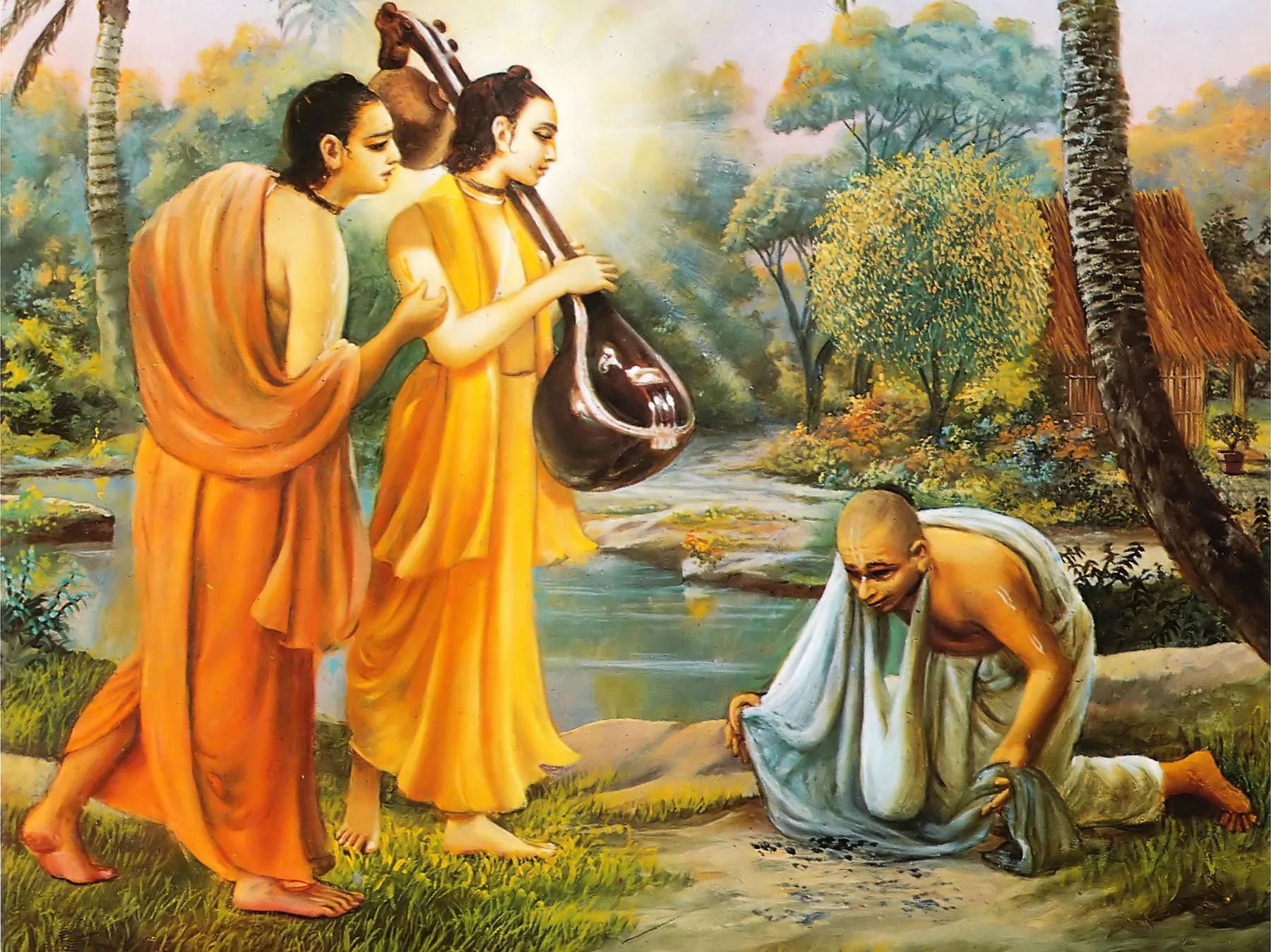
"असंख्य" शिष्य #
1968 में मॉण्ट्रियल के एक युवा भक्त ने श्रील प्रभुपाद से एक चौंकाने वाला प्रश्न पूछा: क्या नारद मुनि सचमुच हरे कृष्ण मन्त्र का कीर्तन इस पृथ्वी पर लाए थे, और यदि हाँ, तो कितने समय पहले? प्रभुपाद का उत्तर इस परम्परा में नारद के स्थान के बारे में एक महत्त्वपूर्ण बात दिखाता है। उन्होंने कहा कि इसकी सचमुच कोई गणना नहीं की जा सकती, क्योंकि नारद सृष्टि के समय से ही ब्रह्मा के एक पुत्र के रूप में मौजूद हैं। और वैदिक साहित्य में वर्णित लगभग हर महान् भक्त किसी न किसी रूप में उनका शिष्य है। फिर उन्होंने उनके नाम गिनाए: प्रह्लाद महाराज, ध्रुव महाराज, व्यासदेव, वाल्मीकि। उन्होंने नारद के पूरे मिशन को एक ही विचार में समेट दिया। नारद शिष्य बनाने में अत्यन्त निपुण थे, और अन्त में उनके शिष्यों की वास्तविक संख्या इतनी अधिक थी कि उसे गिना ही नहीं जा सकता।
स्वयं चैतन्य महाप्रभु द्वारा नामित #
श्री चैतन्य महाप्रभु भी अपने उपदेश में लगभग यही बात कहते हैं, जैसा श्री चैतन्य-चरितामृत में लिखा है। महाप्रभु सनातन गोस्वामी को समझाते हैं कि भगवान् संसार में किन-किन प्रकार के शक्ति-सम्पन्न अवतार भेजते हैं। इनमें वे चार कुमारों, महाराज पृथु और भगवान् परशुराम के साथ नारद को भी प्रमुख शक्त्यावेश-अवतारों में गिनाते हैं। शक्त्यावेश-अवतार वे आत्माएँ हैं, जिनमें परम पुरुषोत्तम भगवान् की कोई विशेष विभूति भरी गई होती है। ब्रह्मा सृष्टि करने की शक्ति धारण करते हैं, और अनन्त शेष हर लोक को सँभालने की शक्ति धारण करते हैं। इसी प्रकार नारद स्वयं भक्ति-सेवा की शक्ति धारण करते हैं। वे जिससे भी मिलते हैं, उसमें भक्ति जगा सकते हैं।
शताब्दियों की दूरी पर एक सहयात्री #
नारद का लगातार भ्रमण केवल उनके स्वभाव का एक गुण नहीं था। वास्तव में, यह प्रजापति दक्ष के शाप के रूप में आरम्भ हुआ। नारद ने दो बार दक्ष के पुत्रों को समझाकर सन्तान उत्पन्न करने से रोक दिया था। तब दक्ष ने क्रोध में यह शाप दिया। उस शाप पर अपने तात्पर्य में श्रील प्रभुपाद समझाते हैं कि एक प्रचारक के लिए कहीं भी स्थिर न रह पाने वाला जीवन कोई दण्ड नहीं है। यह ठीक एक परिव्राजकाचार्य, अर्थात् भ्रमण करने वाले शिक्षक, की योग्यता है। ऐसा शिक्षक उन लोगों के कल्याण के लिए निरन्तर यात्रा करता है, जो अन्यथा कभी कृष्ण के नाम न सुन पाते।
श्रील प्रभुपाद के जीवनीकारों ने उनके अपने जीवन में भी यही बात बार-बार होती देखी। सत्स्वरूप दास गोस्वामी की लिखी जीवनी श्रील प्रभुपाद-लीलामृत में प्रभुपाद के उस निर्णय का वर्णन है, जब सत्तर वर्ष से ऊपर की आयु में उन्होंने वृन्दावन में शान्ति से रहने के बजाय अकेले विश्व-भ्रमण करने का निश्चय किया। यह जीवनी उनकी सीधी तुलना नारद मुनि और चैतन्य महाप्रभु से करती है। ये तीनों भ्रमणशील प्रचारक, अर्थात् परिव्राजकाचार्य, थे। उन्होंने संसार के अपने पास आने की प्रतीक्षा नहीं की, बल्कि स्वयं संसार के हर भाग तक कृष्ण का सन्देश पहुँचाया। इसी जीवनी में लिखा है कि उस समय के एक पत्रकार ने एक बार प्रभुपाद को जेट-युग का परिव्राजकाचार्य कहा था। यह मूल रूप से वही उपाधि है, जो वैदिक साहित्य हज़ारों वर्षों से नारद मुनि को देता आया है।
गौड़ीय परम्परा से परे #
नारद का प्रभाव इससे भी आगे तक जाता है। गौड़ीय परम्परा से बिल्कुल बाहर, छान्दोग्य उपनिषद् में, जो सबसे प्राचीन उपनिषदों में से एक है, नारद और ऋषि सनत्कुमार के बीच हुई एक प्रसिद्ध वार्ता दर्ज है। नारद उनके पास जाते हैं और आत्मा का ज्ञान देने की प्रार्थना करते हैं, क्योंकि उन्होंने सुना है कि जो आत्मा को जानता है, वह शोक से मुक्त हो जाता है। सनत्कुमार पूछते हैं कि उन्होंने अब तक क्या पढ़ा है। उत्तर में नारद प्राचीन विद्याओं की लगभग पूरी सूची गिना देते हैं: चारों वेद, महाकाव्य और प्राचीन इतिहास, व्याकरण, गणित, खगोल-विद्या, नीति-शास्त्र, तर्क-शास्त्र, और भी बहुत कुछ। फिर वे साफ़ स्वीकार करते हैं कि इनमें से किसी ने भी उन्हें सचमुच दुःख से मुक्त नहीं किया। यह उसी शिक्षा की एक अद्भुत गूँज है, जो नारद बाद में ध्रुव महाराज से लेकर स्वयं व्यासदेव तक, दूसरों को देने वाले थे। सांसारिक और यहाँ तक कि शास्त्रीय ज्ञान की हर शाखा में निपुण हो जाना आत्मा को जानने के समान नहीं है। सच्ची विद्या का तब तक कोई मूल्य नहीं, जब तक वह व्यक्ति को स्वयं विद्या से भी आगे न ले जाए। वेदान्त के टीकाकारों ने शताब्दियों से इस अंश की चर्चा की है। इससे पता चलता है कि केवल वैष्णव सम्प्रदाय ने ही नहीं, बल्कि पूरी व्यापक वैदिक परम्परा ने दिव्य ज्ञान के जिज्ञासु और शिक्षक के रूप में नारद की भूमिका को माना। हर शताब्दी में और हर परम्परा में वही व्यक्तित्व बार-बार सामने आता है। वे कन्धे पर वीणा लिए एक ऋषि हैं, जो किसी एक स्थान से बँधे नहीं हैं। जो भी सुनने को तैयार हो, उसे कृष्ण के बारे में बताना वे कभी रोक नहीं पाते।
