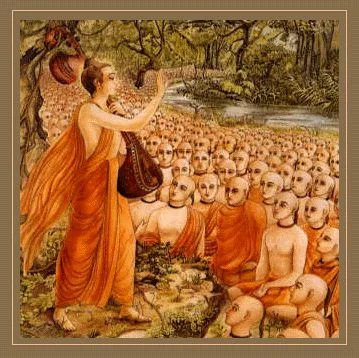
जब पूछा जाता है कि नारद मुनि सदा चलते हुए ही क्यों दिखाए जाते हैं और कहीं भी अधिक समय तक क्यों नहीं टिकते, तब वैष्णव आचार्य प्रायः सबसे पहले इसी प्रसंग को याद करते हैं। श्रीमद्भागवतम् इस प्रश्न का सीधा उत्तर देता है। उस उत्तर में एक पिता का शोक है, जान-बूझकर रची गई एक पहेली है, और एक ऐसा शाप है जो अन्त में वरदान सिद्ध हुआ।
सन्तानोत्पत्ति हेतु भेजे गए दस हज़ार पुत्र #
प्रजापति दक्ष उन महान् प्रजापतियों में से एक थे, जिन्हें ब्रह्माण्ड को जीवों से भरने का दायित्व मिला था। उनके हर्यश्व नाम के दस हज़ार पुत्र हुए। दक्ष ने उन्हें विवाह करके अपनी सन्तान उत्पन्न करने का आदेश दिया। कर्तव्य का पालन करते हुए वे बालक नारायण-सरोवर नामक एक पवित्र सरोवर पर गए। वे अपना सौंपा हुआ कार्य आरम्भ करने से पहले तपस्या द्वारा शुद्ध होना चाहते थे। लेकिन वहाँ के जल ने, और वहाँ रहने वाली सिद्ध आत्माओं के संग ने, उन्हें बदल दिया। उन पर ठीक वैसा ही प्रभाव पड़ा, जैसा कभी अपने पूर्वजन्म में बालक नारद पर पड़ा था। हर स्नान के साथ उस कार्य में उनकी रुचि और कम होती गई, जिसके लिए उनके पिता ने उन्हें भेजा था।

उपदेश के बजाय एक पहेली #
उन्हें विशुद्ध रूप से भौतिक लक्ष्य के लिए ऐसी उत्तम तपस्या करते देख नारद मुनि उनके पास पहुँचे। उन्हें सीधे गृहस्थ-जीवन त्यागने को कहने के बजाय उन्होंने पहेलियों में बात की। उन्होंने एक विचित्र, दूरस्थ राज्य का वर्णन किया: वहाँ रहने वाला एक अकेला पुरुष, उसके साथ एक कुलटा स्त्री जो निरन्तर अपना वस्त्र बदलती रहती है, एक साथ दो दिशाओं में बहने वाली एक नदी, पच्चीस विभिन्न पदार्थों से बना एक घर, एक गाता हुआ हंस, और तलवारों तथा वज्रों का एक पहिया जो बिना किसी विराम के स्वतः घूमता रहता है। उन्होंने उनसे कहा, तुमने ये वस्तुएँ देखी तक नहीं हैं, तो फिर तुम कैसे कल्पना करते हो कि तुम अपने पिता के वास्तविक आदेश को इतना समझते हो कि उसका पालन कर सको?
हर्यश्वों ने बिना किसी और व्याख्या के स्वयं ही वह पहेली सुलझा ली, क्योंकि उनके हृदय पहले से इसके लिए तैयार थे। वह अकेला पुरुष स्वयं परम पुरुषोत्तम भगवान् थे, जो अपने आप में पूर्ण हैं और किसी पर आश्रित नहीं हैं। वह कुलटा स्त्री चंचल भौतिक बुद्धि थी, जो आत्मा का ध्यान अपनी ओर खींचे रखने के लिए बार-बार अपना रूप बदलती रहती है। दोनों दिशाओं में बहने वाली नदी भौतिक प्रकृति का सृष्टि और विनाश का कभी न रुकने वाला चक्र थी। पच्चीस तत्त्वों का घर स्वयं शरीर था। हंस वह विवेकशील आत्मा थी, जो पदार्थ को आत्मा से अलग पहचानती है। और अपने आप घूमने वाला तलवारों का पहिया काल था, जो बिना अनुमति माँगे हर जीव की योजनाओं को काट देता है। यह समझकर उन्होंने नारद का वास्तविक आशय देख लिया। किसी व्यक्ति का वास्तविक पिता शास्त्र है, पिता की गृहस्थ महत्त्वाकांक्षाएँ नहीं, क्योंकि केवल शास्त्र ही उसे दूसरा जन्म देता है। दस हज़ार पुत्रों में से हर एक ने वह कार्य सदा के लिए छोड़ दिया।
दूसरा समूह, और एक पिता का क्रोध #
जब दक्ष को पता चला कि नारद ने एक ही आघात में उनके दस हज़ार पुत्र छीन लिए हैं, तो उन्हें अत्यन्त शोक हुआ। किन्तु ब्रह्मा ने उन्हें सान्त्वना दी, और दक्ष ने शबलाश्व नामक एक हज़ार पुत्रों का दूसरा समूह उत्पन्न किया तथा उन्हें उसी सरोवर पर उन्हीं निर्देशों के साथ भेजा। नारद उन्हें भी वहाँ मिले, और इस बार उन्हें पहेली की भी लगभग आवश्यकता नहीं पड़ी। उन्होंने केवल छोटे भाइयों को याद दिलाया कि वे अपने बड़े भाइयों, हर्यश्वों, के प्रति कितने समर्पित थे, और सुझाव दिया कि वे उसी मार्ग का अनुसरण करें जो उनके भाई पहले ही अपना चुके थे। शबलाश्वों ने तुरन्त और पूरी तरह वैसा ही किया।
यह दक्ष के लिए असहनीय था। उन्होंने नारद का सीधा सामना किया और उन पर तीन आरोप लगाए। पहला, सन्त होने का दिखावा करते हुए उन्होंने पुत्रों की दो पूरी पीढ़ियों को नष्ट कर दिया। दूसरा, उन्होंने उन निर्दोष बालकों पर वैराग्य थोप दिया, जिन्होंने अभी अपने बड़ों का ऋण भी नहीं चुकाया था। तीसरा, उन्होंने उस विश्वास को तोड़ा, जो हर पिता अपने घर में आने वाले अतिथि पर रखता है। फिर दक्ष ने शाप दिया। नारद को ब्रह्माण्ड में घूमना इतना प्रिय है, इसलिए अब से वे किसी भी एक निवास-स्थान पर कभी नहीं टिक सकेंगे। श्रीमद्भागवतम् उनके ठीक यही शब्द दर्ज करता है: "तुम सम्पूर्ण ब्रह्माण्ड में भ्रमण कर सकते हो, किन्तु मैं तुम्हें शाप देता हूँ कि तुम्हारा कहीं भी निवास न हो" (श्रीमद्भागवतम् 6.5.43)।
वरदान के रूप में स्वीकृत शाप #
नारद का उत्तर दो शब्दों का था, *तद् बाढम्*: ऐसा ही हो, तुमने जो कहा है वह उचित है, मैं स्वीकार करता हूँ। इस प्रसंग पर श्रील प्रभुपाद का तात्पर्य बात को स्पष्ट कर देता है। दक्ष स्वयं एक निष्ठावान् गृहस्थ थे। इसलिए उन्होंने सोचा कि बिना स्थायी घर का जीवन किसी के लिए भी सबसे बुरा दण्ड होगा। लेकिन तात्पर्य बताता है कि वास्तव में ऐसा जीवन ही एक परिव्राजकाचार्य की योग्यता है। परिव्राजकाचार्य वह भ्रमणशील शिक्षक है, जो उन लोगों के हित के लिए लगातार यात्रा करता है, जो अन्यथा कृष्ण के विषय में कभी सुन भी न पाते। तात्पर्य के शब्दों में: "प्रचारक को परिव्राजकाचार्य कहा जाता है, अर्थात् वह आचार्य या शिक्षक जो मानव-समाज के कल्याण हेतु सदैव यात्रा करता रहता है" (श्रीमद्भागवतम् 6.5.43, तात्पर्य)। इस प्रकार दक्ष ने जो शाप दण्ड के रूप में दिया था, वही नारद के जीवन-कार्य का स्वरूप बन गया। भ्रमण करने, वीणा बजाने और बिना रुके कीर्तन करने का यही जीवन आगे उन्हें ध्रुव महाराज तक ले गया। यही जीवन उन्हें कयाधु के उद्धार तक, उस वन-डाकू तक जो बाद में वाल्मीकि बना, और सरस्वती नदी के तट पर व्यासदेव तक ले गया।
