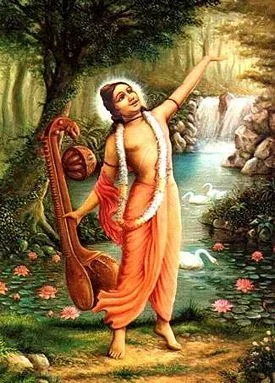
ब्रह्मा के पुत्र बनने से बहुत पहले नारद मुनि एक बिल्कुल अलग, मनुष्य-जीवन जी चुके थे। वे अपने वर्तमान जन्म को नहीं, बल्कि इसी पूर्व-जीवन को अपनी भक्ति का वास्तविक आरम्भ बताते हैं। यह पूरी कथा वे स्वयं व्यासदेव को सुनाते हैं। यह वर्णन श्रीमद्भागवतम् के प्रथम स्कन्ध के अन्तिम भाग में आता है।
एक दासी का एकमात्र पुत्र #
नारद बताते हैं कि एक पूर्व युग में वे एक निर्धन दासी के पुत्र के रूप में जन्मे थे। उनकी माता महान् ऋषियों के घर में काम करती थीं। वे ऋषि विद्वान् ब्राह्मण थे, जो वेदान्त-मार्ग का पालन करते थे। जब वे पाँच वर्ष के हुए, तब तक उनकी देखभाल करने वाला और कोई नहीं था, और उन्हें बाहर की दुनिया का कोई अनुभव नहीं था। नारद कहते हैं कि उन्हें दूसरों से अलग बनाने वाली बात बस इतनी थी: वे न तो चंचल थे, न ही उद्दण्ड बालक। वे अपनी माता के काम के पास ही रहते थे, आवश्यकता होने पर ही बोलते थे, और उनकी आयु के बालकों को जो खेल प्रिय होते हैं, उनमें उनकी कोई रुचि नहीं थी।
वर्षा-ऋतु की कृपा #
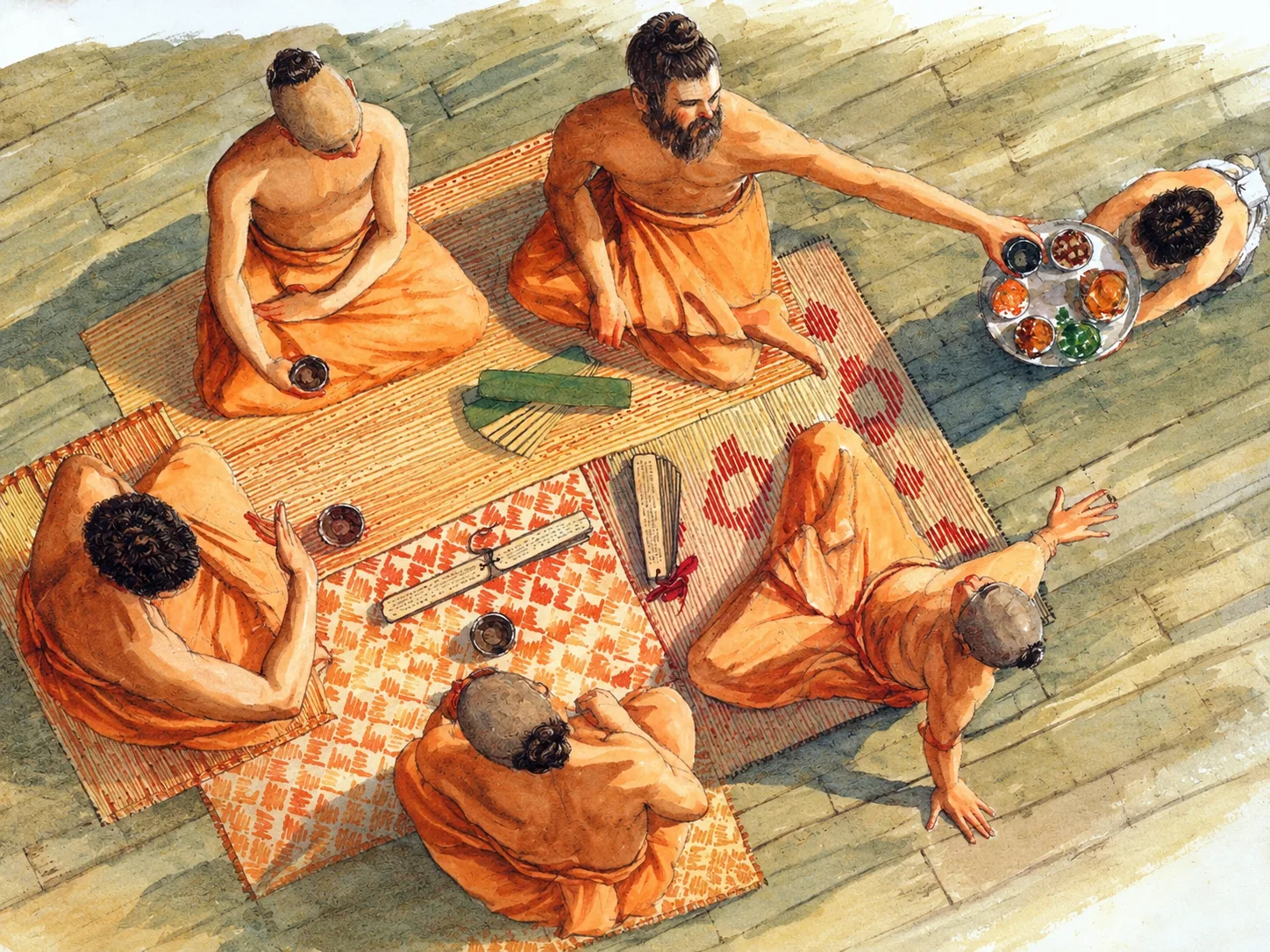
एक बार वेदान्तवादी ऋषियों का एक समूह वर्षा-ऋतु के चार महीनों तक उस घर में ठहरा। परम्परा से यही वह समय है, जब भ्रमण करने वाले सन्न्यासी अपनी यात्राएँ रोककर एक ही स्थान पर रहते हैं। बालक को उनकी व्यक्तिगत सेवा का काम दिया गया। ऐसे ऋषि सबके प्रति समभाव रखने के लिए प्रसिद्ध होते हैं, फिर भी उन्होंने उस बालक पर विशेष कृपा की। उनकी अनुमति से एक बार उसने उनके भोजन का शेष प्रसाद ग्रहण किया। नारद स्पष्ट कहते हैं कि इस एक ही कार्य से उनके पिछले पाप जलकर नष्ट हो गए और उनका हृदय तुरन्त शुद्ध हो गया: "उनकी अनुमति से मैंने एक बार उनके भोजन का शेष प्रसाद ग्रहण किया, और इस एक कार्य से मेरे समस्त पाप तत्काल नष्ट हो गए" (श्रीमद्भागवतम् 1.5.25)। उन महीनों में ऋषियों के पास बैठकर उन्होंने बार-बार कृष्ण की लीलाओं का वर्णन सुना। हर बार जब वे थोड़ा और सुनते, भगवान् के विषय में सुनने की उनकी रुचि और बढ़ जाती। वर्षा बीतकर शरद ऋतु आने तक वे पूरी दो ऋतुएँ केवल कृष्ण की महिमा के कीर्तन और चर्चा में लीन होकर बिता चुके थे। यह सब उन ऋषियों के बीच हुआ, जिन्हें स्वयं इसके सिवा और कुछ भी प्रिय नहीं था।
उपदेश मिला, फिर वे अकेले रह गए #
जब ऋतु समाप्त हुई और ऋषि आगे जाने की तैयारी करने लगे, तो उन्होंने बालक को विदाई का एक उपहार दिया। यह उपहार भक्ति-ज्ञान का गोपनीय उपदेश था। नारद कहते हैं कि यह वही ज्ञान है, जो भगवान् स्वयं अपने कृपापात्रों को देते हैं। इसके थोड़े ही समय बाद एक दुःखद घटना हुई। एक रात उनकी माता गाय दुहने बाहर गईं, उन्हें साँप ने डस लिया, और उनकी मृत्यु हो गई। आश्चर्य की बात है कि नारद ने इसे विपत्ति नहीं, बल्कि भगवान् की कृपा माना। अब उनका कोई और परिवार या मोह शेष नहीं था। इसलिए वे केवल कृष्ण-भावनामृत की खोज में अकेले उत्तर दिशा की ओर चल पड़ने के लिए स्वतन्त्र हो गए।
नारद अपनी माता के विषय में एक और बात बताते हैं, जिस पर आसानी से ध्यान नहीं जाता। वे उनसे बहुत प्रेम करती थीं। लेकिन वे स्वयं दूसरों पर आश्रित थीं और उनके पास कोई साधन नहीं था, इसलिए वे अपने पुत्र की रक्षा या पालन-पोषण के लिए बहुत कुछ नहीं कर सकती थीं। नारद इस स्थिति को अपनी ही एक अनोखी उपमा से समझाते हैं। इस संसार में हर व्यक्ति कठपुतली चलाने वाले के हाथ में लकड़ी की गुड़िया के समान है। उसे एक ऐसी इच्छा चलाती है, जो उसके अपने प्रेम या इच्छा से कहीं बड़ी है। नारद यह बात कड़वाहट से नहीं कहते। बल्कि यहाँ यह बात लगभग राहत देती है। माता का प्रेम उन्हें आगे होने वाली घटना से नहीं बचा सका, इसलिए जो हुआ वह उनकी माता की विफलता नहीं थी। अब उनके लिए आगे चलते रहने के सिवा कुछ शेष नहीं था।
एक झलक, और आजीवन तड़प #
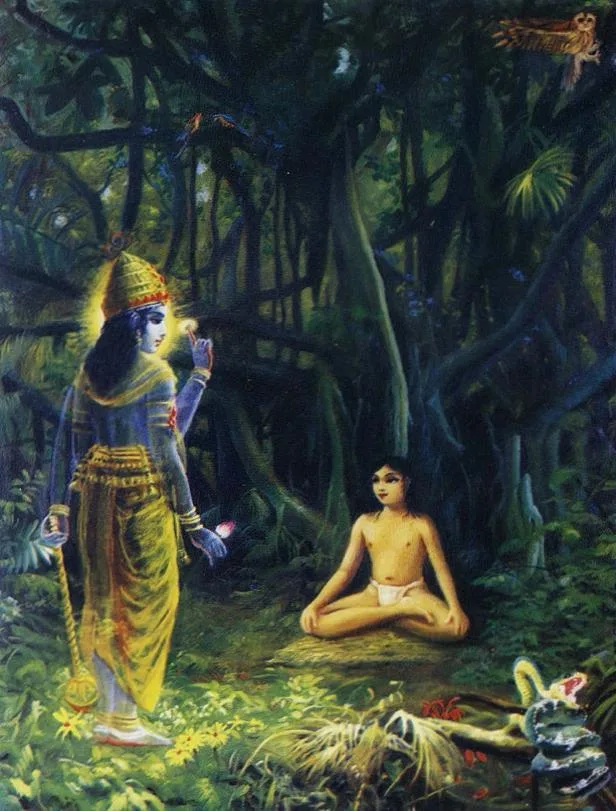
अकेले और बिना किसी योजना के चलते हुए वह बालक समृद्ध नगरों, शान्त गाँवों और गौओं के चरागाहों से होकर गुज़रा। वह सोने, चाँदी और ताँबे से चमकती खानों के पास से, और कमल-पुष्पों तथा गाते पक्षियों से भरे सरोवरों के पास से निकला। फिर प्रदेश और भी जंगली होता गया, जहाँ बाँस के झुरमुट और नरकुल तथा काँटों की उलझी झाड़ियाँ थीं। अन्त में वह ऐसे अँधेरे और भयानक वनों में पहुँचा, जहाँ केवल उल्लू, सियार और साँप ही उसके साथी थे। थका, भूखा और प्यासा वह अन्त में पानी पीने और स्नान करने के लिए एक नदी पर रुका। वहीं एक बरगद के वृक्ष की छाया में विश्राम करते हुए उसने ऋषियों की सिखाई विधि से ध्यान करना आरम्भ किया। जैसे ही उसने अपने हृदय में स्थित भगवान् पर मन एकाग्र किया, कृष्ण सचमुच उसके सामने प्रकट हुए। बालक आनन्द से इतना अभिभूत हो गया कि वह न तो स्वयं को और न ही सामने खड़े स्वरूप को ठीक से देख सका। फिर उतनी ही अचानक वह दिव्य दर्शन छिप गया। उसने उसे फिर से देखने का बहुत प्रयास किया, लेकिन चाहे जितना प्रयास करे, वह उसे फिर नहीं देख सका। तब भगवान् ने स्वयं उससे बात की। उन्होंने समझाया कि नारद इस जीवन में उस स्वरूप को फिर नहीं देखेंगे। यह एक झलक केवल उनकी तड़प को और तीव्र करने के लिए दी गई थी, क्योंकि जिस भक्त की लालसा लगातार बढ़ती रहती है, वह पतित नहीं हो सकता।
इससे सान्त्वना पाकर नारद ने उस जीवन का शेष समय पृथ्वी पर भ्रमण करते और भगवान् के नामों का कीर्तन करते हुए बिताया। अन्त में उनकी मृत्यु आई। वे बताते हैं कि वह बिजली की चमक के समान अचानक और बिना किसी पीड़ा के आई। इसके बाद जो हुआ, वह ब्रह्मा-पुत्र के रूप में उनके जन्म की कथा का भाग है। इस बालक ने एक वर्षा-ऋतु के चार महीनों तक कुछ ऋषियों की सेवा की थी। अब वह पूरे ब्रह्माण्ड के प्रलय और फिर से सृष्टि के बीच से होकर एक बिल्कुल अलग प्रकार के जीवन में ले जाया गया।
