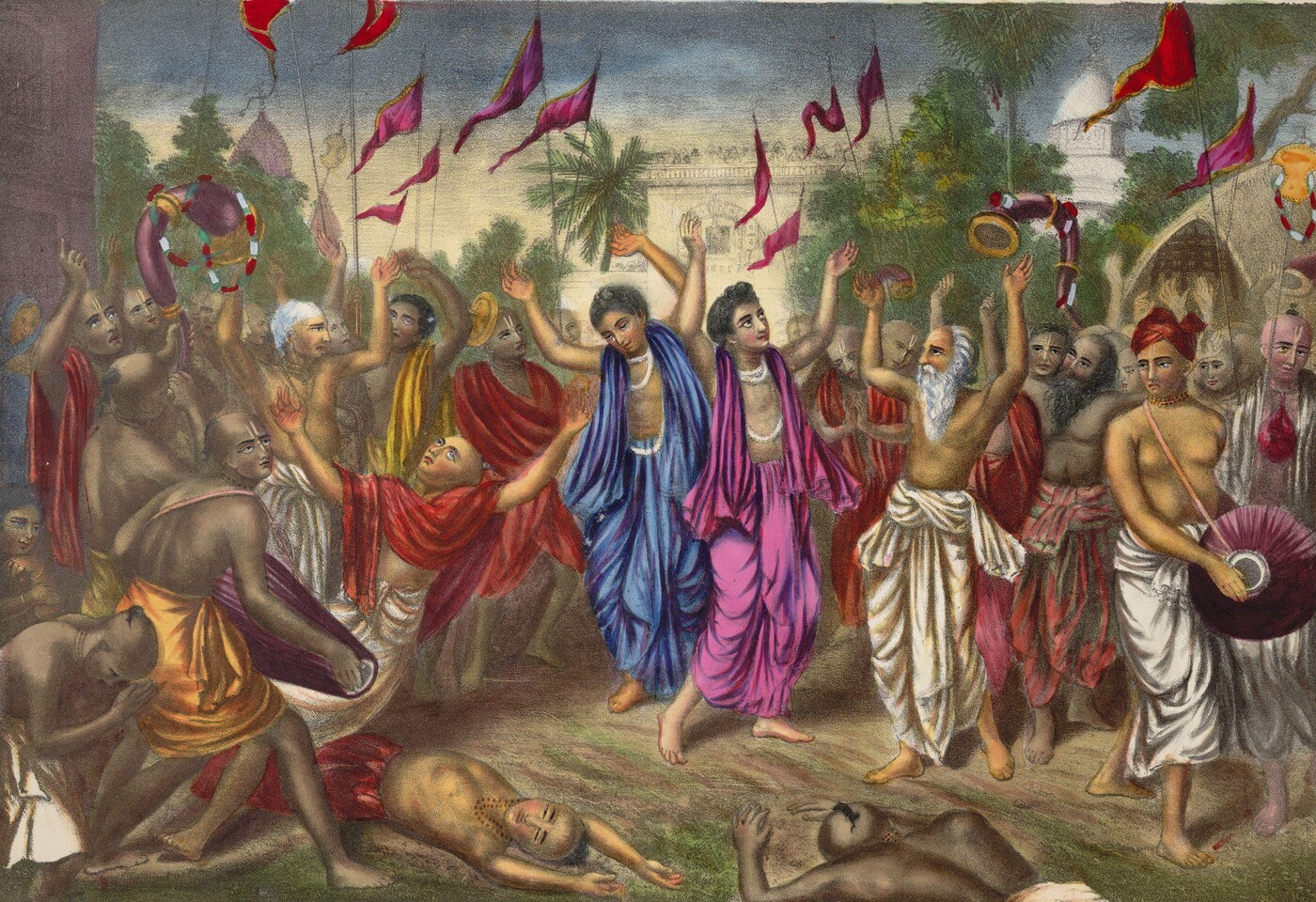
कुलीन-ग्राम ने जगन्नाथ पुरी में केवल भक्त ही नहीं भेजे। उसने एक पूरी संकीर्तन-मण्डली भेजी। उस मण्डली के आगे नृत्य करने के लिए दो पुरुष चुने गए थे, और सत्यराज खान उनमें से एक थे। श्री चैतन्य-चरितामृत इसे साफ शब्दों में लिखता है: "कुलीन-ग्राम नामक गाँव से एक संकीर्तन-मण्डली आई थी, और इस मण्डली में रामानन्द तथा सत्यराज को नर्तक नियुक्त किया गया था।" यह एक छोटी बात है, लेकिन महत्त्वपूर्ण है। संकीर्तन-मण्डली में नर्तक चुने जाने का अर्थ था, गाते हुए भक्तों के समूह में सबसे आगे खड़े होना। नर्तक ही वह गति तय करता था, जिसका बाकी सब अनुसरण करते थे। और यह सब भारत के सबसे बड़े सार्वजनिक उत्सवों में से एक के बीच होता था।
सात मण्डलियाँ, उनमें एक भक्त #
वर्षों बाद, एक और रथयात्रा के समय, महाप्रभु ने पुरी के अपने भक्तों को सात अलग-अलग संकीर्तन-मण्डलियों में बाँटा। इससे गुण्डिचा मन्दिर तक का पूरा मार्ग एक साथ कीर्तन से भर सका। भगवान् के दो सबसे अन्तरंग पार्षदों, श्री अद्वैत आचार्य और श्री नित्यानन्द प्रभु, ने पहली दो मण्डलियों का नेतृत्व मुख्य नर्तकों के रूप में किया। सत्यराज खान बाकी पाँच मण्डलियों में से एक में नृत्य करते थे। उसी श्लोक में उनके साथ वक्रेश्वर पण्डित, अच्युतानन्द, पण्डित श्रीवास और नरहरि दास के नाम भी आते हैं। इससे वे, भले ही थोड़े समय के लिए, उन भक्तों के साथ गिने जाते हैं जिनके नाम गौड़ीय वैष्णव इतिहास के पूरे-पूरे अध्यायों के केन्द्र में हैं। महाप्रभु कीर्तन देखते हुए एक मण्डली से दूसरी मण्डली तक जाते रहे। चैतन्य-चरितामृत कहता है कि भक्तों के हर समूह को पक्का विश्वास था कि भगवान् केवल उन्हीं की मण्डली में नृत्य कर रहे हैं। यह विवरण हमें उस अवसर के प्रेम-उन्माद के बारे में भी बताता है, और उन सात अलग-अलग नर्तकों के बारे में भी, जो उसका नेतृत्व कर रहे थे।
पुरी के तीर्थयात्रियों में पहचाने गए #
पुरी में कम-से-कम एक और अवसर पर सत्यराज खान का नाम लेकर उल्लेख हुआ है। यह प्रसिद्ध बेड़ा-कीर्तन लीला के समय की बात है। राजा प्रतापरुद्र ने अनुरोध किया कि उन्हें एक छिपे हुए स्थान से महाप्रभु के भक्त दिखाए जाएँ। गोपीनाथ आचार्य ने एक-एक करके हर समूह की ओर संकेत किया: राघव पण्डित, वासुदेव दत्त, मुकुन्द दास और नरहरि के नेतृत्व में खण्ड के निवासी, और नाम लेकर कई अन्य भक्त। जब गोपीनाथ आचार्य सत्यराज के गाँव के बंगाली तीर्थयात्रियों तक पहुँचे, तो उन्होंने कहा: "और यहाँ कुलीन-ग्राम के समस्त निवासी उपस्थित हैं, जैसे सत्यराज खान और रामानन्द। वस्तुतः, ये सभी यहाँ उपस्थित हैं।" यह क्षण छोटा है, लेकिन यह उस बात की पुष्टि करता है, जिसका संकेत संकीर्तन-मण्डली वाले श्लोक में मिलता है। हर वर्ष पुरी में सैकड़ों भक्त इकट्ठे होते थे। फिर भी सत्यराज खान इतने जाने-माने थे कि उनका अलग से नाम लिया गया। उन्हें तीर्थयात्रियों की किसी अनाम भीड़ का हिस्सा भर नहीं माना गया। इस पहचान के बदले महाप्रभु ने उनके परिवार से भगवान् जगन्नाथ के विग्रह के लिए एक विशेष सेवा माँगी, जो पीढ़ी-दर-पीढ़ी चलनी थी। वह कथा रेशमी रस्सियों के रक्षक में बताई गई है।
उच्च कुल का गाँव, अपनी ही एक शाखा #
कुलीन-ग्राम नाम का अर्थ ही लगभग "उच्च कुल के परिवारों का गाँव" है। कृष्णदास कविराज गोस्वामी ने महाप्रभु के पार्षदों को जिस ढंग से क्रम में रखा है, उसमें भी कुलीन-ग्राम को इसी रूप में देखा गया है। वे इसे एक समुदाय मानते हैं, केवल बिखरे हुए व्यक्तियों का समूह नहीं। आदि-लीला का एक श्लोक सत्यराज, रामानन्द, यदुनाथ, पुरुषोत्तम, शंकर और विद्यानन्द को महाप्रभु के भक्तों के वृक्ष की उनकी अपनी एक शाखा के प्रमुख बताता है। अगला श्लोक कहता है कि वाणीनाथ वसु के नेतृत्व में पूरे गाँव ने महाप्रभु की सेवा "अपने एकमात्र जीवन और धन" के रूप में की। सत्यराज संकीर्तन-नर्तक भी थे। इन सब बातों को एक साथ देखें, तो एक विशेष और पहचाने जाने योग्य भक्त-समुदाय सामने आता है। यह बंगाली तीर्थयात्रियों का कोई अनाम समूह नहीं था। इस एक गाँव के छह या उससे अधिक गृहस्थों के नाम मिलते हैं। कृष्णदास कविराज ने सावधानी से लिखा है कि श्री चैतन्य महाप्रभु के साथ वास्तव में कौन-कौन भक्त थे। इस विवरण में उन्होंने इनमें से हर एक को अलग से स्थान दिया है।
व्रज की एक गोपी, नाम से स्मरणीय #
सत्यराज खान वास्तव में कौन थे, यह बताने में गौड़ीय वैष्णव परम्परा स्वयं चैतन्य-चरितामृत से एक कदम आगे जाती है। शिवानन्द सेन के पुत्र कवि-कर्णपुर ने अपनी गौर-गणोद्देश-दीपिका में महाप्रभु के पार्षदों के नित्य स्वरूपों की सूची दी है। वहाँ वे सत्यराज खान को सुकण्ठा-देवी बताते हैं। सुकण्ठा-देवी कृष्ण की मूल लीलाओं में व्रज की दो गन्धर्व-नर्तकियों में से एक थीं। इसी प्रकार वे रामानन्द वसु को सुकण्ठा-देवी की सखी कलकण्ठा-देवी के रूप में पहचानते हैं। हमें साफ समझना चाहिए कि यह किस प्रकार का स्रोत है। गौर-गणोद्देश-दीपिका की यह पहचान कवि कर्णपूर ने 1576 में दर्ज की थी। यह स्वयं चैतन्य-चरितामृत में बताया गया कोई दृश्य नहीं है। लेकिन यह एक वास्तविक और स्पष्ट दावा है, जो नाम लेकर किया गया है। इसके लेखक के पिता ने ही वे तीर्थयात्राएँ आयोजित की थीं, जो हर वर्ष कुलीन-ग्राम के भक्तों को पुरी लाती थीं। इस प्रकार यह एक और सूत्र है, जो इस कम प्रसिद्ध गृहस्थ को श्री चैतन्य महाप्रभु के पार्षदों के उस बड़े परिकर से जोड़ता है, जिसके बारे में बहुत कुछ लिखा मिलता है।
