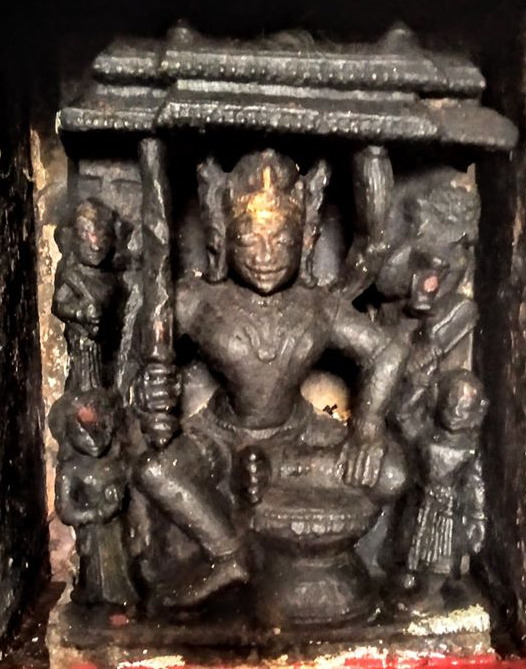
Maharaja Prataparudra
The Gajapati King Who Swept the Road for the Lord
The complete life, on one page: The main biography and every pastime page, in order, in one place
Introduction
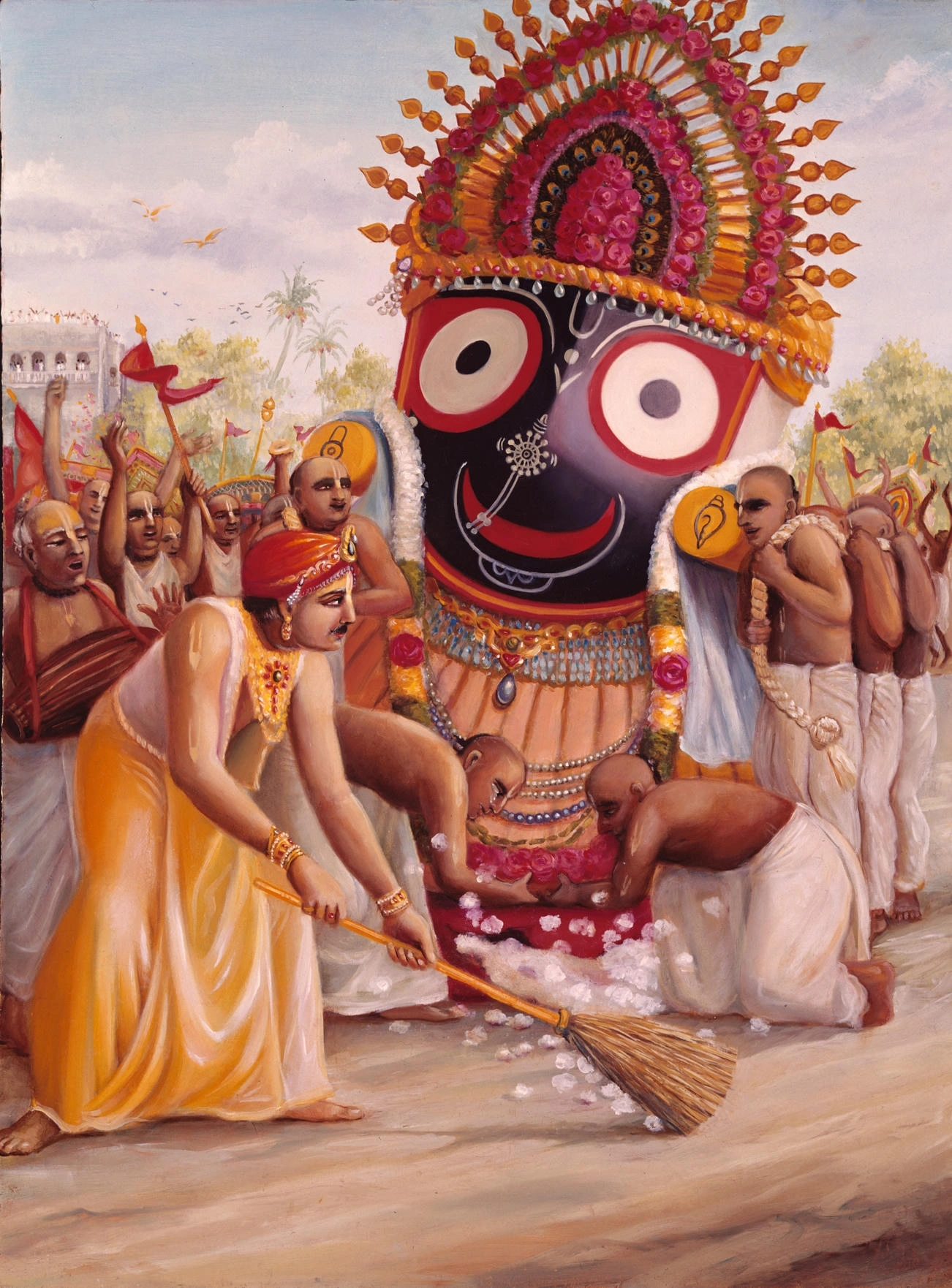
Maharaja Prataparudra ruled Odisha as its Gajapati emperor for almost the whole span of Sri Chaitanya Mahaprabhu's eighteen years at Jagannatha Puri. No king anywhere in the Gaudiya Vaishnava tradition is remembered quite the way he is. He commanded an empire that at its height reached from the Bengal border to the Krishna river. He fought three wars in one lifetime to hold it together. Yet for years he could not get even a private audience with the wandering sannyasi living in his own capital's temple town. This was because that sannyasi had made a rule, and kept it strictly, that one who has renounced the world does not associate with kings. So Prataparudra's story is really two stories in one. The first is the reign of a real historical emperor, recorded in his own dynasty's chronicles and in the records of the powers he fought. The second is the account, preserved in loving detail in the Chaitanya-charitamrita, of a king who spent years trying to get near a man who would not look at him. In the end he succeeded by putting down his crown and picking up a broom.
| Detail | Description |
|---|---|
| Full title | Gajapati Maharaja Prataparudra Deva |
| Dynasty | Suryavamsha Gajapati dynasty of Odisha |
| Reign | c. 1497-1540 CE |
| Capital | Cuttack (Kataka), later Khurda |
| Father | Purushottama Deva |
| Identity | Formerly King Indradyumna, who began the worship of Lord Jagannatha (Gaura-ganoddesha-dipika 118; Chaitanya-charitamrita Adi 10.135-136 purport) |
| Chief queen | Gauri Devi |
| Best known for | Refused an audience by Sri Chaitanya Mahaprabhu for years, then embraced after sweeping the Ratha-yatra road and approaching Him in disguise |
Scriptural evidence for the introduction (2)
pratāparudra chāḍi' karibe jagat nistāra
ei pratijñā kari' kariyāchena avatāra?
Word for word
pratāparudra chāḍi': except for Prataparudra; karibe jagat nistāra: will deliver the whole universe; ei pratijñā kari': making this vow; kariyāchena avatāra: has He appeared as an incarnation.
Alas, has Sri Chaitanya Mahaprabhu incarnated to deliver all kinds of sinners with the exception of a king named Maharaja Prataparudra?
From the purport: Purport excerpt: "The more fallen a person is, the more he has the right to be delivered by the Lord—provided, of course, he surrenders unto the Lord."
The King's own lament at being seemingly excluded from the Lord's mercy, with Srila Prabhupada's purport on why his surrender made that exclusion impossible in the end.
पुरी परमानन्दो य आसीदुद्धवः पुरा ॥
इन्द्रद्युम्नो महाराजो जगन्नाथार्चकः पुरा ।
जातः प्रतापरुद्रः सन्सम इन्द्रेण सोऽधुना ॥११८॥
purī paramānando ya āsīd uddhavaḥ purā ||
indradyumno mahārājo jagannāthārcakaḥ purā |
jātaḥ pratāparudraḥ san sama indreṇa so’dhunā ||118||
Sri Paramananda Puri had formerly been Uddhava. Maharaja Prataparudra, who was as powerful as Lord Indra, had formerly been Maharaja Indradyumna, who began the worship of Lord Jagannatha.
From the purport: In the Gaura-gaṇoddeśa-dīpikā (118) it is said that King Indradyumna, who established the temple of Jagannātha thousands of years ago, later took birth again in his own family as Mahārāja Pratāparudra during the time of Śrī Caitanya Mahāprabhu. Mahārāja Pratāparudra was as powerful as King Indra. (Srila Prabhupada, Chaitanya-charitamrita Adi 10.135-136 purport)
Kavi Karnapura records that King Indradyumna, the ancient worshiper of Lord Jagannatha, took birth again as Maharaja Prataparudra. Sanskrit: diacritic edition of the Gaura-ganoddesha-dipika; English translation as published at bvmlu.org.
Chapter 1
The Gajapati Throne of Odisha
The Suryavamsha Gajapati emperor who ruled Odisha throughout Sri Chaitanya Mahaprabhu's years at Puri.
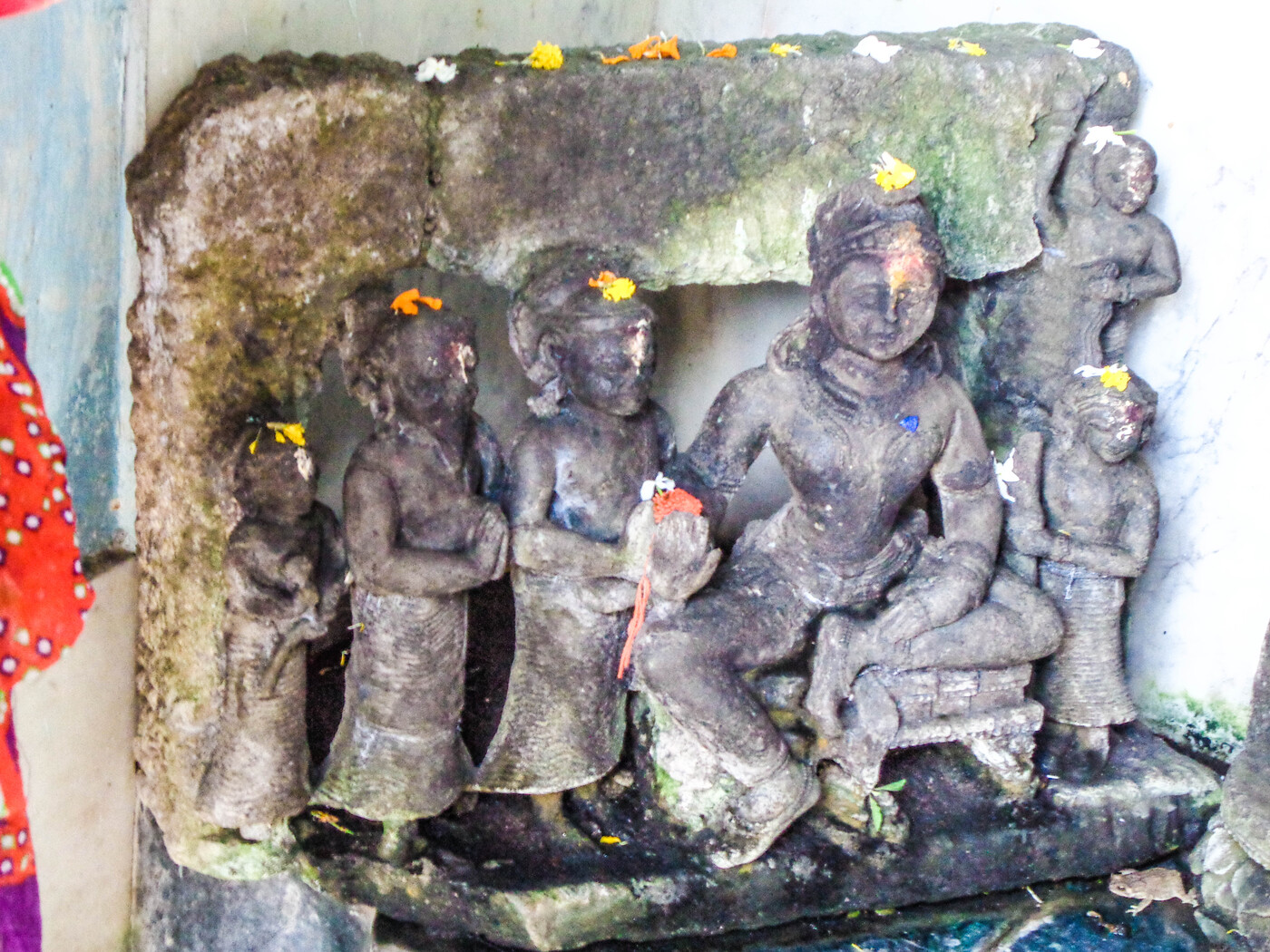
Long before he had heard the name Sri Chaitanya Mahaprabhu, Prataparudra was already one of the most powerful rulers in eastern India. He was the third emperor of a dynasty that his own grandfather had founded. He had also inherited a kingdom that his father had spent a lifetime expanding and defending. To understand the king who later swept a temple road with his own hands, we must first understand the empire he ruled.
| Detail | Description |
|---|---|
| Dynasty | Suryavamsha Gajapati, founded by his grandfather Kapilendra Deva |
| Title | Gajapati, "lord of elephants" |
| Father | Purushottama Deva |
| Mother | Padmavati (also given as Rupambika) |
| Capital | Cuttack (Kataka); later shifted to Khurda |
| Reign | c. 1497-1540 CE |
| Territory at its height | From the Bengal frontier south to the Krishna river near Rajahmundry |
Grandson of the Dynasty's Founder #
Odishan chronicles describe how Prataparudra's grandfather, Kapilendra Deva, seized the throne from Kajjalabhanu, the last king of the preceding Ganga dynasty, while that king was away on campaign. They say that he then founded the line that historians call the Suryavamsha Gajapatis. Kapilendra's son and successor, Purushottama Deva, recovered territory the kingdom had lost and also pushed its borders further. He credited his victories to the direct help of Lord Jagannatha on the battlefield. Prataparudra inherited the throne from his father in 1497 and ruled from Cuttack. Like his father and grandfather before him, he carried the title Gajapati, which marked him as commander of one of India's largest war-elephant corps.
A Family Habit of the Broom #
One story from his father's reign should be told here, because it appears again, in a changed form, in Prataparudra's own life. Purushottama Deva had once been engaged to a princess of Kanchi. Her father came to Puri to see his future son-in-law, and he happened to arrive during Ratha-yatra. There he saw Purushottama sweeping the road before Lord Jagannatha's chariot. This was a customary royal act of humility. But the visiting king was not familiar with Odishan devotion, and he took it as a real insult to his daughter. He cancelled the match on the spot. Then came Purushottama's furious war against Kanchi, and in the end his hard-won marriage to the princess after all. This part is Odishan legend, not something that can be checked point by point. But the custom behind it is real. Sweeping the Ratha-yatra road was already an established royal duty in this family a generation before Prataparudra performed it in front of Sri Chaitanya Mahaprabhu on The Disguise at Ratha-yatra.
Wars on Three Frontiers #
Prataparudra's reign was rarely peaceful. As a young king still in his teens, he drove back an invasion from the Hussain Shahi rulers of Bengal on his northern border. For years afterward he fought the Vijayanagara empire to his south over the fortified town of Udayagiri and the Rayalaseema country around it. This campaign dragged on for well over a year before ending in a negotiated withdrawal. During these same years he was deeply absorbed in devotional life. Historians who have studied the period note that this is sometimes blamed, fairly or not, for his weakening control over military affairs. Late in his reign, in 1531, forces of the Qutb Shahi sultanate of Golconda struck from the southwest and took the fort and administrative center of Kondapalli. Each of these campaigns cost Odisha territory, even when Prataparudra won the immediate battle. In the end, the empire he passed on was smaller than the one he had inherited.
The Emperor Who Built at Puri #
Even a king fighting three wars found time to build. Tradition credits Prataparudra with building the audience hall of the Jagannatha temple at Puri. Inscriptions and temple art from villages near his capital also show a reign that truly cared about Odisha's sacred architecture, not only its battlefields. One example is a depiction of him still preserved at the Sarpeswar temple near Choudwar, built during his rule. In this same period, the Ratha-yatra road-sweeping that his family had practiced for at least a generation became a fixed ritual. It is still called Chera Pahara, and it is performed by the ceremonial Gajapati of Puri down to the present day.
A Family of Devotees #
The Bhakti-ratnakara names Prataparudra's chief queen, Gauri Devi, as the mother of five sons. The eldest of them was Purushottama Jana. Prataparudra had at least four other wives as well. Sources differ slightly on the exact number of his sons, and one modern count goes as high as thirty-two. The Gaudiya sources agree that the King's household, not only the King himself, was drawn into devotion to Sri Chaitanya Mahaprabhu once He arrived at Puri. This is worth remembering as we turn to the years when the Lord Himself would not receive the man at the head of that household.
Why He Matters to This Story #
None of this history of wars and royal succession would have made Prataparudra memorable to Gaudiya Vaishnavas by itself. What makes him unusual is this. He was a ruler of high rank, tested in battle, secure on his family's throne, and master of an empire reaching toward Andhra. Yet for years he was refused an audience by a barefoot sannyasi living in his own temple town. And when the audience finally came, it came only after the emperor set aside every mark of his rank. That refusal, and the reasoning behind it, is told on Forbidden by Sannyasa Etiquette.
Scriptural evidence for this chapter (1)
pratāparudra rājā, āra oḍhra kṛṣṇānanda
paramānanda mahāpātra, oḍhra śivānanda
bhagavān ācārya, brahmānandākhya bhāratī
śrī-śikhi māhiti, āra murāri māhiti
Word for word
pratāparudra rājā: King Prataparudra of Orissa; āra: and; oḍhra kṛṣṇānanda: the Oriya devotee Krishnananda; paramānanda mahāpātra: Paramananda Mahapatra; oḍhra śivānanda: the Oriya Sivananda; bhagavān ācārya: Bhagavan Acharya; brahmānanda-ākhya bhāratī: the devotee named Brahmananda Bharati; śrī-śikhi māhiti āra murāri māhiti: Sri Shikhi Mahiti and Murari Mahiti.
King Pratāparudra of Orissa, the Oriya devotees Krishnananda and Sivananda, and Paramananda Mahapatra, Bhagavan Acharya, Brahmananda Bharati, Sri Shikhi Mahiti and Murari Mahiti constantly associated with Chaitanya Mahaprabhu while He resided in Jagannatha Puri.
From the purport: Purport excerpt: "Pratāparudra Mahārāja, who belonged to the dynasty of the Gaṅga kings and whose capital was in Cuttack, was the Emperor of Orissa and a great devotee of Lord Caitanya Mahāprabhu."
Names Prataparudra among the Lord's constant Puri associates and gives Srila Prabhupada's own account of his dynasty and capital, discussed honestly against the historical record on Legacy and Later Reign.
Chapter 2
Forbidden by Sannyasa Etiquette
Why Sri Chaitanya Mahaprabhu refused, again and again, to grant the king he loved a single audience.
By the time Prataparudra first asked to meet Him, Sri Chaitanya Mahaprabhu had already been living at Jagannatha Puri for some time. He had already turned the kingdom's greatest scholar, Sarvabhauma Bhattacharya, into one of His own followers. Sarvabhauma was now the Lord's devotee, not merely the King's chief pandit. It was he who carried the King's request forward. For his effort, he received one of the sharpest refusals recorded anywhere in the Chaitanya-charitamrita.
| Detail | Description |
|---|---|
| Who asked first | Sarvabhauma Bhattacharya, on the King's behalf |
| The Lord's stated reason | A sannyasi meeting a king is as dangerous as meeting a woman |
| Verse quoted | Chaitanya-chandrodaya-nataka 8.23-24, quoted by the Lord Himself |
| Who eventually softened the ground | Ramananda Raya, on his return from Vidyanagara |
| What stood in for a direct meeting | The Lord's used cloth, sent through Nityananda Prabhu's request; later, the King's own son |
| Outcome of this stage | No direct meeting yet; that came only at Ratha-yatra |
A Rule Mahaprabhu Made for Himself #
The rule was not aimed at Prataparudra in particular. Sri Chaitanya Mahaprabhu held every sannyasi of His own circle, Himself included, to a strict standard. Above all, they had to avoid two things: wealth and the company of women. This also meant avoiding the company of the wealthy and powerful, whose lives revolve around both. A king, however sincere his devotion, was by his very position a man surrounded by money, land and political power. So the Lord treated close association with such a person as harmful to a sannyasi's spiritual life, whatever that person's own qualities might be. This was not just theory for Him. It shaped how He behaved for the rest of His time at Puri, as the pages on His years at Jagannatha Puri describe.
Sarvabhauma's Request and the Covered Ears #
When Sarvabhauma Bhattacharya first raised the subject, "There is a king named Pratāparudra Rāya. He is very anxious to meet You," Sri Chaitanya Mahaprabhu's response was immediate. He covered His ears with His hands. "Since I am in the renounced order," He said, "it is as dangerous for Me to meet a king as to meet a woman. To meet either would be just like drinking poison." He went further and quoted a verse from Kavi Karnapura's Sri Chaitanya-chandrodaya-nataka. The verse speaks of a sannyasi who is genuinely trying to cross the ocean of material existence. For such a person, it says, seeing a materialist or a woman is even worse than willingly drinking poison (Chaitanya-charitamrita, Madhya-lila 11.7-8).
"Like a Venomous Snake" #
Sarvabhauma tried again, pointing out that this was no ordinary king but a great devotee and servant of Lord Jagannatha. The Lord did not disagree about the King's devotion, but He refused to let it change the rule: "Although it is correct that the King is a great devotee, he is still to be considered a venomous snake... just as one is immediately frightened upon seeing a live serpent... one endeavoring for self-realization should similarly fear a materialistic person" (Madhya-lila 11.10-11). Then He warned Sarvabhauma plainly that if the request were raised again, the Bhattacharya would never see Him at Puri again. Frightened, Sarvabhauma went home to think the matter over.
Ramananda Raya's Homecoming Softens the Ground #
The turning point came from an unexpected direction. Ramananda Raya was Prataparudra's own governor of Vidyanagara, and the Lord had personally asked him to resign his post and live at Puri. When he finally arrived, he went straight to see the Lord. He described how the King had wept with joy on hearing that Ramananda wished to serve Sri Chaitanya Mahaprabhu. The King had granted him a full pension without hesitation, and had called himself unfit even to hope for an interview in this lifetime. When the Lord heard, through Ramananda, of the King's humility, His attitude clearly warmed: "Because the King has shown so much love for you, Lord Krishna will certainly accept him" (Madhya-lila 11.27). This small scene clearly shows a principle that the Lord told Ramananda directly that same day. Devotion to a devotee of Krishna is itself a path to Krishna's mercy.
A Used Garment and a Threat to Become a Yogi #
The King's own devotees kept trying. Word reached the devotees that Prataparudra had grown so desperate that he was threatening to give up his kingdom completely and become a wandering holy man if he could not see the Lord. Then Nityananda Prabhu stepped in on the King's behalf. He asked the Lord's servant Govinda for one of the Lord's used cloths and sent it to the King through Sarvabhauma. Prataparudra received it as if it were the Lord Himself and began to worship it. Around the same time, Ramananda Raya pressed once more for a direct meeting, but the Lord again refused. He compared the King's single flaw of birth to the one drop of liquor that spoils an entire pot of milk: "The King certainly possesses all good qualities, but simply by taking up the name 'king,' he has infected everything" (Madhya-lila 12.54).
The Prince Who Reminded Him of Krishna #
The Lord was unable to refuse Ramananda Raya outright, so He offered a compromise. In its way, it was also a joke about His own rule: bring Me the King's son instead, since scripture holds that a son represents his father. The teenaged prince arrived, dressed in yellow, with dark, almond-shaped eyes. Seeing him, Sri Chaitanya Mahaprabhu was at once reminded of Krishna Himself, and He embraced the prince without holding back. This did not satisfy the King's own longing. But it was the first sign that the Lord's resistance, though real, still left a door open somewhere.
The Lesson Within the Refusal #
Read on its own, this part of the Chaitanya-charitamrita can look like simple stubbornness. But read together with what happens next, at The Disguise at Ratha-yatra, it shows something else. The Lord's mercy could not be obtained by rank or by wealth. It could not be obtained even when His own most confidential devotees pleaded for the rule to be bent. It came only through a service so complete that, for a moment, it removed the very distinction that the rule was made to guard against.
Scriptural evidence for this chapter (4)
Quoted in the text above:
- Madhya 12.54 Sri Chaitanya-charitamrita
Further verses:
virakta sannyāsī āmāra rāja-daraśana
strī-daraśana-sama viṣera bhakṣaṇa
Word for word
virakta: unattached; sannyāsī: person in the renounced order; āmāra: My; rāja-daraśana: meeting a king; strī-daraśana-sama: like meeting a woman; viṣera bhakṣaṇa: drinking of poison.
Since I am in the renounced order, it is as dangerous for Me to meet a king as to meet a woman. To meet either would be just like drinking poison.
The Lord's own statement of the rule that kept Him from receiving Prataparudra for years, quoted in full on Forbidden by Sannyasa Etiquette.
niṣkiñcanasya bhagavad-bhajanonmukhasya
pāraṁ paraṁ jigamiṣor bhava-sāgarasya
sandarśanaṁ viṣayiṇām atha yoṣitāṁ ca
hā hanta hanta viṣa-bhakṣaṇato 'py asādhu
Word for word
niṣkiñcanasya: of one detached from material enjoyment; bhagavad-bhajana-unmukhasya: eager to serve the Supreme Lord; pāraṁ param jigamiṣoḥ: desiring to cross to the far side; bhava-sāgarasya: of the ocean of material existence; sandarśanam viṣayiṇām: the seeing of materialistic persons; atha yoṣitām: and of women; hā hanta hanta: alas, alas; viṣa-bhakṣaṇataḥ api asādhu: more abominable than drinking poison.
Alas, for a person who is seriously desiring to cross the material ocean and engage in the transcendental loving service of the Lord without material motives, seeing a materialist engaged in sense gratification or seeing a woman who is similarly interested is more abominable than drinking poison willingly.
A verse from Kavi Karnapura's Sri Chaitanya-chandrodaya-nataka (8.23) that the Lord Himself quoted to Sarvabhauma Bhattacharya when first refusing to meet King Prataparudra.
prabhu kahe, — tathāpi rājā kāla-sarpākāra
kāṣṭha-nārī-sparśe yaiche upaje vikāra
Word for word
prabhu kahe: the Lord replied; tathāpi: still; rājā: the King; kāla-sarpa-ākāra: in the form of a venomous snake; kāṣṭha-nārī-sparśe: by touching a wooden woman; yaiche upaje vikāra: just as agitation arises.
The Lord replied: Still, the King is like a venomous snake. Just as agitation arises simply by touching a woman made of wood, so it is with him.
The Lord's refusal to make an exception for Prataparudra even after Sarvabhauma pointed out that the King was a great devotee.
Chapter 3
The Disguise at Ratha-yatra
How a Gajapati emperor swept a temple road and slipped into a garden dressed as an ordinary Vaishnava to finally reach the Lord.
Every year at Jagannatha Puri, the deities of Jagannatha, Balarama and Subhadra are carried from the main temple to the Gundicha temple in three great chariots. The chariots are dragged by ropes through huge crowds. The crowds were so large that Sri Chaitanya Mahaprabhu organized His own kirtana party into seven separate singing groups just to be heard over them. In the middle of this festival, on a road packed with pilgrims, Maharaja Prataparudra finally found a way past the rule that had kept him from the Lord for years. He did not do it by asking again. He did it by picking up a broom.
| Detail | Description |
|---|---|
| First act of service | Sweeping the road before Jagannatha's chariot with a golden-handled broom |
| Scriptural reference | Chaitanya-charitamrita, Madhya-lila 13.15-18 |
| Second act, later that day | Entering the Balagandi garden dressed as an ordinary Vaishnava |
| What he recited | The gopis' verses of separation from Srimad-Bhagavatam 10.31 (gopi-gita) |
| The Lord's response | Rose and embraced him before asking who he was |
| Modern survival | The ritual, called Chera Pahara, is still performed at Puri's Ratha-yatra today |
The Chera Pahara: A King With a Broom #
The dayitas, Jagannatha's powerful hereditary carriers, moved the heavy deity from the temple's throne toward the waiting chariot. As they did, Prataparudra stepped in ahead of the procession. Krishnadasa Kaviraja Goswami records it simply: "King Pratāparudra personally engaged in the Lord's service by cleansing the road with a broom that had a golden handle. The King sprinkled the road with sandalwood-scented water. Although he was the owner of the royal throne, he engaged in menial service for the sake of Lord Jagannatha" (Madhya-lila 13.15-16). Something like this had happened before in his family. Tradition holds that his own father, Purushottama Deva, had performed the same act a generation earlier, a detail told on The Gajapati Throne of Odisha. But by Prataparudra's time the act had become more like an established custom. It survives today as the ritual called Chera Pahara, still performed at Puri's Ratha-yatra by the ceremonial Gajapati of the region.
Menial Service From the Most Exalted Person #
Krishnadasa Kaviraja stops to explain why this mattered: "Although the King was the most exalted respectable person, still he accepted menial service for the Lord; he therefore became a suitable candidate for receiving the Lord's mercy... Simply by rendering this service, the King received the mercy of the Lord" (Madhya-lila 13.17-18). The point is not that sweeping a road has special spiritual power in itself. The point is that a man with every worldly excuse not to do it chose to do it anyway, in public, in front of his own court.
Anger as a Warning, Not a Verdict #
The mercy was not obvious to onlookers right away. Later that same day, Sarvabhauma Bhattacharya again mentioned the King's longing for an audience. Sri Chaitanya Mahaprabhu showed outward anger, and this frightened Prataparudra badly. Sarvabhauma reassured the King privately: "The Lord is very satisfied with you. By pointing you out, He was teaching His personal associates how to behave with mundane people" (Madhya-lila 13.187). In other words, the anger was a display meant to teach the Lord's own disciples. It was not a judgement on the King. This difference only makes sense once the rest of the day's events are known.
Following Sarvabhauma's Plan to Balagandi #
At midday the chariots stopped at a spot called Balagandi, midway between the temple and Gundicha. There it was customary for devotees of every rank to offer cooked food to the Lord. While the crowds pressed in around the offerings, Sri Chaitanya Mahaprabhu, exhausted from hours of ecstatic dancing, withdrew to rest in a nearby garden. This was the chance Sarvabhauma had been waiting for. He told the King exactly how to use it: set aside the royal dress, enter alone in the appearance of an ordinary Vaishnava, and recite from the chapters of Srimad-Bhagavatam describing Krishna's rasa dance with the gopis while the Lord lay absorbed.
Massaging the Lord's Feet in the Dress of a Vaishnava #
Prataparudra did exactly this. The Chaitanya-charitamrita's own chapter summary states it plainly: "Following Sarvabhauma Bhattacharya's instructions, the King had given up his royal dress. He now entered the garden in the dress of a Vaishnava" (Madhya-lila 14.5). He asked the assembled devotees' permission before approaching, then fell down and touched the Lord's feet, and as Sri Chaitanya Mahaprabhu lay with His eyes closed in ecstatic absorption, the King began, expertly, to massage His legs (Madhya-lila 14.6-7).
The Verse That Broke the Silence #
The King began reciting the gopi-gita, the chapter of Srimad-Bhagavatam beginning "jayati te 'dhikam," in which the gopis of Vrindavana cry out for Krishna's return. Hearing it, Sri Chaitanya Mahaprabhu urged him on again and again: "Go on reciting, go on reciting" (Madhya-lila 14.9). Then the King reached the ninth verse of that chapter: "My Lord, the nectar of Your words and the descriptions of Your activities are the life and soul of those who are always aggrieved in this material world... Those who spread the message of Godhead are certainly the most munificent welfare workers" (Srimad-Bhagavatam 10.31.9, quoted at Madhya-lila 14.13). At that word, munificent, meaning very generous, the Lord rose in ecstatic love and embraced him.
Embraced Before His Name Was Known #
What follows is the detail Gaudiya Vaishnavas return to again and again: "Śrī Caitanya Mahāprabhu immediately embraced the King and cried, 'You are the most munificent! You are the most munificent!' At this point Śrī Caitanya Mahāprabhu did not know who the King was" (Madhya-lila 14.14). The text clearly says that the mercy came first. The recognition came only afterward, when the Lord finally asked, "Who are you?" The King's answer became Prataparudra's own well-known reply for the rest of his life: he was the servant of the Lord's servants (Madhya-lila 14.17-18).
A Family Custom, and a Ritual That Still Continues #
According to the Kanchi legend, this began as a single act of royal humility performed by Prataparudra's father. By this point it had become a settled family practice. That day the King went further. He moved from sweeping a road to setting aside his entire royal identity in a garden. It is this decision that the Chaitanya-charitamrita treats as the actual turning point. We should be clear about what the sources do and do not say. Nothing here describes Prataparudra disguised as a common laborer or sweeper in the Balagandi garden scene itself. The texts describe him giving up royal dress for the appearance of an ordinary Vaishnava devotee. This is related to the humility of the sweeping he had done earlier that same day, but it is a different kind of humility. Both acts together are what the rest of Puri's Vaishnava community saw and never forgot. What happened to that relationship afterward is told on Meeting Sri Chaitanya Mahaprabhu.
Scriptural evidence for this chapter (3)
Quoted in the text above:
- Madhya 13.15-16 Sri Chaitanya-charitamrita
- SB 10.31.9 (quoted at Cc. Madhya 14.13) Srimad-Bhagavatam
Further verses:
mahāprabhu sukha pāila se-sevā dekhite
mahāprabhura kṛpā haila se-sevā ha-ite
Word for word
mahāprabhu sukha pāila: Mahaprabhu felt very happy; se-sevā dekhite: to see that service; mahāprabhura kṛpā haila: the Lord's mercy came about; se-sevā ha-ite: because of that service.
Śrī Caitanya Mahāprabhu became very happy to see the King's service, and it was through this very service that he received the Lord's mercy.
From the purport: Purport excerpt: "A devotee who has received even a small fraction of the mercy of the Lord can understand Him."
Explains why the road-sweeping, not status or persuasion, is what the tradition credits for opening the way to the Lord's mercy.
Chapter 4
Meeting Sri Chaitanya Mahaprabhu
From a secret embrace in a garden to an open one under a bakula tree at Cuttack, and the quieter service in between.
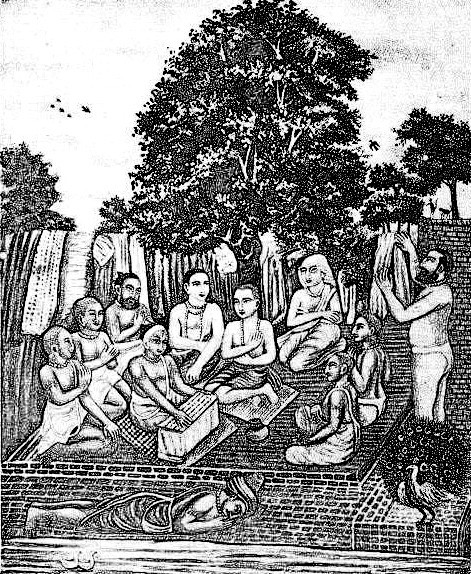
The embrace in the Balagandi garden was not a single, isolated moment of mercy that then faded. Once Sri Chaitanya Mahaprabhu had accepted Maharaja Prataparudra's service, a real relationship followed. At first the King could reach Him only through a secret meeting, for which he had to hide who he was. Over the following years this changed into an open embrace given in full daylight, with no disguise needed at all.
| Detail | Description |
|---|---|
| First words after the embrace | "Who are you?", asked only after the Lord had embraced him |
| The King's reply | "I am the most obedient servant of Your servants" |
| New name given to the Lord | Pratāparudra-santrātā, "the deliverer of Maharaja Prataparudra" |
| Later open meeting | Under a bakula tree at Cuttack, en route to Vrindavana |
| Daily discipline | Massaging the feet of Kashi Mishra, the Lord's Puri host |
| Protective role | Formed part of the outer security ring during Ratha-yatra kirtana |
Servant of the Servants #
When Sri Chaitanya Mahaprabhu finally asked the man He had just embraced who he was, Prataparudra's answer became the phrase Gaudiya Vaishnavas most associate with him: "My Lord, I am the most obedient servant of Your servants. It is my ambition that You will accept me as the servant of Your servants" (Chaitanya-charitamrita, Madhya-lila 14.18). Notice what he did not ask for. He did not request rank in the Lord's eyes. He asked only for a place among those who serve the Lord's own servants. In his purport to this verse, Srila Prabhupada compares this wish to that of Prahlada Maharaja and Dhruva Maharaja, who refused every material blessing and chose exactly this position instead. In the same spirit, at this same Ratha-yatra, Sri Chaitanya Mahaprabhu Himself had declared His own identity in these words: "I am not a brahmana, I am not a kshatriya, I am not a vaishya or a shudra... I identify Myself only as the servant of the servant of the servant of the lotus feet of Lord Sri Krishna, the maintainer of the gopis" (Madhya-lila 13.80). Sri Chaitanya Mahaprabhu then briefly showed him a glimpse of His own divine opulence, and asked him to keep it secret (Madhya-lila 14.19-20).
A Name That Followed Him #
The Chaitanya-charitamrita records that the mercy shown to Prataparudra that day left a permanent mark on how the devotees spoke of the Lord Himself: "Śrī Caitanya Mahāprabhu showed such mercy to the King that from that day on the Lord became known as Pratāparudra-santrātā, the deliverer of Mahārāja Pratāparudra" (Madhya-lila 16.108). It is remarkable what this name remembers. It does not remember a miracle performed for the world. It remembers mercy shown to a single king who had once been refused.
Standing Guard at His Own Ratha-yatra #
Prataparudra's place in the Lord's Puri years was not only a matter of devotional feeling. It also had a very practical side. During the chariot festival, the Lord's kirtana parties danced in ecstatic states that drew enormous crowds. The devotees organized themselves into rings for the Lord's protection. Krishnadasa Kaviraja records that the King and his own attendants formed the outer ring, holding back the press of pilgrims (Madhya-lila 13.90). In this same setting, Srivasa Thakura was standing in front of the King and blocking his view. The King's minister Haricandana pushed him aside again and again, and Srivasa slapped him in return. Haricandana was angry and was about to speak to Srivasa. But Prataparudra personally stepped in and stopped him outright. He told Haricandana that he should feel fortunate, not insulted, to have been touched, even in anger, by a devotee like Srivasa (Madhya-lila 13.96). Ordinarily this king commanded complete respect from everyone. Yet in his own temple town he was content to take the side of a Bengali brahmana's honor over his own minister's.
Kashi Mishra's Daily Visitor #
Away from the crowds, Prataparudra kept a quieter, more private discipline. Throughout His Puri years, Sri Chaitanya Mahaprabhu lived in a small room called the Gambhira, attached to the house of the brahmana Kashi Mishra. Prataparudra himself had originally suggested this house to the devotees as a quiet and secluded place, as told in the account of the Lord's years at Jagannatha Puri. According to Gaudiya tradition, whenever the King was at Puri, he made a habit of going daily to Kashi Mishra's house after his midday meal. There he would massage Kashi Mishra's feet and ask about the state of Lord Jagannatha's temple service. This was not the same as taking formal initiation from Kashi Mishra, and no source claims that it was. But it shows a ruler who valued ordinary, repeated service done with his own hands more than any honor his rank could otherwise command.
An Open Embrace Under a Bakula Tree at Cuttack #
Years later, when Sri Chaitanya Mahaprabhu set out from Puri on His attempted journey to Vrindavana, His route passed directly through Prataparudra's own capital. The Lord was resting under a bakula tree in a garden outside a temple at Cuttack. There Ramananda Raya found Him and immediately went to inform the King. Prataparudra hurried to the spot. This time there was no need for disguise or secrecy. He "fell flat to offer Him obeisances... Being overwhelmed with love, the King again and again got up and fell down" (Madhya-lila 16.102-104). Sri Chaitanya Mahaprabhu stood and embraced him a second time, and the Chaitanya-charitamrita notes that the Lord's own body was bathed in the King's tears (Madhya-lila 16.105-106). This is very different from the secrecy of the Balagandi garden. There the King had needed a disguise to come near the Lord. Now it happened in the open, with Ramananda Raya simply walking over to fetch the King.
Four Months a Year, for as Long as the Lord Allowed #
Every year during the rains, the devotees of Bengal traveled to Puri. They stayed through the four months of Chaturmasya before returning home. Once, at the devotees' request, Sri Chaitanya Mahaprabhu agreed to extend His own residence at Puri through that same four-month period. Of that moment it is recorded: "hearing this, King Pratāparudra became very, very happy" (Madhya-lila 16.285). This small, human detail says as much about the relationship as any grander episode. What became of that relationship in the years after is told on Legacy and Later Reign, along with the wars, buildings and disputed records of Prataparudra's own reign.
Scriptural evidence for this chapter (4)
Quoted in the text above:
- Madhya 14.18 Sri Chaitanya-charitamrita
- Madhya 16.108 Sri Chaitanya-charitamrita
Further verses:
kruddha hañā tāṅre kichu cāhe balibāre
āpani pratāparudra nivārila tāre
Word for word
kruddha hañā: having become angry; tāṅre kichu cāhe balibāre: wants to say something to him; āpani pratāparudra: King Pratāparudra personally; nivārila tāre: stopped him.
As the angered Haricandana was about to speak to Srivasa Thakura, Pratāparudra Mahārāja personally stopped him.
The King defends Srivasa Thakura's honor against his own minister during a Ratha-yatra kirtana; the matching account is told on the Srivasa Thakura page's own disappearance narrative.
nāhaṁ vipro na ca nara-patir nāpi vaiśyo na śūdro
nāhaṁ varṇī na ca gṛha-patir no vanastho yatir vā
kintu prodyan-nikhila-paramānanda-pūrṇāmṛtābdher
gopī-bhartuḥ pada-kamalayor dāsa-dāsānudāsaḥ
Word for word
na: not; aham: I; vipraḥ: a brāhmaṇa; nara-patiḥ: a king or kṣatriya; vaiśyaḥ: belonging to the mercantile class; śūdraḥ: belonging to the worker class; varṇī: belonging to any caste, or brahmacārī; gṛha-patiḥ: householder; vana-sthaḥ: vānaprastha; yatiḥ: mendicant or renunciant; kintu: but; prodyan: brilliant; nikhila: universal; parama-ānanda: with transcendental bliss; pūrṇa: complete; amṛta-abdheḥ: who is the ocean of nectar; gopī-bhartuḥ: of the maintainer of the gopīs; pada-kamalayoḥ: of the two lotus feet; dāsa-dāsānudāsaḥ: the servant of the servant of the servant.
"I am not a brahmana, I am not a kshatriya, I am not a vaishya or a shudra. Nor am I a brahmachari, a householder, a vanaprastha or a sannyasi. I identify Myself only as the servant of the servant of the servant of the lotus feet of Lord Sri Krishna, the maintainer of the gopis."
From the purport: This is verse 74 from the Padyavali, an anthology of verses compiled by Srila Rupa Gosvami.
The Lord's own declaration of being the servant of the servant, spoken during the same Ratha-yatra chapter as the road-sweeping episode; echoed in Prataparudra's own reply once the Lord asked his identity.
Chapter 5
Legacy and Later Reign
The wars, the buildings, the disputed books, and the grief that followed a devotee king through the rest of his reign.
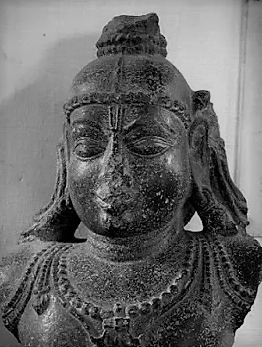
Maharaja Prataparudra did not retire from ruling once he had won the mercy of Sri Chaitanya Mahaprabhu. He went on governing and fighting for his kingdom for roughly another two decades. The empire he left behind at his death in 1540 shows a harder side of his story, next to the devotional one. This page describes that later reign, along with two points on which the sources do not fully agree.
| Detail | Description |
|---|---|
| Death | 1540 CE |
| Reign length | c. 1497-1540, roughly forty-three years |
| Major wars after meeting the Lord | Continued campaigns against Vijayanagara; loss of Kondapalli to Golconda forces, 1531 |
| Attributed literary works | Saraswati-vilasa, Pratapa-martanda, Kautuka-chintamani, Nirnaya-sangraha (authorship of at least one disputed) |
| Successor | Kalua Deva (also given as Kaluwa Pratapa) |
| Dynasty's fate | Overthrown within a generation by the minister Govinda Vidyadhara |
Three Wars for One Kingdom #
Prataparudra's military life did not end with his devotion to the Lord. Rather, the two went on side by side throughout his reign. His long, costly conflict with Vijayanagara over the fort of Udayagiri and the country around it continued for well over a year of campaigning. It ended in a negotiated withdrawal. Later, in 1531, the Qutb Shahi sultanate of Golconda struck at his southwestern territory. Its forces captured Kondapalli, an important administrative center, along with a number of other forts. One relic of that southern war survives to this day. It is the upper portion of a Bala Gopala deity, which the invading Vijayanagara forces carried off from Udayagiri as a trophy of their victory. It is still preserved as a visible sign of how much territory and sacred property changed hands during these campaigns. Under Prataparudra's father, Odisha's empire had reached as far south as Rajahmundry. Over the course of Prataparudra's reign it shrank for good. In spite of his personal virtues as a devotee, the kingdom he ruled at his death was smaller than the one his father had left him.
Sarpeswar and the Buildings of a Reign #
Alongside the fighting, Prataparudra's reign left a real mark on Odishan sacred architecture. He is credited with building the audience hall of the Jagannatha temple at Puri. Images of him are also preserved in temple art from his own lifetime. The best-known example is at the Sarpeswar temple near Choudwar, built during his rule, where a depiction of him survives among the temple's carvings. During his reign, the road-sweeping act he performed at the Ratha-yatra, described on The Disguise at Ratha-yatra, also became a fixed royal custom. It is still performed today as the Chera Pahara ritual by the Gajapati of Puri at the start of every year's festival.
Books Attributed to a Busy King #
Odishan literary tradition attributes several Sanskrit and Odia works to Prataparudra, including Saraswati-vilasa, Pratapa-martanda, Kautuka-chintamani and Nirnaya-sangraha. But a word of caution is needed here. At least two of these, Saraswati-vilasa and Pratapa-martanda, are credited elsewhere to named scholars at his court, not to the King himself. Saraswati-vilasa is credited to Lolla Lakshmidhara, and Pratapa-martanda to Ramakrishna. His court's support for writers is clearer in another case. Srila Prabhupada's own purport to the Chaitanya-charitamrita states plainly that "the drama named Caitanya-candrodaya was written under his direction" (Adi-lila 10.135-136, purport). This refers to the ten-act Sanskrit play composed by Kavi Karnapura Goswami. The purport's statement gives some independent support to a separate tradition that the play was first staged at Puri's Chandana-yatra festival in Prataparudra's own court. A short devotional song addressed to Radha and signed with Prataparudra's name also survives in a manuscript held at the Bangiya Sahitya Parishad library in Calcutta. But the people who catalogued it note real doubt about whether it is really his. That doubt remains open, and a reader should not take the song as a confirmed authentic composition of his.
When the Lord Left Puri #
Sri Chaitanya-charitamrita states that Sri Chaitanya Mahaprabhu spent His last eighteen years continuously at Jagannatha Puri (Madhya-lila 1.22). According to later tradition, He disappeared there in 1534 at the Tota Gopinatha temple. By then, Prataparudra's devotion to Him had lasted two decades. The later devotional chronicle Bhakti-ratnakara remembers the King as unable to bear the loss. It says he fell to the ground in grief and needed the company of Ramananda Raya simply to become calm again. The same source states that the King left Puri afterward and spent the rest of his own life elsewhere. This detail is given here as the tradition's own claim, not as a historical fact confirmed by other evidence. This is because Bhakti-ratnakara is a devotional biography compiled later, not a record written at the time.
A Kingdom That Did Not Outlive Him #
Prataparudra died in 1540, having ruled for more than four decades. His dynasty did not last long after him. Within a short time his successors were killed, and the throne was seized by Govinda Vidyadhara, a minister who had served under him. This ended the Suryavamsha Gajapati line that Prataparudra's grandfather Kapilendra Deva had founded, and a new dynasty began in its place. For roughly six centuries Odisha had been one of the major powers of eastern India. In effect, that status ended with this change.
Two Honest Uncertainties #
Two points should be stated plainly, not smoothed over. First, the sources disagree about which dynasty Prataparudra belonged to. In his purport to the Chaitanya-charitamrita (Adi-lila 10.135-136), Srila Prabhupada describes him as belonging "to the dynasty of the Gaṅga kings," but the historical record on The Gajapati Throne of Odisha and the Gaudiya History website's account of his family say something different. They say that his grandfather, Kapilendra Deva, took the throne from the last king of the earlier Ganga line and started a completely new dynasty, the Suryavamsha Gajapatis. That page follows the more detailed family history. Here we also record the purport's own words, instead of quietly choosing one version. Second, no available source states exactly where and when Prataparudra died, or where he spent his final years after Sri Chaitanya Mahaprabhu's disappearance. Only the year 1540 and the fact of his grief are reasonably well supported. No source doubts the place he holds in Gaudiya Vaishnava memory. He is remembered not as a footnote to a greater man's life. He is remembered as living proof, in Srila Prabhupada's words, that "the more fallen a person is, the more he has the right to be delivered by the Lord, provided, of course, he surrenders unto the Lord" (Chaitanya-charitamrita, Madhya-lila 11.46, purport).
Closing
Kashi Mishra, Not a Formal Diksha Guru #
No source records that Prataparudra ever took formal diksha initiation from anyone. Other Vaishnavas are remembered with a specific guru at a specific place and time. His devotion is remembered through service instead. Gaudiya tradition holds that he gave that same daily, personal service to Kashi Mishra, the brahmana in whose house Sri Chaitanya Mahaprabhu lived at Puri. He visited Kashi Mishra every day to massage his feet and to hear about the state of Lord Jagannatha's worship. That is a real relationship of respect and instruction. But it is not the formal guru-disciple bond recorded for other Gaudiya Vaishnava associates, and the sources do not claim that it was.