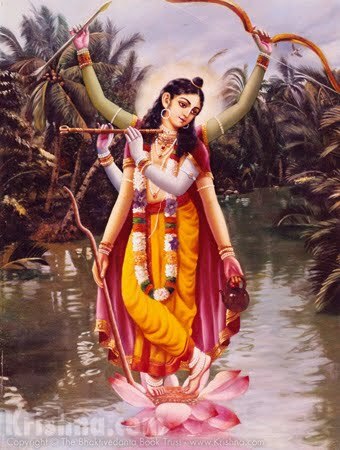
Sri Damodara Pandit
The Devotee Whose Rebuke Mahaprabhu Called Pure Love
Also known as Damodar Pandit, Damodara Pandita, Damodar Pandita
“You are the fully independent Supreme Personality of Godhead. Since everything is known to You, You know what is permissible and what is not. I am merely an insignificant jiva — what power do I have to give directions to You?”
Damodara Pandit's reply to Sri Chaitanya Mahaprabhu, who had joked that He would meet King Prataparudra only with Damodara's permission (Chaitanya-charitamrita, Madhya-lila 12.26-27)
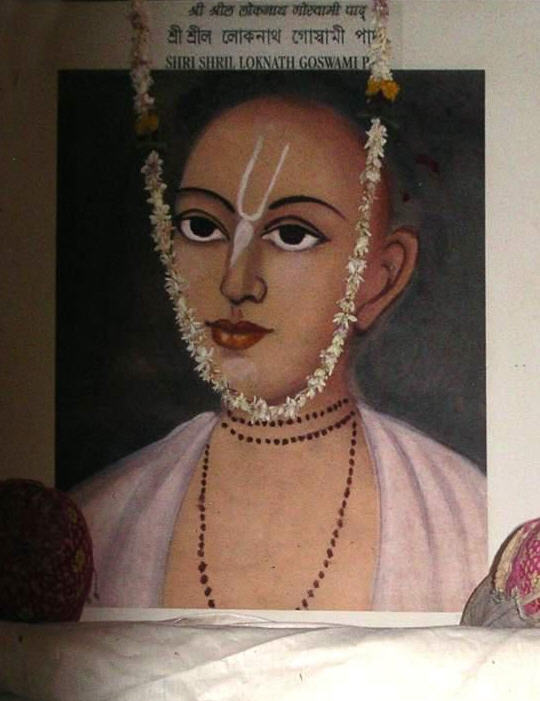
Damodara Pandit was one of the strictest and most trusted of Sri Chaitanya Mahaprabhu's personal associates at Jagannatha Puri. He was so strict about the Lord's own conduct that he once openly scolded Mahaprabhu to His face. Mahaprabhu was not displeased. Instead, as a direct reward for that scolding, He trusted Damodara with His household and sent him to look after His mother in Navadvipa. Sri Chaitanya-charitamrita names him the tenth of the many "branches" that grew from the tree of Mahaprabhu's own life. The single verse given to him is unlike anything said of the others. It says plainly that his prema for the Lord ran so pracanda, so intense, that it came out as vakya-danda, chastisement in words, aimed at God Himself.
| Detail | Description |
|---|---|
| Era | Contemporary of Chaitanya Mahaprabhu, early sixteenth century |
| Documented as | Tenth branch of the Chaitanya tree (Chaitanya-charitamrita, Adi-lila 10.31-32) |
| Younger brother | Shankara Pandita, called the Lord's own "foot-pillow" |
| Best-known episode | Rebuked Sri Chaitanya Mahaprabhu over His affection for a widowed brahmani's son; sent, in reward, to Navadvipa |
| Role among the devotees | Enforced etiquette and discipline in the Lord's circle, at Puri and later in Navadvipa |
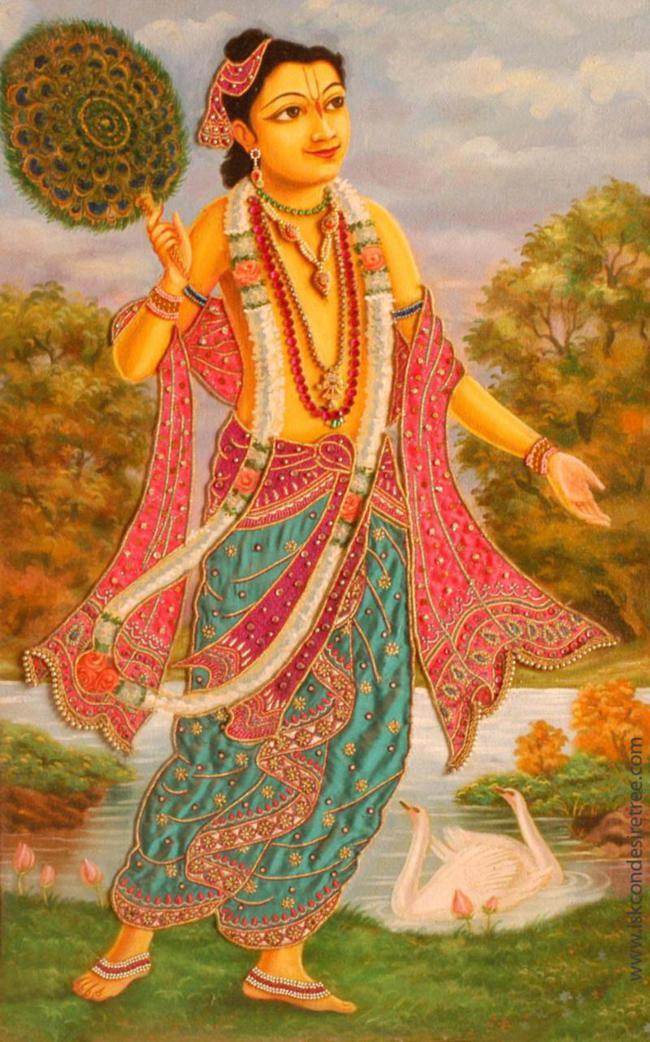
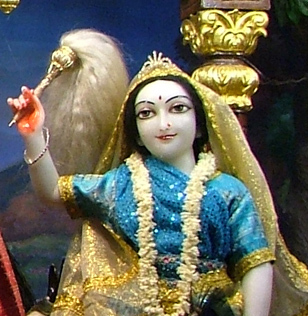
| Identity | Shaivya, a hot-tempered gopi of Vraja; the goddess Sarasvati also entered him (Gaura-ganoddesha-dipika 159; Chaitanya-charitamrita Adi 10.32 purport) |
| Birth and disappearance | Not recorded |
A Branch Known for Its Sternness #
In the tenth chapter of Chaitanya-charitamrita's Adi-lila, Krishnadasa Kaviraja Goswami names, one verse at a time, the devotees who gathered around Sri Chaitanya Mahaprabhu in Nadia and Puri. He describes them as a tree with a trunk, branches and sub-branches. In this way even the most modest of the Lord's followers has some line of scripture to his name. Damodara Pandit is the tenth branch. His verse promises that the "incident of chastisement" behind his reputation will be told later, in full. Krishnadasa Kaviraja keeps that promise many chapters afterward, in Antya-lila.
His younger brother was Shankara Pandita. Mahaprabhu loved Shankara freely, without the reserve He showed toward Damodara. Shankara stayed in the Lord's own room at night, sometimes with Mahaprabhu's feet resting against his body. He became known, half in affection, as prabhu-padopadhana, "the Lord's foot-pillow." When Mahaprabhu formally placed Shankara under his older brother's care, He Himself explained the difference. His love for Damodara was mixed with awe and reverence. His love for Shankara was pure and open, without holding back. Shankara needed someone to guard him, and that is why he belonged with Damodara. Damodara accepted this duty, and from that day treated his own younger brother with the respect due to an elder brother. Gaura-ganoddesha-dipika is the traditional key that identifies Mahaprabhu's associates with figures from Krishna's Vraja pastimes. It names Damodara Pandit as the gopi Shaivya, who is known there for the same sharp temper. It also notes that the goddess Sarasvati would sometimes enter him for special purposes.
This is the verse of Srila Kavi Karnapura's Gaura-ganoddesha-dipika (159):
śaibyā yāsīd vraje caṇḍī sa dāmodara-paṇḍitaḥ
kutaścit kāryato devī prāviśat taṁ sarasvatī
"Hot-tempered Saibya-gopi who previously appeared in Vraja, appeared as Damodara Pandita during Lord Caitanya's pastimes. The goddess Sarasvati also entered the body of Damodara Pandita, who is thus the combined incarnation of them both." (Gaura-ganoddesha-dipika 159)
Srila Prabhupada also remembers him by his Vraja name in his purport to Chaitanya-charitamrita Adi 10.32: "Dāmodara Paṇḍita, who was formerly known as Śaibyā in Vraja-dhāma, used to carry messages from Lord Caitanya to Śacīmātā..."
The Chastisement That Pleased the Lord #
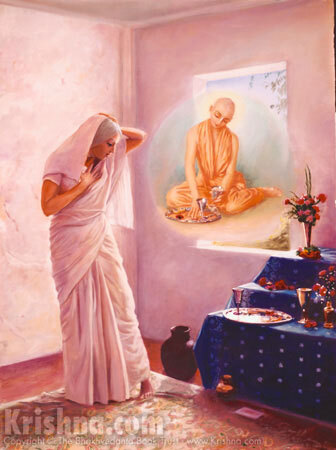
The episode that Chaitanya-charitamrita returns to again and again took place at Jagannatha Puri. There the young son of a widowed brahmani had begun visiting Mahaprabhu daily, sitting with Him in long, affectionate conversation. Damodara Pandit told the boy more than once to stay away, but it had no effect. A child goes where he is loved, and Mahaprabhu was plainly fond of him. One day Damodara could not hold back any longer, and he turned on Mahaprabhu directly. People were already whispering, he said, about a handsome young sannyasi's closeness to a beautiful young widow's son, and the Lord's own authority as a teacher was in danger. Mahaprabhu listened to him fully. Then, instead of taking offense, He called it a wave of pure love. He said that no one among His associates was as close a friend as Damodara. He then sent Damodara to Navadvipa to guard His mother Sachi's household, and told him plainly that no one else was impartial enough for the post. The full conversation, word for word, is told on The Chastisement That Pleased the Lord, along with what Mahaprabhu asked Damodara to tell His mother in secret.
Guardian of the Devotees' Conduct #
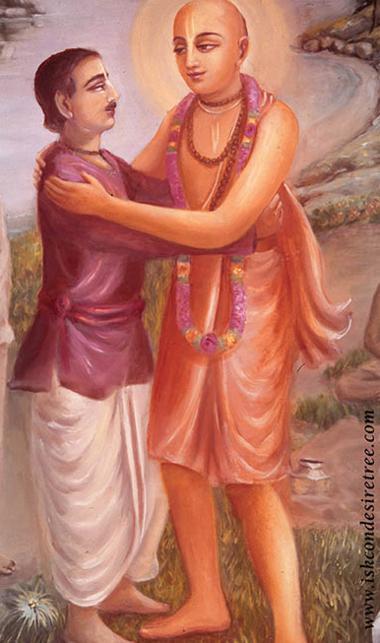
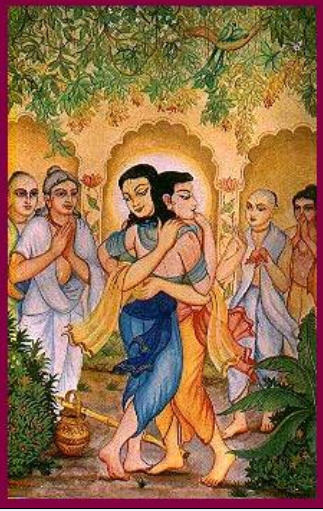
Damodara's sharp tongue was not kept for Mahaprabhu alone. Once he had taken his place among the devotees, first at Puri and then in Navadvipa, he corrected anyone whose behavior fell short of his standard, however senior that person was. He held everyone to that standard, Mahaprabhu included. When the Lord set out on His pilgrimage through South India, He told Nityananda Prabhu and the others that they could not come with Him. He gave His reason with visible affection. He was a sannyasi and Damodara only a brahmachari, yet Damodara still "kept a stick in his hand" to educate Him, and Mahaprabhu did not know how to act freely in front of him. Years later, when King Prataparudra begged for an audience, Mahaprabhu again named Damodara as the one authority He would not go against. He would meet the king, He said, only if Prataparudra's request first passed Damodara's own judgment. That episode is told on Guardian of the Devotees' Conduct, along with the joyful embrace that marked Damodara's part in welcoming Mahaprabhu home from South India.
Later Years and Remembrance #
Damodara Pandit is not to be confused with Svarupa Damodara Goswami, Mahaprabhu's personal secretary at Puri. Svarupa Damodara Goswami was a completely separate person who shares only the name Damodara. Chaitanya-charitamrita is careful to keep the two apart, and they should never be mixed up. Damodara Pandit continued in his post in Navadvipa for years afterward, watching over Sachi Mata's household and the standard of conduct among the devotees there. Narahari Chakravarti's Bhakti-ratnakara records that Narottama Dasa Thakura, on arriving in Navadvipa many years later, sought him out and paid obeisances at his feet. He did this simply because Damodara had been a direct associate of the Lord. This shows how far Damodara's reputation had traveled by then. No available source gives a year of birth or disappearance for him, or any family details beyond his brother Shankara. What survives instead is one of the most specific and most quoted stories in the whole of Chaitanya-charitamrita. As Krishnadasa Kaviraja puts it, the story is proof that even a chastisement can be a form of pure love.
Scriptural evidence
Quoted in the text above:
- Verse 159 Gaura-ganoddesha-dipika
Further verses:
dāmodara-paṇḍita śākhā premete pracaṇḍa
prabhura upare yeṅho kaila vākya-daṇḍa
Word for word
dāmodara-paṇḍita: Dāmodara Paṇḍita; śākhā: another branch (the tenth branch); premete: in affection; pracaṇḍa: very advanced; prabhura: the Lord; upare: upon; yeṅho: he who; kaila: did; vākya-daṇḍa: chastisement by speaking.
Dāmodara Paṇḍita, the tenth branch of the Caitanya tree, was so elevated in love of Lord Caitanya that he once unhesitatingly chastised the Lord with strong words.
The verse that first introduces Damodara Pandit among the branches of the Chaitanya tree and names his defining trait: love intense enough to become open chastisement of the Lord.
daṇḍa-kathā kahiba āge vistāra kariyā
daṇḍe tuṣṭa prabhu tāṅre pāṭhāilā nadīyā
Word for word
daṇḍa-kathā: the narration of such chastisement; kahiba: I shall speak; āge: ahead; vistāra kariyā: making a detailed description; daṇḍe tuṣṭa prabhu: the Lord is very much satisfied by the chastisement; tāṅre: him; pāṭhāilā: sent back; nadīyā: Nadia (a district in Bengal).
Later in the Caitanya-caritamrita I shall describe this incident of chastisement in detail. The Lord, being very much satisfied by this chastisement, sent Damodara Pandita to Navadvipa.
From the purport: Purport excerpt: "Damodara Pandita, who was formerly known as Saibya in Vraja-dhama, used to carry messages from Lord Caitanya to Sacimata, and during the Ratha-yatra festival he carried messages from Sacimata to Lord Caitanya Mahaprabhu."
Krishnadasa Kaviraja's own promise, kept later in Antya-lila 3, that the chastisement story would be told in full; the purport independently confirms Damodara's identity as Saibya (Shaivya) of Vraja-lila and his ongoing role carrying messages between Mahaprabhu and Sachi Mata.
In the third chapter is a description of the forceful glories of Haridasa Thakura. That chapter also mentions how Damodara Pandita spoke words of criticism to Sri Caitanya Mahaprabhu.
Krishnadasa Kaviraja's own chapter-by-chapter summary of Antya-lila, confirming that the Damodara Pandit chastisement story belongs to Antya-lila Chapter Three alongside the glorification of Haridasa Thakura.
āmi kon kṣudra-jīva, tomāke vidhi diba?
āpani milibe tāṅre, tāhāo dekhiba
Word for word
āmi: I; kon: some; kṣudra-jīva: insignificant living entity; tomāke: unto You; vidhi diba: shall give direction; āpani: personally; milibe: You will meet; tāṅre: him; tāhāo: that also; dekhiba: I shall see.
"I am merely an insignificant jiva, so what power do I have to give directions to You? By Your own personal choice You will meet with the King. I shall see it."
The continuation of Damodara Pandita's reply on the King Prataparudra question, completing the exact quotation used as the pull-quote here (Chaitanya-charitamrita, Madhya-lila 12.26-27).
- Sri Chaitanya-charitamrita, Adi-lila, Chapter 10 (verses 31-32)
- Sri Chaitanya-charitamrita, Antya-lila, Chapter 3 ("The Glories of Srila Haridasa Thakura")
- Sri Chaitanya-charitamrita, Antya-lila, Chapter 20 (summary verses)
- Sri Chaitanya-charitamrita, Madhya-lila, Chapter 7
- Sri Chaitanya-charitamrita, Madhya-lila, Chapter 9
- Sri Chaitanya-charitamrita, Madhya-lila, Chapter 11
- Sri Chaitanya-charitamrita, Madhya-lila, Chapter 12
- Damodar Pandit (Gaudiya History biography)
Frequently asked
When was Sri Damodara Pandit born?
Sri Damodara Pandit appeared Not recorded in Not recorded.
When and where did Sri Damodara Pandit disappear?
Sri Damodara Pandit disappeared Not recorded at Not recorded.
What are the main pastimes of Sri Damodara Pandit?
The pastimes covered here include: Guardian of the Devotees' Conduct, The Chastisement That Pleased the Lord.