Srila Prabhupada
Founder-Acharya of the International Society for Krishna Consciousness
The complete life, on one page: The main biography and every pastime page, in order, in one place
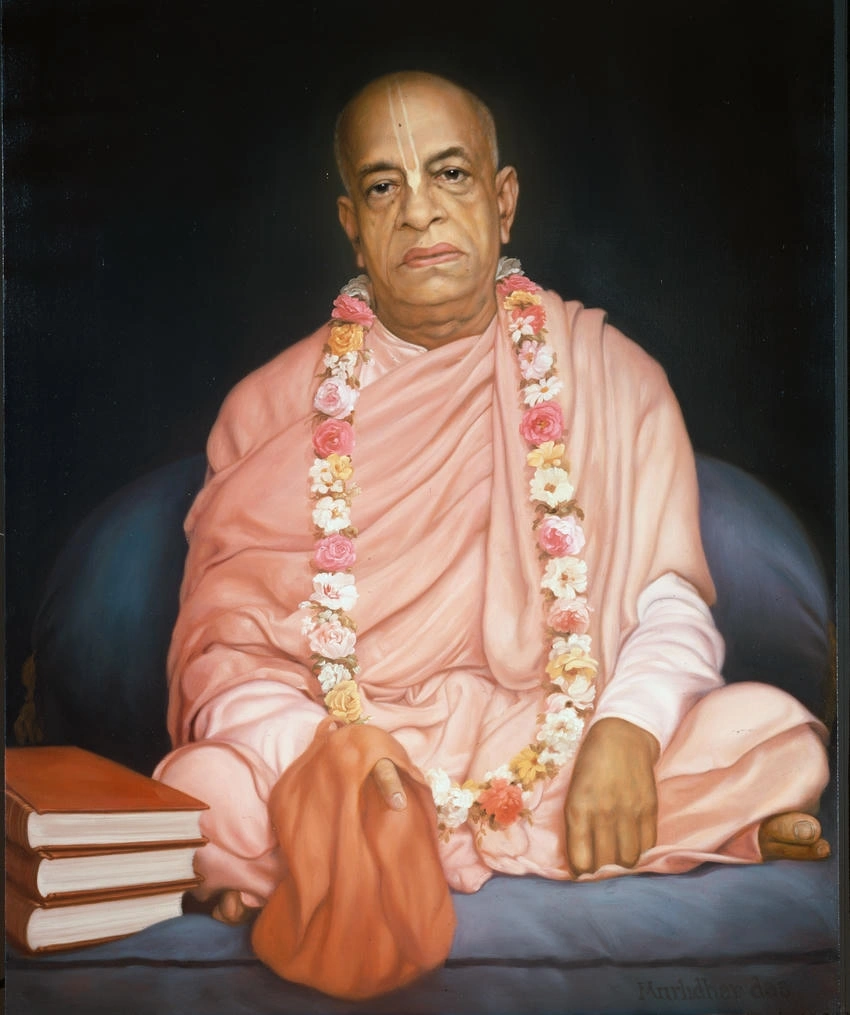
Introduction
His Divine Grace A.C. Bhaktivedanta Swami Prabhupada (1896-1977) is the founder-acharya of the International Society for Krishna Consciousness (ISKCON). For the Hare Krishna Movement Kota and this temple, he is the acharya of the present age. Through him, the Brahma-Madhva-Gaudiya sampradaya reached every continent of the world within a single lifetime. Sri Chaitanya Mahaprabhu started the sankirtana movement in sixteenth-century Bengal. Srila Prabhupada, at an age when most people have long retired, carried that same movement by cargo ship to America. In under twelve years he established over a hundred temples on six continents.
What follows gives the outline of his life; the sections below expand each stage in full. Older pages on his biography and mission, his twenty-six qualities as a pure devotee, a year-by-year milestone timeline, the Gaudiya Vaishnava sampradaya and his pre-1978 books remain in place and are linked from the relevant sections below.
Chapter 1
Birth and Childhood
Born the day after Janmashtami to a Calcutta cloth merchant, marked from infancy by an astrologer's prediction.
Abhay Charan De was born in Calcutta on 1 September 1896, one day after Janmashtami, the anniversary of Krishna's appearance. His parents, Gour Mohan De and Rajani De, gave him the name Abhay Charan, meaning "one who has taken fearless shelter at Krishna's feet." His family planned their year around the festivals of the Radha-Krishna temple across the street. So a son born so close to Janmashtami had a quiet, special meaning for them.
| Detail | Description |
|---|---|
| Born | 1 September 1896, Calcutta |
| Birth name | Abhay Charan De |
| Father | Gour Mohan De, cloth merchant |
| Mother | Rajani De |
| Family connection | Related to the wealthy Mullik mercantile family |
| Childhood home | Harrison Road, opposite the Mulliks' Radha-Govinda temple |
Born the Day After Janmashtami #
The date mattered to the way the family saw the child. Gaudiya Vaishnava households paid close attention to the festival calendar. A birth just after the celebration of Krishna's own appearance was the kind of detail a family remembered. Abhay grew up hearing it told again and again, long before he could know what his own life would become.
Gour Mohan De and a Merchant's Household #
Gour Mohan De ran a modest cloth and clothing shop in Calcutta's Harrison Road neighborhood. He was not a wealthy man. But he was related to the Mulliks, an old and prosperous merchant family that had traded in gold and salt for centuries and whose properties surrounded the De residence. Family history recorded within the Gaudiya Math traces the connection back over generations. It says that a Mogul-era ruler had given the title Mullik, meaning "lord," to a branch of the De family because of its wealth and influence. A later marriage between the two branches kept the families close ever after. Gour Mohan himself was only a modest trader by the family's grander standards. But all accounts agree that he was a devout Gaudiya Vaishnava first and a businessman second. He welcomed wandering sadhus into his home and arranged the household's daily life around worship, not business. More than anything else, he wanted his son to grow up a pure devotee of Radha and Krishna.
The Astrologer's Prediction #
Following custom, Gour Mohan had an astrologer cast his newborn son's horoscope. Vaishnava biographers record that the astrologer made a specific and striking prediction: that at the age of seventy the child would cross the ocean, become a renowned religious teacher, and establish 108 temples around the world. Any family might hear such a prediction and set it aside as the usual flattering talk. But Gour Mohan appears to have taken it seriously enough to shape his son's upbringing around it. He resisted anything that might turn Abhay away from a devotional life.
Daily Darshan Across Harrison Road #
Directly opposite the De family's rooms stood a temple of Radha-Krishna that the Mullik family had maintained for a century and a half. Every day, accompanied by his parents or a family servant, young Abhay crossed the road to see the Deities. This was not an occasional outing. It was a fixed habit of his childhood, as regular as any meal. In this way he came to know temple worship, kirtan, and the daily routine of Deity service early and naturally. Most children learn these things only much later, if at all. His younger sister, Bhavatarini, was often his companion in these years. Vaishnava biographers record that the two of them turned even their ordinary play into a chance for devotion, calling out to Krishna for help when a kite would not catch the wind.
A Six-Year-Old's Ratha-Yatra #
At around six years of age, Abhay organized his own miniature version of Ratha-yatra, the chariot festival that carries the Deities of Jagannatha, Baladeva, and Subhadra through the streets of Puri once a year. He persuaded his father to have a small copy of the great Puri chariot built for him. Gour Mohan agreed. In the end he found a small used cart from a neighborhood woman and helped his son restore and decorate it. Abhay ran his own festival for several days each year, pulling neighborhood children into a procession of drums and chanting around Harrison Road.
It looked like just a boy's game. Decades later, Abhay had become known to the world as Bhaktivedanta Swami. When he organized the first Ratha-yatra ever held in San Francisco, he was returning to a festival he had first held, in miniature, on a Calcutta street.
His Mother's Wish, His Father's Refusal #
As Abhay grew older, his mother, Rajani, wanted him sent to London to study law. This was a common hope in Bengali families who had some money and wanted a respected career for a son. Gour Mohan refused. He feared that a stay in England would expose Abhay to Western habits that would undo everything he had tried to teach him. Gour Mohan made this decision with no way of knowing what lay ahead. His son would in fact cross the ocean, but not as a young law student. He would go near the very age the astrologer had named, as a penniless sannyasi, carrying out an order his own guru had given him decades earlier. That later chapter of the story begins with the schooling described in Education and Early Influences.
Chapter 2
Education and Early Influences
Scottish Church College, a classmate named Subhas Chandra Bose, and a diploma refused in solidarity with Gandhi.
In 1916 Abhay enrolled at Scottish Church College, one of the two most respected colleges in Calcutta. Four years later he passed his final examinations with distinction in English, philosophy, and economics. But he refused to walk into the hall to collect the diploma he had earned. Just as his formal education was coming to an end, he chose to make a quiet political statement.
| Detail | Description |
|---|---|
| College | Scottish Church College, Calcutta |
| Founder | Rev. Alexander Duff, Christian missionary |
| Enrolled | 1916 |
| Subjects | English, philosophy, and economics |
| Graduated | 1920, B.A., diploma refused |
| Notable classmate | Subhas Chandra Bose |
A Missionary College for Bengali Sons #
Scottish Church College had been founded in 1830 by the Reverend Alexander Duff, a Scottish missionary. Duff believed that a Western, English-medium education, given through mission schools and colleges, would draw educated Indians toward Christianity. By Abhay's time the college no longer pressed this Christian aim so strongly. Instead, it was known for producing well-rounded, morally serious graduates, and many Vaishnava families in Calcutta sent their sons there without much worry that their religion would be interfered with. Bible study was compulsory, and each morning began with scripture readings and hymns. Most of the Scottish professors were ordained ministers of the Church of Scotland. But Abhay remembered them less as missionaries and more as strict, polite and sometimes rather unusual teachers.
Professors, Poetry, and the Gita #
Abhay studied English and Sanskrit in his first year, then Sanskrit and philosophy, and finally philosophy and economics, the combination he carried through to graduation. He joined the college's English Society, where he recited Keats and Shelley to his classmates. He also joined its Sanskrit Society. There he was known for his fine recitation of the eleventh chapter of the Bhagavad-gita, which describes Krishna's universal form. One professor taught English literature by comparing Dickens and Walter Scott to the Bengali novelist Bankim Chandra Chatterji. This was a small sign of respect for Bengali literature, and Abhay remembered it fondly. He did not have such fond memories of one economics professor. When this professor was frustrated with his students, he would tell them plainly that Indians should never expect independence and were fit only for low, unskilled work.
Subhas Chandra Bose and Talk of Swaraj #
Subhas Chandra Bose was one year ahead of Abhay at Scottish Church. Bose was already a committed nationalist. He had been expelled from Presidency College for organizing a student strike against an abusive British professor. At Scottish Church, Bose served as secretary of the Philosophy Club. He quietly drew fellow students, Abhay among them, into discussions of Indian independence, or swaraj, and the leaders connected with it: Gandhi, Bipin Chandra Pal, Surendranath Banerjee, Lala Lajpat Rai. Open political protest was not allowed on campus, so these conversations happened informally, among friends. By his own account, Abhay was not drawn to political organizing itself. What attracted him to the independence movement was something else. The movement insisted that India's civilization and scriptures deserved to be taken seriously, not dismissed as primitive.
Gandhi's Non-Cooperation Movement Arrives #
The mood of the movement changed sharply after 1919. In April of that year, British troops fired on an unarmed crowd gathered at Jallianwala Bagh in Amritsar, killing hundreds. Until then, Gandhi had hoped that Indian loyalty during the recent war might be rewarded with self-government. Now he gave up that hope. He called for complete non-cooperation with British institutions: a boycott of British schools, courts, titles, and goods. Students across India were urged to leave government-affiliated colleges and not complete their degrees. Gandhi said these degrees produced loyal subjects, not free citizens. At that time, wearing homespun khadi cloth instead of British mill cloth was a small but clear political statement, and Abhay began wearing khadi.
Refusing the Diploma #
Abhay completed his fourth year at Scottish Church in 1920 and sat for and passed his final B.A. examinations. His name appeared on the list of students cleared to receive their diplomas at the graduation ceremony. He did not attend. To show support for Gandhi's non-cooperation movement, he refused to appear and collect the diploma he had earned. In this way he gave up a qualification that would have opened doors to a career. But that career, as he saw it, would have been built on British terms.
I joined Gandhi's movement in 1920 and gave up my education. Although I had passed my final examination -- B.A. -- I gave it up and did not appear.
His father did not scold him for it. Gour Mohan had never set his hopes for his son on a British degree. But Abhay still had to earn a living. Gour Mohan, not Gandhi's movement, arranged Abhay's next step. He found Abhay a position at a Calcutta pharmaceutical firm. This was the beginning of the working life described in Marriage and Household Life.
A Country in Ferment #
Abhay grew up at a very special time in Bengal. His British-run college taught Bible study and English poetry to the sons of a colonized people. One of his classmates would later lead an army against the empire. Across the city there was a hidden current of nationalist feeling, but on a campus lawn it could only be discussed in whispers. Abhay took in all of this, but by nature he did not become a political man. The years at Scottish Church did not leave him with loyalty to a political party. They left him with a firm, settled feeling that India's spiritual heritage was worth more than its colonizers were willing to admit. Two years later, on a Calcutta rooftop, that feeling would come back in a changed form.
Chapter 3
Marriage and Household Life
An arranged marriage in 1918 while he was still a student, five children, and a pharmaceutical business in Calcutta and Allahabad.
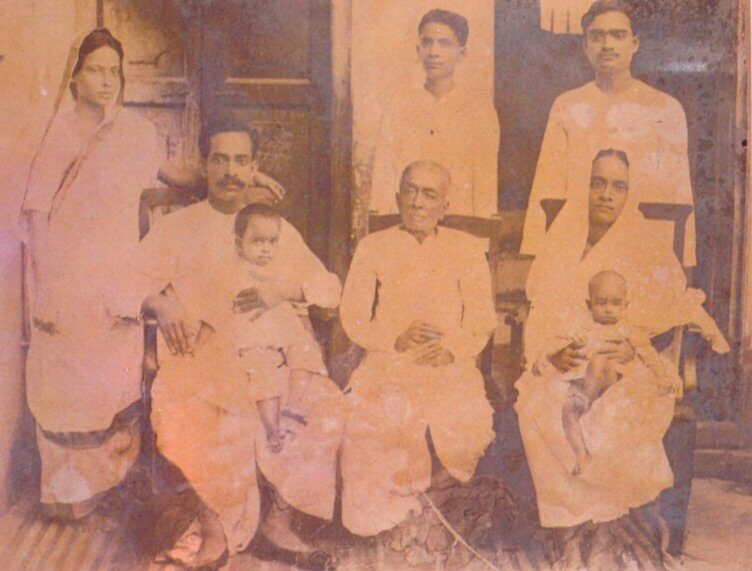
In 1918, while still a student, Abhay was married by his father's arrangement to Radharani Datta, also from an aristocratic Calcutta family. The marriage would later produce five children. It ran alongside a pharmaceutical career that took the family from Calcutta to Allahabad. In this way Abhay built an ordinary life of family and business. But all through it, he kept thinking privately about one meeting, which had already begun to change his sense of what mattered most.
| Detail | Description |
|---|---|
| Married | 1918, while a college student |
| Wife | Radharani Datta |
| Children | Five, born over the course of the marriage |
| First employer | Bose's Laboratory, Calcutta |
| Own business | Prayag Pharmacy, Allahabad, from 1923 |
An Arranged Marriage in 1918 #
In 1918, while still a student at Scottish Church College, Abhay was married to Radharani Datta in a match arranged entirely by his father. Gour Mohan spent a long time considering suitable families before he chose the Dattas. They were an aristocratic family connected to the Mulliks, the same merchant relatives who supported the neighborhood's Radha-Govinda temple. Radharani was eleven years old at the time of the marriage. This followed the custom of the time, which was to arrange a daughter's marriage well before puberty. The couple would not begin living together as husband and wife until several years later. Over the following years the marriage produced five children.
A Reluctant Bridegroom #
By his own later account, Abhay had not been keen on his father's choice. He had privately considered another match. He obeyed Gour Mohan out of duty to his father, not out of affection. For some time afterward he remained open with his father about his unhappiness. At one point he explored whether he might take a second wife, which society then allowed. Gour Mohan discouraged him directly. He told his son that it was Krishna's mercy that his wife did not entirely please him. Too much attachment to family life, he said, would only work against his future progress in spiritual life. Abhay accepted his father's advice, and the marriage continued on those terms. It was a working household partnership, not a romantic one. In time the household came to include his aging father, a widowed sister, and her son.
Bose's Laboratory and a Trusted Hand #
In 1920 Abhay had given up his college diploma as a gesture of support for Gandhi's non-cooperation movement. Now he needed a job, and it was Gour Mohan who found one for him. Dr. Kartick Chandra Bose was a family friend and a surgeon. He was one of the first Indians to manufacture medicines that, until then, only European firms had made. He took Abhay on as a department manager at his Calcutta firm, Bose's Laboratory. At first Abhay knew little about the business, and some longtime employees resented having a young manager placed above them. But Dr. Bose personally spoke up for him and trusted him with accounts worth tens of thousands of rupees. Abhay spent his early twenties here, handling account books and shipments, not scripture. In these same years, in 1922, he first met the man who would become his spiritual master. That meeting is described in Meeting His Spiritual Master.
Prayag Pharmacy in Allahabad #
In 1923 Dr. Bose proposed that Abhay become his sales agent for northern India. The two chose Allahabad as his base. It was a well-connected railway centre at the meeting place of the Ganges, Yamuna, and Sarasvati rivers. Abhay moved his young family there and opened a small medicine shop, Prayag Pharmacy. It sold medicines and tinctures made by Bose's Laboratory. He brought in a local doctor, who wrote prescriptions that Abhay then filled, and the two of them shared the income. Business was steady enough that Abhay bought a car. For several years he traveled constantly by train across northern India to find new customers, and he gave most of his energy to growing the pharmacy's business.
Customers Named Nehru #
Motilal Nehru and his son Jawaharlal were among the regular customers at Prayag Pharmacy. At that time they were rising figures in the Congress movement, and they lived in the wealthy part of Allahabad. Abhay noted that Jawaharlal always preferred Western-manufactured medicines to Indian ones. Once Jawaharlal asked him for a political donation, and Abhay gave it as a matter of ordinary courtesy. The detail is small, but it tells us something. For a decade, the future founder of a worldwide Vaishnava mission lived as an ordinary small-town pharmacist. He filled prescriptions for the family that would one day lead independent India. At that time there was no sign yet of what either man's life would become.
Business by Day, Krishna Consciousness Within #
Abhay kept strict Vaishnava eating rules throughout these years, even while traveling. When business required it, he dressed in an ordinary Western shirt and trousers. Still, at hotels he refused meat, onions, garlic, and mushrooms, though the hotels assumed a traveling salesman would not object. Colleagues who knew him at the time remembered a business-minded man who spoke often of family expenses and profit margins. Yet he also kept a small home temple. But Abhay had not forgotten the meeting on a Calcutta rooftop in 1922. He kept thinking back on it during his long train journeys between accounts. The pharmacy years did not really take him away from that meeting. Instead, the meeting slowly worked on him against the pull of his ordinary family and business life. In time this tension would be resolved in formal discipleship, as told in The Order to Preach in English.
Chapter 4
Meeting His Spiritual Master
A college friend dragged a skeptical Abhay to a Calcutta rooftop in 1922, and the encounter decided the rest of his life.
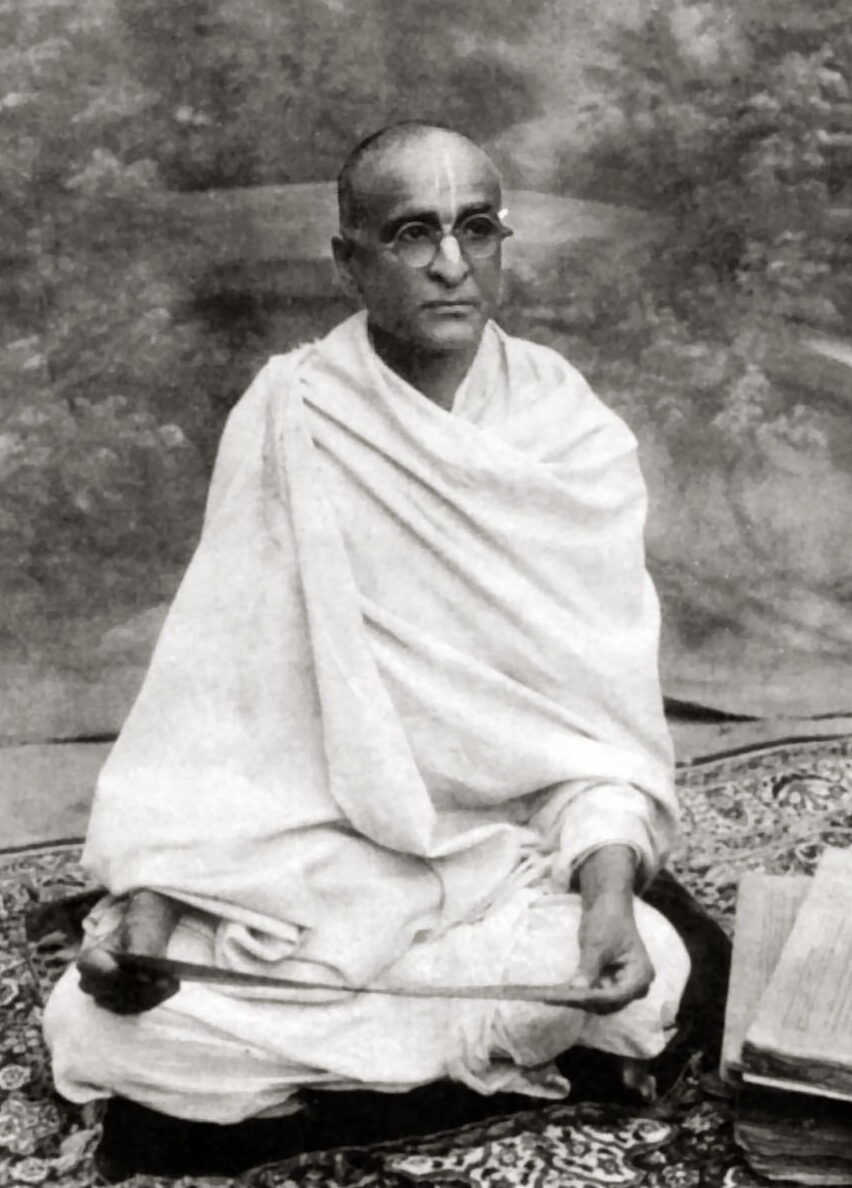
In 1922, a college friend kept urging Abhay until he agreed to go to a Calcutta rooftop to meet a sadhu. Abhay went reluctantly and full of doubt, with no intention of taking the sadhu seriously. Within minutes, without being asked, the sadhu had told him to spread Chaitanya Mahaprabhu's teaching in English. The sadhu was Srila Bhaktisiddhanta Sarasvati Thakura, founder of the Gaudiya Math. This was the beginning of their relationship. Abhay would later say that he accepted Bhaktisiddhanta as his spiritual master that same evening, though another eleven years would pass before any formal ceremony confirmed it.
| Detail | Description |
|---|---|
| Date | 1922 |
| Location | Bhaktivinod Asana, Ultadanga, Calcutta |
| Introduced by | Narendranath Mullik, college friend |
| Spiritual master met | Srila Bhaktisiddhanta Sarasvati Thakura (1874-1937) |
| Institution | Founder of the Gaudiya Math |
| Predecessor | Son of the Vaishnava reformer Bhaktivinoda Thakura |
A Reluctant Visit to Ultadanga #
In 1922, Abhay's college friend Narendranath Mullik kept pressing him to visit a sadhu who had settled at an ashram on Ultadanga Junction Road. Several of the Mulliks had already gone and come back impressed, and Naren wanted Abhay's opinion to confirm their own. Abhay resisted. He had grown up watching a steady stream of so-called holy men pass through his father's house. Some were sincere, many were not, and a few were openly of bad character. He told Naren plainly that he had no interest in paying respects to another one. Naren insisted the man was a serious scholar, and at last Abhay gave in. He walked with Naren to a building marked Bhaktivinod Asana, the Calcutta center of the Gaudiya Math.
Why Don't You Preach in English #
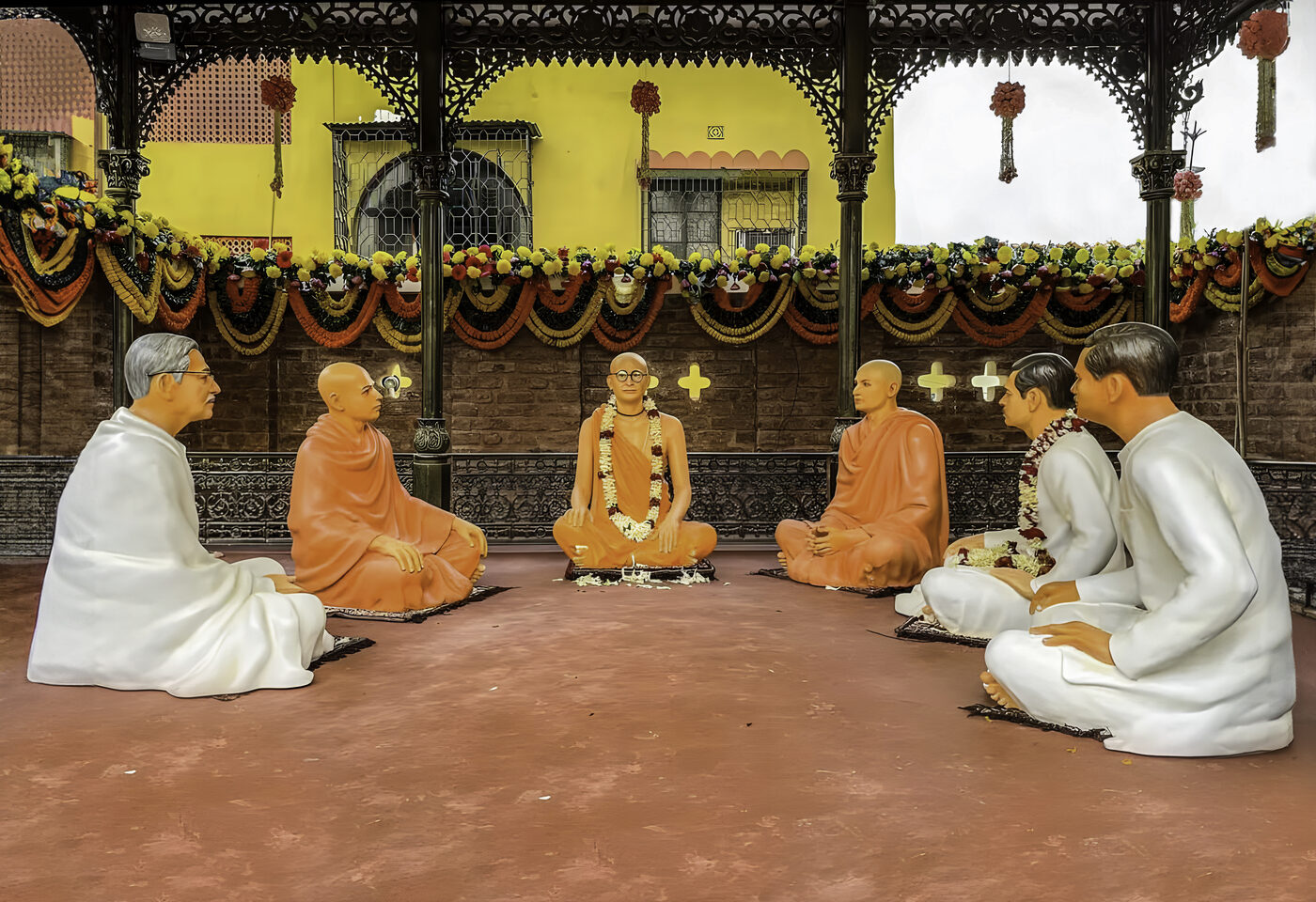
The sadhu was Srila Bhaktisiddhanta Sarasvati Thakura, founder of the Gaudiya Math and the son and successor of the Vaishnava reformer Bhaktivinoda Thakura. Abhay and Naren were shown up to a rooftop where Bhaktisiddhanta sat with a few disciples and guests. Before the two young men had even finished offering their obeisances or saying a word of greeting, Bhaktisiddhanta spoke first.
You are an educated young man. Why don't you take the message of Chaitanya Mahaprabhu and spread it in English?
It was really an instruction more than a question. Bhaktisiddhanta gave it to a stranger in the first seconds of a meeting that Abhay had come to only because his friend insisted. Abhay was dressed in the white khadi worn by those who supported Gandhi. He was startled, but at once he also felt drawn in.
Abhay's Objection: Independence First #
Abhay did not let the remark pass unchallenged. He gave Bhaktisiddhanta the same argument that nationalist-minded students all over Calcutta were making. They said that a colonized people was in no position to spread its culture to the world. "Who will hear your Chaitanya's message?" he asked. "We are a dependent country. First India must become independent. How can we spread Indian culture if we are under British rule?" It was a serious question, not an attempt to provoke. It reflected exactly the view Abhay had taken in from Subhas Chandra Bose and the independence talk of his college years, described in Education and Early Influences. In this view, spiritual culture was a luxury that nations could afford only after they had won political freedom.
Bhaktisiddhanta's Answer to the Challenge #
Bhaktisiddhanta's reply, as Vaishnava biographers record it, did not dispute the facts of British rule or its injustices. Instead, he set the question aside, because it started from a wrong idea. Krishna consciousness, he said, was not a project that depended on which government happened to hold power at a given time. It addressed the eternal position of the soul. That truth did not wait for the outcome of any nation's politics. He argued that to make one's own nation the highest object of devotion, instead of one's relationship with God, was itself a form of illusion. This was so however morally good the independence cause might be. Real benefit to humanity lay in restoring people's forgotten relationship with Krishna. Political self-rule, however just a cause, could not do that by itself. He spoke partly in English and partly in Bengali. He quoted the Bhagavad-gita's instruction to surrender to the Supreme Personality of Godhead above all other duties. He also quoted the Srimad-Bhagavatam's judgment that religious practice followed for any motive less than pure devotion falls short in the end.
Defeated, and Glad of It #
Abhay had been raised in a Vaishnava household. He knew these teachings well enough to see that Bhaktisiddhanta was not making up a clever point to win a debate. Bhaktisiddhanta was restating, with unusual force and clarity, the firm conclusions of scripture and of the disciplic line he represented. He later described the effect plainly:
I was so much struck with wonder. I could understand: here is the proper person who can give a real religious idea.
He and Naren stayed talking with Bhaktisiddhanta for more than two hours before finally taking their leave. Walking back onto the dark Calcutta street afterward, Naren asked what he thought. "He's wonderful," Abhay replied. "The message of Lord Chaitanya is in the hands of a very expert person."
A Guru Accepted in the Heart #
Abhay did not take formal initiation that evening, or for more than a decade afterward. Marriage and business kept him from the kind of full commitment that the Gaudiya Math's renounced preachers had made. He recognized this inner conflict even as he walked away from that first meeting. But something had already been settled. Recalling the encounter many years later, he put it this way:
I immediately accepted him as spiritual master. Not formally, but in my heart.
This difference was important. Formal initiation, the ceremony in which Abhay would eventually receive the name Abhay Charanaravinda, was still eleven years away. That episode is covered in The Order to Preach in English. But according to the account he gave later in life, the real relationship began on the Ultadanga rooftop in 1922. There he recognized his guru in his heart, more than a decade before any outward ceremony confirmed it.
Who Was Bhaktisiddhanta Sarasvati #
Bhaktisiddhanta Sarasvati Thakura (1874-1937) was the most important Gaudiya Vaishnava reformer of his generation. He continued and extended the work of his father, Bhaktivinoda Thakura. Bhaktivinoda had spent decades winning back respect, among thinkers and in society, for a tradition that in many places had drifted into practices that gave it a bad name. Bhaktisiddhanta founded the Gaudiya Math as a network of preaching centers across India. He trained a generation of scholar-preachers regardless of their caste of birth. He held that Chaitanya Mahaprabhu's teaching was meant not for one nation or sect but for the entire world. This last conviction, more than any particular argument about politics, was what he urged on a doubtful young stranger the moment Abhay came before him. The full lineage that this meeting brought Abhay into is described on the Gaudiya Vaishnava sampradaya page.
Scriptural evidence for this chapter (2)
सर्वधर्मान्परित्यज्य मामेकं शरणं व्रज ।
अहं त्वां सर्वपापेभ्यो मोक्षयिष्यामि मा शुच: ॥ ६६ ॥
sarva-dharmān parityajya
mām ekaṁ śaraṇaṁ vraja
ahaṁ tvāṁ sarva-pāpebhyo
mokṣayiṣyāmi mā śucaḥ
Word for word
sarva-dharmān: all varieties of religion; parityajya: abandoning; mām: unto Me; ekam: only; śaraṇam: for surrender; vraja: go; aham: I; tvām: you; sarva: all; pāpebhyaḥ: from sinful reactions; mokṣayiṣyāmi: will deliver; mā: do not; śucaḥ: worry.
Abandon all varieties of religion and just surrender unto Me. I shall deliver you from all sinful reactions. Do not fear.
The verse on surrendering to the Supreme Personality of Godhead that Bhaktisiddhanta cited in answering Abhay's independence objection.
धर्म: प्रोज्झितकैतवोऽत्र परमो निर्मत्सराणां सतां
वेद्यं वास्तवमत्र वस्तु शिवदं तापत्रयोन्मूलनम् ।
श्रीमद्भागवते महामुनिकृते किं वा परैरीश्वर:
सद्यो हृद्यवरुध्यतेऽत्र कृतिभि: शुश्रूषुभिस्तत्क्षणात् ॥ २ ॥
dharmaḥ projjhita-kaitavo ’tra paramo nirmatsarāṇāṁ satāṁ
vedyaṁ vāstavam atra vastu śivadaṁ tāpa-trayonmūlanam
śrīmad-bhāgavate mahā-muni-kṛte kiṁ vā parair īśvaraḥ
sadyo hṛdy avarudhyate ’tra kṛtibhiḥ śuśrūṣubhis tat-kṣaṇāt
Word for word
dharmaḥ: religiosity; projjhita: completely rejected; kaitavaḥ: covered by fruitive intention; atra: herein; paramaḥ: the highest; nirmatsarāṇām: of the one-hundred-percent pure in heart; satām: devotees; vedyam: understandable; vāstavam: factual; atra: herein; vastu: substance; śivadam: well-being; tāpa-traya: threefold miseries; unmūlanam: causing uprooting of; śrīmat: beautiful; bhāgavate: the Bhāgavata Purāṇa; mahā-muni: the great sage (Vyāsadeva); kṛte: having compiled; kim: what is; vā: the need; paraiḥ: others; īśvaraḥ: the Supreme Lord; sadyaḥ: at once; hṛdi: within the heart; avarudhyate: becomes compact; atra: herein; kṛtibhiḥ: by the pious men; śuśrūṣubhiḥ: by culture; tat-kṣaṇāt: without delay.
Completely rejecting all religious activities which are materially motivated, this Bhāgavata Purāṇa propounds the highest truth, which is understandable by those devotees who are fully pure in heart. The highest truth is reality distinguished from illusion for the welfare of all. Such truth uproots the threefold miseries. This beautiful Bhāgavatam, compiled by the great sage Vyāsadeva [in his maturity], is sufficient in itself for God realization. What is the need of any other scripture? As soon as one attentively and submissively hears the message of Bhāgavatam, by this culture of knowledge the Supreme Lord is established within his heart.
The verse defining religion without ulterior motive (dharmah projjhita-kaitavah) that Bhaktisiddhanta invoked in the same conversation.
Chapter 5
The Order to Preach in English
From an occasional visitor to a garlanded initiate to the sole editor of a homemade wartime English magazine.
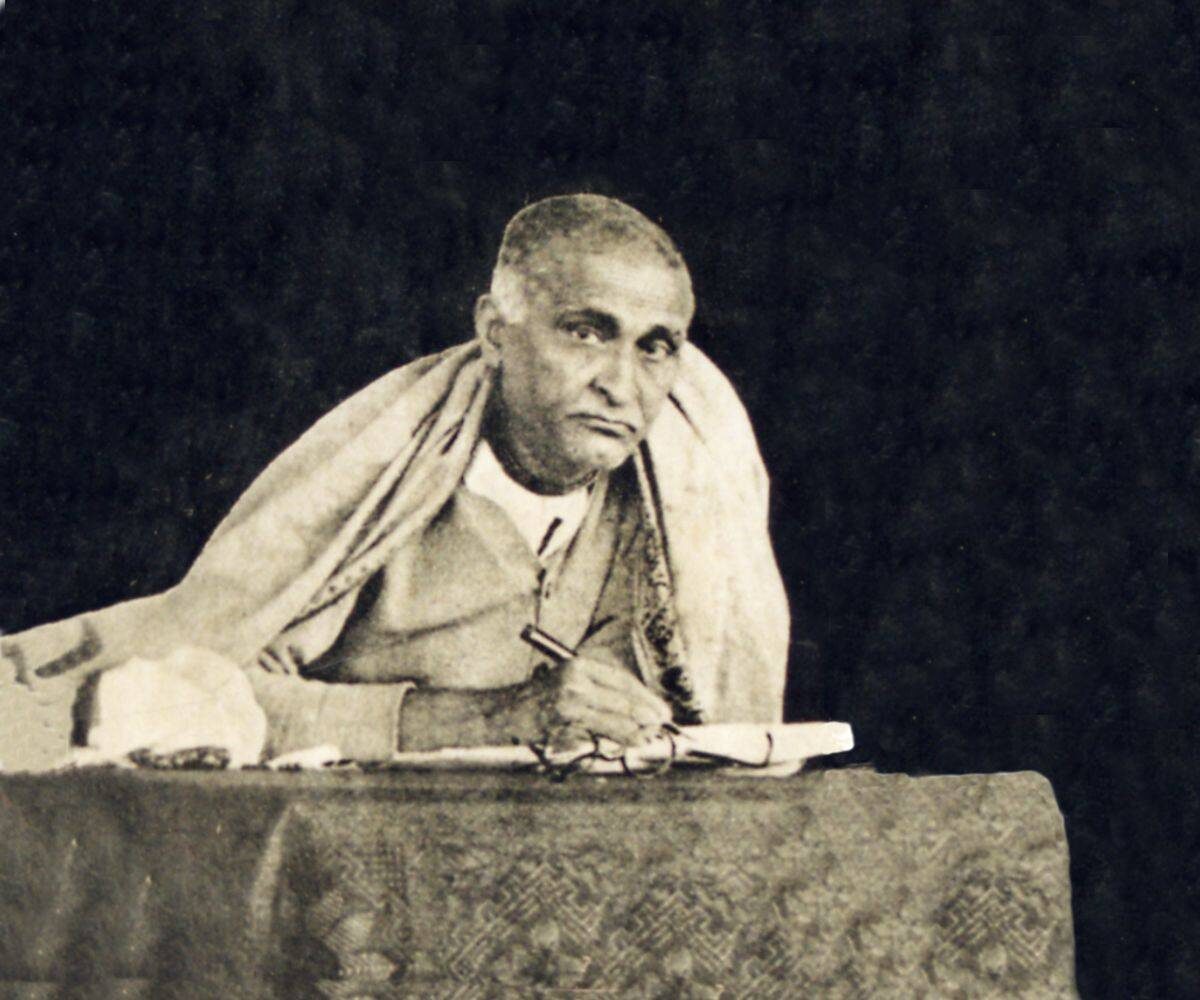
After the 1922 meeting described in Meeting His Spiritual Master, years passed with almost no further contact between Abhay and the Gaudiya Math. Several things slowly turned his inner conviction into formal discipleship, and then turned formal discipleship into a printed English magazine. There was a series of visits, an initiation, and an instruction to print books given near the end of his guru's life. Finally there was a letter that arrived two weeks before his guru's death.
| Detail | Description |
|---|---|
| 1928 | Gaudiya Math opens a center in Allahabad |
| 1932 | Visits Bhaktisiddhanta during his Vrindavan parikrama |
| 1933 | Formal initiation at Allahabad; receives the name Abhay Charanaravinda |
| Late 1936 | Told in Vrindavan, "If you ever get money, print books" |
| 1 January 1937 | Bhaktisiddhanta Sarasvati Thakura passes away |
| 1944 | A.C. Bhaktivedanta launches Back to Godhead magazine |
A Kumbha-Mela Visitor at Prayag Pharmacy #
For several years after the 1922 meeting, Abhay had almost no further contact with the Gaudiya Math. He was busy building his pharmaceutical business in Allahabad, and Bhaktisiddhanta Sarasvati was busy spreading his own mission across India. Contact began again in January 1928, during the Kumbha-mela. A sannyasi disciple of Bhaktisiddhanta walked unannounced into Prayag Pharmacy with a few companions. He was looking for support to establish a Gaudiya Math center in Allahabad. Abhay recognized him at once from the Gaudiya Math circles he had come into contact with years earlier in Calcutta, and he offered his help.
A Regular at the Allahabad Gaudiya Math #
Once the Allahabad center opened, Abhay became one of its most reliable local supporters. He contributed money regularly, attended lectures, sometimes led kirtan himself, and used his position as a local businessman to bring prominent Allahabad residents to hear the Math's traveling preachers. His wife did not object to his involvement with the Math, but she chose not to take any initiation herself. She was content with the simple home worship the family already practiced. This difference between them is described further in Marriage and Household Life.
To Vrindavan and Back in 1932 #
In October 1932, Bhaktisiddhanta led several hundred disciples and pilgrims on a month-long parikrama of Vrindavan. They walked around the sites associated with Krishna's pastimes there. Abhay could not join the full pilgrimage because of his business commitments. But on its twentieth day he traveled from Allahabad to meet the party. For years he had been connected with his future guru only indirectly, through the Math's local preachers. Now he could spend time in Bhaktisiddhanta's company again.
Initiation at the Cornerstone Ceremony #
The following year, the Allahabad Gaudiya Math obtained land and funds for a permanent temple building. It arranged for Bhaktisiddhanta to preside over the cornerstone-laying ceremony in November 1933, with the governor of the United Provinces as guest of honor. When Abhay learned that Bhaktisiddhanta would also be conducting an initiation ceremony that day, he asked to be included. He received the initiation into chanting. Unusually, on the same occasion he also received the sacred thread marking second initiation. This was a sign of trust that Bhaktisiddhanta did not show to every new disciple. He was given the name Abhay Charanaravinda, "Abhay whose shelter is the lotus feet of Krishna," and from this point Vaishnava and scholarly sources generally refer to him as A.C. Bhaktivedanta. Bhaktivedanta was a further title. His godbrothers would give it to him within a few years, in recognition of his writing and scholarship.
If You Ever Get Money Print Books #
At the end of 1936, A.C. Bhaktivedanta again visited Bhaktisiddhanta in Vrindavan. As they walked together at Radha-kunda, Bhaktisiddhanta told him how troubled he was by the quarrels among his senior disciples in Calcutta. They were fighting over control of the Math's newly built marble temple building, and he feared the dispute would only get worse after his own death. "It would be better," he said, "to take the marble from the walls and secure money. If I could do this and print books, that would be better." Then, turning directly to his disciple, he gave an instruction that would outlast every dispute over property:
If you ever get money, print books.
A.C. Bhaktivedanta later said the words entered his life permanently at that moment, though it would be more than two decades before he had the means to act on them at any real scale.
A Letter Two Weeks Before the End #
By December 1936, Bhaktisiddhanta's health had seriously declined, and he was staying at Jagannatha Puri. A.C. Bhaktivedanta was still busy with business in Bombay. Most of his godbrothers were serving their guru directly as brahmacharis or sannyasis, but he himself remained a householder tied to a business. Knowing this, A.C. Bhaktivedanta wrote to ask whether there was any particular service he could offer. Two weeks later a reply arrived:
I am fully confident that you can explain in English our thoughts and arguments to the people who are not conversant with the languages of the other members. This will do much good to yourself as well as your audience. I have every hope that you can turn yourself into a very good English preacher if you serve the mission to inculcate the novel impression of Lord Chaitanya's teachings in the people in general as well as philosophers and religionists.
In this letter A.C. Bhaktivedanta recognized the same instruction he had first heard on the Ultadanga rooftop fourteen years earlier, when Bhaktisiddhanta gave it without being asked. His task was to carry Chaitanya Mahaprabhu's teaching into English. That first meeting is described in Meeting His Spiritual Master. This time the instruction came in his own guru's handwriting, addressed to him personally. It left no room for the objection he had once raised about India's political situation.
Bhaktisiddhanta's Death and a Fractured Mission #
Srila Bhaktisiddhanta Sarasvati Thakura passed away at 5:30 in the morning on 1 January 1937. He had spent his final days reading Chaitanya-charitamrita and chanting on his beads. He had instructed that a twelve-member governing body should manage the Gaudiya Math's affairs after his departure. But this instruction was largely ignored. Almost at once a struggle for personal control of the Math's properties broke out among his senior disciples, and it broke apart the mission he had built. A.C. Bhaktivedanta had already lost his father, and now he grieved the loss of his guru as well. He kept largely clear of the fighting between the groups. He continued to write occasional articles for Gaudiya Math publications while the institution around him came apart.
Launching Back to Godhead in 1944 #
The instruction to preach in English did not produce a magazine immediately. A.C. Bhaktivedanta acted on it fully only in 1944, when Calcutta was enduring Japanese air raids and the hardships of the Second World War. Working alone from his front room, he planned, wrote, edited, and laid out the first issue of an English fortnightly. He called it Back to Godhead. The title was explained by the motto at the top of the front page, "Godhead is Light, Nescience is darkness," which was printed beneath a logo. The logo showed Lord Chaitanya's shining light reaching toward a crowd still feeling its way in the dark. The first issue opened with quotations from wartime statesmen and religious leaders: Churchill, Roosevelt, the Archbishop of Canterbury, and Sarvepalli Radhakrishnan. They spoke about how morally worn out the world at war had become. The issue argued that no political settlement could succeed without a return to basic spiritual principles. Its content and stated purpose came from a single source, which was printed on the cover of every issue: "Edited & Founded... Under the direct order of His Divine Grace Sri Srimad Bhakti Siddhanta Saraswati Goswami Prabhupada."
Fighting the War for Newsprint #
Publishing while paper was rationed during the war was a struggle of its own. Government officials twice refused his requests to buy newsprint for a second issue. They said that an ordinary citizen's religious magazine did not deserve scarce paper. A.C. Bhaktivedanta wrote to the paper-control authorities a third time. He argued at length that a magazine devoted to spiritual and moral renewal was more urgent, not less, during a war than in peacetime. He asked to be allowed even a single page a month, instead of being shut down completely. The appeal succeeded. But after only a couple of issues the venture could not pay for itself, so he went back to writing for it privately instead of printing it regularly. Still, the magazine he founded in that Calcutta front room in 1944 survives today and is still published under the same title. This is described further on his published works page. For the fuller sequence of dates from birth to disappearance, see the Srila Prabhupada milestones timeline.
Chapter 6
Launching Back to Godhead
Alone and unfunded in wartime Calcutta, the newly honored 'Bhaktivedanta' launched a magazine still printed today.
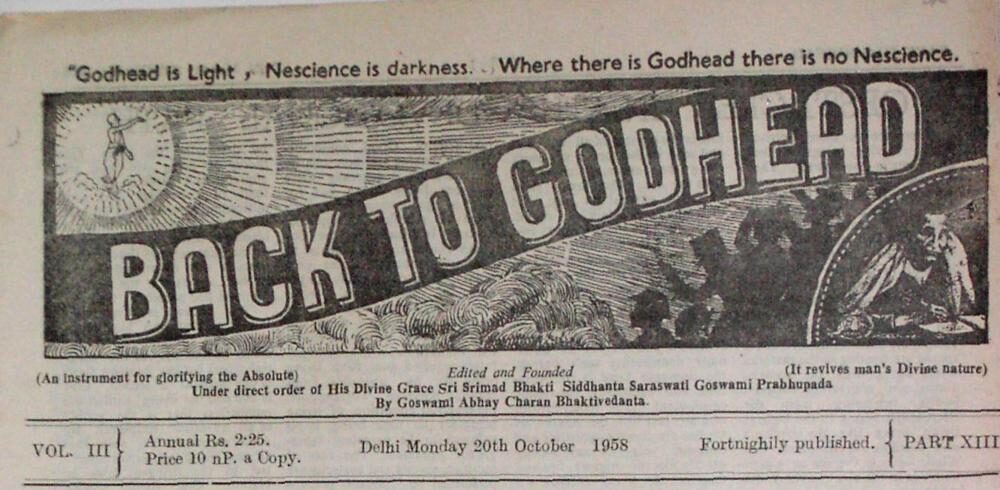
By the end of the 1930s, the Gaudiya Vaishnava community had shaped A.C. Bhaktivedanta's spiritual life for well over a decade. Its members saw that he was more than an ordinary disciple. In 1939 a group of elders and scholars honored him with a formal title. Five years later, working entirely alone and in the middle of a world war, he took up the responsibility that this title carried. He launched a magazine. It has been printed ever since, on and off at first and later continuously.
| Detail | Description |
|---|---|
| Title conferred | 1939, by elders of the Gaudiya Vaishnava community |
| Meaning | Bhakti ("devotion") plus vedanta ("the culmination of Vedic knowledge") |
| Magazine founded | 14 February 1944, Calcutta |
| First issue | 44 pages, printed despite a wartime paper shortage |
| His role | Sole writer, editor, financier, printer-contact, and distributor |
| Status today | Still published by his followers, in a range of languages |
The Title Bhaktivedanta #
In 1939, A.C. Bhaktivedanta was still a working pharmaceutical businessman in Calcutta. He supported a family and gave his free hours to writing, lecturing, and helping the Gaudiya Math press. That year, elders within the Gaudiya Vaishnava community honored him with the title "Bhaktivedanta." The word joins bhakti, meaning devotion, with vedanta, meaning the culmination, or highest point, of Vedic knowledge. The title recognized two things those elders had already seen in him. He had a scholar's grasp of Sanskrit philosophy, and with it the discipline of a practicing devotee. He kept the title for the rest of his life, and he eventually placed it before the sannyasa name he received two decades later.

Answering a Standing Order #
Along with the title, he still had an older duty that was not yet fulfilled. For years Bhaktisiddhanta Sarasvati had urged him to carry Chaitanya Mahaprabhu's teachings to the English-speaking world. Shortly before his own passing in 1937, Bhaktisiddhanta had told him directly, "You try to preach whatever you have learned from me in English, and that will do good to you and the people who will hear you." By the early 1940s his guru was gone, and after his guru's death the Gaudiya Math itself was splitting into rival groups. So A.C. Bhaktivedanta had no organized press behind him. He had to decide on his own how to carry out that instruction. His answer was to start a magazine from nothing, in his own front room.
A Magazine Born in Wartime Calcutta #
On 14 February 1944, the anniversary of Bhaktisiddhanta Sarasvati's appearance day, A.C. Bhaktivedanta launched the first issue of Back to Godhead. It was an English-language fortnightly presenting the teachings of Chaitanya Mahaprabhu. He had planned, written, and typed the manuscript himself on a manual typewriter. Then he ran into a wartime paper shortage. It was so severe that at first his chosen printer could not supply him at all. In the end he got permission to print a first issue of forty-four pages. The title stated its argument plainly. The purpose of human life is to turn the mind back toward Krishna, back toward Godhead. The first issue took on subjects as large as the causes of war and why material happiness is an illusion. He wrote it while Calcutta itself was under wartime blackout and, at times, air raids.
Stopped, Then Revived #
The magazine's money ran out almost at once. After only two issues, A.C. Bhaktivedanta had to stop printing for lack of money. He did not restart it for eight years. In February 1952, after moving his family to Allahabad, he began it again, but it soon stopped once more. At Jhansi, he tried to establish the League of Devotees with his first disciple, Acharya Prabhakar. But there he had no money to print it. He revived it only in 1956, in Delhi. Looking back on those years, he later wrote plainly to a disciple, "I was printing this paper and almost distributing free, and some of them were paying me subscription and some of them not. But I was trying my best at my cost" (letter to Rayarama, 12 June 1968).
No Staff, No Funding, No Shortcuts #
Whichever city he was working from, the work was always the same. He wrote nearly every article, edited the copy, dealt with printers, and then distributed the finished issues himself. There was no sales force. When he later printed and sold the magazine in Delhi, he would go from tea stall to tea stall, sometimes spending an hour or more just to sell a single copy. Whenever sales did not cover the costs, he bore the loss himself. He did this for most of two decades before he ever set foot in America. There, too, he would have to build a movement from nothing.
A Fortnightly That Became a Worldwide Institution #
Back to Godhead survived every one of these interruptions. His followers started it once more in October 1966, soon after he founded his mission in New York. They printed the early American issues on a second-hand mimeograph machine, a simple kind of copier. Since then they have kept it in continuous print, and it is now issued in a range of languages. He never lost sight of what he wanted it to become. "I am awaiting for the day when this paper will take the shape of Life Magazine or similar other magazines, in the matter of its popularity," he wrote in 1968. Two years later he stated the goal even more strongly, saying that it "should be published not in hundreds and thousands, but in millions." The magazine is still one of the better-known parts of the large body of literature he built over his lifetime. These works are listed today on the Prabhupada books page. It began as one man's fortnightly. Again and again it stopped for lack of funds, and each time the same man's persistence started it again. In the end it outlasted every difficulty that threatened to end it.
Chapter 7
Vanaprastha and Writing Srimad-Bhagavatam
Fifteen years of retirement, a collapsed venture in Jhansi, and the labor of translating Gaudiya Vaishnavism's scripture.
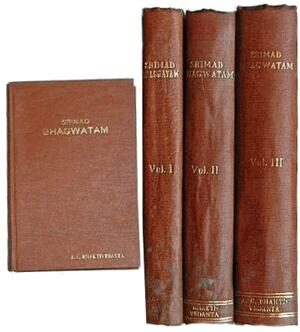
In 1950, A.C. Bhaktivedanta stepped back from the responsibilities of household and business life and accepted vanaprastha. In Vedic society, this is the traditional retired order that comes between the life of a householder and full renunciation. But what followed was not a quiet retirement. The next fifteen years brought setbacks, one venture that collapsed, and finally the enormous task, done mostly alone, of translating the main scripture of Gaudiya Vaishnavism into English.
| Detail | Description |
|---|---|
| Order accepted | Vanaprastha, 1950 |
| Residence | Vrindavan, with occasional trips to Delhi |
| Editorial work | Gaudiya Patrika magazine, for godbrother Bhakti Prajnan Keshava |
| Failed venture | The League of Devotees, Jhansi, 1952 |
| Residence, 1962-1965 | Radha-Damodar temple, Vrindavan |
| Work undertaken | English translation and commentary on the 18,000-verse Srimad-Bhagavatam |
| First Canto published | Three volumes, in 1962, 1964, and 1965 |
Entering Vanaprastha (1950) #
Vanaprastha releases a person from the daily duties of maintaining a household so that the final years of life can be turned toward spiritual practice and preparation. A.C. Bhaktivedanta took up this order in 1950 and moved to Vrindavan, the town devotees regard as the site of Krishna's earthly pastimes, living simply and without the business affairs that had occupied him for decades. He continued to commute occasionally to Delhi, but Vrindavan, not Calcutta, was now his base.
Editing the Gaudiya Patrika #
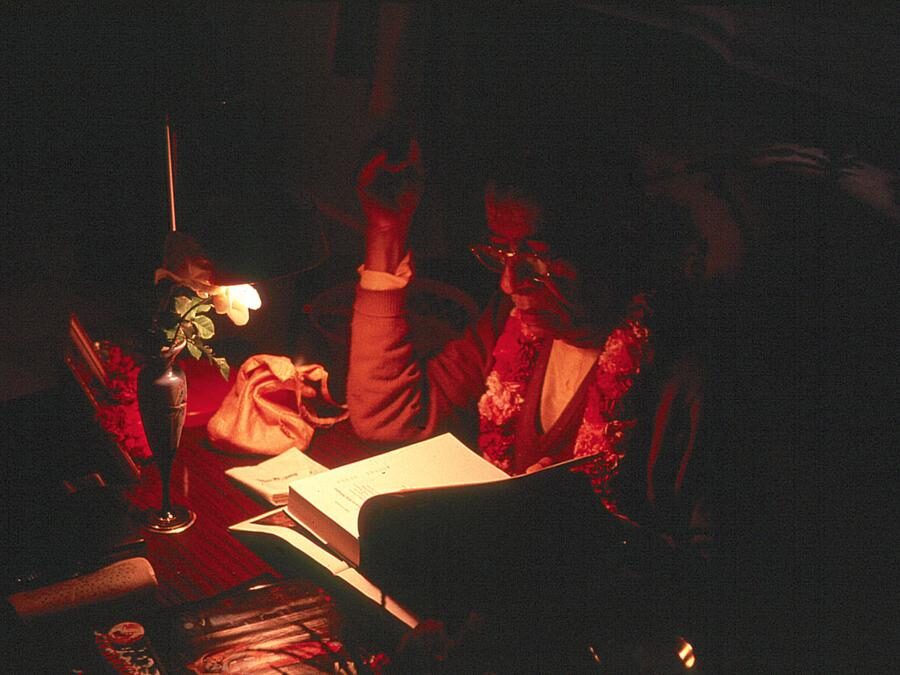
In nearby Mathura, he wrote for and edited the Gaudiya Patrika, a magazine published by his godbrother Bhakti Prajnan Keshava. He used the same natural gift for editing that he had already shown with Back to Godhead a few years earlier. But now he used it for a godbrother's magazine instead of his own. This work kept him connected to the wider community of Bhaktisiddhanta Sarasvati's disciples, which had broken into groups. He stayed connected in this way even though he lived outside all of their institutions.
The League of Devotees in Jhansi (1952) #
In 1952, A.C. Bhaktivedanta attempted something more ambitious. He wanted to build an organized society of devotees in Jhansi, a city in central India. It was meant to carry Chaitanya Mahaprabhu's teachings on a larger and more organized scale. He found real interest among a handful of young Ayurvedic students and physicians. One of them, Prabhakar Misra, became his first initiated disciple under the name Acharya Prabhakar. He picked out a building, the Bharati Bhavan complex, that could serve as the society's home. But he could never raise the funds to secure it. The small circle of well-wishers around him had neither the money nor the time to keep the project going. He later summarized the effort himself:
That League of Devotees – I was alone. There were some students, but they were not so active. I was doing everything.
From there the venture fell apart. The provincial governor's wife ran a women's welfare society in Jhansi. She pushed to have the Bharati Bhavan building given to her own organization instead. A.C. Bhaktivedanta had no funds and no legal right to oppose this, so he had to leave. The League of Devotees collapsed within about two years of its founding. He moved on with no fixed institution, no income, and, for a time, no settled place to live.
A Quiet Room at Radha-Damodar (1962) #
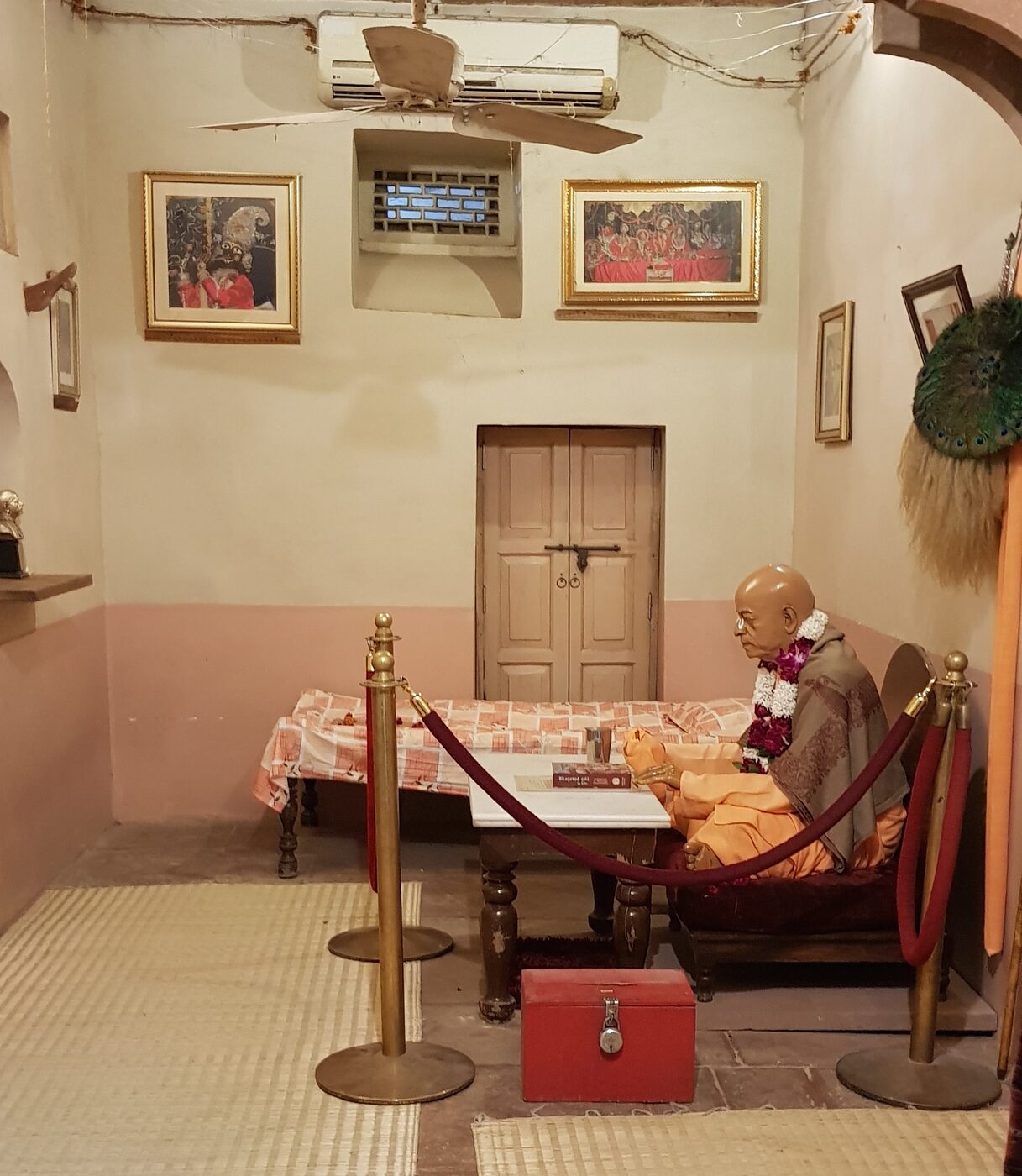
After Jhansi, A.C. Bhaktivedanta returned to Vrindavan for good. From 1962 he lived at the Radha-Damodar temple, where he took a small room. There, largely alone, he began the task that would fill the rest of the decade. He began translating the central scripture of Gaudiya Vaishnavism into English, a language in which almost none of his godbrothers had written.
Translating an 18,000-Verse Scripture #
The Srimad-Bhagavatam, also called the Bhagavata Purana, is the foundational text of Gaudiya Vaishnavism. It has some 18,000 verses of Sanskrit narrative and philosophy, in twelve cantos. Translating it into English verse by verse, with a full explanatory commentary, was already a very difficult task for a scholar. He was doing it with no organization supporting him, no paid assistants, and no promise of readers. This made it more like an act of faith. He worked through the text carefully, step by step, from his room at Radha-Damodar. He produced not just a translation but also purports. Later these purports would make his editions of Vaishnava scripture understandable to readers who had no background in Sanskrit or Indian philosophy. The same body of work is now gathered on the Prabhupada books page.
Printing the First Canto Against the Odds #
Translating the text was only half the struggle. Printing it was the other half. He had shown self-reliance in paying for Back to Godhead two decades earlier, and he showed the same self-reliance now. He traveled in search of donors. He gathered statements of approval from figures such as the publisher Hanuman Prasad Poddar and the philosopher-statesman Sarvepalli Radhakrishnan. When he approached possible supporters, he used these statements as proof of the work's value. Volume One of the First Canto appeared in 1962. It took a little over two years in total to complete the canto's other two volumes, which were published in 1964 and 1965 as funds allowed. One of those who helped along the way was Sumati Morarjee, the head of a shipping line. At one point she gave him a contribution toward his printing costs in exchange for a copy of the finished work. Her name would matter again within a few years, in a very different setting.
These three volumes were more than a scholarly achievement. Soon after the third volume appeared, two hundred sets of them would travel with him to America on a cargo ship, packed into a steel trunk. By weight, they were the largest single possession that he carried across the ocean.
Chapter 8
Accepting Sannyasa
A dream of his departed guru led him to take the vow of renunciation, and the way he kept his own name showed a quiet humility.
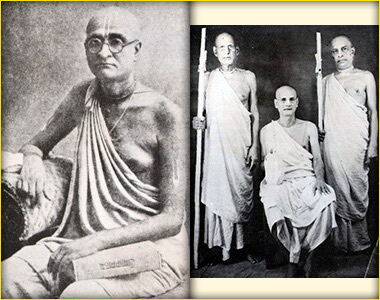
On 17 September 1959, A.C. Bhaktivedanta formally entered the renounced order of life, sannyasa. He took vows that would mark him for the rest of his days as a swami, not a householder. By then he was sixty-three. He had been in vanaprastha for nearly a decade, and for years he had been translating the Srimad-Bhagavatam, mostly alone. So this step was not really a sudden turn. His life was already stripped down to the essentials, and sannyasa made it stricter still. Vaishnava biographers trace the immediate decision to a dream. But the ceremony itself tells just as much about the man taking the vows, and so does a small, deliberate choice he made about his own name that day.
| Detail | Description |
|---|---|
| Date | 17 September 1959 |
| Location | Keshavaji Gaudiya Math, Mathura |
| Officiating godbrother | Bhakti Prajnan Keshava |
| Sannyasa name received | Bhaktivedanta Swami |
| Name he actually adopted | A.C. Bhaktivedanta Swami |
What Sannyasa Means in This Tradition #
Vedic society traditionally recognizes four ashramas, or stages of life: brahmacharya, the celibate student years; grihastha, married household life; vanaprastha, retirement from household duties; and sannyasa, complete renunciation. Sannyasa is the final and most demanding of these stages. It is a formal, public vow to give up home, family ties, and material possessions entirely. The sannyasi takes on the saffron cloth and a new name, which marks the break with the life that came before. In the Gaudiya Vaishnava tradition specifically, sannyasa is not mainly about going away to live alone. It carries a duty to preach. A sannyasi is expected to spend whatever years remain to him spreading Krishna consciousness as widely as his strength allows. He does not withdraw from the world. He goes out into it with nothing left to protect.
A Dream of Bhaktisiddhanta Sarasvati #
By 1959, Bhaktisiddhanta Sarasvati had been gone for more than two decades. Vaishnava biographers record that A.C. Bhaktivedanta, then in his early sixties, had a recurring dream. In it his departed spiritual master appeared to him as A.C. Bhaktivedanta had known him in life, a tall and scholarly sannyasi. Again and again Bhaktisiddhanta Sarasvati motioned toward the saffron cloth of the renounced order, showing that the time had come. On waking, A.C. Bhaktivedanta thought carefully about what the dream meant. He understood that he would be able to accomplish his spiritual master's mission only once he had taken sannyasa himself. He also understood that his earlier attempts, including the failed League of Devotees in Jhansi, had come before the time was right. Whatever one may think about dreams, this one had an immediate and practical effect on him. He moved to act on it without spending a long time deciding. Most disciples of his generation approached this step only after years of preparation, or at a much younger age.
The Ceremony at Keshavaji Gaudiya Math #
A.C. Bhaktivedanta turned to his godbrother Bhakti Prajnan Keshava. By then Keshava headed his own branch of the divided Gaudiya Math, the Keshavaji Gaudiya Math in Mathura. Keshava accepted the request without hesitation. On 17 September 1959, at that math, Keshava performed the sannyasa ceremony for A.C. Bhaktivedanta. He formally admitted him into the renounced order and gave him the name Bhaktivedanta Swami. The two men had studied under the same guru. Now one of them was sending the other into the last and most demanding stage of that guru's path. Vaishnava biographers also record a smaller, stranger detail from that same day. After the ceremony, A.C. Bhaktivedanta was gored by a bull in the marketplace. He chose to see the injury not as misfortune but as a kind of purification, marking his entry into the renounced order.
Why He Kept the Initials A.C. #
By custom, a new sannyasi sets aside his earlier name and takes the one given at the ceremony. A.C. Bhaktivedanta did not fully do this. His initials, A.C., stood for Abhay Charanaravinda. Bhaktisiddhanta Sarasvati had given him this name at his own initiation decades before. The name marked the beginning of his personal relationship with his guru. He did not let that name disappear into a new title. Instead, he placed the initials in front of his sannyasa name, becoming A.C. Bhaktivedanta Swami. He explained the choice as a matter of humility, and biographers have recorded his explanation. Even at this highest step of renunciation, he did not want the new title to look as though it stood on its own, cut off from the guru who had first named him. Keeping "A.C." kept that connection clearly visible in his own signature for the rest of his life. It was a small act. In effect, it said that whatever he had become still came from what his spiritual master had first made of him.
Bhaktivedanta Swami, Not Yet Prabhupada #
From 1959 onward, he was properly addressed as Bhaktivedanta Swami. He would carry this name through the remaining years in India and the first years of his mission in the West. "Prabhupada," the title of respect by which his followers know him today, would not come into common use among his disciples until 1968. Sannyasa cleared the way for what came next, in practical ways as much as spiritual ones. Three years later he would take up residence at the Radha-Damodar temple in Vrindavan to complete his translation of the Srimad-Bhagavatam. Within six years of taking these vows, he would be standing on the deck of a cargo ship bound for America. He was going to fulfil the order that had first come from Bhaktisiddhanta Sarasvati. Even in his own signature, he still refused to leave his guru behind. His full guru lineage and the wider Gaudiya sampradaya into which he was accepted are traced on the Prabhupada sampradaya page.
Chapter 9
The Voyage to America
At sixty-nine, with forty rupees and two heart attacks at sea, he crossed the Atlantic alone to keep his guru's order.
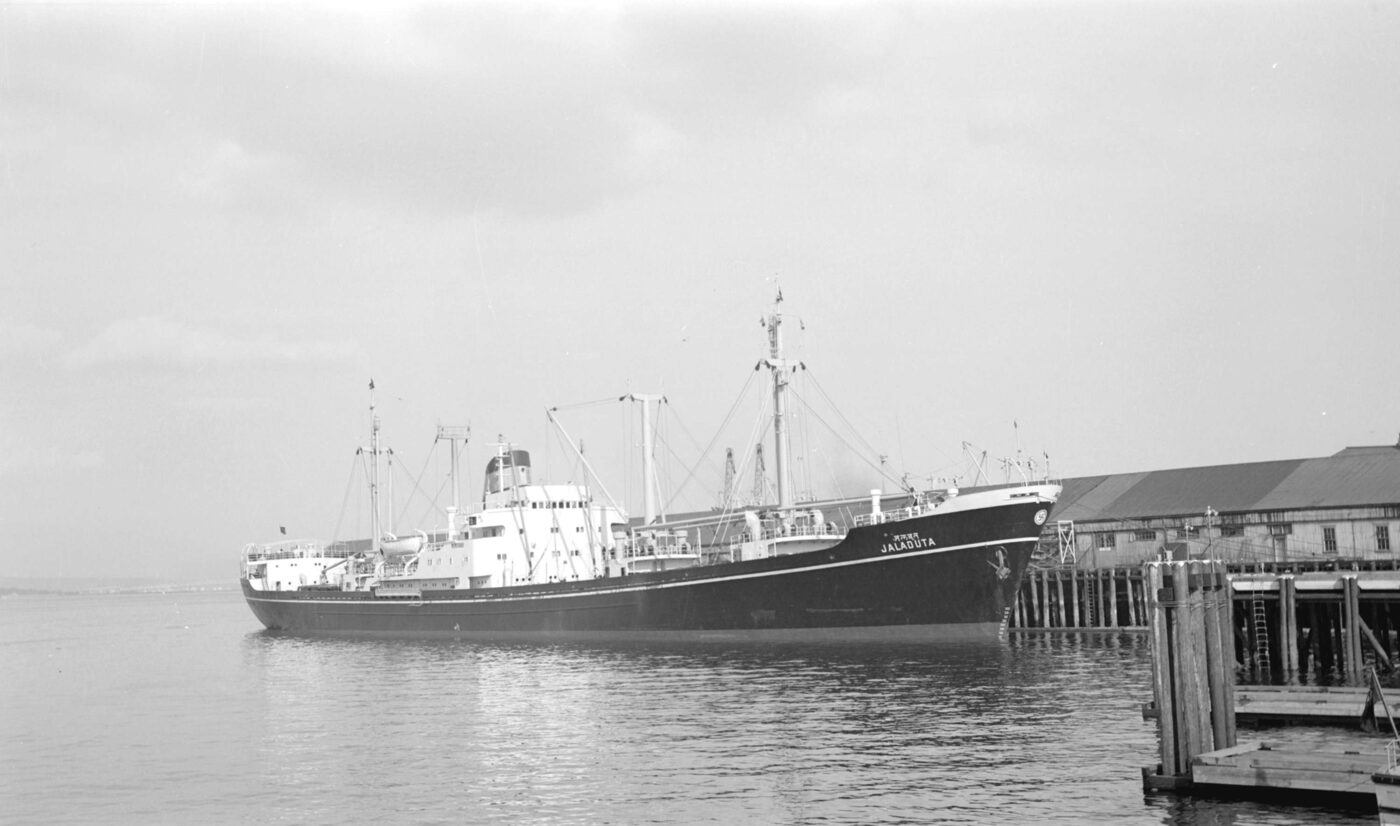
By 1965, Bhaktivedanta Swami had spent nearly three decades preparing, in one way or another, to carry out a single instruction from his spiritual master: preach the teachings of Chaitanya Mahaprabhu in the English-speaking West. He had the sannyasa vows, the completed First Canto of his Srimad-Bhagavatam translation, and almost nothing else. At sixty-nine, with no independent income, no institutional backing, and no contacts in America beyond a family of strangers who had agreed to sponsor his visa, he set out anyway.
| Detail | Description |
|---|---|
| Departure | 13 August 1965, Calcutta |
| Ship | The Jaladuta, a Scindia Steam Navigation Company freighter |
| Passage granted by | Sumati Morarjee, head of Scindia Steam Navigation |
| Age at departure | 69 |
| Possessions | A suitcase, an umbrella, dry cereal, forty rupees (about seven US dollars), and two hundred sets of his Srimad-Bhagavatam First Canto |
| Duration of crossing | 35 days |
| Arrival | Boston Harbor, 17 September 1965 |
Planning a Passage He Could Not Afford #
To leave India at all, Bhaktivedanta Swami needed three things he did not have: a sponsor in the United States who would take responsibility for him, official permission from the Indian government to travel, and a ticket. A sponsor came at last, almost by accident. Years earlier he had been a guest at a man's home in Agra. This man's son, Gopal Agarwal, had gone to America to study engineering and had settled there. While they were talking, Bhaktivedanta Swami had casually asked whether the son might sponsor his visa for a month. He did not know then how seriously the father had taken the request. But months later the papers arrived. An American he had never met had agreed to sponsor his entry. What happened when he reached the Agarwals' door is told in the story of his uncertain first year in America. The ticket was a separate problem, and a much harder one to solve.
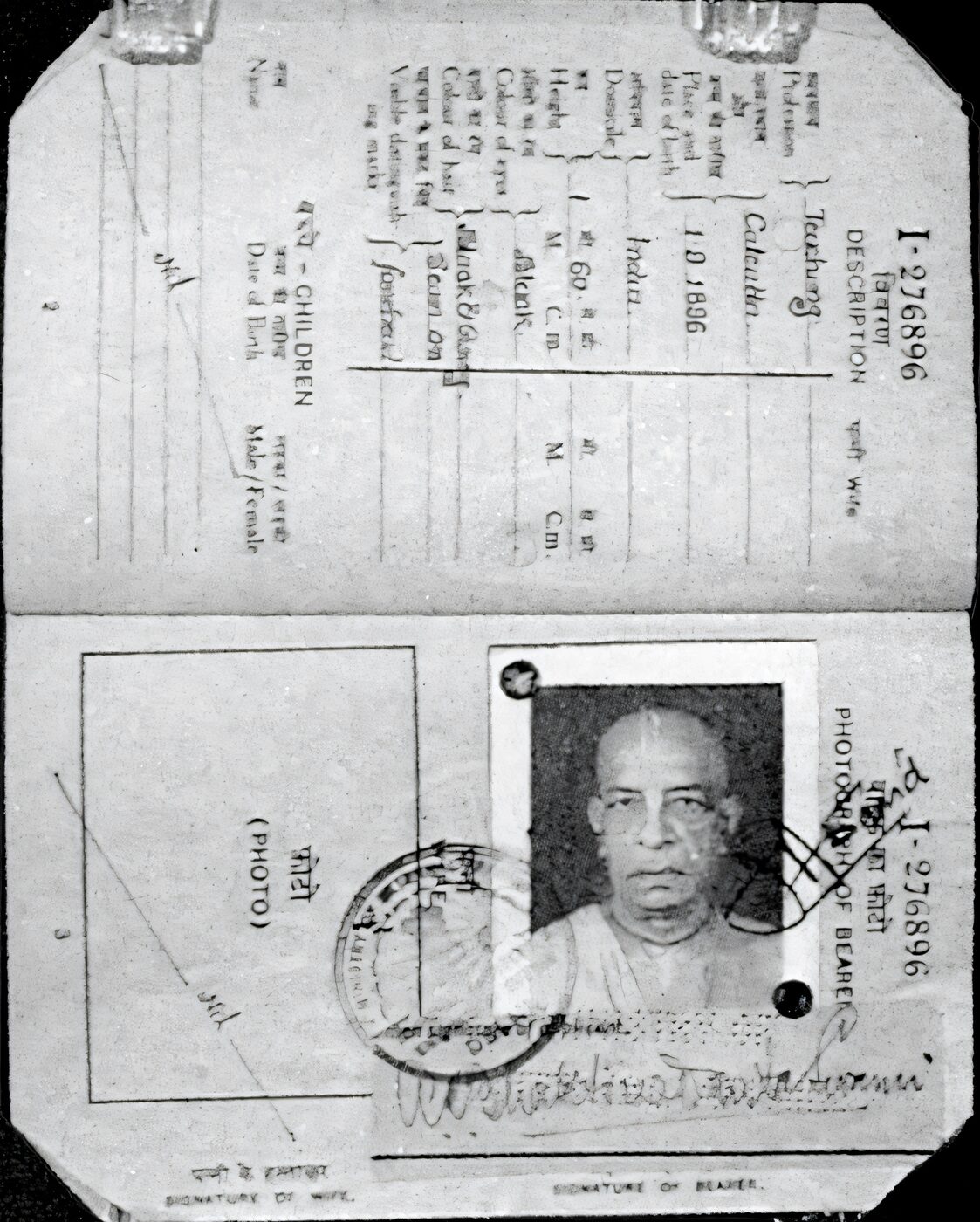
Approaching Sumati Morarjee #
For the ticket, he turned to Sumati Morarjee, head of the Scindia Steam Navigation Company. She had long been a well-wisher, and she had once given him five hundred rupees in exchange for a copy of his Bhagavatam. He asked her for free passage to America on one of her company's cargo ships. By his own account, she was unwilling at first. She told him plainly that she doubted such a journey was right at his age:
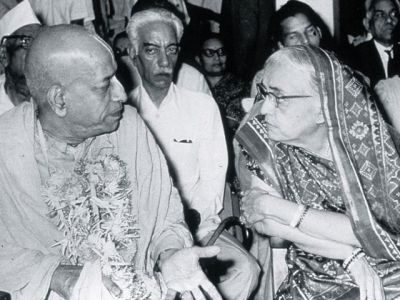
"Swamiji, you are so old, you are taking this so responsibility. Do you think it is right?"
He told her it was all right. She agreed at last and arranged a ticket for him on one of the company's cargo ships, the Jaladuta. She did even more. She made sure the ship's captain, Arun Pandia, understood that his passenger was a vegetarian brahmana. The ship's food supplies were meant for a merchant crew, so she arranged for extra fruit and vegetables to be carried for him.
Bureaucratic Hurdles in Delhi and Bombay #
A ticket and a sponsor were still not enough. Indian foreign-exchange rules required a P-form giving permission for his travel. At first an official at the State Bank of India refused to approve it. The official's reason was that a private person, not an institution, was sponsoring him, so he might be left stranded abroad after a month. Bhaktivedanta Swami took the matter to higher officers. At last he reached Mr. Rao, the bank's chief controller of foreign exchange, who approved the papers without any further objection. So the journey to America became possible only because one person after another, each in turn, said yes to an aging swami who had no institution behind him.
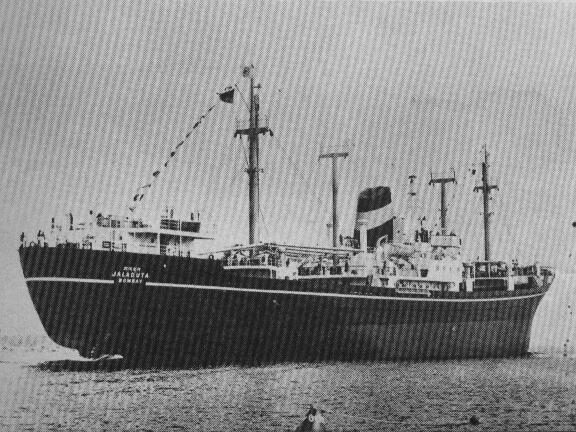
Departure From Calcutta #
The Jaladuta left Calcutta at nine in the morning on Friday, 13 August 1965, under Captain Arun Pandia. Bhaktivedanta Swami, sixty-nine years old, was the ship's only passenger. Ahead of him was a 35-day journey on a cargo ship, not a passenger ship. He was going to a country where he knew no one except a family that had agreed to take responsibility for him without ever having met him.
What He Carried Onto the Jaladuta #
His possessions for the voyage, and for whatever came after it in America, fit easily into a small space:
- a suitcase
- an umbrella
- a supply of dry cereal
- forty Indian rupees, worth about seven US dollars
- two hundred three-volume sets of his English translation of the First Canto of Srimad-Bhagavatam
He had no money set aside for a place to stay, and no plan for going back except the return half of his ticket. If his welcome in America turned out to be as uncertain as the journey there, he had nothing to fall back on.
Seasickness and Two Heart Attacks at Sea #
The crossing was hard on him almost from the start. His diary was a free appointment book from the shipping company, which he had begun to use as a travel journal. In it he recorded seasickness, dizziness and vomiting again and again through the Arabian Sea. These became worse, not better, as the days passed. On 25 August he wrote only a few words: "Beginning from today down." The five days that follow have no entries at all. Then, on 31 August, he wrote:
Passed over a great crisis on the struggle for life and death. A separate statement has to be written on this crisis area.
He had suffered two heart attacks during those days, alone in a cabin on a cargo ship with no doctor aboard, a passenger no one on land yet knew to worry about.
A Dream and Renewed Resolve #
Years later, in a room conversation with his own disciples, Bhaktivedanta Swami remembered those days. He described what had gone through his mind in the middle of the crisis. It was a dream in which Krishna, appearing in many forms at once, was in a boat. Krishna told him not to fear, but to come along. Bhaktivedanta Swami told this memory briefly and simply. But its effect on him at the time can be seen in what followed. The diary entries began again, his health became steady, and the tone of the diary changed from crisis to endurance.
The Rest of the Crossing #
By early September the worst had passed, though not the discomfort. Entries from the Mediterranean and the Atlantic describe fog off Gibraltar, lifeboat drills, and a slow return of appetite. On 9 September, twenty-four hours into the Atlantic crossing, he wrote that he was "taking my food regularly" and finding "some strength to struggle," but he added that the food was not his real source of strength. That came from his continued reading of Chaitanya Charitamrita, which he called "the nectarine of life... the source of my all vitality." More than once, he also wrote that he missed Vrindavan and the deities he had left behind there. And he wrote plainly why he had left at all: to carry out the order of Bhaktisiddhanta Sarasvati.
A Poem Written in Boston Harbor #
On 18 September 1965, the day after the Jaladuta docked, Bhaktivedanta Swami composed a Bengali poem aboard the ship, later published under the title Markine Bhagavata-dharma. It is less a record of the voyage than a prayer addressed directly to Krishna about what came next, and it captures the same self-doubt and surrender that run through the diary itself:
How will I make them understand this message of Krishna consciousness? I am very unfortunate, unqualified, and the most fallen. Therefore I am seeking Your benediction so that I can convince them, for I am powerless to do so on my own.
Further on, he wrote of himself as an instrument, not as the one who does the work:
O Lord, I am just like a puppet in Your hands. So if You have brought me here to dance, then make me dance, make me dance, O Lord, make me dance as You like.
He ended the poem by returning to the title he had received in 1939. Now he saw it not as an honor already earned, but as a task he still had to fulfill: "I have been designated as Bhaktivedanta, and now, if You like, You can fulfill the real purport of Bhaktivedanta."
Arrival at Boston Harbor and On to New York #
The Jaladuta docked at Commonwealth Pier, Boston, on the morning of 17 September 1965, and the immigration checks were done right there at the pier. His American sponsor had arranged in advance for a bus to carry him onward that same day, and Bhaktivedanta Swami waited at the dock for several hours for it. He arrived in the country with the same suitcase, his forty rupees in cash, and two hundred sets of a scripture translation that almost no one in America yet knew existed. What happened after that bus set out, and in the uncertain year that followed, is told on the struggling in New York City page.
Chapter 10
Struggling in New York City
Nearly seventy and virtually penniless, he built a storefront temple the New York Times took notice of within a year.
Bhaktivedanta Swami stepped off the ship that had nearly killed him at Boston Harbor. He was now in a country where he had no support. He knew no one except a single family who had agreed to sponsor his visa, though they were strangers to him. He was sixty-nine years old. His health was weak after two heart attacks at sea, and he carried forty rupees' worth of money and little else. Over the following year he built his work, first from a series of borrowed rooms and finally from a converted storefront on the Lower East Side of New York. That year is the least comfortable chapter of his life in America, and his biographers do not try to soften it.
| Detail | Description |
|---|---|
| First American contacts | The Agarwal family, Butler, Pennsylvania |
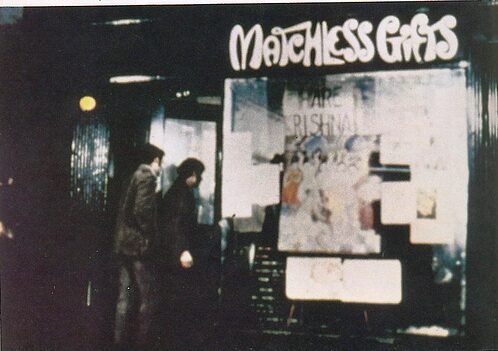
| First temple | 26 Second Avenue, a former curiosity shop called "Matchless Gifts" |
| Public turning point | Kirtan in Tompkins Square Park, reported by the New York Times |
| Regulative principles required of initiates | Four: no illicit sex, no meat, fish, or eggs, no intoxicants, no gambling |
| Daily practice required | Sixteen rounds of the Hare Krishna mantra |
| Initiates in the first year | Nineteen |
The Agarwals of Butler, Pennsylvania #
He later described standing on the dock in an unfamiliar country, with no plan beyond a name and an address: "I did not know whether to turn left or right." The Agarwals had sent someone from a travelers' aid service to meet him there. After several hours' wait, this person put him on a bus going straight to Butler, Pennsylvania. Gopal Agarwal, the engineer whose sponsorship had made his visa possible, lived there with his wife Sally. Even by his own account, the link between them was slight. He had met Gopal's father as a guest in Agra years before and had simply asked, almost in passing, whether the son might sponsor him. After a nine-hour overnight ride he arrived in Butler between two and three in the morning. Gopal met him at the bus stop in a station wagon. The Agarwals had no spare room in their apartment. So he took his meals with the family, but his hosts arranged for him to sleep somewhere else.
Lecturing at the Local YMCA #
With no room of his own at the Agarwals', Bhaktivedanta Swami stayed at the local YMCA for the three weeks he remained in Butler. Sally Agarwal arranged some speaking engagements around the town, and he lectured on Bhagavad-gita to whatever small groups could be gathered, including at the YMCA itself. It was a very small start. A foreign swami was speaking to curious strangers in a small Pennsylvania town. But this was the first audience he had found on American soil.
Back to New York, With No Fixed Address #
After about a month, he returned by bus to New York City. Here the help that had supported him in Butler simply ended. There was no second sponsor waiting, no institution, and no savings to draw on. Over the following weeks and months he moved from one uncertain place to another. At one point it was a windowless room, at another a loft in the Bowery. He had no guarantee from one period to the next of where he would stay. He was nearly seventy. He was still recovering from the heart attacks he had suffered at sea only weeks earlier. He had arrived in the city owning almost nothing, and since then he had gained almost nothing more. Nothing about this period suggests that he was comforted by any hope of an easy success. By any ordinary standard, it was an uncertain and often very hard time in his life.
Finding 26 Second Avenue #
The turn came with the help of a small number of early well-wishers who had begun attending his talks. Together they found a storefront on the Lower East Side, at 26 Second Avenue, that had previously operated as a curiosity shop under the name "Matchless Gifts." Bhaktivedanta Swami converted the space into a small temple, a single room that served simultaneously as his residence, his classroom, and the movement's first fixed address in America.
Bhagavad-gita Classes and Kirtan #
From that storefront he offered regular classes on the Bhagavad-gita and other Vaishnava texts, and led kirtan, group chanting, of the Hare Krishna mantra:
Hare Krishna, Hare Krishna, Krishna Krishna, Hare Hare
Hare Rama, Hare Rama, Rama Rama, Hare Hare
Every day he lectured and led chanting for anyone who walked in from Second Avenue. That was the whole of the work. There was no money for publicity and no organization beyond the people already present in the room.
Chanting in Tompkins Square Park #
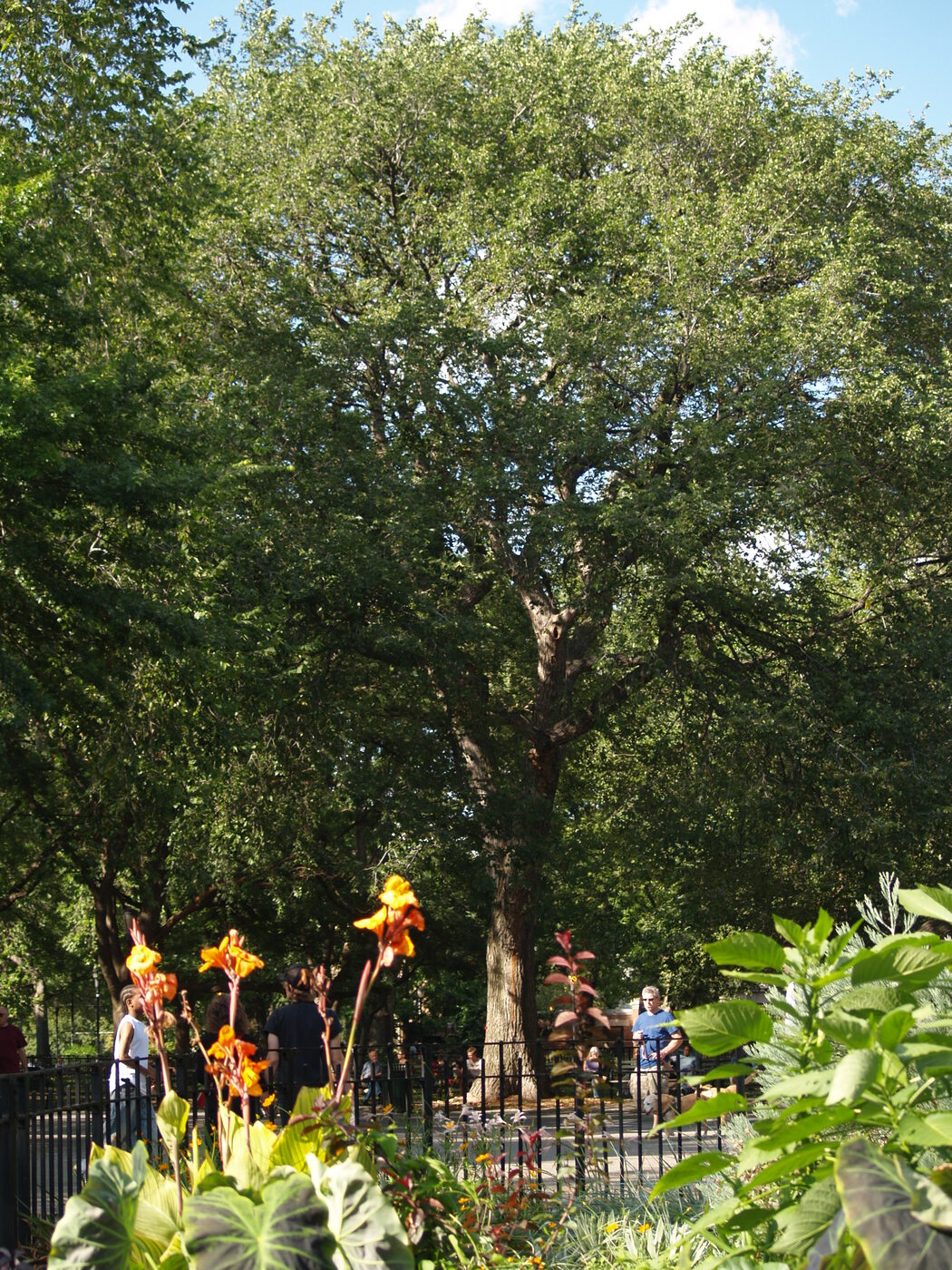
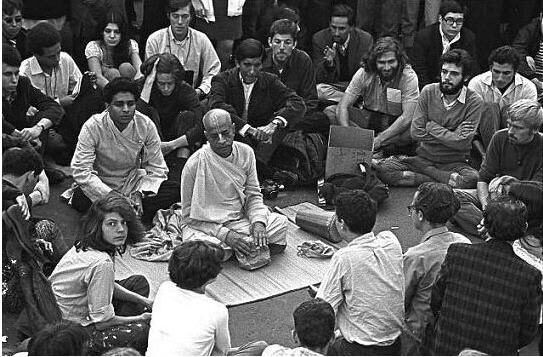
The chanting soon moved outdoors. On Sunday afternoons, Bhaktivedanta Swami and a growing handful of followers held kirtan in the open air, under a tree in nearby Tompkins Square Park. Passersby began to notice them. Most of them were young people from the counterculture of the mid-1960s, who had turned away from the usual way of life in American society.
The New York Times Takes Notice #
One of those Sunday gatherings caught the attention of a New York Times reporter. The reporter wrote about it under the headline "Swami's Flock Chants in Park to Find Ecstasy; 50 Followers Clap and Sway to Hypnotic Music at East Side Ceremony." It was the first time a major newspaper had given real attention to the young movement. This came less than a year after its founder had gotten off a cargo ship with no contacts and no plan beyond fulfilling his guru's order.
Four Regulative Principles and Sixteen Rounds #
Even in this hardship, he did not lower his standards for those who wanted to join him. To receive formal spiritual initiation, Bhaktivedanta Swami required his followers to vow to follow four regulative principles:
- No illicit sex, meaning no sexual activity outside of marriage
- No eating of meat, fish, or eggs
- No intoxicants, including alcohol, drugs, cigarettes, and even coffee and tea
- No gambling
Initiates also vowed to chant sixteen rounds of the Hare Krishna mantra daily. This meant going sixteen full times around a strand of 108 beads each day, without fail. He asked this of young Americans in the middle of the 1960s counterculture. That way of life was built largely around the very habits the four principles forbade. It was a big demand from a teacher who had nothing material to offer in return, only the practice itself.
Nineteen Initiates in the First Year #
By the end of his first year in New York, Bhaktivedanta Swami had initiated nineteen people into that discipline. It was not a large number, and nothing about the room at 26 Second Avenue in 1965 and 1966 looked like the beginning of an international institution. But it was a strong enough foundation. In July 1966 he was able to register the group formally as the International Society for Krishna Consciousness. In the end, the Society was built on that one year. A man in his late sixties had arrived in a country he had never seen, with almost nothing. He simply kept teaching until a handful of people stayed to listen.
Chapter 11
Founding ISKCON
From a Second Avenue storefront to two temples, a record album, and a movement with a name
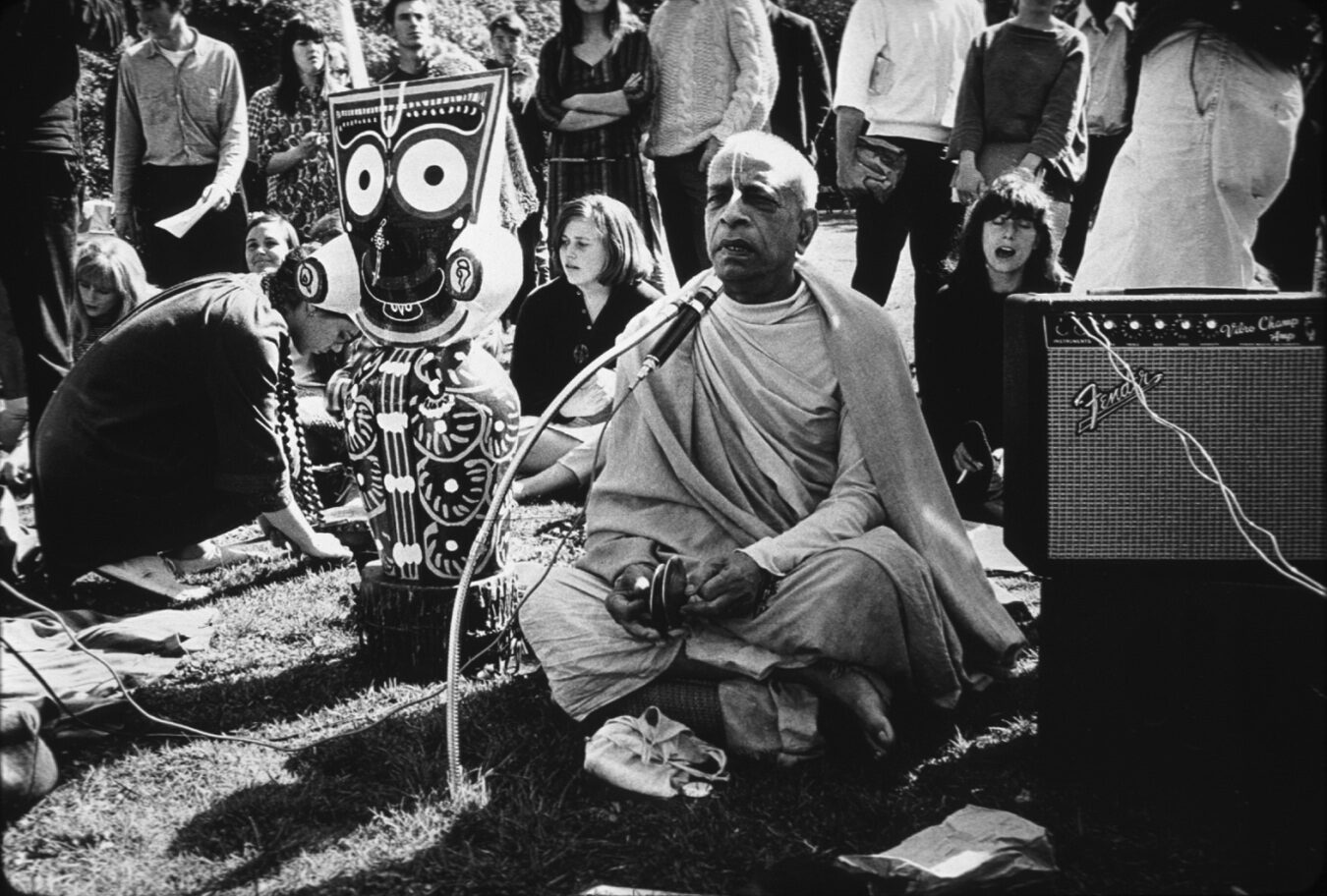
By the summer of 1966, Bhaktivedanta Swami had been in New York for the better part of a year, chanting under a tree in Tompkins Square Park and lecturing from a rented storefront on the Lower East Side. What had begun as one elderly Vaishnava monk with a trunk of books was starting to draw a following of young Americans. The next two years turned that following into an institution, then into a movement with outposts on both American coasts.
| Detail | Description |
|---|---|
| ISKCON incorporated | July 1966, New York |
| First temple | 26 Second Avenue, "Matchless Gifts," Lower East Side |
| Krishna Consciousness album | December 1966, released on the Happening label |
| Bhagavad-gita As It Is completed | Mid-January 1967 |
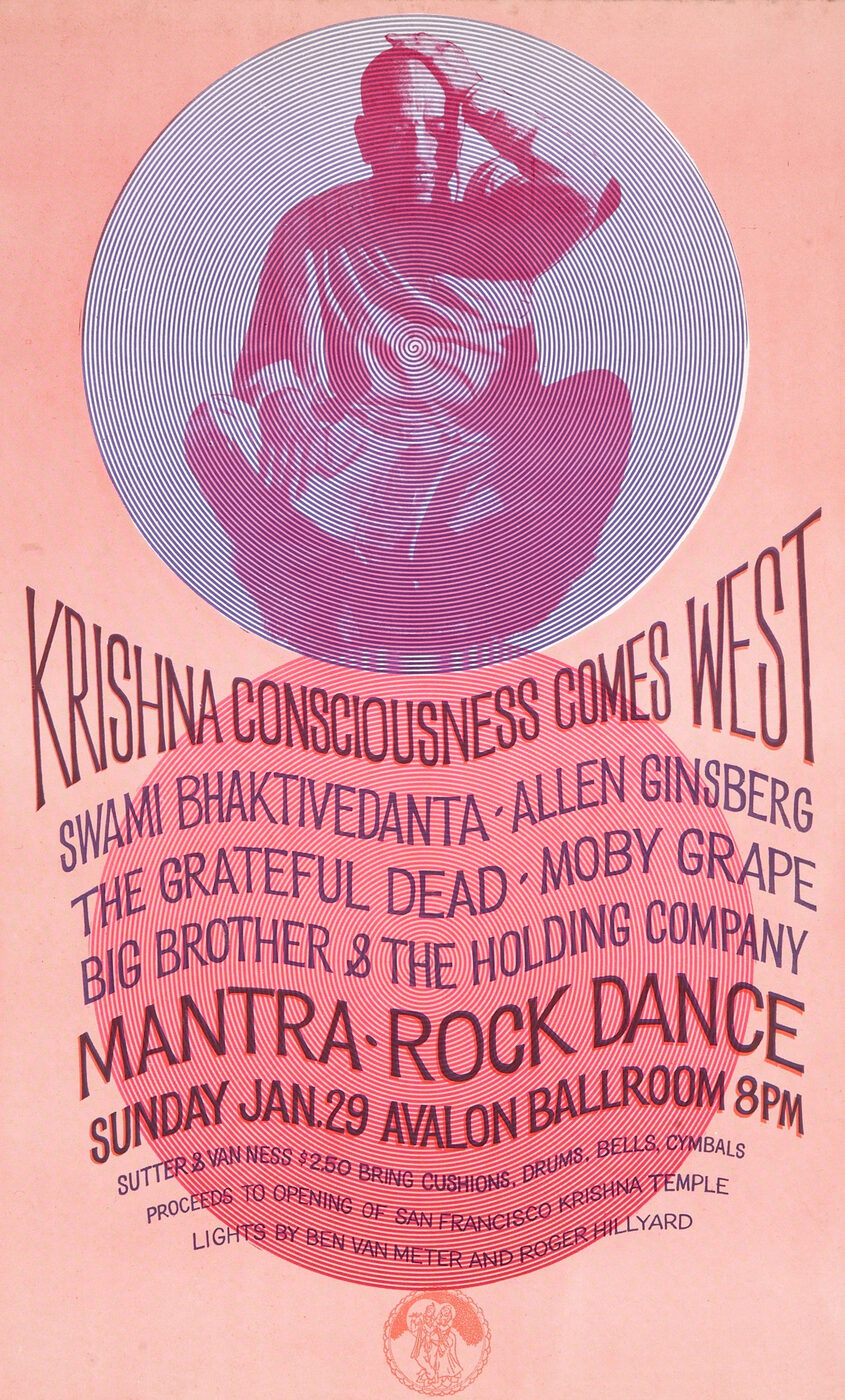
| Mantra-Rock Dance | 1967, Avalon Ballroom, San Francisco, roughly 3,000 attendees |
| First Western Ratha-yatra | San Francisco, 1967, a flatbed truck standing in for Puri's chariots |
| "Prabhupada" adopted as name | From mid-1968 |
Incorporating the Society #
In July 1966, Bhaktivedanta Swami formally incorporated, or legally registered, the International Society for Krishna Consciousness in New York. The storefront at 26 Second Avenue, a former curiosity shop called Matchless Gifts, had already been serving as an informal temple for months. It held evening classes on the Bhagavad-gita and kirtan of the Hare Krishna mantra. A Sunday kirtan under a tree in nearby Tompkins Square Park had already drawn a small crowd and a mention in The New York Times, which reported fifty followers clapping and swaying "to find ecstasy." Registering the society gave it a legal name and a founding document. But at first daily life changed very little. There was still one small room, and a handful of young Americans learning to sit through a lecture. And there was one teacher who was determined that the society would exist in more than name only.
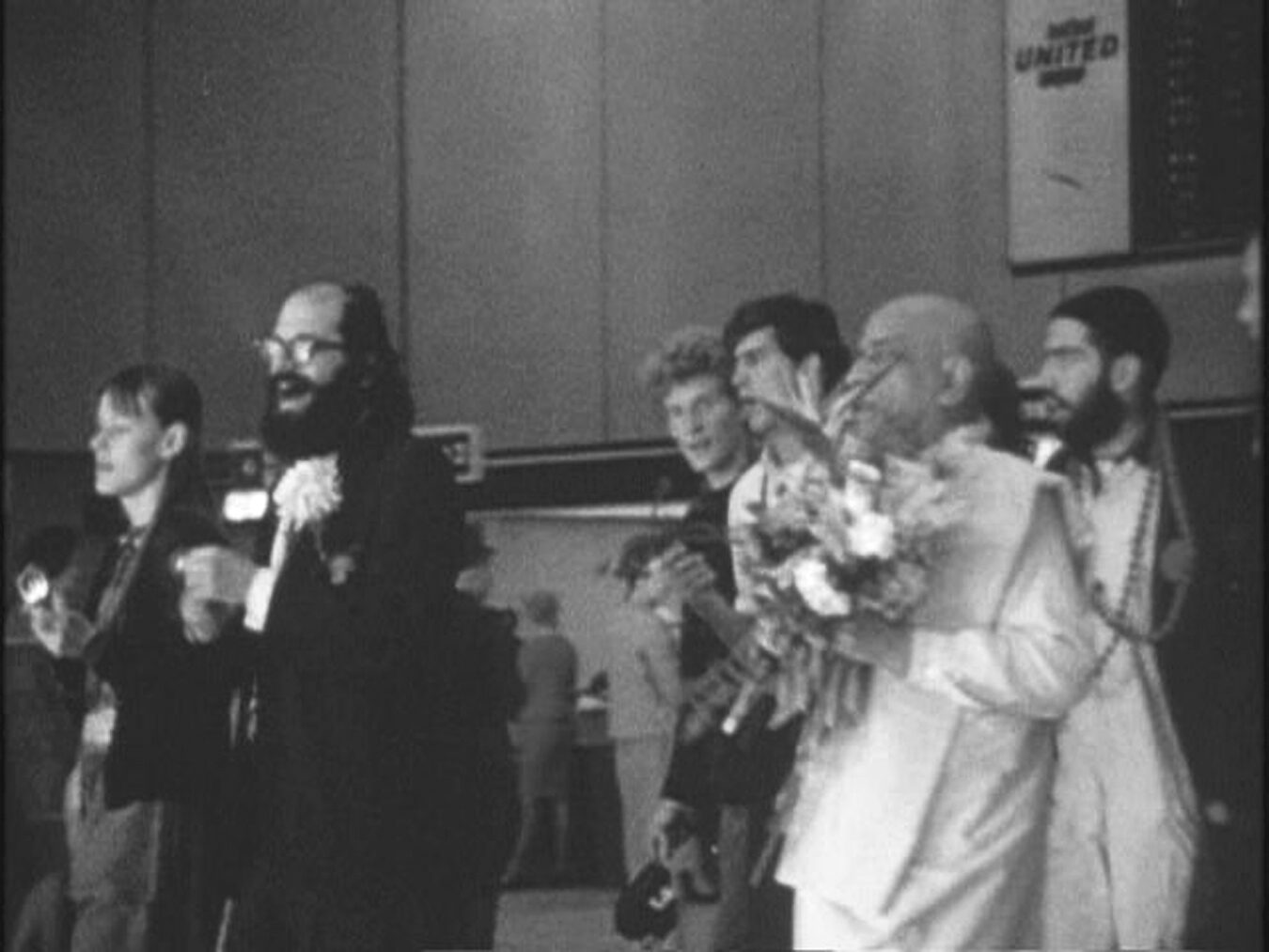
Bhaktivedanta Swami asked those who wanted formal initiation to accept four regulative principles, a discipline sharply at odds with the counterculture around them:
- No eating of meat, fish, or eggs
- No gambling
- No intoxicants, including tea, coffee, alcohol, and drugs
- No sex outside of marriage
Along with the vow came a daily commitment to chant sixteen rounds of the Hare Krishna mantra on a strand of 108 beads. Nineteen people accepted initiation on these terms in the first year alone.
An Album on the Happening Label #
In December 1966, Bhaktivedanta Swami recorded an album of Krishna kirtan together with a short spoken introduction. It was released as Krishna Consciousness by a small record label called "Happening." By any business standard it was a small production. But it carried the maha-mantra beyond the Lower East Side and spread it among the young people of the counterculture of that time. At that moment the movement had almost no other way to reach people who had never walked past the storefront. So the album helped the movement in its earliest spread.
Teaching by Example #
He had only a few followers and almost no organization, so Bhaktivedanta Swami taught everything himself, in person. He showed his first disciples how to cook and offer food to Krishna, how to collect donations, and how to chant the maha-mantra on the street instead of waiting for people to come to them. He also put them to work on his own writing. They typed his manuscript for the second canto of the Srimad-Bhagavatam as he produced it. In this practical way the society's first habits and customs were formed, before any of them were written into a rulebook.
Completing Bhagavad-gita As It Is #
By mid-January 1967, Bhaktivedanta Swami had finished his translation and commentary on the Bhagavad-gita, a project he had carried with him from Vrindavan to New York. There was still no publisher. There was no guarantee that any publishing company would take on a full Gita with long explanations from an unknown swami running a storefront mission. Still, he asked one of his new disciples to find a publisher. This started a search that in time placed the manuscript with the Macmillan Company. Macmillan brought out a shortened Bhagavad-gita As It Is in 1968. Four years later, it brought out the complete edition, with every verse and purport included.
A Second Temple in Haight-Ashbury #
In 1967, the society opened a second center, this one in San Francisco. It was in the middle of the Haight-Ashbury district, at the time when that area was most famous for its counterculture. The location proved very important for the movement's growth. A community there had already rejected the world around it and was searching for something spiritual in its place. Now, a few blocks from its own gathering places, it found a real temple with a real teacher. San Francisco quickly became a second center alongside New York. It was here that the public view of the movement changed most sharply.
The Mantra-Rock Dance #
To draw attention and raise funds for the new San Francisco temple, Bhaktivedanta Swami's disciples organized a concert at the Avalon Ballroom. It brought together his own kirtan and performances by the Grateful Dead and other rock bands of the time. The Mantra-Rock Dance drew an estimated 3,000 people. The storefront mission in New York could hardly have imagined such an audience a year earlier. For many who attended, it was their first sight of the elderly monk chanting the Hare Krishna mantra. For the local press, it made the temple, for a short time, the most talked-about address in the neighborhood.
San Francisco's First Ratha-yatra #
Later that year, Bhaktivedanta Swami's San Francisco followers organized the first Ratha-yatra festival held in the West. Every year in Puri, the deities of Jagannatha are carried through the streets on three huge wooden chariots. In San Francisco, a flatbed truck fitted with four pillars and a canopy took the place of those chariots. In a way, it was a return to his own childhood. Vaishnava biographers record that Abhay had staged his own miniature version of the same festival as a six-year-old in Calcutta, persuading his father to have a small chariot built for him. More than sixty years later, he brought the real festival to the opposite side of the world, even though its first American form was modest. Ratha-yatra would go on to become one of ISKCON's best-known public events in cities everywhere. The fuller story of the society's spread across the globe continues from here.
From Swamiji to Prabhupada #
Through 1967 and into 1968, his followers addressed Bhaktivedanta Swami simply as "the Swami" or "Swamiji." From the middle of 1968 onward they began instead to call him "Prabhupada," a title of respect traditionally reserved for a teacher at whose feet even other teachers sit. The new form of address showed how far the mission had come since the storefront. He was no longer only a swami visiting from India. He was now the founder-acharya of a fast-growing worldwide society, and his disciples knew him by the title that history would remember.
Chapter 12
Building a Global Movement
From a London storefront to a Beatle's estate, Nairobi, Moscow, and the temples of Mayapur
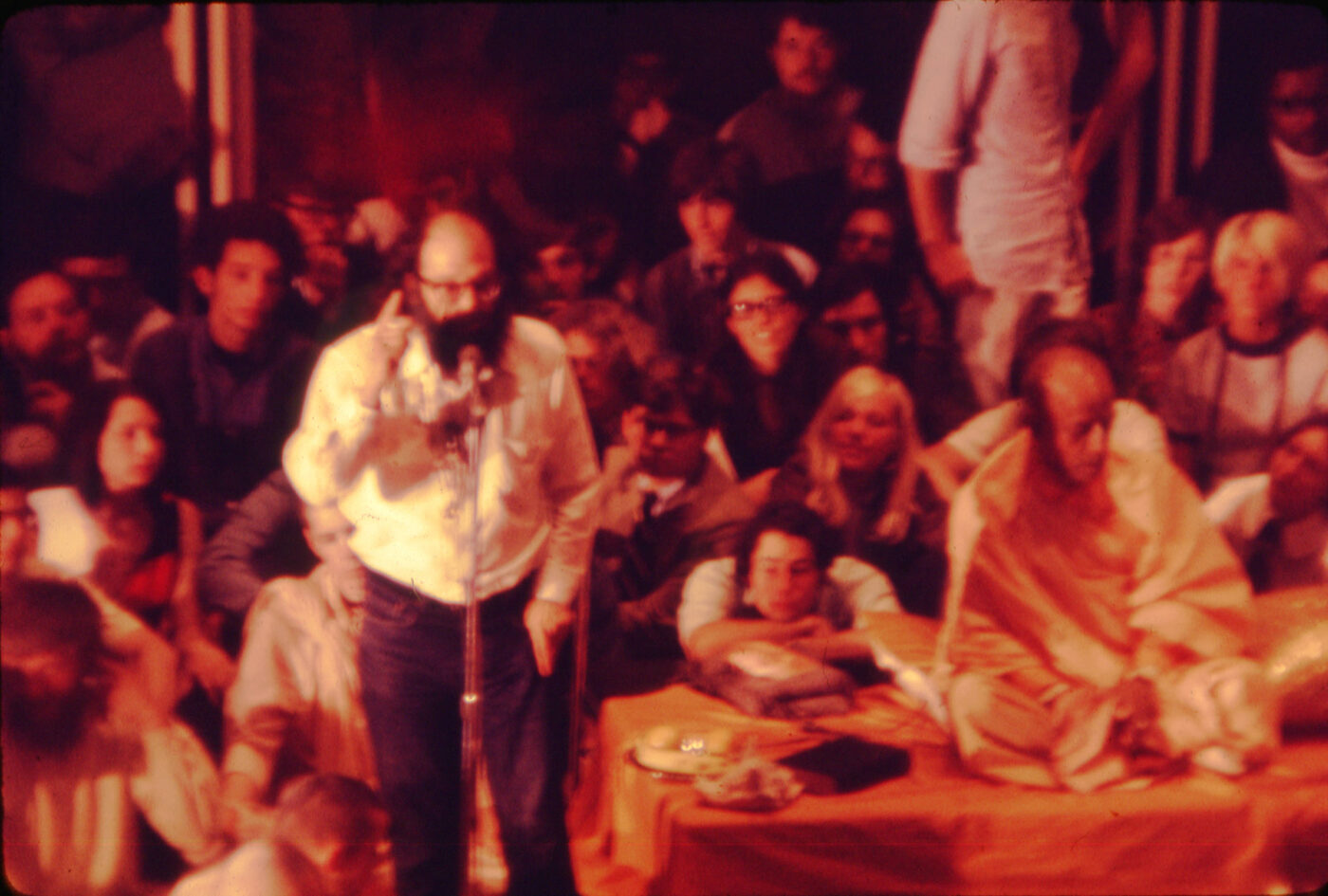
With temples established on both American coasts, Prabhupada turned outward. Over the next decade he sent disciples to open centers on every inhabited continent. He himself travelled constantly to visit them. He installed deities, trained leaders, and met anyone who might help carry Krishna consciousness further, from rock musicians to heads of government. What follows is not one single story. It is a tour of the world, region by region, following a movement that grew almost as fast as one man could keep up with it.
| Detail | Description |
|---|---|
| London temple opened | 1968, by three married couples sent from America |
| "Hare Krishna Mantra" single | August 1969, Apple Records, produced by George Harrison |
| First-day sales / UK chart peak | 70,000 copies sold the first day; reached No. 11 |
| Bhaktivedanta Manor | Donated 1973, a 17-acre estate near London formerly called Piggotts Manor |
| First visit to Kenya | 1970 |
| Visit to Moscow | 20-25 June 1971 |
| Bhaktivedanta Book Trust founded | 1972 |
A Temple in London #
In 1968, Prabhupada sent three married couples among his disciples to open a temple in London. Dressed in their robes and saris, they began chanting the Hare Krishna mantra regularly on the city's streets. It worked exactly as it had in New York and San Francisco: passersby stopped, and then newspapers noticed. Headlines like "Krishna Chant Startles London" and "Happiness is Hare Krishna" made the young London center well known within its first year.
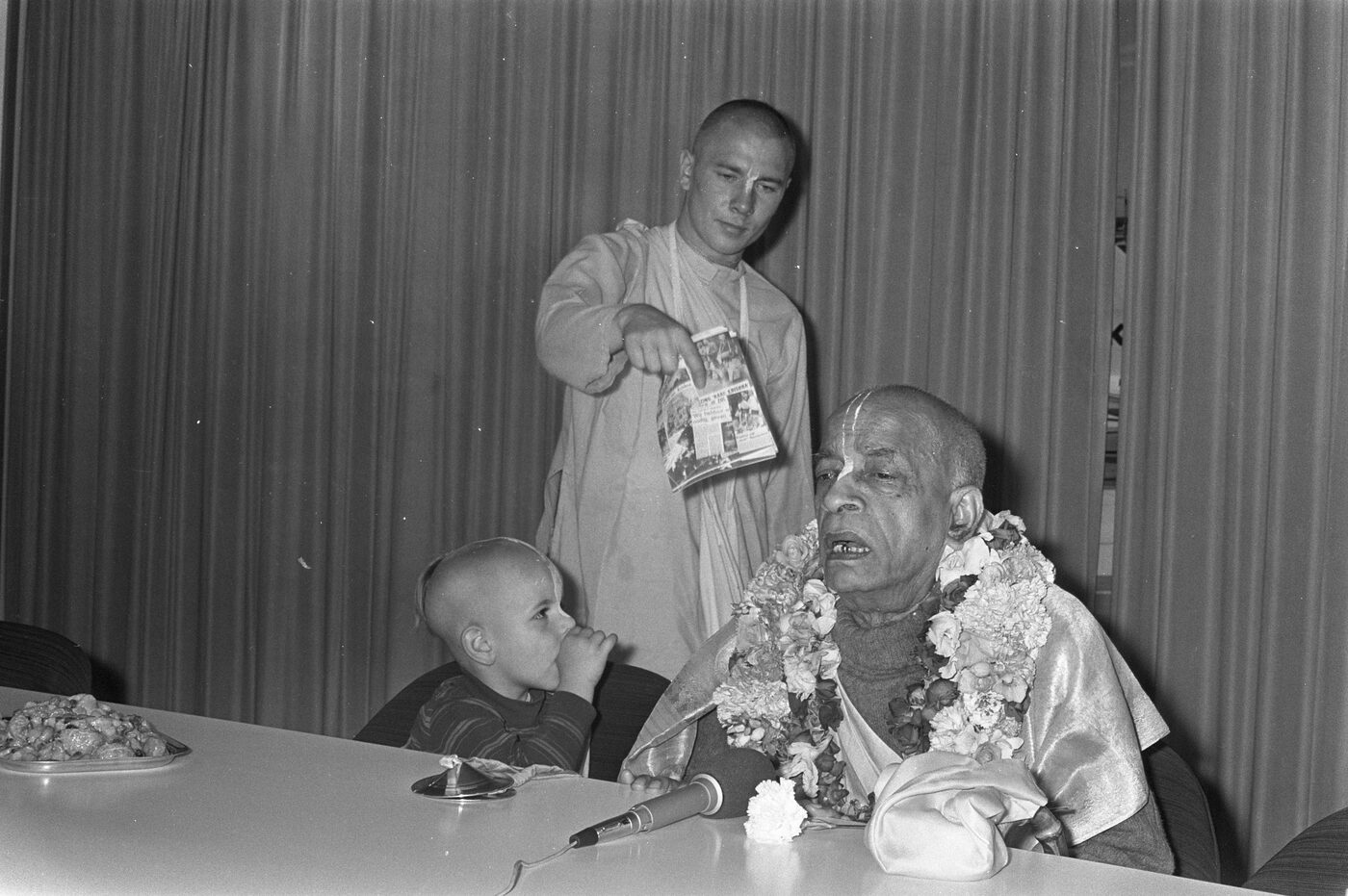
George Harrison and the Radha Krishna Temple #
The London temple's most important connection was with George Harrison of the Beatles. Harrison had already come to know the maha-mantra through Prabhupada's earlier New York recording. In August 1969, Harrison produced a single of the Hare Krishna mantra sung by the London disciples, who recorded under the name The Radha Krishna Temple. He released it on the Beatles' own Apple Records label. The single sold 70,000 copies on its first day, climbed to number 11 on the British charts, and put the disciples on the BBC's Top of the Pops four separate times. It also entered the music charts in Germany, the Netherlands, France, Sweden, Yugoslavia, and Czechoslovakia, as well as South Africa and Japan. This was a surprising reach for a devotional chant that had no tune written for radio.
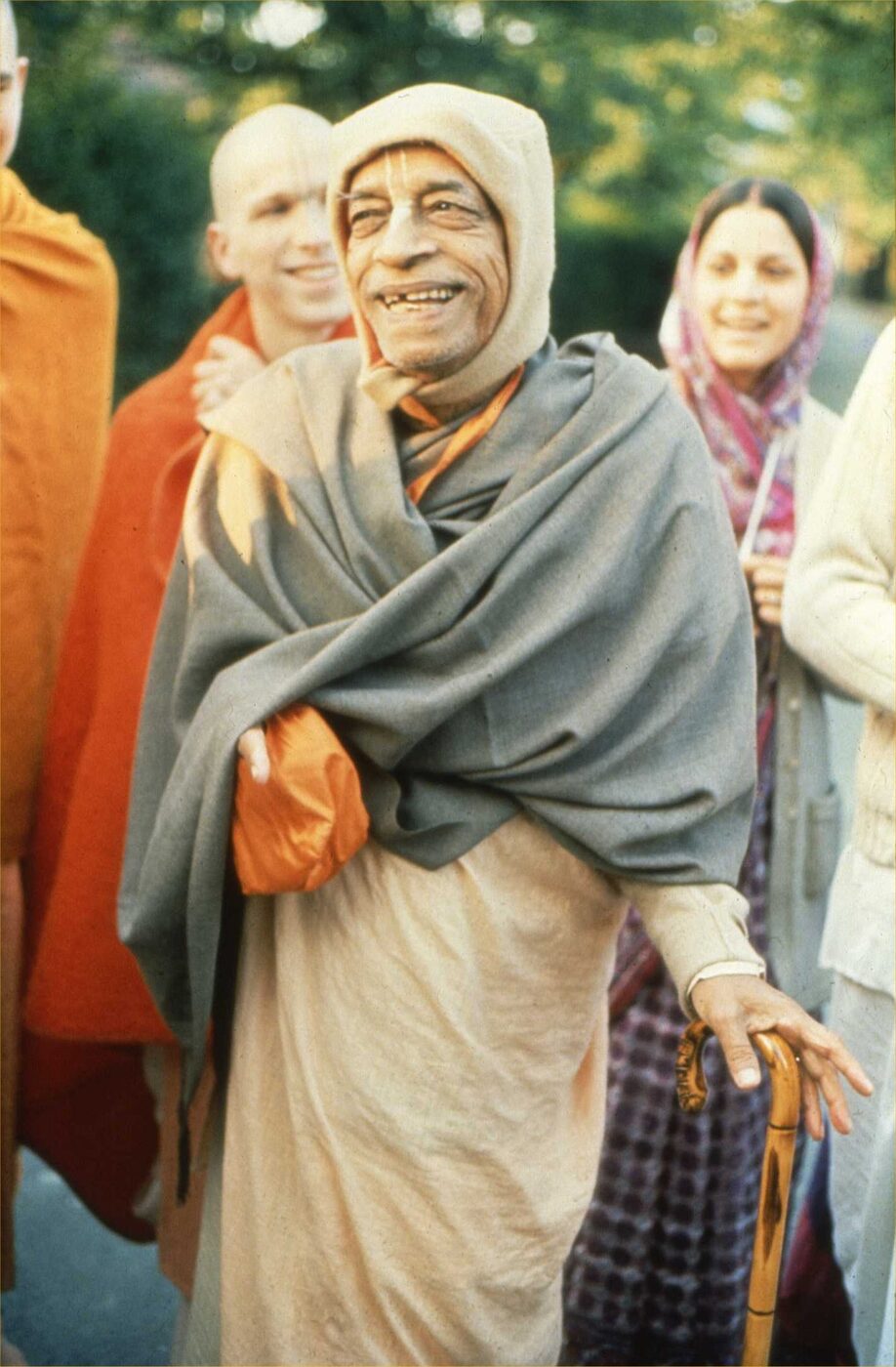
Meeting the Beatles #
In December 1969, encouraged by the single's success, the London disciples met the Beatles in person, when the group was at the height of its fame. At Apple's own press conference, Harrison told reporters that the Hare Krishna mantra was not a pop song at all. He said it was an ancient chant that awakened spiritual bliss in anyone who sang and heard it. In 1969 it was unusual for a rock star to say this publicly. The following year, 1970, Harrison produced a further single with the disciples, "Govinda," and in May 1971 a full album, The Radha Krishna Temple. He also sponsored the publication of Prabhupada's book Krishna, the Supreme Personality of Godhead. He paid for printing it as a full-color book. Without his help, neither the society nor an unknown publisher would have taken that risk.
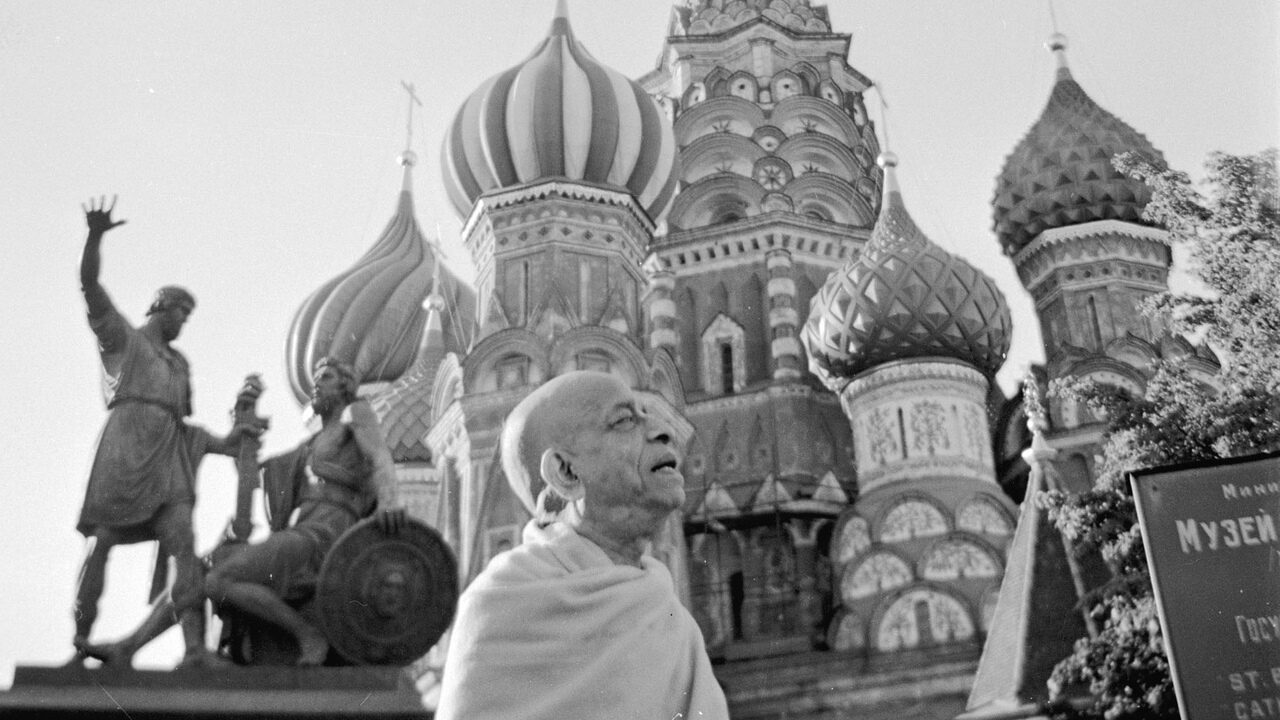
A Gift Called Bhaktivedanta Manor #
Harrison's help reached its high point in 1973. That year he gave the society a 17-acre estate northwest of London, which had been known as Piggotts Manor. Devotees turned the property into a temple and ashram and renamed it Bhaktivedanta Manor in Prabhupada's honor. It is still one of ISKCON's best-known centers outside India. It is a country estate, given by a rock musician to a swami whom he had never expected to meet when he first sang along to a record.
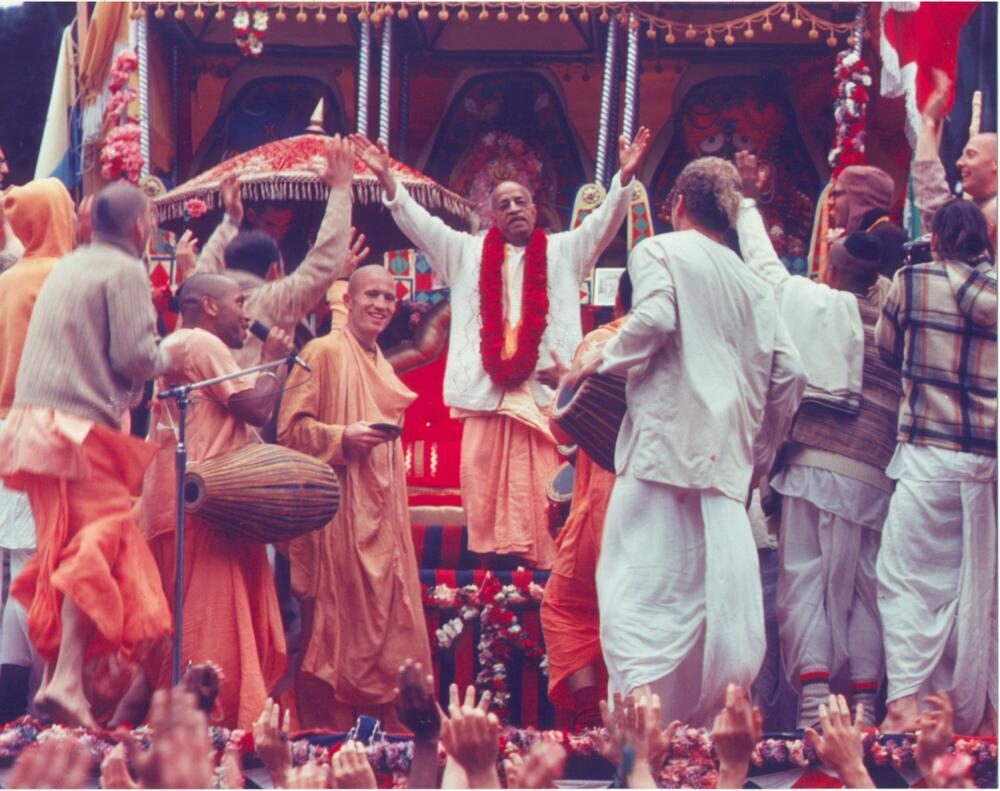
Across Continental Europe #
London became a base for Prabhupada's travels in Europe. Over the following years he travelled again and again through Germany, France, Italy, Sweden, Switzerland, and the Netherlands. He led kirtan, installed deities in new temples, and met scholars, religious leaders, and anyone else curious enough to come and meet him. Each visit followed roughly the same pattern that had worked in New York and London: chanting in public, a lecture, a temple left a little stronger than he had found it, and then travel on to the next city.
First Journeys to Africa #
Prabhupada made his first visit to Kenya in 1970, the earliest of several. He found that the disciples he had sent there had been running spiritual programs mainly for the local Indian community. He insisted that the mission should also reach out to Africans directly. On one occasion in Nairobi, he was scheduled to speak at an Indian Radha-Krishna temple in a mostly African part of the city. He ordered the doors to be thrown open. The hall filled with local residents, and he held kirtan and spoke to them as he would to any other audience. He later visited Mauritius and South Africa as well, and sent disciples to open missions in Nigeria and Zambia.
Into the Soviet Union #
Prabhupada spent five days in Moscow, from 20 to 25 June 1971. This visit marked the start of Krishna consciousness in the Soviet Union. The Soviet state had no room for new religious movements, and during the visit he managed to meet only two Soviet citizens. One was an academic named Grigory Kotovsky. The other was a twenty-three-year-old Muscovite, Anatoly Pinyaev, who was introduced to him through the son of an Indian diplomat stationed in the city. Pinyaev went on to become the first Soviet Hare Krishna devotee. He translated Prabhupada's Bhagavad-gita into Russian and secretly distributed hand-copied editions. Because of this work, he was later forced to spend years shut up in a Soviet psychiatric hospital.
Mayapur and Vrindavan #
From 1970 onward, Prabhupada turned much of his personal attention back to India. He arrived with a party of Western sannyasis and other disciples, and spent much of the next seven years establishing temples in Bombay, Hyderabad, and elsewhere. Two centers mattered most. The first was Mayapur, in West Bengal, the birthplace of Chaitanya Mahaprabhu. There he built what would become ISKCON's world headquarters. The second was Vrindavan, where he established the Krishna-Balaram Mandir. Indians were used to seeing their own culture imitate the West. Now they saw the opposite happening on Indian soil: American and European monks in robes. The sight made a strong impression, even far beyond the society's own membership.
The Bhaktivedanta Book Trust #
In 1972, Prabhupada founded the Bhaktivedanta Book Trust to manage the publication and worldwide distribution of his own writings. For the first time, the Trust gave the movement a steady organization to keep his books in print as fast as his writing required. It is still the official publisher of everything he wrote.
Circling the Globe #
In the last twelve years of his life, Prabhupada circled the world more than a dozen times. He moved almost without rest between the temples he had founded and the ones he still meant to found. The personal side of that busy schedule is easier to see in his conversations and letters than in any list of cities visited. But the list itself gives some idea of what twelve years of continuous travel really meant for a man in his seventies: London, Nairobi, Moscow, Mayapur, and dozens of places in between.
Chapter 13
Conversations and Personal Qualities
Who Prabhupada was in his own recorded words, on morning walks, in letters, and among disciples
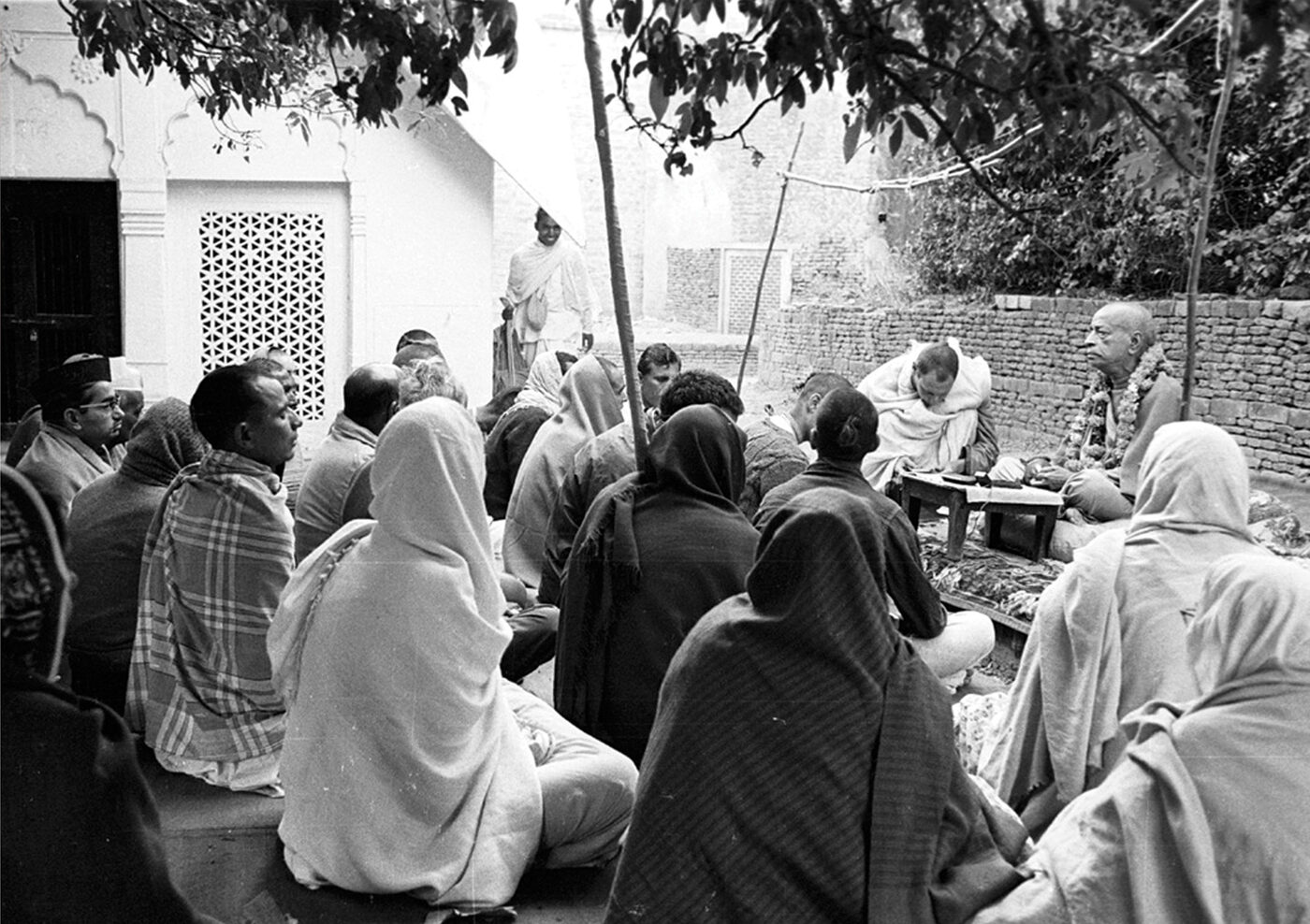
The teaching behind Prabhupada's twenty-six qualities of a Vaishnava is explained on another page. Here the question is simpler: what was he really like to be around? For a religious founder, an unusually large amount of first-hand material about this has survived. There are recorded lectures, hundreds of letters, and thousands of pages of written-down conversations. Much of it was recorded on tape by disciples who felt, rightly, that they were with someone whose words were worth recording.
| Detail | Description |
|---|---|
| Morning walk conversations | Recorded in many cities, 1968-1977 |
| "Life Comes From Life" discussions | With disciples Svarupa Damodara and Sadaputa, mid-1970s |
| Nightly writing routine | Rose near 1:00 a.m. to translate before the day's duties began |
| Disciples initiated in his lifetime | Nearly 5,000 |
The Morning Walk as Classroom #
Wherever he was in the world, Prabhupada took an hour-long walk early each morning. Disciples learned to treat it as the best hour of the day to ask him something. These walks were recorded and written down in city after city over nearly a decade. The talks range across Darwinism, the nature of consciousness, current events, and the failures of Western medicine. They also cover whatever a visiting scientist or scholar walking alongside him happened to raise. No topic was too small and none too large. A question about the stock market could be followed a few minutes later by a question about the soul, and he answered both in the same manner, without changing his tone.
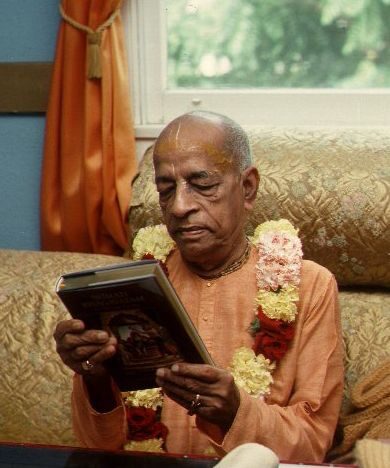
Life Comes From Life #
In the morning-walk and room conversations, one argument came up again and again, and it dealt very directly with the science of his time. Prabhupada challenged the claim that life could have come by chance from non-living matter. Two of his own disciples, Svarupa Damodara, a molecular biologist, and Sadaputa, a mathematician, spent years working with him on this question. In time they put their exchanges together in the book Life Comes From Life. One such session was a slideshow discussion recorded in Washington, D.C. on 3 July 1976. In it, Sadaputa explained the mathematical odds against life forming by itself by chance. Prabhupada then pressed a point he made in many forms elsewhere. Mind and consciousness, he said, cannot be explained as nothing more than the matter that is said to have produced them. And a universe run only by chance is no explanation at all.
The Chance Theory Is the Grace of God #
That same conversation also shows a side of him that is easy to miss in written accounts: a quick, quiet sense of humor. Disciples who lived with him describe this humor as always present in his teaching. Prabhupada read aloud a remark by the mathematician Carl Friedrich Gauss. Gauss described a proof coming to him suddenly, "not on account of my painful effort, but by the grace of God," and Prabhupada turned the scientist's own words against the argument for chance:
"So the chance theory is the grace of God... because if God sees that the rascal is trying for so many years, 'All right, give him a chance.'"
The transcript notes laughter in the room. It is a small moment, but it is real and exactly recorded. It also shows something about how he taught. He did not refuse to use an opponent's terms. Instead, he took those terms and turned them around against the opponent's own argument.
Discipline Before Dawn #
All of this conversation, teaching, and writing cost him great effort. For most of his years in the West, Prabhupada rose at around one o'clock each morning to translate and comment on the Srimad-Bhagavatam and his other books. He worked in the hours before the temple woke. Then he gave the rest of the day to disciples, visitors, and the affairs of a fast-growing international society. His health was often uncertain in his later life. But associates who watched this routine for years did not say that he was careless about his health. They said he firmly refused to let anything, even rest, come before the writing he considered the essential work of his life.
Firmness and Patience #
His standards were strict, but he did not shut people out. In 1976, at ISKCON's annual gathering in Mayapur, the Governing Body Commission passed resolutions that sharply limited the role of women and married householders in the society. Most members of the Commission at that time were sannyasis. Prabhupada heard both sides of the dispute and then overruled his own commission, calling the resolutions "fanaticism" and ordering them withdrawn. As so often with him, his reasoning was both blunt and welcoming to all:
"I cannot discriminate — man, woman, child, rich, poor, educated, or foolish. Let them all come, and let them take Krishna consciousness."
This helps correct any picture of him as only severe. He was strict enough to overturn a decision his own senior disciples had already passed. At the same time, he insisted that the door stay open to everyone.
A Companion Portrait #
None of this is a theological account of who Prabhupada was. That account, built from his twenty-six recorded qualities as a Vaishnava teacher, is given on the qualities page. The conversations and letters add something simpler. Anyone willing to read a morning-walk transcript or a private letter can get a sense of a real person. He was curious, disciplined, sometimes funny, and rarely in doubt about what he had come to the West to do.
Chapter 14
Final Days and Disappearance
The Governing Body Commission, the will of June 1977, the ritvik letter of 9 July 1977, and his passing at Krishna-Balaram Mandir
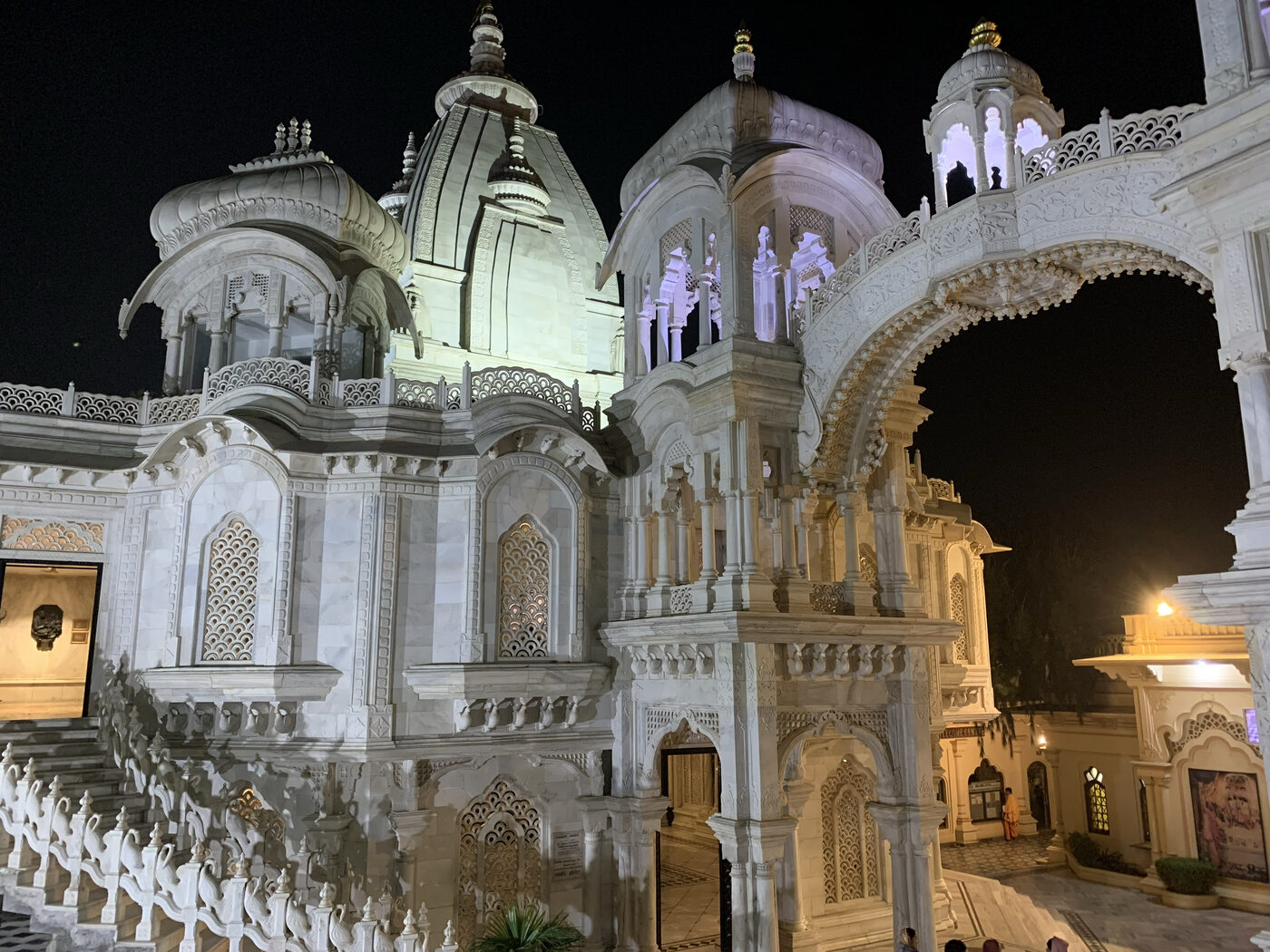
Prabhupada spent the last months of his life at the Krishna-Balaram Mandir in Vrindavan, the temple he himself had established. He was surrounded there by disciples who had come from every part of the world he had spent a decade crossing. His death, when it came, was not sudden, and he had prepared for it. For years he had been putting in place the institutions and the people meant to carry the mission forward without him. His final months were as much about finishing that work as about his own failing health.
| Detail | Description |
|---|---|
| Governing Body Commission established | 1970, twelve senior disciples |
| Eleven ritviks (representatives of the acharya) named to initiate on his behalf | Letter of 9 July 1977, Vrindavan, approved by Srila Prabhupada |
| Death | 14 November 1977, about 7:30 p.m. |
| Place | Krishna-Balaram Mandir, Vrindavan |
| Age at death | 81 |
| Samadhi | Built by followers in the temple courtyard |
A Commission Formed While He Was Still Active #
Prabhupada established the Governing Body Commission (GBC) in 1970, seven years before his death. At that time he was still travelling constantly and was in reasonably good health. The GBC was a group of twelve senior disciples given the duty of overseeing ISKCON's activities worldwide. The timing mattered. The society had grown from one storefront to temples on five continents. It could not go on forever running on the daily, personal instructions of a single founder. Prabhupada set up the GBC as ordinary careful planning for the future, not as an arrangement made on his deathbed. It was meant to work during his lifetime as much as after it. For years afterward he continued to step in directly in GBC affairs. At one point he suspended the entire commission, when he judged that its members were gathering authority into their own hands in ways he had not approved. This shows that from the beginning the GBC was a working part of his own management, not simply a plan for after his departure.
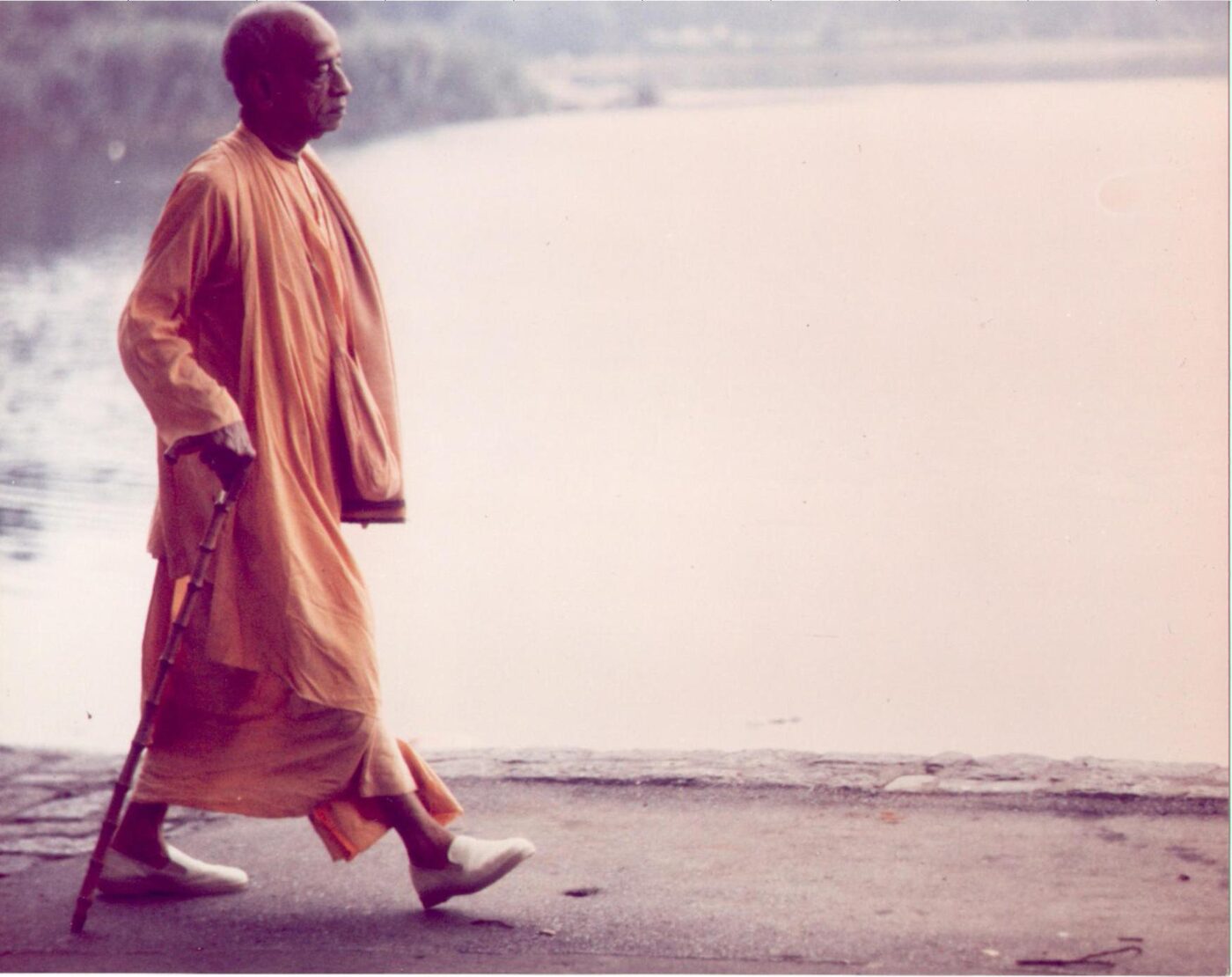
Drafting a Will, June 1977 #
By June 1977, with his health failing, Prabhupada turned to the practical business of putting his affairs in writing. In a recorded conversation at Vrindavan that month, he worked through the wording of his will with several disciples. He insisted that the document should avoid legal words like "trust" and "trustees," because they might cause tax problems for the society as it was already organized. When one disciple suggested "supreme managers" instead, and another offered "ultimate executors," the discussion had some lighter moments, even on this serious occasion. In the end they settled on wording that named the Governing Body Commission as the society's ultimate managing authority over its temples and properties.
Eleven Ritviks: The Letter of 9 July 1977 #
On 9 July 1977, four months before his departure, a letter from Vrindavan to all GBC members and temple presidents, written by his secretary Tamala Krishna Goswami and marked "Approved: A.C. Bhaktivedanta Swami," set out the arrangement Srila Prabhupada had made for initiations. He named eleven senior disciples to act as "ritvik - representative of the acarya, for the purpose of performing initiations, both first initiation and second initiation": Kirtanananda Swami, Satsvarupa dasa Gosvami, Jayapataka Swami, Tamala Krsna Gosvami, Hrdayananda Gosvami, Bhavananda Gosvami, Hansadutta Swami, Ramesvara Swami, Harikesa Swami, Bhagavan dasa Adhikari and Jayatirtha dasa Adhikari. Temple presidents "may henceforward send recommendation for first and second initiation" to whichever of these representatives was nearest, and the representatives "may accept the devotee as an initiated disciple of Srila Prabhupada." The letter is explicit about whose disciples the new devotees are: "The newly initiated devotees are disciples of His Divine Grace A.C. Bhaktivedanta Swami Prabhupad, the above eleven senior devotees acting as His representative." In this letter Srila Prabhupada named ritviks to initiate on his behalf; it names no one as a guru to succeed him.
Declining Health at Vrindavan #
Through the second half of 1977, Prabhupada's health grew steadily worse. He stayed mostly in his room at the Krishna-Balaram Mandir, with disciples constantly attending him. As far as he was able, he continued to instruct those around him, dictate letters, and comment on his translation work, even as his physical strength failed. By his disciples' account, he had escaped death more than once in earlier years. They took this to be by Krishna's grace and by the strength of his own will to keep preaching. But by the autumn of 1977 he had begun deliberately preparing his followers for the end, instead of resisting it. Vaishnava biographers record a conversation from around this time. A young disciple's daughter had died in Vrindavan a few months earlier, and he was asked whether she had gone back to Godhead. Prabhupada answered that anyone who leaves the body in Vrindavan is liberated. Once November came, his own followers understood this remark as speaking of his own passing as well.
The Final Weeks #
There was a late plan to take Prabhupada by bullock cart to Govardhana Hill for the Govardhana-puja festival. It was cancelled the night before. Two of his disciples, Tamala Krishna and Bhavananda, had come to his bedside, clearly upset about the state of the road and the harm the journey might do to him. "You request me not to go?" Prabhupada asked, and he agreed at once to stay. Before this, he had spent the evening with a visiting renounced Vaishnava, Niskincana Krishnadasa Babaji, chanting and talking quietly in Bengali. When Tamala Krishna admitted that Prabhupada's care for them "simply deepens our attachment every moment," Prabhupada answered simply, "It is my duty," and then he turned to the Babaji and added, "just see how much affection they have for me." On the evening of 14 November 1977, his attending physician asked him whether there was anything he wanted. Prabhupada answered faintly, in Hindi, kuch ichha nahin: "I have no desire." He died in his room at the Krishna-Balaram Mandir at about 7:30 that evening, at the age of eighty-one, after a long illness.
The Samadhi in the Temple Courtyard #
Following Gaudiya Vaishnava custom, Prabhupada's disciples laid his body to rest within the grounds of the Krishna-Balaram Mandir. Over the site in the temple courtyard they built a marble samadhi, a memorial shrine. It is still a place of daily worship and pilgrimage in Vrindavan today, and one of several such shrines to him around the world. The story told here, from a single storefront in New York to more than a hundred temples on six continents, comes to its close in this place. A fuller year-by-year account of his life is available elsewhere.
Chapter 15
Legacy and the Movement Today
A hundred temples, a library of translated scripture, and the ritvik arrangement he left for initiation
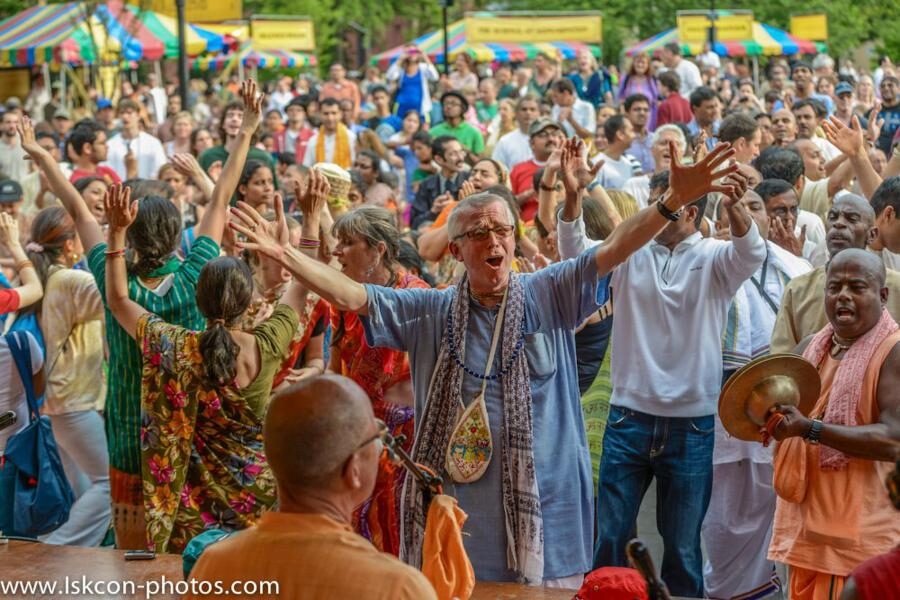
Twelve years passed between the morning Bhaktivedanta Swami stepped off the Jaladuta in Boston harbor and the evening he died at the Krishna-Balaram Mandir in Vrindavan. Almost everything described on these pages happened within those twelve years. This includes the storefronts, the world tours, the books and the temples. But what lasted after him tells us more about his life than any list of what he did.
| Detail | Description |
|---|---|
| Temples founded | More than 100, across six continents, by 1977 |
| Sri Chaitanya-charitamrita | 17 volumes, translation completed 1974 |
| Bhaktivedanta Book Trust founded | 1972 |
| Disciples initiated in his lifetime | Nearly 5,000 |
| Initiation after 1977 | By the letter of 9 July 1977, ritviks initiate on his behalf; the new devotees are his disciples |
What He Built in Twelve Years #
By the time of his death, the society Prabhupada had registered in a single room on Second Avenue had more than a hundred temples across six continents. It also had farm communities, restaurants, and schools for the movement's own children. In his final decade alone he circled the globe well over a dozen times. He installed deities and trained leaders. He returned again and again to the same cities to make sure that what he had started there was still standing. In the modern era, few religious founders have built an international institution on this scale. Prabhupada started from nothing, in old age, and did it within a single lifetime. Harvey Cox, the Harvard theologian, described the achievement in these words:
"There aren't many people you can think of who successfully implant a whole religious tradition in a completely alien culture... So when I say [he's] 'one in a million,' I think that's in some ways an underestimate. Perhaps he was one in a hundred million."
A Literary Legacy #
Besides the society, he left his writings. Prabhupada completed Bhagavad-gita As It Is. He also worked on a multi-volume translation and commentary on the Srimad-Bhagavatam, which occupied him from 1962 until his death. He finished Sri Chaitanya-charitamrita, in seventeen volumes, in 1974. Some readers might never work through the full Bhagavatam with all its notes. To reach them, he also wrote Krsna Book, a retelling of Krishna's own life and pastimes taken from its tenth canto. He also wrote The Nectar of Devotion, a summary of the classical Gaudiya text on the practice of bhakti, and dozens of other titles. All of it was published and kept in print by the Bhaktivedanta Book Trust, which he founded in 1972 for exactly this work. From 1973 until his death, his followers distributed several million pieces of this literature every year in airports, shopping malls, and public squares across the world. Since then his books have appeared in more than eighty languages. A full account of that body of work is given elsewhere. His books have been printed in tens of millions of copies in all these languages. By scholarly estimate, this makes Prabhupada the most translated and most widely read author on Krishna consciousness in history.
Continuing the Parampara #
Prabhupada always described himself as one link in a chain, not its beginning. He was a representative of the Brahma-Madhva-Gaudiya disciplic succession, which he had received from his own guru, Bhaktisiddhanta Sarasvati, and had carried to the West. For initiations after his departure, he left the arrangement set out in the letter of 9 July 1977: eleven ritviks, "representative of the acarya," to accept new devotees as his own initiated disciples, as told on Final Days and Disappearance. The fuller history of the disciplic succession he received is traced on the sampradaya page. He had once worried that India, under Western influence, was forgetting its own spiritual inheritance. Now, in India itself, the movement he built from abroad maintains major temple complexes in Mumbai, Delhi, Bengaluru, Chennai, and Kolkata. His Mayapur headquarters draws millions of pilgrims in an ordinary year. In this way the direction was reversed, back toward India. He did not live to see this in full, but he had set it in motion.
From Vrindavan to Kota #
This chain is not just an idea, and it is not found only in ISKCON's largest centers. It is also the reason Nandgram Dham, home of the Hare Krishna Movement in Kota, exists at all. Every temple in this lineage, large or small, is one more link in the same succession that Prabhupada extended from Vrindavan to the rest of the world. This temple is no exception. A fuller account of Prabhupada's own life and mission is available elsewhere. Here, at the close of his biography, we simply note that the work described across these pages did not stop in 1977. It continues, in this temple and in many others, simply as the result of what one man carried across an ocean in 1965.
Closing
Songs in the Vaishnava Song Book #
The Vaishnava Song Book carries 32 songs attributed to Srila Prabhupada. See the full author page here.
