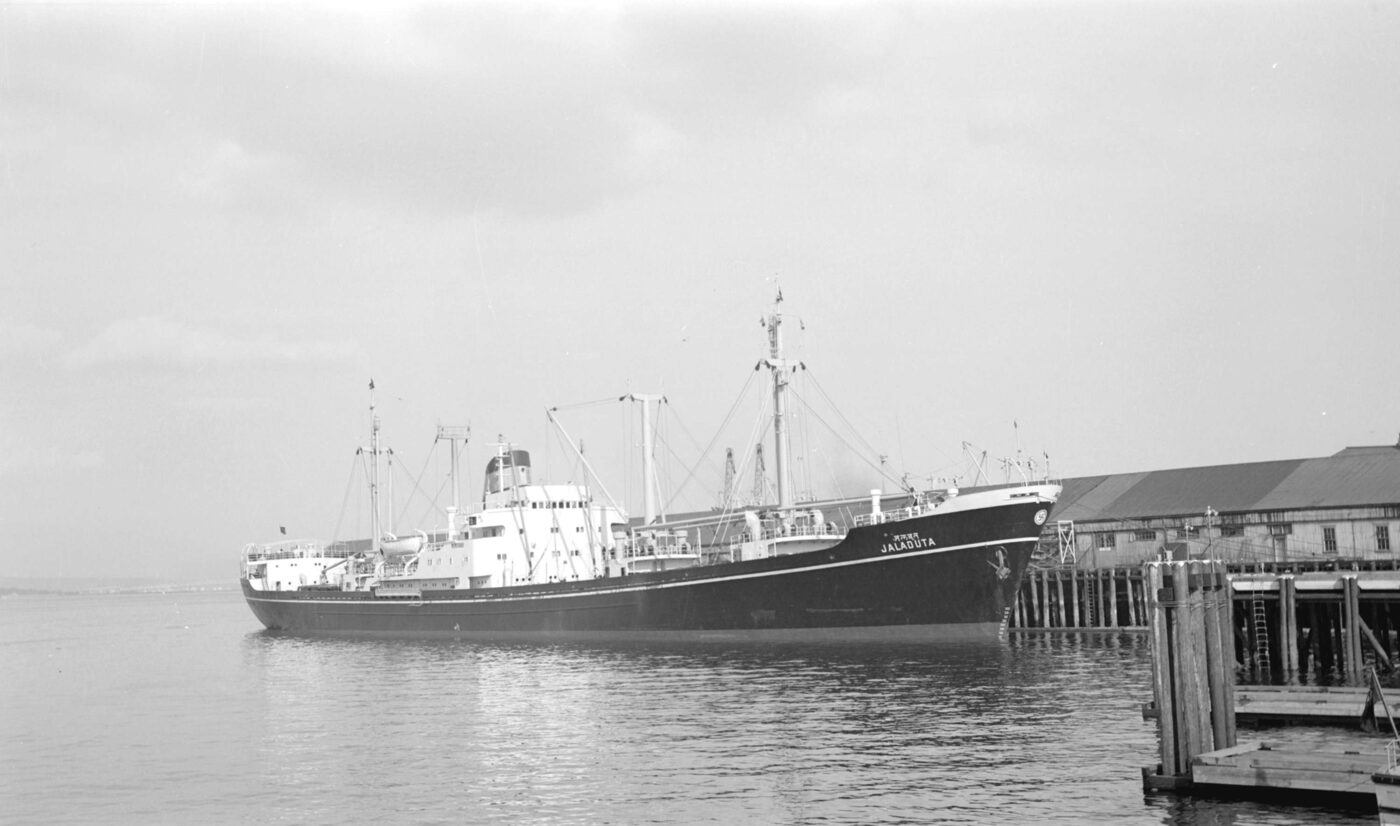
By 1965, Bhaktivedanta Swami had spent nearly three decades preparing, in one way or another, to carry out a single instruction from his spiritual master: preach the teachings of Chaitanya Mahaprabhu in the English-speaking West. He had the sannyasa vows, the completed First Canto of his Srimad-Bhagavatam translation, and almost nothing else. At sixty-nine, with no independent income, no institutional backing, and no contacts in America beyond a family of strangers who had agreed to sponsor his visa, he set out anyway.
| Detail | Description |
|---|---|
| Departure | 13 August 1965, Calcutta |
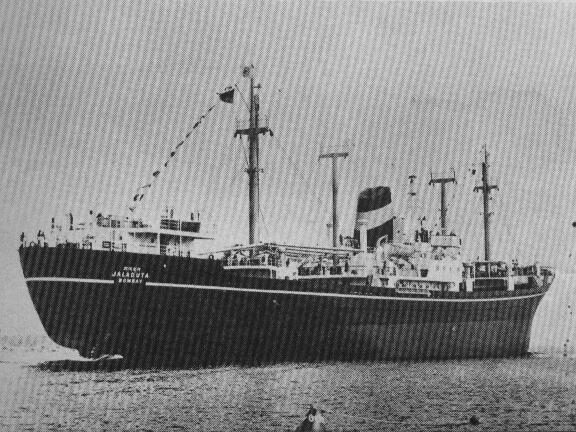
| Ship | The Jaladuta, a Scindia Steam Navigation Company freighter |
| Passage granted by | Sumati Morarjee, head of Scindia Steam Navigation |
| Age at departure | 69 |
| Possessions | A suitcase, an umbrella, dry cereal, forty rupees (about seven US dollars), and two hundred sets of his Srimad-Bhagavatam First Canto |
| Duration of crossing | 35 days |
| Arrival | Boston Harbor, 17 September 1965 |
Planning a Passage He Could Not Afford #
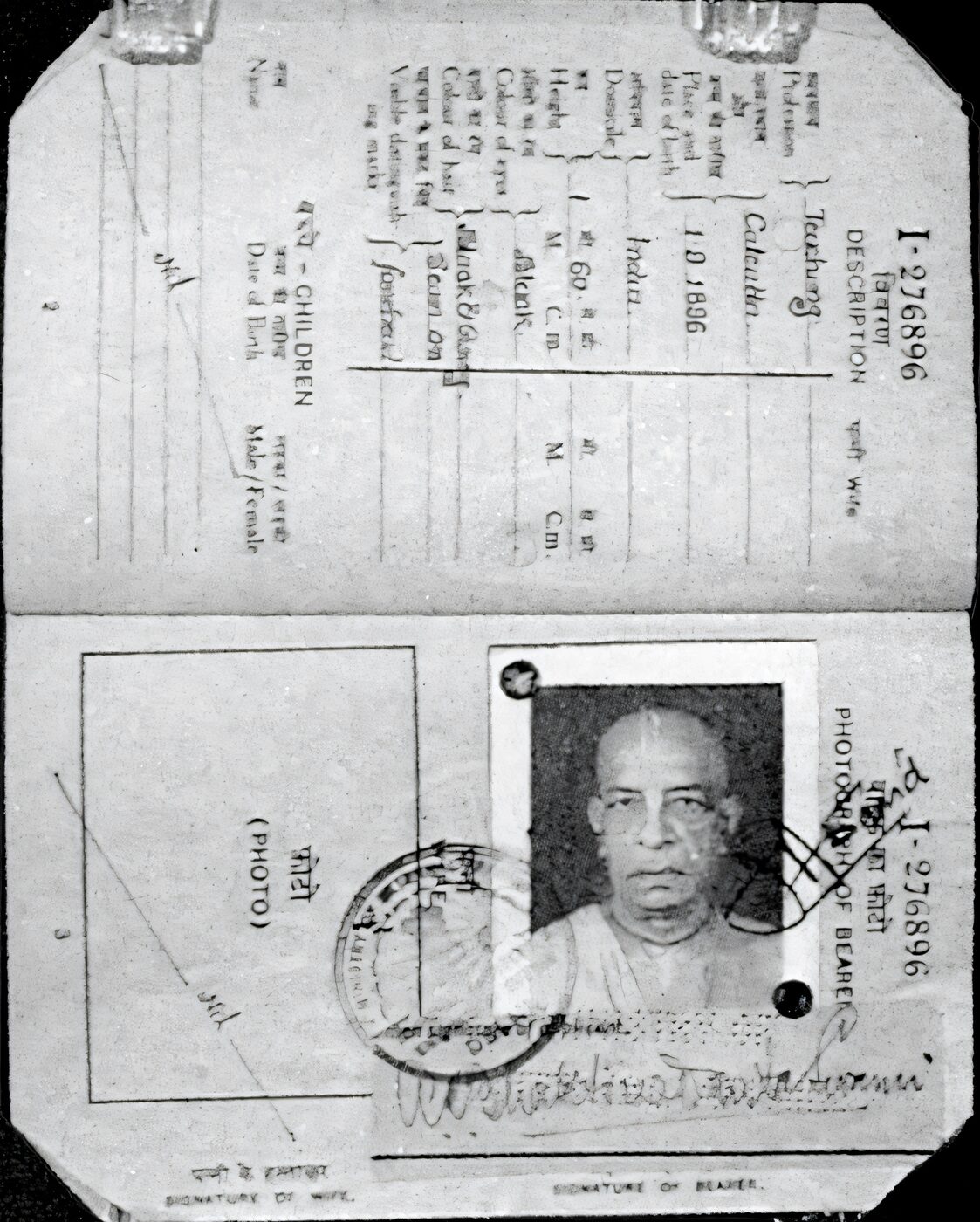
To leave India at all, Bhaktivedanta Swami needed three things he did not have: a sponsor in the United States who would take responsibility for him, official permission from the Indian government to travel, and a ticket. A sponsor came at last, almost by accident. Years earlier he had been a guest at a man's home in Agra. This man's son, Gopal Agarwal, had gone to America to study engineering and had settled there. While they were talking, Bhaktivedanta Swami had casually asked whether the son might sponsor his visa for a month. He did not know then how seriously the father had taken the request. But months later the papers arrived. An American he had never met had agreed to sponsor his entry. What happened when he reached the Agarwals' door is told in the story of his uncertain first year in America. The ticket was a separate problem, and a much harder one to solve.
Approaching Sumati Morarjee #
For the ticket, he turned to Sumati Morarjee, head of the Scindia Steam Navigation Company. She had long been a well-wisher, and she had once given him five hundred rupees in exchange for a copy of his Bhagavatam. He asked her for free passage to America on one of her company's cargo ships. By his own account, she was unwilling at first. She told him plainly that she doubted such a journey was right at his age:
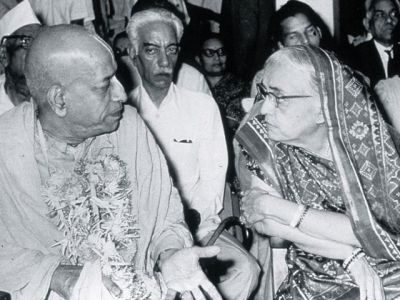
"Swamiji, you are so old, you are taking this so responsibility. Do you think it is right?"
He told her it was all right. She agreed at last and arranged a ticket for him on one of the company's cargo ships, the Jaladuta. She did even more. She made sure the ship's captain, Arun Pandia, understood that his passenger was a vegetarian brahmana. The ship's food supplies were meant for a merchant crew, so she arranged for extra fruit and vegetables to be carried for him.
Bureaucratic Hurdles in Delhi and Bombay #
A ticket and a sponsor were still not enough. Indian foreign-exchange rules required a P-form giving permission for his travel. At first an official at the State Bank of India refused to approve it. The official's reason was that a private person, not an institution, was sponsoring him, so he might be left stranded abroad after a month. Bhaktivedanta Swami took the matter to higher officers. At last he reached Mr. Rao, the bank's chief controller of foreign exchange, who approved the papers without any further objection. So the journey to America became possible only because one person after another, each in turn, said yes to an aging swami who had no institution behind him.
Departure From Calcutta #
The Jaladuta left Calcutta at nine in the morning on Friday, 13 August 1965, under Captain Arun Pandia. Bhaktivedanta Swami, sixty-nine years old, was the ship's only passenger. Ahead of him was a 35-day journey on a cargo ship, not a passenger ship. He was going to a country where he knew no one except a family that had agreed to take responsibility for him without ever having met him.
What He Carried Onto the Jaladuta #
His possessions for the voyage, and for whatever came after it in America, fit easily into a small space:
- a suitcase
- an umbrella
- a supply of dry cereal
- forty Indian rupees, worth about seven US dollars
- two hundred three-volume sets of his English translation of the First Canto of Srimad-Bhagavatam
He had no money set aside for a place to stay, and no plan for going back except the return half of his ticket. If his welcome in America turned out to be as uncertain as the journey there, he had nothing to fall back on.
Seasickness and Two Heart Attacks at Sea #
The crossing was hard on him almost from the start. His diary was a free appointment book from the shipping company, which he had begun to use as a travel journal. In it he recorded seasickness, dizziness and vomiting again and again through the Arabian Sea. These became worse, not better, as the days passed. On 25 August he wrote only a few words: "Beginning from today down." The five days that follow have no entries at all. Then, on 31 August, he wrote:
Passed over a great crisis on the struggle for life and death. A separate statement has to be written on this crisis area.
He had suffered two heart attacks during those days, alone in a cabin on a cargo ship with no doctor aboard, a passenger no one on land yet knew to worry about.
A Dream and Renewed Resolve #
Years later, in a room conversation with his own disciples, Bhaktivedanta Swami remembered those days. He described what had gone through his mind in the middle of the crisis. It was a dream in which Krishna, appearing in many forms at once, was in a boat. Krishna told him not to fear, but to come along. Bhaktivedanta Swami told this memory briefly and simply. But its effect on him at the time can be seen in what followed. The diary entries began again, his health became steady, and the tone of the diary changed from crisis to endurance.
The Rest of the Crossing #
By early September the worst had passed, though not the discomfort. Entries from the Mediterranean and the Atlantic describe fog off Gibraltar, lifeboat drills, and a slow return of appetite. On 9 September, twenty-four hours into the Atlantic crossing, he wrote that he was "taking my food regularly" and finding "some strength to struggle," but he added that the food was not his real source of strength. That came from his continued reading of Chaitanya Charitamrita, which he called "the nectarine of life... the source of my all vitality." More than once, he also wrote that he missed Vrindavan and the deities he had left behind there. And he wrote plainly why he had left at all: to carry out the order of Bhaktisiddhanta Sarasvati.
A Poem Written in Boston Harbor #
On 18 September 1965, the day after the Jaladuta docked, Bhaktivedanta Swami composed a Bengali poem aboard the ship, later published under the title Markine Bhagavata-dharma. It is less a record of the voyage than a prayer addressed directly to Krishna about what came next, and it captures the same self-doubt and surrender that run through the diary itself:
How will I make them understand this message of Krishna consciousness? I am very unfortunate, unqualified, and the most fallen. Therefore I am seeking Your benediction so that I can convince them, for I am powerless to do so on my own.
Further on, he wrote of himself as an instrument, not as the one who does the work:
O Lord, I am just like a puppet in Your hands. So if You have brought me here to dance, then make me dance, make me dance, O Lord, make me dance as You like.
He ended the poem by returning to the title he had received in 1939. Now he saw it not as an honor already earned, but as a task he still had to fulfill: "I have been designated as Bhaktivedanta, and now, if You like, You can fulfill the real purport of Bhaktivedanta."
Arrival at Boston Harbor and On to New York #
The Jaladuta docked at Commonwealth Pier, Boston, on the morning of 17 September 1965, and the immigration checks were done right there at the pier. His American sponsor had arranged in advance for a bus to carry him onward that same day, and Bhaktivedanta Swami waited at the dock for several hours for it. He arrived in the country with the same suitcase, his forty rupees in cash, and two hundred sets of a scripture translation that almost no one in America yet knew existed. What happened after that bus set out, and in the uncertain year that followed, is told on the struggling in New York City page.
