Bhaktivedanta Swami stepped off the ship that had nearly killed him at Boston Harbor. He was now in a country where he had no support. He knew no one except a single family who had agreed to sponsor his visa, though they were strangers to him. He was sixty-nine years old. His health was weak after two heart attacks at sea, and he carried forty rupees' worth of money and little else. Over the following year he built his work, first from a series of borrowed rooms and finally from a converted storefront on the Lower East Side of New York. That year is the least comfortable chapter of his life in America, and his biographers do not try to soften it.
| Detail | Description |
|---|---|
| First American contacts | The Agarwal family, Butler, Pennsylvania |
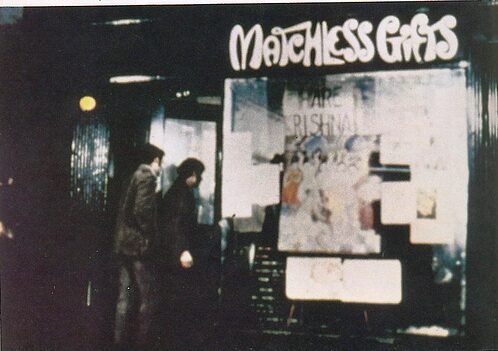
| First temple | 26 Second Avenue, a former curiosity shop called "Matchless Gifts" |
| Public turning point | Kirtan in Tompkins Square Park, reported by the New York Times |
| Regulative principles required of initiates | Four: no illicit sex, no meat, fish, or eggs, no intoxicants, no gambling |
| Daily practice required | Sixteen rounds of the Hare Krishna mantra |
| Initiates in the first year | Nineteen |
The Agarwals of Butler, Pennsylvania #
He later described standing on the dock in an unfamiliar country, with no plan beyond a name and an address: "I did not know whether to turn left or right." The Agarwals had sent someone from a travelers' aid service to meet him there. After several hours' wait, this person put him on a bus going straight to Butler, Pennsylvania. Gopal Agarwal, the engineer whose sponsorship had made his visa possible, lived there with his wife Sally. Even by his own account, the link between them was slight. He had met Gopal's father as a guest in Agra years before and had simply asked, almost in passing, whether the son might sponsor him. After a nine-hour overnight ride he arrived in Butler between two and three in the morning. Gopal met him at the bus stop in a station wagon. The Agarwals had no spare room in their apartment. So he took his meals with the family, but his hosts arranged for him to sleep somewhere else.
Lecturing at the Local YMCA #
With no room of his own at the Agarwals', Bhaktivedanta Swami stayed at the local YMCA for the three weeks he remained in Butler. Sally Agarwal arranged some speaking engagements around the town, and he lectured on Bhagavad-gita to whatever small groups could be gathered, including at the YMCA itself. It was a very small start. A foreign swami was speaking to curious strangers in a small Pennsylvania town. But this was the first audience he had found on American soil.
Back to New York, With No Fixed Address #
After about a month, he returned by bus to New York City. Here the help that had supported him in Butler simply ended. There was no second sponsor waiting, no institution, and no savings to draw on. Over the following weeks and months he moved from one uncertain place to another. At one point it was a windowless room, at another a loft in the Bowery. He had no guarantee from one period to the next of where he would stay. He was nearly seventy. He was still recovering from the heart attacks he had suffered at sea only weeks earlier. He had arrived in the city owning almost nothing, and since then he had gained almost nothing more. Nothing about this period suggests that he was comforted by any hope of an easy success. By any ordinary standard, it was an uncertain and often very hard time in his life.
Finding 26 Second Avenue #
The turn came with the help of a small number of early well-wishers who had begun attending his talks. Together they found a storefront on the Lower East Side, at 26 Second Avenue, that had previously operated as a curiosity shop under the name "Matchless Gifts." Bhaktivedanta Swami converted the space into a small temple, a single room that served simultaneously as his residence, his classroom, and the movement's first fixed address in America.
Bhagavad-gita Classes and Kirtan #
From that storefront he offered regular classes on the Bhagavad-gita and other Vaishnava texts, and led kirtan, group chanting, of the Hare Krishna mantra:
Hare Krishna, Hare Krishna, Krishna Krishna, Hare Hare
Hare Rama, Hare Rama, Rama Rama, Hare Hare
Every day he lectured and led chanting for anyone who walked in from Second Avenue. That was the whole of the work. There was no money for publicity and no organization beyond the people already present in the room.
Chanting in Tompkins Square Park #
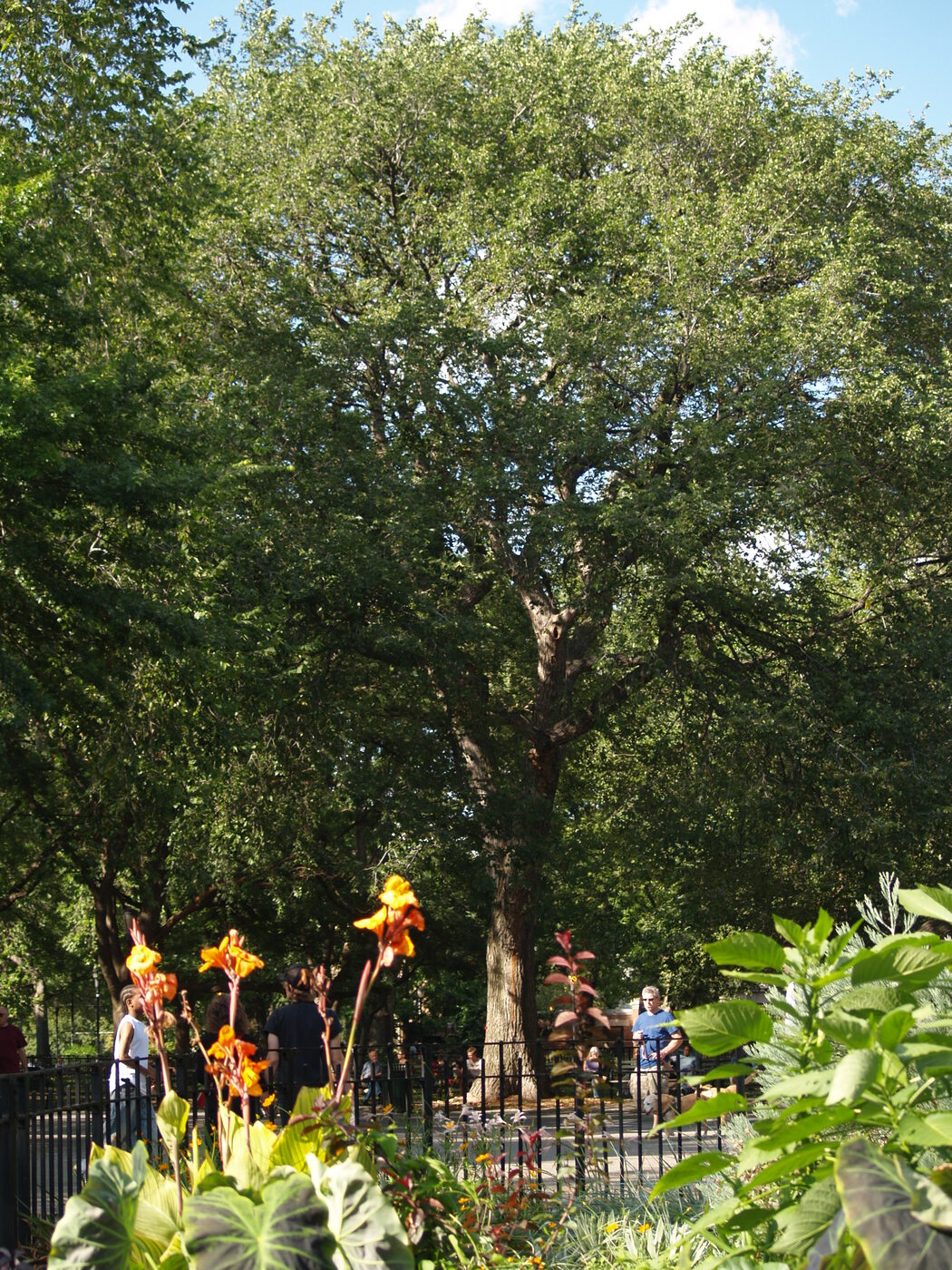
The chanting soon moved outdoors. On Sunday afternoons, Bhaktivedanta Swami and a growing handful of followers held kirtan in the open air, under a tree in nearby Tompkins Square Park. Passersby began to notice them. Most of them were young people from the counterculture of the mid-1960s, who had turned away from the usual way of life in American society.
The New York Times Takes Notice #
One of those Sunday gatherings caught the attention of a New York Times reporter. The reporter wrote about it under the headline "Swami's Flock Chants in Park to Find Ecstasy; 50 Followers Clap and Sway to Hypnotic Music at East Side Ceremony." It was the first time a major newspaper had given real attention to the young movement. This came less than a year after its founder had gotten off a cargo ship with no contacts and no plan beyond fulfilling his guru's order.
Four Regulative Principles and Sixteen Rounds #
Even in this hardship, he did not lower his standards for those who wanted to join him. To receive formal spiritual initiation, Bhaktivedanta Swami required his followers to vow to follow four regulative principles:
- No illicit sex, meaning no sexual activity outside of marriage
- No eating of meat, fish, or eggs
- No intoxicants, including alcohol, drugs, cigarettes, and even coffee and tea
- No gambling
Initiates also vowed to chant sixteen rounds of the Hare Krishna mantra daily. This meant going sixteen full times around a strand of 108 beads each day, without fail. He asked this of young Americans in the middle of the 1960s counterculture. That way of life was built largely around the very habits the four principles forbade. It was a big demand from a teacher who had nothing material to offer in return, only the practice itself.
Nineteen Initiates in the First Year #
By the end of his first year in New York, Bhaktivedanta Swami had initiated nineteen people into that discipline. It was not a large number, and nothing about the room at 26 Second Avenue in 1965 and 1966 looked like the beginning of an international institution. But it was a strong enough foundation. In July 1966 he was able to register the group formally as the International Society for Krishna Consciousness. In the end, the Society was built on that one year. A man in his late sixties had arrived in a country he had never seen, with almost nothing. He simply kept teaching until a handful of people stayed to listen.
