Bhātrola
भतरौड
Also called Bhojana-sthala, Bhātrola-gaon
In short
Bhātrola, also called Bhojana-sthala, "the place of the meal", is the village of Vṛndāvana where, according to Śrī Vraja-maṇḍala Parikramā (2007), Kṛṣṇa ate the food brought by the yajña-patnīs, the wives of the brāhmaṇas who were performing a sacrifice. The book describes it in its chapter on Akrūra-ghāṭa, after Yajña-sthala.[1 +4] Śrīmad-Bhāgavatam tells the meal without naming a place.[6 +5] The Bhakti-ratnākara calls the place of the pastime near the Akrūra village "Bhojana-sthala", and Śrīla Raghunātha dāsa Gosvāmī bows to the place of that meal.[3 +3]
Key facts
| Kind | village |
|---|---|
| Region · area | Vṛndāvana |
| Ācāryas | Śrīla Jīva Gosvāmī, Śrīla Raghunātha dāsa Gosvāmī, Śrīla Śrīnivāsa Ācārya, Śrīla Narahari Cakravartī Ṭhākura |
Why it is glorified
Śrīla Raghunātha dāsa Gosvāmī's Vraja-vilāsa-stava (verse 86) bows to the place where the learned wives of the sacrificers fed …
Śrīla Raghunātha dāsa Gosvāmī's Vraja-vilāsa-stava (verse 86) bows to the place where the learned wives of the sacrificers fed Kṛṣṇa and Balarāma and Their friends, of their own accord and with devotion, with plentiful food of four kinds, and he bows to those wives too. The verse names no place; the Bhakti-ratnākara quotes it for its Bhojana-sthala.[12 +2]
अन्नैर्यत्र चतुर्विधैः पृथुगणैः स्वैरं सुधानिन्दिभिः । कामं रामसमेतमच्युतमहो स्निग्धैर्वयस्यैर्वृतम् । श्रीमान्याज्ञिकविज्ञसुन्दरवधूवर्गः स्वयं यो मुदा । भक्त्या भोजितवान् स्थलं च तदिदं तं चापि वन्दामहे ॥ ८६॥
annairyatra caturvidhaiḥ pṛthugaṇaiḥ svairaṁ sudhānindibhiḥ
kāmaṁ rāmasametamacyutamaho snigdhairvayasyairvṛtam
śrīmānyājñikavijñasundaravadhūvargaḥ svayaṁ yo mudā
bhaktyā bhojitavān sthalaṁ ca tadidaṁ taṁ cāpi vandāmahe || 86 ||
Divine pastimes
The meal in Śrīmad-Bhāgavatam
After Kṛṣṇa had taken the gopīs' clothes, He, Balarāma and the cowherd boys took the cows a good distance from Vṛndāvana, to a grove by the Yamunā. When the boys grew hungry, Kṛṣṇa sent them to ask for food from brāhmaṇas who were performing a sacrifice nearby, and the brāhmaṇas ignored them.[1 +5] Sent again, the boys asked the brāhmaṇas' wives, who at once brought four kinds of food and met Kṛṣṇa in a grove by the Yamunā adorned with aśoka shoots:[4 +3]
niṣidhyamānāḥ patibhir bhrātṛbhir bandhubhiḥ sutaiḥ / bhagavaty uttama-śloke dīrgha-śruta -dhṛtāśayāḥ
yamunopavane 'śoka nava-pallava-maṇḍite / vicarantaṃ vṛtaṃ gopaiḥ sāgrajaṃ dadṛśuḥ striyaḥ
Along the river Yamunā, within a garden decorated with buds of aśoka trees, they caught sight of Him strolling along in the company of the cowherd boys and His elder brother, Balarāma.
Translation: Śrīla Prabhupāda's disciples (BBT)Kṛṣṇa sent the wives back to the sacrifice, because their husbands needed them to complete it, and then fed the boys with that food and ate Himself.[4 +7]
tatraikā vidhṛtā bhartrā bhagavantaṃ yathā-śrutam / hṛḍopaguhya vijahau dehaṃ karmānubandhanam
bhagavān api govindas tenaivānnena gopakān / catur-vidhenāśayitvā svayaṃ ca bubhuje prabhuḥ
Govinda, the Supreme Personality of Godhead, fed the cowherd boys with that food of four varieties. Then the all-powerful Lord Himself partook of the preparations.
Translation: Śrīla Prabhupāda's disciples (BBT)The Bhāgavatam names no place for any of this. It says only that Kṛṣṇa was "not far" from the sacrifice, that He had come a long way, and that the meeting was in a grove by the river.[6 +5] Read more: Kṛṣṇa and the wives of the brāhmaṇas: the pastime and its places →
What the commentators add
The commentators explain these verses as follows (summarised here, not translated). Śrīla Sanātana Gosvāmī, Śrīla Jīva Gosvāmī and Śrīla Viśvanātha Cakravartī Ṭhākura take the grove where the boys grew hungry to be the same aśoka grove where the wives met Kṛṣṇa; aśoka trees give no fruit to eat.[4 +4] Śrīla Sanātana Gosvāmī calls the wives women of Mathurā and says that Kṛṣṇa went far from Vṛndāvana to come near their homes.[24] In his Prīti-sandarbha Śrīla Jīva Gosvāmī says that Kṛṣṇa went along the Yamunā to a paved platform called Bhakta-krīḍana, and that the brāhmaṇas lived south of it and north of Mathurā. Elsewhere he and Śrīla Sanātana Gosvāmī place that platform at the boundary of Vṛndāvana; where it is today is not known.[20 +4]
Of the meal itself, Śrīla Sanātana Gosvāmī says that Kṛṣṇa served the boys Himself and ate with them as they sat around Him in a circle, like the petals of a lotus around its whorl. Śrīla Jīva Gosvāmī and Śrīla Viśvanātha Cakravartī Ṭhākura add that the food was little for so many boys, yet by His power it filled them all.[4 +1]
Śrī Caitanya Mahāprabhu
In Śrīla Murāri Gupta's Kṛṣṇa-caitanya-caritāmṛta (4.7.21), Śrī Caitanya Mahāprabhu is shown, as the last of a series of pastime places in Vṛndāvana, the place where Kṛṣṇa took food from the brāhmaṇas' wives and ate it with the boys and Balarāma. The book gives that place no name (summarised here, not translated).[30]
Traditional accounts
According to the Bhakti-ratnākara, Śrīla Rāghava Paṇḍita Gosvāmī of Govardhana showed Śrīla Śrīnivāsa Ācārya, right after the …
According to the Bhakti-ratnākara, Śrīla Rāghava Paṇḍita Gosvāmī of Govardhana showed Śrīla Śrīnivāsa Ācārya, right after the Akrūra village, the place where the sages headed by Aṅgirā held their sacrifice, where their wives brought the food and where Kṛṣṇa ate it with His companions; "everyone knows this place by the name Bhojana-sthala", the book says. It puts the sacrifice and the meal in one place.[3 +1] Śrīla Nārāyaṇa Bhaṭṭa Gosvāmī's Vraja-bhakti-vilāsa also lists a Yajña-patnī-sthala, a place of the brāhmaṇas' wives, with its own prayer, just before Akrūra-ghāṭa.[5 +1]
The name Bhātrola is given by Śrī Vraja-maṇḍala Parikramā, which says that Kṛṣṇa relished the dishes of the yajña-patnīs here.[1 +4] According to the same book, Kṛṣṇa and His friends then walked back toward Nanda's home, and at Aṭalavana Kṛṣṇa declared that the food had made Him immovable (aṭala); no older text tells this, and it is not certain.[2] The Bengali Vṛndāvana-kathā (1920) reports that the people of Vraja said Kṛṣṇa ate the food with His friends at Bhojana-ṭīlā, an old mound called Bhātarol a little way from Akrūra-ghāṭa.[32]
Aṭalavana
Aṭalavana is a forest in the south of Vṛndāvana town, near the point where the Mathurā road meets the parikramā path, the walk around Vṛndāvana. Śrī Vraja-maṇḍala Parikramā (2007) counts it as the first of the twelve forests within the ten-mile parikramā of Vṛndāvana; it also once calls the place "Bhātrol (Aṭalavana)", as if the two were one (see the accounts below).[2 +2] The story of the name rests on that book alone: walking back toward Chaṭṭīkarā Nanda-Gokula after the meal at Bhātrola, Kṛṣṇa and His friends came to this place, and here, according to the book, He declared that the food had made Him aṭala, unable to move. No scripture, Gosvāmī work or statement of Śrīla Prabhupāda that names Aṭalavana has been found in the works searched, so the story is not certain.[2 +5]
Śrīmad-Bhāgavatam closes Kṛṣṇa's part in the story of the brāhmaṇas' wives with the meal:[4 +4]
evaṃ līlā-nara-vapur nr-lokam anuśīlayan / reme go-gopa-gopīnāṃ ramayan rūpa-vāk-kṛtaiḥ
Thus the Supreme Lord, appearing like a human being to perform His pastimes, imitated the ways of human society. He enjoyed pleasing His cows, cowherd boyfriends and cowherd girlfriends with His beauty, words and actions.
Translation: Śrīla Prabhupāda's disciples (BBT)The Bhāgavatam tells no walk back after the meal and no remark that Kṛṣṇa could not move, and none of its commentators or Śrīla Prabhupāda's Kṛṣṇa book mentions it.[4 +4]
Śrī Vraja-maṇḍala Parikramā says in one line that Aṭala-tīrtha and Aṭala-bihārījī are in Aṭalavana; it does not describe either of them.[2] The name Aṭala-bihārījī may be that of a Deity, but the book describes no temple, and no other source gives its place, history or founder.[2] No source says whether Aṭala-tīrtha is a kuṇḍa or a ghāṭa.[2]
Śrīla Prabhupāda
Śrīla Prabhupāda tells the pastime in chapter 23 of his Kṛṣṇa book.
Śrīla Prabhupāda tells the pastime in chapter 23 of his Kṛṣṇa book. He sets the meeting in the forest of Vṛndāvana by the Yamunā and names no village:[17]
Names this place“The women entered the forest of Vṛndāvana on the bank of the Yamunā, which was verdant with vegetation and newly grown vines and flowers. Within that forest they saw Kṛṣṇa and Balarāma engaged in tending the cows along with Their very affectionate boyfriends.”
Śrīla Prabhupāda, Kṛṣṇa, the Supreme Personality of Godhead, Chapter 23, 'Delivering the Wives of the Brāhmaṇas Who Performed Sacrifices' · vedabase.io
After the wives had gone, he writes, Kṛṣṇa and His friends ate:[17]
Names this place“After the departure of the brāhmaṇas’ wives, Śrī Govinda and His cowherd boyfriends enjoyed the food they had offered.”
Śrīla Prabhupāda, Kṛṣṇa, the Supreme Personality of Godhead, Chapter 23, 'Delivering the Wives of the Brāhmaṇas Who Performed Sacrifices' · vedabase.io
Songs
Śrīla Jīva Gosvāmī's Gopāla-campū sets the meeting in the aśoka grove by the Yamunā and gives a song for the moment when the …
Śrīla Jīva Gosvāmī's Gopāla-campū sets the meeting in the aśoka grove by the Yamunā and gives a song for the moment when the wives arrive there with the food: they see Kṛṣṇa in yellow cloth, the source of the splendour of the new rain-cloud and the lightning.[42 +1]
Location
| Where it is | reference (Akrūra-ghāṭa chapter)[45] |
|---|
Places at Bhātrola
3 places
Also described on this page
- Aṭalavana forest
Also listed here
- Aṭala-bihārījī temple
- Aṭala-tīrtha tīrtha
Nearby places
Akrūra-ghāṭa · Yajña-sthala
History
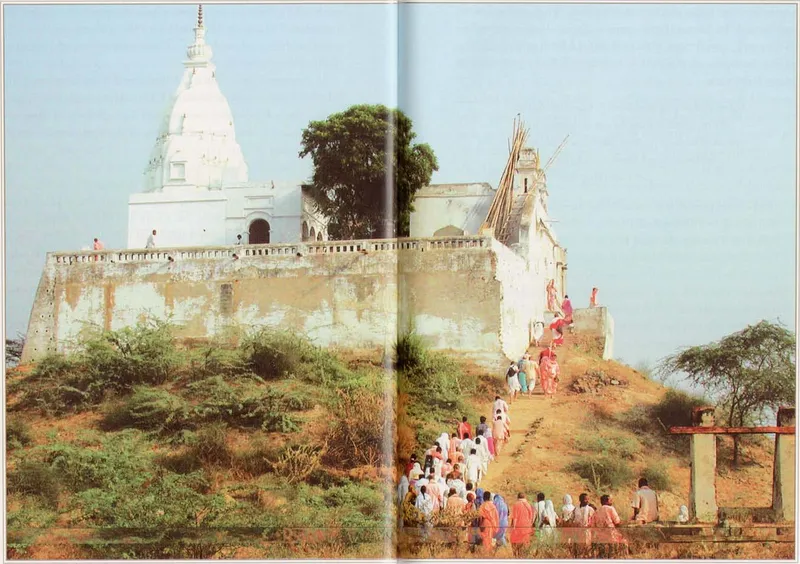
F. S. Growse's Mathurá: A District Memoir (1883) describes, in the hamlet of Akrūr between Mathurā and Vṛndāvana, a temple called Bhat-rond on the edge of a cliff: a single tower with an image of Bihārī Jī, with a garden of the Seths opposite and a fair, the Bhat-mela, held on the road between them on the full moon of Kārttika. The Muttra district gazetteer of 1911 repeats the description. Neither book says that this temple stood at the Bhātrola of Śrī Vraja-maṇḍala Parikramā (2007).[36 +2] By 1920, according to the Vṛndāvana-kathā, the temple on the Bhātarol mound was a ruin with no Deity and no one living there; its Deity, Bihārījī of Śrī Vallabhācārya's sampradāya, was then in Mathurā.[32]
The historian Prabhudayāl Mītal (1966) records that in Saṁvat 1870 Gokuldās Pārikh camped near Bhatarod and for a time arranged the worship of his Deity of Dvārakādhīśa in a garden there. A. W. Entwistle (1987) says that Pārikh, treasurer of Gwalior State, at first wanted to install the Deity in a garden opposite the temple of Bhatror, but the site proved inconvenient, and his temple was built in Mathurā in 1814–15.[39 +1] Entwistle also describes a temple of Bhatror Bihārī on a mound near the parikramā path, a few hundred metres before it crosses the Mathurā–Vṛndāvana road. Whether this is the Batharan-bihārī Mandira of the guidebooks is not settled.[41]
Where the sources differ
Which site honours the sacrifice and which the meal of the brāhmaṇas' wives' pastime (one place or two, and their names).
Accounts differ Which site honours the sacrifice and which the meal of the brāhmaṇas' wives' pastime (one place or two, and their names).
- Śrī Vraja-maṇḍala Parikramā (2007)Two places: Yajña-sthala, the sacrificial arena of the Mathurā brāhmaṇas near Akrūra-ghāṭa, where the brāhmaṇas refused the sakhās; and Bhojana-sthala (Bhātrola-gaon), where Kṛṣṇa relished the food the yajña-patnīs brought.
- Vṛndāvana-Dhāma Ki Jaya! (c. 1986)One heading, 'Yajña-sthāna', tells both the refusal and the feeding, and closes with Vraja-vilāsa-stava 86, which bows to 'the place where Lord Kṛṣṇa enjoyed this pastime' (the feeding).
- Bhakti-ratnākara, Fifth Wave, p. 289One place near the Akrūra village: there the Aṅgiras sages sacrificed, the wives brought the food and Kṛṣṇa ate right here; everyone knows this place by the name Bhojana-sthala. Vraja-vilāsa-stava 86 is quoted for it.
- Vṛndāvana, the Playground of God (2010) and The Color Guide to Vṛndāvana (2000)The Batharan-bihārī temple marks the place where Kṛṣṇa ate (with Balarāma and the boys) after the wives' visit; it is 'also known as Bhojana Sthālī' (Vṛndāvana, the Playground of God (2010): the wives came 'here on the banks of the River Yamunā'). Neither book names Bhātrola or Yajña-sthala.
The wording of these accounts is our summary of the sources, not a published translation.
Accounts differ Where the scriptures and the Gosvāmīs set the pastime of the brāhmaṇas' wives.
- Śrīmad-Bhāgavatam 10.22.29-38, 10.23.7, 10.23.21A good distance from Vṛndāvana, in a small forest by the Yamunā; the sacrificial arena 'not far'; the wives meet Kṛṣṇa in a grove by the Yamunā adorned with aśoka shoots. No name.
- Garga-saṁhitā, Mādhurya-khaṇḍa 21.6, 15, 21After the forest fire in the Muñjāṭavī, an aśoka forest 'on the far side of the Yamunā'; after the meal Kṛṣṇa 'came to Vṛndāraṇya' (which suggests it lay outside it; not stated).
- Garga-saṁhitā, Balabhadra-khaṇḍa 6.13From Bhāṇḍīra to the bank of the Yamunā, to an aśoka forest there.
- Brahma-vaivarta Purāṇa, Śrīkṛṣṇa-janma-khaṇḍa 18.5, 10, 21Kṛṣṇa went to Śrī-Madhuvana by the Yamunā; the Āṅgirasa brāhmaṇas' āśrama was near 'Śrīvana'; Kṛṣṇa waited at the root of a banyan in Madhuvana, in Bhāṇḍīra, far from here.
The wording of these accounts is our summary of the sources, not a published translation.
Accounts differ Where the Canto 10 commentators set the pastime of the brāhmaṇas' wives, against the other tellings.
- Śrīla Jīva Gosvāmī, Prīti-sandarbha 379 (printed under ŚB 10.22.29)Kṛṣṇa went first to the hilly Kāmyaka forest, then along the Yamunā to the paved platform called Bhakta-krīḍana; the sacrificers lived south of it and north of Mathurā.
- Śrīla Sanātana Gosvāmī and Śrīla Jīva Gosvāmī on ŚB 10.11.29; Jīva on 10.11.34-35The Bhakta-krīḍana platform stands at the boundary of Vṛndāvana, two yojanas south of the region known as Bhāṇḍīra; the region between Vatsa-krīḍana and Bhakta-krīḍana is the junction of Mathurā and Vṛndāvana.
- Śrīla Sanātana Gosvāmī on ŚB 10.22.29The yajña-patnīs were women of Mathurā; Kṛṣṇa went far from Vṛndāvana to go near their homes.
- Śrīla Sanātana Gosvāmī, Śrīla Jīva Gosvāmī and Śrīla Viśvanātha Cakravartī Ṭhākura on ŚB 10.22.38 (Śrīla Viśvanātha Cakravartī Ṭhākura also on 10.23.52)Hunger, waiting, meeting and meal were in one aśoka grove by the Yamunā ('that aśoka grove').
The wording of these accounts is our summary of the sources, not a published translation.
Whether Bhātrola and Aṭalavana are one place or two is not certain: Śrī Vraja-maṇḍala Parikramā lists them as one in its route list and as two in its list of the twelve forests.[2]
Accounts differ Are Bhātrola and Aṭalavana the same place?
- Śrī Vraja-maṇḍala Parikramā (2007) (route list)Lists Vṛndāvana's first forest as 'Bhātrol (Aṭalavana)'.
- Śrī Vraja-maṇḍala Parikramā (2007) (the twelve forests)Kṛṣṇa ate at Bhātrola (Bhojana-sthala) and then, returning toward Chaṭṭīkarā Nanda-Gokula, 'came to this place' (Aṭalavana) and said He had become immovable: two places, the forest named from the walk after the meal.
How many wives were held back by their husbands: the Bhāgavatam tells of one lady, while Śrī Vraja-maṇḍala Parikramā says that some brāhmaṇas locked their wives in their houses.[1 +3]
Accounts differ How many wives were kept back by their husbands and gave up their bodies.
- Śrīmad-Bhāgavatam 10.23.35One lady (ekā), held back by her husband, embraced Kṛṣṇa in her heart and gave up her body.
- Śrīla Prabhupāda, Kṛṣṇa book ch. 23'One of the brāhmaṇas' wives … who had been forcibly checked' gave up her body (summary of the chapter text).
- Śrī Vraja-maṇḍala Parikramā (2007)'Some brāhmaṇas forcefully locked their wives in their houses, but these women gave up their bodies in the fire of separation' and went to meet Him (plural).
Accounts differ What became of the wives after they met Kṛṣṇa.
- Śrīmad-Bhāgavatam 10.23.34They returned to the place of sacrifice; their husbands found no fault and finished the sacrifice with them.
- Garga-saṁhitā 4.21.18-19Kṛṣṇa promised that their husbands would reach Goloka with them; they returned to the circle of the sacrifice.
- Brahma-vaivarta 4.18.61-63They went to Goloka in a celestial chariot, becoming gopīs; Kṛṣṇa sent shadow forms of them to the brāhmaṇas' homes.
More on this place
Kṛṣṇa and the wives of the brāhmaṇas: the pastime and its places
References
45 references
- Śrī Vraja-maṇḍala Parikramā (2007), PDF p. 286
- Śrī Vraja-maṇḍala Parikramā (2007), PDF p. 340
- Śrīla Narahari Cakravartī, Bhakti-ratnākara, Fifth Wave (pañcama taraṅga), 1912 ed. p. 289, 2nd ed., 1912
- Śrīmad-Bhāgavatam 10.23.35-36, GRETIL
- Śrīla Nārāyaṇa Bhaṭṭa Gosvāmī, Vraja-bhakti-vilāsa, Vṛndāvana-yātrā section (begins printed p. 226), item numbered 77, 1st ed., publ. Bābā Kṛṣṇadāsa, Kusuma-sarovara, Saṁvat 2008
- Śrīmad-Bhāgavatam 10.23.7, GRETIL
- Śrīmad-Bhāgavatam 10.23.15-17, GRETIL
- Śrīmad-Bhāgavatam 10.23.28, GRETIL
- Śrīmad-Bhāgavatam 10.23.34, GRETIL
- Śrīmad-Bhāgavatam 10.22.36-38, GRETIL
- Śrīmad-Bhāgavatam 10.23.20-21, GRETIL
- Śrīla Narahari Cakravartī, Bhakti-ratnākara, Fifth Wave, 1912 ed. pp. 289-290: Vraja-vilāsa-stava 86 as quoted, 2nd ed., 1912
- Śrīla Raghunātha dāsa Gosvāmī, Vraja-vilāsa-stava, verse 86
- Vṛndāvana-Dhāma Ki Jaya! (c. 1986), by Dhruva Mahārāja dāsa, PDF p. 78
- Śrīmad-Bhāgavatam 10.22.29, GRETIL
- Śrīmad-Bhāgavatam 10.23.3-4, GRETIL
- Śrīla Prabhupāda, Kṛṣṇa, the Supreme Personality of Godhead, Chapter 23, 'Delivering the Wives of the Brāhmaṇas Who Performed Sacrifices' · vedabase.io
- Vṛndāvana, the Playground of God (2010), Bhakti Caitanya Svāmī, PDF p. 239
- Śrīmad-Bhāgavatam 10.23.33, GRETIL
- Śrīmad-Bhāgavatam 10.23.52, GRETIL
Show all 45 references
- Śrīla Prabhupāda, Kṛṣṇa, the Supreme Personality of Godhead (Kṛṣṇa book), Chapter 23, 'Delivering the Wives of the Brāhmaṇas Who Performed Sacrifices' · vedabase.io
- Śrīla Sanātana Gosvāmī, Śrīla Jīva Gosvāmī, Śrīla Viśvanātha Cakravartī Ṭhākura: commentary on ŚB 10.22.38, Bhagavata Vidya Pith edition, ed. Bhagavata Rishi and Krishna Shankar Shastri, 1996
- Śrīla Sanātana Gosvāmī, Śrīla Jīva Gosvāmī, Śrīla Viśvanātha Cakravartī Ṭhākura: commentary on ŚB 10.23.52, Bhagavata Vidya Pith edition, ed. Bhagavata Rishi and Krishna Shankar Shastri, 1996
- Śrīla Sanātana Gosvāmī: commentary on ŚB 10.22.29, Bhagavata Vidya Pith edition, ed. Bhagavata Rishi and Krishna Shankar Shastri, 1996
- Śrīla Jīva Gosvāmī: commentary on ŚB 10.22.29'), Bhagavata Vidya Pith edition, ed. Bhagavata Rishi and Krishna Shankar Shastri, 1996
- Śrīla Jīva Gosvāmī, Gopāla-campū, Pūrva-campū, pūraṇa 22 ('yajña-bhāryā-sad-upacaryā-paryāptiḥ'), sections [12]-[13], GRETIL
- Śrīla Sanātana Gosvāmī: commentary on ŚB 10.11.29, Bhagavata Vidya Pith edition, ed. Bhagavata Rishi and Krishna Shankar Shastri, 1996
- Śrīla Jīva Gosvāmī: commentary on ŚB 10.11.34-35, Bhagavata Vidya Pith edition, ed. Bhagavata Rishi and Krishna Shankar Shastri, 1996
- Śrīla Sanātana Gosvāmī, Śrīla Jīva Gosvāmī, Śrīla Viśvanātha Cakravartī Ṭhākura: commentary on ŚB 10.23.36, Bhagavata Vidya Pith edition, ed. Bhagavata Rishi and Krishna Shankar Shastri, 1996
- Kṛṣṇa-caitanya-caritāmṛta, prakrama 4, sarga 7, verse 21 (4.7.21), PDF page 573
- Śrīla Nārāyaṇa Bhaṭṭa Gosvāmī, Vraja-bhakti-vilāsa, list of the forests and their sites, Vṛndāvana entry, 1st ed., publ. Bābā Kṛṣṇadāsa, Kusuma-sarovara, Saṁvat 2008
- Vṛndāvana-kathā, chapter 16 (ṣoḍaśa pariccheda), item 5 'Bhojana ṭīlā', printed p. 192
- Śrī Vraja-maṇḍala Parikramā (2007), PDF p. 298
- Śrī Vraja-maṇḍala Parikramā (2007), PDF p. 25
- Śrīmad-Bhāgavatam 10.23.37, GRETIL
- Mathurá (1883), F. S. Growse, B.C.S., M.A. Oxon., C.I.E. (as the title page gives him, p. 186
- Muttra (1911), D. L. Drake-Brockman, I.C.S. (edited and compiled), p. 241
- Mathurá (1883), F. S. Growse, B.C.S., M.A. Oxon., C.I.E. (as the title page gives him, p. 63
- A. W. Entwistle, ch. 5, §5.38 'The Pushtimarg in modern times', printed p. 222, the paragraph beginning 'Nowadays the most important temple of the Pushtimarg in Mathura', Egbert Forsten, Groningen, 1987
- Prabhudayāl Mītal, part 2 (history), 'Ādhunik kāl' (the modern period), section 'Gokuladās Pārikh', printed p. 269, third paragraph
- A. W. Entwistle, ch. 8 §66.41 'Bhatror', printed p. 417, first sentence of the entry, Egbert Forsten, Groningen, 1987
- Śrīla Jīva Gosvāmī, Gopāla-campū, Pūrva-campū 22.19-20, GRETIL
- Kṛṣṇam Apaśyan Pīta Dukulam (Gopāla-campū) (Jīva Gosvāmī (as the song book credits it; marked inferred in the song book data; the e-text confirms it is in his Gopāla-campū, Pūrva 22.21)) · song book
- Śrī Vraja-maṇḍala Parikramā (2007), PDF p. 288
- Śrī Vraja-maṇḍala Parikramā (2007), p. 654-655