Dharma-kuṇḍa
धर्म-कुण्ड Hindi name proposed
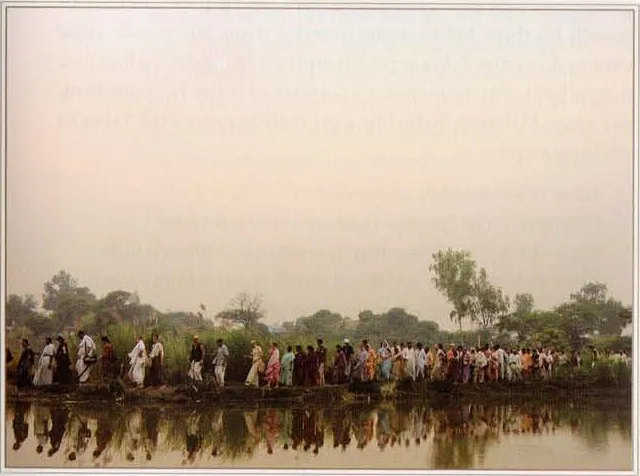
- What it is
- Dharma-kuṇḍa is a kuṇḍa (sacred pond) in the eastern part of Kāmyavana.
- Visiting
- Śrī Vraja-maṇḍala Parikramā (2007) places Dharma-kuṇḍa in the eastern part of Kāmyavana, with a platform called Viśākhā-vedī nearby.
- Places here
- Pañca Pāṇḍava-kuṇḍa, Hanumānjī (Dharma-kuṇḍa), Maṇikarṇikā (Dharma-kuṇḍa), Nara-Nārāyaṇa-kuṇḍa, Nīla-varāha +4 more
In short
Dharma-kuṇḍa is a kuṇḍa (sacred pond) in the eastern part of Kāmyavana.[1] The Bhakti-ratnākara calls it the place where Nārāyaṇa sports in the form of Dharma, and Śrīla Nārāyaṇa Bhaṭṭa Gosvāmī's Vraja-bhakti-vilāsa says that it is named after King Yudhiṣṭhira, the son of Dharma, who performed dharma here.[1 +2] The modern guidebooks tell here the Mahābhārata's story of the Yakṣa's questions to Yudhiṣṭhira; the Mahābhārata itself sets that story in another forest.[4 +1] Around the kuṇḍa lie smaller places: a kuṇḍa of the five Pāṇḍavas, a Maṇikarṇikā, the throne of Dharmarāja and several shrines.[1]
Key facts
Why it is glorified
On the Vraja parikramā of the Bhakti-ratnākara (Fifth Wave), Śrīla Rāghava Paṇḍita Gosvāmī shows Śrīla Śrīnivāsa Ācārya and Śrīla …
In the pilgrimage books
On the Vraja parikramā of the Bhakti-ratnākara (Fifth Wave), Śrīla Rāghava Paṇḍita Gosvāmī shows Śrīla Śrīnivāsa Ācārya and Śrīla Narottama dāsa Ṭhākura this kuṇḍa and tells them that here Nārāyaṇa sports in the form of Dharma, and that its beauty cannot be described (summarised here, not translated).[1 +1]
Śrīla Nārāyaṇa Bhaṭṭa Gosvāmī lists Dharma-kuṇḍa fifth among the holy places of Kāmyavana. In his chapter of bathing prayers he explains the name: King Yudhiṣṭhira performed dharma here, and dharma done at this kuṇḍa becomes imperishable and bears a thousandfold fruit. The prayer he gives for the bath, which he ascribes to the Viṣṇu-dharmottara, honours the kuṇḍa as Dharma itself (summarised here, not translated).[3 +1]
The Nārada Purāṇa also names a Dharma-kuṇḍa, in a list of the tīrthas of Vṛndāvana; it tells no story and gives no position, and no source found so far identifies it with this kuṇḍa.[7]
Divine pastimes
The Yakṣa's questions
The Mahābhārata tells how, during their exile, the Pāṇḍavas left the Kāmyaka forest and went back to Dvaitavana. There, chasing a deer, the brothers grew thirsty and came to a lake that the text does not name. A voice forbade them to drink before answering its questions; four brothers drank and fell, and Yudhiṣṭhira answered. The questioner then revealed that he was Dharma, Yudhiṣṭhira's father, who had come to test him (summarised here, not translated).[4 +1]
Śrīla Prabhupāda quotes one of Yudhiṣṭhira's answers in a general teaching on death, and names the questioner Yamarāja; he does not name a place.[8 +1]
General teaching (does not name the place)Yamarāja once asked Mahārāja Yudhiṣṭhira, “What is the most wonderful thing within this world?” Mahārāja Yudhiṣṭhira replied (Mahābhārata, Vana-parva 313.116) … Hundreds and thousands of living entities meet death at every moment, but a foolish living being nonetheless thinks himself deathless and does not prepare for death. This is the most wonderful thing in this world.
Śrīla Prabhupāda, Śrīmad-Bhāgavatam, 7.2.57, purport · vedabase.io
The guidebooks Śrī Vraja-maṇḍala Parikramā (2007) and the undated parikramā notes Kāmyavana tell this story under the name Dharma-kuṇḍa, as one of the Pāṇḍavas' adventures in Kāmyavana. Where their telling differs from the Mahābhārata's, and who the questioner was, is shown below.[4 +1] Read more: The Pāṇḍavas in Kāmyavana: the Yakṣa's questions and the Pāṇḍava sites →
Traditional accounts
According to Śrī Vraja-maṇḍala Parikramā (2007), the five Pāṇḍavas lived in Kāmyavana for a long time during their exile, and …
According to Śrī Vraja-maṇḍala Parikramā (2007), the five Pāṇḍavas lived in Kāmyavana for a long time during their exile, and Dharma-kūpa, Dharma-kuṇḍa and many places near them seem to be connected with the Pāṇḍavas. The Vraja-bhakti-vilāsa also ties Dharma-kuṇḍa to Yudhiṣṭhira in "auspicious Kāmyavana".[1 +4] Śrīla Prabhupāda writes that the sage Bṛhadaśva first met Mahārāja Yudhiṣṭhira at Kāmyavana, but he does not say where that Kāmyavana is; the identification of the Pāṇḍavas' forest with Vraja's Kāmyavana is the Vraja-bhakti-vilāsa's and the guidebook's.[1 +2]
Śrīla Prabhupāda
Śrīla Prabhupāda names none of the places of this kuṇḍa.
Śrīla Prabhupāda names none of the places of this kuṇḍa. Where Śrī Caitanya Mahāprabhu goes to Kāmyavana, his purport quotes the Bhakti-ratnākara on the forest as a whole:[15]
General teaching (does not name the place)“In this Kāmyavana, Kṛṣṇa performed enchanting pastimes. Here you will be able to take darśana of many ponds and other transcendental spots. I cannot even describe in writing all the sacred tīrthas found at Kāmyavana.”
Śrīla Prabhupāda, Śrī Caitanya-caritāmṛta, Madhya-līlā 18.55, purport · vedabase.io
Visiting today
Śrī Vraja-maṇḍala Parikramā (2007) places Dharma-kuṇḍa in the eastern part of Kāmyavana, with a platform called Viśākhā-vedī nearby. It gives a special rule for bathing here on Kṛṣṇāṣṭamī when it falls on a Wednesday in the month of Bhādra under the Śravaṇa constellation, without naming a source for the rule.[1]
Smaller places described here
- Pañca Pāṇḍava-kuṇḍa: according to the Bhakti-ratnākara, beside Dharma-kuṇḍa Śrīla Rāghava Paṇḍita Gosvāmī showed Śrīla Śrīnivāsa Ācārya the Viśokā platform and "the kuṇḍa of the five Pāṇḍavas". The Vraja-bhakti-vilāsa lists the Pāṇḍavas' five tīrtha-lakes, and the guidebook names a Pañca Pāṇḍava-kuṇḍa, also called Pañca-tīrtha; whether these are one place is not certain.[16 +1]
- Maṇikarṇikā: the Bhakti-ratnākara shows next "Maṇikarṇikā, of which all people sing", where the power of Viśvanātha, Lord Śiva of Kāśī, is present. The Vraja-bhakti-vilāsa lists a Maṇikarṇikā-kuṇḍa with a bathing prayer that it ascribes to the Vāmana Purāṇa, promising learning and prosperity; it is probably the same tīrtha, though neither book says so, and the guidebook names a Maṇikarṇikā-kuṇḍa separately.[18 +2]
- Viśveśvara Mahādeva: a deity of Śiva that the guidebook names last in its list, right after Maṇikarṇikā; the Bhakti-ratnākara's "power of Viśvanātha" at Maṇikarṇikā is probably the source of the name, but no source describes the deity.[1 +1]
- Throne of Dharmarāja: the Vraja-bhakti-vilāsa names the darśana of Dharmarāja's throne right after the Sahasra-tīrtha lake that follows Dharma-kuṇḍa, and gives a prayer for it, ascribed to the Agni Purāṇa, to be said a hundred times with a hundred obeisances; seeing the throne, it says, destroys sins. No source tells whose throne it is.[21 +1]
- Pañca Pāṇḍava: a shrine of the five Pāṇḍavas that the guidebook names among the places to see around the kuṇḍa; which of the Pāṇḍava images of Kāmyavana it means is not clear (see below).[1]
- Hanumānjī, Nara-Nārāyaṇa-kuṇḍa and Nīla-varāha: named only in the guidebook's list of the places around Dharma-kuṇḍa, which tells nothing more about them; they have not been found in any other source.[1] In 1966 Mītal noted ancient images of Varāha in Kāmavana without saying where they stood; whether one of them is Nīla-varāha is not certain.[23]
Location
| Where it is | eastern part of Kāmyavana[31] |
|---|
Places at Dharma-kuṇḍa
9 places
Nearby places
Kāmyavana · Govindadeva Mandira (Kāmyavana) · Pañca Tīrtha-sarovara · Dharma-kūpa
History
The historian A. W. Entwistle (1987) reports that, according to the poet Jagatānanda, the pilgrims led by Śrī Viṭṭhalanātha camped at Dharma-kuṇḍa and bathed in it before walking around Kāman. No copy of Jagatānanda's own text could be found to check this.[13] In 1966 the historian Prabhudayāl Mītal found the kuṇḍa inside a garden, with Dharma-kūpa, the well, close by, and old images and broken carvings set into the walls of the well and placed near the kuṇḍa.[14]
Where the sources differ
Where and how the Yakṣa's questions took place: as the guidebooks tell it under Dharma-kuṇḍa, and as the Mahābhārata tells it.
Where and how the Yakṣa's questions took place: as the guidebooks tell it under Dharma-kuṇḍa, and as the Mahābhārata tells it.[1 +5]
Accounts differ Where and how the episode of the Yakṣa's questions took place: as Śrī Vraja-maṇḍala Parikramā (2007) and the undated parikramā notes Kāmyavana tell it under Dharma-kuṇḍa, and as the Mahābhārata tells it.
- Śrī Vraja-maṇḍala Parikramā (2007); the undated parikramā notes KāmyavanaUnder the heading Dharma-kuṇḍa: 'The five Pāṇḍavas resided in this attractive Kāmyavana for a long time during their exile to the forest.' In summer, when the ponds had dried up, Yudhiṣṭhira gave Bhīma an empty pot; Bhīma followed the birds to 'a beautiful lake full of clean, fragrant water', not named; then Arjuna, Nakula and Sahadeva were sent one after another; all four fainted, and Yudhiṣṭhira answered the Yakṣa.
- Mahābhārata, Āraṇyakaparvan 3.295.2-3.298.26 (BORI critical edition, constituted text)After Draupadī's rescue from Jayadratha the Pāṇḍavas leave Kāmyaka and go back to Dvaitavana, to Mārkaṇḍeya's āśrama; chasing a deer that has carried off a brāhmaṇa's fire-sticks, they lose it and sit down, tired and thirsty, under a banyan in the deep forest; Nakula, sent up a tree, sees water and goes first, then Sahadeva, Arjuna and Bhīma, and each falls after drinking; the lake (saraḥ) is not named; afterwards the brothers return to the āśrama.
Accounts differ Who the questioner of Yudhiṣṭhira (the Yakṣa) was, in the story Śrī Vraja-maṇḍala Parikramā (2007) and the undated parikramā notes Kāmyavana tell under Dharma-kuṇḍa.
- Śrī Vraja-maṇḍala Parikramā (2007); the undated parikramā notes Kāmyavana"That Yakṣa was none other than Dharmarāja (Śrī Nārāyaṇa) Himself, who had desired to test the dharma of his son Yudhiṣṭhira."
- Śrīla Prabhupāda, ŚB 7.2.57 purport"Yamarāja once asked Mahārāja Yudhiṣṭhira, 'What is the most wonderful thing within this world?'" (citing Mahābhārata, Vana-parva 313.116).
- Śrīla Prabhupāda, Teachings of Lord Kapila ch. 2; lecture on ŚB 6.1.38 (Surat, 20 December 1970)"When Dharmarāja asked Mahārāja Yudhiṣṭhira what the most wonderful thing in the world was …"; "Yamarāja is Dharmarāja; another name is Dharmarāja." In his usage the questioner's two names are one person; he does not call him Nārāyaṇa.
- Mahābhārata (Āraṇyaka/Vana-parva)Not available in the texts at hand; not checked.
Accounts differ Whether the Pañca Pāṇḍava-kuṇḍa (Pañca-tīrtha) is the Pāṇḍavas' five lakes, another name of Dharma-kuṇḍa, or a kuṇḍa of its own
- Śrī Vraja-maṇḍala Parikramā (2007)'Pañca Pāṇḍava-kuṇḍa (Pañca-tīrtha)' is one of the places within the area of Dharma-kuṇḍa, listed separately from 'Pañca Pāṇḍava'.
- Śrī Vraja-maṇḍala Parikramā (2007)'The Pañca Tīrtha-sarovara of the Pāṇḍavas' is a separate item after Yajña-kuṇḍa (p. 264) and lies 'nearby' in its Pāṇḍava story (p. 279).
- the undated parikramā notes KāmyavanaHeads its Dharma-kuṇḍa story 'Dharma-Kunda (Pancha Pandava Kunda)': the same kuṇḍa.
- Bhakti-ratnākara 5.842-843Dharma-kuṇḍa, then the Viśokā platform and the kuṇḍa of the five Pāṇḍavas: one kuṇḍa beside Dharma-kuṇḍa.
The wording of these accounts is our summary of the sources, not a published translation.
Accounts differ The name of the platform (vedī) near Dharma-kuṇḍa.
- Bhakti-ratnākara v.843 (printed p. 215)Everyone knows the vedī named Viśokā (বিশোকা).
- Śrī Vraja-maṇḍala Parikramā (2007)"Nearby is a platform (vedī) named Viśākhā-vedī."
The wording of these accounts is our summary of the sources, not a published translation.
Where the throne of Dharmarāja stands: at Dharma-kuṇḍa, according to Śrī Vraja-maṇḍala Parikramā (2007), or by the Sahasra-tīrtha lake after it, according to the Vraja-bhakti-vilāsa.[22 +1]
Accounts differ Where the throne of Dharmarāja stands: at Dharma-kuṇḍa or by the Sahasra-tīrtha lake after it (the Vraja-bhakti-vilāsa's 'tatra' may also mean the whole spot, as the edition's Hindi reads it; the difference may be one of reading only).
- Vraja-bhakti-vilāsa 2.[13].5-7 and 6.6-8After Dharma-kuṇḍa comes the Sahasra-tīrtha lake, and 'there' (tatra) the darśana of Dharmarāja's throne; in the prayer chapter the throne's prayer follows the prayer at that lake.
- Śrī Vraja-maṇḍala Parikramā (2007)'The throne of Dharmarāja is situated at Dharma-kuṇḍa and is a place of darśana' (the overview does not name the Sahasra-tīrtha lake).
Where the Pāṇḍava images of Kāmyavana stand, which figures they are, and how old they are, is told differently; the accounts are set side by side on the page of Kāmeśvara Mahādeva.[11 +2]
More on this place
The Pāṇḍavas in Kāmyavana: the Yakṣa's questions and the Pāṇḍava sites
References
31 references
- Śrī Vraja-maṇḍala Parikramā (2007), PDF p. 148
- Śrīla Narahari Cakravartī, Bhakti-ratnākara, Fifth Wave, 1912 ed. p. 215; Grantha Mandira text vv.842-843, 2nd ed., 1912
- Śrīla Nārāyaṇa Bhaṭṭa, Vraja-bhakti-vilāsa, ch. 6 v.6, printed p. 152; Grantha Mandira text (6) v.6, 1st ed., publ. Bābā Kṛṣṇadāsa, Kusuma-sarovara, Saṁvat 2008
- Mahābhārata, 3.295.2cd-3 (constituted text), BORI critical edition, electronic text, 1999
- Mahābhārata, 3.298.5cd-6 (constituted text), BORI critical edition, electronic text, 1999
- Śrīla Nārāyaṇa Bhaṭṭa, Vraja-bhakti-vilāsa, ch. 2, Kāmyavana list vv.5-6, printed p. 48; Grantha Mandira text (2) part 13 vv.5-7, 1st ed., publ. Bābā Kṛṣṇadāsa, Kusuma-sarovara, Saṁvat 2008
- Nārada Purāṇa, Uttara-bhāga 80.74
- Śrīla Prabhupāda, Śrīmad-Bhāgavatam, 7.2.57, purport · vedabase.io
- Mahābhārata, appendix I no. 32 after 3.297.61d, part 11 as numbered in our index of the (appendix passage; not in the constituted text), BORI critical edition, electronic text, 1999
- Śrīla Prabhupāda, Śrīmad-Bhāgavatam, 1.9.6-7, purport · vedabase.io
- Śrī Vraja-maṇḍala Parikramā (2007), PDF p. 152
- Śrīla Prabhupāda, Śrīmad-Bhāgavatam, 1.9.6-7, purport (on Bṛhadaśva) · vedabase.io
- A. W. Entwistle, § 'Kaman', part 2 'Dharm Kund and other places near Mathura Darwaza', printed p. 364, Egbert Forsten, Groningen, 1987
- Prabhudayāl Mītal, "Braj-yātrā", Kāmavana, printed p. 118
- Śrīla Prabhupāda, Śrī Caitanya-caritāmṛta, Madhya-līlā 18.55, purport · vedabase.io
- Śrīla Narahari Cakravartī, Bhakti-ratnākara, Fifth Wave, printed p.215, v.843 of the Kāmyavana tour: the kuṇḍa of the five Pāṇḍavas, 2nd ed., 1912
- Śrīla Nārāyaṇa Bhaṭṭa Gosvāmī, Vraja-bhakti-vilāsa, ch. 2, list of the marks of Kāmavana, v.8, printed p.48, 1st ed., publ. Bābā Kṛṣṇadāsa, Kusuma-sarovara, Saṁvat 2008
- Śrīla Narahari Cakravartī, Bhakti-ratnākara, Fifth Wave, 1912 ed. printed p. 215; Grantha Mandira text v.844, 2nd ed., 1912
- Śrīla Nārāyaṇa Bhaṭṭa Gosvāmī, Vraja-bhakti-vilāsa, ch. 2, Kāmavana list vv.9-10, printed p. 48; Grantha Mandira text (2) [part 13] vv.9-10, 1st ed., publ. Bābā Kṛṣṇadāsa, Kusuma-sarovara, Saṁvat 2008
- Śrīla Nārāyaṇa Bhaṭṭa Gosvāmī, Vraja-bhakti-vilāsa, ch. 6 v.12, printed p. 153; Grantha Mandira text (6) v.12, 1st ed., publ. Bābā Kṛṣṇadāsa, Kusuma-sarovara, Saṁvat 2008
Show all 31 references
- Śrīla Nārāyaṇa Bhaṭṭa Gosvāmī, Vraja-bhakti-vilāsa, ch. 6 v.8, printed p. 152; the verse ends on printed p. 153; Grantha Mandira text (6) v.8, 1st ed., publ. Bābā Kṛṣṇadāsa, Kusuma-sarovara, Saṁvat 2008
- Śrīla Nārāyaṇa Bhaṭṭa Gosvāmī, Vraja-bhakti-vilāsa, ch. 2, Kāmavana list vv.5-7, printed p. 48; Grantha Mandira text (2) [part 13] vv.5-7, 1st ed., publ. Bābā Kṛṣṇadāsa, Kusuma-sarovara, Saṁvat 2008
- Prabhudayāl Mītal, 'Braj-yātrā', Kāmavana, entry 'विविध देव मूर्तियाँ और देव स्थान', printed p. 117
- Śrī Vraja-maṇḍala Parikramā (2007), PDF p. 149
- Śrī Vraja-maṇḍala Parikramā (2007), PDF p. 150
- the undated parikramā notes Kāmyavana, ¶38
- the undated parikramā notes Kāmyavana, ¶62
- Śrī Vraja-maṇḍala Parikramā (2007), PDF p. 145
- Prabhudayāl Mītal, 'Kāmavana', entry 'पंच पांडव', printed p.117
- A. W. Entwistle, § 'Kaman', item 2 'Dharm Kund and other places near Mathura Darwaza', printed p. 364, Egbert Forsten, Groningen, 1987
- Śrī Vraja-maṇḍala Parikramā (2007), p. 270-271