Varṣāṇā
बरसाना
Also called Vṛsabhānupura
- What it is
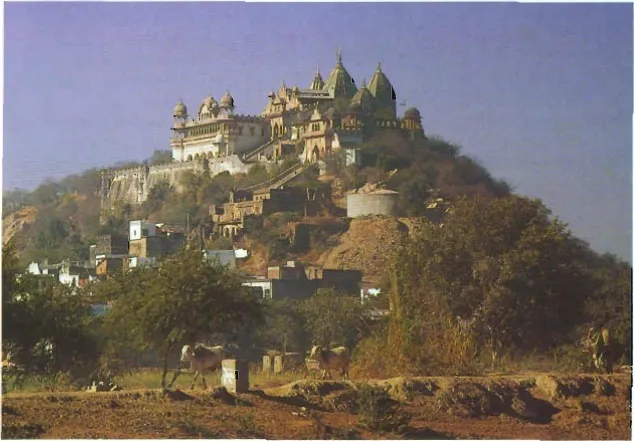
- Varṣāṇā is the town of Vṛṣabhānu, Śrī Rādhā's father, on and around the hill of Brahma-parvata.
- Visiting
- Śrī Vraja-maṇḍala Parikramā (2007) puts Varṣāṇā fourteen miles west of Govardhana and six miles east of Kāmyavana, and the undated parikramā notes Varṣāṇā put it 42 km (25 miles) from Mathurā.
- Places here
- Saṅket, Daīgaon, Sātoyā, Ciksaulī, Geṇḍo +35 more
In short
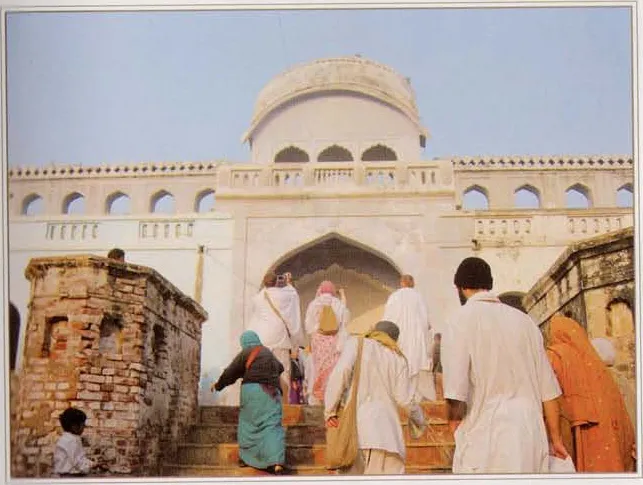
Varṣāṇā is the town of Vṛṣabhānu, Śrī Rādhā's father, on and around the hill of Brahma-parvata. The Bhakti-ratnākara says that the Vṛṣabhānupura of the texts is called Varṣāṇa and that Vṛṣabhānu's home is near the hill.[1] Śrīmad-Bhāgavatam does not name the town; the Garga-saṁhitā tells how Vṛṣabhānu built a town in Vṛndāvana, where Kṛṣṇa came to play.[2 +5] Śrīla Nārāyaṇa Bhaṭṭa Gosvāmī's Vraja-bhakti-vilāsa describes its two hills, Brahma and Viṣṇu, with the places of the toll pastime and the rāsa dance.[8] In 1971, as his biography tells, Śrīla Prabhupāda was carried up the steps to the temple here, and at that stop he called the place Rādhārāṇī's father's.[9 +1]
Key facts
| Kind | village |
|---|---|
| Ācāryas | Śrīla Nārāyaṇa Bhaṭṭa Gosvāmī, Śrīla Lokanātha Gosvāmī, Śrīla Bhūgarbha Gosvāmī |
Why it is glorified
Śrīla Nārāyaṇa Bhaṭṭa Gosvāmī's Vraja-bhakti-vilāsa counts Vṛṣabhānupura sixth among the twelve adhivanas, the chief forests of …
Śrīla Nārāyaṇa Bhaṭṭa Gosvāmī's Vraja-bhakti-vilāsa counts Vṛṣabhānupura sixth among the twelve adhivanas, the chief forests of Vraja, in a list that it gives from the Viṣṇu Purāṇa. It names Rādhā-Kṛṣṇa as the presiding Deity of the place and gives a meditation on Kṛṣṇa with Rādhā, standing on Brahma-parvata.[11 +1] In another list, which it gives from the Bṛhad-gautamīya, Vṛṣabhānupura heads the places that make up the realm of Bhānu's daughter, Śrī Rādhā, before Saṅketa-vaṭa, Nandagrāma, Rādhā-kuṇḍa and Govardhana.[13]
The Sādhana-dīpikā, a manual of worship, quotes a hymn of Rādhā's 108 names that calls Her the one whose home is Vṛṣabhānupura. In the worship of Rādhā that it teaches, one meditates on Vṛṣabhānupura and worships it together with Saṅketa, the hill Varasānu, Nandī-śaila and Nandagrāma; the lamp-offering it quotes says that a clay lamp should be made with earth from Varasānu-pura and Nandagrāma.[14 +4]
Several older texts name a hill or town called Bṛhatsānu. The Garga-saṁhitā names it beside the hill of Nandīśvara, the Nārada Purāṇa lists it among the tīrthas (holy places) of Vṛndāvana, and in the Skanda Purāṇa the sage Śāṇḍilya tells Vajranābha to set up one of the seats of his rule there, with Govardhana, Mathurā, Mahāvana, Nandigrāma and others. Śrīla Jīva Gosvāmī names a Varasānu among the hills of the land of Vṛndāvana. None of these texts says that the hill is Varṣāṇā.[3 +8]
Divine pastimes
Vṛṣabhānu's town
Śrīmad-Bhāgavatam (10.11) tells how the cowherds left Mahāvana for Vṛndāvana, which Upananda describes as a place of sacred hills. It names neither Varṣāṇā nor Vṛṣabhānu; the commentator Vaṁśīdhara names Bṛhatsānu among those hills.[2 +2]
Between Nandeśvara and Mahāvana is a place named Vṛndāvana. This place is very suitable because it is lush with grass, plants and creepers for the cows and other animals. It has nice gardens and tall mountains and is full of facilities for the happiness of all the gopas and gopīs and our animals.
Translation: Śrīla A.C. Bhaktivedanta Swami PrabhupādaThe Garga-saṁhitā adds that Vṛṣabhānu moved too, with his daughter Rādhā on his lap, and built a town in Vṛndāvana with a fort, seven gates, lakes and a thousand groves. Kṛṣṇa played with the boys in Nanda's town and in Vṛṣabhānu's.[5 +2] The Garga-saṁhitā does not say where in Vṛndāvana the town stood; the Bhakti-ratnākara says that Vṛṣabhānupura is called Varṣāṇa.[1]
सभामण्डपसंयुक्तं सदुर्गं परिखायुतम् । चतुर्योजनविस्तीर्णं सप्तद्वारसमन्वितम् ॥ 9 ॥ सरोवरैः परिवृतं राजमार्गं मनोहरम् । सहस्रकुञ्जं च पुरं वृषभानुरचीकॢपत् ॥ 10 ॥
sabhāmaṇḍapasaṁyuktaṁ sadurgaṁ parikhāyutam
caturyojanavistīrṇaṁ saptadvārasamanvitam
9
sarovaraiḥ parivṛtaṁ rājamārgaṁ manoharam
sahasrakuñjaṁ ca puraṁ vṛṣabhānuracīkḷpat || 10 ||
In the Garga-saṁhitā Kṛṣṇa comes to Vṛṣabhānupura every day with the boys. Rādhā sees Him from a window as He walks along a narrow lane of the town, and once He comes there disguised as a woman to test Her love. After the rāsa nights She hurries back to Vṛṣabhānupura while He goes to Nanda's house.[28 +5] The same work places an earlier Vṛṣabhānupura, before the move to Vṛndāvana, on the bank of the Yamunā (see below).[34 +1]
Śrīla Viśvanātha Cakravartī Ṭhākura's Vraja-rīti-cintāmaṇi places Vṛṣabhānu's home on a hill named after him, south of Nandīśvara, with Saṅketa between the two hills; it does not use the name Varṣāṇā.[36 +1] According to the Bhakti-ratnākara, the people of Nandīśvara and Varṣāṇā come and go by the path past Saṅketa, and by it Rādhikā goes from Her father's house to Her in-laws' house at Jāvaṭa.[38] Read more: Saṅket, the meeting place of Rādhā and Kṛṣṇa →
The hill of the toll pastime
Śrīmad-Bhāgavatam does not tell Kṛṣṇa's toll pastime, the dāna-līlā. Its commentators read a stopping of the gopīs into the verses on the boys' games and the gopīs' songs, without naming a place (summarised here, not translated): Śrīla Sanātana Gosvāmī speaks of blocking the gopīs' path and taking their yoghurt, Śrīla Viśvanātha Cakravartī Ṭhākura of the boys playing king at a toll crossing, and Śrīla Jīva Gosvāmī of a toll on milk products.[39 +5]
The Bhakti-ratnākara sets the pastime here. Its guide, Śrīla Rāghava Paṇḍita Gosvāmī of Govardhana, tells Śrīla Śrīnivāsa Ācārya that on this hill Kṛṣṇa performed the dāna-līlā and broke Rādhikā's māna, Her loving anger, and that Rādhikā played here with Her friends as a child. He names three forts on the hills, Dāna, Māna and Vilāsa (Dāna-garh, Māna-garh and Vilāsa-garh), and calls the narrow path between the two hills Sāṅkarī-khor.[1 +1] Read more: Prema-sarovara and Māna-garh →
According to the Vraja-bhakti-vilāsa, Rādhā asked Kṛṣṇa to stay with Her in Her father's town and made Her own palace on the hill named Brahma, and there He asked Her for the toll, so that the hill became a place of the dāna and of the rāsa.[46] The Garga-saṁhitā tells a toll story in the narrow lanes of a hillside without naming the place, and other works set the pastime on Govardhana or at a crossing of the Yamunā (see below).[31 +3] Read more: Kṛṣṇa's toll pastime (dāna-līlā) at Govardhana and Varṣāṇā →
Śrī Rādhā's appearance
Varṣāṇā and Rāval each have a tradition of Śrī Rādhā's appearance. On his parikramā of 28 November 1971, at the hill temple that his biography calls Varṣāṇā, Śrīla Prabhupāda said that this was Rādhārāṇī's father's place and said of one spot that Rādhārāṇī was born there; the recording itself does not name the place.[9 +1] Śrīla Murāri Gupta's Kṛṣṇa-caitanya-caritāmṛta tells that on Śrī Caitanya Mahāprabhu's tour of Vraja His guide pointed out to Him Vṛṣabhānupura as the place where Rādhā appeared (summarised here, not translated). The verse does not say that Mahāprabhu went into the town, and the Caitanya-caritāmṛta's account of His tour does not name it.[50]
According to the Bhakti-ratnākara, Vāsudeva showed Śrīla Vīracandra Prabhu King Vṛṣabhānu's residence here, where Kṛṣṇa came on many pretexts to see Rādhā unnoticed and where Nanda's household was invited to the festival of Her birthday.[51 +1] Śrī Vraja-maṇḍala Parikramā (2007) and the undated parikramā notes Mahāvana say that in some eras Vṛṣabhānu found the newborn Rādhikā on a lotus in Vṛṣabhānu-kuṇḍa during his morning bath, and the notes add that in other eras this happens at Rāval.[53 +1]
Another tradition, that of Śrīla Raghunātha dāsa Gosvāmī and the Bhakti-ratnākara, gives Rāval as the place of Her appearance.[55 +1] The Garga-saṁhitā places Her appearance in a palace in a grove on the bank of the Yamunā, and the Brahma-vaivarta Purāṇa in Vṛṣabhānu's house in Gokula.[34 +2] The sources are set out below; see also the page of Rāval. Read more: The appearance of Śrī Rādhā: the traditions of Rāvala and Varṣāṇā →
Accounts differ Where Rādhā was born: at Varṣāṇā, on the Yamunā (Rāval) or in Gokula.
- Śrīla Prabhupāda, transcript of 28 November 1971 (stop identified as Varṣāṇā by the biography)'Rādhārāṇī was born there.' … 'This is the spot … where Rādhārāṇī was born. Rādhāṣṭamī.'
- Śrīla Prabhupāda-līlāmṛta 2.37 (biography)'At Varṣāṇā, the birthplace of Rādhārāṇī …'
- Garga-saṁhitā 1.8.6 and 1.15.40Rādhā appeared in Vṛṣabhānu's wife in a palace in a grove on the Yamunā's bank (1.8.6); in 1.15.40 Vṛṣabhānupura, before the move to Vṛndāvana, lies by the bank of the Kālindī.
- Brahma-vaivarta Purāṇa, Kṛṣṇa-janma-khaṇḍa 3.116Rādhā took birth in Vṛṣabhānu's house in Gokula.
The wording of these accounts is our summary of the sources, not a published translation.
Traditional accounts
Śrīmad-Bhāgavatam (10.14.34) tells Brahmā's prayer to take any birth in the forest of Gokula; it does not tell that he became a …
Brahmā's hill
Śrīmad-Bhāgavatam (10.14.34) tells Brahmā's prayer to take any birth in the forest of Gokula; it does not tell that he became a hill at Varṣāṇā.[58 +2] According to the Vraja-bhakti-vilāsa, as its Hindi edition renders a passage that the book gives from the Varāha and Padma Purāṇas, Brahmā asked Hari at the end of Satya-yuga to perform the rāsa with the gopīs on him, especially in the rainy season, and Hari told him to become a hill at Vṛṣabhānupura and see His pastimes.[61 +2] The guidebooks tell the same, and the undated parikramā notes Varṣāṇā and Vṛndāvana-Dhāma Ki Jaya! (c. 1986) say that the four peaks of the hill are Brahmā's four heads. The sources differ on which scripture tells the story and on the form of the hill (see below and the page Brahma-parvata).[62 +2]
The marks of Vṛṣabhānupura
The Vraja-bhakti-vilāsa, citing the Padma Purāṇa, describes Vṛṣabhānupura as two hills facing each other, Brahma on the right and Viṣṇu on the left, with Sāṅkarī-khor between them and lakes on all four sides.[8] Its list names these places:
- On top of Brahma-parvata, a temple of Śrī Rādhā-Kṛṣṇa, with darśana of Rādhā-Kṛṣṇa, and below it the temple of Vṛṣabhānu, with darśana of Vṛṣabhānu, Kīrtidā and Śrīdāmā (see Palace of Mahārāja Vṛṣabhānu). The book's prayer on seeing Rādhā-Kṛṣṇa here honours Them as the givers of Brahmā's boon. No source says whether this temple is the present Śrījī temple.[8 +2]
- Beside Vṛṣabhānu's temple, the temple of Lalitā and the sakhīs (Rādhā's companions) with Rādhā, where one has darśana of the nine sakhīs headed by Rādhā. Śrī Vraja-maṇḍala Parikramā (2007) calls it a temple of Śrī Lalitā. The book's prayer there, which it gives from the Brāhma, bows to Rādhā, to Lalitā, to the sakhīs headed by Campakalatā and to Candrāvalī.[8 +3]
- On Brahma-parvata it also lists the Dāna-mandira, a place for the swing, the site of Mayūra-kuṭī and a rāsa-maṇḍala, a circle for the rāsa dance.[8] Read more: The swing pastimes of Rādhā and Kṛṣṇa →
- Also on top of Brahma-parvata, a temple of Rādhā alone, with a līlā-nṛtya-maṇḍala, a circle for the dance of the pastimes, in front of it. Elsewhere the book says that Rādhā made Her own mandira for pastimes on this hill, without saying that the two are the same, and no source says which present temple it is.[8 +3]
- On Viṣṇu-parvata it places a temple of Kṛṣṇa with a dance hall in front of it, the Vilāsa-mandira and Gahvaravana, with a rāsa-maṇḍala below.[8]
- Around the hills it names Dohanī-kuṇḍa, the Mayūra-saras made by Citralekhā, Bhānu-sarovara with the Mahārudra (Śiva) Vrajeśvara beside it, and Kīrti-saras to its left.[8 +1]
Bhānu-sarovara
According to the Vraja-bhakti-vilāsa, Vṛṣabhānu bathed daily in Bhānu-sarovara, and a bath there destroys the faults of body, mind and speech. Its bathing prayer, which the book gives from the Viṣṇu-dharmottara, calls it the lake made by Mahārāja Vṛṣabhānu, the king of the gopas.[70] The same book says that Vṛṣabhānu and the other gopas installed Vrajeśvara beside the lake, and Śrī Vraja-maṇḍala Parikramā (2007) repeats this.[53 +2]
The Bhakti-ratnākara shows a lake of very cool water east of Vṛṣabhānupura, Bhānukhora, and says that people now call the lakes there Bhānukhora and Pilukhora, whose former names were Bhānu-sarovara and Pilu-sarovara.[73] Śrī Vraja-maṇḍala Parikramā lists Vṛṣabhānu-kuṇḍa, east of the village, separately and does not say whether the two are one pond.[53 +1] The introduction to the Hindi edition of the Vraja-bhakti-vilāsa names Bhānukhora first among the tīrthas of Varṣāṇā brought to light by Śrīla Nārāyaṇa Bhaṭṭa Gosvāmī.[74]
Mayūra-sarovara
According to the Vraja-bhakti-vilāsa, the Mayūra-saras, the lake of the peacocks, beside Dohanī-kuṇḍa, is where Citralekhā bathed daily, fed the peacocks and watched them play, and its bathing prayer promises liberation. Śrī Vraja-maṇḍala Parikramā (2007) repeats that Citralekhā made it. No other source identifies the lake on the ground.[8 +2]
The Gosvāmīs and ācāryas
Śrīla Nārāyaṇa Bhaṭṭa Gosvāmī describes Vṛṣabhānupura in his Vraja-bhakti-vilāsa: the marks of the place with its two hills, the …
Śrīla Nārāyaṇa Bhaṭṭa Gosvāmī
Śrīla Nārāyaṇa Bhaṭṭa Gosvāmī describes Vṛṣabhānupura in his Vraja-bhakti-vilāsa: the marks of the place with its two hills, the story of Brahmā's hill, Rādhā's request and the toll on the hill, the prayers on seeing the town, and its place among the forests of Vraja and at the head of Rādhā's realm.[8 +5] In the pilgrimage through the forests in the month of Bhādra, his book brings the pilgrim to Vṛṣabhānupura on the third day, for a walk around it, a night's stay and the worship of Gaurī, and gives a prayer on seeing the town that bows to Kīrtidā, Rādhā's mother.[84 +2]
The modern introduction to the Hindi edition of his book says that he first showed and glorified the yearly Holī of Varṣāṇā and Nandagrāma, that he brought to light the tīrthas of Varṣāṇā, among them Bhānukhora, Dāna-garh, Māna-garh, Vilāsa-garh, Gahvaravana and Sāṅkarī-khor, and that Rājā Ṭoḍaramal paid for his rāsa-maṇḍalas and swings. The introduction draws on a later life of Śrīla Nārāyaṇa Bhaṭṭa Gosvāmī, and these statements are not certain.[74]
Kadamba-khaṇḍī, Śrīla Nārāyaṇa Bhaṭṭa Gosvāmī's place of bhajana
According to the guidebook Vṛndāvana-Dhāma Ki Jaya! (c. 1986), Kadamba-khaṇḍī is a small forest of kadamba trees and a place of many pastimes of Rādhā and Kṛṣṇa. Here, it says, Kṛṣṇa decorated Śrīmatī Rādhārāṇī with kadamba flowers, and Śrīla Nārāyaṇa Bhaṭṭa Gosvāmī performed his bhajana, his worship by chanting and prayer.[65 +1] The book calls him a contemporary of the six Gosvāmīs, names his Vraja-bhakti-vilāsa and says that he established many temples in this area, among them the Lāḍilī Lāl temple of Varṣāṇā; the historian A. W. Entwistle (1987) likewise reports that he settled at Ūñcāgaon and founded temples at Varṣāṇā and at Saṅket.[65 +1]
The book does not say where this grove lies, and no source says whether it is the Kadamba-khaṇḍī by Sunaharā that the Bhakti-ratnākara describes. That book shows a Kadamba-khaṇḍī on the way from Āṭora to Varṣāṇā, together with the village Svarṇahāra, now called Sona-āra or Sonaherā, Ratna-kuṇḍa and Caturmukha (summarised here, not translated): this is the Kadamba-khaṇḍī by Sunaharā. The Bhakti-ratnākara names other groves of this name as well, and no source says which of them is Śrīla Nārāyaṇa Bhaṭṭa Gosvāmī's.[87 +2]
Śrīmad-Bhāgavatam (10.30.32–33) tells of such a moment of adornment. After Kṛṣṇa left the rāsa dance, the gopīs followed His footprints and saw where He had stood on tiptoe to gather flowers for His beloved and where He had sat down to arrange Her hair. The Bhāgavatam names neither the gopī nor the place; Śrīla Prabhupāda's Kṛṣṇa book names Her Rādhārāṇī.[90 +2]
General teaching (does not name the place)“Kṛṣṇa must have picked some flowers in this spot to satisfy Rādhārāṇī, because here, where He stood erect to get the flowers from the high branches of the tree, we find only half the impression of His feet. Dear friends, just see how Kṛṣṇa must have sat down here with Rādhārāṇī and tried to set flowers in Her hair.”
Śrīla Prabhupāda, Kṛṣṇa, the Supreme Personality of Godhead (Kṛṣṇa book), Chapter 30, 'Kṛṣṇa’s Hiding from the Gopīs' · vedabase.io
For this pastime Vṛndāvana-Dhāma Ki Jaya! quotes a verse of Śrīla Raghunātha dāsa Gosvāmī's Vraja-vilāsa-stava (73). The verse praises the king of kadamba trees, with whose flowers the Lord of the bowers joyfully adorned the Queen of the bowers (summarised here, not translated). It names no place; setting it at Kadamba-khaṇḍī is the guidebook's own use of it.[65 +1]
The sources differ on where Kṛṣṇa adorned Rādhā and with which flowers; the accounts are set out on the page of Saṅket. The Bhakti-ratnākara, for one, sets His dressing of Rādhikā at Śṛṅgāravaṭa near Tiloyāra.[94]
Visitors in the biographies
- According to the Prema-vilāsa, Śrīla Lokanātha Gosvāmī and Śrīla Bhūgarbha Gosvāmī saw the places on the hill of Varṣāṇā, bathed in its lake, walked around it and stayed in the village, where the people of Vraja showed them much love.[95]
- In the Bhakti-ratnākara, Śrīla Rāghava Paṇḍita Gosvāmī shows Varṣāṇā, Sāṅkarī-khor and Bhānukhora to Śrīla Śrīnivāsa Ācārya and Śrīla Narottama dāsa Ṭhākura, and the book tells that the two were overwhelmed with joy at Nandagrāma, Jāvaṭa, Varṣāṇā and other places.[1 +5]
- According to the same book, Śrīla Vīracandra Prabhu came to Vṛṣabhānupura from Kāmyavana in great joy and went on from there to Nandagrāma with his party. The Narottama-vilāsa tells that Śrīla Jāhnavā-devī passed through Vṛṣabhānupura on her way from Govardhana to Nandīśvara and Jāvaṭa.[51 +2]
Śrīla Prabhupāda
Śrīla Prabhupāda places Varṣāṇā at the far end of the Vṛndāvana forest …
Śrīla Prabhupāda places Varṣāṇā at the far end of the Vṛndāvana forest:[98]
Names this place“Out of the twelve forests, the Vṛndāvana forest extends from the town of Vṛndāvana up to Nanda-grāma and Varṣāṇā, a distance of thirty-two miles, within which the Pañcakrośī Vṛndāvana town is situated.”
Śrīla Prabhupāda, Śrī Caitanya-caritāmṛta, Madhya-līlā 5.12, purport · vedabase.io
On his parikramā of Vraja in 1971 his disciples carried him in a palanquin up the steps to the temple at Varṣāṇā, as his biography tells:[9 +1]
From his biography“At Varṣāṇā, the birthplace of Rādhārāṇī, the devotees carried Prabhupāda on a palanquin up the many steep steps to the temple. … Kṛṣṇa used to come down that hill. Rādhā would come down this hill, and They would meet in the middle.”
Satsvarūpa dāsa Gosvāmī, Śrīla Prabhupāda-līlāmṛta, vol. 2, ch. 37 · vedabase.io
The recording of 28 November 1971 has his words at the hill temple. The recording does not name the place; the stop is identified as Varṣāṇā by the biography.[9 +1]
Names this place“This is Rādhārāṇīs father's place. … Royal palaces were made on the hills.”
Śrīla Prabhupāda, Parikramā on the Way to Gokula, Vṛndāvana, 28 November 1971 · vedabase.io
Asked in 1976 how Rādhā, Kṛṣṇa and the cowherd boys could meet at places as far apart as Govardhana, Rādhā-kuṇḍa, Vṛndāvana, Nandagrāma and Varṣāṇā, he answered that the distance is ours, not theirs:[99]
General teaching (does not name the place)“That is distance for you, not for them. Just like a small ant, it goes from here to here. It is a great, three hundred miles, but for you, one step. … Kṛṣṇa can do anything, so His associates.”
Śrīla Prabhupāda, Morning Walk in the Vṛndāvana Municipal Park [partially recorded], Vṛndāvana, 2 April 1976 · vedabase.io
In 1974 he included Varṣāṇā in a day's bus pilgrimage that he arranged for his disciples, and in October 1977, in his last weeks, he approved a plan for a parikramā that included Varṣāṇā.[100 +1]
Songs
In his song Dekhite Dekhite Śrīla Bhaktivinoda Ṭhākura prays, as a devotee's own aspiration, to be born in Vṛṣabhānupura as a …
In his song Dekhite Dekhite Śrīla Bhaktivinoda Ṭhākura prays, as a devotee's own aspiration, to be born in Vṛṣabhānupura as a cowherd girl and to be married at Jāvaṭa.[102]
Visiting today
Coming to Varṣāṇā
Śrī Vraja-maṇḍala Parikramā (2007) puts Varṣāṇā fourteen miles west of Govardhana and six miles east of Kāmyavana, and the undated parikramā notes Varṣāṇā put it 42 km (25 miles) from Mathurā.[62 +1] The books give different lengths for the parikramā around the town (see below). In 1987, according to Entwistle, its most popular festivals were Holī, Rādhāṣṭamī and the būṛhī-līlā performances.[82]
Śrī Vraja-maṇḍala Parikramā also names the villages between Saṅket and Nandagrāma that some pilgrims visit, among them Bichora, Andhopa, Hoḍal, Daīgaon, Hāroyāna and Geṇḍo.[89 +1]
Smaller places described here
- Brahmājī Mandira: Śrī Vraja-maṇḍala Parikramā (2007) places a temple of Brahmājī just below the Śrījī temple, still on the hill, beside the palace of Mahībhānu. No other source found mentions it, and none connects it with the story of Brahmā's hill.[53 +3]
- Palace of Mahībhānu: the same guidebook places here the palace of Mahībhānu, whom Śrīla Rūpa Gosvāmī's Rādhā-Kṛṣṇa-gaṇoddeśa-dīpikā names as Rādhā's paternal grandfather. Growse (1883) and Entwistle (1987) record a small temple of Mahībhānu on the steps below the Lāḍilījī temple; no source says whether it is the guidebook's palace.[53 +4]
- Jaipura Mandira: the temple of the Mahārāja of Jaipur on the hill, north of Māna-garh, with the Śrījī temple north of it, according to Śrī Vraja-maṇḍala Parikramā. Mītal (1966) and Entwistle (1987) say that the ruler of Jaipur built it and that its worship follows the Nimbārka-sampradāya; Entwistle names Savāī Mādho Singh II and dates its completion to 1914. They name its Deity differently (see below).[53 +3]
- Vihāra-kuṇḍa, later named Tilaka-kuṇḍa, in the south-west, one of the four ponds around Varṣāṇā that Śrī Vraja-maṇḍala Parikramā lists. Entwistle (1987) names a Tilak kuṇḍ on a longer circuit of the town; whether it is this pond is not certain.[53 +1]
- Mānapurā, the village just south of and below Māna-garh, which, the same guidebook says, reminds one of the pastimes of Rādhā's māna there.[53 +1]
- Gājīpura, the village east of Prema-sarovara, according to Śrī Vraja-maṇḍala Parikramā. Mītal (1966) also calls the village near the lake Gājīpura, and the modern editor of the Hindi Vraja-bhakti-vilāsa takes the book's Premavana to be Gājīpura.[113 +2] Read more: Prema-sarovara and Māna-garh →
- Bhāṇḍokhora, four miles west of Nandagrāma: according to Śrī Vraja-maṇḍala Parikramā, Nanda Mahārāja kept his western cowshed here, and the name comes from the earthen pots (bhāṇḍa) that were filled with milk or washed here.[116]
- Sāñculī, six miles north-west of Nandagrāma, where the same guidebook lists a temple of Candrāvalī Sakhī and a Sūrya-kuṇḍa, and records a local tradition that Candrāvalī used to meet Kṛṣṇa here on the pretext of worshipping the Sun; no older source for it has been found, and in the plays of Śrīla Rūpa Gosvāmī that pretext is Śrī Rādhā's. Entwistle (1987) records a Devī temple with a large spring fair at a village called Sancholi in this area; whether it is the same village is not certain.[63 +1]
- Kuñjaravana, about a mile south-west of Hoḍal: Śrī Vraja-maṇḍala Parikramā (2007), the only source that names it, records a local tradition, which is not certain, that Kṛṣṇa played with the sakhīs in its groves and that they sometimes made themselves into an elephant (kuñjara) for Him to ride.[103 +1]
Location
| Where it is | the town and the village of Citra surround the four-peaked hill; Saṅkeṭ lies between Varṣāṇā and Nandagrāma; the Vṛndāvana forest extends to it[126] 'Varsana is 42 km (25 miles) from Mathura'[64] |
|---|
Places at Varṣāṇā
57 places
Areas (17)
Saṅket
संकेतSaṅket is the village between Nandagrāma, Kṛṣṇa's home, and Varṣāṇā, the home of Śrī Rādhā.
Daīgaon
दहगाँवDaīgaon, also written Dahīgaon, is a village three miles south of Hoḍal, according to the guidebook Śrī Vraja-maṇḍala Parikramā (2007).
Sātoyā
सातोयाSātoyā, also called Satvāsa, is a village on the north-western border of Vraja, two miles west of Meherāna-gaon.
Ciksaulī
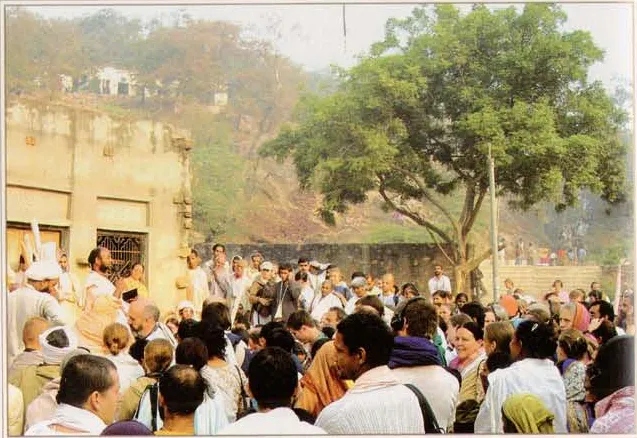
चिकसौलीCiksaulī is a village at the foot of the hill of Varṣāṇā, between Sāṅkarī-khor and Gahvaravana, as the guidebook Śrī Vraja-maṇḍala Parikramā (2007) places it.
Geṇḍo
गेंडोGeṇḍo is the village of the ball game.
Riṭhaura
रीठौराRiṭhaura is a village one and a half miles west of Saṅket.
Show all (17)
Kuṇḍas
6 placesTemples and shrines
4 placesAlso described on this page
Also listed here
- Bhānu-sarovara sarovara
- Bhāṇḍokhora village
- Brahmājī Mandira (Varṣāṇā) temple
- Gājīpura village
- Jaipura Mandira (Varṣāṇā) temple
- Kuñjaravana forest
- Lalitā Mandira (Varṣāṇā) temple
- Mayūra-sarovara sarovara
- Mānapurā village
- Palace of Mahībhānu (Varṣāṇā) palace
- Rādhā Mandira (Brahma-parvata) temple
- Rādhā-Kṛṣṇa Mandira (Brahma-parvata) temple
- Sāñculī village
- Vihāra-kuṇḍa (Varṣāṇā) kuṇḍa
- Candrāvalī Sakhī Mandira (Sāñculī) temple
- Sūrya-kuṇḍa (Sāñculī) kuṇḍa
Nearby places
Govardhana (town) · Kāmyavana · Ūñcāgaon · Mathurā
History
The undated parikramā notes Varṣāṇā, the guidebook Vṛndāvana-Dhāma Ki Jaya! (c. 1986) and the historian A. W. Entwistle (1987) credit Śrīla Nārāyaṇa Bhaṭṭa Gosvāmī with founding the temple of Lāḍilījī, Śrī Rādhā, at Varṣāṇā, the Śrījī temple on the hilltop, though they tell differently where its Deity came from (see below).[65 +3] Read more: The Śrījī (Lāḍilījī) temple of Varṣāṇā →
The historian A. W. Entwistle (1987) writes that Varṣāṇā was a hamlet of Ūñcāgaon until the middle of the eighteenth century, when it grew under Rūp Rām Kaṭārā, a priest of the Jāṭ rulers, and that most of its mansions and temples date from the second half of that century.[79 +1] Prabhudayāl Mītal (1966) also credits Rūp Rām, the family priest of the Jāṭ ruler Sūraj Mal, with several temples, buildings, gardens and chatrīs (canopied pavilions), and with the steps of the old Lāḍilī temple and the market, so that Varṣāṇā became a fine small town.[81]
According to Entwistle, Najaf Khān's army defeated the Jāṭs at Varṣāṇā in 1774 and plundered the town; Mītal gives the year as Saṁvat 1831 (1774–75) and says that Rūp Rām's buildings were badly damaged and the town ruined.[82 +1] In 1812, Entwistle writes, the landholders of Varṣāṇā transferred the whole estate to Lālā Bābū for 602 rupees.[82]
Entwistle also reports a verse of the poet Nehī Nāgarīdās, who settled at Varṣāṇā in the late sixteenth century, that names Sāṅkarī-khor, Gahvaravana, Vilāsa-garh, Bhānokhar and the hilltop temple of Rādhā; Entwistle knew the verse only from other books that quote it.[79]
Where the sources differ
Where Vṛṣabhānu's town was: on the Yamunā, a new town in Vṛndāvana, or Varṣāṇā.
Where Vṛṣabhānu's town was: on the Yamunā, a new town in Vṛndāvana, or Varṣāṇā.
Accounts differ Where Vṛṣabhānu's town (Vṛṣabhānupura) was.
- Garga-saṁhitā 1.15.40Vṛṣabhānupura is on the Yamunā's bank (in the time of Gokula/Mahāvana).
- Garga-saṁhitā 2.4.5–11When the cowherds moved to Vṛndāvana, Vṛṣabhānu built a new town there (no location within Vṛndāvana given).
- Bhakti-ratnākara, Fifth Wave, p. 218This Vṛṣabhānupura is called Varṣāṇa; Vṛṣabhānu's home is near the hill.
- Vraja-bhakti-vilāsa ch. 2 v.47Vṛṣabhānupura is marked by two facing hills, Brahma and Viṣṇu, with Vṛṣabhānu's temple below Brahma-parvata.
The wording of these accounts is our summary of the sources, not a published translation.
Which scripture tells that Brahmā became the hill is told differently; the accounts are set side by side on the page of Brahma-parvata.[62 +2]
Accounts differ What Brahmā's hill at Varṣāṇā is: one of two hills, or a four-peaked hill whose peaks are his four heads.
- Vraja-bhakti-vilāsa ch. 2 v.47 (citing the Padma) and ch. 4 v.54Two facing hills named Brahma (on the right) and Viṣṇu (on the left); Rādhā's palace is on the hill named Brahma.
- the undated parikramā notes VarṣāṇāFour peaks, each a head of Brahmā; also two hills, the white one Brahmā and the black one Viṣṇu.
- Vṛndāvana-Dhāma Ki Jaya! (c. 1986)The hill has four peaks, representing Brahmā's four heads.
- Bhakti-ratnākara, Fifth Wave, p. 218Speaks of the hill and of the narrow path between the two hills, with the three forts Dāna, Māna and Vilāsa on the hills; it does not mention Brahmā.
The wording of these accounts is our summary of the sources, not a published translation.
Accounts differ Whether the Garga-saṁhitā's 'bṛhat-sānu' is the name of a hill (Bṛhatsānu) or 'the great peak' of Nandīśvara.
- Garga-saṁhitā (Sanskrit) 2.1.17, 2.10.19, 2.21.10, 10.44.29'bṛhatsānur giriḥ … yatra nandīśvaro giriḥ' (two hills); 'bṛhatsānu-gireḥ pārśve girer nandīśvarasya ca' (the side of the Bṛhatsānu hill and of the Nandīśvara hill); 'nandīśvare bṛhatsānau' (in a list of places).
- Danavir Goswami's English translation, 2.1.17It takes Bṛhatsānu as the name of a mountain.
- Danavir Goswami's English translation, 2.10.18–22 and 2.21.9In these verses it takes 'bṛhat-sānu' as the summit or great peak of Nandīśvara Hill, not as a second hill.
- Skanda Purāṇa, Bhāgavata-māhātmya 1.38Nandigrāma and Bṛhatsānu are named as two places for Vajranābha's royal seats (so also the Motilal English translation).
The wording of these accounts is our summary of the sources, not a published translation.
Where the gopīs became proud and Kṛṣṇa disappeared with Rādhā: on the Yamunā's bank in the Bhāgavatam, on the slope of Nandīśvara and Bṛhatsānu in the Garga-saṁhitā[21 +7].
Accounts differ Where the gopīs became proud and Kṛṣṇa disappeared with one gopī (Rādhā): on the Yamunā's bank or on the slopes of Nandīśvara and Bṛhatsānu.
- Śrīmad-Bhāgavatam 10.29.45–48, 10.30.35–36The rāsa takes place on the sandy bank of the Yamunā; there the gopīs became proud and Kṛṣṇa disappeared, taking one gopī with Him.
- Śrīla Prabhupāda, Kṛṣṇa book ch. 29–30The same, on the Yamunā's bank; the gopī is Rādhārāṇī.
- Garga-saṁhitā 2.21.10Kṛṣṇa performed rāsa on the slope of Nandīśvara and Bṛhatsānu; there the gopīs became proud and He disappeared with Rādhā.
The wording of these accounts is our summary of the sources, not a published translation.
Where Kṛṣṇa took the toll from the gopīs: the books set it on the hill of Varṣāṇā, on Govardhana or at a crossing of the Yamunā; the accounts are set out on the page of Dāna-garh.[31 +3]
Accounts differ The length of the circumambulation (parikramā) of Varṣāṇā.
- Vraja-bhakti-vilāsa ch. 7 v.8A complete circumambulation called two krośas.
- Vraja-bhakti-vilāsa ch. 9 v.66Vṛṣabhānupura made of three krośas (Hindi: 'तीन कोश परिमित'). This gives the town's extent (krośa-traya-vinirmitam), not expressly the length of its circuit.
- Śrī Vraja-maṇḍala Parikramā (2007)'The parikramā of Varsānā is four miles long.'
- the undated parikramā notes Varṣāṇā'a 7 km parikrama path around it'.
The wording of these accounts is our summary of the sources, not a published translation.
Accounts differ Who established the Lāḍilījī (Śrījī) Deity and temple at Varṣāṇā.
- Vṛndāvana-Dhāma Ki Jaya! (c. 1986)The Deity was installed by Vajranābha and worshipped thousands of years later by Śrīla Nārāyaṇa Bhaṭṭa Gosvāmī, who established the Larily Lāl temple.
- the undated parikramā notes VarṣāṇāŚrīla Nārāyaṇa Bhaṭṭa discovered the Deities and built the original temple with Rājā Ṭoḍaramal's help; 'according to historical records' the present temple was built by Rājā Bīr Siṁh of Orchhā in 1675.
- A. W. Entwistle (1987), pp. 167, 370Śrīla Nārāyaṇa Bhaṭṭa founded a temple of Lāḍilījī; Rūp Rām (18th century) built a new temple for Lāḍilījī on the hill, since superseded by a newer building.
- Prabhudayāl Mītal (1966), p. 119 (historian)When the oldest Lāḍilī temple was built is not recorded; the foundation of the building known as the old temple was laid by Rājā Vīrasiṁha Deva of Orchhā on Māgha śukla 5, Saṁvat 1675, finished about Saṁvat 1680; the beautiful new temple next to it was built a few years before 1966 by Seṭh Haragūlāl of Vṛndāvana.
Accounts differ Who made or built Bhānokhar (Bhānu-sarovara).
- Vraja-bhakti-vilāsa ch. 4 v.67 (prayer cited from the Viṣṇu-dharmottara)The lake was made by the king of the gopas, made by Mahārāja Vṛṣabhānu (a statement about its origin in Kṛṣṇa's time).
- Entwistle (1987), p. 371A pillar inscription inside the tank, published by Führer, gives the year of its construction by Rūp Rām as saṁvat 1666, which Entwistle takes as the Śaka era, 1744 CE.
- Growse (1883), p. 312; Muttra gazetteer (1911), p. 235Rūp Rām 'restored and brought into its present shape' the large stone tank called Bhanokhar.
- Mītal (1966), p. 120The high masonry wall around the tank, with its turrets and chatrīs, was built by Rūparāma Kaṭārā.
The wording of these accounts is our summary of the sources, not a published translation.
Accounts differ The Jaipur temple at Varṣāṇā: its Deity and date.
- Entwistle (1987), p. 374Dedicated to Kṛṣṇa as Kuśalbihārī; built by Sawai Madho Singh II and completed in 1914; served by priests of the Nimbārka Sampradāya.
- Mītal (1966), p. 120Built by the Rājā of Jaipur; worship according to the Nimbārka Sampradāya; its main image is Śrī Rādhāgopāla, with Haṁsa Bhagavān, the Sanakādi and Nārada.
- Vṛndāvana, the Playground of God (2010), p. 132Sawai Mādhav Singh 'also built the Jaipur temple at Varṣana' (no Deity or date given for it; its 1917 date belongs to the Jaipur temple of Vṛndāvana).
- Śrī Vraja-maṇḍala Parikramā (2007)'The temple of the Mahārāja of Jaipura', north of Māna-garh (no builder's name, Deity or date).
Accounts differ Whether Mahībhānu is Rādhā's paternal or maternal grandfather.
- Śrīla Rūpa Gosvāmī, Rādhā-Kṛṣṇa-gaṇoddeśa-dīpikā 2.170–171Her paternal grandfather (pitāmaha) is Mahībhānu; Indu is Her maternal grandfather; Mukharā and Sukhadā are Her maternal and paternal grandmothers.
- Śrī Vraja-maṇḍala Parikramā (2007)'the palace of Śrīmatī Rādhikā's paternal grandfather, Mahībhānu'.
- Entwistle (1987), p. 375, citing Sundarlāl and the Braj parikramā'a small temple of Mahibhana and Sukhada, Radha's maternal grandparents'.
- Growse (1883), p. 311; Muttra gazetteer (1911), p. 234'a temple in honour of Radha's grandfather, Mahi-bhan' (paternal or maternal not said).
More on this place
The appearance of Śrī Rādhā: the traditions of Rāvala and Varṣāṇā · Kṛṣṇa's toll pastime (dāna-līlā) at Govardhana and Varṣāṇā · Prema-sarovara and Māna-garh · The swing pastimes of Rādhā and Kṛṣṇa
- →The appearance of Śrī Rādhā: the traditions of Rāvala and Varṣāṇāarticle›
- →Kṛṣṇa's toll pastime (dāna-līlā) at Govardhana and Varṣāṇāarticle›
- →Prema-sarovara and Māna-garharticle›
- →The swing pastimes of Rādhā and Kṛṣṇaarticle›
- →Saṅket, the meeting place of Rādhā and Kṛṣṇaarticle›
- →The Śrījī (Lāḍilījī) temple of Varṣāṇāarticle›
References
126 references
- Śrīla Narahari Cakravartī, Bhakti-ratnākara, Fifth Wave, printed p. 218 (1912 edition), 2nd ed., 1912
- Śrīmad-Bhāgavatam 10.11.28, Bhagavata Vidya Pith edition, ed. Bhagavata Rishi and Krishna Shankar Shastri, 1996
- Vaṁśīdhara: commentary v.10.11.28, vaṁśīdharaḥ (bhāvārtha-dīpikā-prakāśaḥ), Bhagavata Vidya Pith edition, ed. Bhagavata Rishi and Krishna Shankar Shastri, 1996
- Śrīla Prabhupāda, Kṛṣṇa, the Supreme Personality of Godhead, ch. 11 'Killing the Demons Vatsāsura and Bakāsura' · vedabase.io
- Garga-saṁhitā, Vṛndāvana-khaṇḍa (2) 4.5–6, Sanskrit Wikisource
- Garga-saṁhitā, Vṛndāvana-khaṇḍa (2) 4.9–10, Sanskrit Wikisource
- Garga-saṁhitā, Vṛndāvana-khaṇḍa (2) 4.11, Sanskrit Wikisource
- Śrīla Nārāyaṇa Bhaṭṭa, Vraja-bhakti-vilāsa, ch. 2 v.47 ('ततो वृपभानुपुरलिंगानि', 'pādme'), printed p. 46, 1st ed., publ. Bābā Kṛṣṇadāsa, Kusuma-sarovara, Saṁvat 2008
- Satsvarūpa dāsa Gosvāmī, Śrīla Prabhupāda-līlāmṛta, vol. 2, ch. 37 · vedabase.io
- Śrīla Prabhupāda, Parikramā on the Way to Gokula, Vṛndāvana, 28 November 1971 · vedabase.io
- Śrīla Nārāyaṇa Bhaṭṭa, Vraja-bhakti-vilāsa, the twelve adhivanas, vv.29–30, printed p. 3, 1st ed., publ. Bābā Kṛṣṇadāsa, Kusuma-sarovara, Saṁvat 2008
- Śrīla Nārāyaṇa Bhaṭṭa, Vraja-bhakti-vilāsa, v.129 (Grantha Mandira 'part 5 v.129'), printed p. 27, 1st ed., publ. Bābā Kṛṣṇadāsa, Kusuma-sarovara, Saṁvat 2008
- Śrīla Nārāyaṇa Bhaṭṭa, Vraja-bhakti-vilāsa, ch. 2 v.21, printed p. 36, 1st ed., publ. Bābā Kṛṣṇadāsa, Kusuma-sarovara, Saṁvat 2008
- Śrīla Rādhākṛṣṇa Gosvāmī, Sādhana-dīpikā, (4) part 5 v.10
- Śrīla Rādhākṛṣṇa Gosvāmī, Sādhana-dīpikā, (4) part 6 v.15
- Śrīla Rādhākṛṣṇa Gosvāmī, Sādhana-dīpikā, (4) part 6 v.26
- Śrīla Rādhākṛṣṇa Gosvāmī, Sādhana-dīpikā, (4) part 10 v.4
- Śrīla Rādhākṛṣṇa Gosvāmī, Sādhana-dīpikā, (4) part 10 v.10
- Garga-saṁhitā, Vṛndāvana-khaṇḍa (2) 1.17, Sanskrit Wikisource
- Garga-saṁhitā, Vṛndāvana-khaṇḍa (2) 10.19, Sanskrit Wikisource
Show all 126 references
- Garga-saṁhitā, Vṛndāvana-khaṇḍa (2) 21.10, first half, Sanskrit Wikisource
- Garga-saṁhitā, Aśvamedha-khaṇḍa (10) 44.29, Sanskrit Wikisource
- Skanda Purāṇa, Bhāgavata-māhātmya (Skanda) 1.37–38 (Skanda 2.6.1.37–38), Sanskrit Wikisource
- Nārada Purāṇa, Uttara-bhāga 80.74
- Śrīla Jīva Gosvāmī: commentary v.10.24.25, jīva-gosvāmī (laghu-vaiṣṇava-toṣaṇī), Bhagavata Vidya Pith edition, ed. Bhagavata Rishi and Krishna Shankar Shastri, 1996
- Gopāla-campū, (37) pūraṇa 37, ¶[36]
- Śrīmad-Bhāgavatam 10.11.28, Bhagavata Vidya Pith edition, ed. Bhagavata Rishi and Krishna Shankar Shastri, 1996
- Garga-saṁhitā, Vṛndāvana-khaṇḍa (2) 15.9, Sanskrit Wikisource
- Garga-saṁhitā, Vṛndāvana-khaṇḍa (2) 15.16, Sanskrit Wikisource
- Garga-saṁhitā, Vṛndāvana-khaṇḍa (2) 17.3, Sanskrit Wikisource
- Garga-saṁhitā, Vṛndāvana-khaṇḍa (2) 18.1, Sanskrit Wikisource
- Garga-saṁhitā, Vṛndāvana-khaṇḍa (2) 25.36, Sanskrit Wikisource
- Garga-saṁhitā, Aśvamedha-khaṇḍa (10) 46.50, Sanskrit Wikisource
- Garga-saṁhitā, Goloka-khaṇḍa (1) 8.6, Sanskrit Wikisource
- Garga-saṁhitā, Goloka-khaṇḍa (1) 15.40, Sanskrit Wikisource
- Śrīla Viśvanātha Cakravartī Ṭhākura, Vraja-rīti-cintāmaṇi, sarga 1 vv.80–82
- Śrīla Viśvanātha Cakravartī Ṭhākura, Vraja-rīti-cintāmaṇi, sarga 1 vv.84–85
- Śrīla Narahari Cakravartī, Bhakti-ratnākara, Fifth Wave, 1912 ed. p. 221; Grantha Mandira text v.928–929, 2nd ed., 1912
- Śrīmad-Bhāgavatam 10.18.14, Bhagavata Vidya Pith edition, ed. Bhagavata Rishi and Krishna Shankar Shastri, 1996
- Śrīla Sanātana Gosvāmī: commentary v.10.18.14, sanātana-gosvāmī (bṛhad-vaiṣṇava-toṣaṇī), Bhagavata Vidya Pith edition, ed. Bhagavata Rishi and Krishna Shankar Shastri, 1996
- Śrīmad-Bhāgavatam 10.18.15, Bhagavata Vidya Pith edition, ed. Bhagavata Rishi and Krishna Shankar Shastri, 1996
- Śrīla Viśvanātha Cakravartī Ṭhākura: commentary on ŚB 10.18.15, Bhagavata Vidya Pith edition, ed. Bhagavata Rishi and Krishna Shankar Shastri, 1996
- Śrīmad-Bhāgavatam 10.35.14–15, Bhagavata Vidya Pith edition, ed. Bhagavata Rishi and Krishna Shankar Shastri, 1996
- Bṛhat-krama-sandarbha: commentary on ŚB 10.35.14–15, Bhagavata Vidya Pith edition, ed. Bhagavata Rishi and Krishna Shankar Shastri, 1996
- Śrīla Narahari Cakravartī, Bhakti-ratnākara, Fifth Wave, 1912 ed. p. 218; Grantha Mandira text v.893–896, 2nd ed., 1912
- Śrīla Nārāyaṇa Bhaṭṭa, Vraja-bhakti-vilāsa, ch. 4 v.54, printed p. 100, 1st ed., publ. Bābā Kṛṣṇadāsa, Kusuma-sarovara, Saṁvat 2008
- Garga-saṁhitā, Vṛndāvana-khaṇḍa (2) 18.14, Sanskrit Wikisource
- Garga-saṁhitā, Vṛndāvana-khaṇḍa (2) 18.15–16, Sanskrit Wikisource
- Garga-saṁhitā, Vṛndāvana-khaṇḍa (2) 18.17, Sanskrit Wikisource
- Kṛṣṇa-caitanya-caritāmṛta of Śrīla Murāri Gupta, prakrama 4, sarga 10, v.11
- Śrīla Narahari Cakravartī, Bhakti-ratnākara, Thirteenth Wave, 1912 ed. p. 1022; Grantha Mandira text v.344–346, 2nd ed., 1912
- Śrīla Narahari Cakravartī, Bhakti-ratnākara, Thirteenth Wave, 1912 ed. p. 1023; Grantha Mandira text v.347–349 and v.356, 2nd ed., 1912
- Śrī Vraja-maṇḍala Parikramā (2007), PDF p. 171
- the undated parikramā notes Mahāvana, ¶107
- Śrīla Raghunātha dāsa Gosvāmī, Vraja-vilāsa-stava, Stavāvalī (9) Vraja-vilāsa-stava v.90
- Śrīla Narahari Cakravartī, Bhakti-ratnākara, Fifth Wave, 1912 ed. p. 285; Grantha Mandira text v.1809–1810, 2nd ed., 1912
- Brahma-vaivarta Purāṇa, Kṛṣṇa-janma-khaṇḍa (4) 3.116, Sanskrit Wikisource
- Śrīmad-Bhāgavatam 10.14.34, Bhagavata Vidya Pith edition, ed. Bhagavata Rishi and Krishna Shankar Shastri, 1996
- Śrīla Prabhupāda, Kṛṣṇa, the Supreme Personality of Godhead (Kṛṣṇa book), Chapter 14, 'Prayers Offered by Lord Brahmā to Lord Kṛṣṇa' · vedabase.io
- Śrī Vraja-maṇḍala Parikramā (2007), PDF p. 169
- Śrīla Nārāyaṇa Bhaṭṭa, Vraja-bhakti-vilāsa, ch. 4 v.50, Hindi translation on printed p. 99; the Sanskrit is on p. 98, missing from the scan, 1st ed., publ. Bābā Kṛṣṇadāsa, Kusuma-sarovara, Saṁvat 2008
- Śrī Vraja-maṇḍala Parikramā (2007), PDF p. 170
- Śrī Vraja-maṇḍala Parikramā (2007), PDF p. 188
- the undated parikramā notes Varṣāṇā, ¶3
- Vṛndāvana-Dhāma Ki Jaya! (c. 1986), by Dhruva Mahārāja dāsa, PDF p. 47
- Śrīla Nārāyaṇa Bhaṭṭa, Vraja-bhakti-vilāsa, opening section, mantras of the forests' presiding deities, v.129 (Grantha Mandira 'part 5 v.129'), printed p. 27, 1st ed., publ. Bābā Kṛṣṇadāsa, Kusuma-sarovara, Saṁvat 2008
- Śrīla Nārāyaṇa Bhaṭṭa, Vraja-bhakti-vilāsa, ch. 4 v.51 (prayer on seeing Rādhā-Kṛṣṇa at Vṛṣabhānupura), printed p. 99, 1st ed., publ. Bābā Kṛṣṇadāsa, Kusuma-sarovara, Saṁvat 2008
- Śrīla Nārāyaṇa Bhaṭṭa, Vraja-bhakti-vilāsa, ch. 4 v.55 (prayer on seeing Rādhā and the nine sakhīs, citing the 'Brāhma'), printed p. 100, 1st ed., publ. Bābā Kṛṣṇadāsa, Kusuma-sarovara, Saṁvat 2008
- Śrīla Nārāyaṇa Bhaṭṭa, Vraja-bhakti-vilāsa, ch. 4 v.54 (prose end), printed p. 100, 1st ed., publ. Bābā Kṛṣṇadāsa, Kusuma-sarovara, Saṁvat 2008
- Śrīla Nārāyaṇa Bhaṭṭa, Vraja-bhakti-vilāsa, ch. 4 v.67 (Bhānu-sarovara), printed p. 103, 1st ed., publ. Bābā Kṛṣṇadāsa, Kusuma-sarovara, Saṁvat 2008
- Śrīla Nārāyaṇa Bhaṭṭa, Vraja-bhakti-vilāsa, ch. 4 v.69, first couplet (Vrajeśvara beside the Vṛṣabhānu-saras), printed p. 103, 1st ed., publ. Bābā Kṛṣṇadāsa, Kusuma-sarovara, Saṁvat 2008
- Śrī Vraja-maṇḍala Parikramā (2007), PDF p. 180
- Śrīla Narahari Cakravartī, Bhakti-ratnākara, Fifth Wave, 1912 ed. p. 220, 2nd ed., 1912
- Vraja-bhakti-vilāsa, introduction, 1st ed., publ. Bābā Kṛṣṇadāsa, Kusuma-sarovara, Saṁvat 2008
- Śrīla Nārāyaṇa Bhaṭṭa, Vraja-bhakti-vilāsa, ch. 4 v.66 (Mayūra-saras), printed p. 102, 1st ed., publ. Bābā Kṛṣṇadāsa, Kusuma-sarovara, Saṁvat 2008
- A. W. Entwistle, printed p. 167, Egbert Forsten, Groningen, 1987
- the undated parikramā notes Varṣāṇā, ¶32
- Vṛndāvana-Dhāma Ki Jaya! (c. 1986), by Dhruva Mahārāja dāsa, PDF p. 48
- A. W. Entwistle, §37 'Barsana', printed p. 370, Egbert Forsten, Groningen, 1987
- A. W. Entwistle, §37 'Barsana', printed pp. 370–371, Egbert Forsten, Groningen, 1987
- Prabhudayāl Mītal, 'Braj kā itihās' (the book's separately paged history part), running heads 'Sūrajmal kā mahatva' and 'Jāṭ-Marahaṭhā kāl', printed p. 243
- A. W. Entwistle, §37 'Barsana', printed p. 371, Egbert Forsten, Groningen, 1987
- Prabhudayāl Mītal, 'Braj kā itihās' (the book's separately paged history part), section 'Jāṭ-Mugal saṁgharṣ', running heads 'Jāṭ-Mugal saṁgharṣ' and 'Jāṭ-Marahaṭhā kāl', printed p. 249
- Śrīla Nārāyaṇa Bhaṭṭa, Vraja-bhakti-vilāsa, ch. 4 vv.52–53, printed p. 99, 1st ed., publ. Bābā Kṛṣṇadāsa, Kusuma-sarovara, Saṁvat 2008
- Śrīla Nārāyaṇa Bhaṭṭa, Vraja-bhakti-vilāsa, ch. 7 v.8, printed p. 178, 1st ed., publ. Bābā Kṛṣṇadāsa, Kusuma-sarovara, Saṁvat 2008
- Śrīla Nārāyaṇa Bhaṭṭa, Vraja-bhakti-vilāsa, ch. 9 v.66 (closing lines), printed p. 202, 1st ed., publ. Bābā Kṛṣṇadāsa, Kusuma-sarovara, Saṁvat 2008
- Śrīla Narahari Cakravartī, Bhakti-ratnākara, Fifth Wave, 1912 ed. p. 218; Grantha Mandira text v.887–888, 2nd ed., 1912
- Śrī Vraja-maṇḍala Parikramā (2007), PDF p. 161
- Śrī Vraja-maṇḍala Parikramā (2007), PDF p. 25
- Śrīmad-Bhāgavatam 10.30.32, GRETIL
- Śrīmad-Bhāgavatam 10.30.33, GRETIL
- Śrīla Prabhupāda, Kṛṣṇa, the Supreme Personality of Godhead (Kṛṣṇa book), Chapter 30, 'Kṛṣṇa’s Hiding from the Gopīs' · vedabase.io
- Śrīla Raghunātha dāsa Gosvāmī, Vraja-vilāsa-stava, Stavāvalī (9) v.73 = Vraja-vilāsa-stava 73
- Śrīla Narahari Cakravartī, Bhakti-ratnākara, Fifth Wave, 1912 ed. p. 256; Grantha Mandira text v.1412, 2nd ed., 1912
- Prema-vilāsa, Seventh Vilāsa (সপ্তম বিলাস), printed p. 47, left column, Kolkata, 1913
- Śrīla Narahari Cakravartī, Bhakti-ratnākara, Sixth Wave, 1912 ed. p. 467; Grantha Mandira text v.211–212, 2nd ed., 1912
- Śrīla Narahari Cakravartī, Narottama-vilāsa, Ninth Vilāsa (নবম বিলাস), vv.50–53, printed p. 79, right column, 1st ed., Baṅgābda 1314
- Śrīla Prabhupāda, Śrī Caitanya-caritāmṛta, Madhya-līlā 5.12, purport · vedabase.io
- Śrīla Prabhupāda, Morning Walk in the Vṛndāvana Municipal Park [partially recorded], Vṛndāvana, 2 April 1976 · vedabase.io
- Śrīla Prabhupāda, Letter to Gurudāsa, Honolulu, 17 January 1974 · vedabase.io
- Śrīla Prabhupāda, Room Conversation, Vṛndāvana, 26 October 1977 · vedabase.io
- Dekhite Dekhite (Bhaktivinoda Ṭhākura (as the song book credits it)) · song book
- Śrī Vraja-maṇḍala Parikramā (2007), PDF p. 185
- Rūpa Gosvāmī, part 2 v.170-171: Śrī Rādhā's family
- A. W. Entwistle, §37, item 12 'Other temples at Barsana', printed p. 375, Egbert Forsten, Groningen, 1987
- Mathurá (1883), F. S. Growse, B.C.S., M.A. Oxon., C.I.E. (as the title page gives him, p. 311
- Muttra (1911), D. L. Drake-Brockman, I.C.S. (edited and compiled), p. 234
- A. W. Entwistle, §37, item 10 'Dan Garh', printed p. 374, Egbert Forsten, Groningen, 1987
- Prabhudayāl Mītal, 'Braj-yātrā', Barsana, printed p. 120
- Vṛndāvana, the Playground of God (2010), Bhakti Caitanya Svāmī, PDF p. 132
- A. W. Entwistle, §37, item 2 (end), printed p. 372, Egbert Forsten, Groningen, 1987
- Śrī Vraja-maṇḍala Parikramā (2007), PDF p. 175
- Śrī Vraja-maṇḍala Parikramā (2007), PDF p. 183
- Prabhudayāl Mītal, printed p. 122
- Vraja-bhakti-vilāsa, contents, tenth chapter; front-matter page ८, 1st ed., publ. Bābā Kṛṣṇadāsa, Kusuma-sarovara, Saṁvat 2008
- Śrī Vraja-maṇḍala Parikramā (2007), PDF p. 186
- A. W. Entwistle, §39 'Sanket', item 3 'Villages to the north of Sanket', printed p. 377, Egbert Forsten, Groningen, 1987
- Śrī Vraja-maṇḍala Parikramā (2007), PDF p. 187
- Śrīmad-Bhāgavatam 10.29.45
- Śrīmad-Bhāgavatam 10.29.47
- Śrīmad-Bhāgavatam 10.29.48
- Śrīmad-Bhāgavatam 10.30.36
- Śrīla Prabhupāda, Kṛṣṇa, the Supreme Personality of Godhead (Kṛṣṇa book), Chapter 29, 'The Rāsa Dance: Introduction' (end) · vedabase.io
- Śrīla Prabhupāda, Kṛṣṇa, the Supreme Personality of Godhead, ch. 30 'Kṛṣṇa's Hiding from the Gopīs' · vedabase.io
- Garga-saṁhitā, Vṛndāvana-khaṇḍa (2) 21.10, second half, Sanskrit Wikisource
- Vṛndāvana-Dhāma Ki Jaya! (c. 1986), by Dhruva Mahārāja dāsa, p. 29