Kṛṣṇa's years in Mathurā
From Ugrasena's crowning to the move to Dvārakā
In short
After killing Kaṁsa, Kṛṣṇa made His grandfather Ugrasena king of the Yadus, Kṛṣṇa's dynasty. He lived in Mathurā with Balarāma and protected the city. Jarāsandha of Magadha besieged it seventeen times. When Kālayavana also laid siege, Kṛṣṇa built Dvārakā in the sea, moved His people there and left Mathurā, with Balarāma guarding it.[1–10]
On this page
At a glance
- Scripture: Śrīmad-Bhāgavatam, Tenth Canto, chapters 45 to 50, and Śrīla Prabhupāda's Kṛṣṇa book, chapters 45 to 50.[2, 8]
- The king: Ugrasena, Kṛṣṇa's grandfather on His mother's side, whom Kaṁsa had put in prison.[2, 11]
- The sieges: Jarāsandha attacked the Yadu capital seventeen times and was defeated every time.[5, 8]
- The move: by His Yoga-māyā (His own divine power), Kṛṣṇa moved the citizens to Dvārakā. Then He went out of Mathurā unarmed to meet Kālayavana.[6, 8]
- His age: the Bhāgavatam says that He lived eleven years in Vraja. Śrīla Prabhupāda writes that He went to Mathurā when He was sixteen.[12, 13]
- After Him: King Yudhiṣṭhira made Vajra, Kṛṣṇa's great-grandson, king at Mathurā.[14–17]
Who ruled Mathurā after Kaṁsa?
Mathurā had long been the capital of the Yadus. The Bhāgavatam says that Śūrasena, chief of the dynasty, went to live there, and from that time the city was the capital of all the Yadu kings. Śrīla Prabhupāda's translation adds that Kṛṣṇa lives there eternally.[18, 19]
The Bhāgavatam describes the city as Kṛṣṇa first saw it. It had tall gates of crystal, archways and doors of gold, storehouses of copper and brass, and deep moats. Śrīla Prabhupāda adds its orchards and gardens.[20, 21]
Kaṁsa had broken that royal line. He put his own father Ugrasena in prison, the king of the Yadu, Bhoja and Andhaka dynasties, and ruled the Śūrasena states himself.[11] The killing of Kaṁsa is told in its own article. After it, Kṛṣṇa comforted Vasudeva and Devakī and made Ugrasena king.[1–4] Read more: How Kṛṣṇa killed Kaṁsa in the wrestling arena →
evam āśvāsya pitarau bhagavān devakī-sutaḥ / mātāmahaṃ tūgrasenaṃ yadūnām akaron ṇṛpam
Thus having comforted His mother and father, the Supreme Personality of Godhead, appearing as the son of Devakī, installed His maternal grandfather, Ugrasena, as King of the Yadus.
Translation: Śrīla Prabhupāda's disciples (BBT)Śrīla Prabhupāda describes the city under the new order. The citizens lived happily, protected by the strong arms of Kṛṣṇa and Balarāma, and felt complete satisfaction in Their presence.[4]
Names this place“After this nice political arrangement, the citizens of Mathurā were pleased to live in Mathurā, being protected by the strong arms of Kṛṣṇa and Balarāma. On account of good government in the presence of Kṛṣṇa and Balarāma, the inhabitants of Mathurā felt complete satisfaction in the fulfillment of all their material desires and necessities”
Śrīla Prabhupāda, Kṛṣṇa, the Supreme Personality of Godhead, Chapter 45, 'Kṛṣṇa Recovers the Son of His Teacher' · vedabase.io
The Bhaviṣya Purāṇa links the first celebration of Janmāṣṭamī, the festival of Kṛṣṇa's birth, with these days. There Kṛṣṇa tells King Yudhiṣṭhira that after Kaṁsa's death the people of Mathurā asked for a festival on His birthday. At His father's order the vow was announced in the city. It was to be kept every year at midnight on the eighth day of the dark half of Bhādra, the month of August–September (summarised here, not translated).[22, 23]
The Lord who is always present in Mathurā
Two commentators read the Bhāgavatam's words on the Yadu capital as a statement about Mathurā itself. Śrīla Sanātana Gosvāmī explains that the word "always" rules out the Lord's ever leaving the city, and that Mathurā is eternal. Śrīla Viśvanātha Cakravartī Ṭhākura says that Kṛṣṇa is always present in His own abode there. He simply becomes visible in the world; He does not come down from somewhere else (both summarised here, not translated).[24, 25]
What happened to Nanda and the cowherds?
Nanda Mahārāja and the men of Vraja had come to Mathurā for the festival. Before they went home, Kṛṣṇa and Balarāma spoke to them. In Śrīla Prabhupāda's words, They said that They would come back to Vṛndāvana after giving some satisfaction to Vasudeva, Devakī and Their other relatives.[26]
In the next chapter Śrīla Prabhupāda explains that Kṛṣṇa was neither a cheater nor a breaker of promises. In His original identity He went back with Nanda Mahārāja. He stayed with the gopīs (the cowherd girls) and Mother Yaśodā in His bhāva expansion (bhāva means loving feeling).[27] The promise, and how the sources understand it, are told in their own article.[27] Read more: Kṛṣṇa's promise to return to Vraja, and Loṭhā Bābā of Pūñcharī →
From Mathurā, Kṛṣṇa sent Uddhava to Vṛndāvana with a message. It was meant to soothe the people's pain of separation, and Uddhava left at once on his chariot.[27] Read more: Uddhava brings Kṛṣṇa's message to the gopīs →
The two brothers also left the city for a time to study. The Bhāgavatam says that They went to live at the school of Their guru, Sāndīpani Muni, in the city of Avantī. Śrīla Prabhupāda places Avantipura in the district of Ujjain.[28, 29]
Whom did Kṛṣṇa visit in the city?
The Bhāgavatam tells of two visits in Mathurā after Uddhava came back. First, Kṛṣṇa went to the house of the serving girl Trivakrā, also called Kubjā, to satisfy her, and Uddhava went with Him. According to Śrīla Prabhupāda, she was the hunchbacked woman who had offered Him sandalwood paste when He entered the city.[30, 31] According to the Bhakti-ratnākara, her house stood at the place called Kubjā-kūpa, which everyone knew in its author's time.[32]
Then Kṛṣṇa went with Balarāma and Uddhava to the house of Akrūra, to please him and to have some work done.[33] When Akrūra first brought the brothers to Mathurā, he had begged Them to come to his house. Kṛṣṇa had promised to come only after killing the enemy of the Yadus.[34–36] Śrīla Prabhupāda writes that Kṛṣṇa now kept that promise.[37] The guidebook Śrī Vraja-maṇḍala Parikramā (2007) names a site on Mathurā's parikramā path (the walking route round the city) as Akrūra-bhavana, the home of Akrūra. It names no older source, so the identification may rest on that book alone.[38]
How many times did Jarāsandha attack Mathurā?
After Kaṁsa's death, Jarāsandha, the king of Magadha, surrounded the Yadu capital, Mathurā, on all sides.[7]
The Bhāgavatam says that he came back again and again.[5]
evaṃ saptadaśa-kṛtvas tāvaty akṣauhiṇī-balaḥ / yuyudhe māgadho rājā yadubhiḥ kṛṣṇa-pālitaiḥ
Seventeen times the King of Magadha met defeat in this very way. And yet throughout these defeats he fought on with his akṣauhiṇī divisions against the forces of the Yadu dynasty who were protected by Śrī Kṛṣṇa.
Translation: Śrīla Prabhupāda's disciples (BBT)Śrīla Prabhupāda gives the same count in his Kṛṣṇa book. Jarāsandha besieged Mathurā seventeen times, each time with an army of the same size, and each time he was defeated.[8]
The size of the army is given differently: twenty-three akṣauhiṇī divisions (huge army units) in the Bhāgavatam, and thirteen phalanxes in the Kṛṣṇa book.[7, 8]
Accounts differ The size of Jarāsandha's army in his first attack on Mathurā.
- Śrīmad-Bhāgavatam 10.50.4Twenty-three akṣauhiṇīs (akṣauhiṇībhir viṁśatyā tisṛbhiś cāpi).
- Śrīla Prabhupāda, Kṛṣṇa book ch. 50'thirteen such military phalanxes'.
Why did Kṛṣṇa leave Mathurā for Dvārakā?
Jarāsandha's eighteenth attack was about to begin when a second enemy came. The Bhāgavatam says that a Yavana (foreign) warrior, Kālayavana, arrived at Mathurā and laid siege to it with thirty million barbarian soldiers.[6, 8–10]
aṣṭādaśama saṅgrāma āgāmini tad-antarā / nārada-preṣito vīro yavanaḥ pratyadṛśyata
rurodha mathurām etya tisṛbhir mleccha-koṭibhiḥ / nṛ-loke cāpratidvandvo vṛṣṇīn śrutvātma-sammitān
Arriving at Mathurā, this Yavana laid siege to the city with thirty million barbarian soldiers. He had never found a human rival worth fighting, but he had heard that the Vṛṣṇis were his equals.
Translation: Śrīla Prabhupāda's disciples (BBT)Kṛṣṇa then had a fortified city built in the sea. He moved all His people there before He left Mathurā.[5–8] Śrīla Prabhupāda tells what happened when the new city was finished. Kṛṣṇa moved the people of Mathurā there and made Śrī Balarāma the city father. Then He went out of the city to meet Kālayavana, garlanded with lotus flowers but carrying no weapons.[8]
tatra yoga-prabhāvena nītvā sarva-janaṃ hariḥ / prajā-pālena rāmeṇa kṛṣṇaḥ samanumantritaḥ / nirjagāma pura-dvārāt padma-mālī nirāyudhaḥ
After transporting all His subjects to the new city by the power of His mystic Yoga-māyā, Lord Kṛṣṇa consulted with Lord Balarāma, who had remained in Mathurā to protect it. Then, wearing a garland of lotuses but bearing no weapons, Lord Kṛṣṇa went out of Mathurā by its main gate.
Translation: Śrīla Prabhupāda's disciples (BBT)In The Nectar of Devotion, Śrīla Prabhupāda gives this event as an example of Kṛṣṇa's fine judgement. When the untouchable king seized Mathurā, Kṛṣṇa did not think it wise to kill him with His own hand. Instead He drew him away from the battlefield.[10]
Names this place“Kṛṣṇa’s fine discretion was exhibited when He was fighting with the untouchable king who attacked the city of Mathurā. … Therefore, when the untouchable king seized the city of Mathurā, Kṛṣṇa did not think it wise to kill him directly with His own hand.”
Śrīla Prabhupāda, The Nectar of Devotion, Chapter 21 · vedabase.io
How old was Kṛṣṇa when He came to Mathurā?
The texts answer this in years spent in Vraja. In the Third Canto Uddhava tells Vidura that Kṛṣṇa's father, afraid of Kaṁsa, took Him to Nanda's cow pastures. There He lived for eleven years with Baladeva (Balarāma), like a covered flame.[12] Śrīla Prabhupāda's purport (his explanation of the verse) says that He was carried from Mathurā to Vṛndāvana just after His appearance in Kaṁsa's prison. There He completed all His pastimes of childhood, boyhood and youth.[39]
Names this place“therefore to fulfill everyone’s desire, He was carried from Mathurā to Vṛndāvana just after His appearance in the prison house of Kaṁsa. He lived there for eleven years and completed all His fascinating pastimes of childhood, boyhood and adolescence with His elder brother, Lord Baladeva, His first expansion.”
Śrīla Prabhupāda, Śrīmad-Bhāgavatam, 3.2.26, purport · vedabase.io
In The Nectar of Devotion, Śrīla Prabhupāda writes that Kṛṣṇa's Vṛndāvana pastimes are finished by the end of His fifteenth year. In another chapter he writes that Kṛṣṇa went to Mathurā to kill Kaṁsa when He was sixteen.[13, 40] The commentators on the Tenth Canto count differently. Śrīla Jīva Gosvāmī puts the killing of Kaṁsa in Kṛṣṇa's twelfth year. Śrīla Viśvanātha Cakravartī Ṭhākura says that He killed Kaṁsa at the age of eleven (both summarised here, not translated).[41]
The Brahma-vaivarta Purāṇa adds a full hundred years in Mathurā and Dvārakā after eleven years in Nanda's house (summarised here, not translated).[42] The accounts differ, and they are set side by side here:
Accounts differ How long Kṛṣṇa lived in Vraja before He went to Mathurā, and how old He was then.
- Śrīmad-Bhāgavatam 3.2.26Eleven years, with Balarāma, in Nanda's cow pastures.
- Brahma-vaivarta Purāṇa 4.54.22A full eleven years in Nanda's house; then a full hundred years in Mathurā and Dvārakā.
- Śrīla Prabhupāda, The Nectar of Devotion ch. 26 and 42His Vṛndāvana pastimes end by the end of His fifteenth year; He went to Mathurā to kill Kaṁsa when He was sixteen.
- Śrīla Prabhupāda, ŚB 3.2.26 purportHe was carried to Vṛndāvana just after His appearance and 'lived there for eleven years'.
Which Kṛṣṇa lives in Mathurā?
The Gauḍīya teachers, the teachers in the line of Śrī Caitanya, explain Kṛṣṇa's life in Mathurā in a special way. In the Caitanya-caritāmṛta, Śrī Caitanya Mahāprabhu tells Śrīla Rūpa Gosvāmī about two forms of Kṛṣṇa. The Kṛṣṇa known as Yadu-kumāra shows His pastimes in Mathurā and Dvārakā. But Kṛṣṇa the son of Nanda Mahārāja never at any time leaves Vṛndāvana.[43]
The same teachers rank the places of His pastimes. Śrī Caitanya asked Raghupati Upādhyāya which of Kṛṣṇa's abodes is best. He answered that Madhupurī, that is Mathurā, is the best, and Śrīla Prabhupāda explains that Mathurā is considered better than Dvārakā.[44, 45]
Names this placeKṛṣṇa lives sometimes in Mathurā and sometimes in Dvārakā, but Mathurā is considered the better place. This is also confirmed by Rūpa Gosvāmī in his Upadeśāmṛta (9): vaikuṇṭhāj janito varā madhu-purī. “Madhu-purī, or Mathurā, is far superior to the Vaikuṇṭhalokas in the spiritual world.”
Śrīla Prabhupāda, Śrī Caitanya-caritāmṛta, Madhya-līlā 19.102, purport · vedabase.io
Śrīla Rūpa Gosvāmī teaches in his Bhakti-rasāmṛta-sindhu that Kṛṣṇa's qualities are shown most fully in Vraja, and less fully in Dvārakā and Mathurā. This ranks how fully He shows Himself, not the places as such.[46]
kṛṣṇasya pūrṇatamatā vyaktābhūd gokulāntare
pūrṇatā pūrṇataratā dvārakā-mathurādiṣu ||
These three degrees of perfection are especially exhibited as follows: when He is in Goloka Vṛndāvana His transcendental qualities are exhibited as most perfect, when He is in Dvārakā He exhibits His qualities as very perfect, and when He is in Mathurā He exhibits His qualities as perfect.
Translation: Śrīla A.C. Bhaktivedanta Swami PrabhupādaVerses found in Śrī Dhyānacandra Gosvāmī's Paddhati (manual of worship) count His kalās (parts of His full splendour) and rank Mathurā above Dvārakā. Kṛṣṇa is fullest, with sixteen, in Vṛndāvana. He is fuller, with fifteen, as Vāsudeva in Mathurā, and full, with fourteen, in Dvārakā (summarised here, not translated). One Sanskrit copy of the Padma Purāṇa's Vṛndāvana-māhātmya adds these verses after its last chapter, but the printed Padma Purāṇa does not have them.[47]
Who became king of Mathurā after Kṛṣṇa?
After Kṛṣṇa had left the world, King Yudhiṣṭhira placed Vajra at Mathurā as king of the Śūrasena country, before he himself retired. Vajra was the son of Aniruddha and the great-grandson of Kṛṣṇa.[14]
Names this place“Mahārāja Yudhiṣṭhira, after placing Mahārāja Parīkṣit on the imperial throne of Hastināpura, and after posting Vajra, the great-grandson of Lord Kṛṣṇa, as the King of Mathurā, accepted the renounced order of life.”
Śrīla Prabhupāda, Śrīmad-Bhāgavatam, 1.15.39, purport · vedabase.io
The Bhāgavata-māhātmya of the Skanda Purāṇa goes on with the story. After Yudhiṣṭhira had gone on his last journey, King Parīkṣit went to Mathurā to see Vajranābha (summarised here, not translated).[15]
Places in this article
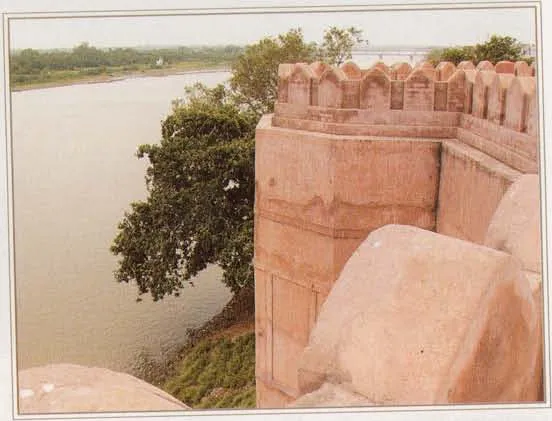
Mathurā
मथुराMathurā is the city on the Yamunā where Śrī Kṛṣṇa appeared from Devakī in the prison of King Kaṁsa.
Raṅga-bhūmi
रंग-भूमिRaṅga-bhūmi, "the arena ground", is the place in the southern part of Mathurā that the guidebooks give for Kaṁsa's wrestling arena, together with Raṅgeśvara Mahādeva and …
Akrūra-bhavana
अक्रूर-भवनAkrūra-bhavana is the house of Akrūra in Mathurā.
Kubjā-kūpa
कुब्जा-कूपKubjā-kūpa, the well of Kubjā, is in Mathurā.
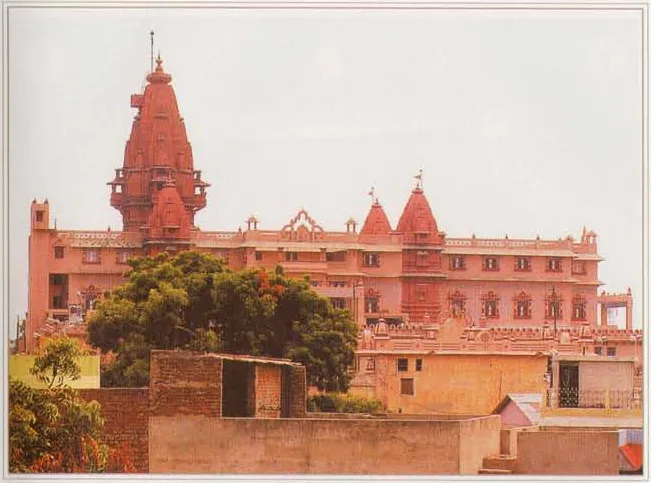
Kṛṣṇa Janma-sthāna
कृष्ण जन्म-स्थानThe Kṛṣṇa Janma-sthāna, also called Kaṭarā Keśavadeva, is honoured as the place where Śrī Kṛṣṇa appeared from Devakī in Kaṁsa's prison.
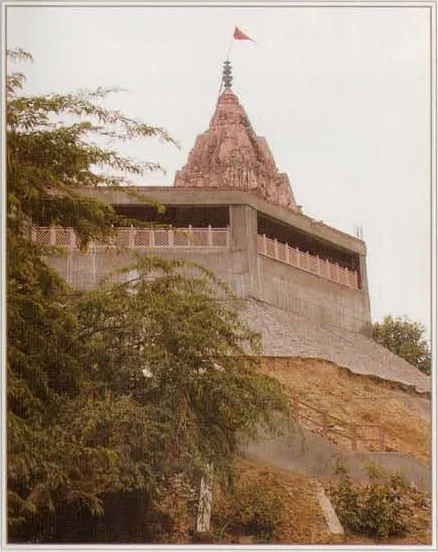
Mahāvidyā-devī Mandira
महाविद्या-देवी मन्दिरThe Mahāvidyā-devī Mandira is a temple of the goddess on a hill in the west of Mathurā, reached by a long flight of steps.
Questions and answers
The Bhāgavatam tells of His stay there from the killing of Kaṁsa to the move to Dvārakā. The Brahma-vaivarta Purāṇa says that after eleven years in Nanda's house He spent a hundred years in Mathurā and Dvārakā together.[5–8, 42]
The Bhāgavatam says that He lived eleven years in Vraja. Śrīla Prabhupāda writes that He went to Mathurā when He was sixteen. The commentators give eleven, or the twelfth year.[12 +2]
Jarāsandha had besieged Mathurā seventeen times. Before his eighteenth attack, Kālayavana surrounded the city. Kṛṣṇa built Dvārakā in the sea, moved His people there and left Balarāma to protect Mathurā.[5–10]
Seventeen times, according to the Bhāgavatam and Śrīla Prabhupāda's Kṛṣṇa book. Each time he was defeated.[5, 8]
Ugrasena, Kaṁsa's father and Kṛṣṇa's grandfather on His mother's side. Kṛṣṇa freed him from Kaṁsa's rule and made him king of the Yadus.[2, 11]
Vajra, the son of Aniruddha and Kṛṣṇa's great-grandson. King Yudhiṣṭhira made him king at Mathurā before he retired.[14–17]
Sources
- Śrīmad-Bhāgavatam 10.44.37, GRETIL
- Śrīmad-Bhāgavatam 10.45.12, GRETIL
- Śrīla Prabhupāda, Kṛṣṇa, the Supreme Personality of Godhead, Chapter 44, 'The Killing of Kaṁsa' · vedabase.io
- Śrīla Prabhupāda, Kṛṣṇa, the Supreme Personality of Godhead, Chapter 45, 'Kṛṣṇa Recovers the Son of His Teacher' · vedabase.io
- Śrīmad-Bhāgavatam 10.50.41, GRETIL
- Śrīmad-Bhāgavatam 10.50.57, GRETIL
- Śrīmad-Bhāgavatam 10.50.4, GRETIL
- Śrīla Prabhupāda, Kṛṣṇa, the Supreme Personality of Godhead, Chapter 50, 'Kṛṣṇa Erects the Dvārakā Fort' · vedabase.io
- Śrīmad-Bhāgavatam 10.50.43-44, GRETIL
- Śrīla Prabhupāda, The Nectar of Devotion, Chapter 21 · vedabase.io
- Śrīmad-Bhāgavatam 10.1.69, GRETIL
- Śrīmad-Bhāgavatam 3.2.26, GRETIL
- Śrīla Prabhupāda, The Nectar of Devotion, Chapter 42 · vedabase.io
- Śrīmad-Bhāgavatam 1.15.39, GRETIL
- Bhāgavata-māhātmya, Skanda version, adhyāya 1, verses 3-5, Sanskrit Wikisource
- Śrīla Prabhupāda, Śrīmad-Bhāgavatam, 1.15.39, purport · vedabase.io
- The Colour Guide to Rādhā-kuṇḍa (1999), Rājaśekhara dāsa Brahmacārī, PDF p. 34
- Śrīmad-Bhāgavatam 10.1.27, GRETIL
- Śrīmad-Bhāgavatam 10.1.28, GRETIL
- Śrīmad-Bhāgavatam 10.41.19-20, GRETIL
Show all 47 references
- Śrīla Prabhupāda, Kṛṣṇa, the Supreme Personality of Godhead, Chapter 41, 'Kṛṣṇa Enters Mathurā' · vedabase.io
- Bhaviṣya Purāṇa, Uttara-parvan 55.12-14 (Janmāṣṭamī-vrata)
- Bhaviṣya Purāṇa, Uttara-parvan 55.15-16
- Bṛhad-vaiṣṇava-toṣaṇī of Śrīla Sanātana Gosvāmī on Śrīmad-Bhāgavatam 10.1.28: commentary v.10.1.28, sanātana-gosvāmī (bṛhad-vaiṣṇava-toṣaṇī), Bhagavata Vidya Pith edition, ed. Bhagavata Rishi and Krishna Shankar Shastri, 1996
- Sārārtha-darśinī of Śrīla Viśvanātha Cakravartī Ṭhākura on Śrīmad-Bhāgavatam 10.1.28: commentary v.10.1.28, viśvanātha-cakravartī (sārārtha-darśiṇī), Bhagavata Vidya Pith edition, ed. Bhagavata Rishi and Krishna Shankar Shastri, 1996
- Śrīla Prabhupāda, Kṛṣṇa, the Supreme Personality of Godhead (Kṛṣṇa book), Chapter 45, 'Kṛṣṇa Recovers the Son of His Teacher' · vedabase.io
- Śrīla Prabhupāda, Kṛṣṇa, the Supreme Personality of Godhead (Kṛṣṇa book), Chapter 46, 'Uddhava Visits Vṛndāvana' · vedabase.io
- Śrīmad-Bhāgavatam 10.45.31, GRETIL
- Śrīla Prabhupāda, Kṛṣṇa, the Supreme Personality of Godhead, chapter 45 ('Kṛṣṇa Recovers the Son of His Teacher') · vedabase.io
- Śrīmad-Bhāgavatam 10.48.1, GRETIL
- Śrīla Prabhupāda, Kṛṣṇa, the Supreme Personality of Godhead, chapter 48 ('Kṛṣṇa Pleases His Devotees') · vedabase.io
- Śrīla Narahari Cakravartī, Bhakti-ratnākara, Fifth Wave (pañcama taraṅga), printed p. 183 (1912 ed.), 2nd ed., 1912
- Śrīmad-Bhāgavatam 10.48.12, GRETIL
- Śrīmad-Bhāgavatam 10.41.12, GRETIL
- Śrīmad-Bhāgavatam 10.41.17, GRETIL
- Śrīla Prabhupāda, Kṛṣṇa, the Supreme Personality of Godhead, Chapter 41 · vedabase.io
- Śrīla Prabhupāda, Kṛṣṇa, the Supreme Personality of Godhead, Chapter 48 · vedabase.io
- Śrī Vraja-maṇḍala Parikramā (2007), PDF p. 43
- Śrīla Prabhupāda, Śrīmad-Bhāgavatam, 3.2.26, purport · vedabase.io
- Śrīla Prabhupāda, The Nectar of Devotion, Chapter 26 · vedabase.io
- Śrīmad-Bhāgavatam: commentary ŚB 10.45.3, commentaries: Jīva Gosvāmī (Laghu-vaiṣṇava-toṣaṇī) and Viśvanātha Cakravartī (Sārārtha-darśinī), Bhagavata Vidya Pith edition, ed. Bhagavata Rishi and Krishna Shankar Shastri, 1996
- Brahma-vaivarta Purāṇa, Śrī-kṛṣṇa-janma-khaṇḍa (4) 54.22-23, Sanskrit Wikisource
- Śrīla Kṛṣṇadāsa Kavirāja Gosvāmī, Śrī Caitanya-caritāmṛta, Antya-līlā 1.67, online edition · vedabase.io
- Śrīla Kṛṣṇadāsa Kavirāja Gosvāmī, Śrī Caitanya-caritāmṛta, Madhya-līlā 19.102, online edition · vedabase.io
- Śrīla Prabhupāda, Śrī Caitanya-caritāmṛta, Madhya-līlā 19.102, purport · vedabase.io
- Śrīla Rūpa Gosvāmī, Bhakti-rasāmṛta-sindhu, 2.1.223, GRETIL
- Verses found in Śrī Dhyānacandra Gosvāmī's Paddhati, the three verses on Kṛṣṇa's kalās
Further sources
- Śrīmad-Bhāgavatam, Tenth Canto, chapters 45 to 50 (translation by the disciples of Śrīla Prabhupāda, BBT); First Canto 15.39 and Third Canto 2.25-26 with Śrīla Prabhupāda's translations and purports.
- Śrīla Prabhupāda, Kṛṣṇa, the Supreme Personality of Godhead, chapters 45 to 50, and The Nectar of Devotion.
- Śrī Caitanya-caritāmṛta, Madhya-līlā 19.102 and Antya-līlā 1.67, translation and purport by Śrīla Prabhupāda.
- The Canto 10 commentaries of Śrīla Sanātana Gosvāmī, Śrīla Jīva Gosvāmī and Śrīla Viśvanātha Cakravartī Ṭhākura; Bhaviṣya, Brahma-vaivarta and Padma Purāṇas; Skanda Purāṇa, Bhāgavata-māhātmya: summarised, not translated.