How Kṛṣṇa killed Kaṁsa in the wrestling arena
कृष्ण ने कुश्ती के अखाड़े में कंस का वध कैसे किया
In short
Kṛṣṇa killed Kaṁsa in the wrestling arena that Kaṁsa had built in Mathurā to have Him and Balarāma killed. First Kṛṣṇa broke the bow of Kaṁsa's sacrifice. Then He killed the elephant Kuvalayāpīḍa at the arena gate and beat the wrestler Cāṇūra. Last, He leapt onto Kaṁsa's high platform, threw him down and killed him.[1–18]
On this page
At a glance
- Scripture: the Śrīmad-Bhāgavatam tells this pastime in its Tenth Canto, chapters 36 and 42 to 44. Śrīla Prabhupāda retells it in his Kṛṣṇa book.[1, 17]
- Kaṁsa's plan: a wrestling ring with seats for people from the city and the countryside, a festival of the bow sacrifice, and an elephant at the gate.[1–7]
- The wrestlers: Kṛṣṇa fought Cāṇūra, and Balarāma fought Muṣṭika. Kūṭa, Śala and Tośala were also killed.[19, 20]
- The killing: Kṛṣṇa seized Kaṁsa by the hair, threw him from his platform into the arena and fell on him. Uddhava later says that Kaṁsa died in the middle of the arena.[13, 14]
- Kaṁsa-khāta: according to Śrīla Sanātana Gosvāmī and Śrīla Jīva Gosvāmī, dragging the body made a ditch. In their time it could still be seen, reaching Viśrānti-tīrtha, a holy bathing place on the Yamunā.[21–23]
- The place: the guidebooks show Raṅga-bhūmi in the southern part of Mathurā, with Raṅgeśvara Mahādeva and Kaṁsa-ṭīlā.[5 +3]
Why did Kaṁsa build a wrestling arena?
Kaṁsa made a plan to kill Kṛṣṇa and Balarāma. The Bhāgavatam says that he told his ministers to build a wrestling ring with many rows of seats around it. People from the city and the outlying districts were to be brought to watch an open contest.[1–6]
mañcāḥ kriyantāṁ vividhā malla-raṅga-pariśritāḥ
paurā jānapadāḥ sarve paśyantu svaira-saṁyugam ||
Erect a wrestling ring with many surrounding viewing stands, and bring all the residents of the city and the outlying districts to see the open competition.
Translation: Śrīla Prabhupāda's disciples (BBT)Then he gave an order to the keeper of his elephants. The elephant Kuvalayāpīḍa was to stand at the entrance of the arena and kill the two brothers there.[7] Śrīla Prabhupāda tells of the same order in his Kṛṣṇa book. There Kaṁsa asks his wrestlers to kill Kṛṣṇa and Balarāma in the arena, while people from many parts of the country come to see the festival.[4]
Names this place“Now I am requesting you to arrange for a wrestling match. People from different parts of the country will come to see the festival. I will arrange to get those two boys here, and you will try to kill Them in the wrestling arena.”
Śrīla Prabhupāda, Kṛṣṇa, the Supreme Personality of Godhead, Chapter 36 · vedabase.io
The festival had a religious cover. Kaṁsa ordered the bow sacrifice, the dhanur-yāga, to begin on Caturdaśī, the fourteenth day of the moon. Animals were to be offered to the lord of the ghosts, Lord Śiva.[2] Śrīla Prabhupāda explains that this day, three days after Ekādaśī (the eleventh day of the moon), is set aside for the worship of Lord Śiva.[4] In their commentaries the Gosvāmīs, the teachers of Vṛndāvana, name this Śiva as Bhūteśvara, the guardian of Mathurā. His story and his shrine have their own article.[26] Read more: How Śiva became Bhūteśvara, the guardian of Mathurā →
Where did Kṛṣṇa break the bow?
On His first day in Mathurā, Kṛṣṇa asked the people of the city where the bow sacrifice would take place. He went there and saw the bow, which looked like Indra's bow.[27] Śrīla Prabhupāda describes it as a very big bow. It lay near the sacrificial altar, guarded by Kaṁsa's constables and watchmen.[28]
The guards warned the brothers not to come nearer. But Kṛṣṇa went up and took the bow in His left hand.[29] The Bhāgavatam tells what happened next:
kareṇa vāmena sa-līlam uddhṛtaṃ sajyaṃ ca kṛtvā nimiṣeṇa paśyatām / nṛṇāṃ vikṛṣya prababhañja madhyato yathekṣu-daṇḍaṃ mada-kary urukramaḥ
Easily lifting the bow with His left hand, Lord Urukrama strung it in a fraction of a second as the King’s guards looked on. He then powerfully pulled the string and snapped the bow in half, just as an excited elephant might break a stalk of sugar cane.
Translation: Śrīla Prabhupāda's disciples (BBT)Śrīla Prabhupāda compares the breaking to an elephant breaking sugarcane in a field.[31] The Bhāgavatam calls the spot only the place of the bow. Śrīla Śrīdhara Svāmī, in his commentary, explains it as the hall of the bow sacrifice. The verse does not say that the bow stood in the wrestling arena.[27] Later texts and the guidebooks differ on whose bow it was and where it stood:
Accounts differ Whose bow Kṛṣṇa broke and where it stood.
- Śrīmad-Bhāgavatam 10.42.15 with Śrīla Śrīdhara SvāmīAt 'the place of the bow' (dhanuṣaḥ sthānam), glossed 'the hall of the bow sacrifice'; the bow was 'like Indra's'. No owner is named.
- Garga-saṁhitā 5.6.26-29At 'the place of the bow', worshipped on Caturdaśī in the sacrificial pavilion (yajña-maṇḍapa); given long ago by Bhārgava (Paraśurāma) to the Yadu king.
- Brahma-vaivarta Purāṇa 4.72.85-87The bow of Maheśa (Śiva), broken 'there' in the sequence that ends in the assembly where Kaṁsa was killed.
- Śrīla Jīva Gosvāmī, Laghu-vaiṣṇava-toṣaṇī on ŚB 10.36.26Rudra (Bhūteśvara) is the deity of that bow too.
The wording of these accounts is our summary of the sources, not a published translation.
The elephant Kuvalayāpīḍa at the arena gate
The next morning the brothers heard the wrestlers' kettledrums and went to the arena.[32] The King's men had worshipped the arena and sounded their drums. They had decorated the galleries with garlands, flags, ribbons and arches.[31 +2] Śrīla Prabhupāda adds that there were separate galleries for kings, for brāhmaṇas (priests) and for kṣatriyas (warriors).[31]
At the gate the keeper was waiting with Kuvalayāpīḍa, and he drove the elephant into their path.[8, 12] Two other works, the Harivaṁśa and the Garga-saṁhitā, set the same scene at the arena gate. The Padma Purāṇa, an old book of sacred history, puts the elephant at the gate of Kaṁsa's palace instead (summarised here, not translated).[7–12]
Kṛṣṇa killed the elephant there. Then Baladeva (another name of Balarāma) and Kṛṣṇa entered the arena with a few cowherd boys, each carrying one of its tusks as a weapon.[9] In The Nectar of Devotion, Śrīla Prabhupāda gives the women of the arena as an example of a mother's loving worry. When the elephants attacked Kṛṣṇa, they begged Him to leave the place at once.[35]
How did Kṛṣṇa appear to the people in the arena?
Kṛṣṇa entered with His elder brother. Each group in the arena saw Him in its own way, according to its own relationship with Him.[12 +3]
|| 10.43.17
mallānām aśanir nṛṇāṁ nara-varaḥ strīṇāṁ smaro mūrtimān gopānāṁ sva-jano’satāṁ kṣiti-bhujāṁ śāstā sva-pitroḥ śiśuḥ
mṛtyur bhoja-pater virāḍ aviduṣāṁ tattvaṁ paraṁ yogināṁ vṛṣṇīnāṁ para-devateti vidito raṅgaṁ gataḥ sāgrajaḥ ||
The various groups of people in the arena regarded Kṛṣṇa in different ways when He entered it with His elder brother. The wrestlers saw Kṛṣṇa as a lightning bolt, the men of Mathurā as the best of males, the women as Cupid in person, the cowherd men as their relative, the impious rulers as a chastiser, His parents as their child, the King of the Bhojas as death, the unintelligent as the Supreme Lord’s universal form, the yogīs as the Absolute Truth and the Vṛṣṇis as their supreme worshipable Deity.
Translation: Śrīla Prabhupāda's disciples (BBT)Śrīla Prabhupāda writes that He appeared differently to different people, according to their different relationships with Him, their rasas.[12] The people on the stands told one another what they had heard about Him. He had killed Pūtanā, the whirlwind demon, Śaṅkhacūḍa, Keśī, Dhenuka and others, and He had pulled down the twin arjuna trees.[39]
Śrīla Rūpa Gosvāmī uses this scene again and again in his Bhakti-rasāmṛta-sindhu, his book on the moods of devotion. Śrīla Prabhupāda gives these verses in English in The Nectar of Devotion. In one verse the whole arena shows mixed feelings at the sight of Mukunda (Kṛṣṇa). Kaṁsa and his priest feel fear, Kṛṣṇa's friends feel joy, and Devakī and the other mothers have tears in their eyes.[38 +5]
tatra rasānāṃ viṣayatve, yathā lalita-mādhave (3.4)-- daityācāryās tad-āsye vikṛtim aruṇatāṃ malla-varyāḥ sakhāyo gaṇḍaunnatyaṃ khaleśāḥ pralayam ṛṣigaṇā dhyāna-muṣṇāsram ambāḥ
romāñcaṃ sāṃyugīnāḥ kam api nava-camatkāram antaḥ sureśā lāsyaṃ dāsāḥ kaṭākṣaṃ yayur asita-dṛśaḥ prekṣya raṅge mukundam ||
“After Kṛṣṇa’s arrival in Kaṁsa’s arena, Kaṁsa’s priest looked at Kṛṣṇa with a detestful expression. The entire arena was filled with dread on the part of Kaṁsa and his priest and restless expressions of pleasure on the cheeks of Kṛṣṇa’s friends. Frustration was felt by His envious rivals. The great sages meditated. Hot tears were in the eyes of Devakī and other motherly ladies, and hairs stood on the bodies of the expert warriors. There was astonishment in the hearts of demigods such as Indra. The servants danced, and the restless eyes of all the young girls glanced about.”
Translation: Śrīla A.C. Bhaktivedanta Swami PrabhupādaIn another verse the sages cry "Jaya!" as He enters, and no one there is untouched by love for Him. In a third, the wives of Vasudeva feel such a parent's love on seeing Him that milk flows from their breasts.[42, 43]
The women's praise of Vraja
While the wrestling went on, the women of Mathurā watched from the stands and praised the land of Vraja. There, they said, the original Lord, disguised as a human, tends the cows with Balarāma and plays His flute.[46–50]
|| 10.44.13
puṇyā bata vraja-bhuvo yad ayaṁ nṛ-liṅga- gūḍhaḥ purāṇa-puruṣo vana-citra-mālyaḥ
gāḥ pālayan saha-balaḥ kvaṇayaṁś ca veṇuṁ vikrīḍayāñcati giritra-ramārcitāṅghriḥ ||
How pious are the tracts of land in Vraja, for there the primeval Personality of Godhead, disguising Himself with human traits, wanders about, enacting His many pastimes! Adorned with wonderfully variegated forest garlands, He whose feet are worshiped by Lord Śiva and goddess Ramā vibrates His flute as He tends the cows in the company of Balarāma.
Translation: Śrīla Prabhupāda's disciples (BBT)In the next verse they say that the gopīs, the cowherd girls of Vraja, must have done great austerities. They always drink with their eyes, they say, the nectar of Kṛṣṇa's form. Śrīla Prabhupāda writes that the women of Mathurā spoke this verse when they saw Kṛṣṇa in the wrestling arena.[47, 48]
Who were Cāṇūra and Muṣṭika?
Cāṇūra and Muṣṭika were the chief of Kaṁsa's wrestlers. When the music began, they sat down on the wrestling mat with Kūṭa, Śala and Tośala.[34] Śrīla Sanātana Gosvāmī explains that they came into the middle of the arena, where Kaṁsa had placed them for the fight (summarised here, not translated).[51]
When they challenged the boys, Kṛṣṇa paired off with Cāṇūra and Balarāma with Muṣṭika.[19, 52] Cāṇūra's blows shook Kṛṣṇa no more than a flower garland shakes an elephant. Kṛṣṇa caught him by the arms, swung him round and threw him to the ground, and Cāṇūra fell dead. Muṣṭika, Kūṭa, Śala and Tośala are killed in the verses that follow.[20]
How did Kṛṣṇa kill Kaṁsa?
Kaṁsa watched from the royal dais, a raised platform, among his ministers and the rulers of his provinces. The Bhāgavatam says that his heart trembled even as he sat there.[53] When his wrestlers had fallen, he shouted wildly against the boys. Kṛṣṇa grew angry and jumped up onto the high dais.[54]
|| 10.44.37
pragṛhya keśeṣu calat-kirīṭaṁ nipātya raṅgopari tuṅga-mañcāt
tasyopariṣṭāt svayam abja-nābhaḥ papāta viśvāśraya ātma-tantraḥ ||
Grabbing Kaṁsa by the hair and knocking off his crown, the lotus-naveled Lord threw him off the elevated dais onto the wrestling mat. Then the independent Lord, the support of the entire universe, threw Himself upon the King.
Translation: Śrīla Prabhupāda's disciples (BBT)Śrīla Prabhupāda tells it in his Kṛṣṇa book. Kṛṣṇa dragged Kaṁsa from his seat to the wrestling dais and threw him down. Then He sat astride his chest and struck him until he lost his life.[17]
Names this place“He then dragged Kaṁsa from his seat to the wrestling dais and threw him down. Then Kṛṣṇa at once straddled his chest and began to strike him over and over again. Simply from the strokes of Kṛṣṇa’s fist, Kaṁsa lost his vital force.”
Śrīla Prabhupāda, Kṛṣṇa, the Supreme Personality of Godhead, Chapter 44, 'The Killing of Kaṁsa' · vedabase.io
Then, as a lion drags a dead elephant, Kṛṣṇa dragged the body along the ground in full view of everyone. All the people in the arena cried out. The verse does not say where the body was taken.[55–58] Śrīla Prabhupāda gives the reason: Kṛṣṇa wanted to assure His parents that Kaṁsa was dead.[57] The Third Canto has the same scene in Uddhava's summary of Kṛṣṇa's life. There Kṛṣṇa and Baladeva pull the body along the ground to please Their parents. Śrīla Prabhupāda's purport (his explanation of the verse) says that They did it to convince them.[56, 58]
Later Uddhava tells Nanda and Yaśodā the place in plain words: Kṛṣṇa killed Kaṁsa in the wrestling arena.[14] In the same verse Uddhava speaks of Kṛṣṇa's promise to return, which has its own article.[14] Read more: Kṛṣṇa's promise to return to Vraja, and Loṭhā Bābā of Pūñcharī →
After the killing
According to Śrīla Prabhupāda, the wives of Kaṁsa and his brothers came and wept over their husbands' bodies, which lay on the wrestling dais.[57] Kṛṣṇa comforted them and had the proper funeral rites performed. Śrīla Prabhupāda adds that He watched over the rites Himself, because He was the nephew of the dead princes.[17, 59] Śrīla Sanātana Gosvāmī and Śrīla Jīva Gosvāmī follow the Harivaṁśa here. They understand that the rites were done on the far shore of the Yamunā. So the queens would not see the funeral fires, and the tīrthas (holy bathing places) would stay pure (summarised here, not translated).[60]
The Bhāgavatam counts Kaṁsa among the demons who fought the Lord directly. In Brahmā's words in the Second Canto, such demons, killed by the Lord, reach the impersonal brahmajyoti (the Lord's spiritual light) or His personal abode.[61] What Kṛṣṇa did next in Mathurā, from freeing His parents to crowning Ugrasena, belongs to the story of His years in the city.[22] Read more: Kṛṣṇa's years in Mathurā →
What is Kaṁsa-khāta?
The Purāṇas, the old books of sacred history, say that the heavy body left a mark in the ground. In the Viṣṇu Purāṇa, Madhusūdana (Kṛṣṇa) drags Kaṁsa by the hair in the middle of the arena, and the body cuts a furrow like the rush of a great flood. In the Harivaṁśa, the dragged body makes a ditch in the assembly ground (both summarised here, not translated).[16, 23]
Śrīla Sanātana Gosvāmī quotes the Viṣṇu Purāṇa in his comment on ŚB 10.44.38. He says that this ditch was known in Mathurā as Kaṁsa-khāta and Kaṁsa-nadī. It still existed in his time, joined to Viśrānti, the best of tīrthas.[21]
Śrīla Jīva Gosvāmī gives the order of events. First the body was dragged in the arena itself. Then Kaṁsa's brothers were killed and Vasudeva and Devakī were set free. Then came a second dragging toward the bank of the Yamunā, because no one could carry the huge body. This second dragging made the ditch that reached Viśrānti-tīrtha (both summarised here, not translated).[21 +2]
Both commentators speak of what could be seen in their own day. No source says whether the ditch can still be seen.[21–23] The Vraja-bhakti-vilāsa of Śrīla Nārāyaṇa Bhaṭṭa Gosvāmī calls Kaṁsa-khāta the tīrtha where Kṛṣṇa killed His mother's brother. It gives the place a prayer, as the place made by Kṛṣṇa.[63, 64] According to the Bhakti-ratnākara, the guide of Śrīla Śrīnivāsa Ācārya showed him a Kaṁsa-khāli, the place of Kaṁsa's end. The sources do not say that these similar names mean one spot.[21 +2]
How do the Gosvāmīs celebrate the arena?
The Gosvāmīs of Vṛndāvana return to this pastime in their poetry. In Śrīla Rūpa Gosvāmī's play Lalita-mādhava, Uddhava asks Gārgī whether she saw the Lord's sport in the arena. He describes Kṛṣṇa rising at the arena gate like the sun over the eastern mountain, putting the elephant to sleep and scattering the wrestlers like owls (summarised here, not translated).[38 +5]
In his Stava-mālā, a garland of hymns, Śrīla Rūpa Gosvāmī prays that Hari (Kṛṣṇa) may live in the reader's heart: Hari, who in the arena threw off the best of wrestlers and broke the fierce elephant Kaṁsa. His hymn in eighteen metres ends its account of Kṛṣṇa's pastimes with a section on the sport in the arena (summarised here, not translated).[44, 68]
Śrīla Jīva Gosvāmī's Gopāla-campū describes the arena among white stands, shining like an autumn sky lit with stars. A hymn in the same work praises Kṛṣṇa as the one who entered the arena with His brother. He threw Kaṁsa down from the dais and dragged him toward Viśrānti (summarised here, not translated).[22 +4]
Where do the books place Raṅga-bhūmi?
The scriptures name the arena of this pastime with the words raṅga, raṅga-bhūmi and raṅga-sthala. The guidebooks' name Raṅga-bhūmi, the arena ground, follows them. The texts do not place the arena within present-day Mathurā.[5 +5]
The pilgrimage books do. According to the Bhakti-ratnākara, Śrīla Rāghava Paṇḍita Gosvāmī showed Śrīla Śrīnivāsa Ācārya and Śrīla Narottama dāsa Ṭhākura where Kṛṣṇa broke the bow and where the elephant blocked His way. He also showed them the Raṅga-sthala where He wrestled, the Mañca-sthāna where Kaṁsa sat, and the place where Nanda and the cowherds watched.[65] The Vraja-bhakti-vilāsa lists the places where Kuvalayāpīḍa, Cāṇūra and Muṣṭika were killed among the holy places inside the city.[64, 73]
Śrīla Prabhupāda's list of the twenty-four ghāṭas (bathing places on the river) of Mathurā includes a Raṅga-sthala, a Mañca-sthala and a Mallayuddha-sthāna. These are the places of the arena, the dais and the wrestling; the list does not describe them.[74, 75] Read more: The twenty-four ghāṭas of Mathurā →
The guidebook Śrī Vraja-maṇḍala Parikramā (2007) gives Raṅga-bhūmi, Raṅgeśvara Mahādeva and Kaṁsa-ṭīlā one number on its map of southern Mathurā.[5 +3] In 1883 F. S. Growse recorded a fair of Kaṁsa's killing at Raṅgeśvara on the tenth day of the bright half of Kārttika (October–November). The same guidebook describes a festival of the Caube community on that day, with a figure of Kaṁsa 25 to 30 feet high.[76, 77]
Where the sources differ
The texts agree on what happened in the arena, but not on every detail of place and day. Each account is given here with its source, without choosing between them. The Bhāgavatam, the Garga-saṁhitā, the Harivaṁśa and the Viṣṇu Purāṇa put Kaṁsa's death in the arena.[13–18] The Padma Purāṇa has Kṛṣṇa throw Kaṁsa from the top of his palace. In another chapter it calls the Viśrānti-tīrtha on the Kālindī (the Yamunā) the place where Kaṁsa was felled.[78] The guidebook Vṛndāvana-Dhāma Ki Jaya! says that Kaṁsa was killed on the hill called Kaṁsa-ṭīlā, while the wrestling took place at Raṅga-bhūmi.[25]
Accounts differ Where exactly Kaṁsa was killed.
- Śrīmad-Bhāgavatam 10.44.37, 10.46.35Thrown from his high dais onto the arena and killed; Uddhava: 'having killed Kaṁsa in the middle of the arena'.
- Garga-saṁhitā 5.8.31; Harivaṁśa 76.35; Viṣṇu Purāṇa 5.20.86-88Thrown from the dais onto the arena / to the ground and dragged in the arena.
- Brahma-vaivarta Purāṇa 4.72.91-92Kṛṣṇa, Sudarśana in hand, pulled Kaṁsa from his platform and killed him; the scene is the assembly (sabhā) with platforms.
- Padma Purāṇa VI.245.378-379Rāma and Kṛṣṇa climbed the lofty 'caitya-prāsāda'; Hari threw Kaṁsa down from the summit of the building (prāsāda-śikhara), and he died on the ground.
The day is also told differently. Śrīla Jīva Gosvāmī and Śrīla Viśvanātha Cakravartī Ṭhākura place the killing on a Caturdaśī, the day for which Kaṁsa ordered the bow sacrifice. The Garga-saṁhitā has Kaṁsa fix the wrestling match for the new-moon day.[77 +4]
Accounts differ The day of the bow sacrifice and of Kaṁsa's killing.
- Śrīmad-Bhāgavatam 10.36.26; Śrīla Prabhupāda, Kṛṣṇa book ch. 36The bow sacrifice was ordered for the Caturdaśī; Śrīla Prabhupāda adds that Caturdaśī is set aside for Śiva's worship. The day of the killing is not stated.
- Garga-saṁhitā 5.1.15 and 5.6.28Bow sacrifice on Caturdaśī (the bow was worshipped that day in the sacrificial pavilion when Kṛṣṇa broke it); the wrestling match on the new-moon day (amāvāsyā).
- Śrīla Jīva Gosvāmī, Laghu-vaiṣṇava-toṣaṇī on ŚB 10.45.3Keśī killed on the dvādaśī of (gauṇa) Phālguna; Kaṁsa killed on the Caturdaśī of that month, in Kṛṣṇa's twelfth year.
- Śrīla Viśvanātha Cakravartī, Sārārtha-darśinī on ŚB 10.45.3Arrival in Mathurā on the dark Trayodaśī of Caitra; Kaṁsa killed on the Caturdaśī; Kṛṣṇa was eleven years old.
Places in this article
Raṅga-bhūmi
रंग-भूमिRaṅga-bhūmi, "the arena ground", is the place in the southern part of Mathurā that the guidebooks give for Kaṁsa's wrestling arena, together with Raṅgeśvara Mahādeva and …
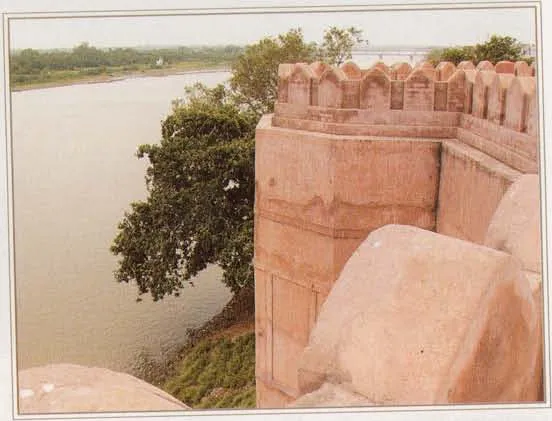
Mathurā
मथुराMathurā is the city on the Yamunā where Śrī Kṛṣṇa appeared from Devakī in the prison of King Kaṁsa.
Kaṁsa-ṭīlā
कंस-टीला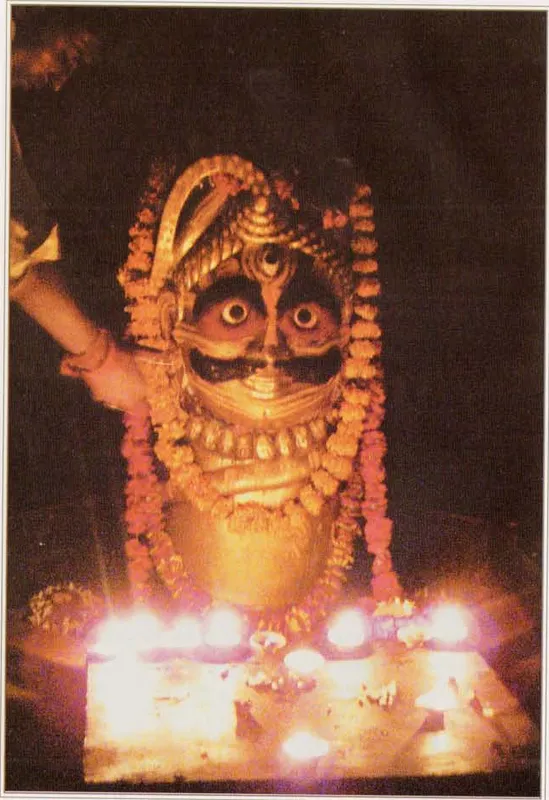
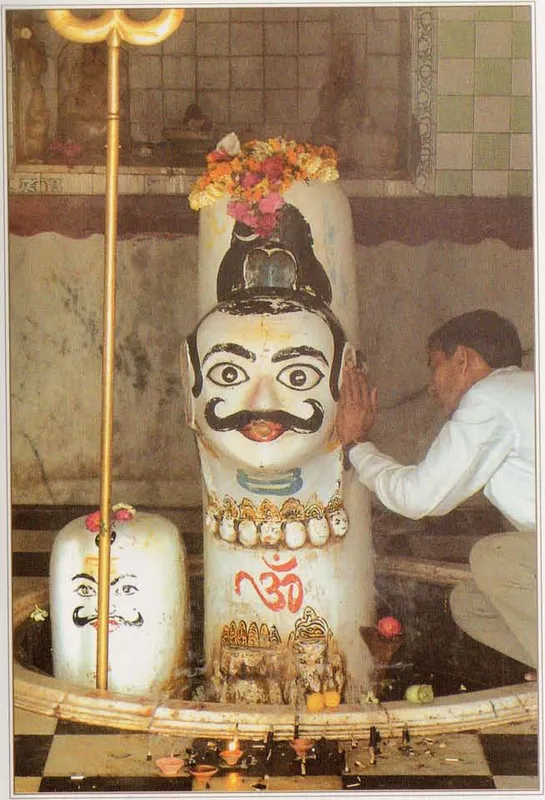
Raṅgeśvara Mahādeva
रंगेश्वर महादेवRaṅgeśvara Mahādeva is a shrine of Lord Śiva in the southern part of Mathurā, beside Raṅga-bhūmi, the arena where Kṛṣṇa killed Kaṁsa.
Bhūteśvara Mahādeva
भूतेश्वर महादेवBhūteśvara Mahādeva is the Śiva who guards Mathurā.
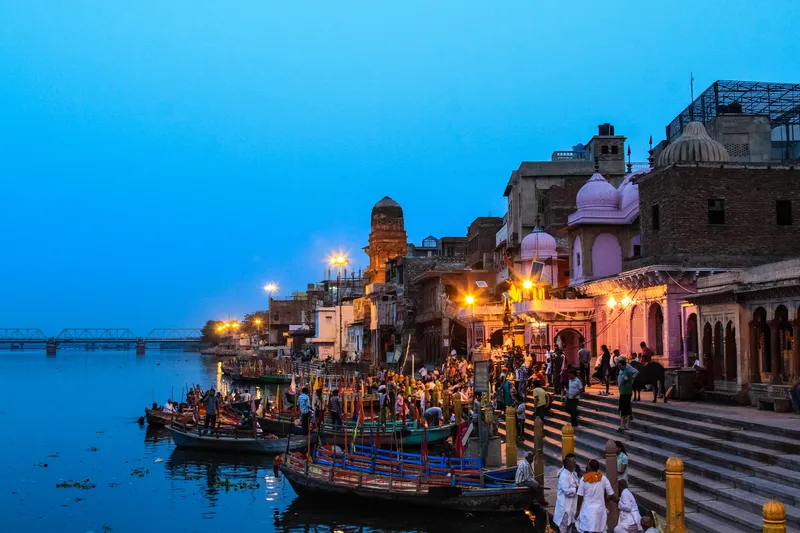
Viśrāma-ghāṭa
विश्राम-घाटViśrāma-ghāṭa is the bathing place on the Yamunā that the 2007 guidebook calls the principal ghāṭa of Mathurā.
Mallayuddha-sthāna
मल्लयुद्ध-स्थानMañcha-sthala
मंच-स्थलRaṅga-sthala
रंग-स्थल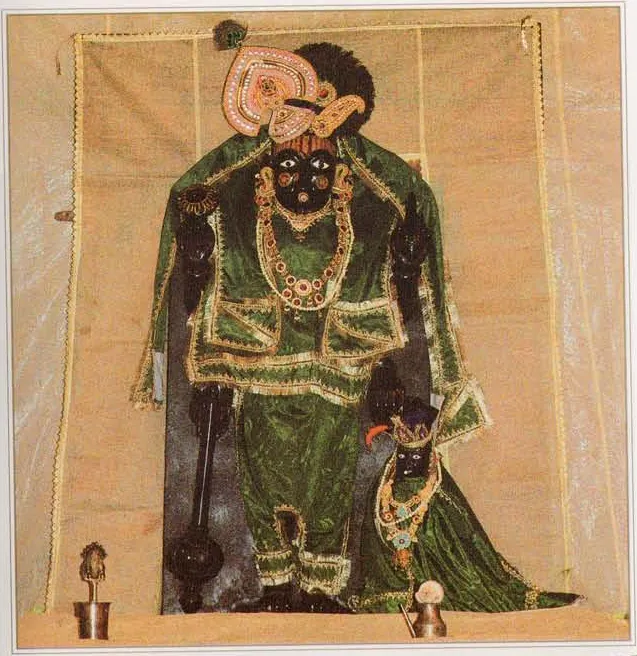
Dīrgha-Viṣṇu Mandira
दीर्घ-विष्णु मन्दिरThe Dīrgha-Viṣṇu Mandira is a temple of Viṣṇu as Dīrgha-viṣṇu near the Bharatpur Gate of Mathurā.
Questions and answers
In the wrestling arena of Mathurā. The Bhāgavatam says that Kṛṣṇa threw Kaṁsa from his high dais onto the arena, and Uddhava later says that Kaṁsa died in the arena. The guidebooks show the place as Raṅga-bhūmi in southern Mathurā; other texts name other spots.[5 +9]
The bow of Kaṁsa's bow sacrifice, which stood under guard near the sacrificial altar. The Bhāgavatam compares it with Indra's bow and names no owner. The Brahma-vaivarta Purāṇa calls it the bow of Lord Śiva.[27 +2]
Kaṁsa had it placed at the arena gate to kill the brothers. Kṛṣṇa killed it there, and He and Balarāma entered the arena carrying its tusks.[7–12]
The chief wrestlers of Kaṁsa. Kṛṣṇa fought and killed Cāṇūra, and Balarāma fought Muṣṭika. The wrestlers Kūṭa, Śala and Tośala also died.[19, 20]
It is the ditch made when Kṛṣṇa dragged Kaṁsa's huge body, according to Śrīla Sanātana Gosvāmī and Śrīla Jīva Gosvāmī. In their time it could still be seen, reaching Viśrānti-tīrtha.[21–23]
Kṛṣṇa had the funeral rites performed for him and his brothers. In Brahmā's words in the Bhāgavatam, demons killed by the Lord, Kaṁsa among them, reach the brahmajyoti or the Lord's own abode.[59, 61]
The guidebooks place it in the southern part of Mathurā, together with Raṅgeśvara Mahādeva and Kaṁsa-ṭīlā.[5 +3]
Sources
- Śrīmad-Bhāgavatam 10.36.24, Bhagavata Vidya Pith edition, ed. Bhagavata Rishi and Krishna Shankar Shastri, 1996
- Śrīmad-Bhāgavatam 10.36.26, Bhagavata Vidya Pith edition, ed. Bhagavata Rishi and Krishna Shankar Shastri, 1996
- Garga-saṁhitā, Mathurā-khaṇḍa (5) 1.13, Sanskrit Wikisource
- Śrīla Prabhupāda, Kṛṣṇa, the Supreme Personality of Godhead, Chapter 36 · vedabase.io
- Śrī Vraja-maṇḍala Parikramā (2007), PDF p. 43
- the undated parikramā notes Mathurā, ¶54
- Śrīmad-Bhāgavatam 10.36.25, Bhagavata Vidya Pith edition, ed. Bhagavata Rishi and Krishna Shankar Shastri, 1996
- Śrīmad-Bhāgavatam 10.43.2, Bhagavata Vidya Pith edition, ed. Bhagavata Rishi and Krishna Shankar Shastri, 1996
- Śrīmad-Bhāgavatam 10.43.16, Bhagavata Vidya Pith edition, ed. Bhagavata Rishi and Krishna Shankar Shastri, 1996
- Harivaṁśa 74.21-22, GRETIL
- Garga-saṁhitā, Mathurā-khaṇḍa (5) 7.16-17, Sanskrit Wikisource
- Śrīla Prabhupāda, Kṛṣṇa, the Supreme Personality of Godhead, Chapter 43 · vedabase.io
- Śrīmad-Bhāgavatam 10.44.37, Bhagavata Vidya Pith edition, ed. Bhagavata Rishi and Krishna Shankar Shastri, 1996
- Śrīmad-Bhāgavatam 10.46.35, Bhagavata Vidya Pith edition, ed. Bhagavata Rishi and Krishna Shankar Shastri, 1996
- Garga-saṁhitā, Mathurā-khaṇḍa (5) 8.31, Sanskrit Wikisource
- Harivaṁśa 76.35-37, GRETIL
- Śrīla Prabhupāda, Kṛṣṇa, the Supreme Personality of Godhead, Chapter 44, 'The Killing of Kaṁsa' · vedabase.io
- Viṣṇu Purāṇa 5.20.91, GRETIL
- Śrīmad-Bhāgavatam ŚB 10.44.1, GRETIL
- Śrīmad-Bhāgavatam ŚB 10.44.22-23, GRETIL
Show all 82 references
- Śrīmad-Bhāgavatam: commentary ŚB 10.44.38, commentary: Sanātana Gosvāmī (Bṛhad-vaiṣṇava-toṣaṇī), Bhagavata Vidya Pith edition, ed. Bhagavata Rishi and Krishna Shankar Shastri, 1996
- Śrīmad-Bhāgavatam: commentary ŚB 10.45.1, commentary: Jīva Gosvāmī (Laghu-vaiṣṇava-toṣaṇī), on the order of events from 10.44.38 to 10.45.2, Bhagavata Vidya Pith edition, ed. Bhagavata Rishi and Krishna Shankar Shastri, 1996
- Viṣṇu Purāṇa 5.20.88-89, GRETIL
- Śrī Vraja-maṇḍala Parikramā (2007), PDF p. 31
- Vṛndāvana-Dhāma Ki Jaya! (c. 1986), by Dhruva Mahārāja dāsa, PDF p. 22
- Śrīmad-Bhāgavatam: commentary ŚB 10.36.26, commentaries: Sanātana Gosvāmī (Bṛhad-vaiṣṇava-toṣaṇī), Jīva Gosvāmī (Laghu-vaiṣṇava-toṣaṇī), Viśvanātha Cakravartī (Sārārtha-darśinī), Bhagavata Vidya Pith edition, ed. Bhagavata Rishi and Krishna Shankar Shastri, 1996
- Śrīmad-Bhāgavatam 10.42.15, Bhagavata Vidya Pith edition, ed. Bhagavata Rishi and Krishna Shankar Shastri, 1996
- Śrīla Prabhupāda, Kṛṣṇa, the Supreme Personality of Godhead, Chapter 42 ('The Breaking of the Bow in the Sacrificial Arena') · vedabase.io
- Śrīla Prabhupāda, Kṛṣṇa, the Supreme Personality of Godhead, chapter 42 · vedabase.io
- Śrīmad-Bhāgavatam 10.42.17, GRETIL
- Śrīla Prabhupāda, Kṛṣṇa, the Supreme Personality of Godhead, Chapter 42 · vedabase.io
- Śrīmad-Bhāgavatam 10.43.1, GRETIL
- Śrīmad-Bhāgavatam 10.42.33, Bhagavata Vidya Pith edition, ed. Bhagavata Rishi and Krishna Shankar Shastri, 1996
- Śrīmad-Bhāgavatam 10.42.37, Bhagavata Vidya Pith edition, ed. Bhagavata Rishi and Krishna Shankar Shastri, 1996
- Śrīla Prabhupāda, The Nectar of Devotion, Chapter 29 · vedabase.io
- Śrīmad-Bhāgavatam 10.43.17, Bhagavata Vidya Pith edition, ed. Bhagavata Rishi and Krishna Shankar Shastri, 1996
- Brahma-vaivarta Purāṇa, Kṛṣṇa-janma-khaṇḍa (4) 72.86-87, Sanskrit Wikisource
- Śrīla Rūpa Gosvāmī, Bhakti-rasāmṛta-sindhu 4.8.84, quoting 'Lalita-mādhava 3.4', GRETIL
- Śrīmad-Bhāgavatam 10.43.25, GRETIL
- Śrīla Rūpa Gosvāmī, Lalita-mādhava, Act 4 ('mukha-kamalāni ca khedayann akhaṇḍaḥ'), vv. 2-3
- Śrīla Rūpa Gosvāmī, Bhakti-rasāmṛta-sindhu 2.1.256, GRETIL
- Śrīla Rūpa Gosvāmī, Bhakti-rasāmṛta-sindhu 2.1.163, GRETIL
- Śrīla Rūpa Gosvāmī, Bhakti-rasāmṛta-sindhu 3.4.73, GRETIL
- Śrīla Rūpa Gosvāmī, Stava-mālā, Śrī Govinda-virudāvalī v.39, after the edition of Bhakti Saranga Goswami and Purushottam Das, Vrindavan, 1959
- Śrīla Rūpa Gosvāmī, Bhakti-rasāmṛta-sindhu 4.8.84, quoting 'Lalita-mādhava 3.4', GRETIL
- Śrīmad-Bhāgavatam 10.44.13, Bhagavata Vidya Pith edition, ed. Bhagavata Rishi and Krishna Shankar Shastri, 1996
- Śrīmad-Bhāgavatam 10.44.14, Bhagavata Vidya Pith edition, ed. Bhagavata Rishi and Krishna Shankar Shastri, 1996
- Śrīla Prabhupāda, Śrī Caitanya-caritāmṛta, Madhya-līlā 21.112, purport · vedabase.io
- Śrī Vraja-maṇḍala Parikramā (2007), PDF p. 45
- Śrī Vraja-maṇḍala Parikramā (2007), PDF p. 293
- Śrīmad-Bhāgavatam: commentary ŚB 10.42.37, commentaries: Sanātana Gosvāmī (Bṛhad-vaiṣṇava-toṣaṇī), Viśvanātha Cakravartī (Sārārtha-darśinī), Bhagavata Vidya Pith edition, ed. Bhagavata Rishi and Krishna Shankar Shastri, 1996
- Śrīla Prabhupāda, Kṛṣṇa, the Supreme Personality of Godhead, Chapter 44 ("The Killing of Kaṁsa") · vedabase.io
- Śrīmad-Bhāgavatam ŚB 10.42.35, GRETIL
- Śrīmad-Bhāgavatam 10.44.34, GRETIL
- Śrīmad-Bhāgavatam 10.44.38, Bhagavata Vidya Pith edition, ed. Bhagavata Rishi and Krishna Shankar Shastri, 1996
- Śrīmad-Bhāgavatam ŚB 3.3.1, GRETIL
- Śrīla Prabhupāda, Kṛṣṇa, the Supreme Personality of Godhead, Chapter 44 ('The Killing of Kaṁsa') · vedabase.io
- Śrīla Prabhupāda, Śrīmad-Bhāgavatam, 3.3.1, purport · vedabase.io
- Śrīmad-Bhāgavatam 10.44.49, Bhagavata Vidya Pith edition, ed. Bhagavata Rishi and Krishna Shankar Shastri, 1996
- Śrīmad-Bhāgavatam: commentary ŚB 10.44.49, commentaries: Sanātana Gosvāmī (Bṛhad-vaiṣṇava-toṣaṇī), Jīva Gosvāmī (Laghu-vaiṣṇava-toṣaṇī), Bhagavata Vidya Pith edition, ed. Bhagavata Rishi and Krishna Shankar Shastri, 1996
- Śrīla Prabhupāda, Śrīmad-Bhāgavatam, 2.7.34–35, translation · vedabase.io
- Śrīla Jīva Gosvāmī, Laghu-vaiṣṇava-toṣaṇī on Śrīmad-Bhāgavatam 10.45.1, Bhagavata Vidya Pith edition, ed. Bhagavata Rishi and Krishna Shankar Shastri, 1996
- Śrīla Nārāyaṇa Bhaṭṭa Gosvāmī, Vraja-bhakti-vilāsa, Mathurā section, passages numbered 33-34, 1st ed., publ. Bābā Kṛṣṇadāsa, Kusuma-sarovara, Saṁvat 2008
- Śrīla Nārāyaṇa Bhaṭṭa Gosvāmī, Vraja-bhakti-vilāsa, second chapter, §42 (list of the tīrtha-deities of Mathurā: southern section), printed p. 43, 1st ed., publ. Bābā Kṛṣṇadāsa, Kusuma-sarovara, Saṁvat 2008
- Śrīla Narahari Cakravartī, Bhakti-ratnākara, Fifth Wave (pañcama taraṅga), 1912 ed. p. 183; verses 363-367 in the Grantha Mandira text numbering, 2nd ed., 1912
- Śrīla Narahari Cakravartī, Bhakti-ratnākara, Fifth Wave (pañcama taraṅga), printed p. 183 (1912 ed.), with the editor's footnote, 2nd ed., 1912
- Śrīla Jīva Gosvāmī, Gopāla-campū, Uttara-campū 5.69 (the 'vīra' hymn 'jaya kṛta-mathurā-praveśa-bhāvuka'; GRETIL gc_2,5.69), GRETIL
- Śrīla Rūpa Gosvāmī, Stava-mālā, Chando'ṣṭādaśaka, section 'raṅga-sthala-krīḍanam', v.41, after the edition of Bhakti Saranga Goswami and Purushottam Das, Vrindavan, 1959
- Śrīla Jīva Gosvāmī, Gopāla-campū, Uttara-campū, pūraṇa 5, ¶[2]
- Śrīmad-Bhāgavatam: commentary ŚB 10.45.3, commentaries: Jīva Gosvāmī (Laghu-vaiṣṇava-toṣaṇī) and Viśvanātha Cakravartī (Sārārtha-darśinī), Bhagavata Vidya Pith edition, ed. Bhagavata Rishi and Krishna Shankar Shastri, 1996
- Garga-saṁhitā, Mathurā-khaṇḍa (5) 7.5, Sanskrit Wikisource
- Garga-saṁhitā, Aśvamedha-khaṇḍa (10) 59.52, Sanskrit Wikisource
- Śrīla Nārāyaṇa Bhaṭṭa Gosvāmī, Vraja-bhakti-vilāsa, second chapter, §42 (inner tīrtha-deities of Mathurā, ascribed to the 'Āditya Purāṇa'), printed p. 44, 1st ed., publ. Bābā Kṛṣṇadāsa, Kusuma-sarovara, Saṁvat 2008
- Śrīla Prabhupāda, Śrī Caitanya-caritāmṛta, Madhya-līlā 17.190, purport · vedabase.io
- Śrīla Prabhupāda, Śrīmad-Bhāgavatam, 4.8.42, purport · vedabase.io
- Mathurá (1883), F. S. Growse, B.C.S., M.A. Oxon., C.I.E. (as the title page gives him, p. 183
- Śrī Vraja-maṇḍala Parikramā (2007), PDF p. 46
- Padma Purāṇa, VI.213.2-6, Sanskrit Wikisource
- Śrīmad-Bhāgavatam 10.36.26, GRETIL
- Śrīla Jīva Gosvāmī, Laghu-vaiṣṇava-toṣaṇī on Śrīmad-Bhāgavatam 10.36.16, Bhagavata Vidya Pith edition, ed. Bhagavata Rishi and Krishna Shankar Shastri, 1996
- Śrīla Viśvanātha Cakravartī, Sārārtha-darśinī on Śrīmad-Bhāgavatam 10.38.39, Bhagavata Vidya Pith edition, ed. Bhagavata Rishi and Krishna Shankar Shastri, 1996
- Garga-saṁhitā, Mathurā-khaṇḍa (5) 1.15, Sanskrit Wikisource
Further sources
- Śrīmad-Bhāgavatam, Tenth Canto, chapters 36 and 42 to 44, translation by the disciples of Śrīla Prabhupāda (BBT); Third Canto 3.1 with Śrīla Prabhupāda's purport.
- Śrīla Prabhupāda, Kṛṣṇa, the Supreme Personality of Godhead, chapters 36, 42, 43 and 44, and The Nectar of Devotion.
- The Canto 10 commentaries of Śrīla Sanātana Gosvāmī, Śrīla Jīva Gosvāmī and Śrīla Viśvanātha Cakravartī Ṭhākura (Sanskrit), summarised, not translated.
- Harivaṁśa, Viṣṇu Purāṇa, Padma Purāṇa, Garga-saṁhitā, Brahma-vaivarta Purāṇa, Bhakti-ratnākara and Vraja-bhakti-vilāsa: summarised from the original unless a published translation is shown.