Śrīla Śrīnivāsa and Śrīla Narottama at Viśrāma-ghāṭa
How Śrīla Śrīnivāsa Ācārya and Śrīla Narottama dāsa Ṭhākura heard the news on reaching Vraja
In short
Viśrāma-ghāṭa in Mathurā is where Śrīla Śrīnivāsa Ācārya and Śrīla Narottama dāsa Ṭhākura heard sad news. Each was on his first journey to Vraja, and each learned there that the Gosvāmīs of Vṛndāvana had left this world. The Bhakti-ratnākara, the Prema-vilāsa and the Narottama-vilāsa tell these arrivals, and they tell them differently.[1–3]
On this page
At a glance
- The place: Viśrāma-ghāṭa, the Viśrānti-tīrtha where, the Bhakti-ratnākara says, Kṛṣṇa rested after killing Kaṁsa.[1, 4]
- Śrīnivāsa's arrival: according to the Bhakti-ratnākara, brāhmaṇas at the ghāṭa were mourning that Śrīla Rūpa Gosvāmī and Śrīla Sanātana Gosvāmī had passed away.[1, 2]
- Narottama's arrival: according to the Narottama-vilāsa, a brāhmaṇa of Mathurā gave him the same news at the ghāṭa that night.[3]
- The three books: the Bhakti-ratnākara and the Narottama-vilāsa are by Śrīla Narahari Cakravartī Ṭhākura, and the Prema-vilāsa is by Nityānanda dāsa.[1–8]
- What followed: according to the Bhakti-ratnākara and the Narottama-vilāsa, Śrīla Jīva Gosvāmī received them both in Vṛndāvana.[9–11]
- Later visitors: according to the same books, Śrīla Śyāmānanda Paṇḍita, Śrī Jāhnavā-devī and Śrī Vīracandra Prabhu also came to the ghāṭa.[12–15]
Why did Śrīnivāsa Ācārya hurry to Vṛndāvana?
The Bhakti-ratnākara follows Śrīnivāsa from Bengal to Purī and on to Vraja. In Purī, it says, Śrīla Gadādhara Paṇḍita told him that he would go to Vṛndāvana, where his wish to study the Bhāgavatam would come true. He gave Śrīnivāsa his own worn copy of the book. Then he told him to go first to Gauḍa, that is Bengal, and Śrīnivāsa went.[16, 17]
When he set out for Vraja, the book says, he carried the lotus feet of Śrīla Rūpa Gosvāmī and Śrīla Sanātana Gosvāmī in his heart. He hurried through Mathurā to Viśrāma-ghāṭa, the ghāṭa (bathing place on the river) where Kṛṣṇa rested after killing Kaṁsa (summarised here, not translated).[1]
The Prema-vilāsa tells the same morning in its own way. Śrīnivāsa reached Mathurā, bowed at Kṛṣṇa's birthplace and saw the places there. Then, among crowds singing and dancing, he came to Kṛṣṇa's Viśrāma-ghāṭa, touched its water and put it on his head (summarised here, not translated).[2]
What news did he hear at Viśrāma-ghāṭa?
In the Bhakti-ratnākara, two or four brāhmaṇas came along the path talking of Vṛndāvana. They mourned that the place had lost its jewels. Śrī Kṛṣṇa-Caitanya had disappeared from sight at Nīlācala (Purī), and the Gosvāmīs had followed (summarised here, not translated).[1] The book names them. On hearing of Śrī Caitanya's disappearance, Śrī Kāśīśvara Gosvāmī had passed from sight. Śrīla Raghunātha Bhaṭṭa Gosvāmī had disappeared in separation from the Lord, and then Śrīla Sanātana Gosvāmī and Śrīla Rūpa Gosvāmī had left.[18]
In the Prema-vilāsa, the speakers are three Vrajavāsīs (people of Vraja) passing by while Śrīnivāsa sat at the ghāṭa facing east. Three had passed from sight, they said: first Śrīla Sanātana Gosvāmī, some days later Śrīla Raghunātha Bhaṭṭa Gosvāmī, and now Śrīla Rūpa Gosvāmī.[2] The book says that when Śrīnivāsa heard it, he cried out that fate had left him without hope (summarised here, not translated).[2]
The two books differ on who spoke and on what was said. Their accounts are set side by side here:
Accounts differ What Śrīnivāsa heard at Viśrāma-ghāṭa when he first came to Mathurā, from whom, and in what order the Gosvāmīs had departed.
- Bhakti-ratnākara, Fourth Wave (1912, pp. 132-133)Two or four brāhmaṇas came along that path talking of Vṛndāvana; they lamented that Śrī Kṛṣṇa-Caitanya had disappeared at Nīlācala and that Kāśīśvara had departed (p. 132), that Śrīla Raghunātha Bhaṭṭa had disappeared in separation from the Lord, within a few days Sanātana, and now Śrī Rūpa (p. 133).
- Prema-vilāsa, Fifth Vilāsa (c. 1913 ed., p. 31)On the road five Vrajavāsīs had told him that Sanātana passed away four months before; at 'Kṛṣṇa's Viśrāma-ghāṭa', sitting facing east, he heard three Vrajavāsīs going by say that first Sanātana, some days later Śrīla Raghunātha Bhaṭṭa, and now Śrī Rūpa had passed from sight (Kāśīśvara is not named).
In what order did the Gosvāmīs leave this world?
The three books do not give one order, and none of them gives a date at this point. The Bhakti-ratnākara names Śrī Kāśīśvara Gosvāmī first, then Śrīla Raghunātha Bhaṭṭa Gosvāmī, Śrīla Sanātana Gosvāmī and last Śrīla Rūpa Gosvāmī.[18] The Prema-vilāsa has Śrīla Sanātana Gosvāmī first, Śrīla Raghunātha Bhaṭṭa Gosvāmī some days later and Śrīla Rūpa Gosvāmī last. It does not name Kāśīśvara.[2]
The Narottama-vilāsa names the same four in the brāhmaṇa's news to Narottama: Raghunātha, Kāśīśvara, Rūpa and Sanātana.[3] All three agree on one point. Śrīla Rūpa Gosvāmī and Śrīla Sanātana Gosvāmī were no longer present when the two young devotees arrived.[1–3]
How did Narottama dāsa Ṭhākura reach Vṛndāvana?
According to the Narottama-vilāsa, Narottama visited all the holy places in a few days and joyfully entered Vraja. He went first to Viśrāma-ghāṭa in Mathurā, bathed in the Yamunā and stayed there.[3]
That night, the book says, a Vaiṣṇava brāhmaṇa of Mathurā fed him and told him that the Gosvāmīs had passed from sight, and Narottama wept. Toward the end of the night the four Gosvāmīs appeared to him in a dream. In the morning the brāhmaṇa walked part of the way with him and sent a man to show him the road to Vṛndāvana. There, the book adds, Śrīla Rūpa Gosvāmī had told Śrīnivāsa in a dream that he would meet Narottama. Śrīla Jīva Gosvāmī said that the Lord had told him the same (summarised here, not translated).[3]
The Prema-vilāsa tells it differently. Narottama came on from Prayāga, saw Bhūteśvara, the Keśava temple and Kṛṣṇa's birthplace, bathed at Viśrāma and stayed in the town.[8] In Vṛndāvana, Śrīla Jīva Gosvāmī received a command from Śrīla Rūpa Gosvāmī: a person named Narottama had been at Viśrānti since the day before. He sent Vaiṣṇavas, who found Narottama at that very ghāṭa and brought him to Vṛndāvana.[8]
The two accounts are given side by side here, without choosing between them:
Accounts differ What happened when Narottama first came to Viśrāma-ghāṭa, and how he was brought on to Vṛndāvana.
- Narottama-vilāsa, Second Vilāsa (c. 1907 ed., p. 13)He went first to Viśrāma-ghāṭa, bathed in the Yamunā and stayed there; that night a Vaiṣṇava brāhmaṇa of Mathurā fed him and told him that Raghunātha, Kāśīśvara, Rūpa and Sanātana had passed from sight; toward dawn those four Gosvāmīs appeared to him in a dream; in the morning the brāhmaṇa sent a man to show him the road to Vṛndāvana, where Śrī Rūpa had told Śrīnivāsa in a dream that he would meet Narottama (pp. 13-14).
- Prema-vilāsa, Eleventh Vilāsa (c. 1913 ed., p. 62)After seeing Bhūteśvara, the Keśava temple and the birthplace he bathed at Viśrāma and stayed in the town; at a command of Śrī Rūpa, Jīva sent Vaiṣṇavas who bathed at Viśrānti, found him at that very ghāṭa and took him to Vṛndāvana.
Who received them in Vṛndāvana?
Śrīla Jīva Gosvāmī received both young devotees. According to the Bhakti-ratnākara, Śrīnivāsa took darśana (a sacred viewing) of Śrī Govinda at dusk beside the temple on his first arrival in Vṛndāvana. He was overwhelmed with love, and Śrīla Jīva Gosvāmī found him there at the evening ārati (the lamp worship).[9, 10] Śrīla Jīva Gosvāmī lifted him from the ground and embraced him. Śrī Kṛṣṇa Paṇḍita, then in charge of Govinda's service, fed him mahā-prasāda, food offered to the Deity (summarised here, not translated).[9] Śrīla Jīva Gosvāmī lodged Śrīnivāsa at his own home, where Rādhā-Dāmodara were worshipped, and gave him darśana of the Deity the next morning.[19, 20]
According to the Narottama-vilāsa, Śrīla Jīva Gosvāmī also brought Narottama to his home and showed him Rādhā-Dāmodara. At the sight of Śrīla Rūpa Gosvāmī's samādhi (the tomb of a saint) there, Narottama rolled on the ground in tears.[11] The same book tells how the two first met. Someone told Śrīnivāsa that a young prince had come from Gauḍa, his body always wet with tears. Śrīla Jīva Gosvāmī, he said, had taken him on his lap at the sight of Śrī Govinda. Śrīnivāsa went joyfully to Govinda's door and met Narottama there (summarised here, not translated).[10]
Each then received initiation. The Bhakti-ratnākara says that Śrīla Gopāla Bhaṭṭa Gosvāmī initiated Śrīnivāsa in the presence of Śrī Rādhāramaṇa.[21–24] Narottama served Śrīla Lokanātha Gosvāmī and received initiation from him. Śrīla Prabhupāda writes that Śrīla Lokanātha Gosvāmī was the spiritual master of Śrīla Narottama dāsa Ṭhākura, his only disciple.[25–28] Read more: How Śrīla Lokanātha Gosvāmī came to Vraja and stayed there →
Śrīla Jīva Gosvāmī then arranged for the two to tour all the places of Vraja with Śrīla Rāghava Paṇḍita Gosvāmī, who had just come from Govardhana.[29–31] On that tour Śrīla Rāghava Paṇḍita Gosvāmī showed them Viśrānti-tīrtha and its glories. At the end of their round of Vraja, they bathed there again.[4 +2] Śrīla Prabhupāda writes that Śrīla Jīva Gosvāmī inspired Śrīla Śrīnivāsa Ācārya, Śrīla Narottama dāsa Ṭhākura and Duḥkhī Kṛṣṇadāsa to preach in Bengal.[33]
Who else came to Viśrāma-ghāṭa?
According to the Prema-vilāsa, Duḥkhī Kṛṣṇadāsa, later named Śrīla Śyāmānanda Paṇḍita, also came this way. His guru sent him to Vṛndāvana. He reached Mathurā, wept at Kṛṣṇa's birthplace, came to Viśrāma-ghāṭa and set out for Vṛndāvana at dawn.[12]
Śrīnivāsa came back to the ghāṭa years later. According to the Ninth Wave (chapter) of the Bhakti-ratnākara, on a later journey he bathed in the Yamunā at Viśrāma-ghāṭa. A brāhmaṇa of Mathurā told him there that Śrī Haridāsa Ācārya had passed from sight ten days before, on the dark Ekādaśī of Māgha (January–February). Śrīnivāsa wept and rolled on the ground. The brāhmaṇa calmed him, and he went on to Vṛndāvana, arriving on Vasanta-pañcamī, the spring festival (summarised here, not translated).[7]
The same books bring Śrī Jāhnavā-devī and Śrī Vīracandra Prabhu here. According to the Bhakti-ratnākara and the Narottama-vilāsa, Śrī Jāhnavā-devī bathed in the Yamunā at Viśrāma-ghāṭa when she came to Mathurā. The Bhakti-ratnākara says that Śrī Vīracandra Prabhu bathed at Śrī Viśrānti-ghāṭa on his tour of Vraja.[13–15]
Why is Viśrāma-ghāṭa so important?
The Varāha Purāṇa, an old scripture, gives the name its meaning. Vāsudeva Janārdana, the lord of the world, takes rest (viśrānti) there, and so it is called Viśrānti.[34, 35] The Purāṇa calls Viśrānti known in the three worlds. It says that no sacrifice, austerity or meditation gives the result of a bath there.[32, 36] The Bhakti-ratnākara quotes the Saura Purāṇa for the same name. Viśrānti destroys sin and gives people rest from wandering in the desert of worldly life. One who bathes there and worships Acyuta (Kṛṣṇa) is freed from the burning of material life (summarised here, not translated).[32]
The Bhakti-ratnākara links it with two pastimes. Śrīla Rāghava Paṇḍita Gosvāmī tells Śrīnivāsa that Kṛṣṇa rested here after killing Kaṁsa. He adds that Śrī Caitanya Mahāprabhu performed a wonderful pastime here. Hundreds of thousands of people ran from all sides calling out Hari's name and could not take their eyes off Him (summarised here, not translated).[4] Read more: The twenty-four ghāṭas of Mathurā →
Places in this article
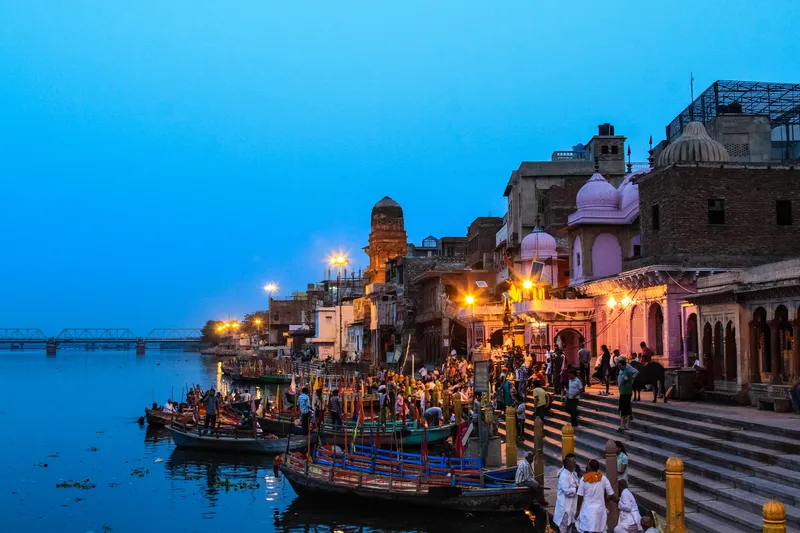
Viśrāma-ghāṭa
विश्राम-घाटViśrāma-ghāṭa is the bathing place on the Yamunā that the 2007 guidebook calls the principal ghāṭa of Mathurā.
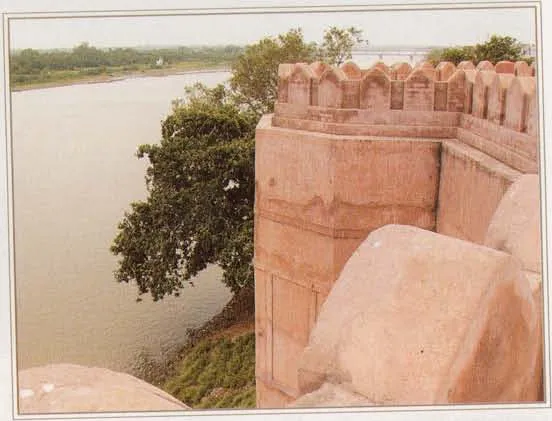
Mathurā
मथुराMathurā is the city on the Yamunā where Śrī Kṛṣṇa appeared from Devakī in the prison of King Kaṁsa.
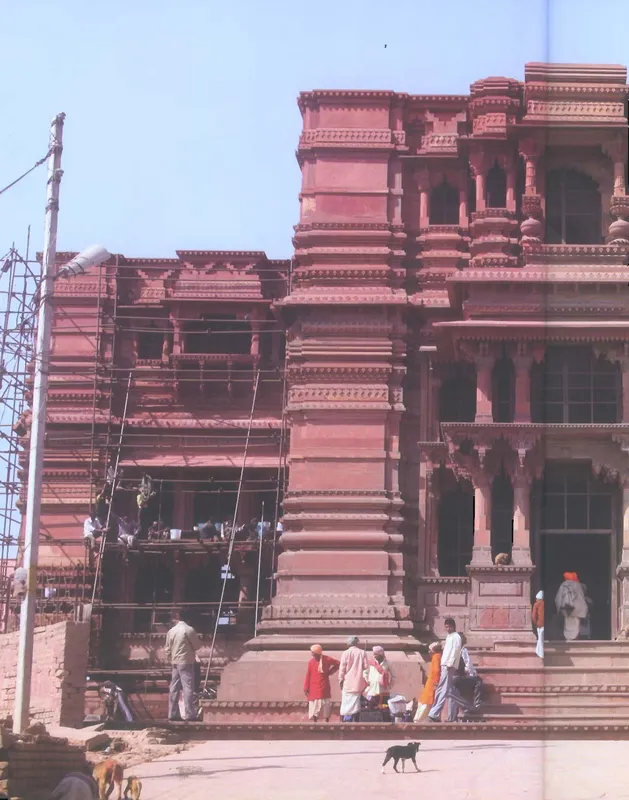
Rādhā-Govinda Mandira (Vṛndāvana, old)
राधा-गोविन्द मन्दिर (वृन्दावन, पुराना)The old Rādhā-Govinda Mandira is the great red-sandstone temple of Śrī Govindadeva in Vṛndāvana, built, as the guidebooks say, on top of Gomā-ṭīlā, a mound.
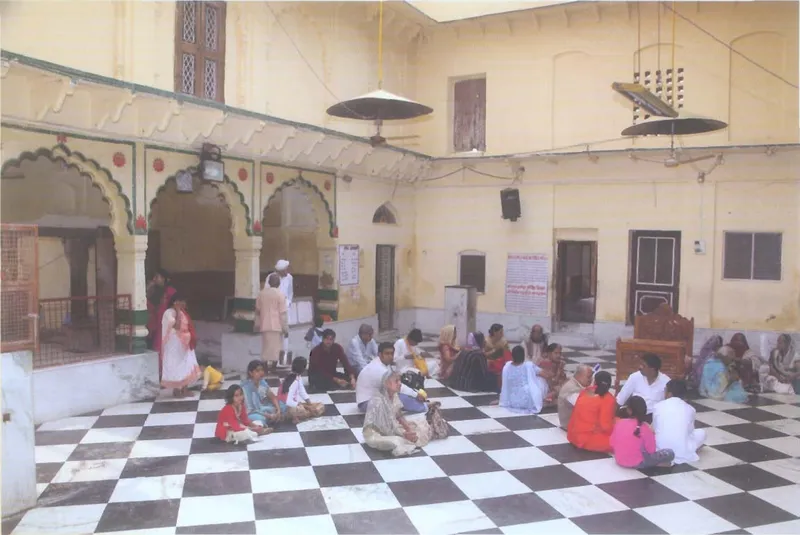
Rādhā-Dāmodara Mandira (Vṛndāvana)
राधा-दामोदर मन्दिर (वृन्दावन)The Rādhā-Dāmodara Mandira is one of the seven old temples of the Gauḍīya Vaiṣṇavas in Vṛndāvana, in the Sevā-kuñja quarter.
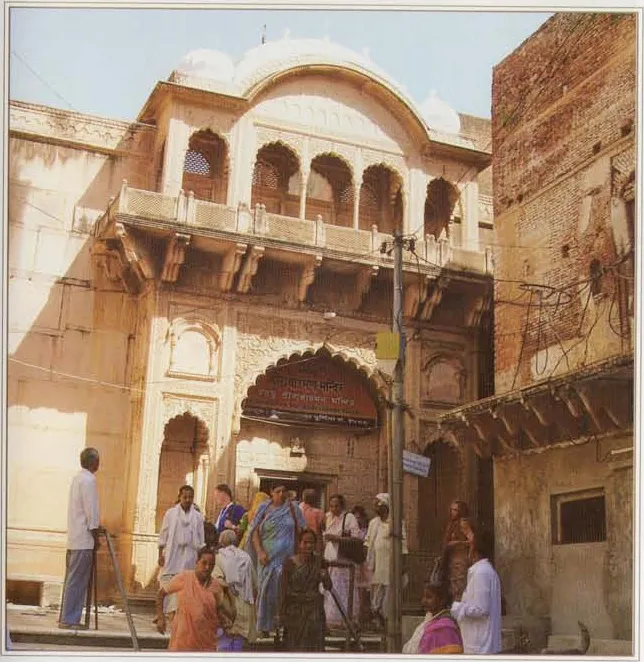
Rādhā-Ramaṇa Mandira (Vṛndāvana)
राधारमण मन्दिर (वृन्दावन)The Rādhā-Ramaṇa Mandira in Vṛndāvana is the temple of Śrī Rādhā-Ramaṇa, the Deity of Śrī Gopāla Bhaṭṭa Gosvāmī, and one of the seven principal Gauḍīya Vaiṣṇava temples o …
Lokanātha Gosvāmī Samādhi (Rādhā-Gokulānanda)
लोकनाथ गोस्वामी समाधि (राधा-गोकुलानन्द)The tomb of Śrīla Lokanātha Gosvāmī is the main samādhi in the samādhi garden beside the Rādhā-Gokulānanda Mandira in Vṛndāvana.
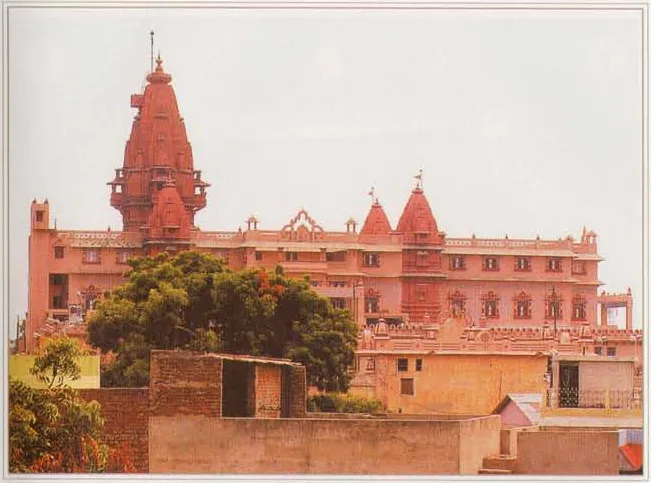
Kṛṣṇa Janma-sthāna
कृष्ण जन्म-स्थानThe Kṛṣṇa Janma-sthāna, also called Kaṭarā Keśavadeva, is honoured as the place where Śrī Kṛṣṇa appeared from Devakī in Kaṁsa's prison.
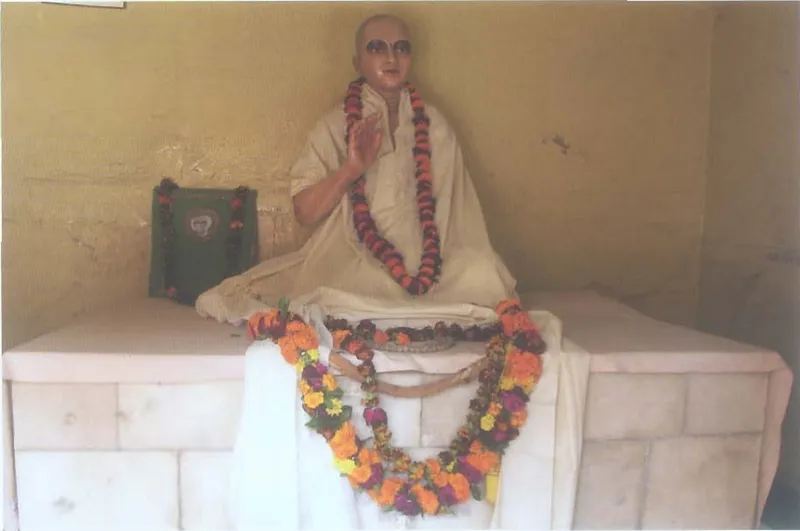
Jīva Gosvāmī's samādhi (Rādhā-Dāmodara)
जीव गोस्वामी की समाधि (राधा-दामोदर)The samādhi (tomb) of Śrīla Jīva Gosvāmī stands in the compound of the Rādhā-Dāmodara Mandira in Vṛndāvana, the temple he founded for his Deities.
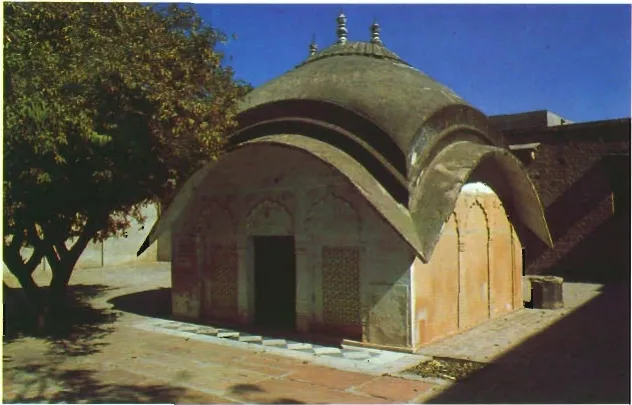
Rūpa Gosvāmī Samādhi (Rādhā-Dāmodara)
रूप गोस्वामी समाधि (राधा-दामोदर)The samādhi (tomb) of Śrīla Rūpa Gosvāmī stands in the courtyard of the Rādhā-Dāmodara temple in Vṛndāvana, opposite his bhajana-kuṭī, with Śrīla Bhūgarbha Gosvāmī's samā …
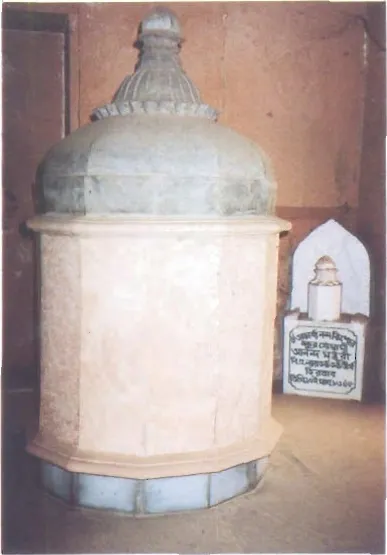
Śrīnivāsa Ācārya Samādhi
श्रीनिवास आचार्य समाधिThe samādhi (tomb) of Śrīla Śrīnivāsa Ācārya is in a small room of Śrīla Śrīnivāsa Ācārya's kuñja near Dhīra-samīra in Vṛndāvana, beside the samādhi of his disciple Śrīla …
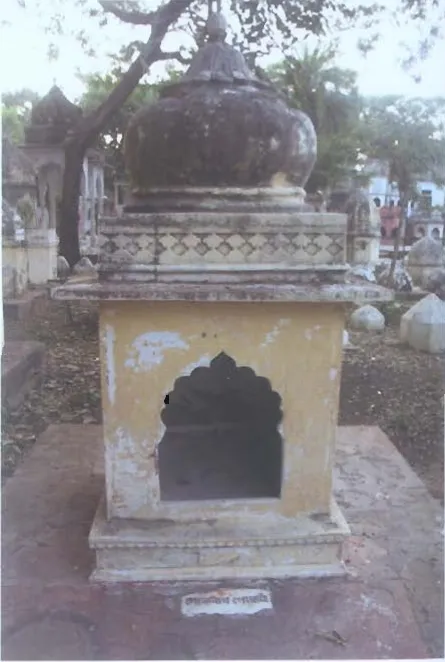
Kāśīśvara Paṇḍita Samādhi
काशीश्वर पण्डित समाधिThis is the samādhi, the tomb, of Śrī Kāśīśvara Paṇḍita in the garden of the sixty-four samādhis in Vṛndāvana.
Questions and answers
According to the Bhakti-ratnākara, he was going to meet Śrīla Rūpa Gosvāmī and Śrīla Sanātana Gosvāmī, whose lotus feet he carried in his heart. Śrīla Gadādhara Paṇḍita had told him that he would go to Vṛndāvana.[1 +2]
That the Gosvāmīs had left this world. In the Bhakti-ratnākara, brāhmaṇas mourn it; in the Prema-vilāsa, three passing Vrajavāsīs say it.[1, 2]
According to the Narottama-vilāsa, a brāhmaṇa of Mathurā sent a man to show him the road. According to the Prema-vilāsa, Vaiṣṇavas sent by Śrīla Jīva Gosvāmī found him at the ghāṭa and brought him.[3, 8]
The books differ. The Bhakti-ratnākara names Kāśīśvara, Raghunātha Bhaṭṭa, Sanātana and Rūpa. The Prema-vilāsa names Sanātana, Raghunātha Bhaṭṭa and then Rūpa.[2, 18]
According to the Bhakti-ratnākara, Śrīla Jīva Gosvāmī himself found Śrīnivāsa at Śrī Govinda's evening ārati. According to the Prema-vilāsa, he sent Vaiṣṇavas to bring Narottama from Viśrāma-ghāṭa.[8–10]
The Varāha Purāṇa says that the Lord takes rest there. The Bhakti-ratnākara says that Kṛṣṇa rested there after killing Kaṁsa, and that Śrī Caitanya Mahāprabhu performed a wonderful pastime there.[4 +2]
Sources
- Śrīla Narahari Cakravartī, Bhakti-ratnākara, Fourth Wave (caturtha taraṅga), 1912 ed. p. 132, 2nd ed., 1912
- Prema-vilāsa, Fifth Vilāsa, publ. Yaśodālāl Tālukdār, Kolkata, Baṅgābda 1320 (c. 1913), p. 31, Kolkata, 1913
- Śrīla Narahari Cakravartī, Narottama-vilāsa, Second Vilāsa, v. 182 (1st ed., Kiśorī dāsa Bābājī, c. 1907), p. 13, 1st ed., Baṅgābda 1314
- Śrīla Narahari Cakravartī, Bhakti-ratnākara, Fifth Wave (pañcama taraṅga), 1912 ed. p. 170, 2nd ed., 1912
- Śrīla Narahari Cakravartī, Bhakti-ratnākara, Fifth Wave (pañcama taraṅga), 1912 ed. p. 178, 2nd ed., 1912
- Śrīla Narahari Cakravartī, Bhakti-ratnākara, Fifth Wave (pañcama taraṅga), 1912 ed. p. 288, 2nd ed., 1912
- Śrīla Narahari Cakravartī, Bhakti-ratnākara, Ninth Wave (navama taraṅga), 1912 ed. p. 568; verses 72-78 in the Grantha Mandira text numbering, 2nd ed., 1912
- Prema-vilāsa, Eleventh Vilāsa, publ. Yaśodālāl Tālukdār, Kolkata, Baṅgābda 1320 (c. 1913), p. 62, Kolkata, 1913
- Śrīla Narahari Cakravartī, Bhakti-ratnākara, Fourth Wave (caturtha taraṅga), 1912 ed. p. 137, 2nd ed., 1912
- Śrīla Narahari Cakravartī, Narottama-vilāsa, second vilāsa, vv. 229-241, Kiśorī dāsa Bābājī's edition, p. 15, left-hand column, 1st ed., Baṅgābda 1314
- Śrīla Narahari Cakravartī, Narottama-vilāsa, Second Vilāsa (dvitīya vilāsa), vv.284–286 and 288, 1st ed. (c. 1907) printed p. 17, 1st ed., Baṅgābda 1314
- Prema-vilāsa, Twelfth Vilāsa, publ. Yaśodālāl Tālukdār, Kolkata, Baṅgābda 1320 (c. 1913), p. 83, Kolkata, 1913
- Śrīla Narahari Cakravartī, Bhakti-ratnākara, Eleventh Wave (ekādaśa taraṅga), 1912 ed. p. 663, 2nd ed., 1912
- Śrīla Narahari Cakravartī, Narottama-vilāsa, Ninth Vilāsa, vv. 8-9 (1st ed., c. 1907), p. 78, 1st ed., Baṅgābda 1314
- Śrīla Narahari Cakravartī, Bhakti-ratnākara, Thirteenth Wave (trayodaśa taraṅga), 1912 ed. p. 1025; verses 381-384 in the Grantha Mandira text numbering, 2nd ed., 1912
- Śrīla Narahari Cakravartī, Bhakti-ratnākara, Third Wave (tṛtīya taraṅga), printed p. 114, lines 9-18, 2nd ed., 1912
- The Color Guide to Vṛndāvana (2000), Written and Photographed by Rājaśekhara dāsa Brahmacārī, PDF p. 126
- Śrīla Narahari Cakravartī, Bhakti-ratnākara, Fourth Wave (caturtha taraṅga), printed pp. 132-133 (1912 ed.), 2nd ed., 1912
- Śrīla Narahari Cakravartī, Bhakti-ratnākara, Fourth Wave, 1912 ed. p. 138, 2nd ed., 1912
- Vṛndāvana, the Playground of God (2010), Bhakti Caitanya Svāmī, PDF p. 53
Show all 36 references
- Śrīla Narahari Cakravartī, Bhakti-ratnākara, taraṅga 4, printed p. 140, 2nd ed., 1912
- Śrīla Narahari Cakravartī, Bhakti-ratnākara, taraṅga 4, printed p. 143, 2nd ed., 1912
- Śrīla Narahari Cakravartī, Bhakti-ratnākara, taraṅga 4, printed p. 144, 2nd ed., 1912
- Śrīla Narahari Cakravartī, Bhakti-ratnākara, taraṅga 4, printed p. 145, 2nd ed., 1912
- Śrīla Narahari Cakravartī, Bhakti-ratnākara, taraṅga 1, printed p. 24, 2nd ed., 1912
- Śrīla Narahari Cakravartī, Bhakti-ratnākara, taraṅga 1, printed p. 23, 2nd ed., 1912
- Śrīla Prabhupāda, Śrī Caitanya-caritāmṛta, Madhya-līlā 18.49, purport · vedabase.io
- Śrīla Prabhupāda, Śrī Caitanya-caritāmṛta, Ādi-līlā 12.82, purport · vedabase.io
- Śrīla Narahari Cakravartī, Bhakti-ratnākara, Fifth Wave, 1912 ed., first page of the wave (no page number printed; the next page is numbered 150), 2nd ed., 1912
- Śrīla Narahari Cakravartī, Bhakti-ratnākara, Fifth Wave, 1912 ed. p. 203, 2nd ed., 1912
- Śrī Vraja-maṇḍala Parikramā (2007), PDF p. 132
- Śrīla Narahari Cakravartī, Bhakti-ratnākara, Fifth Wave (pañcama taraṅga), 1912 ed. p. 171, 2nd ed., 1912
- Śrīla Prabhupāda, Śrī Caitanya-caritāmṛta, Ādi-līlā 10.85, purport · vedabase.io
- Varāha Purāṇa, adhyāya 167, verses 23-25, Sanskrit Wikisource
- Varāha Purāṇa, adhyāya 167, verses 26-30, Sanskrit Wikisource
- Varāha Purāṇa, adhyāya 152, verses 34-38a, Sanskrit Wikisource
Further sources
- Bhakti-ratnākara of Śrīla Narahari Cakravartī Ṭhākura, Fourth, Fifth and Ninth Waves (1912 edition), summarised, not translated.
- Narottama-vilāsa of Śrīla Narahari Cakravartī Ṭhākura, Second Vilāsa (first edition), and Prema-vilāsa of Nityānanda dāsa, Fifth, Eleventh and Twelfth Vilāsas (Kolkata edition of c. 1913): summarised from the Bengali.
- Varāha Purāṇa, Mathurā-māhātmya: summarised from the Sanskrit.