Uddhava brings Kṛṣṇa's message to the gopīs
उद्धव गोपियों के पास कृष्ण का सन्देश लाते हैं
In short
After Kṛṣṇa left Vraja for Mathurā, He sent His friend Uddhava with a message to comfort His parents and the gopīs, the cowherd girls who loved Him. The message said that they were never really apart from Him. The gopīs welcomed it, and Uddhava stayed for months. The guidebooks connect the meeting with Jñāna-gudri in Vṛndāvana and Uddhava-kyārī at Nandagrāma.[1–13]
On this page
At a glance
- Scripture: Śrīmad-Bhāgavatam, Tenth Canto, chapters 46 and 47.[1, 2]
- The message: Kṛṣṇa is the Soul of all, so the gopīs are never really separated from Him.[3]
- How it came: as spoken words in the Bhāgavatam; according to Śrīla Prabhupāda's Kṛṣṇa book, as a written message that Uddhava read aloud.[6 +2]
- How it was received: the gopīs were pleased, their pain of separation eased, and they honoured Uddhava.[3–6]
- Uddhava's prayer: to be born as a bush, creeper or herb in Vṛndāvana, touched by the dust of the gopīs' feet.[9 +2]
- The places: Jñāna-gudri by the Yamunā in Vṛndāvana and Uddhava-kyārī near Nandagrāma, as the guidebooks say, though this may not be certain.[7–13]
Why did Kṛṣṇa send Uddhava to Vraja?
Uddhava was Kṛṣṇa's close friend and adviser in Mathurā. When Kṛṣṇa saw how much the people of Vraja missed Him, He sent Uddhava to them. The Bhāgavatam gives His words:[1, 2]
gacchoddhava vrajaṃ saumya pitror nau prītim āvaha / gopīnāṃ mad-viyogādhiṃ mat-sandeśair vimocaya
[Lord Kṛṣṇa said:] Dear gentle Uddhava, go to Vraja and give pleasure to Our parents. And also relieve the gopīs, suffering in separation from Me, by giving them My message.
Translation: Śrīla Prabhupāda's disciples (BBT)Śrīla Prabhupāda tells the same in his Kṛṣṇa book, his own retelling of the Tenth Canto:[1, 2]
General teaching (does not name the place)“Kṛṣṇa wanted to send him to Vṛndāvana with a message to the residents to pacify their deep feelings of separation. … Requested by Lord Kṛṣṇa, Uddhava immediately left on his chariot and carried the message to Gokula.”
Śrīla Prabhupāda, Kṛṣṇa, the Supreme Personality of Godhead (Kṛṣṇa book), Chapter 46, 'Uddhava Visits Vṛndāvana' · vedabase.io
Uddhava reached Nanda's village at sunset and spent the night with Nanda and Yaśodā, talking of Kṛṣṇa.[14 +8] The Bhāgavatam calls the place "Nanda's Gokula". The commentator Vaṁśīdhara explains it as Nandagrāma. Śrīla Sanātana Gosvāmī and Śrīla Jīva Gosvāmī, in one of their readings, speak of Nanda's houses as the many palaces on the Nandīśvara hill (summarised here, not translated).[1 +2]
Kṛṣṇa's promise to return to Vraja, and how the ācāryas understand it, is told in its own article. Here it is enough to say that the message was meant to comfort, and that Śrīla Prabhupāda writes that it saved the gopīs.[6] Read more: Kṛṣṇa's promise to return to Vraja, and Loṭhā Bābā of Pūñcharī →
Where did Uddhava meet the gopīs?
The next morning the gopīs saw Uddhava's chariot at Nanda's door. They recognised him as Kṛṣṇa's messenger, took him to a quiet place and asked him about Kṛṣṇa:[6, 25]
taṃ praśrayeṇāvanatāḥ su-sat-kṛtaṃ sa-vrīḍa-hāsekṣaṇa-sūnṛtādibhiḥ / rahasy apṛcchann upaviṣṭam āsane vijñāya sandeśa-haraṃ ramā-pateḥ
Bowing their heads in humility, the gopīs duly honored Uddhava with their shy, smiling glances and pleasing words. They took him to a quiet place, seated him comfortably and began to question him, for they recognized him to be a messenger from Kṛṣṇa, the master of the goddess of fortune.
Translation: Śrīla Prabhupāda's disciples (BBT)Śrīla Prabhupāda adds the reason in his Kṛṣṇa book. The gopīs wanted to speak freely, away from people who did not share their feelings:[6, 25]
General teaching (does not name the place)“When the gopīs understood that Uddhava had a message from Kṛṣṇa, they became very happy and called him to a secluded place and offered him a nice sitting place. They wanted to talk with him very freely and did not want to be embarrassed before unknown persons.”
Śrīla Prabhupāda, Kṛṣṇa, the Supreme Personality of Godhead (Kṛṣṇa book), Chapter 47, 'Delivery of the Message of Kṛṣṇa to the Gopīs' · vedabase.io
Neither the verse nor its commentators name that quiet place.[6, 25] Śrīla Jīva Gosvāmī's Gopāla-campū, a poetic retelling of Kṛṣṇa's life, says that Uddhava met them at a bathing place that Kṛṣṇa had named as their gathering place. It too gives no name (summarised here, not translated).[26] The Garga-saṁhitā tells it differently again. The gopīs took Uddhava secretly to a banana grove on the Yamunā's bank, where Śrī Rādhā stayed in a forest cottage; it names no Uddhava-kyārī.[27, 28]
While Uddhava sat with them, one gopī saw a bumblebee and spoke to it as if it were Kṛṣṇa's messenger; this is called the Bhramara-gītā, the song to the bee. Śrīla Prabhupāda's Kṛṣṇa book names that gopī Rādhārāṇī. Her words of separation are left to the Bhāgavatam itself.[8 +11]
What message did Uddhava bring?
Uddhava gave the gopīs Kṛṣṇa's own words. The core of the message is one simple idea: Kṛṣṇa is present everywhere, so they are never really apart from Him.[3]
śrī-bhagavān uvāca bhavatīnāṃ viyogo me na hi sarvātmanā kvacit / yathā bhūtāni bhūteṣu khaṃ vāyv-agnir jalaṃ mahī / tathāhaṃ ca manaḥ-prāṇa- bhūtendriya-guṇāśrayaḥ
The Supreme Lord said: You are never actually separated from Me, for I am the Soul of all creation. Just as the elements of nature — ether, air, fire, water and earth — are present in every created thing, so I am present within everyone’s mind, life air and senses, and also within the physical elements and the modes of material nature.
Translation: Śrīla Prabhupāda's disciples (BBT)Śrīla Prabhupāda gives the message in his own words, and he shows its point. The gopīs did not need lessons in philosophy, because they had loved Kṛṣṇa from the very beginning:[6]
General teaching (does not name the place)“Transcendental knowledge of the Absolute is no longer necessary for you. You were accustomed to loving Me from the very beginning of your lives. … Uddhava’s messages and instructions saved the gopīs from immediate death, and the gopīs acknowledged the benediction from Uddhava.”
Śrīla Prabhupāda, Kṛṣṇa, the Supreme Personality of Godhead (Kṛṣṇa book), Chapter 47, 'Delivery of the Message of Kṛṣṇa to the Gopīs' · vedabase.io
Was it a spoken message or a letter?
The Bhāgavatam simply says that Uddhava spoke the message. Later texts and ācāryas, the great teachers of the tradition, speak of a letter.[6 +2]
- Śrīla Sanātana Gosvāmī allows that it may have been a letter in Kṛṣṇa's own hand. Uddhava opened it and read it out himself, he says, because the gopīs' tears would have washed the writing away (summarised here, not translated).[14, 15]
- Śrīla Prabhupāda's Kṛṣṇa book also says that the message was written, and that Uddhava read it to them instead of handing it over.[6]
- According to Śrīla Jīva Gosvāmī's Gopāla-campū, it is a set of letters, which Uddhava reads out again and again, as Kṛṣṇa told him, until the gopīs are comforted.[29]
- The Garga-saṁhitā, a later text with its own account, has Uddhava give letters to Nanda, Yaśodā, Śrī Rādhā and the gopīs. Śrī Rādhā touches Kṛṣṇa's letter to Her head, eyes and heart, then reads it (summarised here, not translated).[30, 31]
None of these texts tells of the message being torn up.[3–6, 29]
How did the gopīs receive the message?
The Bhāgavatam says that the gopīs were pleased. Kṛṣṇa's words woke their memory of Him, and they began to speak to Uddhava about Him:[3–6]
śrī-śuka uvāca evaṃ priyatamādiṣṭam ākarṇya vraja-yoṣitaḥ / tā ūcur uddhavaṃ prītās tat-sandeśāgata-smṛtīḥ
Śukadeva Gosvāmī said: The women of Vraja were pleased to hear this message from their dearmost Kṛṣṇa. His words having revived their memory, they addressed Uddhava as follows.
Translation: Śrīla Prabhupāda's disciples (BBT)At the end of their talk, it says, His messages had cooled their fever of separation, and they honoured Uddhava as one with their Lord:[3–6]
śrī-śuka uvāca tatas tāḥ kṛṣṇa-sandeśair vyapeta-viraha-jvarāḥ / uddhavaṃ pūjayāṃ cakrur jñātvātmānam adhokṣajam
Śukadeva Gosvāmī continued: Lord Kṛṣṇa’s messages having relieved their fever of separation, the gopīs then worshiped Uddhava, recognizing him as nondifferent from their Lord, Kṛṣṇa.
Translation: Śrīla Prabhupāda's disciples (BBT)In their talk the gopīs told Uddhava that the rivers, hills and forests of Vraja kept reminding them of Kṛṣṇa:[16 +5]
punaḥ punaḥ smārayanti nanda-gopa-sutaṁ bata
śrī-niketais tat-padakair vismartuṁ naiva śaknumaḥ ||
All these remind us constantly of Nanda’s son. Indeed, because we see Kṛṣṇa’s footprints, which are marked with divine symbols, we can never forget Him.
Translation: Śrīla Prabhupāda's disciples (BBT)The ācāryas look deeper into the word "pleased" (all summarised here, not translated). Śrīla Jīva Gosvāmī calls the message "full of knowledge", and says that even this message did not take away their loving memory of Kṛṣṇa. In one of his readings Śrīla Sanātana Gosvāmī even reads the verse as a question, asking whether they were pleased at all.[4 +2] Śrīla Viśvanātha Cakravartī Ṭhākura says that no loving devotee ever liked knowledge of merging into oneness. What eased the gopīs, he says, were Kṛṣṇa's other, loving messages.[34] The readings differ:
Accounts differ How the gopīs took the 'knowledge' in Kṛṣṇa's message
- Śrīmad-Bhāgavatam 10.47.38, 10.47.53they were pleased, the message revived their remembrance of Him, and His messages relieved their fever of separation
- Śrīla Sanātana Gosvāmī on ŚB 10.47.38 (one of his readings)read as a question: were they pleased? not at all; their grief did not cease, for they live only to see Him
- Śrīla Jīva Gosvāmī on ŚB 10.47.38the message was full of knowledge; in his first reading it brought them the remembrance of Him as the Supreme Self; read in a second sense at the same time, it did not take away their loving remembrance of Him
- Śrīla Viśvanātha Cakravartī on ŚB 10.47.53knowledge of oneness never pleased any loving devotee, least of all the gopīs; other, confidential messages relieved their fever
The wording of these accounts is our summary of the sources, not a published translation.
What did Uddhava learn from the gopīs?
Uddhava came to teach, but he stayed to learn. The Bhāgavatam says that he remained in Vraja for several months. He spent them singing of Kṛṣṇa's pastimes, and visited the rivers, forests, hills and valleys of Vraja, reminding everyone of Him.[3 +5]
Seeing the gopīs' love, he made a prayer. Śrīla Prabhupāda translates it in the Caitanya-caritāmṛta:[9 +2]
আসামহো চরণরেণুজুষামহং স্যাং বৃন্দাবনে কিমপি গুল্মলতৌষধীনাম্ ।
যা দুস্ত্যজং স্বজনমার্যপথঞ্চ হিত্বা ভেজুর্মুকুন্দপদবীং শ্রুতিভির্বিমৃগ্যাম্ ॥ ৪৭ ॥
āsām aho caraṇa-reṇu-juṣām ahaṁ syāṁ
vṛndāvane kim api gulma-latauṣadhīnām
yā dustyajaṁ sva-janam ārya-pathaṁ ca hitvā
bhejur mukunda-padavīṁ śrutibhir vimṛgyām
“ ‘The gopīs of Vṛndāvana have given up the association of their husbands, sons and other family members, who are very difficult to give up, and they have forsaken the path of chastity to take shelter of the lotus feet of Mukunda, Kṛṣṇa, which one should search for by Vedic knowledge. Oh, let me be fortunate enough to become one of the bushes, creepers or herbs in Vṛndāvana, for the gopīs trample them and bless them with the dust of their lotus feet.’
Translation: Śrīla A.C. Bhaktivedanta Swami PrabhupādaIn his purport, his explanation of the verse, Śrīla Prabhupāda describes Uddhava's humble wish:[38]
General teaching (does not name the place)“Observing the unalloyed devotion and love of the gopīs for Kṛṣṇa, Uddhava desired to become a creeper, a blade of grass or an herb in Vṛndāvana so that sometimes the gopīs would trample him and he would receive the dust of their lotus feet on his head.”
Śrīla Prabhupāda, Śrī Caitanya-caritāmṛta, Antya-līlā 7.47, purport · vedabase.io
Uddhava also bowed again and again to the dust of the gopīs' feet:[9 +2]
vande nanda-vraja-strīṇāṁ pāda-reṇum abhīkṣṇaśaḥ
yāsāṁ hari-kathodgītaṁ punāti bhuvana-trayam
I repeatedly offer my respects to the dust from the feet of the women of Nanda Mahārāja’s cowherd village. When these gopīs loudly chant the glories of Śrī Kṛṣṇa, the vibration purifies the three worlds.
Translation: Śrīla Prabhupāda's disciples (BBT)The kīrtana (singing the holy names together) that Uddhava held later with Kṛṣṇa's queens at Kusuma-sarovara is told in its own article.[36] Read more: Uddhava among the creepers: the queens' kīrtana →
Which places remember Uddhava's visit?
The Bhāgavatam names no spot for the meeting. The guidebooks and older books remember it at two places, and the Bhakti-ratnākara adds Nandīśvara.[6 +4]
Jñāna-gudri in Vṛndāvana
Jñāna-gudri is a small shrine near the Yamunā in Vṛndāvana. The Bengali Vṛndāvana-kathā of 1920 describes it as a one-storey shrine of Jagannātha, Baladeva and Subhadrā beside the river's sandbank.[42]
The books explain its name in two ways. According to the Vṛndāvana-kathā, the Vrajavāsīs, the people of Vraja, say that Uddhava came to teach the gopīs but himself learned pure love, prema-bhakti, from them. He gained true knowledge, jñāna, here, so the place is called Jñāna-gudri.[42] The guidebooks give a different story. According to Vṛndāvana, the Playground of God (2010), it is said that some Vrajavāsīs tore Kṛṣṇa's cloth letters into rags here. They took the message of His presence everywhere as dry knowledge.[7] The texts above tell of no tearing.[3–6]
Uddhava-kyārī near Nandagrāma
Uddhava-kyārī is a quiet grove near Nandagrāma. Three guidebooks set Uddhava's meeting with the gopīs and the song to the bee here; one places it south-east of Lalitā-kuṇḍa.[8–13] The historian Growse (1883) records near Nandagrāma a kadamba grove (the kadamba is a flowering tree of Vraja) called "Udho ji ká kyár", Uddhava's grove. This is an early written record of the name.[43]
Śrī Vraja-maṇḍala Parikramā (2007) quotes there the Bhāgavatam verses of Uddhava's prayer and his bow to the gopīs' foot-dust; the verses themselves name Vṛndāvana and Nanda's village, not the grove.[9 +2] The Bhakti-ratnākara shows at Nandīśvara a place where Uddhava saw the gopīs' devotion and felt himself blessed, and a place where he stayed some days. It quotes Śrīla Raghunātha dāsa Gosvāmī's verse that Uddhava lived in Vraja for ten months.[39–41]
Where the sources differ
The books do not agree on where the meeting took place or on what became of the message. Śrī Vraja-maṇḍala Parikramā (2007) tells a story that may rest on the guidebooks alone. The gopīs, it says, tore up the message of knowledge like an old patched cloth, a gudaḍī, and threw it into the Yamunā.[44] The accounts of the place are set side by side here:
Accounts differ Where Uddhava met the gopīs and gave them Kṛṣṇa's message
- Śrīmad-Bhāgavatam 10.46.7–8, 10.46.47, 10.47.3Uddhava went to Nanda's Gokula; the gopīs saw his chariot at Nanda's door and questioned him in a secluded place; no place is named
- Vaṁśīdhara on ŚB 10.46.7; Sanātana and Śrīla Jīva Gosvāmī on ŚB 10.47.21Nanda's Gokula is Nandagrāma (Vaṁśīdhara); Nanda's houses are, in one of Śrīla Sanātana's and Śrīla Jīva's explanations of the plural, the palaces on the Nandīśvara hill
- Kṛṣṇa book ch. 47the gopīs called Uddhava to a secluded place; no name
- Śrīmad-Bhāgavatam 10.47.37 (Kṛṣṇa's message), with Śrīla Jīva Gosvāmī and Śrīla Viśvanātha Cakravartīthe message speaks of the rāsa forest as this forest (vane 'smin), glossed this Vṛndāvana; no spot is named
The wording of these accounts is our summary of the sources, not a published translation.
Accounts differ Whether Kṛṣṇa's message was a letter, and what became of it
- Śrīmad-Bhāgavatam 10.47.28–38, 10.47.53Uddhava speaks the message ('please hear'); the gopīs are pleased and their fever of separation is relieved; no letter is mentioned
- Śrīla Sanātana Gosvāmī on ŚB 10.46.7 and 10.47.28perhaps a letter in Kṛṣṇa's own hand; Uddhava showed it, broke its seal and read it out himself, lest the gopīs be unable to read it or their tears wash out the writing
- Kṛṣṇa book ch. 47 (Śrīla Prabhupāda)Uddhava had a message in writing, but he read it to the gopīs instead of handing it over
- Garga-saṁhitā 5.15–16Uddhava gives letters to Rādhā and the gopīs; Rādhā places Hers on Her head, eyes and heart and reads it
Places in this article
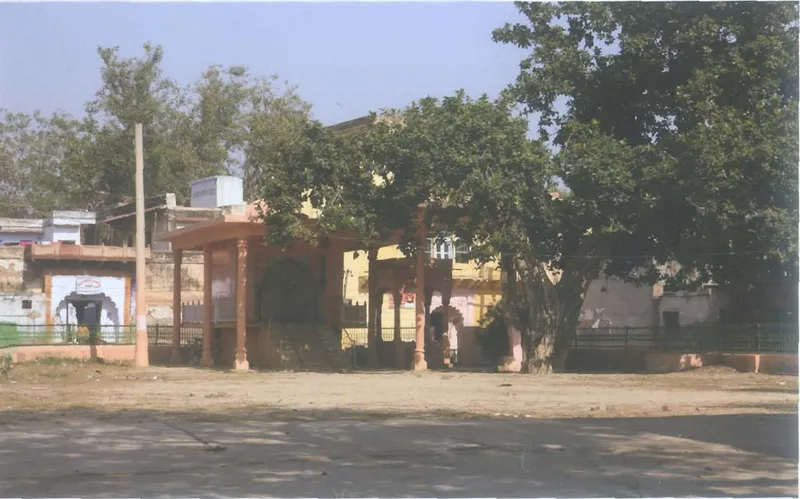
Jñāna-gudri
ज्ञान-गुदड़ीJñāna-gudri (Jñāna-gudaḍī) is an open ground with a large banyan tree on the Yamunā in Vṛndāvana, opposite the temple of Rādhā-Braja-mohana.
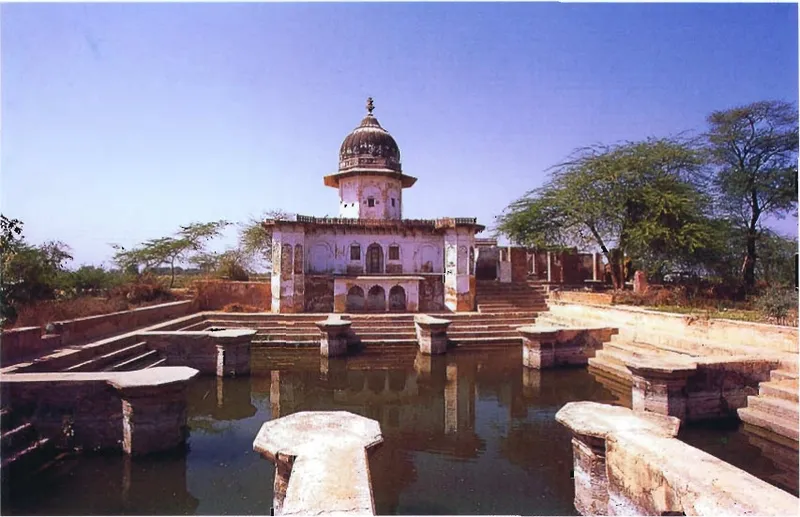
Uddhava-kuṇḍa
उद्धव-कुण्डUddhava-kuṇḍa is a pond beside the Govardhana parikramā path, just west of Kusuma-sarovara.
Uddhava Mandira (Kusuma-sarovara)
उद्धव मन्दिर (कुसुम-सरोवर)The Uddhava Mandira is a temple beside Kusuma-sarovara with a Deity of Uddhava, the friend of Kṛṣṇa who brought His message to the gopīs of Vraja.
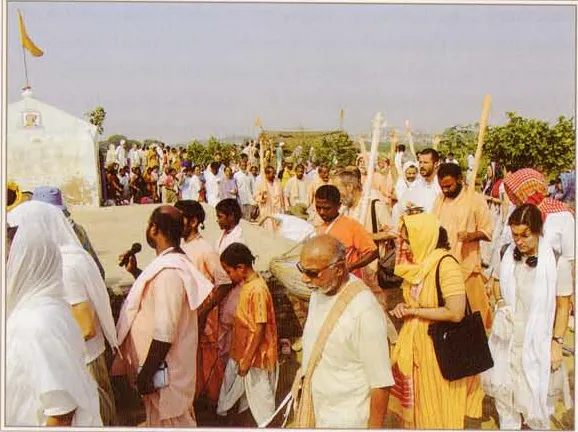
Uddhava-kyārī
उद्धव-क्यारीUddhava-kyārī, also called Kadamba-kyārī and Viśākhā-kuñja, is a grove at Nandagrāma, a short distance south-east of Lalitā-kuṇḍa.
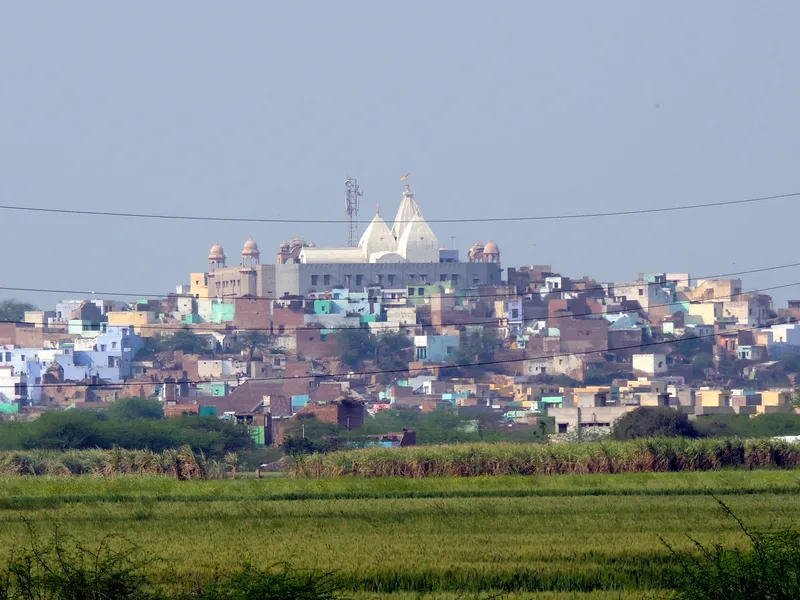
Nandagrāma
नन्दग्रामNandagrāma, today Nandagaon, is the village of Nanda Mahārāja, Kṛṣṇa's father in Vraja, on and around Nandīśvara Hill.
Nandīśvara Hill
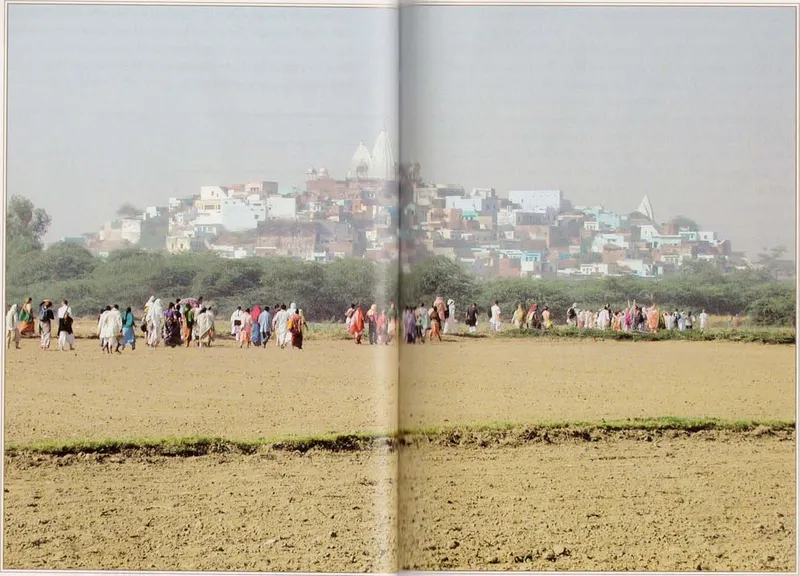
नन्दीश्वर पर्वतNandīśvara is the hill of Nandagrāma, also called Rudra-parvata, "Rudra's hill".
Vṛndāvana
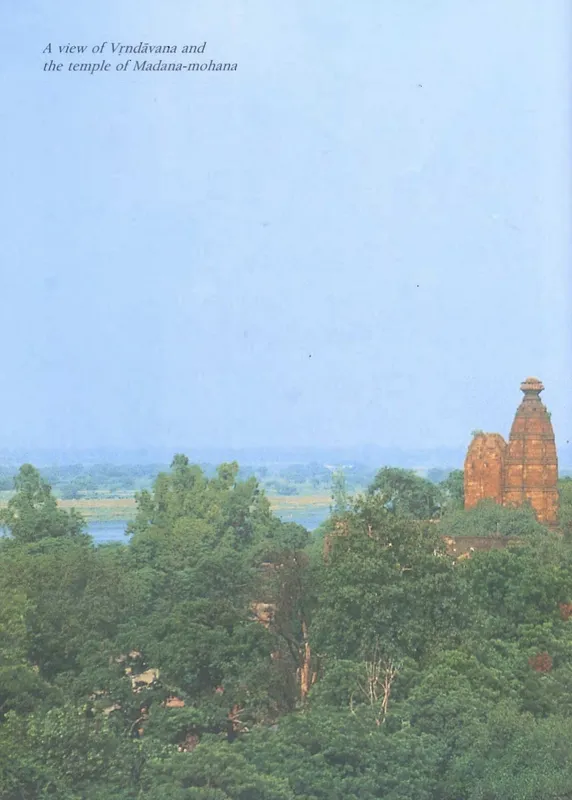
वृन्दावनVṛndāvana is the forest on the bank of the Yamunā where Kṛṣṇa spent His childhood and youth, and the town of temples that stands in that forest today.
Questions and answers
To give joy to Nanda and Yaśodā and to comfort the gopīs, who were suffering in separation from Him, with His message.[1, 2]
That the gopīs are never really separated from Kṛṣṇa, because He is the Soul of all. In Śrīla Prabhupāda's words, knowledge of the Absolute was no longer necessary for them, for they had loved Him from the start.[3, 6]
The Bhāgavatam says Uddhava spoke it. Śrīla Sanātana Gosvāmī allows that it was a letter, and Śrīla Prabhupāda's Kṛṣṇa book says Uddhava read the written message aloud instead of handing it over.[6 +2]
The Bhāgavatam says only "a quiet place". The guidebooks name Jñāna-gudri by the Yamunā in Vṛndāvana and Uddhava-kyārī near Nandagrāma, though neither may be certain.[6 +8]
Their pure love. Seeing it, he prayed to be born as a bush, creeper or herb in Vṛndāvana, so that the dust of their feet would fall on him.[9 +3]
No. In the Bhāgavatam the gopīs are pleased by the message, and in the Gopāla-campū and the Garga-saṁhitā the letters are read and honoured. The tearing is told only by the guidebooks.[3 +6]
Sources
- Śrīmad-Bhāgavatam 10.46.3, GRETIL
- Śrīla Prabhupāda, Kṛṣṇa, the Supreme Personality of Godhead (Kṛṣṇa book), Chapter 46, 'Uddhava Visits Vṛndāvana' · vedabase.io
- Śrīmad-Bhāgavatam 10.47.29, GRETIL
- Śrīmad-Bhāgavatam 10.47.38, GRETIL
- Śrīmad-Bhāgavatam 10.47.53, GRETIL
- Śrīla Prabhupāda, Kṛṣṇa, the Supreme Personality of Godhead (Kṛṣṇa book), Chapter 47, 'Delivery of the Message of Kṛṣṇa to the Gopīs' · vedabase.io
- Vṛndāvana, the Playground of God (2010), Bhakti Caitanya Svāmī, PDF p. 224
- Śrī Vraja-maṇḍala Parikramā (2007), PDF p. 210
- Śrī Vraja-maṇḍala Parikramā (2007), PDF p. 211
- Vṛndāvana-Dhāma Ki Jaya! (c. 1986), by Dhruva Mahārāja dāsa, PDF p. 53
- Vṛndāvana-Dhāma Ki Jaya! (c. 1986), by Dhruva Mahārāja dāsa, PDF p. 55
- UDDHAVA KUNDA (UDDHAVA LILA), ¶8
- Śrīla Prabhupāda, Kṛṣṇa, the Supreme Personality of Godhead, ch. 47 'Delivery of the Message of Kṛṣṇa to the Gopīs' · vedabase.io
- Śrīla Sanātana Gosvāmī: commentary on ŚB 10.46.7, Bhagavata Vidya Pith edition, ed. Bhagavata Rishi and Krishna Shankar Shastri, 1996
- Śrīla Sanātana Gosvāmī: commentary on ŚB 10.47.28, Bhagavata Vidya Pith edition, ed. Bhagavata Rishi and Krishna Shankar Shastri, 1996
- Śrīmad-Bhāgavatam 10.47.61, Bhagavata Vidya Pith edition, ed. Bhagavata Rishi and Krishna Shankar Shastri, 1996
- Śrīmad-Bhāgavatam 10.47.63, Bhagavata Vidya Pith edition, ed. Bhagavata Rishi and Krishna Shankar Shastri, 1996
- Śrīmad-Bhāgavatam ŚB 10.46.7–8, GRETIL
- Śrīla Prabhupāda, Kṛṣṇa, the Supreme Personality of Godhead, ch. 46 'Uddhava Visits Vṛndāvana' · vedabase.io
- Śrīmad-Bhāgavatam 10.46.47, Bhagavata Vidya Pith edition, ed. Bhagavata Rishi and Krishna Shankar Shastri, 1996
Show all 44 references
- Śrīmad-Bhāgavatam 10.47.3, Bhagavata Vidya Pith edition, ed. Bhagavata Rishi and Krishna Shankar Shastri, 1996
- Śrīmad-Bhāgavatam ŚB 10.47.11–12, GRETIL
- Śrīmad-Bhāgavatam 10.47.21, Bhagavata Vidya Pith edition, ed. Bhagavata Rishi and Krishna Shankar Shastri, 1996
- Śrīmad-Bhāgavatam 10.47.54, Bhagavata Vidya Pith edition, ed. Bhagavata Rishi and Krishna Shankar Shastri, 1996
- Śrīmad-Bhāgavatam 10.47.3, GRETIL
- Śrīla Jīva Gosvāmī, Gopāla-campū, Uttara-campū 11, ¶[3] athaikādaśaṁ pūraṇam')
- Garga-saṁhitā, Mathurā-khaṇḍa (5) 15.16, Sanskrit Wikisource
- Garga-saṁhitā, Mathurā-khaṇḍa (5) 15.17, Sanskrit Wikisource
- Śrīla Jīva Gosvāmī, Gopāla-campū, Uttara-campū 12, ¶[11]–[13] dvādaśa pūraṇam')
- Garga-saṁhitā, Mathurā-khaṇḍa (5) 15.40–41, Sanskrit Wikisource
- Garga-saṁhitā, Mathurā-khaṇḍa (5) 16.1–2, Sanskrit Wikisource
- Śrīmad-Bhāgavatam 10.47.50, Bhagavata Vidya Pith edition, ed. Bhagavata Rishi and Krishna Shankar Shastri, 1996
- Śrīla Jīva Gosvāmī: commentary on ŚB 10.47.38, Bhagavata Vidya Pith edition, ed. Bhagavata Rishi and Krishna Shankar Shastri, 1996
- Śrīla Viśvanātha Cakravartī Ṭhākura: commentary on ŚB 10.47.53, Bhagavata Vidya Pith edition, ed. Bhagavata Rishi and Krishna Shankar Shastri, 1996
- Śrīmad-Bhāgavatam 10.47.54, GRETIL
- Śrīmad-Bhāgavatam 10.47.56, GRETIL
- Śrīmad-Bhāgavatam, 10.47.61 (as quoted in CC Antya-līlā 7.47), online edition
- Śrīla Prabhupāda, Śrī Caitanya-caritāmṛta, Antya-līlā 7.47, purport · vedabase.io
- Śrīla Narahari Cakravartī, Bhakti-ratnākara, Fifth Wave (pañcama taraṅga), printed p. 229 (1912 edition), 2nd ed., 1912
- Śrīla Narahari Cakravartī, Bhakti-ratnākara, Fifth Wave, 1912 ed. p. 230; Grantha Mandira text v.1041–1042, 2nd ed., 1912
- Śrīla Raghunātha dāsa Gosvāmī, Stavāvalī, Vraja-vilāsa-stava v.99 v.99)
- Vṛndāvana-kathā, ch. 18, printed pp. 208–209
- Mathurá (1883), F. S. Growse, B.C.S., M.A. Oxon., C.I.E. (as the title page gives him, p. 316
- Śrī Vraja-maṇḍala Parikramā (2007), PDF p. 321
Further sources
- Śrīmad-Bhāgavatam 10.46–10.47, translation by the disciples of Śrīla Prabhupāda (BBT); ŚB 10.47.61 in Śrīla Prabhupāda's translation in Śrī Caitanya-caritāmṛta, Antya-līlā 7.47.
- Śrīla Prabhupāda, Kṛṣṇa, the Supreme Personality of Godhead, chapters 46 and 47 (BBT).
- The Canto 10 commentaries of Śrīla Sanātana Gosvāmī, Śrīla Jīva Gosvāmī, Śrīla Viśvanātha Cakravartī Ṭhākura and Vaṁśīdhara; Śrīla Jīva Gosvāmī's Gopāla-campū; the Garga-saṁhitā: summarised from the Sanskrit, not translated.