Prema-sarovara
प्रेम-सरोवर
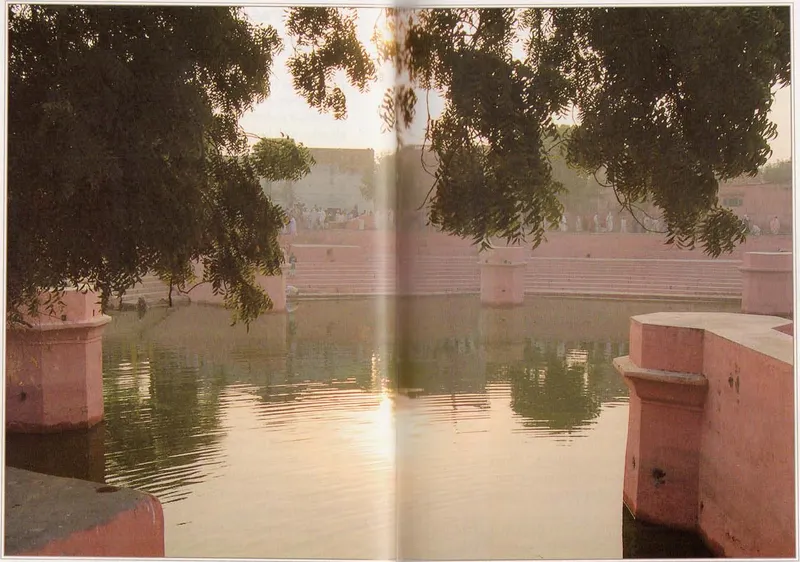
- What it is
- Prema-sarovara, the lake of love (prema), lies on the road from Varṣāṇā to Nandagrāma, about a mile from Varṣāṇā, with the village of Gājīpura to its east.
- Visiting
- Śrī Vraja-maṇḍala Parikramā (2007) describes the lake as boat-shaped and lined with kadamba trees, and says that an enactment called the būḍhī-līlā is performed here on the twelfth day of the bright …
- Places here
- Lalitā-Mohanajī (Prema-sarovara), Rāsa-maṇḍala (Prema-sarovara), Jhūla-sthala (Prema-sarovara), Prema-bihārījī Mandira (Prema-sarovara), Baiṭhakas of Vallabhācārya and Viṭṭhalanātha (Prema-sarovara)
In short
Prema-sarovara, the lake of love (prema), lies on the road from Varṣāṇā to Nandagrāma, about a mile from Varṣāṇā, with the village of Gājīpura to its east.[1 +2] The Bhakti-ratnākara names it as the place where the mood of prema-vaicittya became manifest: love so full that the lover fears separation even in the beloved's presence.[4 +3] Śrīla Nārāyaṇa Bhaṭṭa Gosvāmī's Vraja-bhakti-vilāsa counts Premavana among the twelve upavanas, the smaller forests of Vraja, and gives a pilgrimage to its lake, its Deity Lalitā-mohana, its rāsa-maṇḍala and its swing place.[2 +5] The sources tell differently how the lake came to be.[4]
Key facts
| Kind | sarovara |
|---|---|
| Region · area | Varṣāṇā |
| Ācāryas | Śrīla Nārāyaṇa Bhaṭṭa Gosvāmī, Śrīla Narahari Cakravartī Ṭhākura, Śrīla Rāghava Paṇḍita Gosvāmī of Govardhana, Śrīla Śrīnivāsa Ācārya |
Why it is glorified
In the Fifth Wave of the Bhakti-ratnākara, Śrīla Rāghava Paṇḍita Gosvāmī of Govardhana, guiding Śrīla Śrīnivāsa Ācārya through …
In the Fifth Wave of the Bhakti-ratnākara, Śrīla Rāghava Paṇḍita Gosvāmī of Govardhana, guiding Śrīla Śrīnivāsa Ācārya through Vraja, says (summarised here, not translated): see this Prema-sarovara, Śrīnivāsa; here the mood of prema-vaicittya became manifest. The book does not say how the lake arose.[4]
এই প্রেমসরোবর দেখ শ্রীনিবাস। এথা প্রেমবৈচিত্ত্য ভাবের পরকাশ ॥
ei premasarobara dekha śrīnibāsa| ethā premabaicittya bhābera parakāśa ||
The Vraja-bhakti-vilāsa has the pilgrim bathe in the lake with a prayer to "the lake named Prema", which it calls born of Lalitā's love and the tīrtha that gives prema (summarised here, not translated). Śrī Vraja-maṇḍala Parikramā (2007) likewise says that by bathing in this pond one attains prema for the Divine Couple.[8 +5]
अथ प्रेमबनप्रदक्षिणा । ब्रह्मयामले— भाद्रशुक्लचतुर्थ्यां च गच्छेत् प्रेमाह्वयं बनं । … कदम्बकुसुमाकीर्ण प्रेमाह्वयनमोऽस्तु ते ॥ … ततो प्रेमसरःस्नानाचमनप्रार्थनमन्त्रः— ललिताप्रेमसंभूते प्रेमाख्यसरसे नमः । प्रेमप्रदाय तीर्थाय कौटिल्यपदनाशक ! ॥
atha premabanapradakṣiṇā
brahmayāmale— bhādraśuklacaturthyāṁ ca gacchet premāhvayaṁ banaṁ
… kadambakusumākīrṇa premāhvayanamo'stu te
… tato premasaraḥsnānācamanaprārthanamantraḥ— lalitāpremasaṁbhūte premākhyasarase namaḥ
premapradāya tīrthāya kauṭilyapadanāśaka ! ||
Divine pastimes
How the lake came to be
The guidebooks connect the lake with a pastime of prema-vaicittya involving a bee and Kṛṣṇa's friend Madhumaṅgala, the Bengali Bhaktamāla of Kṛṣṇadāsa Bābājī (1905) with the tears Rādhā and Kṛṣṇa shed at a secret meeting in fear of separation, and the Vraja-bhakti-vilāsa with Lalitā's love. The Bhakti-ratnākara tells no origin, and the accounts differ:[4] Read more: Prema-sarovara and Māna-garh →
Accounts differ How Prema-sarovara came into being.
- Śrī Vraja-maṇḍala Parikramā (2007)A bee hovered near Rādhikā; when Madhumaṅgala said he had chased the madhusūdana (the bee, and also a name of Kṛṣṇa) far away, Rādhikā, though Kṛṣṇa was with Her, felt that He had gone (prema-vaicittya); both wept, and Their tears created the pond.
- Vṛndāvana-Dhāma Ki Jaya! (c. 1986) Vṛndāvana Dhāma Ki Jaya! (Dhruva Mahārāja dāsa) (printed p. 31)The bee buzzed around Their lotus feet; Madhumaṅgala said he had got rid of 'madhu'; Rādhārāṇī wept, Kṛṣṇa wept too, and Their love-filled tears produced the kuṇḍa.
- the Bengali Bhaktamāla of Kṛṣṇadāsa Bābājī (1905)When They met, both shed tears out of fear of separation, and from that a beautiful lake was born; no bee or Madhumaṅgala.
- Vraja-bhakti-vilāsa, ch. 10 v.56 (Śrīla Nārāyaṇa Bhaṭṭa), bathing prayerThe lake called Prema is 'born of Lalitā's love' (lalitā-prema-saṁbhūta).
Why Kṛṣṇa left Vraja
Śrīla Prabhupāda explains in the Kṛṣṇa book (chapter 46), following the decision of expert devotees, that Kṛṣṇa never goes even a step out of Vṛndāvana: in His original identity He returned with Nanda Mahārāja and stayed with the gopīs and Mother Yaśodā in His bhāva expansion. His explanation is given on the page of Pūñcharī.[16 +2]
In Śrīmad-Bhāgavatam (10.36) Kaṁsa sends Akrūra with a chariot to bring Kṛṣṇa and Balarāma from Nanda's village, planning to have Them killed. Later, in His message through Uddhava (10.47.34), Kṛṣṇa tells the gopīs that He stays far away from them to draw their minds closer to Him. Neither passage names Prema-sarovara, and their translation is by Śrīla Prabhupāda's disciples.[19 +3]
yat tv ahaṃ bhavatīnāṃ vai dūre varte priyo dṛśām / manasaḥ sannikarṣārthaṃ mad-anudhyāna-kāmyayā //
But the actual reason why I, the beloved object of your sight, have stayed far away from you is that I wanted to intensify your meditation upon Me and thus draw your minds closer to Me.
Translation: Śrīla Prabhupāda's disciples (BBT)Śrī Vraja-maṇḍala Parikramā (2007) gives its own explanation: after this pastime Kṛṣṇa decided to go far away, and the book calls this the main reason why He left Vṛndāvana. The Bhāgavatam tells His departure differently, as above. The accounts of why He left are set side by side on the page of Vṛndāvana.[19 +3]
Traditional accounts
The Vraja-bhakti-vilāsa counts Premavana as the seventh of the twelve upavanas, in a list it gives from the Varāha Purāṇa (the …
The pilgrimage of Premavana
The Vraja-bhakti-vilāsa counts Premavana as the seventh of the twelve upavanas, in a list it gives from the Varāha Purāṇa (the list has not been found in that Purāṇa's text), and names Lalitā-mohana as its presiding Deity. On the fourth day of the bright fortnight of Bhādra the pilgrim goes to Premavana, bathes in Prema-saras and says a prayer at each of its marks: Lalitā-mohana, the rāsa-maṇḍala and the swing place.[2 +9]
ततो ललितामोहनेक्षणप्रार्थनमन्त्रः— प्रेमप्लुताय कृष्णाय ललितामोहनाय ते । … ततो रासमंडलेक्षणप्रार्थनमन्त्रः— रासक्रीडोत्सवायैव ललितायुगलोत्सव ! । … ततो हिण्डोलस्थलप्रार्थनमन्त्रः— कृष्णवैमल्यदोलाय हिण्डोलसुखवर्द्धन ! । … ततो प्रदक्षिणां कुर्यात्सार्द्ध क्रोशप्रमाणकं । प्रेमपूर्णो हरिस्तस्य सर्वदा प्रीतिदोऽभवत् ॥ इति बनयात्राप्रसंगे प्रेमबनप्रदक्षिणा ॥५९॥
tato lalitāmohanekṣaṇaprārthanamantraḥ— premaplutāya kṛṣṇāya lalitāmohanāya te
… tato rāsamaṁḍalekṣaṇaprārthanamantraḥ— rāsakrīḍotsavāyaiva lalitāyugalotsava !
… tato hiṇḍolasthalaprārthanamantraḥ— kṛṣṇavaimalyadolāya hiṇḍolasukhavarddhana !
… tato pradakṣiṇāṁ kuryātsārddha krośapramāṇakaṁ
premapūrṇo haristasya sarvadā prītido'bhavat
iti banayātrāprasaṁge premabanapradakṣiṇā ||59||
At the lake
- Lalitā-Mohanajī: the Vraja-bhakti-vilāsa's prayer addresses Lalitā-mohana as Kṛṣṇa, flooded with prema, and the mantra of this Deity has the pilgrim meditate on Kṛṣṇa together with His beloved, who is not named. Śrī Vraja-maṇḍala Parikramā says only that one can have His darśana here.[2 +4]
- The rāsa-maṇḍala, a circle for the rāsa dance: listed by the Vraja-bhakti-vilāsa, whose prayer salutes it as the festival of the rāsa, and by Śrī Vraja-maṇḍala Parikramā; neither says which rāsa it marks. The Bhāgavatam sets the rāsa dance on the sandy bank of the Yamunā.[2 +7]
- The swing place: in the Vraja-bhakti-vilāsa's prayer it is Kṛṣṇa's swing, which arose from the festival of the month of Śrāvaṇa; Śrī Vraja-maṇḍala Parikramā calls it a place where Rādhā and Kṛṣṇa would swing.[2 +2]
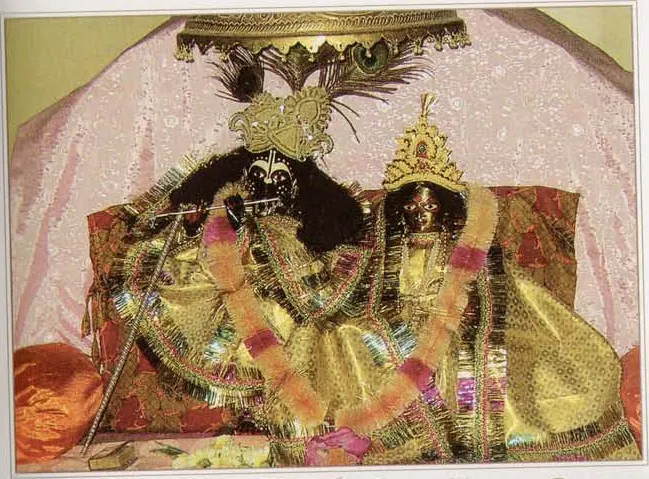
- The temple of Prema-bihārījī: listed by Śrī Vraja-maṇḍala Parikramā, which prints a photograph of its Deities; Prabhudayāl Mītal (1966) and A. W. Entwistle (1987) also record temples of Prema-bihārī by the lake, and no source gives its builder or date.[2 +3]
- The sitting-places (baiṭhakas) of Śrī Vallabhācārya and Śrī Viṭṭhalanātha, according to Śrī Vraja-maṇḍala Parikramā; Entwistle (1987) names only a baiṭhaka of Śrī Viṭṭhalanātha here. Śrīla Prabhupāda identifies Vallabha Bhaṭṭa as the ācārya of the Vallabhācārya-sampradāya and names his sons Gopīnātha and Viṭhṭhaleśvara; he does not mention this place.[2 +2]
Śrīla Prabhupāda
Śrīla Prabhupāda does not speak of Prema-sarovara in the works searched.
Śrīla Prabhupāda does not speak of Prema-sarovara in the works searched. As a general teaching he explains prema-vaicittya, the mood the Bhakti-ratnākara connects with this lake, and says that Śrīmatī Rādhārāṇī wears it as a locket:[5 +2]
General teaching (does not name the place)“The tilaka of good fortune is on the forehead of Śrīmatī Rādhārāṇī, and She also has a locket of prema-vaicittya. Prema-vaicittya is manifest when a lover and beloved meet and fear separation.”
Śrīla Prabhupāda, Teachings of Lord Caitanya, chapter 31 · vedabase.io
Vṛndāvana-Dhāma Ki Jaya! (c. 1986) quotes, in its Prema-sarovara entry, his translation of Kṛṣṇa's considerations in the Caitanya-caritāmṛta (Ādi 4), which end in His decision to appear with Rādhā's mood and complexion. The Caitanya-caritāmṛta names no place for them, so the link with the lake is that book's arrangement.[38 +2]
Visiting today
Śrī Vraja-maṇḍala Parikramā (2007) describes the lake as boat-shaped and lined with kadamba trees, and says that an enactment called the būḍhī-līlā is performed here on the twelfth day of the bright fortnight of Bhādra. Mītal (1966) also puts it about half a kos (an old measure of distance) from Varṣāṇā on the road to Nandagrāma and records a boat-pastime festival and a rāsa-līlā here on that day.[1 +2] The same guidebook says that this enactment was begun by Śrīla Nārāyaṇa Bhaṭṭa Gosvāmī, and Entwistle (1987) reported that it is based on his Premāṅkura, a work of which no copy could be found.[2 +4]
Location
| Where it is | on the road to Nandagaon, one mile from Varṣāṇā; Gājīpura village lies east of it[44] |
|---|
Places at Prema-sarovara
5 places
Nearby places
Varṣāṇā · Gājīpura
Pictures
3 pictures
History
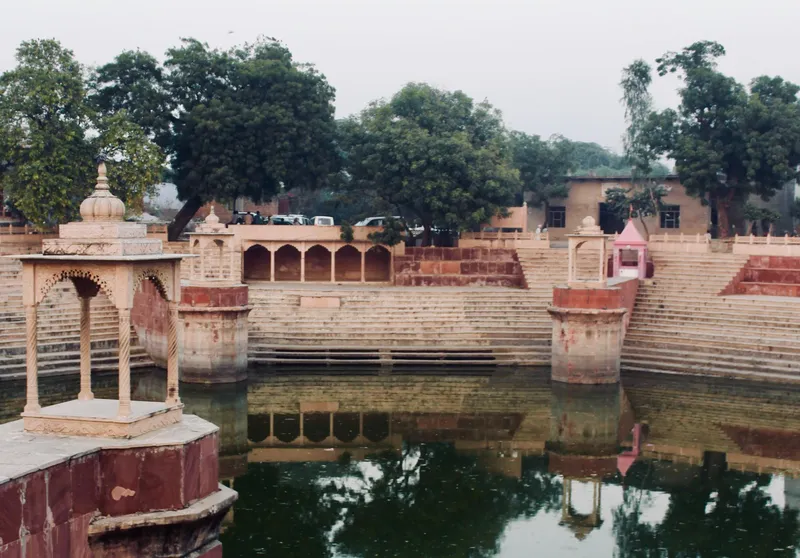
According to the historians F. S. Growse (1883) and A. W. Entwistle (1987), the octagonal stone ghāṭas (bathing steps) of Prema-sarovara were built by Rūp Rām of Varṣāṇā, who also made a walled garden with a domed monument to his brother Hemrāj; Growse places Rūp Rām in the eighteenth century.[35 +1] Prabhudayāl Mītal (1966) and Entwistle record on its bank the temples of Prema-bihārī and of Rādhāgopāl, the second built by Seṭh Lakṣmīnārāyaṇ Poddār of Mathurā; they give no dates.[3 +2]
Where the sources differ
Where Kṛṣṇa's rāsa dance took place, and which rāsa the rāsa-maṇḍalas of Prema-sarovara and Saṅket mark.
Accounts differ Where Kṛṣṇa's rāsa dance took place, and which rāsa the rāsa-maṇḍalas of Prema-sarovara and Saṅket mark.
- Śrīmad-Bhāgavatam 10.32.11-12, 10.33.2-5 (translation by Śrīla Prabhupāda's disciples)Kṛṣṇa took the gopīs to the sandy bank of the Kālindī; 'there on the Yamunā's banks' He began the rāsa on an autumn night, the gopīs in a circle; no village or pond is named
- Kṛṣṇa book ch. 33 (Śrīla Prabhupāda)the rāsa dance, after which Kṛṣṇa and the gopīs entered the water of the Yamunā; no other place named
- Garga-saṁhitā, Vṛndāvana-khaṇḍa 2.21.9-10 and 2.21.18Kṛṣṇa danced the rāsa with the gopīs at 'nandīśvara-bṛhat-sānu-taṭe', which may mean the great peak of Nandīśvara Hill or name the two hills Nandīśvara and Bṛhatsānu; He left the proud gopīs with Rādhā and entered the saṅketa-vaṭa with Her.
- Vraja-bhakti-vilāsa (Śrīla Nārāyaṇa Bhaṭṭa), ch. 2 vv.54, 56 and ch. 10 v.58a rāsa-maṇḍala is one of the marks of Prema-vana, saluted in the Prema-vana pilgrimage as the festival and meeting-place of the rāsa; Saṅketa-vaṭa is marked by a rāsa-maṇḍala adorned with a swing; neither passage says which rāsa
More on this place
Prema-sarovara and Māna-garh
References
44 references
- Śrī Vraja-maṇḍala Parikramā (2007), PDF p. 180
- Śrī Vraja-maṇḍala Parikramā (2007), PDF p. 183
- Prabhudayāl Mītal, printed p. 122
- Śrīla Narahari Cakravartī, Bhakti-ratnākara, Fifth Wave, 1912 ed. p. 220; Grantha Mandira text v.921, 2nd ed., 1912
- Śrīla Prabhupāda, Śrī Caitanya-caritāmṛta, Madhya-līlā 23.63, purport · vedabase.io
- Śrīla Prabhupāda, Teachings of Lord Caitanya, chapter 31 · vedabase.io
- Śrīla Prabhupāda, Śrī Caitanya-caritāmṛta, Madhya-līlā 23.64, translation · vedabase.io
- Śrīla Nārāyaṇa Bhaṭṭa, Vraja-bhakti-vilāsa, the twelve upavanas, vv.18 and 20, printed p. 2, 1st ed., publ. Bābā Kṛṣṇadāsa, Kusuma-sarovara, Saṁvat 2008
- Śrīla Nārāyaṇa Bhaṭṭa, Vraja-bhakti-vilāsa, mantra of the presiding deity of Prema-upavana (v.106), printed p. 19, 1st ed., publ. Bābā Kṛṣṇadāsa, Kusuma-sarovara, Saṁvat 2008
- Śrīla Nārāyaṇa Bhaṭṭa, Vraja-bhakti-vilāsa, ch. 10 vv.55–56, printed p. 223, 1st ed., publ. Bābā Kṛṣṇadāsa, Kusuma-sarovara, Saṁvat 2008
- Śrīla Nārāyaṇa Bhaṭṭa, Vraja-bhakti-vilāsa, ch. 10 vv.57–59, printed p. 224, 1st ed., publ. Bābā Kṛṣṇadāsa, Kusuma-sarovara, Saṁvat 2008
- Śrīla Nārāyaṇa Bhaṭṭa, Vraja-bhakti-vilāsa, ch. 2 v.54 (Grantha Mandira (2) part 13 v.54), printed p. 51, 1st ed., publ. Bābā Kṛṣṇadāsa, Kusuma-sarovara, Saṁvat 2008
- Śrīla Narahari Cakravartī, Bhakti-ratnākara, Fifth Wave, 1912 ed. p. 220; Grantha Mandira text v.921, 2nd ed., 1912
- Śrī Vraja-maṇḍala Parikramā (2007), PDF p. 182
- Śrīla Nārāyaṇa Bhaṭṭa, Vraja-bhakti-vilāsa, ch. 10 vv.55–56, printed p. 223, 1st ed., publ. Bābā Kṛṣṇadāsa, Kusuma-sarovara, Saṁvat 2008
- Śrīla Prabhupāda, Kṛṣṇa, the Supreme Personality of Godhead (Kṛṣṇa book), Chapter 46, 'Uddhava Visits Vṛndāvana' · vedabase.io
- Śrīla Viśvanātha Cakravartī Ṭhākura: commentary on ŚB 10.45.25, Bhagavata Vidya Pith edition, ed. Bhagavata Rishi and Krishna Shankar Shastri, 1996
- Śrīla Jīva Gosvāmī, Śrīla Viśvanātha Cakravartī Ṭhākura, Śrīla Sanātana Gosvāmī: commentary on ŚB 10.39.37, Bhagavata Vidya Pith edition, ed. Bhagavata Rishi and Krishna Shankar Shastri, 1996
- Śrīmad-Bhāgavatam 10.36.30, GRETIL
- Śrīla Prabhupāda, Kṛṣṇa, the Supreme Personality of Godhead (Kṛṣṇa book), chapter 36, 'Kaṁsa Sends Akrūra for Kṛṣṇa' · vedabase.io
Show all 44 references
- Śrīmad-Bhāgavatam 10.47.34, GRETIL
- Śrīla Prabhupāda, Kṛṣṇa, the Supreme Personality of Godhead (Kṛṣṇa book), chapter 47, 'Delivery of the Message of Kṛṣṇa to the Gopīs' · vedabase.io
- Śrīla Nārāyaṇa Bhaṭṭa, Vraja-bhakti-vilāsa, Second chapter (liṅga-kathana), v.54: the marks of the forests, Prema-vana; printed p. 51; Hindi rendering on the same page, 1st ed., publ. Bābā Kṛṣṇadāsa, Kusuma-sarovara, Saṁvat 2008
- Śrīla Nārāyaṇa Bhaṭṭa, Vraja-bhakti-vilāsa, Tenth chapter, v.57: the Prema-vana pilgrimage (premavana-pradakṣiṇā), prayer on seeing Lalitā-mohana; printed p. 224, 1st ed., publ. Bābā Kṛṣṇadāsa, Kusuma-sarovara, Saṁvat 2008
- Śrīla Nārāyaṇa Bhaṭṭa, Vraja-bhakti-vilāsa, Tenth chapter, v.58: the Prema-vana pilgrimage, prayer on seeing the rāsa-maṇḍala; printed p. 224, 1st ed., publ. Bābā Kṛṣṇadāsa, Kusuma-sarovara, Saṁvat 2008
- Śrīla Nārāyaṇa Bhaṭṭa, Vraja-bhakti-vilāsa, Tenth chapter, v.59: the Prema-vana pilgrimage, prayer at the swing place (hiṇḍola-sthala); printed p. 224, 1st ed., publ. Bābā Kṛṣṇadāsa, Kusuma-sarovara, Saṁvat 2008
- Śrīla Nārāyaṇa Bhaṭṭa, Vraja-bhakti-vilāsa, ch. 10 vv.57–59, printed p. 224, 1st ed., publ. Bābā Kṛṣṇadāsa, Kusuma-sarovara, Saṁvat 2008
- Śrīla Nārāyaṇa Bhaṭṭa, Vraja-bhakti-vilāsa, Opening part: the presiding Deities (adhidevatā) of the twelve upavanas, no. 7 (Grantha Mandira 'part 3 v.7'); printed p. 5, 1st ed., publ. Bābā Kṛṣṇadāsa, Kusuma-sarovara, Saṁvat 2008
- Śrīla Nārāyaṇa Bhaṭṭa, Vraja-bhakti-vilāsa, Opening part: the mantras of the Deities presiding over the upavanas, the mantra of Lalitā-mohana, lord of the Prema-upavana, with its meditation (Grantha Mandira 'part 5 v.106'); printed p. 19; Hindi rendering on the same page, 1st ed., publ. Bābā Kṛṣṇadāsa, Kusuma-sarovara, Saṁvat 2008
- Śrīmad-Bhāgavatam 10.32.11–12, GRETIL
- Śrīmad-Bhāgavatam 10.33.2, GRETIL
- Śrīmad-Bhāgavatam 10.33.3, GRETIL
- Śrīmad-Bhāgavatam 10.33.5, GRETIL
- Śrīla Prabhupāda, Kṛṣṇa, the Supreme Personality of Godhead (Kṛṣṇa book), Chapter 33, 'Description of the Rāsa Dance' · vedabase.io
- A. W. Entwistle, printed p. 376, Egbert Forsten, Groningen, 1987
- Śrīla Prabhupāda, Śrī Caitanya-caritāmṛta, Madhya-līlā 19.61, purport · vedabase.io
- Mathurá (1883), F. S. Growse, B.C.S., M.A. Oxon., C.I.E. (as the title page gives him, p. 312
- Śrīla Prabhupāda, Śrī Caitanya-caritāmṛta, Ādi-līlā 4.268, translation · vedabase.io
- Vṛndāvana-Dhāma Ki Jaya! (c. 1986), by Dhruva Mahārāja dāsa, PDF p. 49
- Vṛndāvana-Dhāma Ki Jaya! (c. 1986), by Dhruva Mahārāja dāsa, PDF p. 50
- Śrī Vraja-maṇḍala Parikramā (2007), PDF p. 172
- Śrī Vraja-maṇḍala Parikramā (2007), PDF p. 188
- A. W. Entwistle, printed p. 167, Egbert Forsten, Groningen, 1987
- Śrī Vraja-maṇḍala Parikramā (2007), p. 334-335