Prema-sarovara and Māna-garh
Śrī Rādhā's moods of love remembered near Varṣāṇā
In short
Prema-sarovara is a pond on the road from Varṣāṇā to Nandagrāma. Māna-garh is a peak of the Varṣāṇā hill. Both are remembered for two moods of Śrī Rādhā's love. The Bhakti-ratnākara says that prema-vaicittya (fear of separation while together) appeared at the pond. It says that Kṛṣṇa ended Rādhikā's māna (loving anger) at Varṣāṇā. Śrīla Prabhupāda explains both moods.[1–6]
On this page
At a glance
- Prema-sarovara: according to the 2007 guidebook, it is a boat-shaped pond lined with kadamba trees. It lies one mile from Varṣāṇā on the road to Nandagrāma (Nandgaon).[7–9]
- The mood of the pond: prema-vaicittya. In Śrīla Prabhupāda's translation of the Ujjvala-nīlamaṇi, it is grief from fear of separation while the beloved is present.[4–6]
- Māna-garh: one of the three forts, Dāna, Māna and Vilāsa, that the Bhakti-ratnākara names on the Varṣāṇā hills.[3]
- The mood of Māna-garh: māna (loving anger). Śrīla Prabhupāda counts it among the kinds of separation celebrated in Śrīmatī Rādhārāṇī and the gopīs.[6]
- Pilgrimage: according to the Vraja-bhakti-vilāsa, the pilgrim goes to Māneṅgita-vana on the third day of the bright half of Bhādra (August–September). On the fourth day one walks round Premavana.[8 +7]
- Śyāmā-sakhī: the oldest known verses that tell of Kṛṣṇa coming to Śrī Rādhā in a girl's dress, while She is in māna, are preserved by Śrīla Rūpa Gosvāmī.[17, 18]
The two moods in Śrīla Prabhupāda's words
Both places are remembered for kinds of vipralambha, which means love in separation. The Caitanya-caritāmṛta and its purports explain it. In his purport to Madhya-līlā 23.63, Śrīla Prabhupāda translates the definitions of the four kinds of separation from Śrīla Rūpa Gosvāmī's Ujjvala-nīlamaṇi. They are pūrva-rāga, māna, pravāsa and prema-vaicittya.[4]
General teaching (does not name the place)“When attachment produced in the lover and beloved before their meeting by seeing, hearing and so on becomes very palatable by the mixture of four ingredients, such as vibhāva and anubhāva, this is called pūrva-rāga. … Prema-vaicittya is a word used to indicate an abundance of love that brings about grief from fear of separation, although the lover is present.”
Śrīla Prabhupāda, Śrī Caitanya-caritāmṛta, Madhya-līlā 23.63, purport · vedabase.io
The next verse, in Śrīla Prabhupāda's translation, says which moods belong to whom. Three of them, pūrva-rāga, pravāsa and māna, are celebrated in Śrīmatī Rādhārāṇī and the gopīs. Prema-vaicittya is very prominent among the queens of Dvārakā.[6]
General teaching (does not name the place)“Of the four kinds of separation, three [pūrva-rāga, pravāsa and māna] are celebrated in Śrīmatī Rādhārāṇī and the gopīs. In Dvārakā, among the queens, feelings of prema-vaicittya are very prominent.”
Śrīla Prabhupāda, Śrī Caitanya-caritāmṛta, Madhya-līlā 23.64, translation · vedabase.io
That verse does not deny prema-vaicittya to Śrī Rādhā. In his Teachings of Lord Caitanya, Śrīla Prabhupāda describes Her ornaments. Among them he counts a locket of prema-vaicittya. It is the mood that shows itself when lover and beloved meet and yet fear separation.[4–6]
General teaching (does not name the place)“The tilaka of good fortune is on the forehead of Śrīmatī Rādhārāṇī, and She also has a locket of prema-vaicittya. Prema-vaicittya is manifest when a lover and beloved meet and fear separation.”
Śrīla Prabhupāda, Teachings of Lord Caitanya, chapter 31 · vedabase.io
Śrīla Prabhupāda also warned how such pastimes should be presented. In a conversation of January 1977, he called Kṛṣṇa's dealings with Śrī Rādhā very confidential, not for ordinary people. He said that to present them as an ordinary thing is distortion.[19] So the places below are described simply, with what their sources say of them, without the fuller stories.
Prema-sarovara, the pond of love
The Bhakti-ratnākara of Śrīla Narahari Cakravartī Ṭhākura gives the pond its mood. It follows Śrīla Śrīnivāsa Ācārya on his tour of Vraja. His guide, Śrīla Rāghava Paṇḍita, shows him Prema-sarovara and tells him that the mood of prema-vaicittya appeared here. The book tells no story of how the pond came to be.[1]
এই প্রেমসরোবর দেখ শ্রীনিবাস। এথা প্রেমবৈচিত্ত্য ভাবের পরকাশ ॥
ei premasarobara dekha śrīnibāsa| ethā premabaicittya bhābera parakāśa ||
The older Vraja-bhakti-vilāsa of Śrīla Nārāyaṇa Bhaṭṭa Gosvāmī already knows the lake, as part of a forest. It counts Premavana among the upavanas (smaller forests) of Vraja and names its Deity Lalitā-mohana. It asks the pilgrim to walk around it on the fourth day of the bright half of Bhādra. The pilgrim bathes in the lake, which it calls Prema-saras, and prays at Lalitā-mohana, the rāsa-maṇḍala (the circle of the rāsa dance) and the place of the swing.[8 +5]
Its bathing prayer calls the lake the tīrtha (holy bathing place) that gives prema, pure love. The 2007 guidebook Śrī Vraja-maṇḍala Parikramā likewise says that by bathing in this pond one attains love for the Divine Couple.[14, 21]
The same guidebook (2007) places the pond on the road to Nandagrāma, one mile from Varṣāṇā. It describes the pond as boat-shaped and lined with kadamba trees. On its banks it names Lalitā-mohana, a rāsa-maṇḍala, a swing, the temple of Śrī Prema-bihārī, and sitting places of Śrī Vallabhācārya and Śrī Viṭṭhalanātha. It reports a festival at the pond on the twelfth day of the bright half of Bhādra, and the historian Mītal (1966) records festivals on the same day.[7–9]
The historians give the dated history of the buildings. According to Growse (1883) and Entwistle (1987), the eight-sided stone ghāṭs (steps down to the water) were built by Rūp Rām Kaṭārā of Varṣāṇā. He also made a walled garden with a domed monument to his brother Hemrāj.[22, 23] Mītal and Entwistle record two temples on the bank, of Prema-bihārī and of Rādhā-gopāla. The second was built by a merchant of Mathurā, Seṭh Lakṣmīnārāyaṇ Poddār.[9 +2]
The guidebook Vṛndāvana-Dhāma Ki Jaya! quotes some verses of the Caitanya-caritāmṛta in its entry on the pond. In them Kṛṣṇa thinks about the glories of Śrī Rādhā's love and decides to appear with Her mood and complexion. The Caitanya-caritāmṛta names no place for these thoughts, so the link with Prema-sarovara is that guidebook's own arrangement.[24–26]
General teaching (does not name the place)“Therefore, assuming Rādhārāṇī’s sentiments and bodily complexion, I shall descend to fulfill these three desires.”
Śrīla Prabhupāda, Śrī Caitanya-caritāmṛta, Ādi-līlā 4.268, translation · vedabase.io
Māna-garh, the fort of māna on the Varṣāṇā hill
The Bhakti-ratnākara is the earliest known text that says Kṛṣṇa ended Śrī Rādhā's māna at Varṣāṇā. At Vṛṣabhānu's town, Śrīla Rāghava Paṇḍita tells Śrīla Śrīnivāsa Ācārya that here Kṛṣṇa broke Rādhikā's māna and was absorbed in many pastimes. The book names no shrine and does not say how.[27, 28] A few lines later it names Dāna, Māna and Vilāsa as the three forts on the hills. This is the earliest known mention of a Māna-garh there.[3]
The older Vraja-bhakti-vilāsa gives the place a name and a day, without telling how a māna ended. It describes Māneṅgita-vana as the forest of the māna of Rādhā and the gopīs. The pilgrim walks around it on the third day of the bright half of Bhādra, and the book gives a prayer to its Māna-mandira.[10 +2] In its list of the area's sites, it sets the Māna-mandira on Brahma-parvata, the Varṣāṇā hill, with a swing, a rāsa-maṇḍala and Ratna-kuṇḍa (a kuṇḍa is a sacred pond). The 2007 guidebook lists the same four sites at Māna-garh.[10 +2]
The shrine on the peak has two names in the sources. The Vraja-bhakti-vilāsa and the 2007 guidebook call it Māna-mandira. Of the books cited here, only the guidebook Vṛndāvana-Dhāma Ki Jaya! calls it Māna-kuṭīra.[11 +3] The historian Entwistle (1987) describes a small temple called Mān Garh or Mān Mandir at the north-western end of the Varṣāṇā hill, above the village of Mānpur.[32]
Kṛṣṇa as Śyāmā-sakhī
The guidebooks tell one pastime at Māna-garh. Kṛṣṇa came in the dress of a girl, as Śyāmā-sakhī, to end Śrī Rādhā's māna. A sakhī is a girl friend of Śrī Rādhā. The Bhāgavatam does not tell this pastime. The oldest known texts that describe it are two verses that Śrīla Rūpa Gosvāmī preserved, and neither names a place.[17 +6]
The first is in the Padyāvalī, his collection of verses by many poets. In a verse of the poet Vāsava, Kṛṣṇa is dressed as a sakhī. He says that He is Mādhava's messenger and asks Śrī Rādhā to give up Her māna. Then He shows His own form. In Śrīla Rūpa Gosvāmī's prayer Utkalikā-vallarī, the same disguise fails, for Śrī Rādhā sees through it. Both are summarised here, not translated.[17, 18]
The Bhakti-ratnākara does not tell the disguise at Varṣāṇā. It sets it at the village of Narī-Semarī and connects the village's former name, Śyāmarī-kinnarī, with the pastime. It says Kṛṣṇa came there as Śyāmā-sakhī playing the vīṇā (a stringed instrument), and Śrī Rādhā's māna went away.[27, 28]
The guidebooks tell it at Māna-garh. According to them, Viśākhā had Kṛṣṇa come back disguised as a new sakhī who played the vīṇā and sang. Śrī Rādhā recognised Him and gave up Her māna. The guidebook Vṛndāvana-Dhāma Ki Jaya! says the shrine on the peak is dedicated to this pastime.[30 +4] Read more: Śrī Rādhā's māna at the autumn rāsa and how it was broken →
Where the sources differ
The sources differ on how Prema-sarovara came to be. The 2007 guidebook and Vṛndāvana-Dhāma Ki Jaya! each tell it in their own way. In both, the pond was formed from the tears of the Divine Couple after Madhumaṅgala chased away a bee. The Bengali Bhaktamāla (1905) says it was born of the tears both shed in fear of separation. The Vraja-bhakti-vilāsa calls it born of Lalitā's love, and the Bhakti-ratnākara tells no origin.[1 +5]
The 2007 guidebook also says that at Prema-sarovara Kṛṣṇa decided to go far away. It calls this the main reason why He left Vṛndāvana. The Bhāgavatam gives a different account. Kaṁsa's call through Akrūra was the occasion of His leaving. In His message through Uddhava, Kṛṣṇa says that He stays far away to deepen the gopīs' meditation on Him.[21 +4] Read more: Akrūra in Vraja: his arrival at Nandagrāma and Kṛṣṇa's departure →
Accounts differ Why Kṛṣṇa left Vṛndāvana for Mathurā.
- Śrīmad-Bhāgavatam 10.36.30 (ch. 36–39) and Śrīla Prabhupāda's Kṛṣṇa book ch. 36Kaṁsa sent Akrūra to bring Kṛṣṇa and Balarāma to Mathurā on a chariot, planning to kill Them; Akrūra took Them to Mathurā.
- Śrīmad-Bhāgavatam 10.47.34 and Śrīla Prabhupāda's Kṛṣṇa book ch. 47In His message through Uddhava, Kṛṣṇa says He stays far away from the gopīs to intensify their meditation on Him.
Śrīla Prabhupāda teaches, following the expert opinion of advanced devotees, that Kṛṣṇa never goes even a step out of Vṛndāvana. That teaching and His promise to return are told in their own article.[41–43] Read more: Kṛṣṇa's promise to return to Vraja, and Loṭhā Bābā of Pūñcharī →
The sources also differ on where Kṛṣṇa came as Śyāmā-sakhī. The Bhakti-ratnākara says at Narī-Semarī, the guidebooks at Māna-garh, and Śrīla Rūpa Gosvāmī's verses name no place.[17 +7] The source of the prayer to the Māna-mandira differs as well. The 2007 guidebook prints it as from the Ādi-varāha Purāṇa. The Vraja-bhakti-vilāsa gives it no source line of its own, under a section headed Ādi-purāṇa; whether it is in that Purāṇa is not certain.[10 +2]
Accounts differ The source of the Māna-mandira prayer ('deva-gandharva-ramyāya …').
- Śrī Vraja-maṇḍala Parikramā (2007)Ādi-varāha Purāṇa.
- Vraja-bhakti-vilāsa ch. 10 vv.62–63 (printed p. 225)No source line for the prayer itself; the Māneṅgita-vana section is headed 'ādipurāṇe' (Ādi-purāṇa).
Places in this article
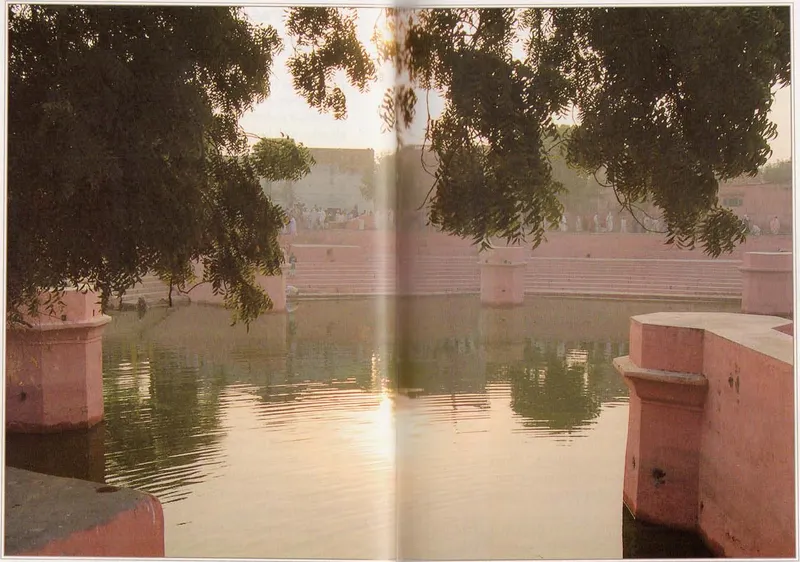
Prema-sarovara
प्रेम-सरोवरPrema-sarovara, the lake of love (prema), lies on the road from Varṣāṇā to Nandagrāma, about a mile from Varṣāṇā, with the village of Gājīpura to its east.
Māna-kuṭīra
मान-कुटीरAccording to the undated parikramā notes Varṣāṇā, Māna-kuṭīra is a shrine at Māna-garh, on the hill of Varṣāṇā, dedicated to the pastime in which Kṛṣṇa, dressed as a girl …
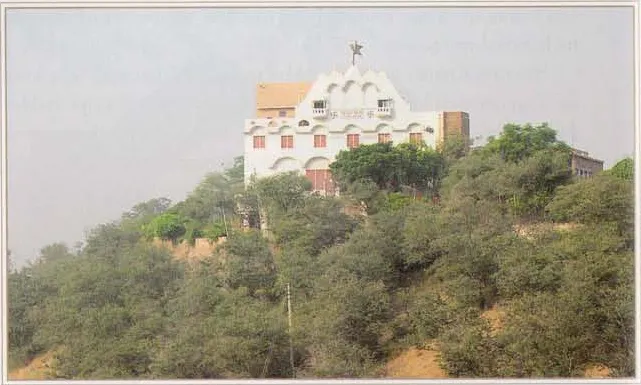
Māna-garh
मान-गढ़Māna-garh, the fort of māna, is a peak of Brahma-parvata, the hill of Varṣāṇā.
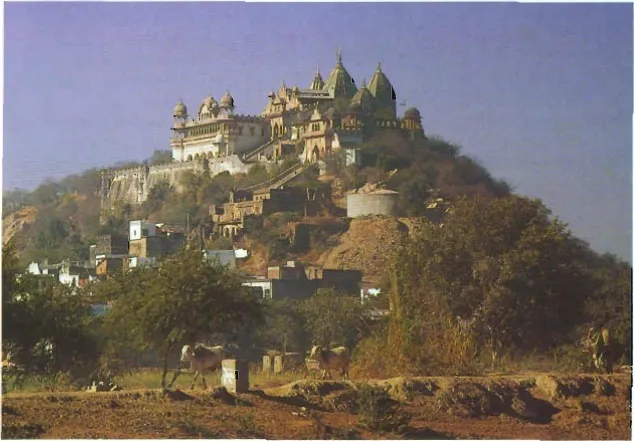
Varṣāṇā
बरसानाVarṣāṇā is the town of Vṛṣabhānu, Śrī Rādhā's father, on and around the hill of Brahma-parvata.
Narī-Semarī
नरी-सेमरीNarī-Semarī is a pair of villages south-east of Chātā (Chatravana).
Premavana
प्रेमवन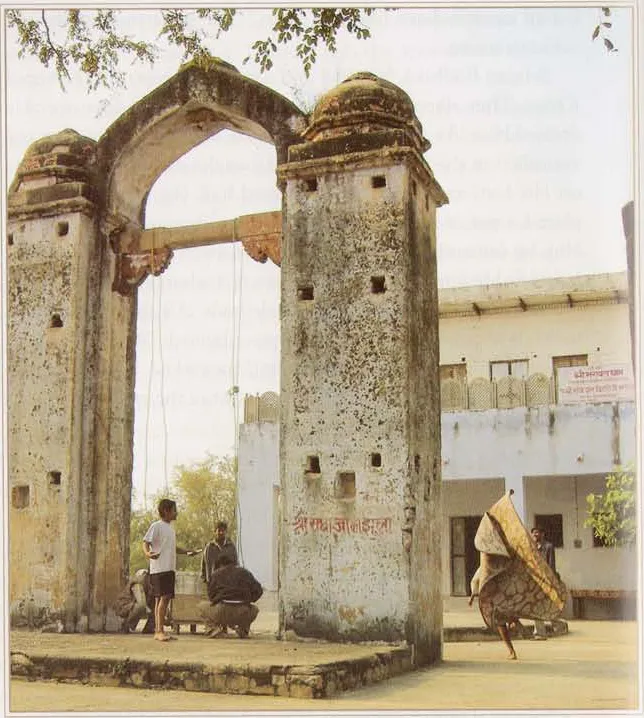
Dāna-garh
दान-गढ़Dāna-garh, the fort of the toll (dāna), is a peak on top of Brahma-parvata, the hill of Varṣāṇā, west of Sāṅkarī-khor.
Questions and answers
It is a pond on the road from Varṣāṇā to Nandagrāma. The Bhakti-ratnākara says that the mood of prema-vaicittya appeared there. The Vraja-bhakti-vilāsa calls its lake the tīrtha that gives prema.[1 +2]
In Śrīla Prabhupāda's translation of the Ujjvala-nīlamaṇi, it is a fullness of love that brings grief from fear of separation, even though the lover is present.[4–6]
Māna is one of the kinds of love in separation. Śrīla Prabhupāda's translation of Caitanya-caritāmṛta Madhya 23.64 says that pūrva-rāga, pravāsa and māna are celebrated in Śrīmatī Rādhārāṇī and the gopīs.[6]
Kṛṣṇa came to Śrī Rādhā in a girl's dress, as Śyāmā-sakhī, to end Her māna. Śrīla Rūpa Gosvāmī preserves the oldest verses of it. The Bhakti-ratnākara sets it at Narī-Semarī, the guidebooks at Māna-garh.[17 +7]
It is on the Varṣāṇā hill. The Bhakti-ratnākara names Māna as one of three forts on the hills, and the Vraja-bhakti-vilāsa sets its Māna-mandira on Brahma-parvata. Entwistle (1987) places the small temple at the hill's north-western end.[3 +2]
He explains them as kinds of separation, defined in the Ujjvala-nīlamaṇi. He also warns that Kṛṣṇa's dealings with Śrī Rādhā are very confidential and must never be presented as an ordinary thing.[4, 19]
Sources
- Śrīla Narahari Cakravartī, Bhakti-ratnākara, Fifth Wave, 1912 ed. p. 220; Grantha Mandira text v.921, 2nd ed., 1912
- Śrīla Narahari Cakravartī, Bhakti-ratnākara, Fifth Wave, printed p. 218 (1912 edition), 2nd ed., 1912
- Śrīla Narahari Cakravartī, Bhakti-ratnākara, Fifth Wave, 1912 ed. p. 218; Grantha Mandira text v.893–896, 2nd ed., 1912
- Śrīla Prabhupāda, Śrī Caitanya-caritāmṛta, Madhya-līlā 23.63, purport · vedabase.io
- Śrīla Prabhupāda, Teachings of Lord Caitanya, chapter 31 · vedabase.io
- Śrīla Prabhupāda, Śrī Caitanya-caritāmṛta, Madhya-līlā 23.64, translation · vedabase.io
- Śrī Vraja-maṇḍala Parikramā (2007), PDF p. 180
- Śrī Vraja-maṇḍala Parikramā (2007), PDF p. 183
- Prabhudayāl Mītal, printed p. 122
- Śrīla Nārāyaṇa Bhaṭṭa, Vraja-bhakti-vilāsa, ch. 10 v.62 (circumambulation of Māneṅgita-vana), printed p. 225, 1st ed., publ. Bābā Kṛṣṇadāsa, Kusuma-sarovara, Saṁvat 2008
- Śrīla Nārāyaṇa Bhaṭṭa, Vraja-bhakti-vilāsa, ch. 10 v.63 (prayer for the Māna-mandira), printed p. 225, 1st ed., publ. Bābā Kṛṣṇadāsa, Kusuma-sarovara, Saṁvat 2008
- Śrīla Nārāyaṇa Bhaṭṭa, Vraja-bhakti-vilāsa, the twelve upavanas, vv.18 and 20, printed p. 2, 1st ed., publ. Bābā Kṛṣṇadāsa, Kusuma-sarovara, Saṁvat 2008
- Śrīla Nārāyaṇa Bhaṭṭa, Vraja-bhakti-vilāsa, mantra of the presiding deity of Prema-upavana (v.106), printed p. 19, 1st ed., publ. Bābā Kṛṣṇadāsa, Kusuma-sarovara, Saṁvat 2008
- Śrīla Nārāyaṇa Bhaṭṭa, Vraja-bhakti-vilāsa, ch. 10 vv.55–56, printed p. 223, 1st ed., publ. Bābā Kṛṣṇadāsa, Kusuma-sarovara, Saṁvat 2008
- Śrīla Nārāyaṇa Bhaṭṭa, Vraja-bhakti-vilāsa, ch. 10 vv.57–59, printed p. 224, 1st ed., publ. Bābā Kṛṣṇadāsa, Kusuma-sarovara, Saṁvat 2008
- Śrīla Nārāyaṇa Bhaṭṭa, Vraja-bhakti-vilāsa, ch. 2 v.54 (Grantha Mandira (2) part 13 v.54), printed p. 51, 1st ed., publ. Bābā Kṛṣṇadāsa, Kusuma-sarovara, Saṁvat 2008
- Padyāvalī (compiled by Śrīla Rūpa Gosvāmī), v.248, under the heading 'tatra yamunā-tīre gatayā rādhayā saha saṃkathā', GRETIL
- Śrīla Rūpa Gosvāmī, Utkalikā-vallarī, Stava-mālā part 24 (Utkalikā-vallarī) v.58, after the edition of Bhakti Saranga Goswami and Purushottam Das, Vrindavan, 1959
- Śrīla Prabhupāda, Room Conversation with Film Producer about Kṛṣṇa Lila, Bhubaneswar, 22 January 1977 · vedabase.io
- Śrīla Narahari Cakravartī, Bhakti-ratnākara, Fifth Wave, 1912 ed. p. 220; Grantha Mandira text v.921, 2nd ed., 1912
Show all 43 references
- Śrī Vraja-maṇḍala Parikramā (2007), PDF p. 182
- A. W. Entwistle, printed p. 376, Egbert Forsten, Groningen, 1987
- Mathurá (1883), F. S. Growse, B.C.S., M.A. Oxon., C.I.E. (as the title page gives him, p. 312
- Śrīla Prabhupāda, Śrī Caitanya-caritāmṛta, Ādi-līlā 4.268, translation · vedabase.io
- Vṛndāvana-Dhāma Ki Jaya! (c. 1986), by Dhruva Mahārāja dāsa, PDF p. 49
- Vṛndāvana-Dhāma Ki Jaya! (c. 1986), by Dhruva Mahārāja dāsa, PDF p. 50
- Śrīla Narahari Cakravartī, Bhakti-ratnākara, Fifth Wave, 1912 ed. p. 218; Grantha Mandira text v.892, 2nd ed., 1912
- Śrīla Narahari Cakravartī, Bhakti-ratnākara, Fifth Wave, 1912 ed. p. 248; Grantha Mandira text v.1270–1275, 2nd ed., 1912
- Śrīla Nārāyaṇa Bhaṭṭa, Vraja-bhakti-vilāsa, ch. 2 v.54, printed p. 51; the list begins on p. 50 'अथ कोकिलावनम् । नारदपञ्चरात्रे—', 1st ed., publ. Bābā Kṛṣṇadāsa, Kusuma-sarovara, Saṁvat 2008
- the undated parikramā notes Varṣāṇā, ¶26
- Śrī Vraja-maṇḍala Parikramā (2007), PDF p. 175
- A. W. Entwistle, §37 'Barsana', item 9 'Man Garh', printed p. 374, Egbert Forsten, Groningen, 1987
- Śrī Vraja-maṇḍala Parikramā (2007), PDF p. 174
- the undated parikramā notes Varṣāṇā, ¶24
- the undated parikramā notes Varṣāṇā, ¶25
- Śrī Śrī Bhaktamāla grantha, printed p. 324, left column
- Śrīmad-Bhāgavatam 10.36.30, GRETIL
- Śrīla Prabhupāda, Kṛṣṇa, the Supreme Personality of Godhead (Kṛṣṇa book), chapter 36, 'Kaṁsa Sends Akrūra for Kṛṣṇa' · vedabase.io
- Śrīmad-Bhāgavatam 10.47.34, GRETIL
- Śrīla Prabhupāda, Kṛṣṇa, the Supreme Personality of Godhead (Kṛṣṇa book), chapter 47, 'Delivery of the Message of Kṛṣṇa to the Gopīs' · vedabase.io
- Śrīla Prabhupāda, Kṛṣṇa, the Supreme Personality of Godhead (Kṛṣṇa book), Chapter 46, 'Uddhava Visits Vṛndāvana' · vedabase.io
- Śrīla Viśvanātha Cakravartī Ṭhākura: commentary on ŚB 10.45.25, Bhagavata Vidya Pith edition, ed. Bhagavata Rishi and Krishna Shankar Shastri, 1996
- Śrīla Jīva Gosvāmī, Śrīla Viśvanātha Cakravartī Ṭhākura, Śrīla Sanātana Gosvāmī: commentary on ŚB 10.39.37, Bhagavata Vidya Pith edition, ed. Bhagavata Rishi and Krishna Shankar Shastri, 1996
Further sources
- Śrī Caitanya-caritāmṛta, Ādi-līlā 4 and Madhya-līlā 23.63–64, translation and purports by Śrīla Prabhupāda (BBT); Śrīla Prabhupāda, Teachings of Lord Caitanya, chapter 31.
- Bhakti-ratnākara, Fifth Wave (Bengali, 1912 edition); Vraja-bhakti-vilāsa; Śrīla Rūpa Gosvāmī's Padyāvalī and Utkalikā-vallarī: summarised here, not translated.
- Historians (Growse 1883, Mītal 1966, Entwistle 1987) only for the dated details of the buildings, paraphrased.