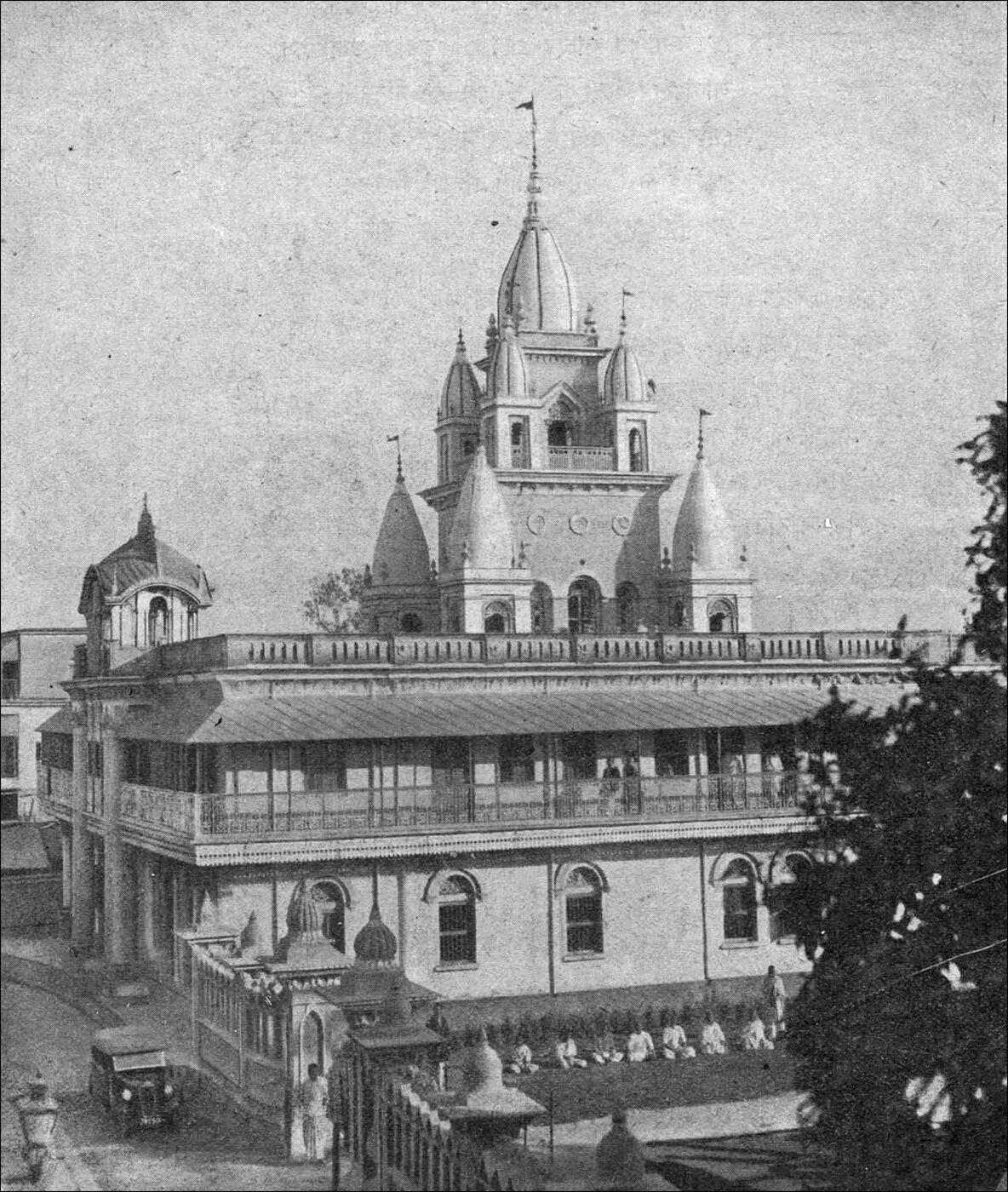
Bhaktivinoda Thakura died on 23 June 1914. Bhaktisiddhanta Sarasvati's guru, Gaura Kishora Dasa Babaji, died the following year. So within twelve months Bhaktisiddhanta lost both his father, who had guided him to his guru, and his guru, who had given him initiation. For two decades his religious life had been centred on these two persons. Most of Bhaktivinoda's other followers were householders who could not take up a full-time missionary life. Bhaktisiddhanta later said that after these deaths he felt nearly alone, with a mission that seemed too big for his means. Over the next two decades he built the Gaudiya Math. It was one of the more ambitious efforts to build an institution in modern Gaudiya Vaishnava history.
| Father's death | 23 June 1914 |
| Guru's disappearance | 1915 |
| Sannyasa taken | 27 March 1918, Mayapur, before a photograph of his guru |
| New name | Bhaktisiddhanta Sarasvati Goswami Prabhupada |
| First center | December 1918, Calcutta; renamed Sri Gaudiya Math, 1920 |
| Eventual scale | 64 centers in India, plus branches in London, Berlin, and Rangoon |
Alone With an Unfinished Mission #
After his father's death, Bhaktisiddhanta moved the family's Calcutta press to Mayapur and then to nearby Krishnanagar. He took over as editor of Bhaktivinoda's journal Sajjana-tosani, and he completed the publication of the Chaitanya Charitamrita that his father had begun. As Bhaktisiddhanta saw it, the deaths of his father and guru had also left the Chaitanya tradition without any formal sannyasa order of its own. Established lineages, such as Shankara's Advaita order and the Vaishnavas of South India in the line of Ramanuja, had long-established sannyasa institutions. But in the roughly four centuries since Chaitanya Mahaprabhu, Gaudiya Vaishnavism had never formally set one up. In 1918 Bhaktisiddhanta traveled to South India to study the tridanda sannyasa order kept in Ramanuja's ashrams. He decided to become the first sannyasi of Gaudiya Vaishnavism since Chaitanya's own associates.
While he was at Vrajapattana, Bhaktisiddhanta was weighed down by one question. How could he alone carry out the preaching that both his father and his guru had asked of him, without wealth, followers, or worldly influence? It is said that one night, in a vision, he saw the Panca-tattva and Their sankirtana associates entering the natya-mandira of the Sri Yogapitha temple in a blaze of light. With Them were Srila Jagannatha Dasa Babaji, Bhaktivinoda Thakura, Gaura Kishora Dasa Babaji, and other past acharyas. They assured him, "Don't you worry at all. With supreme enthusiasm preach the conclusion of pure devotion, in intense earnestness chant the glories of the Name, Abode, Form, Attributes, Associates and Pastimes of Godhead at various places. All of us will help you. There is no need to worry... No type of worldly hindrance or danger will be able to make any obstruction for this great work of yours. We are always with you." With this assurance, and because his own disciples urged him, he decided that the time had come to go beyond his personal bhajana and preach widely.
Taking Sannyasa Before a Photograph #
But there was no living Gaudiya Vaishnava sannyasi from whom he could receive the order. On 27 March 1918, before leaving for Calcutta, Bhaktisiddhanta sat down before a photograph of Gaura Kishora Dasa Babaji and accepted sannyasa there. He did this because the guru who might otherwise have given it to him was no longer living. From that day he wore the dress of a Vaishnava renunciant and took the name Bhaktisiddhanta Sarasvati Goswami Prabhupada. The photograph he sat before, and the circumstances of his guru's death in 1915, are described on Gaura Kishora Dasa Babaji's page on disappearance and legacy.
A Question Never Raised Within His Own Lineage #
The way he took sannyasa, before his guru's photograph and not from a living sannyasi, has been debated since by some Vaishnava historians. They question whether such a sannyasa can be considered formally valid by traditional standards, because the order is traditionally given by a living sannyasi guru. Within the Gaudiya Math itself, and within the ISKCON lineage that comes from it, this has never been treated as a real question. Bhaktisiddhanta Sarasvati's sannyasa, taken before the photograph of his guru, was accepted without dispute by his own disciples and by every generation of their disciples since.
Building a Mission From a Rented House #
In December 1918 Bhaktisiddhanta inaugurated his first center, called the Calcutta Bhaktivinoda Asana, at a rented house on Ultadinghi Junction Road in North Calcutta. On 5 February 1919, the Appearance Day of Sri Vishnupriya, he formally re-established the Sabha, a Vaishnava society, under its full name, the Sri Vishva-Vaishnava-Raja-Sabha. In his talk he traced its lineage back through Sri Rupa Gosvami and Sri Sanatana Gosvami, Chaitanya Mahaprabhu's own foremost associates. He also traced it through their successors, Sri Jiva Gosvami, Sri Raghunatha Dasa Gosvami, Srila Krishnadasa Kaviraja Goswami, Srila Narottama Dasa Thakura, and Srila Vishvanatha Chakravarti Thakura. These were the acharyas whose teachings the Sabha existed to preserve and spread. The Sabha was registered under the name of Bhaktivinoda's own earlier society. But it became known simply as the Gaudiya Math, named after its Calcutta branch and after Gaudiya, the weekly Bengali magazine that Bhaktisiddhanta started to carry its message. The Calcutta center itself took the name Sri Gaudiya Math in 1920. Over the following two decades, the mission grew from this single rented house into an institution with sixty-four branches across India, from Assam and Calcutta to Delhi, Varanasi, Mathura, Vrindavan, and Madras. It also had three centers abroad, in London, Berlin, and Rangoon.
The Scale of the Ambition #
A Vaishnava tradition four hundred years old had never organized itself into a formal missionary institution. Yet within two decades it was running dozens of monasteries and training initiated preachers. It was publishing periodicals in seven languages, including Bengali, English, Hindi, Assamese, and Oriya. It was sending representatives to lecture before British officials and German scholars in Europe. Bhaktisiddhanta himself spoke of his aim in terms of technology as much as theology. The mridanga drum played in kirtana could be heard for a street or two. But he described the printing press he had built as a brihat mridanga, a "great drum" whose sound could carry the teachings of Chaitanya Mahaprabhu around the world through the printed page. He gave the sannyasa order to some twenty-five disciples. He used every modern means available to him: print, public kirtana processions, English-language periodicals, and invitations to colonial officials. He insisted that his message must reach beyond caste, nationality, and social respectability alike.
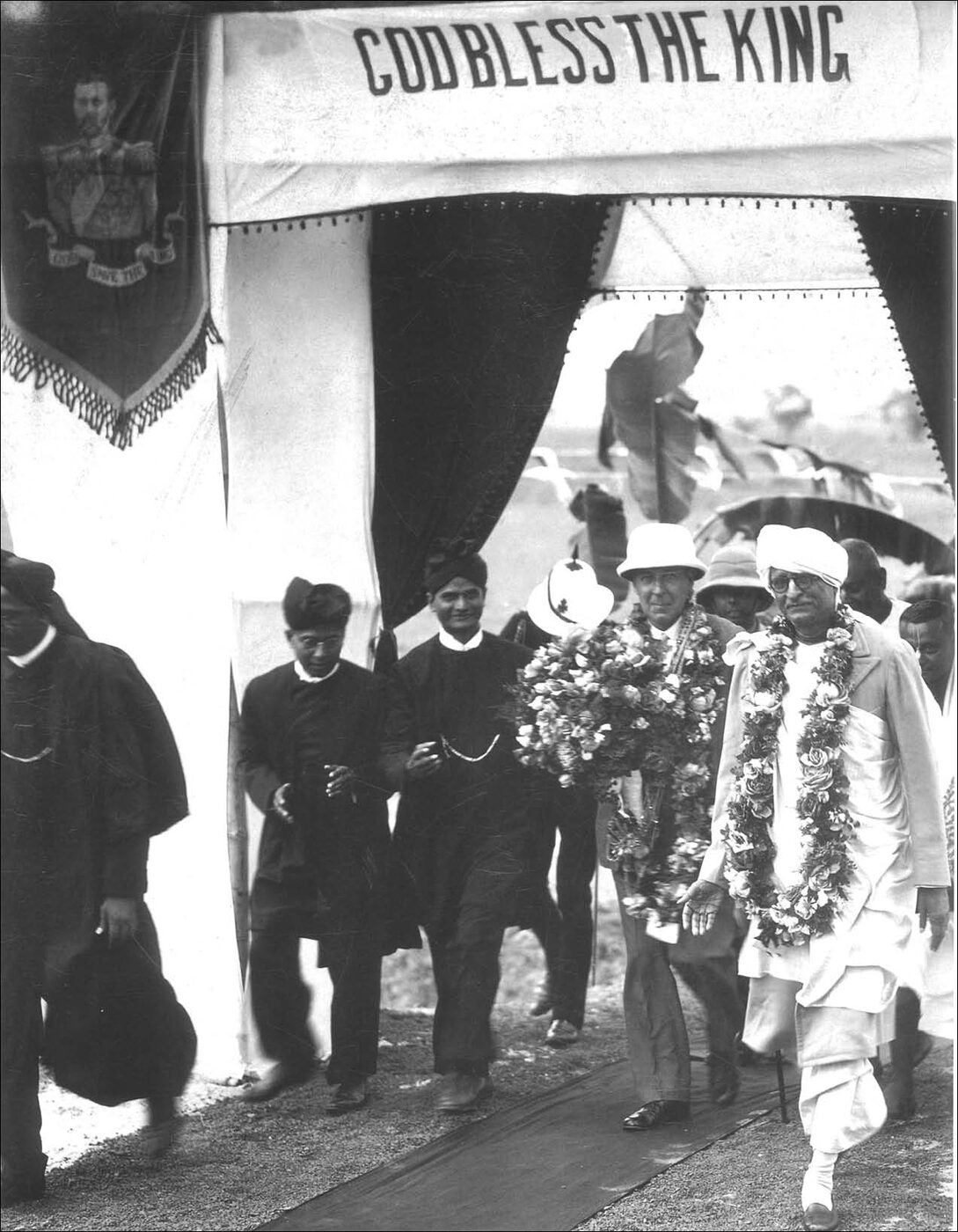
His movement's growing following was noticed even by the nationalist leader Subhas Chandra Bose. Bose had once been a Calcutta college classmate of Abhay Charan De, who would later become Bhaktisiddhanta's disciple. Bose complained to Bhaktisiddhanta, "So many people you have captured. They are doing nothing for nationalism." As usual, Bhaktisiddhanta was not moved by the politics of the day. He replied: "Well, for your national propaganda you require very strong men, but these people are very weak. You can see, they are very skinny. So don't put your glance upon them. Let them eat something and chant Hare Krishna." In March 1933 he sent three disciples, Bhakti Pradip Tirtha, Bhakti Hriday Bon, and Sambidananda Prabhu, to open the Gaudiya Math's mission in Europe. Within months a center was running in London. That July his preachers were received by King George V and Queen Mary at Buckingham Palace, and by the Archbishop of Canterbury. This showed how far the message had already traveled in fifteen years, since it was first entrusted to a single rented room in Calcutta.
A Lion Guru's Legacy #
He sharply and publicly criticized what he called a "society of cheaters and the cheated," and his targets were hereditary caste privilege, professional reciters of the Bhagavatam, and imitation devotional movements. This criticism earned him among his followers the title acharya-keshari, "lion guru." The wider guru-lineage in which this mission stood, and still stands today, is set out on the guru-parampara chart. By the time of his death in January 1937, Bhaktisiddhanta Sarasvati had built the largest organized missionary institution Gaudiya Vaishnavism had ever produced. He had built it from a rented house and a handful of disciples, and he had already begun looking toward its expansion beyond India. One of the young men who would carry that expansion forward was a Calcutta businessman named Abhay Charan De. In Bhaktisiddhanta's early years in Calcutta, Abhay was unknown to him and not yet formally his disciple.
