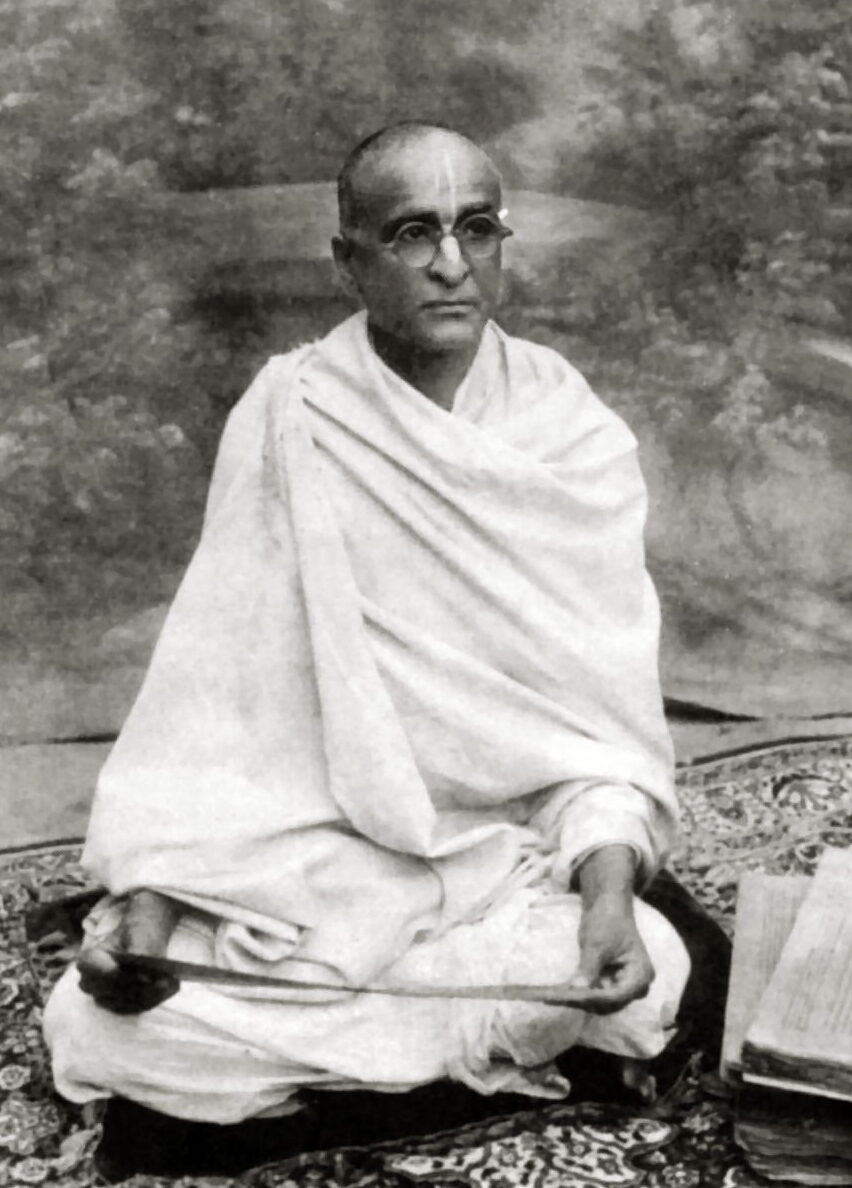
Srila Bhaktisiddhanta Sarasvati Thakura
Founder of the Gaudiya Math
The complete life, on one page: The main biography and every pastime page, in order, in one place
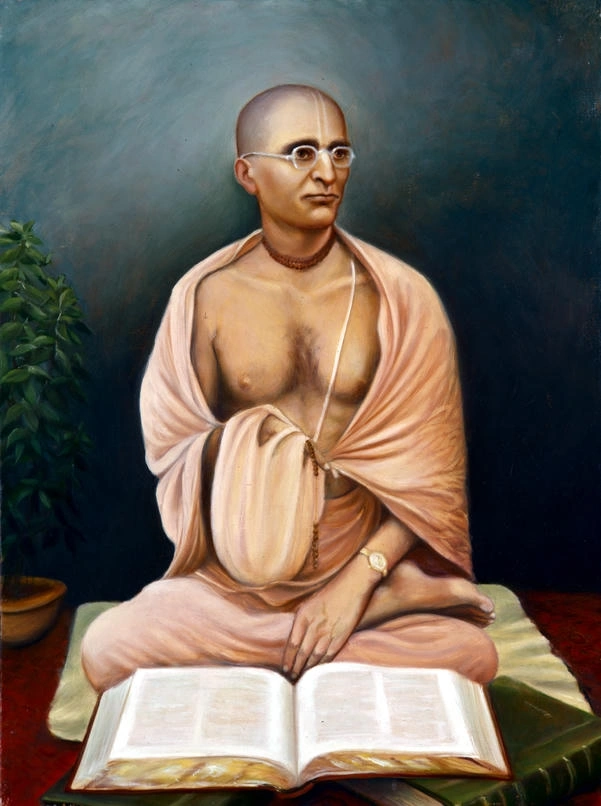
Introduction
nama om vishnu-padaya krishna-preshthaya bhu-tale
shrimate bhaktisiddhanta-sarasvatiti namine
I offer my respectful obeisances unto His Divine Grace Bhaktisiddhanta Sarasvati, who is very dear to Lord Krishna, having taken shelter at his lotus feet.
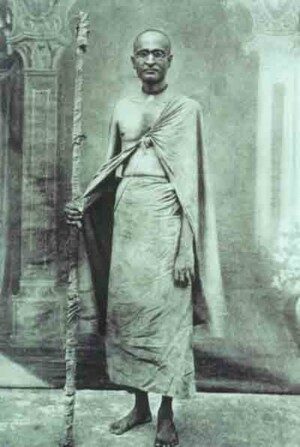
Srila Bhaktisiddhanta Sarasvati Thakura (1874-1937) is the founder of the Gaudiya Math and the direct spiritual master of Srila Prabhupada. Through this acharya, Bhaktivinoda Thakura's vision of a worldwide Krishna consciousness movement gained a real institution, a printing press, and a disciple able to carry it to America. He was born Bimala Prasad, the son of Bhaktivinoda Thakura. He joined his father's reforming vision with his own careful scholarship and strong discipline in organising. The entire history of ISKCON goes back to one instruction he gave, as Srila Prabhupada's own account of that meeting describes: "Why don't you take the message of Chaitanya Mahaprabhu and spread it in English?"
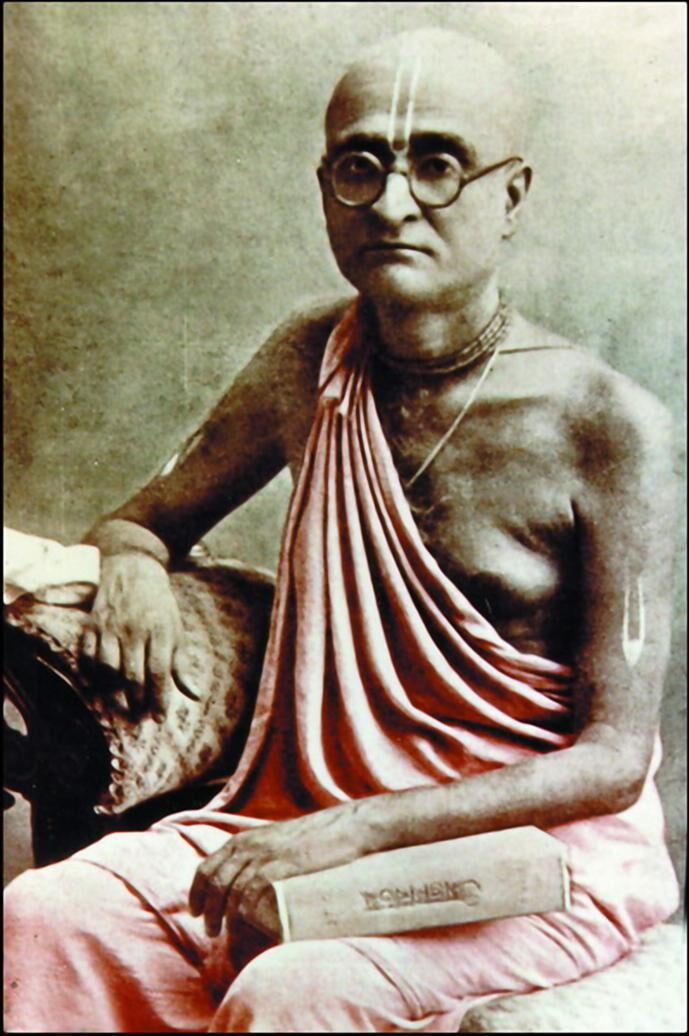
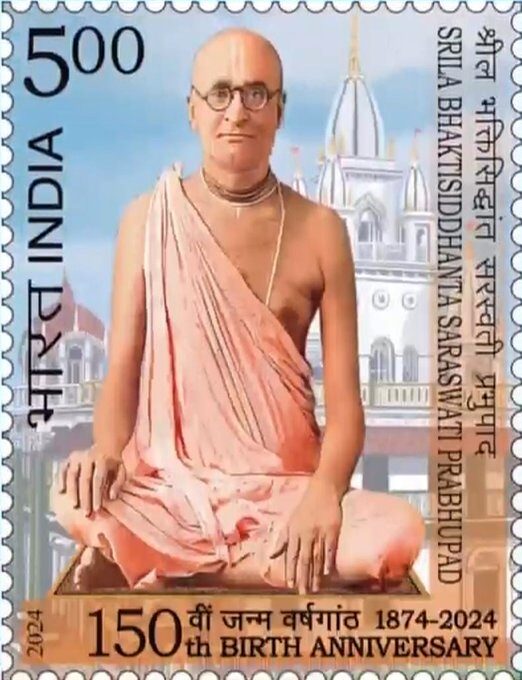
Chapter 1
Birth and a Prodigious Childhood
How a magistrate's son born near Jagannatha's temple showed a scholar's mind from early childhood.
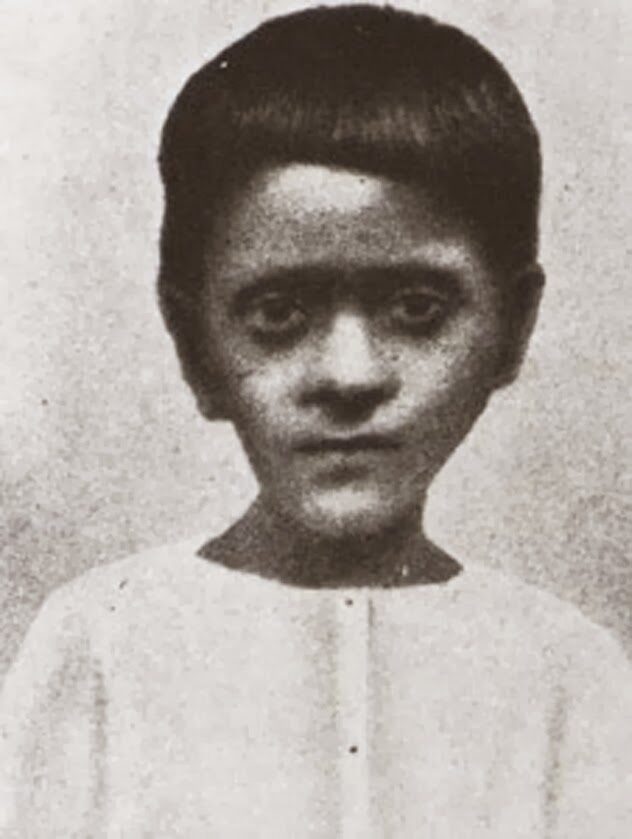
Srila Bhaktisiddhanta Sarasvati Thakura was born Bimala Prasad at 3:30 in the afternoon on 6 February 1874. The house was a few hundred meters from the Jagannatha Temple on Puri's Grand Road. This is the same road down which the deities of Jagannatha, Baladeva, and Subhadra are pulled each year during the Ratha-yatra festival. His father, Kedarnath Datta, was then posted in Puri as a deputy magistrate. In his off-duty hours Kedarnath studied Vaishnava scripture under local pandits, translated texts, and wrote on devotional theology. This work would later earn him the title by which history remembers him, Bhaktivinoda Thakura. Bimala Prasad's mother was Bhagavati Devi, Kedarnath's second wife. Her son's own biographers remember her as a quietly devout woman. So the child who would become Bhaktisiddhanta Sarasvati was born into a household that was already turned toward the disciplined study and practice of Gaudiya Vaishnavism. This was unusual for the family of a colonial civil servant.
An experienced astrologer who examined the infant's horoscope is remembered to have said, "I have done many horoscopes in my life, but I have never before seen such a horoscope filled with all the signs of a great personality. This child will become world famous as a brilliant teacher of life's ultimate goal." Vaishnava accounts record that all thirty-two bodily marks of a maha-purusha, a great personality, were found on the child, and that he was born with his umbilical cord wrapped around his neck like a brahmin's sacred thread.
| Birth name | Bimala Prasad Datta |
| Born | 3:30 pm, 6 February 1874, Puri (then Bengal Presidency, now Odisha) |
| Father | Kedarnath Datta, later Bhaktivinoda Thakura |
| Mother | Bhagavati Devi |
| Place in family | Sixth child born to Bhagavati Devi; seventh among Bhaktivinoda's fourteen children |
| Noted childhood feat | Memorized the Bhagavad-gita in Sanskrit as a young boy |
A Name Tied to a Vow #
Vaishnava biographers record that Kedarnath, after being posted to Puri, had a dream. In it Lord Jagannatha urged him to set aside the practice of law and give himself fully to the service of Vaishnavism. Kedarnath protested that he could not carry such a mission alone. Jagannatha is then said to have told him to pray for an assistant to the goddess Bimala Devi, whose shrine stands within the Puri temple complex. When a son was born soon after, Kedarnath connected the birth to the dream and named the child Bimala Prasad, "the mercy of Bimala Devi."
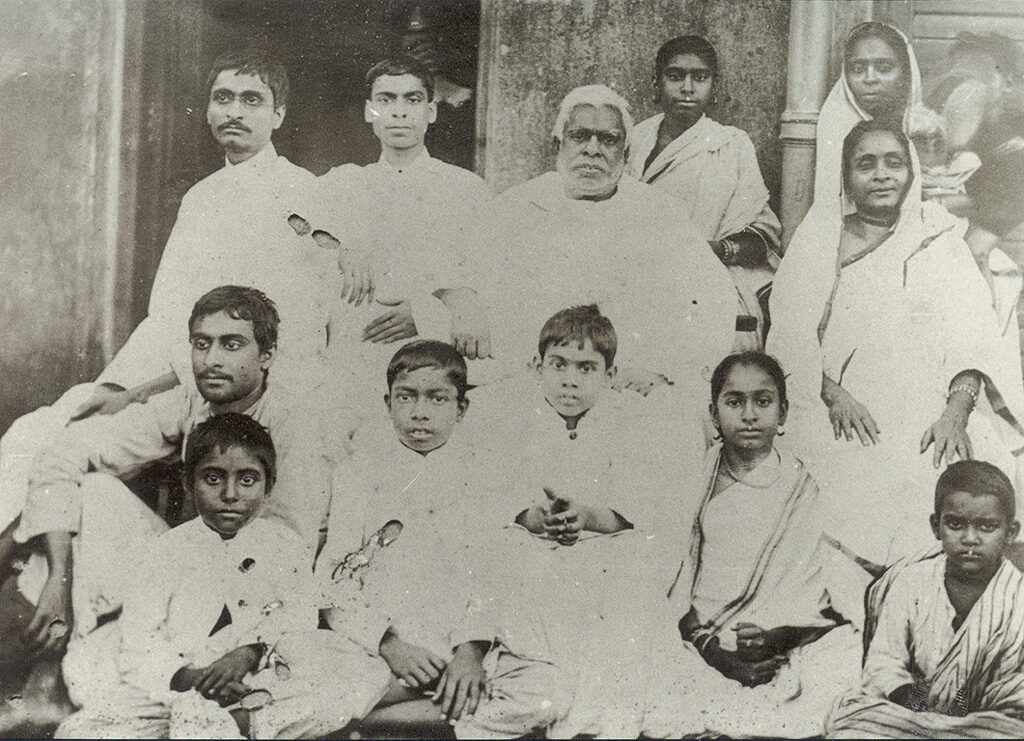
A related tradition, recorded by other biographers, places the moment of recognition later. In this version, the infant was carried before the Jagannatha cart during a Ratha-yatra, and he is said to have reached out and touched the deity's feet. A further account tells the story of that Ratha-yatra season in yet another way. When the child was six months old, the cart of Lord Jagannatha's Ratha-yatra procession stopped before Bhaktivinoda Thakura's house for three days. At Bhaktivinoda's instruction, Bhagavati Devi brought the boy before the cart. There a garland offered to the Lord fell from His neck and encircled the infant. Everyone present took this as a sign of special favor. The grain ceremony, marking the child's first taking of solid food, was performed on the cart itself, with Jagannatha's own prasadam. Then, as was the custom, various objects were placed before the child to test what his future work would be. He reached at once for the Srimad-Bhagavatam, and this foretold his life as a preacher. The accounts do not agree on every detail. But all of them express the same belief among Bhaktisiddhanta's followers: that from the very beginning, his birth was closely tied to his father's mission and to the deity of Puri.
Whether these stories are read as history or as devotion, they point to a fact about the family that is well recorded. Bhaktivinoda had prayed for a capable son to help carry forward the revival of Gaudiya Vaishnavism that he had begun. This shaped how Bimala Prasad was raised from infancy. More about the household he was born into can be found on the page describing Bhaktivinoda Thakura's family and household life.
Childhood Between Puri and Bengal #
Bimala Prasad spent his first ten months in Puri. Then he was carried to Bengal by palanquin, on his mother's lap. He spent most of his infancy at Ranaghat in Nadia district. There, it is said, he took in stories of Krishna and Chaitanya as his mother recited them. His schooling changed each time Kedarnath's postings moved the family: an English-medium school at Ranaghat, the Oriental Seminary in Calcutta from 1881, and, after his father's transfer to Serampore as senior deputy magistrate in 1884, the Serampore High School. Bhaktivinoda and Bhagavati Devi raised their children under strict Vaishnava discipline. They allowed them to eat only food first offered to Krishna. One incident from this period became part of family memory. As a small child, no older than four, Bimala Prasad was gently corrected by his father for eating a mango that had not yet been offered to the deity. He took the correction to heart and resolved never to eat a mango again. His biographers say he kept this private vow for the rest of his life.
A Memory His Disciples Called Encyclopedic #
During these Bengal years, Bimala Prasad's gifts of mind became impossible to miss. Accounts vary on the exact age, but by the time he was somewhere between seven and nine years old, he had memorized the entire Bhagavad-gita in the original Sanskrit and could explain its verses in his own words. He became known for being able to recall whole passages from a book word for word after a single reading. In later years this ability earned him the name "living encyclopedia" among those who knew him. The same gift showed itself in other ways. While still a boy he composed his own poetry in Sanskrit. At age eleven, while in the fifth class, he invented a personal shorthand system that he called Bicanto.
Along with this early gift for language, he showed an early talent for mathematics and the other exact sciences. This would shape much of his reputation as an adult. While still a young student he began taking lessons in mathematics and jyotisha, the traditional Indian science of astronomy and calendar calculation. His two tutors were Pandit Mahesh Chandra Chauramani and Pandit Sundar Lal, and from them he would later earn the title Siddhanta Sarasvati. He liked these independent studies better than the standard school lessons. He also preferred reading devotional literature such as Narottama Dasa Thakura's Prarthana and Prema-bhakti-chandrika. This preference would show itself again throughout his student years. At eleven years of age he also went with his father on a tour of the places of Chaitanya Mahaprabhu's pastimes. This was the first of several such pilgrimages father and son would make together.
When Bimala Prasad was thirteen and in the seventh class, Bhaktivinoda Thakura brought him tulasi beads from Jagannatha Puri. Bhaktivinoda gave his son the name Hari and taught him a Nrisimha mantra to chant. The boy faithfully kept this early devotional discipline, along with his daily worship of the Kurma Deity. This was years before he would seek out a guru of his own.
Proofreader to a Reformer #
Bimala Prasad's education was not limited to a classroom. In 1885 Bhaktivinoda founded the Vishva Vaishnava Raj Sabha, an association of leading Bengali Vaishnavas. The following year he launched a Bengali monthly journal, Sajjana-toshani ("the source of pleasure for devotees"). It carried articles on Gaudiya Vaishnava history and philosophy, along with book reviews and poetry. From around the age of twelve, Bimala Prasad worked as his father's proofreader for this journal and for the Vaishnava Depository, the library and press Bhaktivinoda had established. In this way he gained an early, hands-on education in printing and publishing, and it would prove very important for his later work. Vaishnava biographers also record something from a few years earlier. Bhaktivinoda was building a devotional hall in Calcutta, and during the digging an ancient deity of Kurmadeva was found. The seven-year-old Bimala Prasad had recently received the sacred thread, and his father gave him the deity's daily worship. His biographers see this early responsibility as a sign of how much Bhaktivinoda trusted the seriousness of his son's devotion, even as a child.
By the end of this period, when he was still in his early teens, Bimala Prasad had already shown the combination that would mark the rest of his life. He had an extraordinary memory. He had a hunger for both scriptural and scientific learning. And he had firsthand experience of the printing press his father used to spread Gaudiya Vaishnava teaching. The formal recognition that followed, and a defining new name, came in the years described on the next page: Education and the Title Siddhanta Sarasvati.
Chapter 2
Education and the Title Siddhanta Sarasvati
From a schoolboy's honorary title to a self-made scholar's respected place among Calcutta's learned circles.
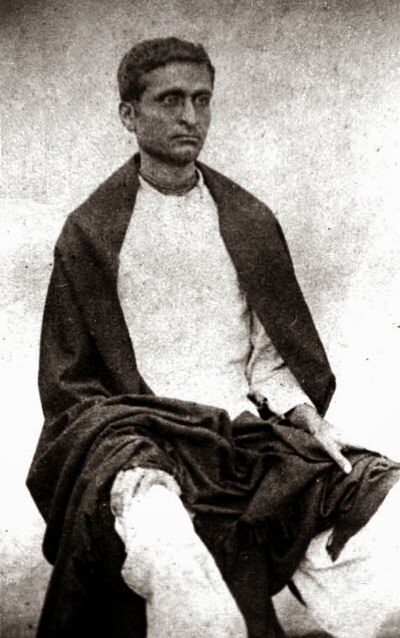
In 1887, at around thirteen, Bimala Prasad joined the Calcutta Metropolitan Institution, a college closely associated with the city's Western-educated Bengali elite, the bhadralok. There he pursued extracurricular studies in Sanskrit, mathematics, and jyotisha alongside the regular curriculum. Still a schoolboy, he so impressed his tutors with his command of astronomical calculation that they gave him an honorary title: Siddhanta Sarasvati, "the pinnacle of wisdom" in the exact sciences. He adopted it as his pen name from that point on, and later merged it with "Bhaktisiddhanta" into the name by which the world would eventually know him.
At around sixteen, while still at school, Bimala Prasad formed the Cirakumara Sabha, the "Assembly of Perpetual Bachelors," with a circle of friends. They met regularly at Calcutta's Beadon Square to discuss religious topics. Each member took a vow of celibacy, so that he would be free for devotional life instead of family duties. Of the whole assembly, only Bimala Prasad kept that vow without fail. This was an early sign of the disciplined renunciation that would mark the rest of his life.
| School (from 1887) | Calcutta Metropolitan Institution |
| Honorary title received | Siddhanta Sarasvati, "pinnacle of wisdom," for proficiency in Sanskrit grammar and jyotisha |
| Further study | Sanskrit College, Calcutta: Indian philosophy, ancient history, Vedic studies |
| Left Sanskrit College | 1895, after a dispute with the principal, Mahesh Chandra Nyayaratna |
| Post at Tripura court | Secretary and court historian (1895), then tutor to the royal princes (to 1908) |
| Independent teaching begun | Sanskrit school (catuspathi) and an astronomy school in Calcutta, 1897 |
Sanskrit College and a Parting of Ways #
In 1892, at eighteen, Bimala Prasad took the entrance examination and joined Sanskrit College. It was one of colonial Calcutta's leading colleges of classical learning. There he studied Indian philosophy and ancient history, and he read the Vedas under the guidance of the pandit Prithvidhara Sarma. He used the college library a great deal and read far beyond the set syllabus. Even as a student he wrote articles for religious journals. One of these was the Calcutta weekly Nivedana, where he published several pieces in 1899. During his college holidays he discussed the Vedas at length with Prithvidhara Sarma. By this stage he had already mastered five of the six traditional branches of Vedic learning: shiksha (pronunciation), kalpa (the sequence of Vedic rites), nirukta (etymology), chandah (Vedic metre), and jyotisha (astronomy and calendrical calculation). Prithvidhara Sarma urged him to take up the sixth branch, vyakarana or grammar, and to study the Siddhanta Kaumudi throughout his life. Bimala Prasad answered, "My life is for the single-minded cultivation of the teachings of Sri Chaitanya, not for the cultivation of grammar. I have only studied the Vedas, the branches of the Vedas and their related parts in a secondary manner."
In 1895 his formal studies there came to an end after a dispute over the astronomical calculations of the principal, Mahesh Chandra Nyayaratna. The episode shows that even as a student, Bimala Prasad was ready to challenge an established scholar's technical work instead of simply accepting his authority. By his own later account, there was more to the decision than the dispute itself. "If I remain studying with careful attention at the College," he wrote in his autobiography, "then extreme pressure will be brought upon me to enter family life, but if I am considered to be foolish and inefficient, then no one will put such an inducement upon me for becoming so engaged. By this consideration, I left the Sanskrit College, and, in order to maintain my life for the service of Hari, I was desirous of getting an honest occupation which I could perform with the intention of earning a humble income." He never returned to complete a formal college degree.
The Title Made Permanent #
The title Siddhanta Sarasvati was first given to him as a schoolboy for his skill in jyotisha. Over the following decade his knowledge of the subject grew from youthful promise into real scholarship, and the title became firmly established in Calcutta's learned circles. By around the age of twenty-five, according to his biographers, he had become thoroughly versed in Sanskrit, mathematics, and astronomy. He published many articles and prepared an edition of the ancient astronomical work Surya-siddhanta with his own commentary. This independent scholarly work, as much as the early recognition at school, fixed "Siddhanta Sarasvati" as his settled name among the bhadralok of Calcutta. He was a young man who had mastered the traditional Sanskrit sciences. He had also mastered the historical and philosophical learning valued by the Western-educated elite of his generation. And he had done this without passing through a university.
Secretary, Historian, Tutor #
In 1895, the same year his Sanskrit College studies ended, the Maharaja of Tripura, Bir Chandra Manikya, offered the young scholar a position at the royal court. The Maharaja was an associate of his father. The post was secretary and historian, and it included editing a chronicle of the Tripura royal line, the Rajaratnakara. The post gave him financial independence. More importantly, it gave him access to the palace library, where he read deeply in Indian and Western works of history, philosophy, and religion. After the Maharaja's death in 1896, his successor, Radha Kishore Manikya, asked Siddhanta Sarasvati to tutor the royal princes in Bengali and Sanskrit. He held this role until 1908. The king also asked him to stop dishonest court officials from misusing royal wealth. Siddhanta Sarasvati did so quickly, and the Maharaja was very pleased. Later he was also given the duty of inspecting the administration of the royal palace. But he became unhappy when he found envy and corruption in its affairs, and in time he gave notice that he wished to leave state service altogether. The Maharaja granted him a full pension in recognition of his service. Siddhanta Sarasvati accepted it for three years and then, by his own choice, gave that up too.
Early Teaching and Independent Scholarship #
Even while serving the Tripura court, Siddhanta Sarasvati was building an independent life of teaching and publishing in Calcutta. In 1897 he founded his own catuspathi, a traditional Sanskrit school, which he named Saraswati Chatuspati. From this school he brought out journals on astronomy and astrology, including Jyotirvid and Brihaspati. He also brought out editions of older astrological works such as the Surya-siddhanta, and an almanac he called the Bhakti Panjika. He was so well respected in this field that Sir Asutosh Mukherjee offered him a post as professor of astronomy at the University of Calcutta. Siddhanta Sarasvati declined the offer, because he felt it would be an obstacle to his spiritual life. At the request of Srila Jagannatha Dasa Babaji, he later composed the Sri Navadvipa Panjika. In this almanac the months, lunar days, and constellations were renamed after Vishnu. In 1898 he studied the Siddhanta Kaumudi, a standard Sanskrit grammar, under Prithvidhara Sarma at Bhakti Bhavana, his father's devotional center. He also opened an astronomy school in Calcutta.
During this same period he took up an austerity that was an early sign of the far more severe vows of his later bhajana years. From 1897 he strictly observed Chaturmasya, the four-month rainy-season vow. He cooked a single preparation for himself each day and lay on the bare earth without bedding or pillow. In 1898 he went with Bhaktivinoda Thakura on a tour of Benares, Prayaga, and Gaya, where he discussed philosophy with followers in the line of Ramanujacharya. By then, word of his debating skill had spread widely. On one occasion during his college years, a public debate on astrological calculation was held at the home of Sri Rajendra Chandra Sastri. There he defeated the scholar Panchanana Sahityacharya, a disciple of the noted professor Vasudeva Sastri. He defeated him so thoroughly that afterward few scholars in Calcutta were willing to debate him, for fear of a similar defeat.
So by his mid-twenties, Siddhanta Sarasvati was already a recognized teacher and scholar. He was equally at ease with Sanskrit grammar, with jyotisha, and with the historical and philosophical reading he had taken in at the Tripura court library. Across Calcutta's learned circles he was known by the title that, taken literally, named him "the pinnacle of wisdom."
Yet by his own later account, this very success began to leave him unsatisfied. It was success in the world that the bhadralok valued most. His dissatisfaction with a life measured in titles, positions, and scholarly recognition would, within a few years, lead him to seek out a very different kind of teacher. That story is told on the next page: Initiation from Gaura Kishora Dasa Babaji.
Chapter 3
Initiation from Gaura Kishora Dasa Babaji
Why an accomplished young scholar sought initiation from an illiterate ascetic who lived under a tree.
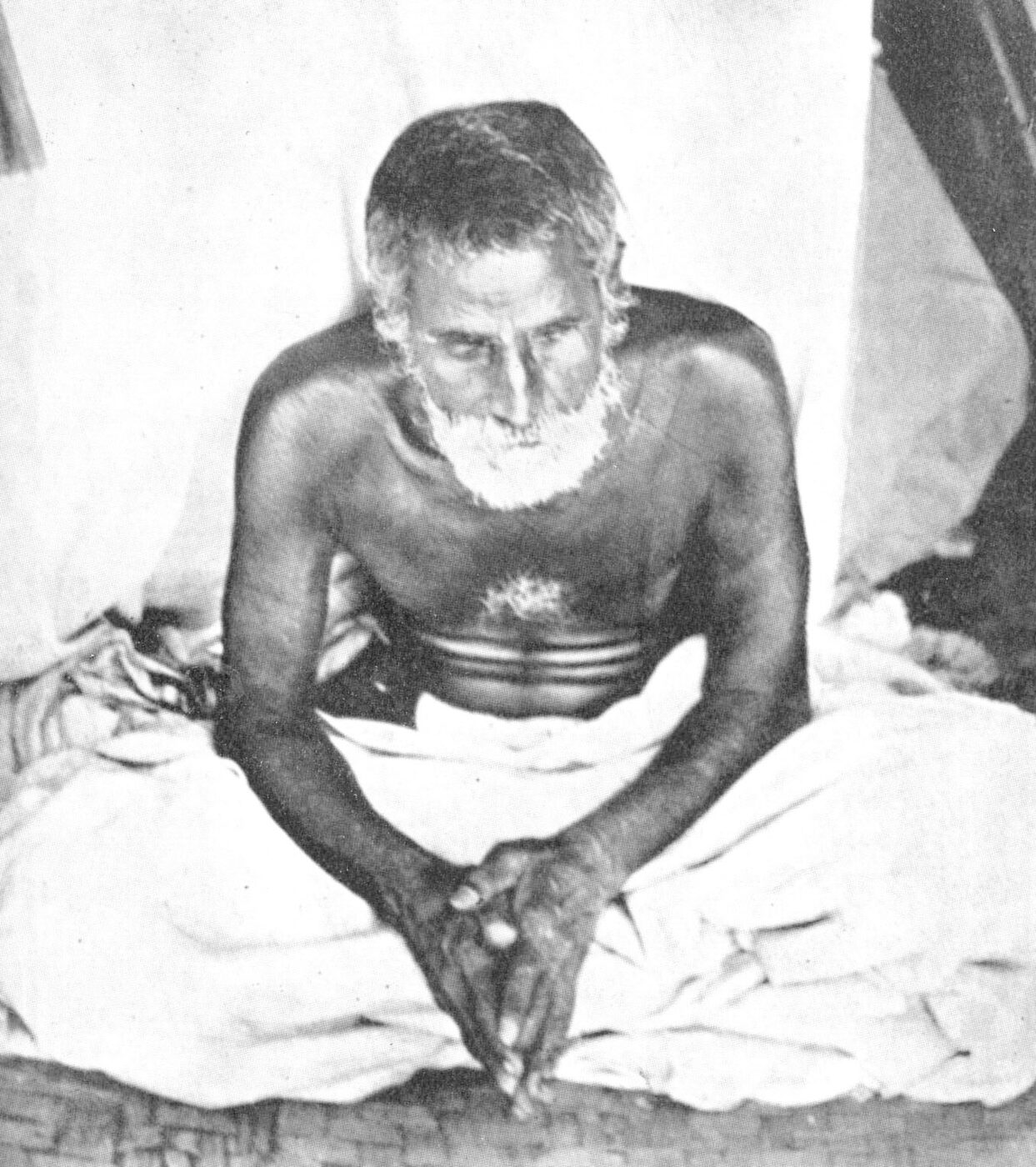
By his mid-twenties, Bimala Prasad was known across Calcutta's learned circles as Siddhanta Sarasvati. He held a secure position as tutor to Tripura's royal princes. He had real authority as a scholar in Sanskrit, jyotisha, and philosophy, and he moved comfortably among the bhadralok, Calcutta's Western-educated elite. By his own account, none of it satisfied him. He had come to feel that his religious life, for all its learning, was "confined to books and to a strict ethical life," and that such a life was incomplete. It needed contact with someone who lived devotion, and did not only study it. At his father's direction, he set out to find such a person. He found him not in Calcutta's colleges or courts, but living beneath a tree on the bank of the Ganga: the ascetic Gaura Kishora Dasa Babaji.
| Guru sought | Gaura Kishora Dasa Babaji, Vaishnava ascetic |
| Approached on the advice of | Bhaktivinoda Thakura |
| Initiation | Around 1900, at Godruma near Mayapur (by his own later testimony, January 1901) |
| Name received | Sri Varshabhanavi-devi-dayita Dasa ("servant of Krishna, the beloved of Radha") |
| Prior standing | Titled scholar, tutor to Tripura's royal princes |
An Illiterate Teacher for a Titled Scholar #
Every account agrees that Gaura Kishora Dasa Babaji was an unlikely guru for a man with Siddhanta Sarasvati's formal learning and titles. He could not read. He lived in extreme austerity. His waistcloth was reportedly made from cloth discarded from the dead. He ate plain rice soaked in Ganges water and seasoned with little more than salt and chili. Sometimes he cooked in thrown-away earthen pots that he had cleaned himself. He held no post, published nothing, and sought no following. But Bhaktivinoda Thakura, and the son he sent to find him, judged that he had something Siddhanta Sarasvati's own education had not given him. It was a life of devotion practiced so completely that it needed no books to pass it on. Bhaktisiddhanta Sarasvati later reflected on what it meant to finally meet such a person after years of purely intellectual religion:
It was by providential dispensation that I was able fully to understand the language and practical side of devotion after I had met the practicing master [Gaura Kishora Dasa Babaji]... Up to that time, my idea of religion was confined to books and to a strict ethical life, but that sort of life was found imperfect unless I came in touch with the practical side of things.
A Guru Who Made Him Wait #
Vaishnava biographers relate that Gaura Kishora Dasa Babaji did not accept Siddhanta Sarasvati readily. Known for being highly selective about whom he initiated, he is said to have turned the young scholar away three times. When Siddhanta Sarasvati first approached him at Bhaktivinoda Thakura's urging, in the month of Magha, 1900, Gaura Kishora Dasa Babaji replied only, "Mahaprabhu will be asked. If He gives permission, your desire will be fulfilled." On a second visit Siddhanta Sarasvati asked what Mahaprabhu's order had been, and received the answer, "I forgot to ask." A third time he was told, "I asked. I did not receive the command of Mahaprabhu." At this, Siddhanta Sarasvati stood up, his heart breaking. Weeping as he spoke, he pleaded that if he received no mercy he could no longer sustain his life. Seeing this, Gaura Kishora Dasa Babaji's heart melted, and he told the young scholar to bathe in the Sarasvati river and then return to him.
Vaishnava biographers also compare this episode to the slowness with which Lokanatha Gosvami once accepted Narottama Dasa Thakura as his only disciple. Lokanatha Gosvami, too, was a humble and renounced paramahamsa, slow to accept anyone into his shelter. Siddhanta Sarasvati never gave up. He is also said to have compared his own persistence to that of the medieval philosopher Ramanuja. By tradition, Ramanuja was turned away eighteen times before his own guru agreed to accept him. Siddhanta Sarasvati is said to have declared that he too would wait as long as necessary. We do not know exactly what passed between them. The details come down to us only through devotional memoir, not through independent record. But the outcome is not in doubt. Gaura Kishora Dasa Babaji accepted him and gave him initiation in a grove at Godruma near Mayapur. In the words his disciples remembered, he told him to preach the Absolute Truth and set aside all other work.
A New Name and a Disputed Date #
Bhaktisiddhanta Sarasvati himself later dated his acceptance of Gaura Kishora as guru to January 1901, though other accounts place the meeting in the closing months of 1900. With the initiation came a new name, Sri Varshabhanavi-devi-dayita Dasa, "servant of Krishna, the beloved of Radha," and, by his own later writings, instruction in the chanting of the Hare Krishna mantra. The full story of that acceptance, told from the guru's own side, appears on Gaura Kishora Dasa Babaji's page on initiating Bhaktisiddhanta Sarasvati.
How Calcutta's Educated Vaishnavas Received It #
Nothing in the record suggests that the bhadralok circles he had moved in until then stayed silent about his choice of guru. In the Calcutta of his young adulthood, people more and more judged spiritual authority by exactly the qualifications he already had. These were Western and Sanskrit education, published scholarship, a respected position in an institution, and a good command of the new reformist religious ideas then rising among the educated middle class. An ascetic who could not read, who lived under a tree, and who could show nothing except a life of visible renunciation went directly against those ideas. Bhaktisiddhanta Sarasvati would spend much of the following decade arguing, in essays and public debates, that devotion, not birth, learning, or social position, was the true measure of a person's spiritual standing. This stand brought him into conflict with parts of Calcutta's brahminical and bhadralok establishment. His choice of guru in 1900 was, in effect, the first and most personal expression of that same belief. He had gone looking for someone who lived what the books described. He found him in a man whom his own social world would not have looked at twice.
Years of Bhajana #
Around the time of his initiation, Siddhanta Sarasvati was not living in seclusion. He accompanied Bhaktivinoda Thakura to Puri in March 1900 to help establish a place of bhajana near the samadhi of Haridasa Thakura. There he began compiling a Vaishnava encyclopedia of terms, biography, and doctrine that he called Vaishnava-Manjusha-Samahriti. It was later published in four volumes. One Vaishnava scholar who read it remarked that the work "is only possible for a supra-mortal, a great personality," beyond what even twenty-five or thirty ordinary scholars working together could do. Between 1904 and 1905 he toured South India, preaching and debating pandits in Tirupati, Srirangam, Kumbhakonam, Madurai, and elsewhere. On this tour he met a tridandi swami of the Ramanuja line at Perambadur. From him he first gathered detailed knowledge of the rites of Vedic tridanda Vaishnava sannyasa. He would use this knowledge years later, when he himself accepted the sannyasa order.
In 1905, at thirty-one, he began the great vow that would define his next decade. He chanted three lakh, or three hundred thousand, names of the Lord daily, some 192 rounds, in the manner of Haridasa Thakura. He worked out that at this rate he would complete a billion names in about nine years. At first he lived in a grass hut at the Yogapitha, the birthsite of Chaitanya Mahaprabhu. From February 1909 he lived in a cottage he built nearby at Vrajapattana, on the site of the house of Chandrashekhara Acharya, Chaitanya Mahaprabhu's uncle. He cooked sun-dried rice in ghee and ate it from the floor, and he slept without a pillow. He never interrupted his chanting. Even when the roof of his hut broke, he simply held an umbrella against the rain. Watching this austerity, Gaura Kishora Dasa Babaji remarked, "I observe that the renunciation of Sri Rupa-Raghunatha is manifest in my Prabhu," speaking of his own disciple as "my Prabhu." This reversed the usual custom, in which a disciple, not a guru, uses this title of respect. Srila Prabhupada later described this period of his own guru's life: "From childhood he was a strict brahmachari, Bhaktisiddhanta Sarasvati Gosvami Maharaja. And he underwent very severe penances for starting this movement, world-wide movement. That was his mission." Even in the midst of this solitary bhajana, Siddhanta Sarasvati initiated his own first disciple in 1906. It was a quiet first sign that the seeker who had once wept for his guru's mercy would soon be sought out by others in the same way.
For Siddhanta Sarasvati, his decision to take this guru did not mean rejecting his education. It meant giving it a new direction. He did not abandon his scholarship. Over the following years he brought it into the service of the tradition his new guru lived by. The full results of this change, in the institution he went on to build, are told on the next page: Founding the Gaudiya Math.
Chapter 4
Founding the Gaudiya Math
After two deaths left him alone, he accepted sannyasa before a photograph of his guru and built a worldwide mission.
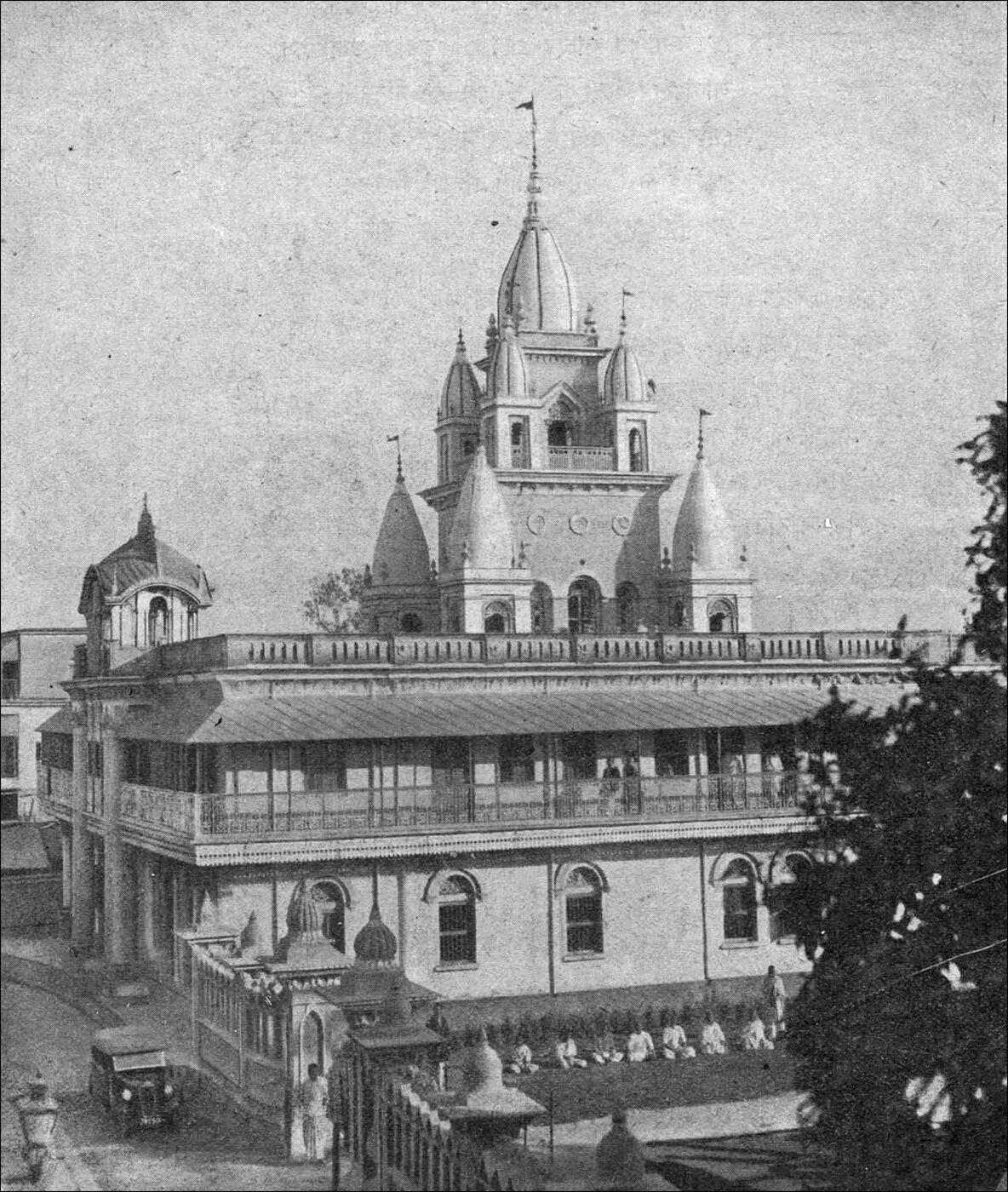
Bhaktivinoda Thakura died on 23 June 1914. Bhaktisiddhanta Sarasvati's guru, Gaura Kishora Dasa Babaji, died the following year. So within twelve months Bhaktisiddhanta lost both his father, who had guided him to his guru, and his guru, who had given him initiation. For two decades his religious life had been centred on these two persons. Most of Bhaktivinoda's other followers were householders who could not take up a full-time missionary life. Bhaktisiddhanta later said that after these deaths he felt nearly alone, with a mission that seemed too big for his means. Over the next two decades he built the Gaudiya Math. It was one of the more ambitious efforts to build an institution in modern Gaudiya Vaishnava history.
| Father's death | 23 June 1914 |
| Guru's disappearance | 1915 |
| Sannyasa taken | 27 March 1918, Mayapur, before a photograph of his guru |
| New name | Bhaktisiddhanta Sarasvati Goswami Prabhupada |
| First center | December 1918, Calcutta; renamed Sri Gaudiya Math, 1920 |
| Eventual scale | 64 centers in India, plus branches in London, Berlin, and Rangoon |
Alone With an Unfinished Mission #
After his father's death, Bhaktisiddhanta moved the family's Calcutta press to Mayapur and then to nearby Krishnanagar. He took over as editor of Bhaktivinoda's journal Sajjana-tosani, and he completed the publication of the Chaitanya Charitamrita that his father had begun. As Bhaktisiddhanta saw it, the deaths of his father and guru had also left the Chaitanya tradition without any formal sannyasa order of its own. Established lineages, such as Shankara's Advaita order and the Vaishnavas of South India in the line of Ramanuja, had long-established sannyasa institutions. But in the roughly four centuries since Chaitanya Mahaprabhu, Gaudiya Vaishnavism had never formally set one up. In 1918 Bhaktisiddhanta traveled to South India to study the tridanda sannyasa order kept in Ramanuja's ashrams. He decided to become the first sannyasi of Gaudiya Vaishnavism since Chaitanya's own associates.
While he was at Vrajapattana, Bhaktisiddhanta was weighed down by one question. How could he alone carry out the preaching that both his father and his guru had asked of him, without wealth, followers, or worldly influence? It is said that one night, in a vision, he saw the Panca-tattva and Their sankirtana associates entering the natya-mandira of the Sri Yogapitha temple in a blaze of light. With Them were Srila Jagannatha Dasa Babaji, Bhaktivinoda Thakura, Gaura Kishora Dasa Babaji, and other past acharyas. They assured him, "Don't you worry at all. With supreme enthusiasm preach the conclusion of pure devotion, in intense earnestness chant the glories of the Name, Abode, Form, Attributes, Associates and Pastimes of Godhead at various places. All of us will help you. There is no need to worry... No type of worldly hindrance or danger will be able to make any obstruction for this great work of yours. We are always with you." With this assurance, and because his own disciples urged him, he decided that the time had come to go beyond his personal bhajana and preach widely.
Taking Sannyasa Before a Photograph #
But there was no living Gaudiya Vaishnava sannyasi from whom he could receive the order. On 27 March 1918, before leaving for Calcutta, Bhaktisiddhanta sat down before a photograph of Gaura Kishora Dasa Babaji and accepted sannyasa there. He did this because the guru who might otherwise have given it to him was no longer living. From that day he wore the dress of a Vaishnava renunciant and took the name Bhaktisiddhanta Sarasvati Goswami Prabhupada. The photograph he sat before, and the circumstances of his guru's death in 1915, are described on Gaura Kishora Dasa Babaji's page on disappearance and legacy.
A Question Never Raised Within His Own Lineage #
The way he took sannyasa, before his guru's photograph and not from a living sannyasi, has been debated since by some Vaishnava historians. They question whether such a sannyasa can be considered formally valid by traditional standards, because the order is traditionally given by a living sannyasi guru. Within the Gaudiya Math itself, and within the ISKCON lineage that comes from it, this has never been treated as a real question. Bhaktisiddhanta Sarasvati's sannyasa, taken before the photograph of his guru, was accepted without dispute by his own disciples and by every generation of their disciples since.
Building a Mission From a Rented House #
In December 1918 Bhaktisiddhanta inaugurated his first center, called the Calcutta Bhaktivinoda Asana, at a rented house on Ultadinghi Junction Road in North Calcutta. On 5 February 1919, the Appearance Day of Sri Vishnupriya, he formally re-established the Sabha, a Vaishnava society, under its full name, the Sri Vishva-Vaishnava-Raja-Sabha. In his talk he traced its lineage back through Sri Rupa Gosvami and Sri Sanatana Gosvami, Chaitanya Mahaprabhu's own foremost associates. He also traced it through their successors, Sri Jiva Gosvami, Sri Raghunatha Dasa Gosvami, Srila Krishnadasa Kaviraja Goswami, Srila Narottama Dasa Thakura, and Srila Vishvanatha Chakravarti Thakura. These were the acharyas whose teachings the Sabha existed to preserve and spread. The Sabha was registered under the name of Bhaktivinoda's own earlier society. But it became known simply as the Gaudiya Math, named after its Calcutta branch and after Gaudiya, the weekly Bengali magazine that Bhaktisiddhanta started to carry its message. The Calcutta center itself took the name Sri Gaudiya Math in 1920. Over the following two decades, the mission grew from this single rented house into an institution with sixty-four branches across India, from Assam and Calcutta to Delhi, Varanasi, Mathura, Vrindavan, and Madras. It also had three centers abroad, in London, Berlin, and Rangoon.
The Scale of the Ambition #
A Vaishnava tradition four hundred years old had never organized itself into a formal missionary institution. Yet within two decades it was running dozens of monasteries and training initiated preachers. It was publishing periodicals in seven languages, including Bengali, English, Hindi, Assamese, and Oriya. It was sending representatives to lecture before British officials and German scholars in Europe. Bhaktisiddhanta himself spoke of his aim in terms of technology as much as theology. The mridanga drum played in kirtana could be heard for a street or two. But he described the printing press he had built as a brihat mridanga, a "great drum" whose sound could carry the teachings of Chaitanya Mahaprabhu around the world through the printed page. He gave the sannyasa order to some twenty-five disciples. He used every modern means available to him: print, public kirtana processions, English-language periodicals, and invitations to colonial officials. He insisted that his message must reach beyond caste, nationality, and social respectability alike.
His movement's growing following was noticed even by the nationalist leader Subhas Chandra Bose. Bose had once been a Calcutta college classmate of Abhay Charan De, who would later become Bhaktisiddhanta's disciple. Bose complained to Bhaktisiddhanta, "So many people you have captured. They are doing nothing for nationalism." As usual, Bhaktisiddhanta was not moved by the politics of the day. He replied: "Well, for your national propaganda you require very strong men, but these people are very weak. You can see, they are very skinny. So don't put your glance upon them. Let them eat something and chant Hare Krishna." In March 1933 he sent three disciples, Bhakti Pradip Tirtha, Bhakti Hriday Bon, and Sambidananda Prabhu, to open the Gaudiya Math's mission in Europe. Within months a center was running in London. That July his preachers were received by King George V and Queen Mary at Buckingham Palace, and by the Archbishop of Canterbury. This showed how far the message had already traveled in fifteen years, since it was first entrusted to a single rented room in Calcutta.
A Lion Guru's Legacy #
He sharply and publicly criticized what he called a "society of cheaters and the cheated," and his targets were hereditary caste privilege, professional reciters of the Bhagavatam, and imitation devotional movements. This criticism earned him among his followers the title acharya-keshari, "lion guru." The wider guru-lineage in which this mission stood, and still stands today, is set out on the guru-parampara chart. By the time of his death in January 1937, Bhaktisiddhanta Sarasvati had built the largest organized missionary institution Gaudiya Vaishnavism had ever produced. He had built it from a rented house and a handful of disciples, and he had already begun looking toward its expansion beyond India. One of the young men who would carry that expansion forward was a Calcutta businessman named Abhay Charan De. In Bhaktisiddhanta's early years in Calcutta, Abhay was unknown to him and not yet formally his disciple.
Chapter 5
The Printing Press as Mridanga
Why Bhaktisiddhanta Sarasvati treated a printing press, not the drum, as the real instrument of kirtana
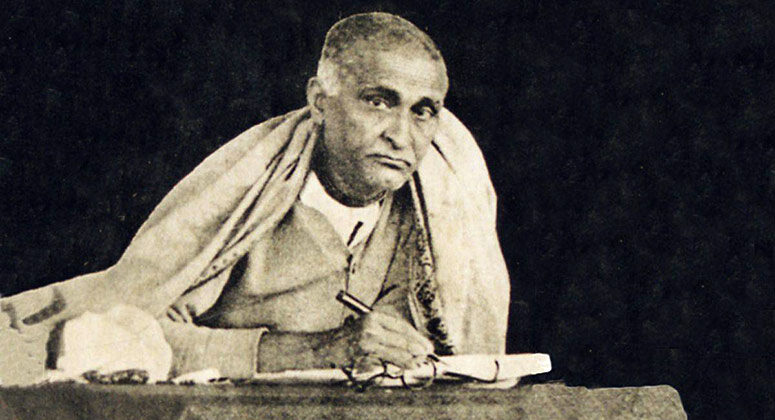
In a kirtana, the mridanga is the two-headed clay drum that carries the rhythm of the chanting. By long custom, its sound is considered inseparable from the holy name itself. Srila Bhaktisiddhanta Sarasvati Thakura surprised his own tradition by arguing that a printing press, run properly, was a bigger and more effective mridanga than the instrument in anyone's hands. His disciples remembered him calling it a brihad mridanga, a "great mridanga," and they remembered his reason. The sound of a drum reaches only as far as a courtyard or a temple hall. But a printed page carries the same message to readers who could never be reached in person. It also reaches more people than any group of kirtana singers could ever speak to directly.
A Father's Instruction Made Into a Mission #
This belief did not begin with Bhaktisiddhanta. In 1910, his father Bhaktivinoda Thakura wrote to him from Mayapur with an instruction. Looking back, it reads like a mission statement handed from one generation to the next: "The real service to Sri Mayapur can be done by acquiring printing presses, distributing devotional books, and sankirtana-preaching... I had a special desire to preach the significance of such books as Srimad Bhagavatam, Sat Sandarbha, and Vedanta Darshan. You have to accept that responsibility." Bhaktivinoda had spent decades of his own life doing exactly this on a smaller scale. He ran the Vaishnava Depository press and the Sajjana-toshani magazine from his home. Bhaktisiddhanta took up the instruction and carried it out on a far larger scale.
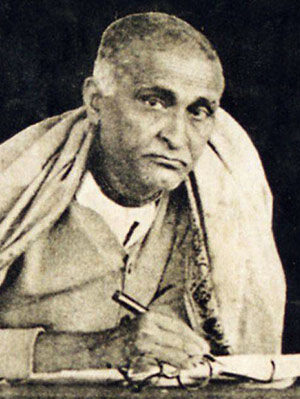
Bhagavat Yantra: God's Machine #
On 6 February 1913, Bhaktisiddhanta rented a house at #4 Sanagar Lane in the Kalighat section of Calcutta, for thirty-six rupees a month. This was still years before he accepted sannyasa or founded the Gaudiya Math as an institution. He set up a printing press there and gave it a name that stated his theology openly: bhagavat-yantra, "God's machine." Its first major project was a new edition of Krishnadasa Kaviraja Goswami's Chaitanya Charitamrita, the central biography of Chaitanya Mahaprabhu. It was printed with Bhaktivinoda Thakura's Amrita-pravaha-bhashya, together with Bhaktisiddhanta's own long Anubhashya commentary on the medieval Bengali text. The press also brought out the Bhagavad-gita with Vishvanatha Chakravarti Thakura's Sararthavarshini commentary and Bhaktivinoda Thakura's own Rasikaranjana commentary. After his father's death in 1914 he moved the press to Mayapur and then to nearby Krishnanagar. He continued both the Chaitanya Charitamrita project and his father's Sajjana-toshani without a break.
Why Print Rather Than Preach Only Aloud #
Oral kirtana and lecture remained central to Bhaktisiddhanta's own daily practice and to the Gaudiya Math's public life. For him it was never a choice of one or the other. But he saw particular advantages in the printed page that oral preaching alone could not give. A book did not get tired, forget a verse, or need to sleep. It could be read again at whatever speed and depth the reader chose. A skeptical college graduate could study it as carefully as a devotional history by Rupa Gosvami. It could travel to London, Berlin, or Rangoon in a trunk. It could reach a reader Bhaktisiddhanta himself would never meet, long after he was no longer alive to give the lecture in person. After he had accepted sannyasa and seriously begun founding Gaudiya Math centers across India, he built a press, editorial staff, and distribution network into nearly every one of them. He used the same principle to justify using other plain modern technology as instruments of bhakti, not as distractions from it. These included motorcars, loudspeakers, and even airplanes for a preaching tour that was planned but never took place.
A Publishing Operation, Not a Sideline #
By the end of his life, Bhaktisiddhanta's presses had produced periodicals in seven languages: the Bengali fortnightly Sajjana-toshani inherited from his father, the English fortnightly The Harmonist, the Bengali weekly Gaudiya (from which the Gaudiya Math itself took its name), a Hindi fortnightly called Bhagavata, a Bengali daily, an Assamese monthly, and an Oriya periodical. They also produced a steady stream of book editions of the standard Gaudiya Vaishnava texts. Publishing was not a small side activity of an institution built mainly around temples and preachers. It was one of the institution's main activities. Bhaktisiddhanta gave it staff and money, and he defended it as seriously as any temple's daily worship.
Technology in the Service of Devotion #
The press was one example of a wider principle that Bhaktisiddhanta applied on purpose throughout his mission: yukta-vairagya, a term coined by Chaitanya Mahaprabhu's associate Rupa Gosvami meaning "renunciation through engagement." Bhaktisiddhanta did not treat modern technology as worldly and therefore to be avoided. He held that any object, such as a printing press, a motorcar, or a loudspeaker, became spiritual the moment it was used purely in service to Krishna and not for personal enjoyment. This let him use the latest advances in printing, transportation, and communication without weakening what he considered the unchanged core teachings of the Chaitanya tradition. He did not choose the printing press mainly because of any casual fondness for machinery. He chose it because of this same reasoning. For a mission that meant to reach readers a kirtana party never could, the press was the obvious choice of instrument.
The Conviction Passed Down #
The clearest sign of how deeply this belief took root is what his disciple Srila Prabhupada did with it. Decades later, Prabhupada founded the Bhaktivedanta Book Trust to mass-produce his own translations and commentaries for a Western audience. He would describe his press in nearly the same words: "ISKCON Press remains our big mridanga and the backbone of our movement." He told disciples plainly that this had been his own guru's firm opinion, not just a figure of speech used for effect: "My Guru Maharaja used to say that this press is brihad-mridanga... the sound of press goes long, long distance, to long distant places." It began as one press, named for God, in a rented Calcutta building. Through a direct line of instruction from Bhaktivinoda to Bhaktisiddhanta to Prabhupada, it became one of the largest publishing operations in the history of any religious movement. See the full catalog of Prabhupada's books. The story of how this belief in publishing reached its fullest expression is told in Launching Back to Godhead.
Chapter 6
Confronting Caste and Deviation
Bhaktisiddhanta Sarasvati's firm stand against priesthood by birth and against drifting from true doctrine
Srila Bhaktisiddhanta Sarasvati Thakura is remembered by his followers as a reformer, and for him reform was never a gentle thing. He spent much of his missionary life in open conflict with two different groups that he considered obstacles to genuine Gaudiya Vaishnavism. The first were hereditary brahmana communities, who restricted priestly authority and temple worship to birth, not qualification. The second were Vaishnava lineages that he judged had drifted from the teaching of Chaitanya Mahaprabhu. Both fights cost him supporters, and on at least one occasion they exposed him to physical violence. To present these fights fairly, we must not soften his positions into a vague acceptance of everyone, and we must not treat the controversy as a scandal. He held these views as sincere theological convictions. He argued them in print, and he accepted the consequences.
The 1911 Balighai Debate #
Even before the Balighai debate described below, Bhaktisiddhanta had already come into conflict with a popular Puri preacher, Radharamana-charana Dasa Babaji. Bhaktisiddhanta considered this preacher's rhyming style of kirtana and his sakhibheki practices (men dressing as sakhis, the female companions of Radha) a serious deviation. The matter went far enough that Bhaktivinoda Thakura told his son to withdraw for a time and take up bhajana near the Yogapitha instead, to spare him further criticism. The Midnapore conference arose against this same background of controversy.
On 8 September 1911, Bhaktisiddhanta was invited to a conference at Balighai in Midnapore. He was not yet a sannyasi and was still working under his father's mission. The conference was called to debate the position of non-brahmana Vaishnavas. The questions were limited, but they were important. Could someone who was not born a brahmana, but was formally initiated as a Vaishnava, worship a shalagram-shila, the sacred stone representing Vishnu? And could such a person give initiation in Vaishnava mantras to others? Bhaktivinoda Thakura had been invited to the conference himself, but he was bedridden with rheumatism. When he heard of the challenge, he exclaimed, "Is there no one manifest in the Vaishnava world who is capable of meeting with them and, by the conclusions and original logic of the scriptures, put an end to their lowly activities?" Bhaktisiddhanta answered his father by writing a paper titled Brahmana o Vaishnavera Taratamya Vishayaka Siddhanta ("The Conclusion Concerning the Comparison of Brahmanas and Vaishnavas"). It argued that a devoted Vaishnava, whatever his birth, stood spiritually higher than a ritually correct brahmana who lacked devotion. Hearing it read aloud, Bhaktivinoda Thakura sat up in delight and declared, "Sarasvati, truly, truly Sarasvati! Truly, truly he is the acharya-sun illuminating the face of the Vaishnava world," and acharya-sun became the title by which his son was known for the rest of his life. Bhaktisiddhanta did not reject the brahminical order completely. He continued to regard brahmanas as keepers of genuine spiritual and ritual knowledge. But he insisted that the varnashrama system, as it was then practiced around him, had become corrupted by misguided, self-serving custom.
Sri Vishvambharananda Deva Gosvami presided over the Midnapore assembly. He was chosen by common consent of those present. Bhaktisiddhanta divided his paper into two parts. First he recited the scriptural glories of the brahmanas, and the opposing pandits were visibly delighted. Then he turned to define the qualifications of a true guru and Vaishnava. At this point objection after objection was raised, and over three days of debate each one was answered. He was backed by Sri Madhusudana Gosvami, Sarvabhauma Sri Ramananda Dasa Babaji, and Sri Sitanatha Bhaktitirtha Mahodaya. Along with him, they argued that a Vaishnava's qualification to worship the shalagram-shila and recite the Vedas did not depend on the family into which he was born. When Bhaktisiddhanta rose to give the concluding address, he spoke for two hours with such force that no one on the opposing side could offer a reply. Then the crowd surged forward in great numbers to take the dust of his feet. To protect him from being crushed, the guards had to dip his feet in a basin of water and distribute the water among the thousands present. Bhaktisiddhanta himself always tried to refuse this honor, because it was his own principle to return obeisances, not to accept them.
The Cost of the Position #
The paper was Bhaktisiddhanta's first public statement on the question, and it did not go unanswered. Scholars who have studied the episode note that it drew long and continued criticism from smarta brahmana communities in the Nabadwip region. These communities' claim to priestly and guru status rested on hereditary birthright, not on any test of devotional qualification. The paper may also have been one of the causes of later violence directed at Bhaktisiddhanta and his disciples. On 29 January 1925, an upper-caste mob attacked Bhaktisiddhanta and a large gathering of his devotees during a pilgrimage procession in Nabadwip. The surviving accounts of exactly who organized the attack, and why, are incomplete. But the episode fits with years of friction between his mission and the town's established brahmana community. It was also one reason for a lasting decline in the Gaudiya Math's activity there.
Defending the Gaura Mantra #
Later in 1911, a related controversy arose when smarta critics argued that the name Gaura in the Gayatri mantra chanted by Gaudiya Vaishnavas had no basis in the Vedas, and that Chaitanya Mahaprabhu was merely a devotee rather than an incarnation of Godhead. Addressing a large assembly of scholars at Navadvipa's Bada Akhada Hall, Bhaktisiddhanta answered the challenge with scripture rather than sentiment, citing the Chaitanyopanishad of the Atharva Veda directly:
sa hovacha: rahasyam te vadishyami, jahnavi-tire navadvipe
golokakhye dhamni govindo dvibhujo gaurah sarvatma
maha-purusho mahatma maha-yogi trigunatitah sattva-rupo
bhaktim loke kashyatiti
"Brahma said: I shall tell thee a secret. On the bank of the Jahnavi, at Navadvipa, which is called Goloka Dhama, Govinda, in a two-armed form, as Gaura, the Great One, transcendental to the three modes of material nature, whose form is eternal, shall reveal bhakti to the world." He supported this with further citations from the Shvetashvatara Upanishad, the Smriti, the Tantras, and the Puranas. Unknown to him at the time, Gaura Kishora Dasa Babaji was present in a corner of that same assembly, and was greatly pleased to hear his disciple's defense of the Lord's holy name.
Gandhi's Ten Questions #
Bhaktisiddhanta's position on caste reached a wider public in January 1933. That month The Harmonist published his essay "Gandhiji's Ten Questions," which answered a challenge Mahatma Gandhi had put to orthodox Sanatana Dharma organizations the previous month about the practice of untouchability. Bhaktisiddhanta did not accept Gandhi's way of putting the question. Instead he gave its terms a new meaning. He argued that an "untouchable," properly speaking, was someone opposed to the service of God, not someone born into a particular family or occupation. He said that temples of Vishnu should stand open to anyone sincerely willing to take up devotional training, regardless of birth. He went further. He argued that untouchability as India practiced it had cultural and historical origins, not religious ones. So, in his view, it lay outside what a purely religious answer could properly decide. In place of the social category based on birth alone that was common then, he proposed a way of living based on what he called unconditional reverence for all beings as spiritual entities in service to God.
The Fight Against Apasampradaya #
Bhaktisiddhanta's second controversy mattered more within Vaishnava circles. It concerned other groups that traced their lineage to Chaitanya Mahaprabhu, but which he considered to have deviated from Chaitanya's actual teaching. He used the term apasampradaya, literally a "deviant" or "false" branch of the tradition, for these groups, and he named them openly. There were professional reciters who treated the Bhagavatam as a hereditary family trade, not a living teaching. There were advaitin interpreters who explained Krishna's personal form as ultimately unreal. And his sharpest criticism was aimed at the sahajiyas. These communities presented sexual ritual as a path to divine love, and they claimed close kinship with mainstream Gaudiya Vaishnavism. In one of his sharper sayings, he described the religious world he inherited as "a society of cheaters and the cheated," and this firm stand against loose doctrine earned him the title acharya-keshari, the "lion guru."
A Consistent, Not a Contradictory, Position #
In Bhaktisiddhanta's own understanding, the two fights were a single position, not two separate ones. In his view, both the caste-bound brahmana and the sahajiya deviant had replaced the one thing he held truly mattered with an outward or inherited sign, such as birth, ritual correctness, or social convention. For him, the one thing that truly mattered was sincere, qualified devotion to Krishna under proper spiritual guidance. This stand made him controversial in his own lifetime. Established religious leaders criticized him, and it led to at least one violent clash. This is a recorded part of his history, not something to hide or play down. It is also one reason his followers sincerely call him a reformer.
Chapter 7
Meeting the Young Abhay Charan De
Why Bhaktisiddhanta Sarasvati challenged a skeptical Calcutta college student to preach in English
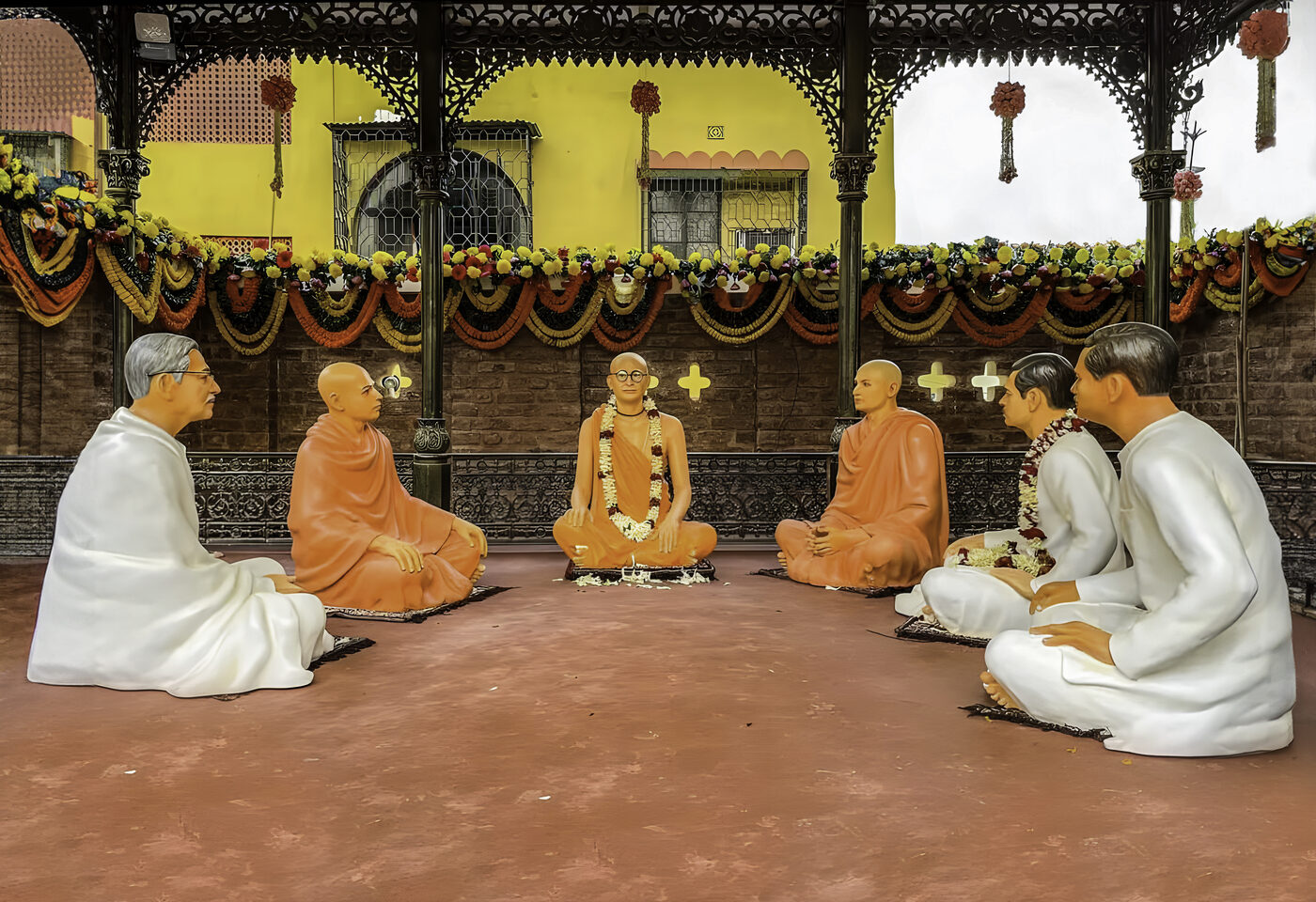
In 1922, a young Calcutta businessman named Abhay Charan De was brought, unwillingly, to a rooftop meeting with a sadhu he had no particular interest in seeing. Abhay and the friend who dragged him there had not yet finished offering their obeisances when Srila Bhaktisiddhanta Sarasvati Thakura spoke first: "You are an educated young man. Why don't you take the message of Chaitanya Mahaprabhu and spread it in English?" That story is told in full, from Abhay's side, on Srila Prabhupada's own pages: Meeting His Spiritual Master and The Order to Preach in English. This page tells the same story from the other side. It explains what in Bhaktisiddhanta's own mission led him to make this appeal to a stranger. It also shows how the relationship he began that evening grew over the fifteen years of life that remained to him.
A Question Bhaktisiddhanta Had Been Asking for Years #
By 1922, Bhaktisiddhanta had spent more than a decade preparing for exactly the kind of moment this meeting was. From his father, Bhaktivinoda Thakura, he had inherited a conviction that Chaitanya Mahaprabhu's teaching belonged to the whole world, not to Bengal alone. He had also received a specific instruction to make printing and preaching, not solitary practice, the main work of his mission. He had also inherited his father's confidence about the educated, English-speaking Bengali middle class, the bhadralok, into which Bhaktisiddhanta himself had been born. This class was not to be avoided by a serious Vaishnava mission. It was to be actively recruited, because its members alone had the language and the education to carry Krishna consciousness past India's borders. In Bhaktisiddhanta's eyes, Abhay Charan De was exactly the kind of person this effort had to reach. He was a college-educated young man who knew English and moved in nationalist and business circles. That evening he was dressed in the white khadi of a Gandhi follower. Bhaktisiddhanta's opening words were not casual talk before the real conversation. They were the same message he had been preparing and repeating, in one form or another, since he took over his father's press.
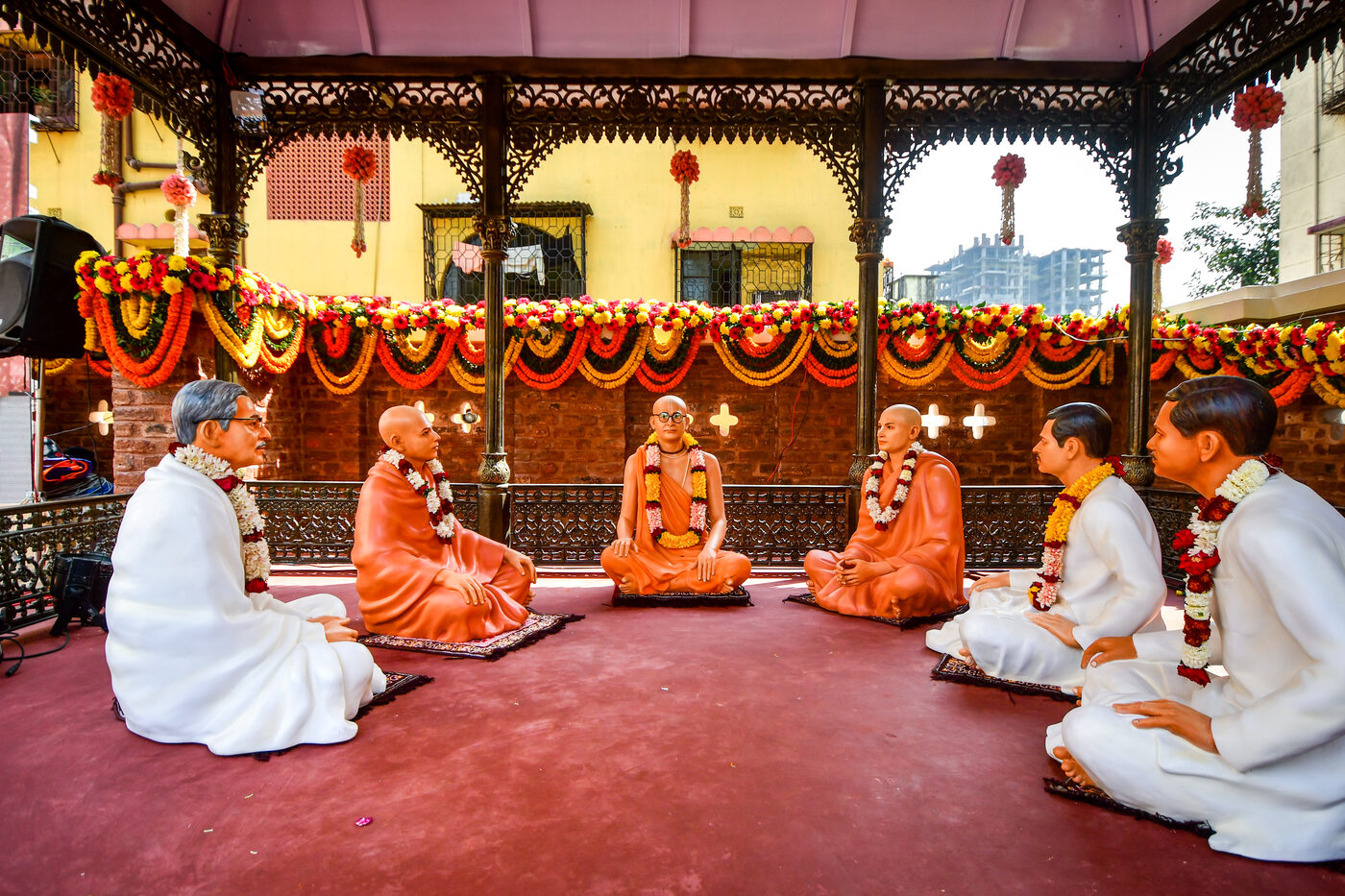
An Answer That Revealed the Whole Man #
Abhay did not accept this instruction quietly. He raised the usual nationalist objection of the day. A nation ruled by others, he argued, had no right to export its culture until it had won its own political freedom. Bhaktisiddhanta replied partly in English and partly in Bengali. He did not dispute the facts of the argument. He set the argument aside. He said that Krishna consciousness addressed the eternal position of the soul, and that this truth did not wait for the outcome of any nation's politics. He added that to make one's own country, instead of one's relationship with God, the object of highest devotion was itself a subtle illusion. Vaishnava biographers record that Abhay left that rooftop meeting more than two hours after it began. He told his friend that the message of Chaitanya Mahaprabhu was "in the hands of a very expert person," and he later said that he had accepted Bhaktisiddhanta as his guru in his heart that same evening. But eleven years would pass before any formal ceremony confirmed it.
A Long Gap, Then a Steady Return #
After this came years of near silence, not immediate discipleship. Abhay built a pharmaceutical business in Allahabad, and Bhaktisiddhanta spread the Gaudiya Math across India and, more and more, abroad. Contact began again only in January 1928. A Gaudiya Math sannyasi arrived unannounced in Allahabad, looking for support for a new center there. Abhay recognized him from his earlier short contact with the Math in Calcutta, and he became one of the center's steadiest local supporters. In October 1932, Bhaktisiddhanta led several hundred disciples on a month-long parikrama around Vrindavan. Abhay traveled from Allahabad to join the pilgrimage for one of its days, at Kosi. He sat listening with full attention as Bhaktisiddhanta spoke for hours. In this way, after a decade of only indirect contact, he was again in direct contact with his future guru. On this occasion Bhaktisiddhanta noticed him in the crowd and remarked simply, "He likes to hear. He does not go away."
Formal Initiation, 1933 #
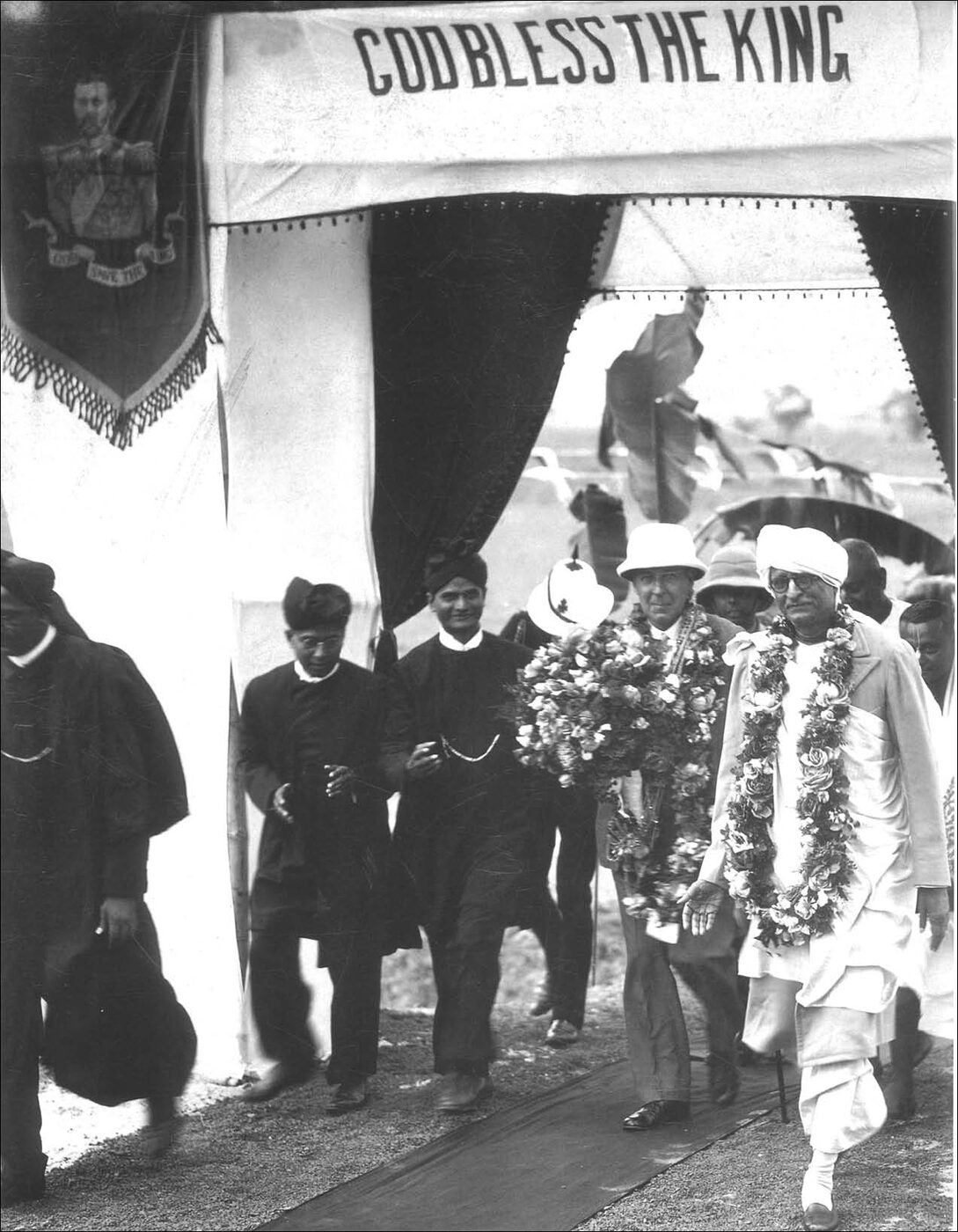
The following November, the Allahabad Gaudiya Math held a ceremony to lay the cornerstone of a permanent temple. Bhaktisiddhanta presided, and the governor of the United Provinces was the guest of honor. Abhay learned that Bhaktisiddhanta would also be giving initiations that day, and he asked to be included. He received first initiation into chanting. Unusually, on the same occasion he also received the sacred thread of second initiation. This was a sign of trust that Bhaktisiddhanta did not give as a matter of course. He gave Abhay the name Abhay Charanaravinda, "Abhay whose shelter is the lotus feet of Krishna."
Print Books #
At the end of 1936, Bhaktisiddhanta and his disciple were walking together at Radha-kunda near Vrindavan. Bhaktisiddhanta told him how troubled he was by quarrels among senior Gaudiya Math leaders in Calcutta. They were fighting over control of a newly built temple, and he feared the dispute would go on after he was gone. "It would be better," he said, "to take the marble from the walls and secure money. If I could do this and print books, that would be better." Then, turning to Abhay directly, he gave the instruction that would shape the rest of Abhay's life: "If you ever get money, print books." More than two decades would pass before Abhay, by then Srila Prabhupada, had the means to carry it out on a large scale. But he said afterward that in that moment the words entered his life permanently.
A Final Letter #
By December 1936, Bhaktisiddhanta's health had failed seriously. Abhay was busy with business in Bombay. He knew that most of his godbrothers were serving their guru directly as renunciants, while he was still a householder. So he wrote to ask whether there was some particular service he could do. Bhaktisiddhanta's reply is dated 3 December 1936, and it is among the last letters he wrote to any disciple. In it he returned to the same instruction he had given on that Calcutta rooftop fourteen years earlier: "I am fully confident that you can explain in English our thoughts and arguments to the people who are not conversant with the languages of the other members... I have every hope that you can turn yourself into a very good English preacher." Bhaktisiddhanta Sarasvati passed away less than a month later, on 1 January 1937. He had begun with this instruction as a stranger on a rooftop, and he ended with it as a dying guru writing to a trusted disciple. The instruction itself never changed. What remained to be seen was how completely Srila Prabhupada would fulfill it, decades later.
Chapter 8
Final Years and Disappearance
What Bhaktisiddhanta Sarasvati had built by 1937, the succession crisis that followed him, and his legacy through ISKCON
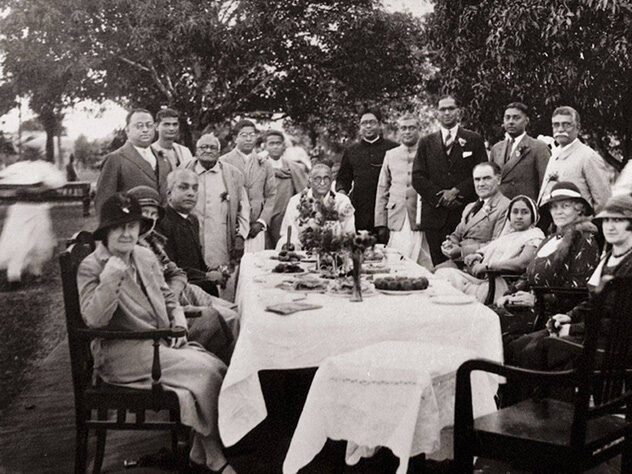
By the mid-1930s, Srila Bhaktisiddhanta Sarasvati Thakura had turned a single rented room in Calcutta, opened in 1918, into a movement with a presence across India and beyond. His health, meanwhile, was failing. He continued directing the Gaudiya Math's affairs and corresponding with disciples almost to the end, and died in Calcutta in the early hours of 1 January 1937, at the age of sixty-two.
| Died | 1 January 1937, Calcutta, Bengal Presidency, age 62 |
| Gaudiya Math centers founded | 64 in India, 3 abroad (London, Berlin, Rangoon) |
| Periodicals published | 7, in Bengali, English, Hindi, Assamese, and Odia |
| Sannyasa disciples initiated | 25 |
| Final instruction on governance | A twelve-man governing body to jointly manage the mission |
| Direct spiritual line | To A.C. Bhaktivedanta Swami Prabhupada, founder of ISKCON (1966) |
What He Left Behind #
Bhaktisiddhanta founded his first center in 1918 and died nineteen years later. In those years he established sixty-four Gaudiya Math centers across India. They were in Nabadwip, Mayapur, Calcutta, Mymensingh, Chittagong, Puri, Madras, Delhi, Varanasi, and Vrindavan, and in dozens of other towns. He also established three centers abroad, in London, Berlin, and Rangoon. His presses had produced periodicals in seven languages and a large body of Bengali Vaishnava literature. Much of it was his own translation and commentary on works such as the Chaitanya Charitamrita. He had personally initiated twenty-five disciples into sannyasa. This was the renounced order he had revived for Gaudiya Vaishnavism after it had been unused for centuries. He had also drawn a wider circle of educated, often wealthy followers into his mission. Scholars have since described this mission as the most powerful reform movement within Bengali Vaishnavism in its time.
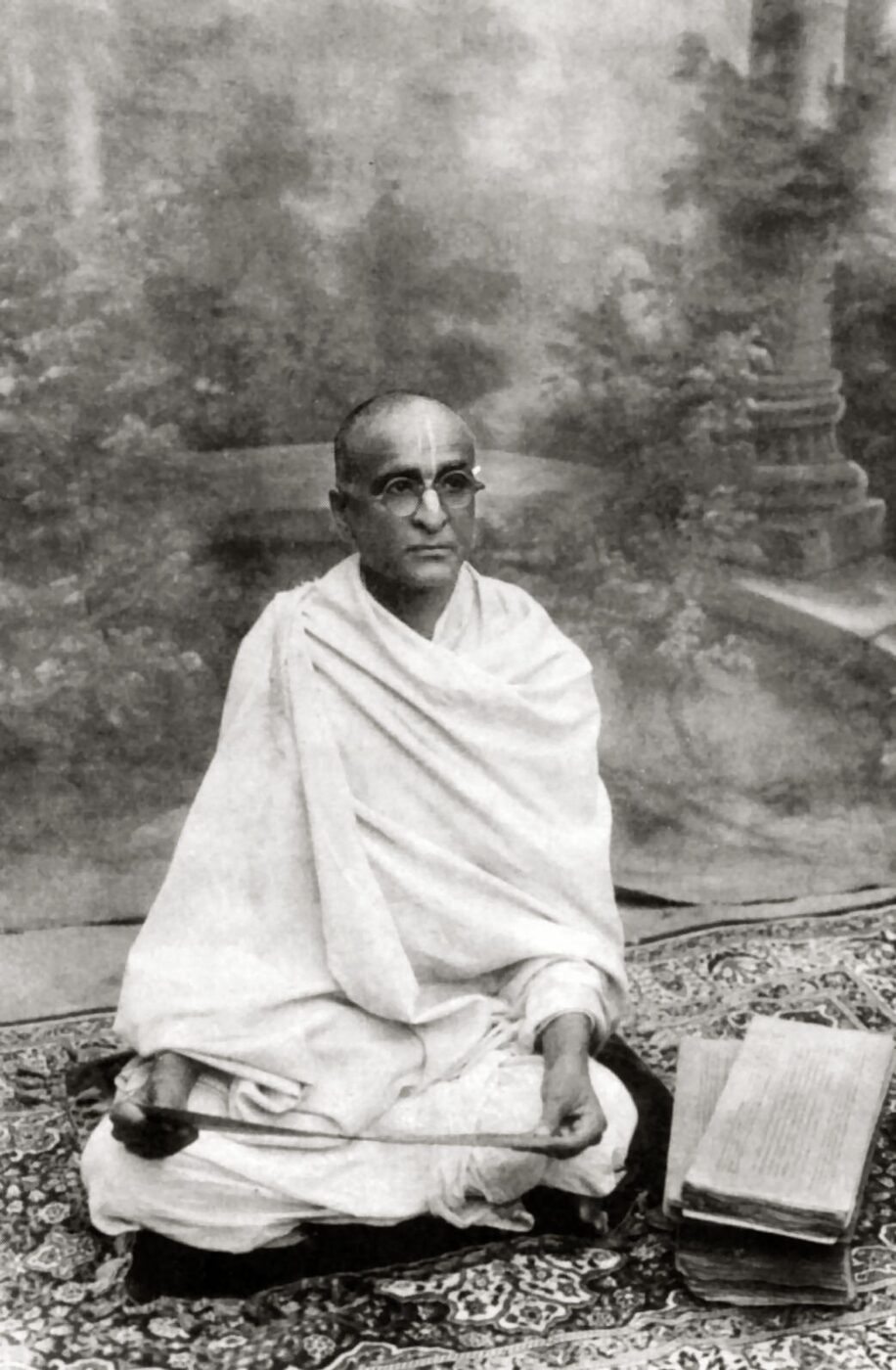
Final Days #
In October 1936 Bhaktisiddhanta went to Jagannatha Puri, where his final illness first became clear. There, at the Chatak-parvata, he observed the Appearance Day of Madhvacharya. This place is considered non-different from Giri-Govardhana. In his own final days there, he was heard again and again softly reciting verses of Rupa Gosvami and Raghunatha Dasa Gosvami addressed to Govardhana Hill: "Oh Govardhana, please fulfill my desire," and "Oh Govardhana, please give me a dwelling place on the banks of the pond nearby You." To his disciples he said plainly, "You all take to sincere Hari-bhajana. There are not many more days." He left Puri for Calcutta on 6 December 1936.
On the morning of 31 December, Bhaktisiddhanta asked one disciple to sing Sri Rupa Manjari by Narottama Dasa Thakura and another to sing the Shikshashtaka. He also asked that the Vaishnava Manjusha be finished and published. This was the encyclopedia of Vaishnava vocabulary that he had spent decades compiling. Among his last statements to his assembled disciples were, "Love and rapture, both should have the same end in view. Thakura Narottama lived on the principles of Rupa-Raghunatha. It is good to follow that path," and, to all present, "Please accept my blessings to you all, present and absent. Please bear in mind, our sole duty and religion is to spread and propagate service to the Lord and His devotees." Vaishnava accounts describe Bhaktisiddhanta spending his last days reading the Chaitanya Charitamrita and chanting on his beads. They say he refused medical treatment and made this request: "Simply chant Hare Krishna, that's all." He did not name a single successor to head the Gaudiya Math. Instead, he specifically instructed that its affairs be managed by a twelve-man governing body chosen from among the senior disciples. This arrangement was similar in spirit to the Governing Body Commission his own disciple Prabhupada would later establish for ISKCON. He passed from this world chanting the name of Krishna at about 5:30 in the morning on Thursday, 1 January 1937.
After his disappearance, his body was worshipped with scented oil, flowers, and sandalwood paste. Then it was carried in a great sankirtana procession to Sealdah railway station in Calcutta, and from there onward to Sridham Mayapur. Thousands gathered along the way for a final darshan. He was brought in turn to the Yogapitha, to Sri Shrivasa-angana, and finally to Vrajapattana, the place of his years of solitary bhajana. There he was laid to rest before the samadhi of his own guru, Gaura Kishora Dasa Babaji, on the banks of Radha-kunda, while devotees kept up an all-night kirtana.
The Crisis That Followed #
Bhaktisiddhanta was confident that qualified leaders would come forward naturally, because of their personal merit and not by appointment. But this confidence did not hold up against the practical work of running a large institution and its property. Within weeks of his death, a dispute broke out among his senior disciples over control of the mission and its assets. It hardened into rival groups and legal cases. The united Gaudiya Math first split into two rival institutions. Over the following decades it broke up further into a number of smaller independent groups, and each of them traces its authority back to Bhaktisiddhanta. This history is a recorded part of the Gaudiya Math's story. It is not a matter for this page to settle. So it is reported only briefly, without taking a side in disputes that were already decades old.
Legacy #
The breaking up of the institution did not undo what Bhaktisiddhanta had built into it. Scholars studying the period have compared the Gaudiya Math's reach and ambition to Swami Vivekananda's Ramakrishna Mission. In that era the impersonalist reading of Sanatana Dharma philosophy was dominant, and the Gaudiya Math challenged it. This challenge left a lasting mark on how Gaudiya Vaishnavism was understood in India. Through the Math's small early efforts in London and Berlin, it also left a mark on how Gaudiya Vaishnavism was understood in the West. Today the wider Gaudiya Math tradition that Bhaktisiddhanta founded has various independent branches. Together they are estimated to include more than forty institutions and hundreds of centers worldwide. In November 2023, UNESCO listed the 150th anniversary of his birth among the anniversaries it is associated with in 2024-2025. India put forward this proposal, with the backing of several other member states. This shows how far his reputation has traveled since 1937, not only as a religious teacher but also as a philosopher and social reformer.
But the clearest line from Bhaktisiddhanta's own work runs through one of his last disciples, who was also one of the least prominent at the time. This was A.C. Bhaktivedanta Swami. In 1966 he founded the International Society for Krishna Consciousness in New York. He carried the same teaching that Bhaktisiddhanta had asked him to spread in English on a Calcutta rooftop in 1922, and he carried it to a scale that neither man could have imagined in 1937. Asked once, years later, what he could say about his own guru, Srila Prabhupada answered simply, "What can I say? He was a Vaikuntha man!" The full guru-parampara connecting Bhaktisiddhanta, his disciple, and the tradition both served is set out on the sampradaya page.
Closing
Songs in the Vaishnava Song Book #
The Vaishnava Song Book carries 2 songs attributed to Srila Bhaktisiddhanta Sarasvati Thakura. See the full author page here.