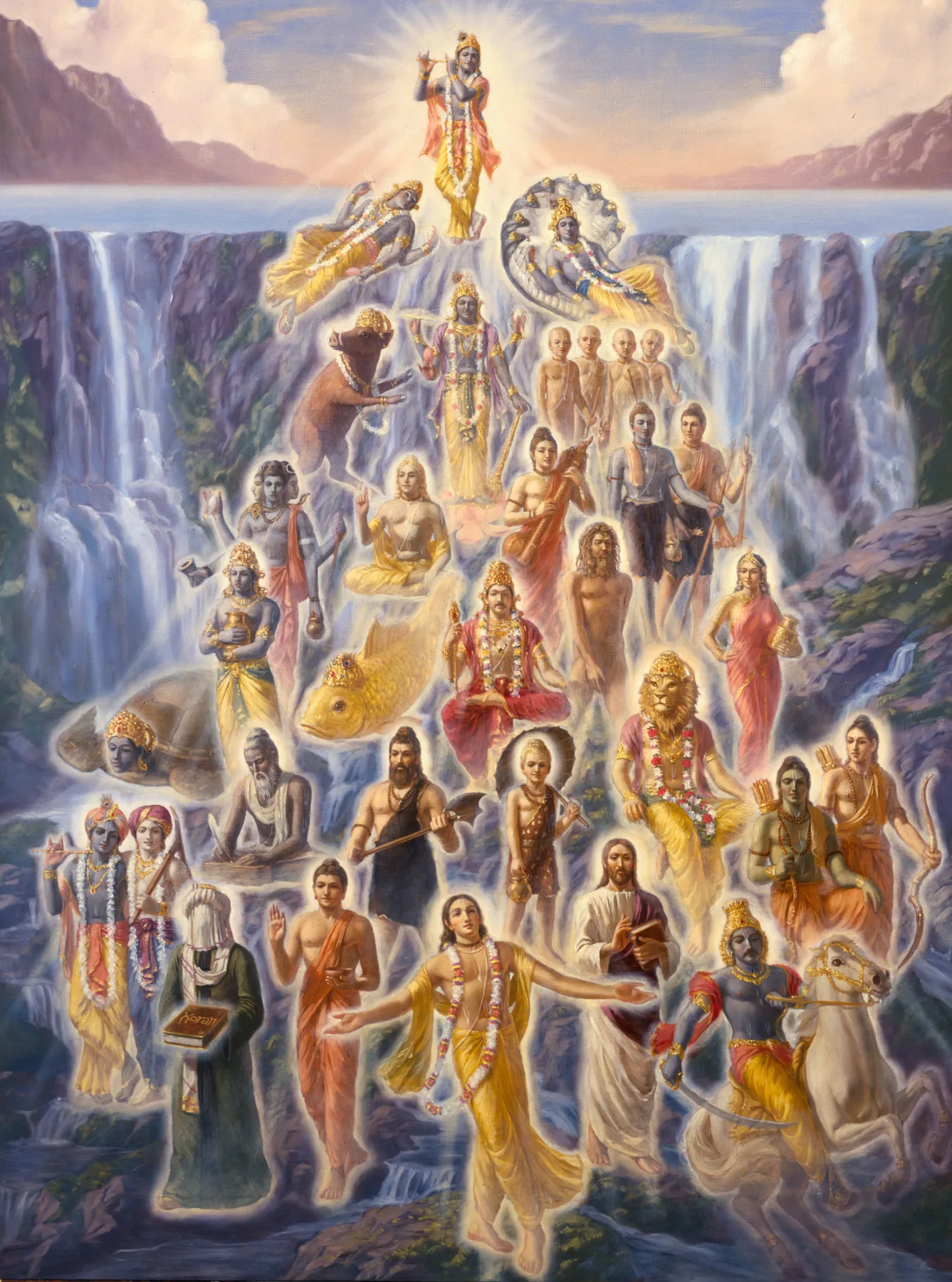
जो पाठक ब्रह्म-संहिता की साक्षी या श्रीमद्भागवतम् के प्रत्यक्ष कथन से पहले से परिचित है, वह स्वाभाविक रूप से एक प्रश्न पूछ सकता है। गौड़ीय वैष्णव सम्प्रदाय कृष्ण को केन्द्र में रखता है। क्या इसका अर्थ यह है कि वह विष्णु और नारायण की उस उपासना को नकारता है, जो बाकी पूरी वैष्णव परम्परा में प्रचलित है? ऐसा नहीं है। गौड़ीय धर्मशास्त्र ने सदा स्पष्ट रूप से, बिना प्रश्न को टाले, समझाया है कि ऐसा क्यों नहीं है। इस व्याख्या का मुख्य तकनीकी शब्द है विष्णु-तत्त्व, अर्थात् भगवान के अपने प्रत्यक्ष, व्यक्तिगत विस्तारों की श्रेणी। यह जीव-तत्त्व से अलग है। जीव-तत्त्व वह श्रेणी है, जिसमें हर व्यक्तिगत आत्मा आती है, चाहे वह कितनी भी उन्नत क्यों न हो।
स्वयं कृष्ण, तथा अवतारों के रूप में उनके विस्तार #
ब्रह्म-संहिता इस सम्बन्ध को एक ही श्लोक में बताती है। संक्षेप में यह श्लोक कहता है, "उनके व्यक्त्यंश अवतारों के रूप में, यथा राम आदि, वैकुण्ठ से प्रकट होते हैं और उनका अपना रूप कृष्ण इस लोक में व्रज सहित गोलोक से प्रकट होता है," और इसका पूरा अनुवाद है, "मैं गोविन्द की उपासना करता हूँ, वह आदि भगवान, जिन्होंने स्वयं को व्यक्तिगत रूप से कृष्ण के रूप में तथा राम, नृसिंह, वामन आदि के रूप में इस लोक में विभिन्न अवतारों के रूप में अपने व्यक्त्यंशों के रूप में प्रकट किया" (ब्रह्म-संहिता 5.39)। यह भेद बिलकुल सटीक है। राम, नृसिंह, वामन और अन्य अवतारों को कला-नियमेन, अर्थात् "अंश के नियम से" प्रकट होने वाला बताया गया है। वे वास्तविक और पूर्ण रूप से दिव्य हैं, और पूरी उपासना के योग्य हैं। फिर भी वे अंश हैं, स्वयं मूल स्रोत नहीं। यही श्लोक उस स्रोत का नाम कृष्ण बताता है, जो स्वयं, अर्थात् स्वयम्, प्रकट होते हैं।
| विवरण | वर्णन |
|---|---|
| विष्णु-तत्त्व | भगवान के अपने प्रत्यक्ष, व्यक्तिगत विस्तार: विष्णु, नारायण, राम, नृसिंह, इत्यादि |
| जीव-तत्त्व | वह श्रेणी जिसमें ब्रह्मा तथा शिव सहित हर व्यक्तिगत आत्मा आती है |
| कृष्ण से सम्बन्ध | विष्णु-तत्त्व रूप कृष्ण के अपने विस्तार हैं, दिव्यता में समान, प्राकट्य में भिन्न |
| मुख्य उपमा (ब्रह्म-संहिता 5.46) | एक मोमबत्ती की ज्योति से जलाई गई दूसरी ज्योति: गुण में समान, स्थान में भिन्न |
| महाविष्णु (ब्रह्म-संहिता 5.47-48) | असीमित भौतिक ब्रह्माण्डों का स्रोत, स्वयं गोविन्द के "अंश के अंश" के रूप में वर्णित |
मोमबत्ती और कारण-सागर #
यह बात बिना विरोधाभास के कैसे सम्भव है, इसे दिखाने के लिए ब्रह्म-संहिता स्वयं एक मुख्य उदाहरण देती है। "एक मोमबत्ती की ज्योति जब अन्य मोमबत्तियों को प्रदान की जाती है, यद्यपि वह उनमें पृथक् रूप से जलती है, अपने गुण में समान रहती है। मैं आदि भगवान गोविन्द की आराधना करता हूँ जो अपने विभिन्न प्राकट्यों में समान रूप से इसी सचल रीति से स्वयं को प्रदर्शित करते हैं" (ब्रह्म-संहिता 5.46)। जो मोमबत्ती दूसरी मोमबत्ती को जलाती है, उसमें कुछ भी नष्ट या कम नहीं होता। दूसरी मोमबत्ती की ज्योति भी किसी प्रकार कम सच्ची अग्नि नहीं है। इस विवरण के अनुसार विष्णु-तत्त्व विस्तार भी इसी प्रकार होता है। हर विस्तार को पूर्ण दिव्यता मिलती है, और वह न बँटती है, न घटती है।
इसके बाद ग्रन्थ इसी सिद्धान्त को पूरे ब्रह्माण्ड के स्तर पर लागू करता है। महाविष्णु भगवान का वह रूप हैं, जो कारण-सागर में शयन करते हैं। जब वे श्वास छोड़ते हैं, तो उनसे सम्पूर्ण ब्रह्माण्ड निकलते हैं। ब्रह्म-संहिता उनका बहुत सटीक वर्णन करती है: "मैं आदि भगवान गोविन्द की आराधना करता हूँ जो अपना महान व्यक्त्यंश स्वरूप धारण करके... अपने रोमकूपों में अनन्त लोक धारण करते हुए कारण-सागर में शयन करते हुए सृजनात्मक निद्रा का आनन्द लेते हैं" (ब्रह्म-संहिता 5.47)। इसके बाद के श्लोक आगे कहते हैं: "ब्रह्मा तथा भौतिक लोकों के अन्य स्वामी, महाविष्णु के रोमकूपों से प्रकट होकर, उनके एक श्वास-निःश्वास की अवधि तक जीवित रहते हैं। मैं आदि भगवान गोविन्द की आराधना करता हूँ जिनके व्यक्त्यंश स्वरूप का महाविष्णु अंश का अंश हैं" (ब्रह्म-संहिता 5.48)। महाविष्णु भगवान का वही रूप हैं, जो असीमित भौतिक ब्रह्माण्डों को उत्पन्न करते हैं, और हर ब्रह्माण्ड का अपना ब्रह्मा होता है। फिर भी यहाँ उन्हें स्पष्ट रूप से गोविन्द का कला-विशेष, अर्थात् एक विशेष अंश का अंश, कहा गया है। यह बहुत बड़ा दावा है। सम्पूर्ण ब्रह्माण्ड महाविष्णु की एक श्वास की अवधि में ही जन्म लेते और नष्ट होते हैं। फिर भी, ब्रह्म-संहिता के अपने विवरण के अनुसार, महाविष्णु भी स्वयं मूल स्रोत नहीं हैं।
स्वयं ब्रह्मा की स्वीकारोक्ति भी इसी बात से मेल खाती है #
यही सिद्धान्त उस श्लोक को भी समझाता है, जिसकी चर्चा भागवत के प्रत्यक्ष कथन वाले पृष्ठ पर पहले की जा चुकी है। यह ब्रह्म-विमोहन-लीला के बाद कृष्ण के सामने ब्रह्मा की स्वीकारोक्ति है: "भगवान नारायण आपका ही विस्तार हैं, और उन्हें नारायण इसलिए कहा जाता है क्योंकि वे ब्रह्माण्ड के आदि जल के उत्पादक स्रोत हैं। वे वास्तविक हैं, आपकी मायाजनित उपज नहीं" (श्रीमद्भागवतम् 10.14.14)। इसमें "आपकी मायाजनित उपज नहीं" वाक्यांश उतना ही महत्त्वपूर्ण है, जितना नारायण को कृष्ण का विस्तार बताना। गौड़ीय धर्मशास्त्र स्पष्ट रूप से सिखाता है कि विष्णु-तत्त्व विस्तार उन मिथ्या छवियों जैसे नहीं हैं, जो भौतिक माया उत्पन्न करती है। वे कोई प्रक्षेपण, केवल आभास या कम स्तर के प्रतिबिम्ब नहीं हैं। वे पूर्ण रूप से वास्तविक और पूर्ण रूप से दिव्य व्यक्ति हैं। बस वे मूल स्रोत नहीं हैं।
विष्णु-उपासना का खण्डन नहीं #
इसी सिद्धान्त के कारण गौड़ीय धर्मशास्त्र विष्णु या नारायण की उस उपासना को, जो पूरे वैष्णव जगत में प्रचलित है, न गलत मानता है और न ही किसी निचले स्तर की। श्रील मध्वाचार्य ने विष्णु-उपासना पर केन्द्रित एक पूरी परम्परा स्थापित की, जो आज भी उडुपी में फल-फूल रही है। यह गौड़ीय परम्परा अपनी गुरु-परम्परा को मध्वाचार्य की परम्परा से होकर जोड़ती है, और इसमें कोई विरोधाभास नहीं मानती। मध्वाचार्य के अपने पृष्ठ पर इस सम्बन्ध पर विस्तार से विचार किया गया है। गौड़ीय धर्मशास्त्र कुछ भी घटाता नहीं है। वह जो जोड़ता है, वह उद्गम के विषय में एक दावा है। यह दावा कृष्ण के बारे में है, विशेष रूप से वृन्दावन में उनके द्विभुज रूप के बारे में। विष्णु-तत्त्व रूपों में वे केवल अनेक समान विस्तारों में से एक नहीं हैं। वे वह स्रोत हैं, जिससे यह पूरी श्रेणी प्रकट होती है। यहाँ विचार किया गया हर श्लोक विस्तार का वर्णन करता है, कभी न्यूनता या विरोधाभास का नहीं। गौड़ीय वैष्णव सम्प्रदाय ने सदा इसी बात पर बल दिया है कि इस सम्बन्ध को इसी प्रकार समझा जाना चाहिए।
यह सिद्धान्त क्यों स्पष्ट करना आवश्यक था, मान लेना नहीं #
मान लीजिए, कोई कृष्ण-केन्द्रित धर्मशास्त्र विष्णु और नारायण के स्थान को इतनी सटीकता से न समझा पाता। तब उसमें एक वास्तविक कमी रह जाती। या तो उसका अर्थ यह निकलता कि वैष्णव इतिहास के अधिकांश भाग में भगवान के गलत रूप की उपासना हुई, या फिर वह अपने ही शास्त्रीय स्रोतों का खण्डन करता। इनमें से कई स्रोत, स्वयं श्रीमद्भागवतम् भी, विष्णु और नारायण पर बहुत अधिक ध्यान देते हैं। विष्णु-तत्त्व का सिद्धान्त किसी भी सत्य को छोड़े बिना इस कमी को दूर करता है। कृष्ण की सर्वोच्चता बनी रहती है, और उसके साथ विष्णु और नारायण की पूर्ण दिव्यता भी बनी रहती है। उनका सम्बन्ध स्रोत और विस्तार का है, प्रतिद्वन्द्वियों का नहीं। बिना किसी हानि के विस्तार का यही ढाँचा, बिलकुल अलग प्रसंग में, श्री चैतन्य महाप्रभु: स्वयं कृष्ण पर फिर दिखाई देता है। वहाँ यह समझा जाता है कि कृष्ण जब भी प्रकट होते हैं, तब उनके पूर्ण रूपों के साथ-साथ उनके अपने निजी पार्षद भी उनके साथ आते हैं।
