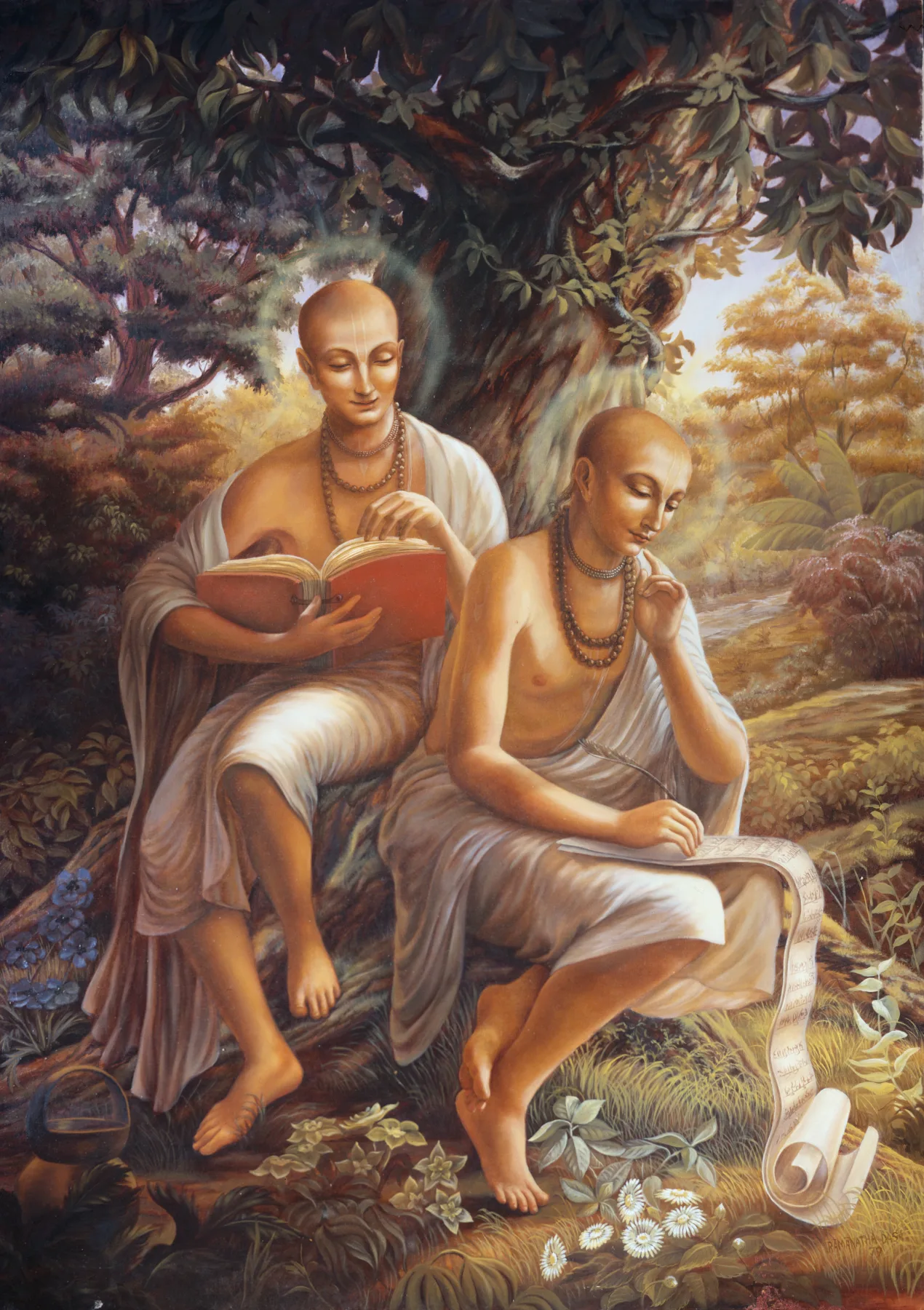
अब तक इन पृष्ठों पर जाँचा गया हर प्रमाण एक उद्धरण रहा है: ब्रह्म-संहिता का एक श्लोक, गीता का, भागवत का, किसी उपनिषद का। श्री चैतन्य महाप्रभु ने प्रयाग में रूप को और वाराणसी में सनातन गोस्वामी को शिक्षा देकर दो भागों वाला एक मिशन दिया। उन्हें कृष्ण की वृन्दावन-लीलाओं के लुप्त स्थानों को फिर से खोजना था। साथ ही उन्हें वह धार्मिक साहित्य लिखना था, जो इस आन्दोलन को उसका दार्शनिक आधार देता। मिशन के इस दूसरे भाग से एक ही पीढ़ी के भीतर औपचारिक दर्शन का एक बड़ा भण्डार तैयार हुआ। यह लगभग पूरी तरह शास्त्र के उद्धरणों पर बना था, अपने निजी कथनों पर नहीं। ये पृष्ठ भी ठीक यही पद्धति अपनाते हैं।
जीव गोस्वामी का षट्-सन्दर्भ #
श्रील जीव गोस्वामी रूप और सनातन के भतीजे थे और षड्गोस्वामियों में सबसे छोटे थे। उन्हें एक ऐसी परम्परा विरासत में मिली, जिसके पास पहले से अपनी भक्ति-साधना, फिर से खोजे गए तीर्थ-स्थान और पहले संकलित शास्त्र थे। उसमें अब भी एक ऐसे ग्रन्थ की कमी थी, जो प्रशिक्षित वेदान्तियों, नैयायिकों और विरोधी वैष्णव सम्प्रदायों के सामने तर्क के बदले तर्क देकर टिक सके। जीव गोस्वामी का उत्तर था षट्-सन्दर्भ। यह एक के बाद एक लिखे गए छह ग्रन्थ हैं, जिन्हें बाद में भागवत-सन्दर्भ के नाम से एक साथ रखा गया। तत्त्व-सन्दर्भ बताता है कि कौन-से शास्त्र विश्वसनीय प्रमाण माने जाते हैं। भगवत्-सन्दर्भ और परमात्म-सन्दर्भ भगवान के स्वरूप और परमात्मा के रूप में उनकी उपस्थिति को समझाते हैं। कृष्ण-सन्दर्भ चौथा और केन्द्रीय ग्रन्थ है। भक्ति-सन्दर्भ और प्रीति-सन्दर्भ सिद्धान्त से साधना की ओर, और फिर उसके परम लक्ष्य की ओर ले जाते हैं।
| विवरण | वर्णन |
|---|---|
| पूर्ण ग्रन्थ | षट्-सन्दर्भ (भागवत-सन्दर्भ), छह खण्ड, श्रील जीव गोस्वामी द्वारा |
| चतुर्थ खण्ड | कृष्ण-सन्दर्भ: भागवत के अपने ही श्लोकों से नारायण पर कृष्ण की सर्वोच्चता का तर्क प्रस्तुत करता है |
| पद्धति | स्वतंत्र चिन्तन के स्थान पर लगभग पूर्णतः शास्त्रीय उद्धरण से निर्मित तर्क |
| आधारभूत श्लोक | श्रीमद्भागवतम् 1.2.11: ब्रह्म, परमात्मा तथा भगवान एक ही सत्य की तीन अनुभूतियों के रूप में |
| पूरक ग्रन्थ | श्री रूप गोस्वामी का भक्ति-रसामृत-सिन्धु, इस विषय पर कि माधुर्य-रस भक्ति का सबसे सम्पूर्ण प्राकट्य क्यों है |
कृष्ण-सन्दर्भ वास्तव में क्या तर्क करता है #
चौथा सन्दर्भ एक ही, स्पष्ट रूप से कहे गए दावे को समर्पित है। वह दावा यह है कि कृष्ण ही भगवान् स्वयम्, अर्थात् मूल पुरुष हैं, भगवान का कोई और रूप नहीं। विष्णु, नारायण और अन्य सभी दिव्य विस्तार तथा अवतार उन्हीं से प्रकट होते हैं। जीव गोस्वामी इसे केवल घोषित नहीं करते। वे इसके समर्थन में भागवत के अपने ही श्लोक एकत्र करते हैं। इनमें श्रीमद्भागवतम् 1.3.28 और श्रीभा. 10.14.14 में ब्रह्मा की अपनी स्वीकारोक्ति भी है। वे वृन्दावन और गोलोक की नित्य प्रकृति को विस्तार से समझाते हैं, और श्रीधर स्वामी सहित पहले के टीकाकारों का समर्थन करते हैं। वे उन आपत्तियों का भी एक-एक करके उत्तर देते हैं, जो नारायण को सर्वोच्च मानने वाला कोई विरोधी वेदान्ती उठा सकता है। कृष्णदास कविराज गोस्वामी ने श्री चैतन्य-चरितामृत में इस उपलब्धि का सार सीधे शब्दों में कहा: "श्री भागवत-सन्दर्भ में, श्रील जीव गोस्वामी ने भक्ति के परम लक्ष्य के विषय में निर्णायक रूप से लिखा है।" इस चौथे ग्रन्थ में जीव गोस्वामी उसी निर्णायक लेखन को विशेष रूप से कृष्ण की अपनी स्थिति स्थापित करने में लगाते हैं।
जीव गोस्वामी के पहले के सन्दर्भ एक आधारभूत श्लोक पर टिके हैं। उसे सीधे उद्धृत करना उचित है, क्योंकि पूरा तर्क उसी पर बना है। श्रीमद्भागवतम् कहता है: "विद्वान परमार्थवेत्ता जो परम सत्य को जानते हैं वे इस अद्वैत सत्ता को ब्रह्म, परमात्मा अथवा भगवान कहते हैं" (श्रीमद्भागवतम् 1.2.11)। श्रील प्रभुपाद का तात्पर्य बताता है कि जीव गोस्वामी आगे जो तर्क प्रस्तुत करते हैं, उसके लिए इसका क्या अर्थ है। ये तीन अलग-अलग सत्य नहीं हैं। ये एक ही सत्य की अनुभूति की तीन गहराइयाँ हैं। तात्पर्य में भगवान को "परम सत्य का अन्तिम शब्द," परमात्मा को "आंशिक प्रतिनिधित्व," और निर्विशेष ब्रह्म को "वह चमकती हुई प्रभा... जैसे सूर्य-किरणें सूर्यदेव से हैं" कहा गया है। पहले यह दिखाना आवश्यक है कि इन तीनों स्वरूपों में भगवान ही सबसे पूर्ण हैं, कोई निचला या अधिक सीमित स्वरूप नहीं। तभी कृष्ण की भगवान के रूप में विशेष पहचान का कोई तर्क शुरू हो सकता है। इसी कारण जीव गोस्वामी के पहले के सन्दर्भ यह आधार तैयार करते हैं, और उसके बाद कृष्ण-सन्दर्भ अपना केन्द्रीय दावा करता है।
रूप गोस्वामी और 'क्यों' का प्रश्न #
व्यवस्थित तर्क यह बताता है कि कृष्ण कौन हैं। लेकिन केवल उससे एक बात स्पष्ट नहीं होती। यह परम्परा वैकुण्ठ के चतुर्भुज, ऐश्वर्यशाली नारायण को नहीं, बल्कि वृन्दावन के प्रेममय, लीलामय कृष्ण को उसी भगवान का सबसे पूर्ण प्राकट्य मानकर पूजती है। ऐसा क्यों? यह प्रश्न श्रील रूप गोस्वामी से जुड़ा है। उनका भक्ति-रसामृत-सिन्धु गौड़ीय वैष्णव सम्प्रदाय को भक्ति-रस की पूरी शब्दावली देता है। भक्ति-रस का अर्थ है वे अलग-अलग भाव या सम्बन्ध, जिनके द्वारा आत्मा भगवान से प्रेम कर सकती है। इनका क्रम शान्त (तटस्थ भाव) और दास्य (सेवकत्व) से शुरू होकर सख्य (मित्रता) और वात्सल्य (माता-पिता जैसा प्रेम) से होते हुए माधुर्य, अर्थात् दाम्पत्य प्रेम, तक जाता है। यह परम्परा माधुर्य को प्रेम के आदान-प्रदान का सबसे पूर्ण रूप मानती है, क्योंकि इसमें इससे पहले के सभी सम्बन्धों के सारे गुण समाए हुए हैं। अपने ग्रन्थ के आरम्भ में रूप गोस्वामी एक ही छोटे श्लोक में लक्ष्य की परिभाषा देते हैं। अनन्य भक्ति सब भौतिक इच्छाओं से मुक्त होनी चाहिए। उसमें सकाम कर्म या दार्शनिक चिन्तन की बाधा नहीं होनी चाहिए। और वह अनुकूल भाव से, केवल कृष्ण के लिए ही की जानी चाहिए (भक्ति-रसामृत-सिन्धु 1.1.11, भगवद्गीता 11.55 पर श्रील प्रभुपाद के तात्पर्य में उद्धृत)।
इस परम्परा के अपने विवरण के अनुसार, माधुर्य को सबसे ऊँचा स्थान देने का अर्थ यह नहीं है कि ऐश्वर्य मिथ्या है या उपासना के योग्य नहीं है। वैकुण्ठ और नारायण का ऐश्वर्य पूरी तरह वास्तविक है, जैसा कि विष्णु-तत्त्व विस्तार पर समझाया गया है। असली कारण कुछ और है। विस्मय और श्रद्धा चाहे कितने भी सच्चे हों, वे उपासक और उपास्य के बीच स्वाभाविक रूप से कुछ दूरी बना देते हैं। घनिष्ठ प्रेम यह दूरी नहीं बनाता। वृन्दावन के ग्वालबाल, बछड़े और गोपियाँ नहीं जानते कि वे ब्रह्माण्ड के मूल कारण से बात कर रहे हैं। वे उन्हें केवल एक प्रिय सखा, पुत्र या प्रेमी के रूप में जानते हैं। रूप गोस्वामी का रस-विज्ञान मानता है कि ऐश्वर्य की यही विस्मृति प्रेम का वह सबसे पूर्ण और स्वाभाविक आदान-प्रदान सम्भव बनाती है, जो सर्वोच्च पुरुष को मिल सकता है।
दो पद्धतियाँ, एक निष्कर्ष #
यह प्रमाण यहाँ जाँचे गए बाकी सभी प्रमाणों से अपनी पद्धति में अलग है, अपने निष्कर्ष में नहीं। जीव गोस्वामी औपचारिक दार्शनिक तर्क द्वारा, श्लोक-दर-श्लोक, कृष्ण की सर्वोच्चता तक पहुँचते हैं। उनका तर्क एक प्रशिक्षित प्रतिपक्षी के लिए है। रूप गोस्वामी भक्ति-भाव और रस के विज्ञान द्वारा उसी लक्ष्य तक पहुँचते हैं। उनकी बात साधक के अपने हृदय के लिए है। गौड़ीय वैष्णव सम्प्रदाय ने इन्हें कभी एक-दूसरे के विरोधी मार्ग नहीं माना। दोनों मिलकर बताते हैं कि यह परम्परा कृष्ण के विषय में क्या दावा करती है। वे यह भी बताते हैं कि यह परम्परा उन्हें वृन्दावन के ग्वालबाल के विशेष और असाधारण रूप में ही क्यों पूजती है। यह परम्परा मानती है कि हाल के समय में यह उपासना अपने सबसे पूर्ण रूप में स्वयं श्री चैतन्य महाप्रभु में दिखाई दी।
