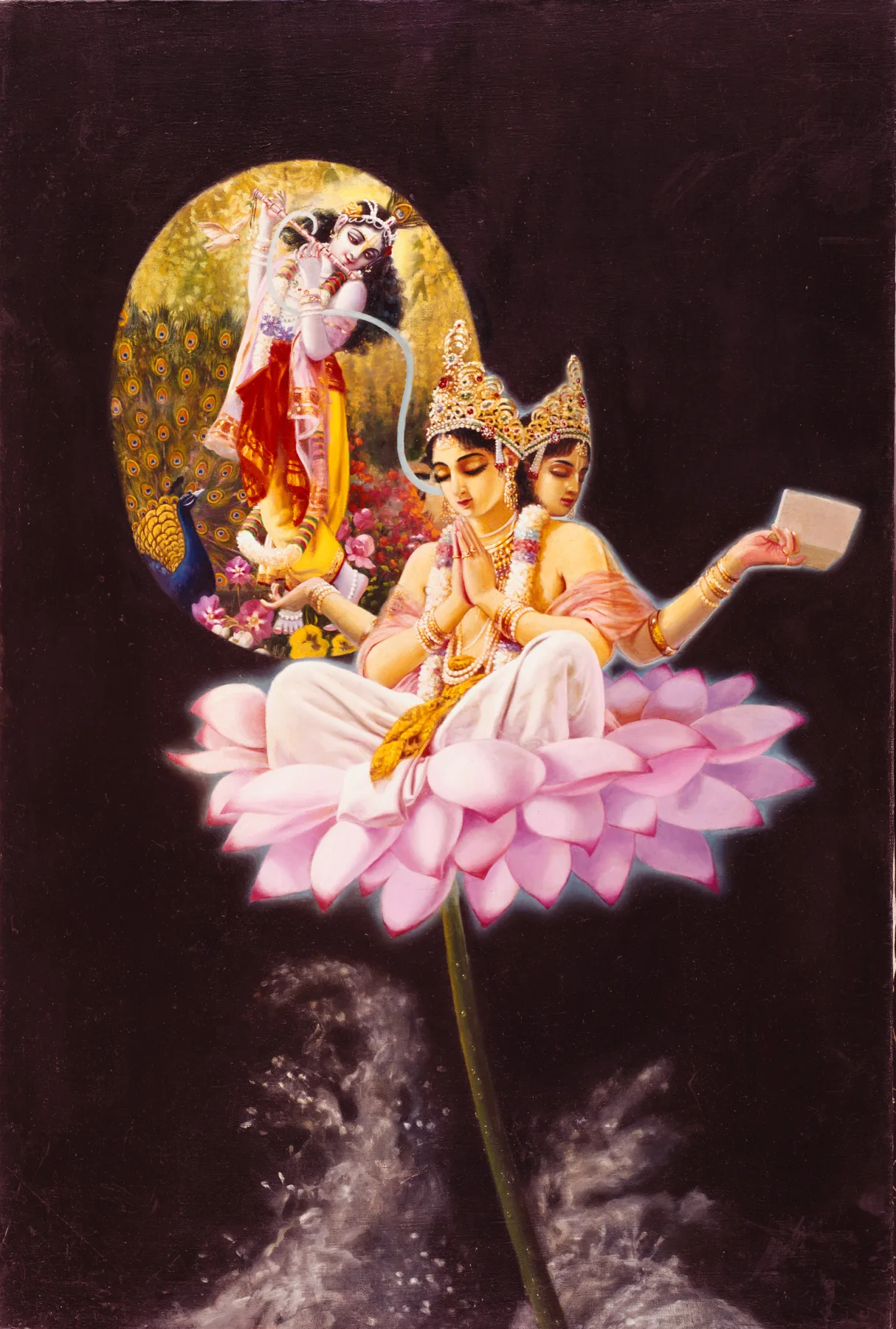
भगवान ब्रह्मा के अपने पृष्ठ पर यह कथा बताई गई है कि यह ग्रन्थ कैसे मिला। श्री चैतन्य महाप्रभु दक्षिण भारत की यात्रा कर रहे थे। तभी आदि-केशव के मन्दिर में उन्हें एक प्राचीन स्तोत्र का एकमात्र बचा हुआ अध्याय मिला, और उन्होंने उसे हाथ से लिखवाया। दक्षिण भारत यात्रा पृष्ठ पर भी इस खोज का वर्णन है। कृष्णदास कविराज गोस्वामी ने साफ़ कहा है कि परम सत्य के विषय में अन्तिम सिद्धान्त को इतनी स्पष्टता से बताने वाला कोई दूसरा शास्त्र नहीं है।
यह पृष्ठ उस खोज की कथा दोबारा नहीं बताता। यहाँ हम यह देखेंगे कि मिले हुए ग्रन्थ में वास्तव में क्या कहा गया है। ब्रह्म-संहिता ब्रह्मा की स्तुति का स्तोत्र नहीं है। यह कृष्ण के विषय में स्वयं ब्रह्मा की साक्षी है। और ब्रह्मा वही हैं, जिन्हें गुरु-परम्परा अपना प्रथम गुरु मानती है।
प्रारम्भिक श्लोक #
ब्रह्म-संहिता का पाँचवाँ अध्याय उस श्लोक से आरम्भ होता है, जिसे पूरी गौड़ीय वैष्णव परम्परा में सबसे अधिक उद्धृत किया जाता है। पूरा श्लोक इस प्रकार है: "गोविन्द नाम से प्रसिद्ध कृष्ण ही सर्वोच्च भगवान हैं। उनका शरीर नित्य, आनन्दमय एवं दिव्य है। वे सबके उद्गम हैं। उनका कोई अन्य उद्गम नहीं, और वे समस्त कारणों के आदि कारण हैं।"
इस एक श्लोक में पाँच अलग-अलग बातें कही गई हैं। गौड़ीय आचार्य इन्हें सदा एक साथ पढ़ते आए हैं। उनके लिए ये केवल प्रशंसा के शब्द नहीं, बल्कि एक जुड़ा हुआ तर्क हैं:
- कृष्ण को सर्वोच्च भगवान, सबका नियन्ता कहा गया है। उन्हें कोई नियन्त्रित नहीं करता।
- उनका शरीर सच्चिदानन्द है: नित्य, पूर्ण ज्ञान से युक्त, और पूर्ण आनन्द से युक्त। यह वैसा अस्थायी शरीर नहीं है, जैसा इस संसार में हर जीव धारण करता है।
- वे ही सबके उद्गम हैं।
- उनका अपना कोई उद्गम नहीं है।
- वे समस्त कारणों के कारण हैं: अनेक कारणों में से एक कारण नहीं, बल्कि वह कारण जो हर दूसरे कारण के पीछे है।
| विवरण | वर्णन |
|---|---|
| सन्दर्भ | ब्रह्म-संहिता, अध्याय 5, श्लोक 1 |
| वक्ता (परम्परा के अनुसार) | भगवान ब्रह्मा, सृष्टि के आरम्भ में अपनी अनुभूति प्रस्तुत करते हुए |
| मुख्य कथन | कृष्ण (गोविन्द) सर्वोच्च नियन्ता हैं, जिनका अपना कोई उद्गम नहीं है; वे समस्त कारणों के कारण हैं |
| फिर से किसने पाया | श्री चैतन्य महाप्रभु, दक्षिण भारत यात्रा, लगभग 1510 ई. |
| प्रथम अंग्रेज़ी अनुवाद | भक्तिसिद्धान्त सरस्वती ठाकुर, 1932, जीव गोस्वामी की टीका सहित |
इस श्लोक पर श्रील प्रभुपाद का अपना तात्पर्य इस बात को साफ़ शब्दों में कहता है। परमतत्त्व को कई नामों से जाना जाता है: निर्विशेष ब्रह्म-प्रभा, सबके हृदय में स्थित परमात्मा, विष्णु, ईश्वर। यह श्लोक बताता है कि ये सब एक ही व्यक्तिगत स्रोत से प्रकट होते हैं। जैसा प्रभुपाद कहते हैं, "अतः यह स्पष्ट है कि कृष्ण ही एकमात्र सर्वोच्च भगवान हैं।"
एक क्षण सोचिए कि यह बात कौन कह रहा है। सभी पारम्परिक विवरणों के अनुसार, ब्रह्मा इस ब्रह्माण्ड में किसी भी जीव को मिल सकने वाले सबसे शक्तिशाली पद पर हैं। अपने ही स्तोत्र में वे उस महिमा का कुछ अंश अपने लिए भी ले सकते थे। लेकिन इसके बदले वे किसी और को समस्त उद्गमों का उद्गम बताते हैं। वे हैं ग्वाल-बालक कृष्ण, जिनकी लीलाओं को यही परम्परा पूजनीय मानती है। भगवद्गीता 7.7 में कृष्ण स्वयं अपने शब्दों में यही बात कहते हैं। इस सम्बन्ध को भगवद्गीता में कृष्ण के अपने वचन पृष्ठ पर समझाया गया है।
कृष्ण का अपना धाम #
आगे के श्लोक किसी अमूर्त विचार का नहीं, बल्कि एक वास्तविक स्थान का वर्णन करते हैं। ब्रह्म-संहिता 5.2 कृष्ण के दिव्य धाम को गोकुल कहती है, "दिव्य लीलाओं का एक आध्यात्मिक स्थान," और उसे हज़ार पंखुड़ियों वाले एक कमल के रूप में दिखाती है। इस कमल के बीच में कृष्ण का अपना नित्य धाम है। श्लोक 29 में बताया गया है कि वहाँ गोविन्द गौओं की देखभाल करते हैं। उनके चारों ओर इच्छा पूरी करने वाले वृक्ष हैं, और लाखों गोपियाँ बड़े प्रेम और आदर से उनकी सेवा करती हैं। श्लोक 37 इससे भी अधिक स्पष्ट चित्र देता है। वहाँ गोलोक में वे राधा के साथ नित्य निवास करते हैं, जो "आह्लादिनी शक्ति की मूर्ति" हैं। राधा अपनी घनिष्ठ सखियों से घिरी रहती हैं।
जो परम्परा इन श्लोकों को संजोए हुए है, वह इन्हें कविता या रूपक नहीं मानती। वह इन्हें एक वास्तविक, नित्य, पूर्णतः व्यक्तिगत धाम का सीधा वर्णन मानती है। वह धाम पृथ्वी के किसी भी स्थान जितना ही वास्तविक है। बस उसे भौतिक इन्द्रियों से देखा या पाया नहीं जा सकता।
ब्रह्म का प्रकाश #
एक और श्लोक पर विशेष ध्यान देना चाहिए, क्योंकि इसकी बात सीधे उपनिषदों तक जाती है। वेदान्त साहित्य में जगह-जगह निर्विशेष ब्रह्म-प्रभा का वर्णन आता है। ब्रह्म-संहिता 5.40 उसके विषय में एक विशेष बात कहती है। यह ब्रह्म-प्रभा बिना किसी रूप या गुण का प्रकाश है। जो लोग वेदों को निर्विशेष दृष्टि से पढ़ते हैं, वे इसी प्रकाश को सबके केन्द्र में रखते हैं। यह श्लोक कहता है कि यह प्रकाश और कुछ नहीं, बल्कि स्वयं कृष्ण के दिव्य शरीर से निकलने वाली आभा है। श्लोक उसे "भौतिक ब्रह्माण्ड की अनन्त महिमाओं से पृथक्" कहता है, फिर भी अन्त में उसे एक व्यक्तिगत स्रोत से ही जोड़ता है।
यह कोई छोटी बात नहीं है। गौड़ीय वैष्णव सम्प्रदाय के सामने सबसे पुरानी आपत्ति के उत्तर में वह बहुत समय से यही बात कहता आया है। वह आपत्ति यह है कि वेदान्त में बताया गया परम सत्य मूल रूप से निर्विशेष है। उस आपत्ति के अनुसार व्यक्तिगत उपासना किसी ऊँची अवस्था तक पहुँचने के मार्ग का केवल एक निचला, अस्थायी पड़ाव है। ब्रह्म-संहिता इसका उल्टा कहती है। निर्विशेष स्वरूप वास्तविक है, लेकिन वह किसी और अधिक मूल तत्त्व से निकलता है। ठीक वैसे ही, जैसे सूर्य का प्रकाश वास्तविक है, पर वह सूर्य से निकलता है।
इसी बात के और विस्तृत वैदिक प्रमाण वैदिक एवं उपनिषदीय साक्षी पृष्ठ पर दिए गए हैं। यही सिद्धान्त विशेष रूप से विष्णु और नारायण पर कैसे लागू होता है, यह विष्णु-तत्त्व विस्तार पृष्ठ पर समझाया गया है।
एक ग्रन्थ जिस पर प्रभुपाद बार-बार लौटे #
श्रील प्रभुपाद ने अपने बीस वर्षों के प्रचार में इसी श्लोक पर बार-बार प्रवचन दिए। 1968 में मॉण्ट्रियल के एक प्रवचन में वे यही तर्क एक दूसरे पहलू से रखते हैं। वे बताते हैं कि साधारण शरीर को छोड़ना पड़ता है, लेकिन कृष्ण के नित्य स्वरूप को कभी छोड़ना नहीं पड़ता। "यह रूप कुछ वर्षों बाद बदल जाएगा। जैसे ही मैं यह शरीर छोड़ता हूँ, यह रूप बदल जाता है... इसलिए उनका ऐसा कोई रूप नहीं है जो बदला जाए।" इसके बाद उन्होंने श्लोक को सीधे उद्धृत किया और गोविन्द नाम का अर्थ समझाया: "गोविन्द का अर्थ है वे आनन्द देते हैं... इसलिए यदि तुम अपनी शुद्ध इन्द्रियों से कृष्ण की सेवा करते हो, तो तुम सचमुच सुखी हो जाते हो। इसीलिए उनका नाम गोविन्द है... समस्त कारणों का कारण। इसीलिए वे जगदीश हैं।" प्रवचन का पूरा अंश नीचे के सन्दर्भों में दिया गया है।
यह प्रमाण सबसे पहले क्यों आता है #
ब्रह्म-संहिता कृष्ण की सर्वोच्चता के लिए इस परम्परा का एकमात्र प्रमाण नहीं है। भगवद्गीता, श्रीमद्भागवतम्, उपनिषद, और षड्गोस्वामियों के क्रम से, सावधानी से दिए गए तर्क, ये सब अपने आप में भी पक्के प्रमाण हैं। लेकिन प्रमाणों के इस क्रम में ब्रह्म-संहिता का एक विशेष स्थान है।
ब्रह्मा इस सम्पूर्ण गुरु-परम्परा की पहली कड़ी हैं। उन्होंने यह ज्ञान सीधे कृष्ण से पाया। यह कथा भगवान ब्रह्मा के पृष्ठ पर बताई गई है। ब्रह्म-संहिता उन्हीं कृष्ण के विषय में ब्रह्मा की अपनी साक्षी है, जिन्होंने ब्रह्मा को सिखाया था। यह परम्परा मानती है कि जब कोई सचमुच सर्वोच्च हो, तो उस बात की जड़ में ठीक ऐसा ही प्रमाण मिलना चाहिए। ब्रह्मा जैसे महान आदि-गुरु ने अपने ही स्तोत्र का आरम्भ किसी दूसरे को समस्त कारणों का कारण बताकर किया। यह आत्म-प्रशंसा नहीं है। यह ऐसे साक्षी का वचन है, जिससे अधिक योग्य साक्षी कोई हो ही नहीं सकता।
