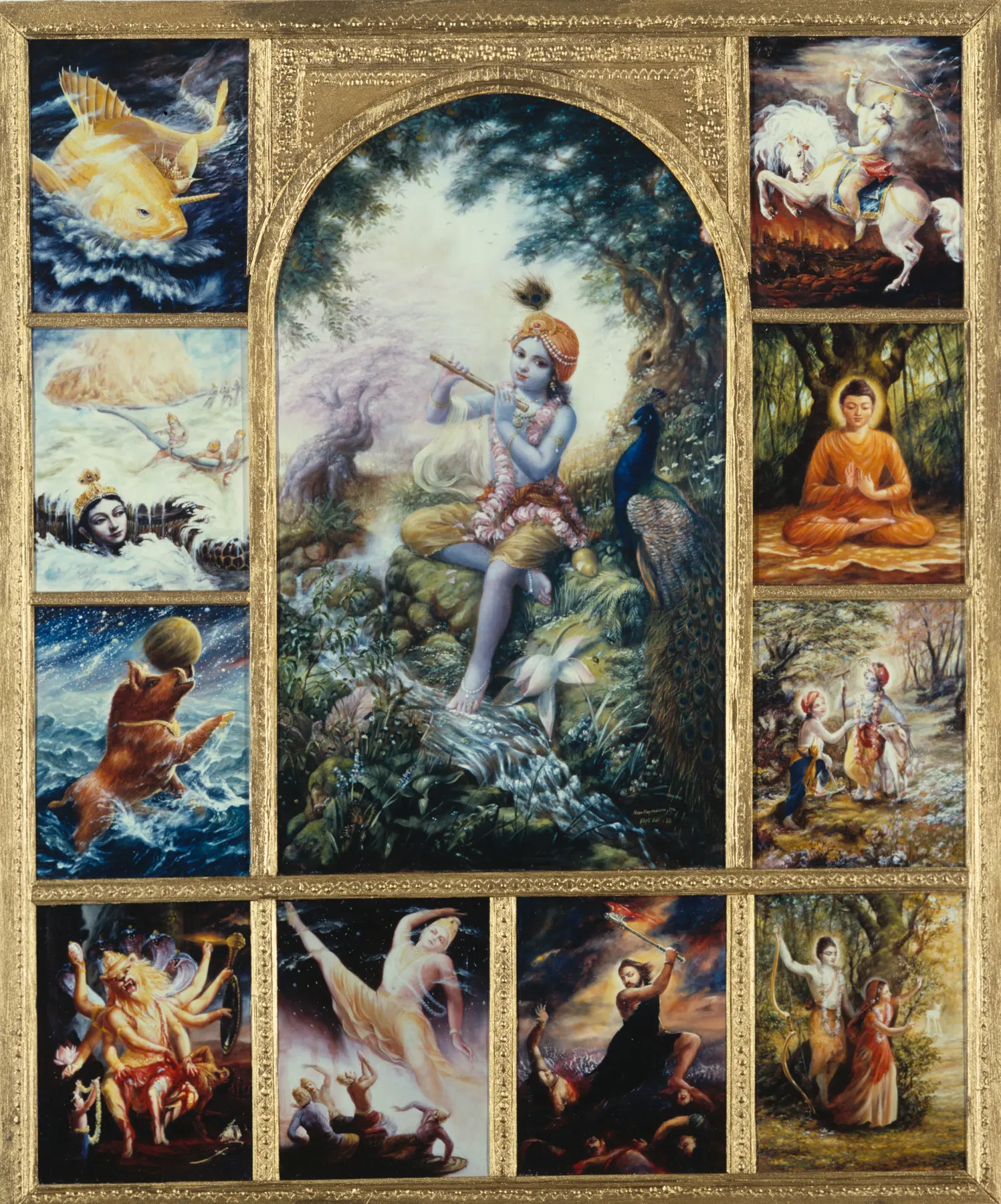
श्रीमद्भागवतम् के प्रथम स्कन्ध का तीसरा अध्याय एक ऐसे प्रश्न का उत्तर देता है, जो वैदिक साहित्य का हर गम्भीर विद्यार्थी कभी-न-कभी पूछता है। भगवान के कितने अवतार हैं, और उनका आपस में क्या सम्बन्ध है? अध्याय इनकी सूची देकर उत्तर देता है। सूत गोस्वामी लगभग पच्चीस श्लोकों में एक के बाद एक अवतारों के नाम बताते हैं, चार कुमारों और वराह से लेकर राम, व्यासदेव और बुद्ध तक। यह सूची अन्त में एक निर्णायक कथन तक पहुँचती है। तब से गौड़ीय वैष्णव सम्प्रदाय इस कथन को कृष्ण की सर्वोच्च पहचान के विषय में शास्त्र का सबसे सीधा निर्णय मानता आया है।
सूची और उसका निष्कर्ष #
अध्याय के आरम्भ में बताया गया है कि सृष्टि के प्रारम्भ में किस प्रकार "भगवान ने पहले स्वयं को पुरुष-अवतार के विश्वरूप में विस्तृत किया और भौतिक सृष्टि की समस्त सामग्री प्रकट की" (श्रीमद्भागवतम् 1.3.1)। इस तरह पहले श्लोक से ही अध्याय स्पष्ट कर देता है कि आगे दी गई सूची एक ही भगवान के अपने विस्तारों की सूची है। यह अलग-अलग, एक-दूसरे से होड़ करने वाले देवताओं की सूची नहीं है। हर अवतार का एक-एक करके नाम लेने के बाद अध्याय अपने निर्णय पर पहुँचता है: "उपर्युक्त सभी अवतार या तो भगवान के पूर्णांश हैं अथवा पूर्णांशों के अंश हैं, किन्तु भगवान श्रीकृष्ण स्वयं आदि पुरुष हैं। ये सभी उन ग्रहों पर तब प्रकट होते हैं जब नास्तिकों द्वारा उपद्रव उत्पन्न किया जाता है। भगवान आस्तिकों की रक्षा हेतु अवतरित होते हैं" (श्रीमद्भागवतम् 1.3.28)।
| विवरण | वर्णन |
|---|---|
| सन्दर्भ | श्रीमद्भागवतम् 1.3.28 |
| प्रसंग | भगवान के अवतारों की सूची देने वाले अध्याय का अन्तिम श्लोक |
| मुख्य कथन | हर बताया गया अवतार पूर्णांश या अंश का अंश है, पर कृष्ण नहीं; वे भगवान् स्वयम् हैं, अर्थात् स्वयं साक्षात् भगवान |
| बाद में किसने व्यवस्थित रूप दिया | जीव गोस्वामी का कृष्ण-सन्दर्भ, षट्-सन्दर्भों में से चौथा |
यह श्लोक जो भेद बताता है, वह सटीक है। यह केवल कविता नहीं है। सूची में कृष्ण से पहले कई नाम आते हैं। इनमें राम जैसे महान रूप भी हैं, और वे पुरुष-अवतार भी, जो भौतिक ब्रह्माण्डों की रचना करते हैं और उनमें सर्वत्र मौजूद रहते हैं। इन सबका वर्णन दो विशेष संस्कृत श्रेणियों से किया गया है: अंश, अर्थात् पूर्णांश, और कला, अर्थात् अंश का अंश। केवल कृष्ण के लिए एक बिल्कुल अलग, तीसरा शब्द आया है: स्वयम्, अर्थात् "व्यक्तिगत रूप से" या "स्वयं साक्षात्"। वे किसी के अंश नहीं हैं। वे वह स्रोत हैं, जिससे सारे अंश निकलते हैं। श्रील प्रभुपाद का तात्पर्य इस सम्बन्ध को समझाने के लिए एक सरल उदाहरण देता है। यह उदाहरण दूसरे अवतारों को छोटा नहीं बताता। यह केवल यह समझाता है कि कौन-सा अवतार कितनी शक्ति प्रकट करता है: "जब कमरे में छोटे विद्युत बल्ब लगाए जाते हैं, तो इसका अर्थ यह नहीं कि विद्युत-गृह उन छोटे बल्बों तक सीमित है। वही विद्युत-गृह अधिक वोल्ट वाले बड़े औद्योगिक डायनेमो चलाने के लिए भी शक्ति प्रदान कर सकता है। इसी प्रकार, भगवान के अवतार सीमित शक्तियाँ प्रदर्शित करते हैं क्योंकि उस विशेष समय में उतनी ही शक्ति की आवश्यकता होती है।" विष्णु और नारायण सामान्य अर्थ में अवतार नहीं हैं। वे कृष्ण के अपने पूर्ण विष्णु-तत्त्व विस्तार हैं। यही सम्बन्ध उन पर कैसे लागू होता है, यह विष्णु-तत्त्व विस्तार पृष्ठ पर विस्तार से समझाया गया है।
स्वयं ब्रह्मा की स्वीकारोक्ति #
श्रीमद्भागवतम् में यही निष्कर्ष केवल इसी एक स्थान पर नहीं मिलता। भगवान ब्रह्मा के अपने पृष्ठ पर ब्रह्म-विमोहन-लीला की कथा पहले ही बताई गई है। ब्रह्मा यह परखना चाहते थे कि सामने खड़ा बालक सचमुच भगवान है या नहीं। इसलिए उन्होंने कृष्ण के ग्वालबाल मित्रों और बछड़ों को चुरा लिया। कृष्ण ने ऐसा पूरा उत्तर दिया कि ब्रह्मा उनके चरणों में गिरकर प्रार्थना करने लगे। ये प्रार्थनाएँ भागवत के दशम स्कन्ध में दर्ज हैं। इनमें ब्रह्मा कृष्ण की केवल प्रशंसा ही नहीं करते, बल्कि खुलकर स्वीकार करते हैं कि कृष्ण कौन हैं: "क्या आप ही मूल नारायण नहीं हैं, हे सर्वोच्च नियन्ता, क्योंकि आप प्रत्येक देहधारी जीव की आत्मा तथा समस्त सृष्ट लोकों के नित्य साक्षी हैं? वास्तव में, भगवान नारायण आपका ही विस्तार हैं, और उन्हें नारायण इसलिए कहा जाता है क्योंकि वे ब्रह्माण्ड के आदि जल के उत्पादक स्रोत हैं। वे वास्तविक हैं, आपकी मायाजनित उपज नहीं" (श्रीमद्भागवतम् 10.14.14)। इस श्लोक का एक विशेष महत्त्व है। यह ब्रह्मा के मुख से आया है, जिन्हें परम्परा आदि-गुरु के रूप में सम्मान देती है। और ब्रह्मा ने यह बात ठीक उस क्षण कही, जब कृष्ण की दिव्यता की सीधी परीक्षा लेने के बाद वे स्वयं हार चुके थे। यह किसी दार्शनिक का तर्क नहीं है। यह एक स्वीकारोक्ति है, जो ब्रह्माण्ड के उस साक्षी के मुख से निकली, जो इसे कहने के लिए सबसे योग्य था।
एक श्लोक जिस पर प्रभुपाद बार-बार लौटे #
श्रील प्रभुपाद ने कई दशकों तक अपने प्रवचनों में श्रीमद्भागवतम् 1.3.28 को बार-बार उद्धृत किया। 1969 में लॉस एंजिल्स की एक वार्ता में वे कृष्ण के अपने नाम के अर्थ से आरम्भ करते हैं और वहीं से अपनी बात आगे बढ़ाते हैं: "कृष्ण सर्वाकर्षक हैं। यही भगवान का पूर्ण नाम है, 'कृष्ण'।... अतः कृष्णस्तु भगवान् स्वयम् [श्रीभा. 1.3.28]। वैदिक साहित्य के अनुसार, कृष्ण भगवान की सर्वोच्च पूर्ण सत्ता हैं, स्वयम्। स्वयम् का अर्थ है मूल। कृष्ण के अनेक विस्तार, अवतार हैं। हम भी कृष्ण के विस्तार हैं। हम, समस्त जीव, हम भी कृष्ण के विस्तार हैं। हमें विभिन्नांश, पृथक् विस्तार कहा जाता है।" वहाँ वे विष्णु-तत्त्व विस्तारों और सामान्य आत्माओं की विभिन्नांश स्थिति के बीच जो अन्तर बताते हैं, उसकी सीधी चर्चा विष्णु-तत्त्व विस्तार पृष्ठ पर की गई है।
भागवत के शब्दों का महत्त्व क्यों है #
गौड़ीय वैष्णव सम्प्रदाय का पूरा तर्क इस बात पर टिका है कि वह शास्त्र के ऐसे सटीक शब्द दिखा सके, जिन्हें कोई भी जाँच सकता है। वह केवल पीढ़ियों से चली आ रही किसी धारणा पर आधारित नहीं है। श्रीभा. 1.3.28 इस प्रकार के प्रमाण का सबसे स्पष्ट उदाहरण है। यहाँ शास्त्र पहले बड़े परिश्रम से एक के बाद एक अवतारों की सूची देता है, और पूरी सूची में एक जैसे तकनीकी शब्दों का प्रयोग करता है। फिर वह उस सूची के एक नाम को स्पष्ट रूप से बाकी सबसे अलग श्रेणी का बताता है। श्रील जीव गोस्वामी ने दूसरे श्लोकों के साथ इसी एक श्लोक को लिया और इस पर औपचारिक तर्क का एक पूरा ग्रन्थ रचा। उस ग्रन्थ की पूरी चर्चा षड्गोस्वामी और कृष्ण-सन्दर्भ पृष्ठ पर की गई है।
