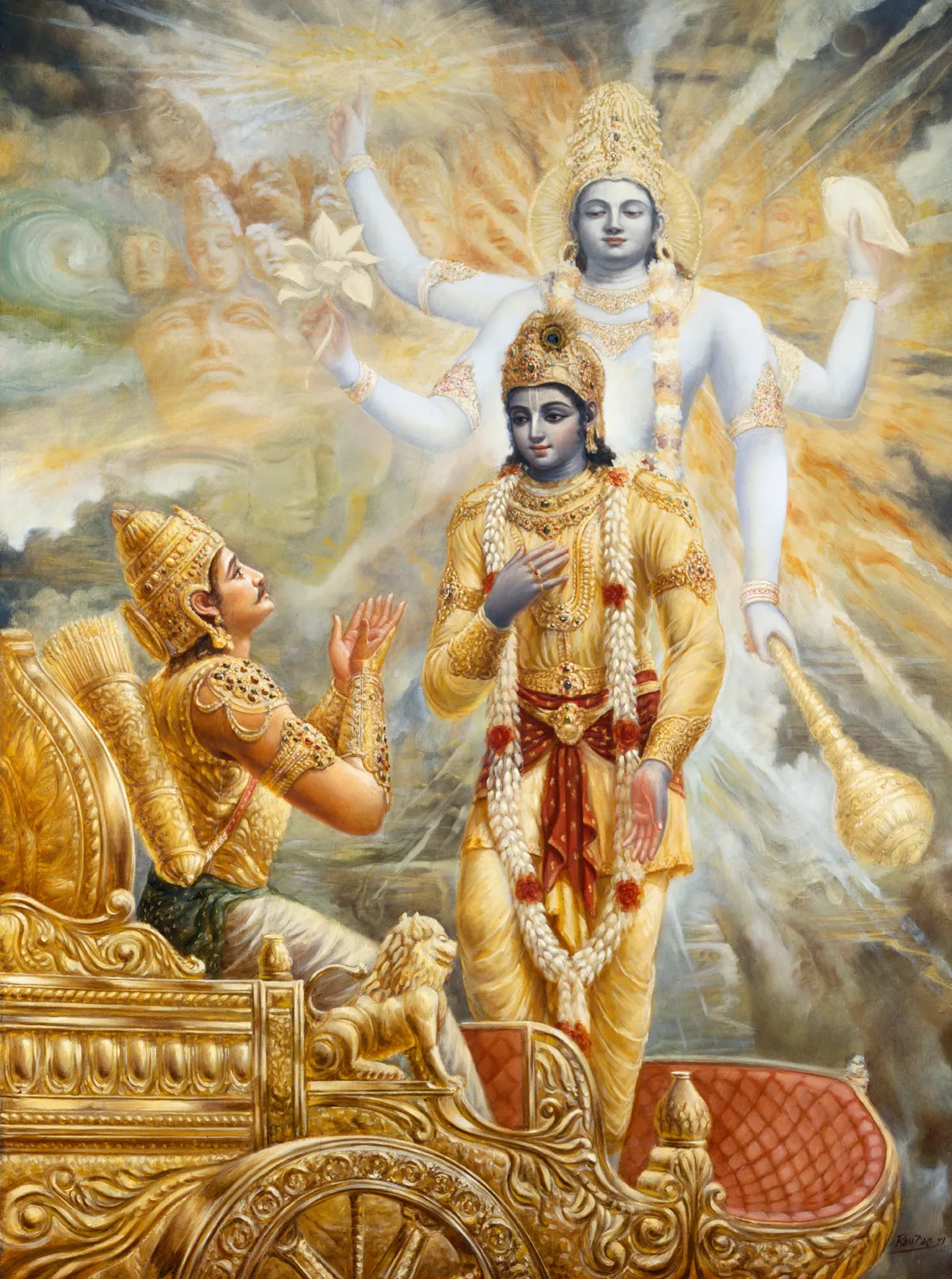
दूसरे पृष्ठों पर किसी व्यक्ति के विषय में प्रमाण प्रायः इस बात से मिलता है कि कोई दूसरा उसके बारे में क्या कहता है। यह पृष्ठ अलग है, क्योंकि भगवद्गीता कृष्ण के विषय में किसी दूसरे का दिया हुआ विवरण नहीं है। इसके अठारह अध्यायों में स्वयं कृष्ण अपनी वाणी में अपने विषय में बोलते हैं। वे यह बात एक ऐसे मित्र से कहते हैं, जिसने अभी-अभी उन्हें रथ हाँककर रणभूमि में ले जाते देखा है। गौड़ीय वैष्णव परम्परा इसे निर्णायक प्रमाण मानती है। यहाँ हमें इस पर निर्भर नहीं रहना पड़ता कि किसी और ने कृष्ण को कैसे समझा, क्योंकि ये शब्द स्वयं कृष्ण के हैं। कृष्ण की स्थिति के विषय में दूसरे लोग चाहे जो निष्कर्ष निकालें, गीता में यह दर्ज है कि स्वयं कृष्ण ने अपनी स्थिति क्या बताई।
"मुझसे परे कोई सत्य नहीं है" #
सातवें अध्याय में, जब अर्जुन को उपदेश देना अभी आरम्भ ही हुआ है, कृष्ण साफ़ कहते हैं: "हे धनञ्जय, मुझसे परे कोई सत्य नहीं है। जैसे मणियाँ धागे में पिरोई जाती हैं, वैसे ही सब कुछ मुझ पर ही टिका है" (भगवद्गीता 7.7)। इस श्लोक पर श्रील प्रभुपाद का तात्पर्य सीधे उस दूसरे मत का खण्डन करता है, जिसे अनेक दार्शनिक मानते हैं। इन दार्शनिकों का कहना है कि परम सत्य अन्त में निर्विशेष है, और भगवान का कोई भी व्यक्तिगत रूप सीमित मनुष्यों के लिए दी गई केवल एक अस्थायी छूट है। उसी तात्पर्य में श्रील प्रभुपाद ब्रह्म-संहिता का कथन भी उद्धृत करते हैं और ज़ोर देकर कहते हैं कि "ये प्रमाण इसमें कोई संशय नहीं छोड़ते कि परम सत्य वह सर्वोच्च पुरुष है, समस्त कारणों का कारण।" यही बात ब्रह्मा की ओर से ब्रह्म-संहिता की साक्षी पृष्ठ पर समझाई गई है।
| विवरण | वर्णन |
|---|---|
| भ.गी. 7.7 | "मुझसे परे कोई सत्य नहीं है": कृष्ण से ऊपर कोई दूसरा परमतत्त्व नहीं |
| भ.गी. 10.8 | "मैं समस्त आध्यात्मिक और भौतिक जगतों का स्रोत हूँ": कृष्ण ही दोनों लोकों के उद्गम हैं |
| भ.गी. 15.18-19 | कृष्ण स्वयं को पुरुषोत्तम कहते हैं, जो नाशवान और अविनाशी दोनों से परे हैं |
| भ.गी. 18.66 | गीता का अपना चरम उपदेश: सीधे स्वयं कृष्ण की शरण लेना |
| सबमें एक समान बात | हर कथन कृष्ण ने स्वयं अपने विषय में कहा है, यह उनके कार्यों को देखकर लगाया गया अनुमान नहीं है |
"मैं सबका स्रोत हूँ" #
दसवें अध्याय को परम्परा से विभूति-योग, "परमतत्त्व की विभूति," कहा जाता है। इसमें कृष्ण सबसे पूरे ढंग से बताते हैं कि वे ही सबके उद्गम हैं। "मैं समस्त आध्यात्मिक और भौतिक जगतों का स्रोत हूँ," वे अर्जुन से कहते हैं। "सब कुछ मुझसे ही उत्पन्न होता है। जो बुद्धिमान इसे पूर्णतः जानते हैं, वे मेरी भक्ति में संलग्न होकर पूर्ण हृदय से मेरी उपासना करते हैं" (भगवद्गीता 10.8)। श्रील प्रभुपाद का तात्पर्य दिखाता है कि यह बात केवल अर्जुन के लिए नहीं है: "समस्त वैदिक साहित्य इस बात से सहमत है कि कृष्ण ही ब्रह्मा, शिव तथा अन्य समस्त देवताओं के स्रोत हैं।" इसके बाद तात्पर्य समर्थन के लिए उपनिषदों की ओर मुड़ता है और अथर्ववेद के गोपाल-तापनी उपनिषद (1.24) को उद्धृत करता है: "आदि में यह कृष्ण ही थे जिन्होंने ब्रह्मा को वैदिक ज्ञान की शिक्षा दी और भूतकाल में वैदिक ज्ञान का प्रसार किया।" यह एक पंक्ति इस श्लोक को इस विवरण के दो और विषयों से जोड़ती है। पहला विषय यह दावा है कि सृष्टि के आरम्भ में भगवान ब्रह्मा को शिक्षा देने वाले कृष्ण ही थे, कोई छोटा व्यक्ति नहीं। इसकी पूरी चर्चा इस परम्परा का उद्गम पृष्ठ पर की गई है। दूसरा विषय वह व्यापक वैदिक साक्षी है, जो वैदिक एवं उपनिषदीय साक्षी पृष्ठ पर एकत्र की गई है।
पुरुषोत्तम, नाशवान और अविनाशी दोनों से परे #
गीता के अन्तिम भाग में, पन्द्रहवें अध्याय में पुरुषोत्तम-योग पर एक अंश है। यह अंश छोटा है, लेकिन इसका दर्शन गहरा है। यहाँ कृष्ण और भी सटीक रूप से बताते हैं कि वे किस श्रेणी में आते हैं। वेदान्त दर्शन सामान्यतः अस्तित्व की दो बड़ी श्रेणियाँ मानता है: क्षर, अर्थात् नाशवान भौतिक जगत, और अक्षर, अर्थात् अविनाशी व्यष्टि जीवात्माएँ। कृष्ण स्वयं को इनमें से किसी भी श्रेणी में नहीं रखते, बल्कि दोनों से ऊपर रखते हैं: "क्योंकि मैं दिव्य हूँ, क्षर और अक्षर दोनों से परे, और क्योंकि मैं सबसे महान् हूँ, इसलिए मैं संसार में तथा वेदों में उस पुरुषोत्तम के रूप में प्रसिद्ध हूँ" (भगवद्गीता 15.18)। अगला श्लोक सीधे बताता है कि इस बात को मानने या न समझ पाने पर क्या निर्भर करता है: "जो कोई मुझे बिना किसी सन्देह के भगवान की सर्वोच्च पूर्ण सत्ता के रूप में जानता है, वह सबका ज्ञाता है। इसलिए वह मेरी पूर्ण भक्ति में संलग्न हो जाता है" (15.19)। श्रील प्रभुपाद का तात्पर्य दिखाता है कि यह एक भेद पूरे ग्रन्थ के लिए कितना केन्द्रीय है। "सम्पूर्ण भगवद्गीता में, इस तथ्य पर प्रत्येक चरण में बल दिया गया है," वे लिखते हैं। वे यह बात उन "अनेक हठी टीकाकारों" के विरुद्ध कहते हैं, जो सर्वोच्च भगवान और व्यष्टि जीवात्मा को अन्त में एक ही मानते हैं।
गीता का अपना निष्कर्ष #
कृष्ण अपनी स्थिति को ऐसे नहीं छोड़ते कि पाठक को उसे बड़ी सावधानी से पढ़कर स्वयं निकालना पड़े। ग्रन्थ के बिल्कुल अन्त के पास तक वे ब्रह्म, परमात्मा, अलग-अलग सामाजिक वर्णों, वैराग्य और एक दर्जन अन्य मार्गों का ज्ञान बता चुके हैं। तब वे पूरे उपदेश का सार एक ही श्लोक में कहते हैं: "समस्त धर्मों को त्यागकर केवल मेरी शरण में आ जाओ। मैं तुम्हें समस्त पापों से मुक्त कर दूँगा। भयभीत मत हो" (भगवद्गीता 18.66)। इस उपदेश में कृष्ण प्रथम पुरुष में बोलते हैं और अपनी ही शरण में आने को कहते हैं। इसमें ऐसा कोई संकेत नहीं है कि उनसे ऊपर कोई और ऊँचा सिद्धान्त है, जिसकी ओर यह शरणागति अन्त में आगे बढ़ाई जानी चाहिए। गौड़ीय वैष्णव परम्परा कृष्ण की सर्वोच्च पहचान के प्रश्न पर इसे गीता का अपना अन्तिम वचन मानती है। गीता ने आत्मा के स्वरूप, भौतिक जगत, और ज्ञान तथा कर्म के मार्गों के विषय में और भी बहुत कुछ सिखाया है। लेकिन गीता के वक्ता स्वयं कृष्ण स्पष्ट रूप से स्वयं को वह लक्ष्य बताते हैं, जिसकी ओर यह सब अन्त में ले जाता है।
स्वतंत्र प्रमाण के रूप में यह क्यों महत्त्वपूर्ण है #
जिस पाठक के मन में संदेह हो, वह उचित रूप से यह प्रश्न पूछ सकता है। कृष्ण ने अपने विषय में जो दावे किए, उन्हें प्रमाण क्यों माना जाए? क्या वे किसी भक्त लेखक के कहने का केवल एक ढंग नहीं हो सकते? गौड़ीय वैष्णव परम्परा का उत्तर यह है कि गीता के दावे अकेले नहीं हैं। दूसरे स्रोत भी स्वतंत्र रूप से उनकी पुष्टि करते हैं: श्रीमद्भागवतम् का प्रत्यक्ष निर्णय, वैदिक तथा उपनिषदीय अभिलेख, और वह सावधानी से बना दार्शनिक तर्क, जो जीव गोस्वामी ने बाद में इन्हीं स्रोतों के आधार पर अपने कृष्ण-सन्दर्भ में रखा। लेकिन भगवद्गीता वह देती है, जो इनमें से कोई भी बाद का स्रोत नहीं दे सकता। वह इस दावे को उसके सबसे सीधे रूप में देती है, क्योंकि इनमें से किसी में भी कृष्ण प्रथम पुरुष में नहीं बोल रहे हैं। यहाँ बात यह नहीं है कि शास्त्र कृष्ण के विषय में क्या कहता है। बात यह है कि कृष्ण स्वयं अपने विषय में क्या कहते हैं।
