Sri Kurma Vipra
The Brahmana Mahaprabhu Told to Become a Guru
The complete life, on one page: The main biography and every pastime page, in order, in one place
Introduction
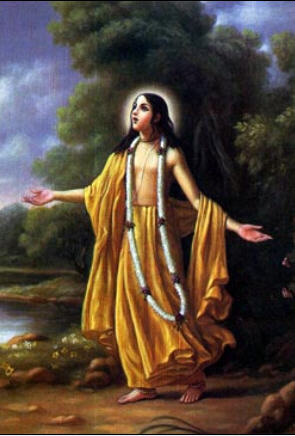
Kurma Vipra was a poor householder brahmana of Kurma-kshetra on the Andhra coast, a man with no recorded ancestry, no known family name, and no life story beyond a single afternoon. Gaudiya Vaishnavas remember him for one reason. He begged Sri Chaitanya Mahaprabhu to let him renounce home and follow Him, but the Lord refused. The sentence the Lord spoke instead has become the single most quoted verse in the Chaitanya-charitamrita on what it really means to be a guru. The meeting is recorded in full within the South India tour, where it appears as the key episode of the tour.
| Detail | Description |
|---|---|
| Also known as | Kurma Brahmana, the brahmana Kurma, Kurma Bipra |
| Where he lived | A village at Kurma-kshetra, identified with present-day Srikurmam, Srikakulam district, Andhra Pradesh |
| Met Mahaprabhu | During the South India tour, in the month of Vaishakha, c. 1510 |
| Occupation | Vedic brahmana householder |
| Famous for | Receiving the "become a guru" instruction of Chaitanya-charitamrita, Madhya-lila 7.128 |
| Primary source | Sri Chaitanya-charitamrita, Madhya-lila, Chapter 7, verses 121-135 |
| Life after the tour | Not recorded |
Scriptural evidence for the introduction (1)
ei mata yanra ghare kare prabhu bhiksha
sei aiche kahe, tanre karaya ei shiksha
At whosever house Sri Chaitanya accepted His alms by taking prasadam, He would convert the dwellers to His sankirtana movement and advise them just as He advised the brahmana named Kurma.
Krishnadasa Kaviraja Goswami's own statement that the instruction given to Kurma was not a one-time exception but the Lord's standing method throughout the South India tour.
Chapter 1
Hospitality at Kurma-kshetra
A poor brahmana's welcome at a coastal temple town becomes the occasion for Mahaprabhu's most quoted instruction.
The Temple of the Tortoise Incarnation #
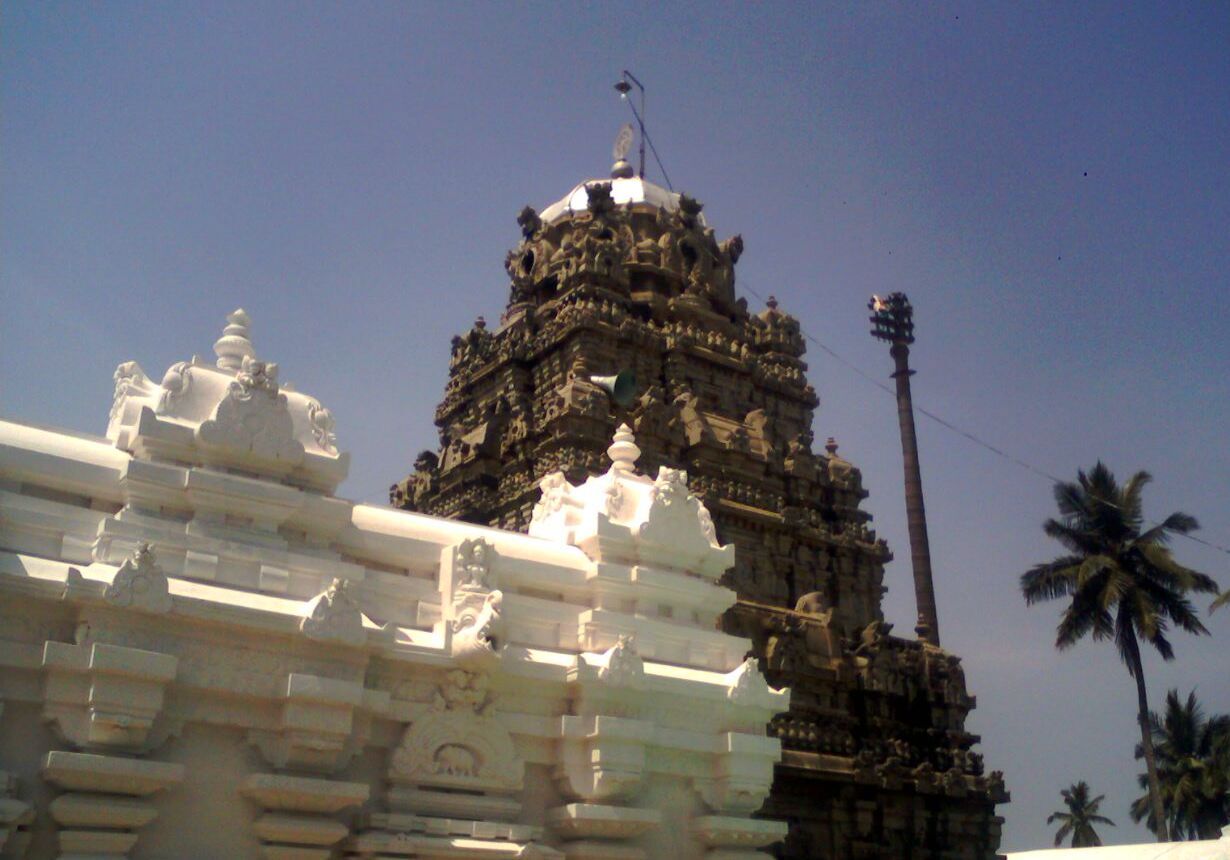
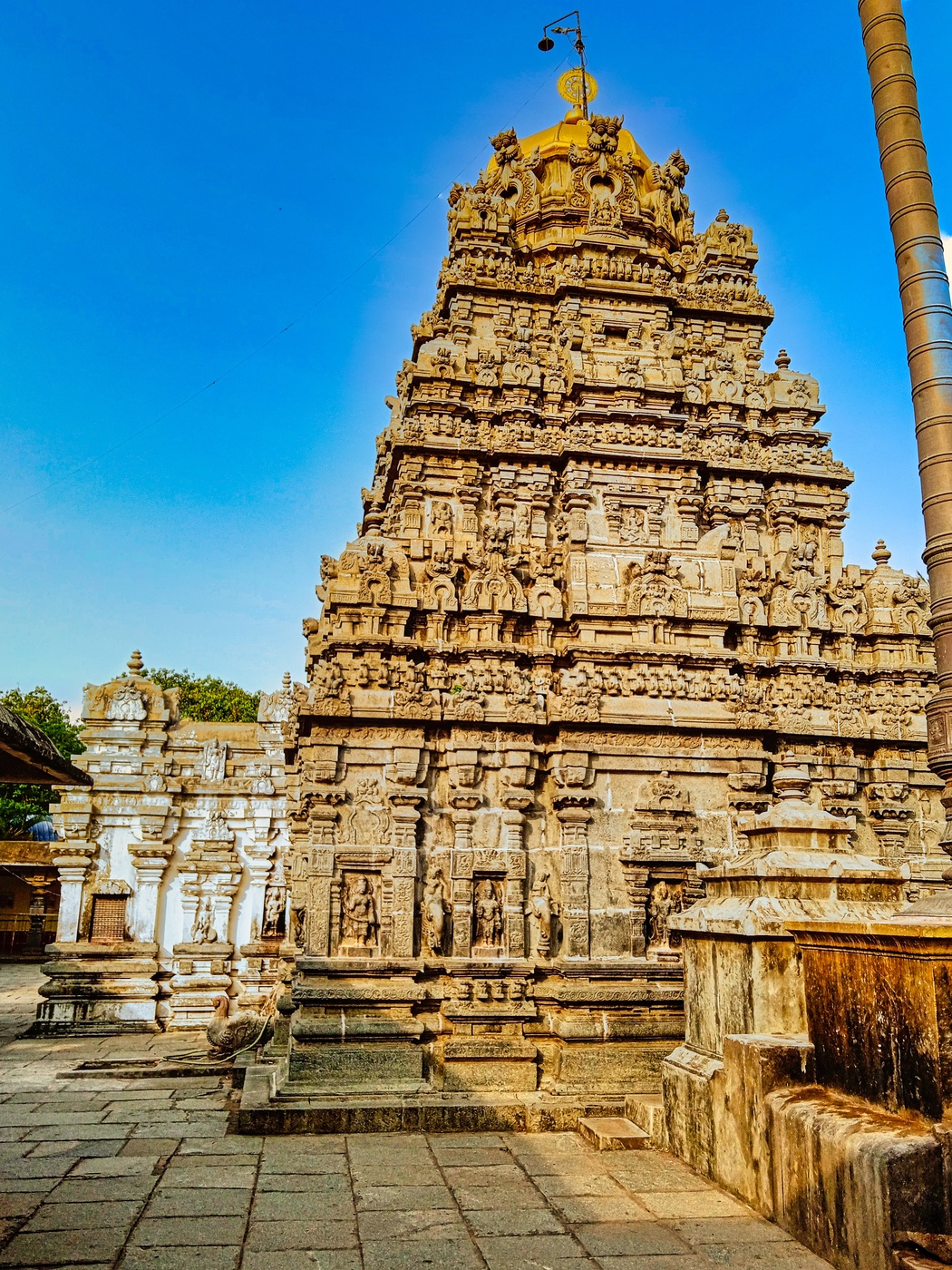
By the time Sri Chaitanya Mahaprabhu reached Kurma-kshetra, His South India tour had already been running for some weeks, and its pattern was set: He walked chanting, embraced whoever chanted back, and moved on. Kurma-kshetra is identified with the temple town now called Srikurmam. It is on the Andhra coast, in what is today Srikakulam district. It is the site of an old Vaishnava temple built around a Deity of Kurma, the tortoise incarnation of Vishnu, and the place takes its name from Kurma. Krishnadasa Kaviraja Goswami describes the Lord going first to the temple itself and offering obeisances to the Deity. Then He fell into such intense ecstatic love that He danced, wept and laughed before the astonished villagers. News of it spread. People came from the surrounding villages simply to look at Him. The Chaitanya-charitamrita says that everyone who saw Him became a devotee on the spot. They chanted "Krishna" and "Hari" and raised their arms in the same ecstasy.
Krishnadasa Kaviraja adds one more detail before the Lord's mood settled. When His external consciousness returned, the temple priest of the Kurma Deity came forward with offerings of his own. He treated the ecstatic sannyasi as an honored guest of the shrine itself. After the temple, the ecstasy, the crowds and the priest, the story moves from the whole town to one particular house.
A Vedic Brahmana Named Kurma #
"In one village there was a Vedic brahmana named Kurma," Krishnadasa Kaviraja writes. With that single sentence, a man who has no other biography enters the Chaitanya-charitamrita by name. He invited Mahaprabhu to his home with what the text calls great faith and devotion, and the Lord accepted. He seems to have accepted every such invitation on this part of the tour. The very next verses of the chapter say that He did the same at every house where He took alms during the whole journey. The whole journey, village by village, is told on the South India tour. This page stays inside the one house Kurma opened to Him.
Feet-Washing and a Family's Prasadam #
What Kurma did next follows a custom of hospitality as old as the Vedic household itself. But the Chaitanya-charitamrita records it in close, homely detail. He brought the Lord into his home and washed His feet. Then he and every member of his family drank that water together. This was an act of reverence toward a sannyasi guest, and in the family's eyes it was also reverence toward Krishna Himself. He fed Mahaprabhu, offering all kinds of food with what the text again calls great affection and respect. When the meal was finished, the entire family shared what the Lord had left on His plate as prasadam. Nothing in the account suggests Kurma expected anything in return for this. From everything the text shows, he was an ordinary brahmana householder doing what hospitality to a holy guest required of him. The only difference was that the guest was the Lord Himself.
"My Family, Birth and Riches Have All Been Glorified" #
Before Mahaprabhu could rise from the meal, Kurma spoke a prayer. Krishnadasa Kaviraja preserves it almost verse for verse. Kurma said that the same lotus feet on which Lord Brahma meditates had come to rest in his own house, not because of any merit of his own. He said that there was no way to measure how fortunate this made him. And he said that on this one day his family, his birth and his wealth had all been made worthwhile. It is a brahmana's plain, open-hearted gratitude, spoken with no idea of what was coming next. Kurma was now about to make a request of his own. The Lord would refuse that request, and would answer instead with an instruction that outlasted every other detail of the afternoon. That exchange is told in full on Become a Guru in This Land.
Scriptural evidence for this chapter (1)
'kurma'-name sei grame vaidika brahmana
bahu shraddha-bhaktye kaila prabhura nimantrana
In one village there was a Vedic brahmana named Kurma. He invited Lord Chaitanya Mahaprabhu to his home with great respect and devotion.
The verse in which Krishnadasa Kaviraja Goswami first names the brahmana Kurma and records his invitation to Mahaprabhu.
Chapter 2
Become a Guru in This Land
Refused permission to renounce his home, Kurma was given something rarer: a way to reach everyone without leaving it.
"Let Me Go With You" #
The meal was over and Kurma had finished his prayer of gratitude, described in full on Hospitality at Kurma-kshetra, when he made a request of his own. He begged Mahaprabhu to let him give up his household and go with Him. In Krishnadasa Kaviraja's phrasing, he said that he could no longer tolerate the waves of misery caused by materialistic life. The same wish had already moved other householders on this tour to want to give up everything at the sight of the Lord. As usually happened on this journey, the answer was a refusal.
Stay Home, Chant, and Preach #
Mahaprabhu's answer was direct. Never suggest such a thing again, He told Kurma; better to remain at home and chant the holy name of Krishna without interruption. The reason for this refusal was practical as much as spiritual. In the conditions of this age, a person who suddenly gives up family life, without real training in renunciation, rarely gains anything by it. He often loses what he already had. Mahaprabhu had already heard a version of this same argument at the start of this journey, when He let Nityananda Prabhu persuade Him not to travel entirely alone. The fuller story of that earlier argument is told on the South India tour page. This time it was the other way round. It was Kurma, not the Lord, who was being told that renunciation was not the answer.
Whomever You Meet, Tell Him What Krishna Said #
What Mahaprabhu offered Kurma instead is the verse for which this entire episode is remembered. Its sense, translated plainly, is this: instruct everyone you meet in the teaching Krishna Himself gives in the Bhagavad-gita and the Srimad-Bhagavatam; by doing only that, under the Lord's own order, become a guru and help liberate this whole land. The verse does not require anyone to master scripture, take formal disciples, or leave his occupation. It asks only that he repeat faithfully, without changing anything, what has already been taught. Krishnadasa Kaviraja does not treat this as a special case made for one willing brahmana. A few verses later he states plainly that this was the Lord's method at every house where He accepted a meal on the entire tour. That is why the instruction runs like a thread through the whole journey. It was not a private word to one man.
Bhaktisiddhanta's Reading: No Excuse for False Pride #
Srila Bhaktisiddhanta Sarasvati Thakura addressed this exact verse at length in his own Bengali commentary, the Anubhashya. His explanation brings out something that is easy to miss in the plain instruction. He read the verse as meant for devotees who mistake outward renunciation for real spiritual advancement, or who mistake for it a certain kind of self-important humility about "mere" preaching. Such people imagine that only grand, large-scale service counts as real spiritual work. They have in mind the service of Rupa Goswami, Sanatana Goswami, Jiva Goswami or Raghunatha Dasa Goswami in their books, or the wide following gathered by teachers like Madhvacharya or Narottama Dasa Thakura. As reported in later Gaudiya writing on this instruction, Bhaktisiddhanta's point was the opposite. Remaining a householder and simply repeating Krishna's own words to one's neighbors is not a lesser path that needs an apology. And looking down on it is itself the kind of false pride the instruction was meant to correct.
The Promise of the Lord's Company #
Mahaprabhu did not leave Kurma with only an order; He left him with a promise. If Kurma followed this instruction, the Lord told him, the waves of his householder life would never again overwhelm him the way they had before. More than that, he would have the Lord's company again, whether or not they ever met again in person. Kurma was being told that he could not follow the Lord on the road. For such a man, this promise answered the very worry that had made him ask to leave home in the first place. The Instruction That Outlived the Man tells what became of Kurma after this promise, and what the instruction itself went on to mean four centuries later.
Scriptural evidence for this chapter (2)
prabhu kahe, — "aiche bat kabhu na kahiba
grhe rahi' krishna-nama nirantara laiba
Sri Chaitanya Mahaprabhu replied, "Don't speak like that again. Better to remain at home and chant the holy name of Krishna always.
Mahaprabhu's direct refusal of Kurma's request to renounce his household and follow Him.
yare dekha, tare kaha 'krishna'-upadesa
amara ajnaya guru hana tara' ei desa
Word for word
yare: whomever; dekha: you meet; tare: him; kaha: tell; krishna-upadesa: the instruction of the Bhagavad-gita as spoken by the Lord, or of Srimad-Bhagavatam, which advises one to worship Sri Krishna; amara ajnaya: under My order; guru hana: becoming a spiritual master; tara': deliver; ei desa: this country.
Instruct everyone to follow the orders of Lord Sri Krishna as they are given in the Bhagavad-gita and Srimad-Bhagavatam. In this way become a spiritual master and try to liberate everyone in this land.
From the purport: Purport excerpt: "This is the sublime mission of the International Society for Krishna Consciousness."
The single most quoted verse in the Chaitanya-charitamrita on what it means to become a guru; Mahaprabhu spoke it to Kurma in place of letting him renounce his home.
Chapter 3
The Instruction That Outlived the Man
What became of Kurma Vipra is not recorded, but the sentence spoken to him guided Srila Prabhupada's preaching for a decade.

He Followed a Little Way, Then Was Sent Home #
The Chaitanya-charitamrita gives Kurma exactly one more sentence after the instruction described on Become a Guru in This Land. When Mahaprabhu left the district, Kurma followed Him for some distance along the road. It was the same wish that had already made him ask permission to leave home for good, and he had been refused. Then the Lord made sure that he was sent back. That is the last thing Krishnadasa Kaviraja ever tells us about him. Shortly after, at that same house, a different brahmana altogether came looking for the Lord. He was a man named Vasudeva who suffered from leprosy, and he found that the Lord had already gone. Mahaprabhu turned back to embrace him and cure him on the spot. It is a striking detail that Kurma's home kept drawing devotees to it even after the Lord Himself had left. But the text does not say whether Kurma saw the healing, or even whether he was there. By then, his house had a place in the story of its own, apart from him.
No Later Word #
Here the sources are silent, and we say so plainly instead of filling the gap. No text consulted gives Kurma's family name, his age, his caste subdivision, or a single fact about his life before or after this one afternoon. The devotional biography Sri Chaitanya: His Life and Associates by Bhakti Ballabh Tirtha Maharaj discusses this episode at some length. It says plainly that there is little chance historians will ever find out more about him. It also treats this lack as unimportant. What a devotee's worldly identity was, it argues, matters far less than the lesson taught through his life. Told honestly, Kurma Vipra's own story is built almost entirely around that one instruction, because the instruction is nearly all that survives.
"Simply Repeat What Krishna Has Said" #
What does survive is the sentence itself. Srila Prabhupada returned to it constantly across nearly a decade of lectures on three continents. In a Bhagavad-gita class in Los Angeles in December 1968, he used the verse to answer a question nobody in the room had even asked aloud. The question was how an ordinary follower, with no formal training, could ever call himself a spiritual master. He told his audience that simply speaking on Krishna's message was, by the Lord's own order, enough. In November 1971 he spoke to a large public gathering in Delhi, and there he took the same point further. He answered the objection before anyone raised it. A person might protest that he is a fool and unfit to become a guru, Prabhupada said, but Mahaprabhu's order removes that excuse entirely. This is because all it asks is that a person repeat what Krishna has already said, without changing it. And at the end of 1976, in a Bombay press interview, he was asked in effect what qualified a person to teach. He gave the same answer a third time: simply repeating the Bhagavad-gita's own words makes a person a guru. The full transcripts of all three are cited below. Between them they span 1968 to 1976, and every one of them rests on the same eight-word instruction first spoken to a brahmana at Kurma-kshetra.
A Householder's Charter #
Prabhupada's own written comment on this verse is very clear about what he took it to mean. This instruction, he held, describes the entire mission of the movement he founded. That mission never asked anyone to give up family life. It asked only that they chant and pass on what Krishna had already taught. That is close to the same offer Mahaprabhu made to a frightened brahmana who thought the only real answer to his own suffering was to walk away from his family. Kurma Vipra's name appears in the historical record for one afternoon and then disappears. But the instruction he received has been repeated, without change, by generation after generation of Gaudiya Vaishnavas since. It is repeated in every temple and home where a devotee, unqualified in every worldly sense, reads a verse of the Bhagavad-gita aloud to a neighbor who has never opened one.
Scriptural evidence for this chapter (1)
prabhura anuvraji' kurma bahu dura aila
prabhu tanre yatna kari' ghare pathaila
When Sri Caitanya left, the brahmana Kurma followed Him a great distance, but eventually Lord Caitanya took care to send him back home.
The last verse in the Chaitanya-charitamrita to mention Kurma by name; nothing further about his life is recorded.
Closing
The Sentence Every Later Preacher Repeats #
Krishnadasa Kaviraja does not present this as a one-time exception made for one hospitable brahmana. In the very next verses of the same chapter, he states that this was the Lord's regular method. At whatever house He accepted alms during the entire tour, He gave the householder this same order before moving on. On the South India tour, the effect spread even faster than the Lord Himself could travel. Village converted village faster than He could walk between them. Kurma's house is simply the one place in that chain where the instruction itself was written down in full, and not only its effect. The same journey brought Paramananda Puri into the Lord's company at Rishabha Hill, Venkata Bhatta and the boy who became Gopala Bhatta Goswami into it at Srirangam, and Ramananda Raya into it at the Godavari. Kurma's meeting had far smaller results for any one person's life. Even so, it produced the tour's most quoted line.
What We Do Not Know #
We must say plainly what the sources do not tell us. Krishnadasa Kaviraja never states Kurma's family name, his age, or anything about his life before or after this one afternoon. The text says only that his family drank the water that had washed the Lord's feet and shared His remnants of food. A few verses later the Chaitanya-charitamrita records that when the Lord finally left the district, Kurma followed Him some distance before being sent back home. That is the last the text ever says of him. Shortly afterward, a brahmana named Vasudeva, who suffered from leprosy, came to Kurma's own house looking for the Lord and was healed. Whether Kurma himself saw the healing is not stated. No independent biography of Kurma exists. Srila Bhaktisiddhanta Sarasvati Thakura did comment at length on the instruction itself in his Anubhashya. But even his commentary adds nothing about the man who received it. It explains only what the instruction means for everyone who reads it after him. The record is short, but it is honest.
At a Glance #
- Met personally by Sri Chaitanya Mahaprabhu at Kurma-kshetra during the South India tour, c. 1510.
- Received the Chaitanya-charitamrita's clearest single verse on what it means to become a guru: repeat Krishna's own teaching to whomever you meet.
- Krishnadasa Kaviraja states this instruction was the pattern for the entire tour, not a one-time exception.
- Nothing about his life is recorded before or after this one encounter.
- The verse given to him remains among Srila Prabhupada's most quoted in describing ISKCON's own preaching mission.
