Srila Mahesh Pandit
One of the Twelve Gopalas, Beloved Companion of Nityananda Prabhu
The complete life, on one page: The main biography and every pastime page, in order, in one place
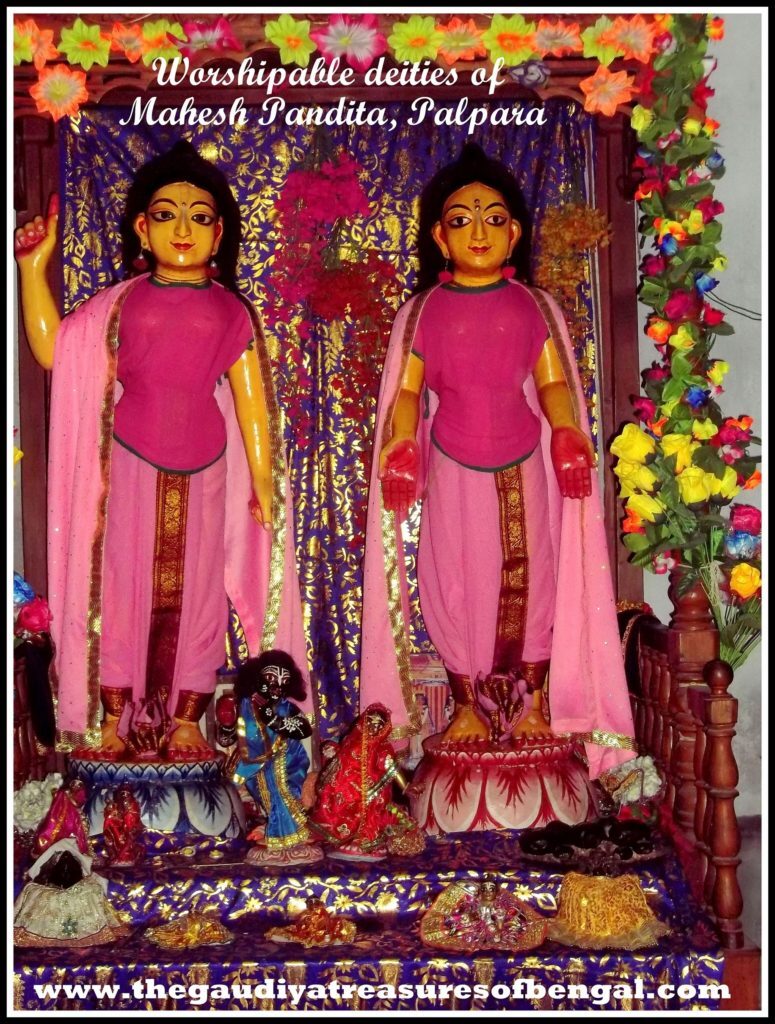
Introduction
Mahesh Pandit is remembered in Gaudiya Vaishnava tradition as one of Nityananda Prabhu's closest gopala companions in Bengal. His ecstatic dancing to the kettledrum became well known. His Sripat has moved twice in four hundred years to escape a shifting river. His name survives mainly in short, specific mentions, not in a full life story. What we can say about him comes from a handful of verses and a few sentences of commentary, not from a connected biography. This page tells only what those sources actually say.
| Detail | Description |
|---|---|
| Identity | Mahabahu, a cowherd friend of Krishna in Vraja (Gaura-ganoddesha-dipika 129) |
| Standing among the associates | The seventh of the Dvadasha-gopala, the twelve gopala associates of Nityananda Prabhu, named in Sri Chaitanya-charitamrita, Adi-lila 11.32 |
| Closest tie | Described as especially dear to Nityananda Prabhu; recorded at festivals with Him at Panihati (also spelled Paninati in one source) and Saptagram |
| Sripat (seat of worship) | Founded at Masipur, near Jirat; moved to Beledanga near Sukhasagar, then to its present site at Palpara near Chakdaha, Nadia district, in 1927 |
| Family | By one account the youngest of three brothers, with Jagadish Pandit and Hiranya; Bhaktivinoda Thakura himself calls the evidence inconclusive |
| Disappearance day | Krishna-trayodashi, the thirteenth day of the dark fortnight of the month of Pausha; year not recorded |
Scriptural evidence for the introduction (2)
mahesa pandita -- vrajera udara gopala
dhakka-vadye nritya kare preme matoyala
Mahesa Pandita, the seventh of the twelve gopalas, was very liberal. In great love of Krishna he danced to the beating of a kettledrum like a madman.
From the purport: Purport excerpt: "The village of Mahesa Pandita, which is known as Palapada, is situated in the district of Nadia within a forest about one mile south of the Cakadaha railway station."
The verse that names Mahesh Pandit as the seventh of the twelve gopalas and records the ecstatic, kettledrum-driven dancing he is chiefly remembered for. Verified directly against vedabase.io (Sri Chaitanya-charitamrita, Adi 11.32) during this Hindi write-up; the translation given here matches exactly.
सुबाहुर्यो व्रजे गोपो दत्त उद्धारणाख्यकः ।
महेश पण्डितः श्रीमन्महाबाहुर्व्रजे सखा ॥
subāhur yo vraje gopo datta uddhāraṇākhyakaḥ
maheśa paṇḍitaḥ śrīman mahābāhur vraje sakhā
The devotee who had been the cowherd boy Subahu in Vrajabhumi appeared in Lord Caitanya's pastimes as Uddharana Datta. Lord Krsna's cowherd friend Mahabahu appeared in Lord Caitanya's pastimes as Sriman Mahesa Pandita.
Kavi Karnapura's identification of Mahesh Pandit as Mahabahu, Krishna's cowherd friend in Vraja; the same verse names Uddharana Datta as the cowherd boy Subahu. Sanskrit: diacritic edition of the Gaura-ganoddesha-dipika; English translation as published at bvmlu.org.
Chapter 1
The Panihati Festival and the Journey to Saptagram
Mahesh Pandit's recorded presence at Nityananda Prabhu's Chira-dadhi Mahotsava, and his onward journey to Saptagram.
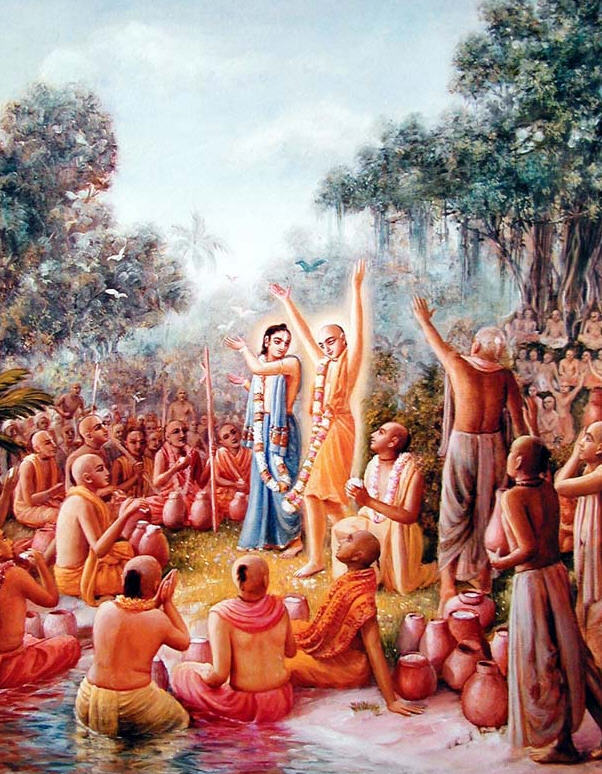
Apart from the standard lists of the twelve gopalas, one festival gives the clearest single record of Mahesh Pandit's own presence beside Nityananda Prabhu. Two different sources describe it under two slightly different names. This page keeps to what the sources actually say about him. The festival itself is famous for the story of a very different devotee, and it is treated here only as the needed background.
The Chira-Dadhi Mahotsava, Also Called the Danda Mahotsava #
This festival is Panihati's Chira-dadhi Mahotsava, the festival of chipped rice and yogurt. Today it is remembered mainly as the turning point in Raghunatha Dasa Goswami's own life. Nityananda Prabhu called the hesitant young Raghunatha a thief for having stayed away from Him so long. He seized him and placed His own feet on his head. Then He gave him a playful punishment: Raghunatha was to arrange a feast of chipped rice and yogurt for every Vaishnava gathered at Panihati that day. Raghunatha did exactly that, and the "punishment" became one of the most joyful assemblies Nityananda Prabhu ever held. That is why the tradition remembers the same event by two names. It is called the Chira-dadhi Mahotsava because of the feast itself. It is also called the Danda Mahotsava, the festival of punishment, because of the punishment that led to it.
Gaudiya History's biography of Mahesh Pandit says simply that he took part in the Chira-dadhi Mahotsava at Panihati. A second entry, posted separately on the same site, says instead that he was present at the Danda Mahotsava held at Paninati. This is almost certainly the same place with its name spelled a little differently, not a second festival. So the two entries most likely describe one single occasion, recorded twice in slightly different words. Neither account describes what Mahesh Pandit personally did there. Raghunatha Dasa Goswami's whole story turns on this one day. But Mahesh Pandit appears only as one name among the many devotees the festival drew. He was present, and he is recorded as present, but no scene of his own is told.
Following Nityananda Prabhu to Saptagram #
The same source that names him at the Chira-dadhi Mahotsava adds one more detail. Afterward, Mahesh Pandit followed Nityananda Prabhu on to Saptagram. Saptagram was a river town on the Bengal side of the Ganges. It was one of Nityananda Prabhu's own regular stopping points as He went on gathering and teaching devotees through the region. Saptagram does not appear elsewhere in Mahesh Pandit's own story. No episode there is attached to his name, and the sources give only the single fact that he went. His Sripat was later set up near Chakdaha, not far downriver. Seen together with this, the detail suggests that he spent much of his life in this same stretch of riverside Bengal. He moved with Nityananda Prabhu as He travelled and preached, and did not stay fixed in one place. It is a small fact. The sources keep only this, that he followed, and nothing more.
Scriptural evidence for this chapter (1)
From the purport: It is mentioned that Mahesa Pandita joined the festival performed by Sri Nityananda Prabhu at Panihati. Narottama dasa Thakura also joined in the festival, and Mahesa Pandita saw him on that occasion.
Srila Bhaktisiddhanta Sarasvati Thakura's Anubhasya commentary on this verse independently places Mahesh Pandit at the Panihati festival and records that he saw Narottama Dasa Thakura there. This is a separate, earlier meeting between the two than the later Khardaha visit recorded in Bhakti-ratnakara. Verified directly against vedabase.io during this Hindi write-up.
Chapter 2
Received by Narottama Dasa Thakura at Khardaha
A generation after Mahaprabhu's own pastimes, Narottama Dasa Thakura sought out Mahesh Pandit at Khardaha for darshan of his feet.
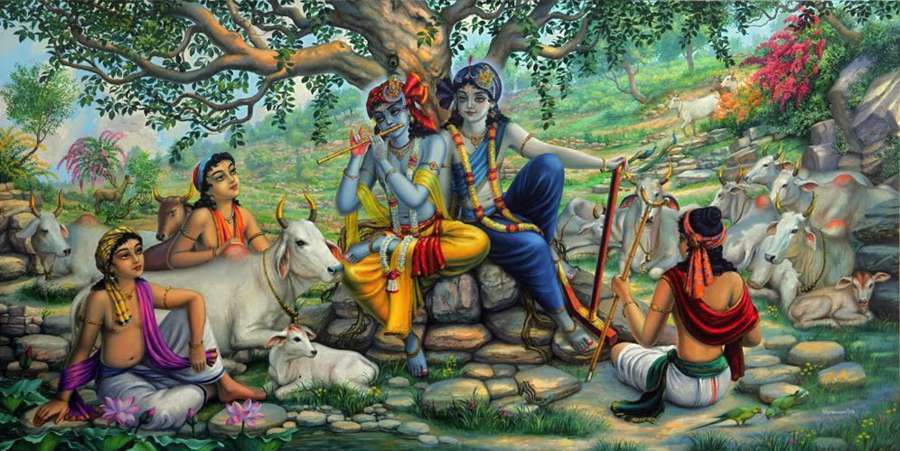
Long after Sri Chaitanya Mahaprabhu's own pastimes had ended, the tradition mentions Mahesh Pandit's name once more. This time he is not shown beside Nityananda Prabhu Himself. Instead, he appears in the account of a much younger devotee who came looking for the associates Nityananda Prabhu had left behind.
Khardaha, Nityananda Prabhu's Own Seat #
Khardaha, on the Bengal side of the Ganges, was Nityananda Prabhu's own main seat in His later years. After His disappearance, His family and closest associates went on living there, and later generations of Vaishnavas came there to seek them out. Jahnava Mata, Nityananda Prabhu's wife, and their son Viracandra Prabhu both continued to lead the Vaishnava community gathered there. This is one reason the town went on drawing visiting devotees for generations after Nityananda Prabhu Himself had disappeared. By the time of the events described below, Mahesh Pandit himself was among those still to be found there. The sources give no date, only the fact of his presence in the town when the visit occurred.
Narottama Dasa Thakura's Visit #
Narottama Dasa Thakura belonged to the generation after Mahaprabhu's own direct associates. In Narahari Chakravarti's Bhakti-ratnakara, he is remembered as having traveled to Khardaha. While there, he sought out Mahesh Pandit especially to take darshan of his lotus feet. In the text it is a small act, a single sentence in a long history, but its meaning is easy to see. Narottama was a devotee of the next generation, already deeply established in bhakti. Still, he went out of his way to honor a surviving companion of Nityananda Prabhu, simply because that companion had walked beside Nityananda Prabhu. The Bhakti-ratnakara does not record what, if anything, passed between them beyond the visit itself.
Called a Parama-mahanta #
Vrindavana Dasa Thakura's Sri Chaitanya-bhagavata separately pays Mahesh Pandit a similar honor in different words. It calls him a parama-mahanta, a great and exalted soul, and notes especially how dear he was to Nityananda Prabhu. Different retellings of this reference place it at different points in the Chaitanya-bhagavata, so no single verse number can be given with confidence. Still, the basic fact, that Vrindavana Dasa Thakura uses this title for him, is recorded. It comes from a second author writing in a different book, apart from the Bhakti-ratnakara passage above.
The exact references do not fully match, but the two sources still give one clear picture. In his own lifetime, Mahesh Pandit was known mainly for his closeness to Nityananda Prabhu and for the unrestrained, dancing ecstasy for which he is remembered on his own main biography page. A generation later, at Khardaha, he was remembered as someone worth a special visit and worth a title kept for truly advanced devotees.
Closing
Identity in the Gaura-ganoddesha-dipika #
The clearest single fact about Mahesh Pandit's identity does not come from a story at all. It comes from a genealogy. Kavi Karnapura Goswami's Gaura-ganoddesha-dipika sets out to answer, associate by associate, who each companion of Sri Chaitanya Mahaprabhu had been earlier, in Krishna's own pastimes in Vraja. Its 129th verse states plainly that Krishna's cowherd friend Mahabahu appeared in Mahaprabhu's own pastimes as Shriman Mahesha Pandita. The verse tells us nothing more about who Mahabahu was in Vraja; it gives only the name. No source claims more than this simple statement in the verse. This is the normal, expected form of an entry in this book. It does not mean that something has been left out.
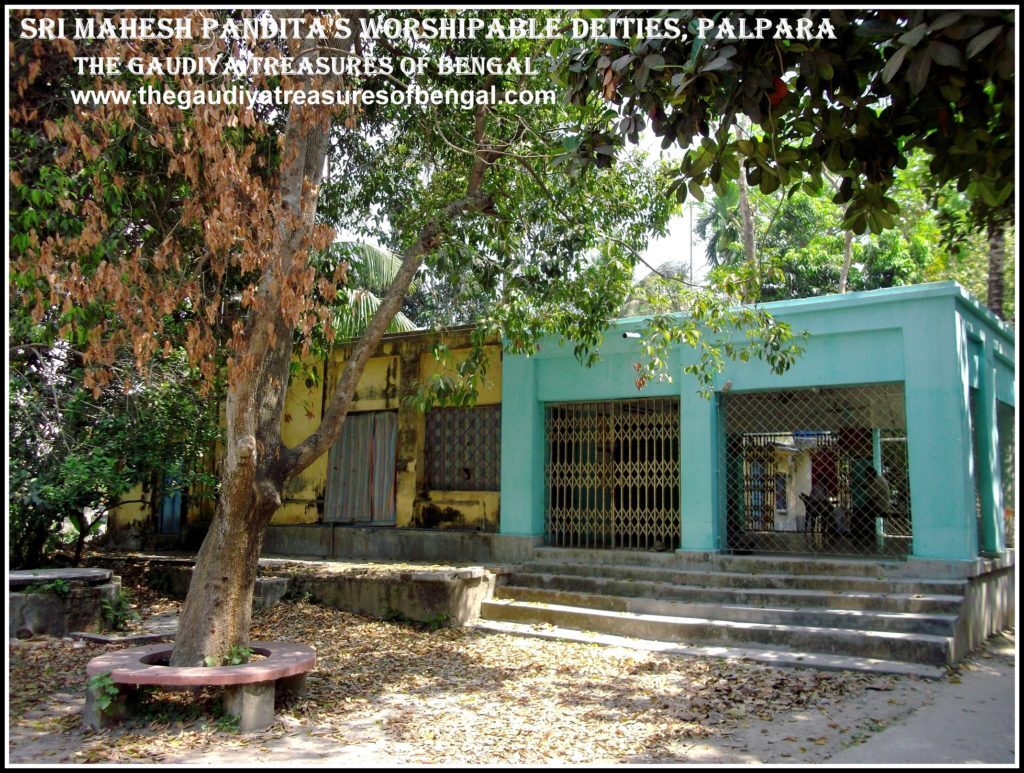
The verse pairs him with Uddharana Datta Thakura, another of the twelve gopalas:
subāhur yo vraje gopo datta uddhāraṇākhyakaḥ
maheśa paṇḍitaḥ śrīman mahābāhur vraje sakhā
"The devotee who had been the cowherd boy Subahu in Vrajabhumi appeared in Lord Caitanya's pastimes as Uddharana Datta. Lord Krsna's cowherd friend Mahabahu appeared in Lord Caitanya's pastimes as Sriman Mahesa Pandita." (Gaura-ganoddesha-dipika 129)
Named Among the Twelve Gopalas #
Mahesh Pandit belongs to a specific, named group called the Dvadasha-gopala. These are twelve cowherd-boy associates whom the tradition places especially around Nityananda Prabhu, not directly around Mahaprabhu. This is like the way Gadadhara Pandit and Srivasa Thakura are placed close to the Lord Himself. Sri Chaitanya-charitamrita, Adi-lila 11.32 names him the seventh of the twelve and gives the single line by which he is most often remembered: a very liberal soul who danced to the beat of a kettledrum like a madman, lost in love of Krishna. Chaitanya-charitamrita's eleventh chapter describes Nityananda Prabhu's associates as branches growing from a single tree. Some sources count Mahesh Pandit as the seventeenth of those branches. This fits the text: the verse just before his, Adi-lila 11.31, names Dhananjaya Pandita as Nityananda Prabhu's sixteenth dear servant.
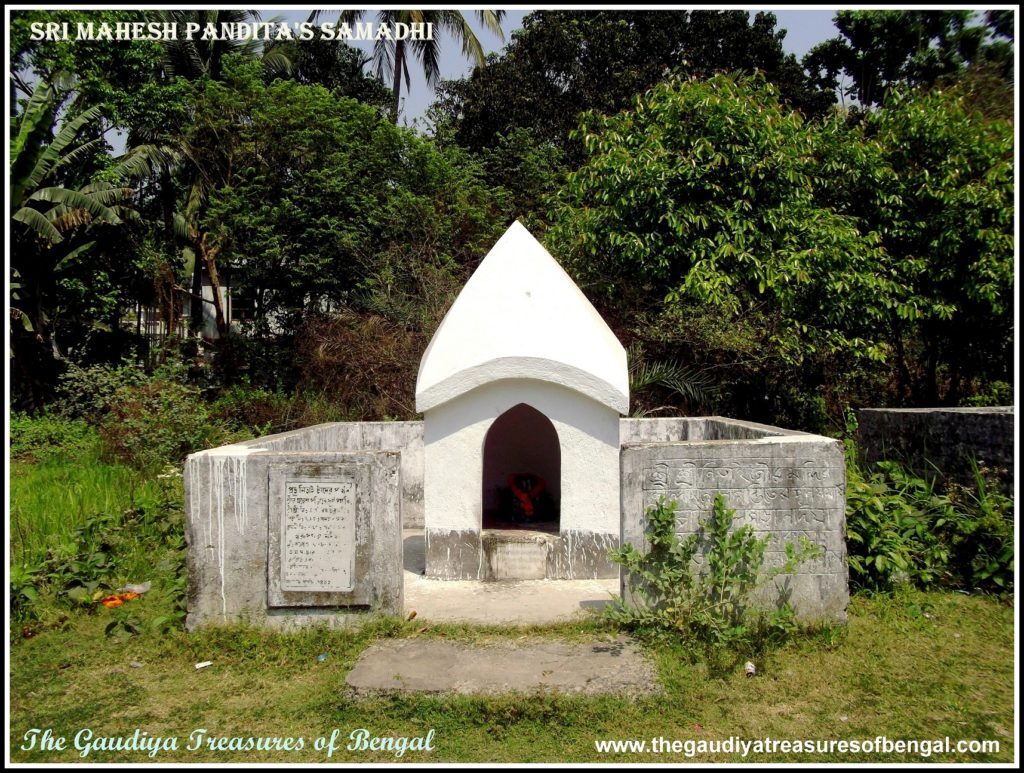
A Family Dispute and an Uncertain Birthplace #
Some accounts describe Mahesh Pandit as the youngest of three brothers, alongside Jagadish Pandit and a third named Hiranya, with Jagadish Pandit's own Sripat recorded at nearby Jashra. Other sources say nothing about this claim. Bhaktivinoda Thakura discusses the question directly, but he says only that the evidence does not settle it. He neither confirms nor denies that they were brothers. His birthplace is uncertain in the same way. It is sometimes given simply as the area now called Chakdaha. But that may tell us no more than where his Sripat later settled. No source gives an independent, dated record of his birth. Both points are best treated as open questions, not settled ones.
Disappearance #
Mahesh Pandit's disappearance day is kept on Krishna-trayodashi, the thirteenth day of the dark fortnight, in the month of Pausha (December-January). No available source gives the year. What every account records in the same way is not the date but the kind of man he was. Both his grief and his joy came out as movement. He danced before the assembled Vaishnavas to the sound of a kettledrum, in a state the tradition simply calls being matoyala, intoxicated, with prema, love of Krishna.
- Sri Chaitanya-charitamrita, Adi-lila 11.32 (Bhaktivedanta translation)
- Mahesh Pandit – Biography, Gaudiya History
- Mahesh Pandit – Biography (alternate entry), Gaudiya History
- Sri Gaura-ganoddesha-dipika (verse 129), Gaudiya History
- Mahesh Pandit, Stephen Knapp (quoting Srila Prabhupada's purport to Sri Chaitanya-charitamrita)
- Sri Mahesh Pandita Disappearance, Ramai Swami
- Sri Mahesh Pandit, Shyam Das Baba (excerpted from Sri Chaitanya: His Life & Associates by Srila Bhakti Ballabh Tirtha Maharaj)
- Mahesh Pandita – Biography, Sripat Palpara, Chakdaha, Nadia — The Gaudiya Treasures of Bengal
