Srila Shivananda Sena
The householder who led Bengal's devotees to Jagannatha Puri every year
The complete life, on one page: The main biography and every pastime page, in order, in one place
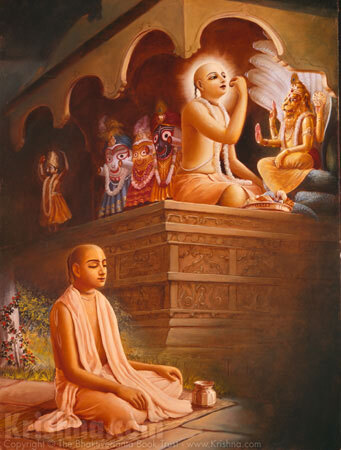
Introduction
Srila Shivananda Sena was a householder devotee of Sri Chaitanya Mahaprabhu. In a sense, his service was entirely practical. Every single year, he organized, led and personally paid for the long journey that carried Bengal's devotees from their homes near the Ganges to Jagannatha Puri, where Mahaprabhu spent His last decades. In Sri Chaitanya-charitamrita, Krishnadasa Kaviraja Goswami calls him the Lord's "extremely confidential servant," and Shivananda earned this title entirely through practical work. It came from careful organizing, from hospitality, and from a devotion that showed itself in humble, everyday tasks. Year after year, for a decade or more, he arranged tolls, lodging and food for two or three hundred people.
| Detail | Description |
|---|---|
| Native place | Kumarahatta (Halisahara), on the Ganges, a separate community from Kulina-grama, whose own residents joined his pilgrimage party |
| Caste/community | Vaidya (a Bengali community traditionally linked with medicine and scribal service) |
| Best-known service | Organizing and funding the yearly Bengali pilgrimage to see Sri Chaitanya Mahaprabhu at Jagannatha Puri |
| Family | Wife (unnamed in the sources) and three sons: Chaitanya dasa, Ramadasa and Paramananda dasa |
| Most famous son | Paramananda Sena, later known as Kavi-karnapura, author of Sri Chaitanya-chandrodaya-nataka and Gaura-ganoddesha-dipika |
| Identity | The gopis Vira and Duti of Vrindavana, combined in one person (Gaura-ganoddesha-dipika 176; Chaitanya-charitamrita Adi 10.60 purport) |
| Branch of the Chaitanya tree | Twenty-fourth branch, per Chaitanya-charitamrita, Adi-lila 10.54 |
Scriptural evidence for the introduction (3)
śivānanda sena — prabhura bhṛtya antaraṅga
prabhu-sthāne yāite sabe layena yāṅra saṅga
Word for word
śivānanda sena: Śivānanda Sena; prabhura: of the Lord; bhṛtya: servant; antaraṅga: very confidential; prabhu-sthāne: to Jagannātha Purī, where the Lord was staying; yāite: while going; sabe: all; layena: took; yāṅra: whose; saṅga: shelter.
Shivananda Sena, the twenty-fourth branch of the tree, was an extremely confidential servant of Lord Chaitanya Mahaprabhu. Everyone who went to Jagannatha Puri to visit Lord Chaitanya took shelter and guidance from Shri Shivananda Sena.
The core verse naming Shivananda Sena as a branch of the Chaitanya tree and describing his defining role as guide for pilgrims to Puri.
prati-varṣe prabhu-gaṇa saṅgete lā-iyā
nīlācale calena pathe pālana kariyā
Word for word
prati-varṣe: every year; prabhu-gaṇa: the devotees of Lord Caitanya; saṅgete: along with; lā-iyā: taking; nīlācale: to Jagannātha Purī; calena: goes; pathe: on the road; pālana: maintenance; kariyā: providing.
Every year he took a party of devotees from Bengal to Jagannatha Puri to visit Lord Chaitanya. He maintained the entire party as they journeyed on the road.
States directly the yearly pilgrimage and full material support that defines Shivananda Sena's service.
पुरा वृन्दावने वीरा दूती सर्वाश्च गोपिकाः ।
निनाय कृष्ण निकरं सेदानीं जनको मम ।
व्रजे बिन्दुमती यासीदद्य सा जानकी मम ॥१७६॥
purā vṛndāvane vīrā dūtī sarvāś ca gopikāḥ |
nināya kṛṣṇa nikaraṁ sedānīṁ janako mama |
vraje bindumatī yāsīd adya sā jānakī mama ||176||
The two gopis Vira-devi and Duti-devi, who acted as messengers arranging the gopis' meetings with Lord Krsna, combined to appear as my father (Sivananda Sena). The vraja-gopi Bindumati appeared as my mother.
From the purport: Paramānanda Sena wrote in his Gaura-gaṇoddeśa-dīpikā (176) that two of the gopīs of Vṛndāvana, whose former names were Vīrā and Dūtī, combined to become his father. (Srila Bhaktisiddhanta Sarasvati, quoted by Srila Prabhupada in Chaitanya-charitamrita Adi 10.60 purport)
Kavi Karnapura writes this verse about his own father: the gopis Vira and Duti combined to appear as Shivananda Sena, and the gopi Bindumati as his mother. Sanskrit: diacritic edition of the Gaura-ganoddesha-dipika; English translation as published at bvmlu.org.
Chapter 1
A Householder In Kumarahatta And Kulina-Grama
Where Shivananda Sena actually lived, and the family he raised there
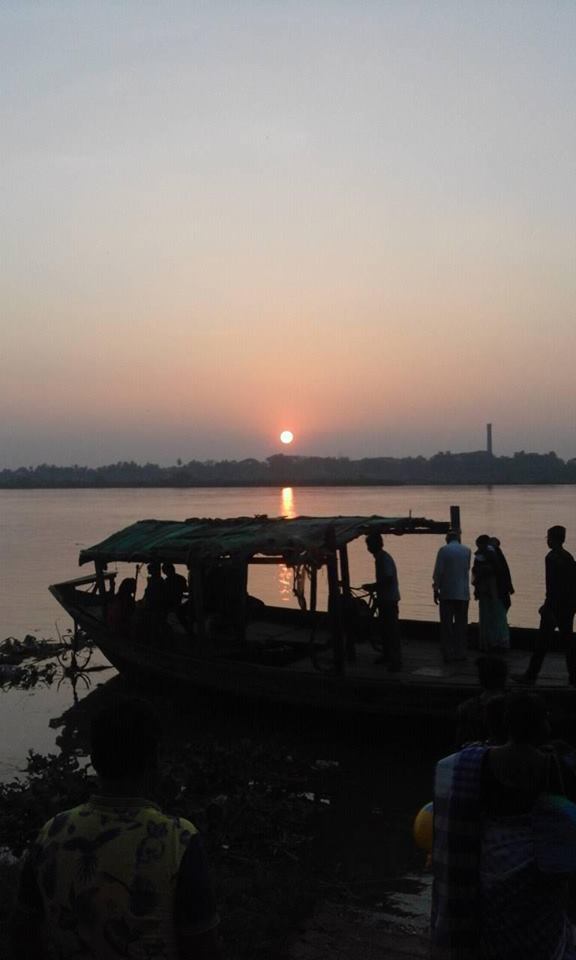
Most short accounts of Shivananda Sena describe him as a resident of Kulina-grama. The fuller sources tell a slightly different, more interesting story, and getting it right matters, because it explains exactly what kind of service he was famous for.
| Detail | Description |
|---|---|
| Actual native village | Kumarahatta, also called Halisahara, on the banks of the Ganges |
| Nearby village | Kanchadapada, about one and a half miles away, where he installed Deities |
| Caste/community | Vaidya, a Bengali community traditionally associated with medicine |
| Wife | Not named in the surviving sources |
| Sons | Chaitanya dasa (eldest), Ramadasa, and Paramananda dasa (youngest, later Kavi-karnapura) |
| Family priest | Shrinatha Pandita |
Not Actually From Kulina-Grama #
If you read Sri Chaitanya-charitamrita carefully, it is unusually exact about this. In several places it separates "Shivananda Sena" as an individual from "the inhabitants of Kulina-grama" as a separate group. For instance, when the pilgrimage party assembled at Navadvipa one year, the text says plainly that "the inhabitants of Kulina-grama and Khanda village also assembled," which sounds as if they were joining a party that was already forming around someone else. Srila Bhaktisiddhanta Sarasvati Thakura is quoted at length in Srila Prabhupada's purport to Sri Chaitanya-charitamrita, Adi-lila 10.60. He settles the question directly: "Shivananda Sena was a resident of Kumarahatta, which is also known as Halisahara." Kulina-grama was the home village of a different, well-known group of devotees, led by Satyaraja Khan (also called Satyaraja Vasu). Shivananda Sena led and organized this group on the road, but he did not personally belong to it. This is a small correction, but a real one. It is made here so that the more famous stories about him (the pilgrimage, the dog, his son Kavi-karnapura) are connected to the right home village.
A Vaidya Family By The Ganges #
Shivananda Sena belonged to the Vaidya community. This Bengali caste was traditionally linked with the practice of medicine and with work as writers and administrators. Mukunda Datta and his brother Vasudeva Datta from Chittagong came from the same community. Kumarahatta sat directly on the Ganges. About one and a half miles away was another village called Kanchadapada. There Shivananda Sena installed Deities of Gaura and Gopala and established a temple of Krishnaraya. According to Bhaktisiddhanta Sarasvati Thakura, this temple was still standing and worshiped generations later. This was not a poor man's household. Organizing and personally funding a journey of several weeks for two or three hundred people, year after year, took real and lasting wealth. Everything in the record suggests that Shivananda Sena had such wealth and used it without hesitation for the devotees' benefit.
Wife And Three Sons #
His wife is never named in the sources that survive, but she appears at several points in the story. She traveled with the pilgrimage party. She wept when Nityananda Prabhu cursed her sons in a moment of anger. And she stayed at Jagannatha Puri with her children for months at a time, while her husband managed the affairs of the whole traveling community. The couple had three sons. The eldest was Chaitanya dasa, and his very name puzzled Mahaprabhu when He first heard it. "What kind of name have you given him? It is very difficult to understand," the Lord said. Shivananda Sena simply replied that the name had "appeared to him from within." The middle son was Ramadasa, and little else is separately recorded about him. The youngest was Paramananda dasa. He was born at home in Bengal and later became the famous poet Kavi-karnapura. In its list of the Lord's associates, Chaitanya-charitamrita says that all three were themselves "heroic devotees of Lord Chaitanya." Shivananda Sena's own household was counted as a separate sub-branch of the great tree of the Lord's devotees. It was a whole family in service, not just one person.
A Family Priest, Not A Diksha-Guru #
The sources name a family priest, Shrinatha Pandita, connected to Shivananda Sena's household. Some accounts call him Shrinatha Chakravarti, and he apparently belonged to a branch of Advaita Acharya's line. This same person later gave formal diksha initiation to young Kavi-karnapura, as social custom required. He did this even though the boy had already received the holy name directly from Mahaprabhu Himself. But nowhere do the sources name a formal diksha-guru for Shivananda Sena personally. He is remembered in the tradition simply as a close householder-servant of Sri Chaitanya Mahaprabhu. His whole religious life took the form of organizing, funding, and protecting other Vaishnavas. He is not remembered through a recorded guru-lineage. This absence of a named guru is not a gap in the research. It appears to be a true picture of how he was actually remembered by the tradition that wrote his story down.
Now that we know where he lived and who his family were, the far more famous parts of Shivananda Sena's story can be told properly. The pilgrimage he ran every single year is described at leading the annual pilgrimage to Puri. The extraordinary mercy shown to an ordinary stray dog along the way is told at the mercy shown to a dog.
Scriptural evidence for this chapter (2)
caitanya-dāsa, rāmadāsa, āra karṇapūra
tina putra śivānandera prabhura bhakta-śūra
Word for word
caitanya-dāsa: Caitanya dāsa; rāmadāsa: Rāmadāsa; āra: and; karṇapūra: Karṇapūra; tina putra: three sons; śivānandera: of Śivānanda Sena; prabhura: of the Lord; bhakta-śūra: heroic devotees.
The three sons of Shivananda Sena, named Chaitanya dasa, Ramadasa and Karnapura, were all heroic devotees of Lord Chaitanya.
Names all three sons directly and confirms the family's own status as devotees in the Chaitanya-charitamrita's genealogy of associates.
Shivananda Sena was a resident of Kumarahatta, which is also known as Halisahara, and was a great devotee of the Lord... Shivananda Sena had three sons, named Chaitanya dasa, Ramadasa and Paramananda. As mentioned above, this last son later became Kavi-karnapura... His spiritual master was Shrinatha Pandita, who was Shivananda Sena's priest.
From the purport: Purport excerpt: "Shivananda Sena was a resident of Kumarahatta, which is also known as Halisahara, and was a great devotee of the Lord."
Srila Bhaktisiddhanta Sarasvati Thakura's biographical note, preserved in Srila Prabhupada's purport, that corrects the common assumption that Shivananda Sena was himself from Kulina-grama.
Chapter 2
Leading The Annual Pilgrimage To Puri
Tolls, lodging, a curse from Nityananda Prabhu, and the search for Raghunatha Dasa Goswami
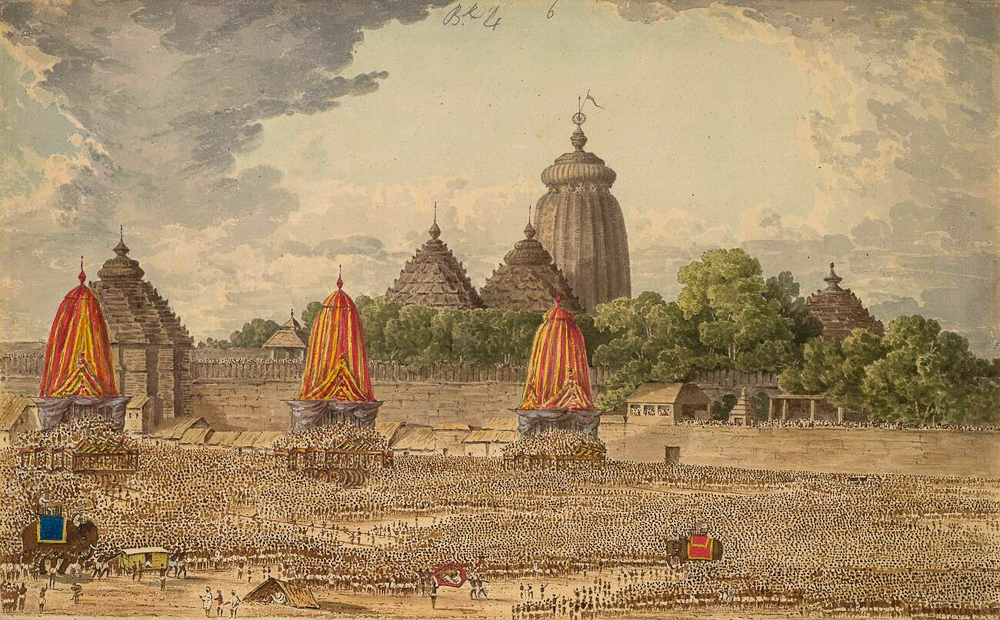
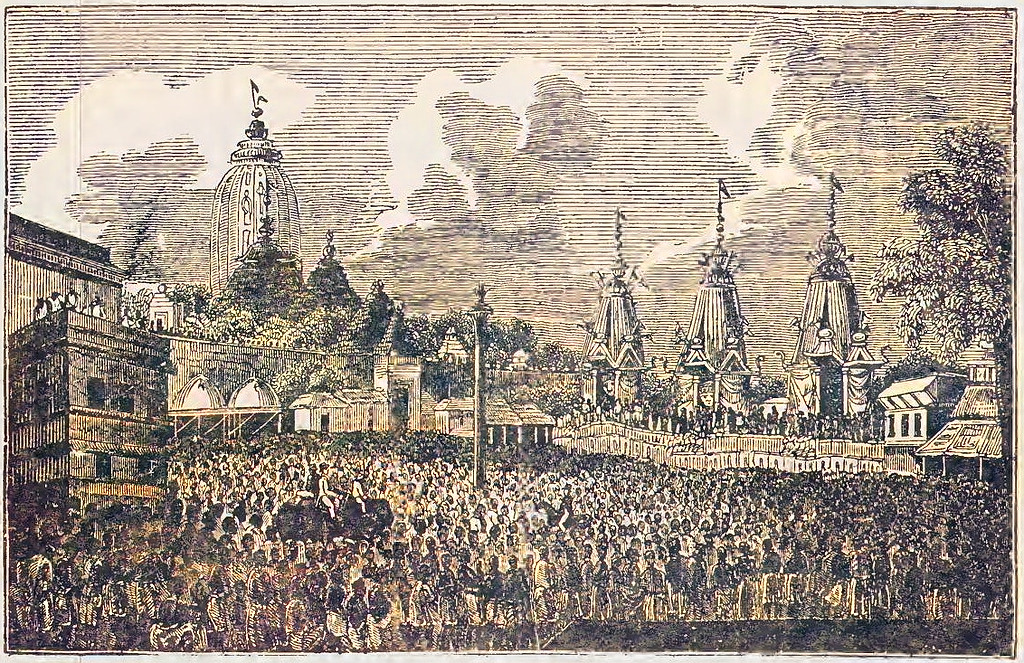
For about ten years, the same scene was repeated every summer. Hundreds of Bengali devotees left their homes near the Ganges and walked for weeks along roads and river crossings where tolls had to be paid. One householder carried the entire practical weight of the journey on his shoulders.
| Detail | Description |
|---|---|
| Timing | About one month before chaturmasya (the four-month rainy season), every year |
| Party size | Two to three hundred devotees in a typical year |
| Notable travelers | Advaita Acharya, Srivasa Thakura and his brothers and wife Malini, Vasudeva Datta, Murari Gupta, the residents of Kulina-grama and Khanda |
| Shivananda Sena's role | Paying every toll, arranging every night's lodging, maintaining the whole party |
| Best-known incident | Nityananda Prabhu's curse and kick, at a village with no shelter |
What The Job Actually Involved #
Sri Chaitanya-charitamrita describes plainly what Shivananda Sena did, without making it sound more romantic than it was: "Shivananda Sena managed the payment of tolls at different places. Maintaining everyone, he guided all the devotees in great happiness... He took care of everyone and gave each devotee places to stay. He knew all the paths leading to Orissa." This was skilled, exhausting and humble work. He had to bargain with toll collectors and find lodging for two or three hundred people in villages that had no reason to expect them. He did it again and again, year after year. Meanwhile, everyone else in the party was free simply to walk, chant, and look forward to seeing Sri Chaitanya Mahaprabhu. Before setting out, the whole group would first go to see Sacimata, the Lord's mother, and take her permission. This detail shows how fully the pilgrimage had become a recognized, expected yearly event among Bengal's Vaishnavas. It was not a sudden or occasional trip.
Left Waiting Under A Tree #
The single most quoted episode from these journeys happened in a year when things went wrong. The party reached a village and had nowhere to stay. Chaitanya-charitamrita explains plainly that "no one but Shivananda Sena could arrange for their residential quarters," and this time he had been delayed. He was held back at a toll station while everyone else went ahead. Nityananda Prabhu was left waiting under a tree, hungry and without shelter, and He grew furious. "Shivananda Sena has not arranged for My residence," He said, "and I am so hungry I could die. Because he has not come, I curse his three sons to die." When this was repeated to Shivananda's wife, she began to cry.
"Let My Three Sons Die" #
When Shivananda Sena returned from the toll station and heard what had happened, he answered his weeping wife at once, and his words were startling: "You crazy woman! Why are you needlessly crying? Let my three sons die for all the inconvenience we have caused Nityananda Prabhu." He then went straight to Nityananda Prabhu, who stood up and kicked him. Chaitanya-charitamrita clearly records what happened next. Shivananda Sena was "very pleased at being kicked," and immediately arranged a milkman's house as the Lord's residence. He touched Nityananda Prabhu's feet and led Him inside. Then he spoke words that Gaudiya Vaishnavas have quoted ever since: "Today You have accepted me as Your servant and have properly punished me for my offense... The dust of Your lotus feet is not attainable even by Lord Brahma, yet Your lotus feet have touched my wretched body. Today my birth, my family and my activities have all become successful." Hearing this, Nityananda Prabhu rose and embraced him in love. Here the text adds a short note on Nityananda Prabhu's own nature: "One of Sri Nityananda Prabhu's characteristics is His contradictory nature. When He becomes angry and kicks someone, it is actually for his benefit." Not everyone present understood the moment in this way. Shivananda's own nephew Shrikanta, who was still a boy, was offended on his uncle's behalf. He angrily went ahead alone to complain to Mahaprabhu directly. He did not realize that the Lord already knew everything that had happened.
Feeding The Lord Too Well #
Hospitality could go wrong in gentler ways too. At Puri one year, Shivananda Sena bought unusually costly remnants of Lord Jagannatha's food. Out of pure respect for the offering, he pressed Mahaprabhu to eat generously. He pressed so much that the Lord ate more than He should have and felt uncomfortably full afterward. As the Chaitanya-charitamrita says: "Because of Shivananda Sena's glories, Sri Chaitanya Mahaprabhu ate all kinds of prasadam to honor his request. However, the Lord ate more than necessary, and therefore His mind was dissatisfied" (Chaitanya-charitamrita, Antya-lila 10.147). The next day, Shivananda's eldest son, Chaitanya dasa, noticed this and quietly fixed the problem. He served a lighter meal of yogurt, lime, ginger and soft fried bread instead. Mahaprabhu was delighted: "This boy knows My mind," He said. It is a small, warm story. It shows that Shivananda Sena was not the only one in the family with a gift for knowing in advance what the Lord actually needed.
The Search for Raghunatha Dasa #
Shivananda Sena's party also comes into the story of the young Raghunatha Dasa Goswami. Raghunatha dasa fled his wealthy family's home to reach Mahaprabhu, and his father believed he had gone with the pilgrims. His anxious father then sent ten men after him with a letter for Shivananda Sena, begging for his son's return. The men caught up with the traveling Vaishnavas at a place called Jhankara and asked Shivananda Sena directly about Raghunatha dasa. His answer was short and true: "He did not come here." The men went home empty-handed. Raghunatha dasa had in fact slipped away separately and was making his own hard journey to Puri on foot. Some days later he reached the Lord safely. Later, at Puri, Shivananda Sena told him about the letter and the ten men his father had sent. This young man would go on to become one of the Six Goswamis of Vrindavana.
The most famous single episode from these pilgrim years, though, involves neither a curse nor a search party, but an ordinary dog that attached itself to the party on the road. What happened to it once the group reached Mahaprabhu is told in full at the mercy shown to a dog.
Scriptural evidence for this chapter (8)
Quoted in the text above:
- Antya 12.15 Sri Chaitanya-charitamrita
- Antya 12.27 Sri Chaitanya-charitamrita
- Antya 12.29 Sri Chaitanya-charitamrita
- Antya 10.147 Sri Chaitanya-charitamrita
Further verses:
‘tina putra maruka śivāra, ekhana nā āila
bhokhe mari’ genu, more vāsā nā deoyāila’
Word for word
tina putra: three sons; maruka: let them die; śivāra: of Shiva (Shivananda); ekhana: now; nā āila: did not come; bhokhe: from hunger; mari' genu: I am dying; more: for Me; vāsā: residence; nā deoyāila: was not arranged.
"Shivananda Sena has not arranged for My residence," He complained, "and I am so hungry I could die. Because he has not come, I curse his three sons to die."
Nityananda Prabhu's curse on Shivananda Sena's three sons, spoken out of hunger and frustration during a night with no lodging arranged.
ānandita hailā śivāi pāda-prahāra pāñā
śīghra vāsā-ghara kailā gauḍa-ghare giyā
Very pleased at being kicked, Shivananda Sena quickly arranged for a milkman's house to be the Lord's residence.
Shivananda Sena's joyful reaction to being kicked by Nityananda Prabhu, taken as a mark of the Lord's personal attention rather than an insult.
āji mora saphala haila janma, kula, karma
āji pāinu kṛṣṇa-bhakti, artha, kāma, dharma
Word for word
āji: today; mora: my; saphala: successful; haila: became; janma: birth; kula: family; karma: activities; pāinu: I have achieved; kṛṣṇa-bhakti: devotional service to Krishna; artha: economic development; kāma: satisfaction of the senses; dharma: religious principles.
"Today my birth, my family and my activities have all become successful. Today I have achieved the fulfillment of religious principles, economic development, satisfaction of the senses and ultimately devotional service to Lord Krishna."
Shivananda Sena's own words of joy after being kicked by Nityananda Prabhu, the source of the quotation used here.
patrī diyā śivānande vārtā puchila
śivānanda kahe, — ‘teṅha ethā nā āila’
Word for word
patrī diyā: after delivering the letter; śivānande: unto Śivānanda Sena; vārtā puchila: inquired the news; śivānanda kahe: Śivānanda Sena replied; teṅha: he; ethā: here; nā āila: did not come.
After delivering the letter, the men inquired from Shivananda Sena about Raghunatha dasa, but Shivananda Sena replied, "He did not come here."
Shivananda Sena shields Raghunatha dasa Goswami from his father's search party with a direct denial, protecting the young man's escape to Mahaprabhu.
Chapter 3
The Mercy Shown To A Dog
Chaitanya-charitamrita's own account of a stray dog fed on the road to Puri, and what happened to it there
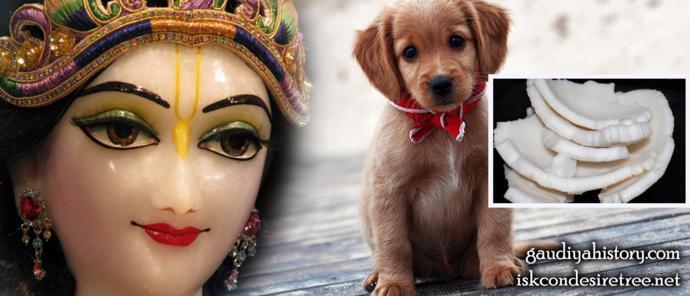
Sri Chaitanya-charitamrita tells this story with unusual care for detail. The story is best read in the same order that the text gives it, because every small step matters to what it is trying to teach.
| Detail | Description |
|---|---|
| Where told | Sri Chaitanya-charitamrita, Antya-lila, Chapter One (told a second time, briefly, in Madhya-lila 1.140) |
| Who cared for the dog | Shivananda Sena, on the road to Jagannatha Puri |
| Cost of the river crossing | Ten pana of small conchshells (kadi) |
| What Mahaprabhu fed it | Remnants of green coconut pulp |
| What the dog did in response | Chanted "Krishna, Krishna" |
| Its fate | Attained a spiritual body and departed for Vaikuntha the next day |
A Dog Joins The Party #
"While going to Jagannatha Puri, Shivananda Sena allowed a dog to go with him. He supplied it food to eat and maintained it." That is all Chaitanya-charitamrita says to introduce the animal. It does not explain where the dog came from, and it adds nothing sentimental. It simply states that the dog started following the pilgrimage and that Shivananda Sena chose to feed it instead of driving it away.
Paid Passage Across A River #
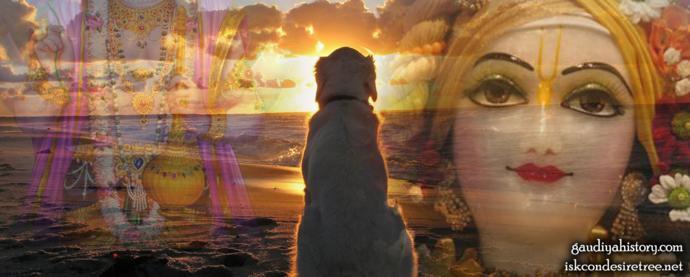
The first real test came at a river crossing. An Orissan boatman refused to let the dog board the ferry with the rest of the party. Shivananda Sena, the text says, was "unhappy that the dog had to stay behind," and he was truly troubled. So he paid the boatman ten pana of kadi simply to get the dog across to the other side. Kadi were small conchshells that served as everyday money in that period.
A Night Of Real Worry #
Some time later, while Shivananda Sena was delayed at a toll station, his servant forgot to feed the dog its usual meal. Shivananda Sena returned that evening. During his own meal, he asked whether the dog had eaten. He learned that it had not and, worse, that it had wandered off. He immediately sent ten men out to search for it. They came back empty-handed. Chaitanya-charitamrita tells plainly what followed: Shivananda Sena "became very unhappy and fasted for the night." In the morning the search continued but still found nothing. The text notes that "all the Vaishnavas were astonished," and what astonished them was not really Shivananda's grief, but how completely the dog had vanished. In great anxiety, the whole party continued on to Jagannatha Puri, where Mahaprabhu met them as He always did.
Coconut Pulp And The Holy Names #
The next morning, when the devotees came to see Sri Chaitanya Mahaprabhu at His residence, they found the missing dog already there, sitting a little apart from the Lord. Mahaprabhu was throwing it pieces of green coconut pulp, smiling, and saying to it, "Chant the holy names 'Rama,' 'Krishna' and 'Hari.'" The devotees watched the dog eat the coconut pulp while repeating "Krishna, Krishna" again and again, and Chaitanya-charitamrita says plainly that they were "very surprised." Shivananda Sena's own response is the most remarkable human detail in the whole episode. When he saw the dog chanting Krishna's name in that state, he immediately offered it his own obeisances. He did this out of natural humility. He especially wanted to make up for whatever offense he felt he had committed against it during the difficult days on the road.
"It Had Obtained Its Spiritual Body" #
The next day, no one saw the dog again. Chaitanya-charitamrita states directly what had happened to it: "the next day, no one saw that dog, for it had obtained its spiritual body and departed for Vaikuntha, the spiritual kingdom." Krishnadasa Kaviraja Goswami then states the point of the whole story very plainly: "Such are the transcendental pastimes of Sri Chaitanya Mahaprabhu, the son of mother Sachi. He even delivered a dog simply by inducing it to chant the maha-mantra, Hare Krishna." In his purport, Srila Prabhupada takes the episode as proof of the power of sadhu-sanga, association with a genuine devotee. He notes that this result of liberation "is possible even for a dog, by the mercy of the Vaishnava," and he uses the story to make a point. Everyone in the human form of life, he urges, should be encouraged to associate with devotees. His reason is that even eating prasadam, not to speak of chanting and dancing, can carry a soul all the way to Vaikuntha.
The story is told a second time, more briefly, earlier in the same work. Madhya-lila 1.140 simply notes, in passing, that "a dog accompanied Shivananda Sena and the devotees, and that dog was so fortunate that after seeing the lotus feet of Lord Chaitanya Mahaprabhu, it was liberated and went back home, back to Godhead." Krishnadasa Kaviraja Goswami mentions the same dog twice, in two different parts of his enormous biography. This says something about how seriously the tradition takes this particular pastime. It is not treated as a charming side note. It is one of the clearest and simplest examples anywhere in Chaitanya-charitamrita of a mercy that makes no difference at all between a human devotee's cherished companion and any other living being.
Throughout the story, Shivananda Sena worried about the dog, spent money on it, fasted in grief, and finally bowed in humility before the animal he had once been reluctant to keep. This part of the story is easy to overlook next to the miracle itself, but the whole episode really depends on it. Without his determined and costly care for an ordinary stray, there would have been no dog at Jagannatha Puri for Mahaprabhu to feed at all.
Scriptural evidence for this chapter (6)
Quoted in the text above:
- Antya 1.17 Sri Chaitanya-charitamrita
- Antya 1.32 Sri Chaitanya-charitamrita
- Antya 1.33 Sri Chaitanya-charitamrita
- Madhya 1.140 Sri Chaitanya-charitamrita
Further verses:
কুক্কুর রহিলা, — শিবানন্দ দুঃখী হৈলা ।
দশ পণ কড়ি দিয়া কুক্কুরে পার কৈলা ॥
kukkura rahilā, — śivānanda duḥkhī hailā
daśa paṇa kaḍi diyā kukkure pāra kailā
Word for word
kukkura rahilā: the dog remained; śivānanda duḥkhī hailā: Śivānanda became very unhappy; daśa paṇa kaḍi: ten paṇa of small conchshells; diyā: paying; kukkure: the dog; pāra kailā: crossed to the other side.
Shivananda Sena, unhappy that the dog had to stay behind, paid the boatman ten pana of conchshells to take the dog across the river.
From the purport: Purport excerpt: "One pana is eighty kadis, or small conchshells... Sivananda Sena paid for the dog with dasa pana, or eighty times ten pieces of kadi."
Shows the real cost Shivananda Sena was willing to bear for the dog's welfare, at an Orissan river crossing where the boatman had refused it passage.
prasāda nārikela-śasya dena phelāñā
‘rāma’ ‘kṛṣṇa’ ‘hari’ kaha’ — balena hāsiyā
Word for word
prasāda: food; nārikela-śasya: pulp of green coconut; dena phelāñā: throwing, gives; rāma kṛṣṇa hari: the holy names; kaha': say; balena hāsiyā: says, smiling.
Furthermore, Sri Chaitanya Mahaprabhu was throwing remnants of green coconut pulp to the dog. Smiling in His own way, He was saying to the dog, "Chant the holy names 'Rama,' 'Krishna' and 'Hari.'"
Mahaprabhu personally feeding and instructing the dog to chant, once the pilgrimage party reached Him at Jagannatha Puri.
Chapter 4
His Son, Kavi-Karnapura
A toe in an infant's mouth, a seven-year-old's verse, and a lifetime spent writing about Mahaprabhu's associates
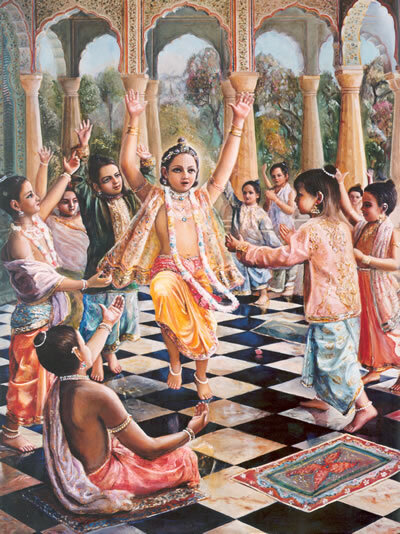
Of all that Shivananda Sena gave to the Gaudiya Vaishnava tradition, nothing has lasted like his youngest son. The son's fame has lasted even better than his father's own name. The boy was in his mother's womb during one of the Puri pilgrimages and was born back home in Bengal. He grew up to write some of the most important Sanskrit works the movement possesses.
| Detail | Description |
|---|---|
| Birth name | Paramananda dasa |
| Nickname from Mahaprabhu | Puri dasa |
| Later title | Kavi-karnapura ("jewel of poets, for the ear") |
| Birth year | 1524 or 1527, depending on the source (not fully settled) |
| Major works | Sri Chaitanya-chandrodaya-nataka, Gaura-ganoddesha-dipika (1576), Sri Chaitanya-charitamrita-mahakavya, Ananda-vrindavana-champu, Alankara-kaustubha, a commentary on the Tenth Canto of Srimad-Bhagavatam |
| Formal initiation | From Shrinatha Chakravarti (Shrinatha Pandita), the family priest, though he had already received Krishna's name directly from Mahaprabhu |
Born After His Father Came Home #
Shivananda Sena's youngest son was in his mother's womb during one of the yearly pilgrimages to Puri. Chaitanya-charitamrita is specific that he was born only after Shivananda was home again in Bengal. It notes simply that "the son was in the womb of Shivananda's wife, and when Shivananda returned home the son was born." Following Sri Chaitanya Mahaprabhu's own instruction, the boy was named Paramananda dasa. But the Lord at once began calling him Puri dasa in play, and the name stayed with him. When Shivananda Sena introduced the infant to the Lord, Mahaprabhu did something He is not recorded doing for any other child in Chaitanya-charitamrita: He put His own toe in the baby's mouth. Right after describing this, Chaitanya-charitamrita adds that "no one can cross over the ocean of Shivananda Sena's good fortune, for the Lord considered Shivananda's whole family His own."
A Boy Who Would Not Speak The Holy Name #
Some years later, Shivananda Sena brought Puri dasa back to Puri and made him offer obeisances at Mahaprabhu's feet. The Lord asked the boy, again and again, to say "Krishna" aloud, and the boy would not. Shivananda Sena tried hard to coax his son into chanting in front of everyone, but the child stayed silent. At last Mahaprabhu Himself remarked, half in wonder, "I have induced the whole world to take to the holy name of Krishna. I have induced even the trees and immovable plants to chant the holy name... but I could not induce this boy to chant the holy name of Krishna." Svarupa Damodara Goswami was standing nearby, and he explained what was happening. The boy had already been given the mantra and was chanting it silently within his mind. He was following the rule that a disciple does not repeat his initiating mantra aloud in front of others. This small moment shows that something unusual was already at work in the boy, even before he had spoken a single verse of his own.
A Verse At Seven Years Old #
The proof came soon after. Another day, Mahaprabhu simply said to him, "Recite, My dear Puri dasa," and without any warning the child composed and spoke aloud a Sanskrit verse of his own: "Lord Sri Krishna is just like a bluish lotus flower for the ears; He is ointment for the eyes, a necklace of indranila gems for the chest, and universal ornaments for the gopi damsels of Vrindavana. Let that Lord Sri Hari, Krishna, be glorified." Chaitanya-charitamrita takes care to show how extraordinary this was: "Although the boy was only seven years old and still had no education, he composed such a nice verse. Everyone was struck with wonder." Later Vaishnava writers connect this gift directly back to the toe Mahaprabhu had once placed in his mouth as an infant. They see it as the seed of the poetic power that would occupy him for the rest of his life. By most accounts, it was around this time that his mentor at Puri, Svarupa Damodara Goswami, gave him a title. The tradition has remembered him by this title ever since: Kavi-karnapura, "one whose poetry is nectar poured into the ear."
A Lifetime Of Writing Down The Movement's Memory #
Kavi-karnapura grew up to become one of Gaudiya Vaishnavism's most important Sanskrit authors. His Sri Chaitanya-chandrodaya-nataka is a full dramatic retelling of Mahaprabhu's life. His Sri Chaitanya-charitamrita-mahakavya and Ananda-vrindavana-champu cover the same subject in different literary forms. His Alankara-kaustubha is a serious work on poetic theory and devotional feeling. He also wrote a commentary on the Tenth Canto of Srimad-Bhagavatam. But none of these is cited as often as his Gaura-ganoddesha-dipika, completed around 1576. It is an orderly guide to the identities of Sri Chaitanya Mahaprabhu's associates in Krishna's eternal pastimes in Vrindavana. The account of Ramananda Raya already draws on this very text for the question of his gopi-identity. So a book written by Shivananda Sena's son more than four centuries ago still directly shapes how this tradition is explained to readers today. Kavi-karnapura's own book also honours his father. At verse 176, it records that Shivananda Sena himself was the combined incarnation of two gopis of Vrindavana named Vira and Duti.
Even though Mahaprabhu had personally given him the name of Krishna as a child, Kavi-karnapura later took diksha from Shrinatha Chakravarti, the same family priest connected to his father's household. Sources differ slightly on the exact year of his birth, giving either 1524 or 1527. Nothing in the record settles this small difference, so both years are given here instead of quietly choosing one.
Read his full biography at Srila Kavi Karnapura Goswami. The father is remembered chiefly for organizing journeys and caring for guests. The son is remembered as one of the tradition's great poets. Between the two of them, the family from Kumarahatta left behind both the practical and the literary support on which the memory of a whole generation of Gaudiya Vaishnavas rests. What is known of Shivananda Sena's own final years is told at final days and legacy, which closes this account.
Scriptural evidence for this chapter (5)
Quoted in the text above:
- Antya 16.74 Sri Chaitanya-charitamrita
- Antya 16.75 Sri Chaitanya-charitamrita
Further verses:
choṭa-putre dekhi’ prabhu nāma puchilā
‘paramānanda-dāsa’-nāma sena jānāilā
Lord Chaitanya asked the youngest son's name, and Shivananda Sena informed the Lord that his name was Paramananda dasa.
Mahaprabhu personally asking after the name of the boy who would grow up to be Kavi-karnapura.
śivānanda yabe sei bālake milāilā
mahāprabhu pādāṅguṣṭha tāra mukhe dilā
Word for word
śivānanda: Śivānanda Sena; yabe: when; sei bālake: that child; milāilā: introduced; mahāprabhu: Mahāprabhu; pāda-aṅguṣṭha: His toe; tāra mukhe: in his mouth; dilā: put.
When Shivananda Sena introduced the child to Sri Chaitanya Mahaprabhu, the Lord put His toe in the child's mouth.
From the purport: Purport excerpt: "One may refer to Antya-lila, chapter sixteen, verses 65-75, for information about the later manifestations of the Lord's mercy on Puri dasa."
The famous blessing later Vaishnava writers connect directly to Kavi-karnapura's precocious gift for Sanskrit poetry.
Two of the gopis of Vrindavana, whose former names were Vira and Duti, combined to become Shivananda Sena, the author's father.
Kavi-karnapura's own identification of his father Shivananda Sena's spiritual identity in Krishna's Vrindavana pastimes, preserved in Srila Prabhupada's purport.
Chapter 5
Final Days And Legacy
What the sources say, and do not say, about the end of his life, and what he left behind
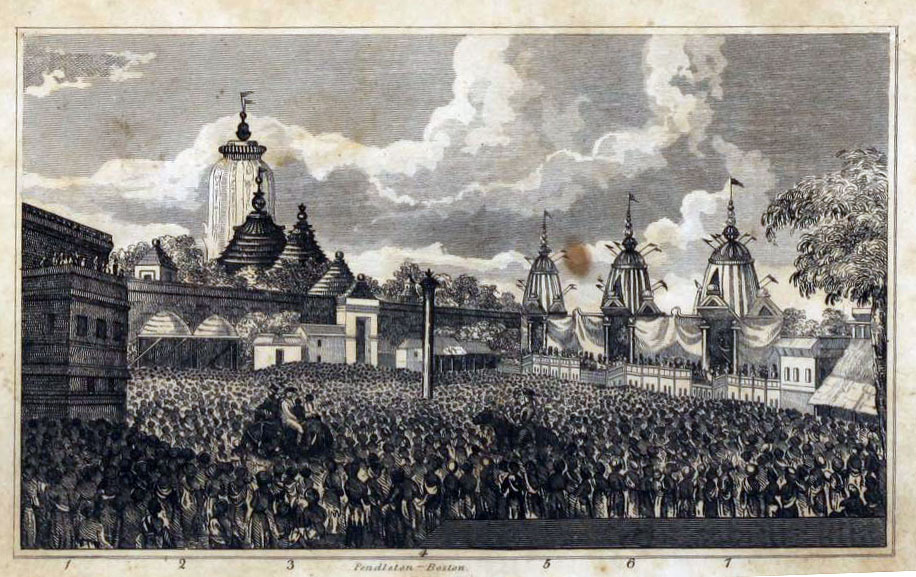
In the sources that survive, Shivananda Sena's story is no longer told in detail after the pilgrimage years. They do not describe his death, a final scene or any last words. What remains instead is a small group of traces, some physical and some written. Each one is more solid than the one before.
| Detail | Description |
|---|---|
| Date of disappearance | Not recorded in any source |
| Traditional samadhi location | Some later accounts place it at Jagannatha Puri, among the area's cluster of devotees' memorials, though Chaitanya-charitamrita itself does not describe this |
| Physical legacy | Deities of Gaura and Gopala, and a temple of Krishnaraya, at Kanchadapada near Kumarahatta |
| Family legacy | A son, Kavi-karnapura, whose books still shape how the tradition explains itself |
| Recorded by | Srila Bhaktisiddhanta Sarasvati Thakura, whose account is preserved in Srila Prabhupada's purports |
No Recorded Date, No Recorded Scene #
Several of Sri Chaitanya Mahaprabhu's other close associates have a recorded disappearance date, but Shivananda Sena does not. No date is given for him in Sri Chaitanya-charitamrita, in Srila Prabhupada's purports, or in the Gaudiya History biographies. One later devotional account says that his samadhi is still among the memorials at Jagannatha Puri that are traditionally linked with Mahaprabhu's closest devotees. But this detail does not appear in Chaitanya-charitamrita itself, so we report it here as a later tradition, not as an established fact. We can say only this much with confidence. For about ten years, his yearly pilgrimages are recorded. His youngest son grew old enough to compose verses that amazed an audience that included Sri Chaitanya Mahaprabhu Himself. After that, the record of Shivananda Sena's own life simply fades away. The same is true of many householder devotees of this period, who were famous for what they did, not for any writings of their own.
A Temple That Outlasted Him #
But one part of what he left behind is unusually solid for someone who lived so long ago. Srila Bhaktisiddhanta Sarasvati Thakura recorded that Shivananda Sena installed Deities of Gaura-Gopala and set up a temple of Krishnaraya at Kanchadapada, a village about one and a half miles from Kumarahatta. Bhaktisiddhanta Sarasvati Thakura also recorded that this temple was still standing, with worship still going on, in his own lifetime, centuries after Shivananda Sena's death. So a man remembered mainly for arranging other people's journeys also built something lasting of his own, in the quiet corner of Bengal that was really his home.
Preserved By A Later Acharya #
Much of what we know about Shivananda Sena's own life has survived only because Srila Bhaktisiddhanta Sarasvati Thakura took the trouble to record it, and because Srila Prabhupada kept that record in his own purport to Chaitanya-charitamrita. From this record we learn his real native village, that his wife was with him at Puri, the names of all three sons, and who the family priest was. Without that single paragraph of handed-down details, most of what sets Shivananda Sena apart from a name on a list of Mahaprabhu's associates would be lost today. This reminds us that, in every generation, the Gaudiya Vaishnava tradition's memory of its own history depends on someone choosing to write the details down before they are lost. His own son Kavi-karnapura did exactly this kind of work for a whole generation of Mahaprabhu's associates in the Gaura-ganoddesha-dipika.
What Endures #
So what remains of Shivananda Sena is not a date, or a monument in the usual sense. It is a very particular kind of example. He was a householder with real wealth and a family, and he had no special claim to scholarship or renunciation. Yet Krishnadasa Kaviraja Goswami, in his own words, calls him an "extremely confidential servant" of the Supreme Lord. Shivananda Sena is called this simply because he used what he had, without holding back, for the good of other devotees. Year after year, the pilgrimage he organized brought hundreds of ordinary Bengali Vaishnavas face to face with Sri Chaitanya Mahaprabhu. The compassion he showed a stray dog on the road became one of Chaitanya-charitamrita's clearest teachings on how far the Lord's mercy reaches. And the son he brought to Mahaprabhu at Puri went on to write some of the texts this tradition still depends on today. Few devotees in Sri Chaitanya Mahaprabhu's circle are remembered so fully for what they did for others, not for what they said or wrote. Shivananda Sena seems to have been fully at peace with that kind of legacy.
- Sri Chaitanya-charitamrita, Adi-lila 10.54-10.63 (Bhaktivedanta VedaBase)
- Sri Chaitanya-charitamrita, Madhya-lila 1.131-1.140, 16.16-16.27 (Bhaktivedanta VedaBase)
- Sri Chaitanya-charitamrita, Antya-lila 1.17-1.33 (Bhaktivedanta VedaBase)
- Sri Chaitanya-charitamrita, Antya-lila 10.12, 10.123, 10.140-10.151 (Bhaktivedanta VedaBase)
- Sri Chaitanya-charitamrita, Antya-lila 12.7-12.51 (Bhaktivedanta VedaBase)
- Sri Chaitanya-charitamrita, Antya-lila 16.65-16.76 (Bhaktivedanta VedaBase)
- Sri Chaitanya-charitamrita, Antya-lila 6.178-6.182 (Bhaktivedanta VedaBase)
- Shivananda Sena, Gaudiya History (ISKCON Desire Tree)
- Shivananda Sena, Biography (alternate account), Gaudiya History
- Kavi Karnapura Goswami, Biography, Gaudiya History
