Sri Vakresvara Pandita
The Ecstatic Dancer Mahaprabhu Called His Own Wing
The complete life, on one page: The main biography and every pastime page, in order, in one place
Introduction
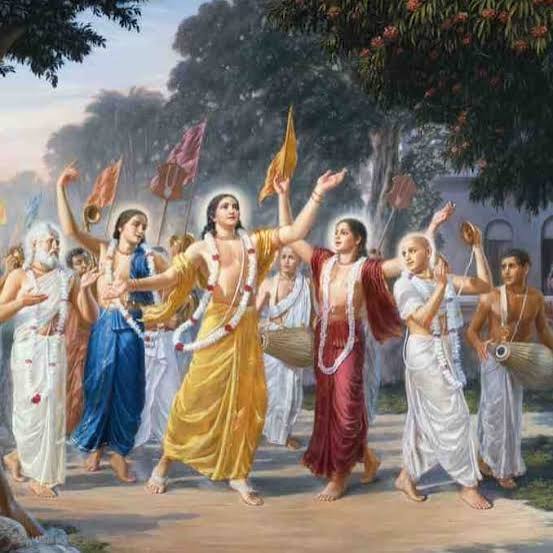
Long before he became known as one of Sri Chaitanya Mahaprabhu's most extraordinary dancers, Vakresvara Pandita was simply a boy from Guptipara, a village near Triveni in Bengal. He found his way into the Lord's earliest sankirtana gatherings at Navadvipa. He stayed at Sri Chaitanya Mahaprabhu's side for the rest of his manifest life, first in Bengal and then at Jagannatha Puri. Sri Chaitanya-charitamrita names him as the fifth branch of the Lord's own tree of devotees. He is remembered above all for one feat. He danced in unbroken spiritual ecstasy for seventy-two hours without stopping. Krishnadasa Kaviraja Goswami records this directly in the text, not only in later legend.
| Detail | Description |
|---|---|
| Birthplace | Guptipara, near Triveni, Bengal |
| Named in Chaitanya-charitamrita as | The fifth branch of Sri Chaitanya Mahaprabhu's own tree of devotees (Adi 10.17) |
| Signature feat | Danced in constant ecstasy for seventy-two hours (twenty-four prahara) without stopping |
| Identity | Aniruddha, fourth of the catur-vyuha expansions of Lord Vishnu (Gaura-ganoddesha-dipika 71; Chaitanya-charitamrita Adi 10.17 purport) |
| Diksha guru | Not recorded in any available source; his significance comes from direct personal association with Sri Chaitanya Mahaprabhu Himself |
| Foremost disciple | Sri Gopala Guru Goswami, later custodian of the Deity of Sri Radha-Kanta at Puri |
| Deity established | Sri Sri Radha-Kanta, worshipped at Kashi Mishra's house (later called the Gambhira), Puri |
At a Glance
- He joined Sri Chaitanya Mahaprabhu's sankirtana movement from its earliest days in Navadvipa and danced at the houses of Srivasa Thakura and Chandrashekhara Acharya, then followed the Lord to Puri and stayed there for the rest of his life.
- His seventy-two-hour dance is recorded directly in Sri Chaitanya-charitamrita, not only in later devotional biographies. It also led to one of Mahaprabhu's most quoted lines: "You are like a wing. If I had another like you, I would be able to fly in the sky."
- By his mercy, a proud Bhagavatam scholar named Devananda Pandita was freed from a serious offense against Srivasa Thakura and given Mahaprabhu's own mercy in turn.
- He became guru to Gopala Guru Goswami, a fact Srila Prabhupada's own purport confirms directly, and passed on to him the seva of the Deity of Sri Radha-Kanta at Puri.
- A later text claims that he was a gopi in Krishna's pastimes. But the verse usually quoted for him, Gaura-ganoddesha-dipika 71, does not actually say so, and the full picture is more complicated than any one source shows.
Scriptural evidence for the introduction (3)
বক্রেশ্বর পণ্ডিত—প্রভুর বড় প্রিয় ভৃত্য ।
এক–ভাবে চব্বিশ প্রহর যাঁর নৃত্য ॥ ১৭ ॥
vakresvara pandita -- prabhura bada priya bhrtya
eka-bhave cabbisa prahara yanra nrtya
Word for word
vakresvara pandita: Vakresvara Pandita; prabhura: of the Lord; bada: very; priya: dear; bhrtya: servant; eka-bhave: continuously in the same ecstasy; cabbisa: twenty-four; prahara: a duration of time comprising three hours; yanra: whose; nrtya: dancing.
Vakresvara Pandita, the fifth branch of the tree, was a very dear servant of Lord Caitanya's. He could dance with constant ecstasy for seventy-two hours.
From the purport: Purport excerpt: "In the Gaura-ganoddesa-dipika (71) it is stated that Vakresvara Pandita was an incarnation of Aniruddha... Among these disciples are Sri Gopalaguru and his disciple Sri Dhyanacandra Gosvami."
The direct textual basis for the seventy-two-hour dancing feat and for calling Vakresvara Pandita the fifth branch of Sri Chaitanya Mahaprabhu's own tree of devotees, not Nityananda Prabhu's.
প্রভু বলে—তুমি মোর পক্ষ এক শাখা ।
আকাশে উড়িতাম যদি পাঙ আর পাখা ॥ ২০ ॥
prabhu bale -- tumi mora paksa eka sakha
akase uditama yadi pan ara pakha
Word for word
prabhu bale: Lord Sri Caitanya Mahaprabhu replied; tumi: you; mora: My; paksa: wing; eka: one; sakha: one-sided; akase: in the sky; uditama: I could fly; yadi: if; pan: I could get; ara: another; pakha: wing.
Lord Caitanya replied, "I have only one wing like you, but if I had another, certainly I would fly in the sky!"
This is the exact source of the site's chosen quote for Vakresvara Pandita - Mahaprabhu's own image of him as a wing of His sankirtana mission.
व्यूहस्तूर्योऽनिरुद्धो यो स वक्रेश्वरपण्डितः ।
कृष्णावेशज नृत्येन प्रभोः सुखमजीजनत् ॥
vyūhas tūryo'niruddho yo sa vakreśvara-paṇḍitaḥ
kṛṣṇāveśaja nṛtyena prabhoḥ sukham ajījanat
Lord Aniruddha, the fourth member of the Catur-vyuha, appeared in Lord Caitanya's pastimes as Vakresvara Pandita. Lord Krsna personally entered Vakresvara's body and caused Him to dance in ecstasy.
From the purport: In the Gaura-gaṇoddeśa-dīpikā (71) it is stated that Vakreśvara Paṇḍita was an incarnation of Aniruddha, one of the quadruple expansions of Viṣṇu (Vāsudeva, Saṅkarṣaṇa, Aniruddha and Pradyumna).
Kavi Karnapura names Aniruddha, the fourth of the catur-vyuha, as Vakresvara Pandit, and says Krishna entered him to make him dance; Srila Prabhupada cites this verse in his purport to CC Adi 10.17. Sanskrit: diacritic edition of the Gaura-ganoddesha-dipika; English translation as published at bvmlu.org.
Chapter 1
Life and Association with Mahaprabhu
From a village near Triveni to the innermost circle of Sri Chaitanya Mahaprabhu's sankirtana movement.
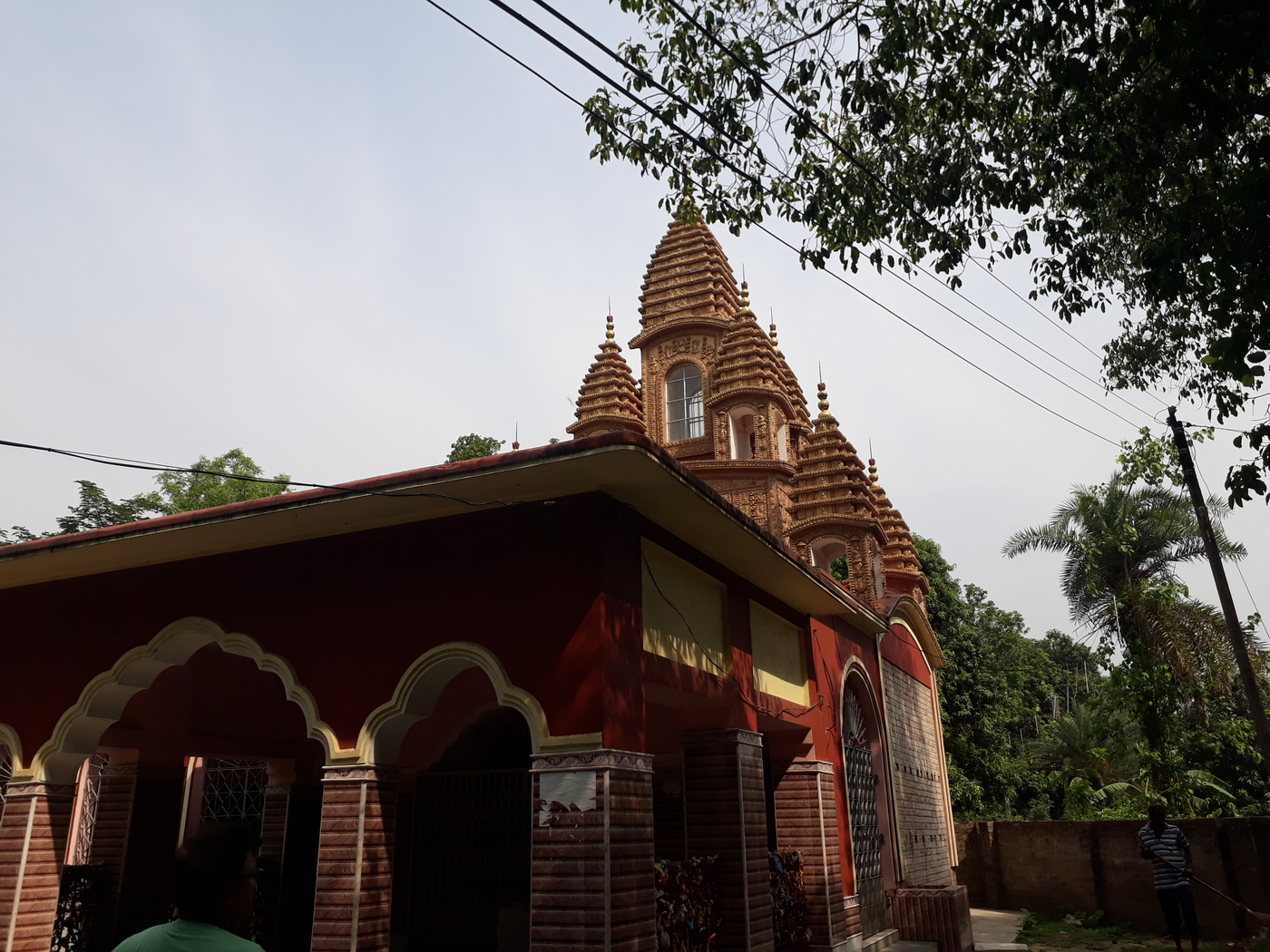
Almost nothing is recorded about Vakresvara Pandita's life before he found Sri Chaitanya Mahaprabhu. Gaudiya tradition places his birth in Guptipara, a village near Triveni on the Bhagirathi river in Bengal. Many of Mahaprabhu's earliest Bengali associates came from this same general region along the Ganges. No year survives for his birth. The only date passed down for it comes from Sri Dhyanachandra Goswami's own Dhyana-chandra-paddhati. It gives the fifth day of the dark fortnight of the month of Ashadha (roughly June-July), a lunar tithi still observed today as his appearance day. Without a year attached to it, this should be read as devotional memory, not as a settled historical date.
| Detail | Description |
|---|---|
| Birthplace | Guptipara, near Triveni, Bengal |
| First appears in Mahaprabhu's company | Among the early sankirtana gatherings at Navadvipa |
| Known for, even as a young devotee | Exceptional skill as a singer and dancer |
| Houses where he is recorded dancing | Those of Srivasa Pandita and Chandrashekhara Acharya |
| Later home | Jagannatha Puri, at Kashi Mishra's house, alongside Mahaprabhu Himself |
Joining the Sankirtana Movement at Navadvipa #
This part of his life is well recorded, because Sri Chaitanya-charitamrita records it directly. Vakresvara Pandita became part of Sri Chaitanya Mahaprabhu's congregational chanting movement in Navadvipa close to its very beginning. He was quickly recognized as one of its most gifted performers. He is named as a regular presence at the nightly kirtan gatherings held at the house of Srivasa Thakura. These were the same gatherings where Mahaprabhu first revealed His own divinity to His closest devotees. He is also named at the house of Acharyaratna, also known as Chandrashekhara Acharya. There, dramatic performances of Krishna's pastimes were sometimes staged, with Mahaprabhu Himself taking a role. According to Srila Prabhupada's purport to Chaitanya-charitamrita, Vakresvara Pandita first danced for seventy-two unbroken hours during one of these performances at Srivasa Thakura's house. This pastime is important enough to be told separately on The Ecstatic Dancer.
Sri Chaitanya-charitamrita's own structure shows how central Vakresvara Pandita was considered to be in this circle. The tenth chapter of the Adi-lila is built entirely around the image of Mahaprabhu as a tree and his devotees as its branches. It names the branches in order. Srivasa Thakura and his brothers are the first branch, Acharyaratna is the second, Pundarika Vidyanidhi the third, Gadadhara Pandita the fourth, and Vakresvara Pandita the fifth. Jagadananda Pandita follows immediately as the sixth. This is a real honor given in the text itself, not a later devotional addition. Krishnadasa Kaviraja Goswami named him among the few devotees important enough to be counted one by one, instead of being grouped under a subbranch. Some later retellings describe Vakresvara Pandita as "the fifth branch of Nityananda Prabhu's tree". But the chapter itself is titled "The Trunk, Branches and Subbranches of the Caitanya Tree," and its own numbering makes clear that the tree is Sri Chaitanya Mahaprabhu's own, not Nityananda Prabhu's. This difference is important. Vakresvara Pandita's place in the tradition comes from being counted directly among Mahaprabhu's own innermost branches.
No Recorded Diksha Guru #
The sources we found do not name a diksha guru, or formal initiating spiritual master, for Vakresvara Pandita. What they do record is his close association with Sri Chaitanya Mahaprabhu, and that Gopala Guru Goswami and others later received initiation from him. That part of his story is told in full on Training Gopala Guru Goswami.
Following Mahaprabhu to Puri #
When Sri Chaitanya Mahaprabhu accepted the sannyasa order of renunciation and settled at Jagannatha Puri, Vakresvara Pandita went with Him and stayed there for the rest of his life. Sri Chaitanya-charitamrita's Madhya-lila names him among the devotees who made their permanent home with the Lord at Nilachala. There he is grouped together with Gadadhara Pandita, Damodara Pandita, Sankara and Haridasa Thakura (Madhya 1.252). Elsewhere he is named among the wider circle that included Svarupa Damodara Goswami (Adi 10.124-126). Secondary biographical tradition adds that he was also present during Mahaprabhu's journey north to Ramakeli to meet Sanatana Goswami and Rupa Goswami. But this detail does not appear directly in Sri Chaitanya-charitamrita's own account of that journey, so it should be read with that in mind. The text does confirm, again and again and by name, that Vakresvara Pandita remained one of the fixed, recognized members of Mahaprabhu's Puri household for the rest of the Lord's manifest pastimes. He was present at the annual Ratha-yatra and in the gatherings at Kashi Mishra's house. Tradition says he was present right up to Mahaprabhu's own disappearance. The following pages describe what this closeness meant in practice. It meant dancing that drew the Lord's own personal praise. It also meant the worship of a Deity that would eventually pass through his hands to a new generation.
Scriptural evidence for this chapter (1)
পণ্ডিত-গোসাঞি কৈল নীলাচলে বাস ।
বক্রেশ্বর, দামোদর, শঙ্কর, হরিদাস ॥ ২৫২ ॥
pandita-gosani kaila nilacale vasa
vakresvara, damodara, sankara, haridasa
Word for word
pandita-gosani: Gadadhara Pandita; kaila: did; nilacale: at Jagannatha Puri; vasa: living; vakresvara: Vakresvara; damodara: Damodara Pandita; sankara: Sankara; haridasa: Haridasa Thakura.
Residing with the Lord at Jagannatha Puri were Pandita Gosani and other devotees, such as Vakresvara, Damodara, Sankara and Haridasa Thakura.
Confirms Vakresvara Pandita as one of the small, named circle of devotees who made Puri their permanent home alongside Sri Chaitanya Mahaprabhu.
Chapter 2
The Ecstatic Dancer
Seventy-two hours of unbroken dancing, Mahaprabhu's wish for a second wing like him, and a proud scholar's redemption.
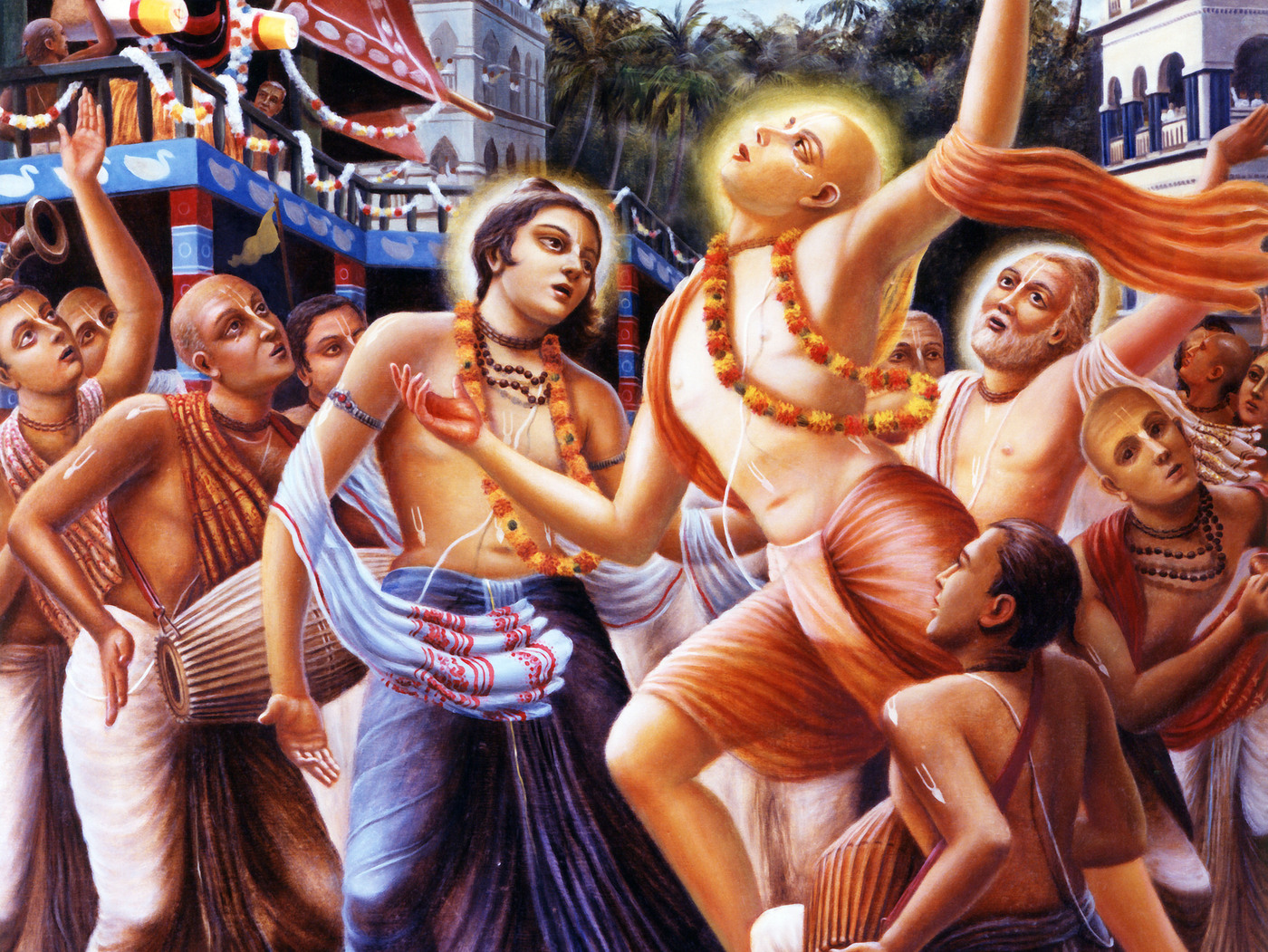
If Vakresvara Pandita is remembered for one thing above all others, it is his ability to dance in devotional ecstasy for far longer than an ordinary body should allow. This is unusual for a devotional memory of this kind. The exact number connected with it comes from Sri Chaitanya-charitamrita's own text, not only from later popular retelling.
| Detail | Description |
|---|---|
| Recorded duration of his ecstatic dance | Seventy-two hours (twenty-four prahara), continuous |
| Textual source for this number | Sri Chaitanya-charitamrita, Adi-lila 10.17, and Srila Prabhupada's purport there |
| Setting | A dramatic performance at the house of Srivasa Pandita |
| Mahaprabhu's own words afterward | "You are like a wing. If I had another like you, I would be able to fly in the sky" |
| A second, separate feat of mercy | Freeing the scholar Devananda Pandita from an offense against a Vaishnava |
Seventy-Two Hours Without Stopping #
Sri Chaitanya-charitamrita states plainly that Vakresvara Pandita "could dance with constant ecstasy for seventy-two hours" (Adi 10.17). Srila Prabhupada's purport gives more detail about this short statement. Quoting the Gaura-ganoddesha-dipika of Kavi Karnapura, it explains that this happened during a dramatic performance at the house of Srivasa Thakura. It says that Vakresvara Pandita was one of the chief dancers in that performance. It also says that he was considered an incarnation of Aniruddha, one of the four original expansions of Lord Vishnu (Vasudeva, Sankarshana, Aniruddha and Pradyumna). Kavi Karnapura's own verse puts it even more directly. As the purport's source explains, Krishna Himself personally entered Vakresvara Pandita's body and made him dance. Seventy-two hours means a full three days and nights without food, sleep or rest. This same length of time is repeated in every available source, from Sri Chaitanya-charitamrita's own text, through Srila Prabhupada's purport, to every later biographical retelling. So it is one of the more reliable specific numbers anywhere in this devotee's story. It is not the kind of figure that grows with each retelling.
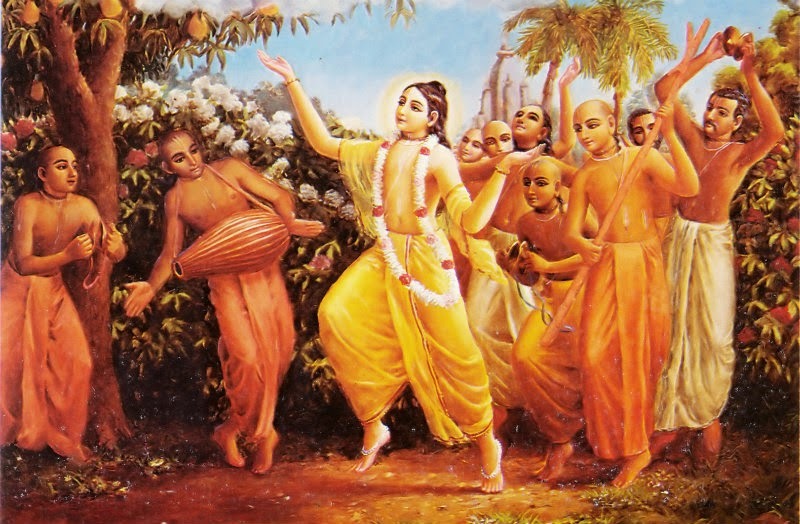
When that dance reached its peak, Sri Chaitanya-charitamrita records what happened next in Vakresvara Pandita's own words: still absorbed in ecstasy, he caught hold of Mahaprabhu's feet and said, "O Chandramukha! Please give me ten thousand Gandharvas. Let them sing as I dance, and then I will be greatly happy" (Adi 10.19). Mahaprabhu's reply is one of the most quoted lines connected to any of His individual associates: "I have only one wing like you, but if I had another, certainly I would fly in the sky!" (Adi 10.20). This is a striking image for the Lord Himself to use about a devotee. The image does not say that Vakresvara served Him. It says that Vakresvara's own ecstatic dancing was itself a wing carrying the Lord's sankirtana forward.
Dancing at Puri's Ratha-Yatra #
This was not a single, isolated episode. Once Vakresvara Pandita settled at Jagannatha Puri with Mahaprabhu, he took a regular part in the sankirtana of the annual Ratha-yatra festival. Sri Chaitanya-charitamrita's Madhya-lila describes the seven kirtan parties Mahaprabhu organized to accompany Lord Jagannatha's chariots, and names Vakresvara Pandita as the leader of dancing in one of them, alongside Srivasa Thakura leading another (Madhya 11.228). Years later, during the Gundicha-marjana festivities that followed one Ratha-yatra, the text records a direct echo of the earlier scene at Srivasa Thakura's house: "Sri Chaitanya Mahaprabhu then ordered Vakresvara Pandita to dance, and as he began to dance, the Lord began to sing" (Madhya 14.100). Once, his dancing had drawn a longing wish from the Lord Himself. Years later, Vakresvara Pandita was still the one Mahaprabhu turned to and personally sang for.
The Redemption of Devananda Pandita #
A second story shows a different side of the same gift. It is preserved in Sri Chaitanya-Bhagavata, not in Sri Chaitanya-charitamrita. Devananda Pandita was a respected teacher of Srimad-Bhagavatam at Kuliya, across the Ganges from Navadvipa. But he was proud of his scholarship and, at that time, did not yet believe in Mahaprabhu. Once Srivasa Thakura wept in ecstatic love while listening to his class. Some of Devananda's students thought this was a disturbance and removed Srivasa Thakura from the room, and Devananda did nothing to stop them. Word of the insult reached Mahaprabhu. He is recorded as teaching, in response, that a person who blasphemes a Vaishnava must use that same mouth to glorify Krishna and His devotees. This is because the two kinds of Bhagavata, the book and the person, are not separate. By this account, Devananda was able to correct his offense through Vakresvara Pandita. One evening Vakresvara came to Kuliya to lead kirtan at a devotee's house, and he danced for two full praharas (six hours). Devananda kept the crowd in order so that Vakresvara would not be disturbed, and afterward he fell at Vakresvara's feet. Vakresvara blessed him simply: "Krishna-bhakti hauk," may you attain devotion to Krishna. From that day, the sources say, faith awoke in Devananda's heart. When Mahaprabhu later met him, He is recorded as saying that Devananda had earned the Lord's own notice because he had served Vakresvara, since "Krishna has made His home in the heart of Vakresvara Pandita; as Krishna dances in his heart, so Vakresvara Pandita himself dances." This episode is recorded only in Sri Chaitanya-Bhagavata, which has no complete English text available online. It is taken here from a secondary translation on Gaudiya History, not from a direct citation of the original text, so we report it with that in mind.
Taken together, these episodes explain why, in every available source, Vakresvara Pandita's name is almost never separated from the word ecstasy. His dancing was not a performance skill separate from his devotion. In every account gathered here, it was his devotion itself, made visible.
Scriptural evidence for this chapter (6)
আপনে মহাপ্রভু গায় যাঁর নৃত্যকালে ।
প্রভুর চরণ ধরি’ বক্রেশ্বর বলে ॥ ১৮ ॥
apane mahaprabhu gaya yanra nrtya-kale
prabhura carana dhari' vakresvara bale
Word for word
apane: personally; mahaprabhu: Sri Chaitanya Mahaprabhu; gaya: sang; yanra: whose; nrtya-kale: at the time of dancing; prabhura: of the Lord; carana: lotus feet; dhari': embracing; vakresvara: Vakresvara Pandita; bale: said.
Sri Chaitanya Mahaprabhu personally sang while Vakresvara Pandita danced, and thus Vakresvara Pandita fell at the lotus feet of the Lord and spoke as follows.
Sets the scene for Vakresvara Pandita's plea for ten thousand Gandharva singers and Mahaprabhu's famous reply about the wing.
“দশসহস্র গন্ধর্ব মোরে দেহ’ চন্দ্রমুখ ।
তারা গায়, মুঞি নাচোঁ—তবে মোর সুখ ॥” ১৯ ॥
"dasa-sahasra gandharva more deha' candramukha
tara gaya, muni nacon -- tabe mora sukha"
Word for word
dasa-sahasra: ten thousand; gandharva: residents of Gandharvaloka; more: unto me; deha': please deliver; candra-mukha: O moon-faced one; tara gaya: let them sing; muni nacon: let me dance; tabe: then; mora: my; sukha: happiness.
"O Candramukha! Please give me ten thousand Gandharvas. Let them sing as I dance, and then I will be greatly happy."
From the purport: Purport excerpt: "The Gandharvas can sing continuously for days, and therefore Vakresvara Pandita wanted to dance as they sang."
Vakresvara Pandita's own request, still absorbed in ecstasy, shows the scale of dancing he felt capable of sustaining.
আর সম্প্রদায়ে নাচে পণ্ডিত-বক্রেশ্বর ।
শ্রীবাস নাচে আর সম্প্রদায়-ভিতর ॥ ২২৮ ॥
ara sampradaye nace pandita-vakresvara
srivasa nace ara sampradaya-bhitara
Word for word
ara sampradaye: in another sampradaya, or group; nace: dances; pandita-vakresvara: Vakresvara Pandita; srivasa: Srivasa Thakura; nace: dances; ara: another; sampradaya-bhitara: in the middle of a group.
Vakresvara Pandita began to dance in another group, and in yet another group Srivasa Thakura began to dance.
Places Vakresvara Pandita as the leader of one of the seven sankirtana parties Mahaprabhu organized for the annual Ratha-yatra at Puri.
তবে বক্রেশ্বরে প্রভু কহিলা নাচিতে ।
বক্রেশ্বর নাচে, প্রভু লাগিলা গাইতে ॥ ১০০ ॥
tabe vakresvare prabhu kahila nacite
vakresvara nace, prabhu lagila gaite
Word for word
tabe: thereafter; vakresvare: unto Vakresvara Pandita; prabhu: Lord Sri Caitanya Mahaprabhu; kahila: ordered; nacite: to dance; vakresvara nace: Vakresvara Pandita began to dance; prabhu: Sri Caitanya Mahaprabhu; lagila: began; gaite: to sing.
Sri Caitanya Mahaprabhu then ordered Vakresvara Pandita to dance, and as he began to dance, the Lord began to sing.
Years after the original seventy-two-hour dance, Mahaprabhu is still recorded personally singing for Vakresvara Pandita's dancing, during the Gundicha festivities following Ratha-yatra.
Listen, Brahmin, if someone eats poison then he must take ambrosia through the very same mouth... Whatever blasphemies you have unknowingly made are exactly like poison which you have eaten. Now you must use the same mouth to constantly glorify Krishna's name and qualities, which are like ambrosia.
Mahaprabhu's own teaching on atoning for a Vaishnava-aparadha, given in response to Devananda Pandita's offense against Srivasa Thakura and resolved through Devananda's later service to Vakresvara Pandita; drawn from a secondary translation of Sri Chaitanya-Bhagavata, which has no standalone English corpus on vedabase.
You have served Vakresvara, therefore I have come to know you. Vakresvara Pandit is the Lord's complete energy and whoever pays homage to him attains Krishna. Krishna has made his home in Vakresvara's heart. Krishna dances in order to make Vakresvara dance.
Mahaprabhu's own explanation to Devananda Pandita of Vakresvara Pandita's spiritual stature, given after Devananda's offense against Srivasa Thakura was resolved through service to Vakresvara; drawn from a secondary translation of Sri Chaitanya-Bhagavata.
Chapter 3
Training Gopala Guru Goswami
A documented guru-disciple relationship, and a dispute about his gopi identity, examined here with better sources instead of being repeated without question.
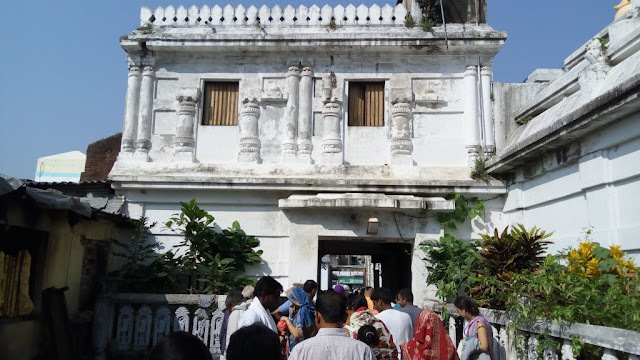
After Sri Chaitanya Mahaprabhu's own disappearance, Vakresvara Pandita remained at Puri. In the years that followed, he became a formally recognized guru. This role is confirmed not only by devotional memory but also by Srila Prabhupada's own purport to Sri Chaitanya-charitamrita.
| Detail | Description |
|---|---|
| Textual basis for his role as guru | Srila Prabhupada's purport to Adi 10.17 |
| Foremost named disciple | Sri Gopala Guru Goswami |
| Disciple's own disciple | Sri Dhyanachandra Goswami |
| Deity passed down through this line | Sri Sri Radha-Kanta, at Kashi Mishra's house (the Gambhira), Puri |
| Disputed identity | The gopi Tungavidya Sakhi, claimed for Vakresvara Pandita by one later text, for Gopala Guru Goswami by an unsourced popular claim, and assigned to two entirely different people by the Gaura-ganoddesha-dipika itself |
A Documented Guru-Disciple Line #
Sri Chaitanya-charitamrita's purport to Adi 10.17 states plainly that Vakresvara Pandita had many disciples in Orissa. They were known as Gaudiya Vaishnavas, although they were themselves Oriyas. The purport names two of them directly: "Sri Gopalaguru and his disciple Sri Dhyanacandra Gosvami." This one line gives solid support, in the text itself, for Gopala Guru Goswami's discipleship under Vakresvara Pandita. It does not rest only on later biographical retelling. A second purport, to Adi 10.131, tells us what this discipleship led to in practice. Kashi Mishra's house at Puri, the same house Mahaprabhu Himself had lived in during His Puri years, "was inherited by Vakresvara Pandita and then by his disciple Gopalaguru Gosvami, who established a Deity of Radhakanta there." Secondary biographical tradition also states that Vakresvara Pandita himself first worshipped the Deity of Sri Radha-Kanta at that same house. When we read the two together, the fuller picture is this. Vakresvara Pandita took up the seva of Radha-Kanta at Kashi Mishra's house after Mahaprabhu's own disappearance. When his own time came, that seva passed to Gopala Guru Goswami, along with the house itself, which was later known as the Gambhira. Gopala Guru Goswami expanded the altar with four more Deities. Gopala Guru Goswami's own page tells that side of the story in fuller detail. It includes his training under Svarupa Damodara Goswami and Raghunatha Dasa Goswami, and his own teaching of Dhyanachandra Goswami.
An Unresolved Question, Looked at Freshly #
A truly disputed claim has grown around this same relationship. Was Vakresvara Pandita previously the gopi Tungavidya Sakhi in Krishna's own pastimes in Vraja, or was it instead his disciple Gopala Guru Goswami? Tungavidya Sakhi is one of Srimati Radharani's eight principal companions. Gaudiya History's biography of Gopala Guru Goswami states that "according to some, Gopal Guru Goswami was the gopi known as Tungavidya Sakhi," without citing a specific text for the claim. Another source says something different. Gaudiya History's separate biography of Vakresvara Pandita and the website isvara.org both quote, independently, a translation of Sri Dhyanachandra Goswami's own Dhyana-chandra-paddhati. Dhyanachandra was Gopala Guru Goswami's own direct disciple. In this translation he writes that "that person who was previously very expert in the arts of singing and dancing, the gopi, Tungavidya, is presently renowned in the world as Vakreshwar Pandit." The second claim rests on a named, specific text, written by someone in the direct line of disciplic succession from both men. The first claim gives no textual citation at all. On its own, this would favor Vakresvara Pandita, not Gopala Guru Goswami, as the better-supported candidate for this identity.
But the Gaura-ganoddesha-dipika itself makes the picture even more complicated, instead of settling it. This book, written by Kavi Karnapura, a contemporary of Mahaprabhu's own associates, is the foundational Gaudiya Vaishnava text for exactly this kind of identity. The difficulty appears when we go beyond the single verse usually quoted and read its fuller text. Verse 71, the verse always cited for Vakresvara Pandita, identifies him only as an incarnation of Aniruddha. It says nothing about Tungavidya Sakhi or any other gopi. Separately, verse 168 of the same text states that "Sukeshi-gopi appeared as Makaradhvaja," and Makaradhvaja Pandit was Gopala Guru Goswami's own birth name, before Mahaprabhu gave him the title "guru." If this identification is followed, the Gaura-ganoddesha-dipika's own answer to "who was Gopala Guru Goswami previously" is Sukeshi-gopi, not Tungavidya Sakhi. Tungavidya-gopi herself appears twice more in the same text, assigned to two entirely different Bengali Vaishnavas. Verse 163 names her as the previous identity of Kavi Karnapura Goswami's own teacher, Prabodhananda Saraswati, while verse 170 assigns her instead to a devotee named Vidyavachaspati. Neither of those two is Vakresvara Pandita or Gopala Guru Goswami.
There is one further complication, and it should be stated honestly, not smoothed over. A separate translation of Gaura-ganoddesha-dipika 71, on the Gaudiya History website next to a Sanskrit text, includes an extra line. This line names a gopi called Sasirekha in connection with Vakresvara Pandita. It appears nowhere in the fuller translation of the same text used above, which comes from an independent source. Instead, that fuller translation, in its own verse 166, names a gopi Shashirekha-devi as the previous identity of a completely different devotee, Sri Kashishvara Goswami. The most likely explanation is that this one translation has mixed material from two separate verses, and that there is no real third claim. But this cannot be fully confirmed from the available sources, so the difference is reported here instead of being quietly settled.
Put plainly, there is no settled answer to "who was Tungavidya Sakhi." We can say with real confidence that the claim from a specific, named source favors Vakresvara Pandita over Gopala Guru Goswami. But the oldest and most authoritative identity text available, the Gaura-ganoddesha-dipika itself, does not actually support that claim either. Instead, it names a different gopi, Sukeshi, for Gopala Guru Goswami by name. And it assigns Tungavidya Sakhi twice over to two unrelated Vaishnavas. So, both here and on Gopala Guru Goswami's own page, this is reported honestly as an open question, not settled with a convenient answer.
Not One of the Twelve Gopalas #
Popular retellings sometimes loosely group Vakresvara Pandita with famous groups of Mahaprabhu's associates. But he does not belong to the "twelve gopalas," which are a specific and separately recorded circle of boyhood cowherd companions. They are connected with Nityananda Prabhu's later preaching in Bengal. The recorded grouping that truly includes him is the one already discussed above: Sri Chaitanya-charitamrita's own count of the named branches of Sri Chaitanya Mahaprabhu's tree, where he stands fifth.
Scriptural evidence for this chapter (6)
Quoted in the text above:
- on Vakresvara Pandita's identity and dates Dhyana-chandra-paddhati (attributed to Sri Dhyanachandra Goswami)
Further verses:
কাশীমিশ্র, প্রদ্যুম্নমিশ্র, রায় ভবানন্দ ।
যাঁহার মিলনে প্রভু পাইলা আনন্দ ॥ ১৩১ ॥
kasi-misra, pradyumna-misra, raya bhavananda
yanhara milane prabhu paila ananda
Word for word
kasi-misra: Kasi Misra; pradyumna-misra: Pradyumna Misra; raya bhavananda: Bhavananda Raya; yanhara: of whom; milane: meeting; prabhu: the Lord; paila: got; ananda: great pleasure.
In the list of devotees at Jagannatha Puri, Kasi Misra was the fifth, Pradyumna Misra the sixth and Bhavananda Raya the seventh. Lord Chaitanya took great pleasure in meeting with them.
From the purport: Purport excerpt: "Later this house was inherited by Vakresvara Pandita and then by his disciple Gopalaguru Gosvami, who established a Deity of Radhakanta there."
The clearest confirmation that Kashi Mishra's house and its Deity worship passed from Vakresvara Pandita to Gopala Guru Goswami after Vakresvara Pandita's own disappearance.
Lord Aniruddha, the fourth member of the Chatur-vyuha, appeared in Lord Chaitanya's pastimes as Vakreshvara Pandita. Lord Krishna personally entered Vakreshvara's body and caused Him to dance in ecstasy. This ecstatic dancing of Vakreshvara Pandita delights Lord Chaitanya Mahaprabhu.
The fuller, verse-numbered translation of this text names only Aniruddha for Vakresvara Pandita - it does not itself attach any gopi identity to him, which matters for the Tungavidya Sakhi question discussed elsewhere in his story.
Gauraseni-gopi appeared as the saintly Devotee Narayana Vachaspati. Kaveri-gopi appeared as Pitambara, and Sukeshi-gopi appeared as Makaradhvaja.
Makaradhvaja Pandit was Gopala Guru Goswami's own birth name before Mahaprabhu titled him "guru" - by this verse's own identification, his previous gopi identity was Sukeshi, not Tungavidya.
Tungavidya-gopi, who lived in Vrajabhumi and was learned in all the scriptures, appeared later as Prabodhananda Saraswati... The charming vraja-gopi named Tungavidya appeared as Vidyavachaspati, who was dear to both Lord Chaitanya and the residents of Vrindavana.
In this same text, the gopi Tungavidya is assigned twice over to two devotees who are neither Vakresvara Pandita nor Gopala Guru Goswami - evidence that the Tungavidya Sakhi identity question is more tangled than either popular claim alone suggests.
The vraja-gopi Shashirekha-devi appeared as Shri Kashishvara Goswami.
Cited to show that a separate rendering of verse 71 which adds a gopi named "Sasirekha" to Vakresvara Pandita likely mixes in this unrelated verse, since the fuller translation assigns Shashirekha-devi to Kashishvara Goswami instead.
Chapter 4
Legacy
No surviving book of his own, but a spiritual line, a Deity's worship and a place in the tradition's living memory that all trace back to him.
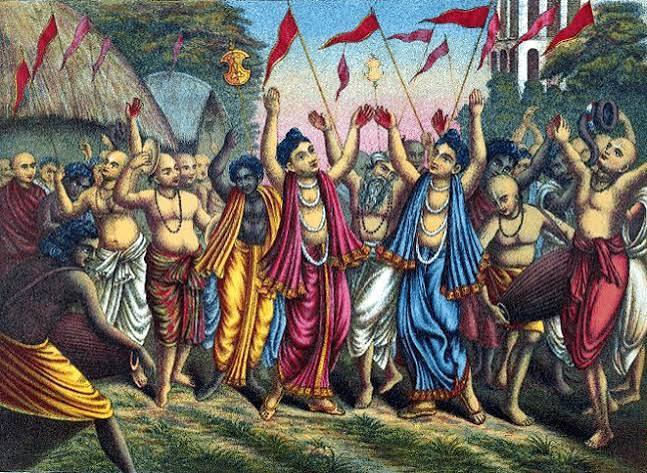
Every available source remembers Vakresvara Pandita's disappearance on the sixth day of the bright fortnight of the month of Ashadha. In the Gaudiya Vaishnava calendar, this day comes about two weeks after his appearance day, which falls on the fifth day of the dark fortnight of the same month. As with his appearance, no year is recorded anywhere. So the date is reported here as devotional memory, not as settled history.
| Detail | Description |
|---|---|
| Disappearance day | Sixth day of the bright fortnight of Ashadha (traditional; no year recorded) |
| Traditional samadhi location | The "64 Samadhis" area associated with Vrindavana, per secondary sources |
| Literary legacy in his own name | None survives; no book or composition by Vakresvara Pandita himself is known to survive |
| Biography written about him | Gaura-krishnodaya, by the Oriya devotee Sri Govinda dasa, referenced in Srila Prabhupada's own purport, but not known to survive in any widely accessible form |
| Living legacy | The spiritual line running through Gopala Guru Goswami and Dhyanachandra Goswami, and the continued worship of Sri Radha-Kanta at Puri |
No Book of His Own #
Rupa Goswami, Sanatana Goswami and several of the other great Gaudiya teachers left behind their own theological and literary works. But from the available sources, Vakresvara Pandita does not appear to have written anything under his own name. His importance to the tradition was never as an author. Srila Prabhupada's own purport to Chaitanya-charitamrita Adi 10.17 notes that his life was instead the subject of someone else's book: "Sri Govinda dasa, an Oriya devotee of Lord Caitanya Mahaprabhu, has described the life of Vakresvara Pandita in his book Gaura-krsnodaya." That book does not appear to have a modern edition or translation that is easy to find, and we could not locate its contents or check them directly. Still, it is recorded here because it shows that a fuller biography dedicated to Vakresvara Pandita once existed in the tradition, even though it cannot be read today.
Instead, his memory has been carried forward by exactly what made him special in life: his dancing, his mercy toward Devananda Pandita, and above all his guru-disciple line. Devotional sources place his own samadhi, or memorial tomb, in the area of Vrindavana known as the "64 Samadhis," where memorials are kept to many Vaishnavas of the generation that lived through Sri Chaitanya Mahaprabhu's own pastimes. But this detail rests on a single secondary source, and it could not be checked separately against a primary account.
A Living Spiritual Line #
Sri Chaitanya-charitamrita's own text confirms directly that Vakresvara Pandita's role as guru to Gopala Guru Goswami did not end with his own disappearance. Gopala Guru Goswami went on to train Sri Dhyanachandra Goswami. Together the two of them produced the Sri Gaura-Govindarcana-Smarana-Paddhati, a manual for meditative worship of Gauranga and Radha-Govinda that some Gaudiya Vaishnavas still consult today. That entire written tradition is real, dated and still in use. Its first link goes back to Vakresvara Pandita's own initiation of a young Oriya boy named Makaradhvaja Pandit. So, although Vakresvara Pandita left no book of his own, his teaching lived on through his disciple, and then through his disciple's disciple. Very few of Sri Chaitanya Mahaprabhu's other named branches can claim a line carried forward as directly as this.
The Deity He Served, Still Worshipped Today #
Vakresvara Pandita worshipped the Deity of Sri Sri Radha-Kanta at Kashi Mishra's house at Puri after Mahaprabhu's own disappearance. The Deity is still worshipped there today, at what is now called the Sri Radha-Kanta Matha, or the Gambhira, at Balisahi in Puri. It is an active Gaudiya Vaishnava pilgrimage site. Over the centuries it was expanded, first by Gopala Guru Goswami and then by later caretakers. But it rests on the seva that Vakresvara Pandita himself first took up. Gopala Guru Goswami's own legacy page describes that temple, and the devotional traditions still connected to it, in fuller detail. The tradition's memory of Vakresvara Pandita himself is simpler, and in its own way more striking. His dancing expressed his love for Krishna so completely that Sri Chaitanya Mahaprabhu Himself, watching it, wished aloud that He had two wings like it instead of one.
- Sri Chaitanya-charitamrita, Adi-lila 10.17-20, with Srila Prabhupada's purport
- Sri Chaitanya-charitamrita, Adi-lila 10.131, with Srila Prabhupada's purport
- Sri Chaitanya-charitamrita, Madhya-lila 11.228 and 14.100
- Gaudiya History (ISKCON Desire Tree): Sri Gaura-Ganoddesha-Dipika (full translation)
- Gaudiya History (ISKCON Desire Tree): Vakresvara Pandit
- Gaudiya History (ISKCON Desire Tree): Vakresvara Pandit - Biography
- Gaudiya History (ISKCON Desire Tree): Vakresvara Pandit - Biography (with Chaitanya-Bhagavata excerpts)
- ISVARA.org Vedic Library: Vakresvara Pandita, by Manonatha Dasa Vanacari
- Krishna.org: Who Is Vakresvara Pandita?
- Related page: Sri Gopala Guru Goswami
- ISKCON Desire Tree: Vakresvara Pandit Appearance, by Ramai Swami
