Bilvavana
बेलवन Hindi name proposed
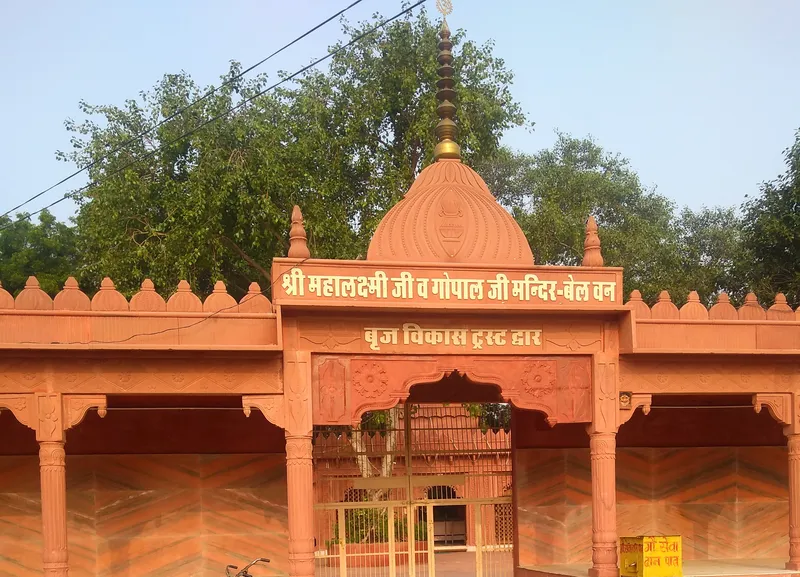
- What it is
- Baelvana, in Sanskrit Bilvavana, "the forest of bilva (bael) trees", is one of the twelve forests of Vraja.
- Visiting
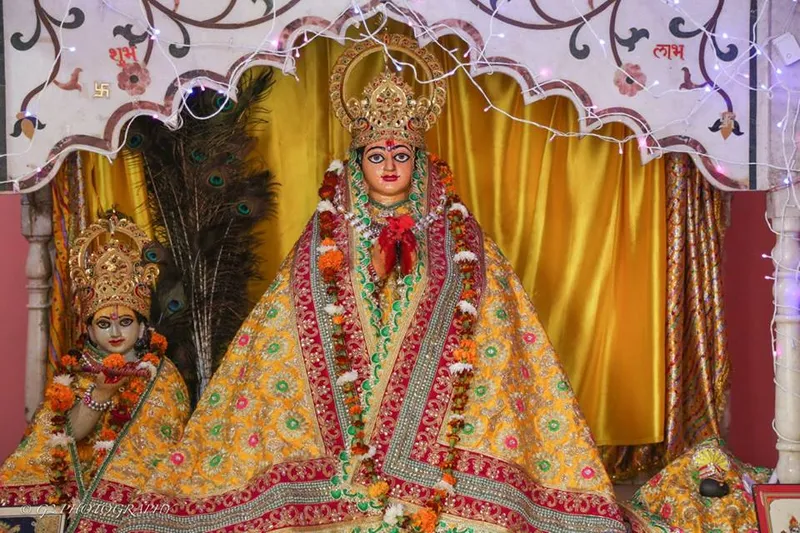
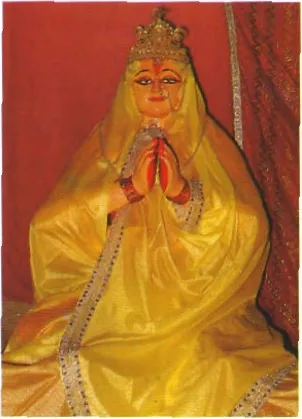
- According to Śrī Vraja-maṇḍala Parikramā (2007) and two other guidebooks, a temple of Lakṣmī stands in Baelvana, and one of them describes her Deity, about three feet high, with folded hands.
- Places here
- Lakṣmī Mandira (Baelvana), Kṛṣṇa-kuṇḍa (Baelvana)
In short
Baelvana, in Sanskrit Bilvavana, "the forest of bilva (bael) trees", is one of the twelve forests of Vraja. The Padma Purāṇa and the Caitanya-caritāmṛta call it Śrīvana, and Śrīla Prabhupāda explains that Śrīvana is also called Bilvavana.[1 +5] It is one of the five forests across the Yamunā, on its eastern bank.[3 +5] The Varāha Purāṇa calls it the forest worshipped by the gods, and Śrī Caitanya Mahāprabhu saw Śrīvana on His tour of Vraja.[1 +8] According to the guidebooks, Lakṣmī, the goddess of fortune, performs austerities here in the hope of entering the rāsa dance, and her temple stands in the forest.[17 +5]
Key facts
| Kind | forest |
|---|---|
| Region · area | Bhāṇḍīravana |
| Ācāryas | Śrī Caitanya Mahāprabhu, Śrīla Rūpa Gosvāmī, Śrīla Baladeva Vidyābhūṣaṇa, Śrīla Rāghava Paṇḍita Gosvāmī of Govardhana, Śrīla Śrīnivāsa Ācārya |
Why it is glorified
The Varāha Purāṇa calls Bilvavana the tenth forest, worshipped by the gods, and says that whoever goes there is honoured in the …
The Varāha Purāṇa calls Bilvavana the tenth forest, worshipped by the gods, and says that whoever goes there is honoured in the world of Brahmā. Śrīla Rūpa Gosvāmī quotes the verse in his Mathurā-māhātmya, and the Bhakti-ratnākara quotes it too.[1 +3]
The Padma Purāṇa describes Śrīvana as the cause of all opulence, a part of Kṛṣṇa's play, increasing beauty, splendour and fame.[1 +3]
In the Nārada Purāṇa it is Bilvāraṇya, the tenth forest, and one who bathes there goes to the world of Śiva or of Viṣṇu, as he wishes.[23 +1] Every list of the twelve forests counts it, though the names and numbers change from list to list (see below).[3 +5]
Divine pastimes
Lakṣmī's austerities
Śrīmad-Bhāgavatam tells that the goddess of fortune performed austerities for a long time, giving up all other desires, to obtain the touch of the dust of Kṛṣṇa's feet, and that the favour the gopīs received in the rāsa was never given to her. Neither verse names a place.[27 +5]
kasyānubhāvo 'sya na deva vidmahe tavāṅghri-reṇu-sparaśādhikāraḥ / yad-vāñchayā śrīr lalanācarat tapo vihāya kāmān su-ciraṃ dhṛta-vratā
O Lord, we do not know how the serpent Kāliya has attained this great opportunity of being touched by the dust of Your lotus feet. For this end, the goddess of fortune performed austerities for centuries, giving up all other desires and observing austere vows.
Translation: Śrīla Prabhupāda's disciples (BBT)Commenting on this verse (summarised here, not translated), Śrīla Baladeva Vidyābhūṣaṇa says that the place where Lakṣmī performed her austerities is known as Śrīvana. He does not say where Śrīvana is.[33] According to the guidebook Śrī Vraja-maṇḍala Parikramā (2007) and two others, Lakṣmī heard from Nārada of the rāsa and the gopīs' good fortune, and she still performs austerities here to enter the rāsa. One of them adds that she meditates on the rāsa of Sevā-kuñja across the Yamunā.[17 +5] No older source has been found for the conversation of Kṛṣṇa, Nārada and Lakṣmī that these guidebooks tell. The accounts of where she performed her austerities, and of what came of them, are set side by side on the page of the Lakṣmī Mandira.[17 +5]
Śrīla Prabhupāda explains, as a general teaching, why her austerities did not bring her into the rāsa:[27 +5]
General teaching (does not name the place)“The goddess of fortune, Lakṣmī, wanted to enjoy Kṛṣṇa and at the same time retain her spiritual body in the form of Lakṣmī. However, she did not follow in the footsteps of the gopīs in her worship of Kṛṣṇa.”
Śrīla Prabhupāda, Śrī Caitanya-caritāmṛta, Madhya-līlā 9.136, translation · vedabase.io
Other pastimes
According to the Bhakti-ratnākara, Rāma and Kṛṣṇa with Their friends ate ripe bilva fruits here with great delight.[12 +2] The Brahma-vaivarta Purāṇa tells that Kṛṣṇa, with Balarāma and the boys, went to a Śrīvana to play, and that the Āṅgirasa brāhmaṇas, whose wives brought food to Kṛṣṇa, held their sacrifice near Śrīvana. It does not say where its Śrīvana is, and the Bhāgavatam names no place for that sacrifice.[34 +3] The Garga-saṁhitā names the forest of bilvas only in passing, on Kṛṣṇa's way to Kokilāvana with Rādhā.[38 +2]
Śrī Caitanya Mahāprabhu
The Caitanya-caritāmṛta tells that after Bhadravana Śrī Caitanya Mahāprabhu visited Śrīvana and Lohavana, and then went to Mahāvana.[6 +4]
‘śrīvana’ dekhi’ punaḥ gelā ‘loha-vana’
‘mahāvana’ giyā kailā janma-sthāna-daraśana
Śrī Caitanya Mahāprabhu then visited Śrīvana and Lohavana. He then went to Mahāvana and saw Gokula, the place of Lord Kṛṣṇa’s early childhood pastimes.
Translation: Śrīla A.C. Bhaktivedanta Swami PrabhupādaIn his purport Śrīla Prabhupāda explains that Śrīvana is also called Bilvavana and quotes the Bhakti-ratnākara's description of it.[1 +5]
Names this placeOf Śrīvana (also called Bilvavana), the Bhakti-ratnākara states, devatā-pūjita bilvavana śobhāmaya: “The beautiful forest of Bilvavana is worshiped by all the demigods.” … “At Lohavana, Lord Kṛṣṇa used to tend cows. The demon named Lohajaṅgha was killed at this place.”
Śrīla Prabhupāda, Śrī Caitanya-caritāmṛta, Madhya-līlā 18.67, purport · vedabase.io
Traditional accounts
According to the Bhakti-ratnākara (Fifth Wave), Śrīla Rāghava Paṇḍita Gosvāmī of Govardhana, guiding Śrīla Śrīnivāsa Ācārya and …
According to the Bhakti-ratnākara (Fifth Wave), Śrīla Rāghava Paṇḍita Gosvāmī of Govardhana, guiding Śrīla Śrīnivāsa Ācārya and Śrīla Narottama dāsa Ṭhākura, showed them Bilvavana after Māṭha-grāma. He told them of the bilva fruits and said that whoever bathes in its Śrī Kṛṣṇa-kuṇḍa is freed from all sins.[12 +3] The same book tells that Śrīla Vīracandra Prabhu, after Bhadravana, wandered in the Bhāṇḍīra, Śrī and Loha forests.[42]
Śrīla Nārāyaṇa Bhaṭṭa Gosvāmī's Vraja-bhakti-vilāsa names Janārdana as the presiding Deity of Bilvavana. It sets the walk around the forest on the twelfth day of the bright fortnight of Bhādra, with a prayer to Bilvavana, "giver of perfection in austerity", and to Janārdana, Lord of the bilvas.[26 +4] The same book names a Śrī-vaṭa, a banyan whose sign is a temple of Lakṣmī, among the banyans of the northern bank, though it does not call that place Bilvavana.[45 +1] It also counts the forests and banyans of that bank as the kingdom of Śrī Baladeva, and those of the southern bank as Kṛṣṇa's.[8 +1]
Śrīla Prabhupāda
Śrīla Prabhupāda names Bilvavana among the five forests on the eastern bank of the Yamunā …
Śrīla Prabhupāda names Bilvavana among the five forests on the eastern bank of the Yamunā:[3 +5]
Names this place“There are twelve forests in the area of Vṛndāvana, and Madhuvana is one of them. Pilgrims from all parts of India assemble together and visit all twelve of these forests. There are five forests on the eastern bank of the Yamunā: Bhadravana, Bilvavana, Lauhavana, Bhāṇḍīravana and Mahāvana.”
Śrīla Prabhupāda, Śrīmad-Bhāgavatam, 4.8.42, purport · vedabase.io
He also writes that the pilgrims of his time, starting from Mathurā, visited Bilvavana among the twelve forests.[9 +2]
Visiting today
According to Śrī Vraja-maṇḍala Parikramā (2007) and two other guidebooks, a temple of Lakṣmī stands in Baelvana, and one of them describes her Deity, about three feet high, with folded hands. In the past, they say, many bael trees grew here.[17 +5]
Śrī Vraja-maṇḍala Parikramā adds that Kṛṣṇa-kuṇḍa and a sitting-place (baiṭhaka) of Śrī Vallabhācārya are just nearby; it gives no description, date or source for the baiṭhaka, so the attribution is not certain.[18] Śrīla Prabhupāda writes that Vallabhācārya, born in 1478, founded the Vallabhācārya-sampradāya and had two sons, Gopīnātha and Viṭṭhaleśvara.[49] The historians A. W. Entwistle (1987) and Prabhudayāl Mītal (1966) differ from the guidebook about whose sitting-place this is:
Accounts differ Whose sitting-place (baiṭhak) is at Baelvana, and where Vallabhācārya's baiṭhak in this area is.
- Śrī Vraja-maṇḍala Parikramā (2007) (printed p. 500)A sitting-place (baiṭhaka) of Śrī Vallabhācārya is just nearby Lakṣmī's place in Baelvana, with Kṛṣṇa-kuṇḍa and a temple of Lakṣmī.
- A. W. Entwistle (1987), a historianEntwistle places a baiṭhaka of Śrī Viṭṭhalanātha at Belban, close to the Lakṣmī temple.
- Mītal (1966), p. 126At Bel-ban, on the Yamunā bank under a dark tamāla tree, is the baiṭhak of Śrī Gusāīṁjī.
- Entwistle (1987), p. 419, citing Puṣṭimārga sources; Mītal (1966), p. 141Vallabhācārya's baiṭhak in this area is at Mānasarovara.
Location
| Where it is | Seva Kunja (Vrindavana) which is just across the Yamuna River from this Forest[57] |
|---|
Places at Bilvavana
3 places
Also listed here
- Vallabhācārya's baiṭhaka (Baelvana) baiṭhaka
Nearby places
Sevā-kuñja · Yamunā · Shrine at Dvādaṣāditya-ṭilā
Pictures
2 pictures
Where the sources differ
Accounts differ The names and numbers of these four forests in the lists of the twelve forests.
- Varāha Purāṇa 161.7-10Bhadravana 6th, Lohārgala-vana 9th, Bilvavana 10th, Bhāṇḍīra 11th; in 153.40-47: Bhadravana 6th across the Yamunā, Lohajaṅgha-vana 9th, Bilvavana 10th, Bhāṇḍīra 11th.
- Nārada Purāṇa, Uttara-bhāga 79.12-17Bhadravana 6th, Lohajaṅgha 9th, Bilvāraṇya 10th, Bhāṇḍīra 11th (the Varāha's numbers), each with a different fruit of bathing.
- Padma Purāṇa, Pātāla 69.16Bhadra, Śrī, Loha, Bhāṇḍīra are the first four of the twelve.
- Ādi-purāṇa 9.19-20Bilvaka 6th, Lauha 7th, Bhāṇḍīra 8th, Bhadraka 9th.
The wording of these accounts is our summary of the sources, not a published translation.
Whether the forests across the Yamunā belong to Balarāma. Śrī Vraja-maṇḍala Parikramā says that Śrī Balabhadra presides over them, and that for this reason they have temples of Śrī Baladeva; this is not certain.[46 +5]
Accounts differ Whether the east-bank forests 'belong to' or are presided over by Balarāma.
- the undated parikramā notes Bhadravana (citing the Gopāla-tāpanī Upaniṣad)The four east-bank forests (Bhadra, Bhāṇḍīra, Bilva, Lauha) belong to Balarāma; the other eight to Kṛṣṇa.
- Śrī Vraja-maṇḍala Parikramā (2007)Balabhadra presides over five east-bank forests including Gokula-Mahāvana; hence temples of Baladeva in all of them.
- Gopāla-tāpanī as quoted by Śrīla Jīva Gosvāmī (Kṛṣṇa-sandarbha)Two forests, Kṛṣṇa-vana and Bhadra-vana, with the twelve forests between them, and 'Rāma's form' there; no forests are assigned to Balarāma in the lines quoted.
- Vraja-bhakti-vilāsa ch. 1 (quoting the Bṛhan-nāradīya)The presiding Deities (adhipa-devatā) of the four are Śrīdhara, Hṛṣīkeśa, Hayagrīva and Janārdana (forms of Viṣṇu).
Whether the circuit of Bilvavana in the Vraja-bhakti-vilāsa, which includes the place of Bakāsura's killing, describes this forest or may describe another Bilvavana.[44 +2]
Accounts differ Whether the Vraja-bhakti-vilāsa's Bilvavana circuit describes this forest.
- Vraja-bhakti-vilāsa ch. 1 (Ādi-vārāha)Bilvaka is one of the five forests north (east) of the Yamunā.
- Vraja-bhakti-vilāsa ch. 10 and ch. 2 v.54Its Bilvavana circuit includes the place of Bakāsura's killing, Nanda-kuṇḍa and Māna-mādhurī-kuṇḍa; ch. 2 lists the same three under Vimala-vana ('tato vimalabanam … bakāsurabadhasthānam | nandakuṇḍam | tatpārśve mānamādhurīkuṇḍam').
- Śrī Vraja-maṇḍala Parikramā (2007) and the undated parikramā notes BilvavanaBaelvana is across the Yamunā from Vṛndāvana (Sevā-kuñja), between Māṭa and Lohavana.
Where the brāhmaṇas' wives brought food to Kṛṣṇa.
Accounts differ Where the pastime of the brāhmaṇas' wives (ŚB 10.23) took place.
- Śrīmad-Bhāgavatam 10.23.1-3 (disciples' translation)The boys are sent to brāhmaṇas performing the Āṅgirasa sacrifice; no place is named.
- Brahma-vaivarta Purāṇa 4.18.10, 4.18.21-22, 4.98.17, 4.128.2The Āṅgirasa brāhmaṇas sacrifice in their own āśrama near Śrīvana; Rāma and Keśava wait at a distance, at the Bhāṇḍīra, at the root of the banyan; the brāhmaṇīs' food was eaten there.
- Garga-saṁhitā 4.21.6-7 and 8.6.13After the forest fire, at an Aśoka forest on the (far) bank of the Yamunā, reached from the Bhāṇḍīra.
- Padma Purāṇa, Pātāla 69.32-33In the seventh petal (west) of the lotus of Vṛndāvana, which gives the yajña-patnīs their desired boons.
The wording of these accounts is our summary of the sources, not a published translation.
References
57 references
- Varāha Purāṇa, adhyāya 153, verses 45-47, Sanskrit Wikisource
- Śrīla Rūpa Gosvāmī, Mathurā-māhātmya v.353 ('of Bilva-vana')
- Padma Purāṇa, Vṛndāvana-māhātmya (1) vv.16-17 (= Padma Pātāla-khaṇḍa 69.16-17)
- Padma Purāṇa, Vṛndāvana-māhātmya (1) vv.49b-50 (= Padma Pātāla-khaṇḍa 69.49b-50)
- Ādi-purāṇa, (9) navamo'dhyāyaḥ vv.19-20, Śrī Veṅkaṭeśvara Press, Mumbai, 1929
- Śrīla Kṛṣṇadāsa Kavirāja Gosvāmī, Śrī Caitanya-caritāmṛta, Madhya-līlā 18.67, online edition · vedabase.io
- Śrīla Narahari Cakravartī, Bhakti-ratnākara, Fifth Wave, printed p. 185: the twelve forests, with the Padma Purāṇa and Skanda verses, 2nd ed., 1912
- Śrīla Nārāyaṇa Bhaṭṭa Gosvāmī, Vraja-bhakti-vilāsa, chapter 1, 'the two divisions of the twelve forests, north and south of the Yamunā', quoted 'ādivārāhe', printed p. 12, 1st ed., publ. Bābā Kṛṣṇadāsa, Kusuma-sarovara, Saṁvat 2008
- Śrīla Prabhupāda, Śrīmad-Bhāgavatam, 4.8.42, purport · vedabase.io
- Śrīla Prabhupāda, Śrī Caitanya-caritāmṛta, Madhya-līlā 17.193, purport · vedabase.io
- Śrīla Prabhupāda, Śrī Caitanya-caritāmṛta, Madhya-līlā 5.12, purport · vedabase.io
- Śrīla Narahari Cakravartī, Bhakti-ratnākara, Fifth Wave, printed p. 275: the ninth forest, Bilvavana, 2nd ed., 1912
- Śrīla Kṛṣṇadāsa Kavirāja Gosvāmī, Śrī Caitanya-caritāmṛta, CC Madhya-līlā 18.66, online edition · vedabase.io
- Śrīla Prabhupāda, Śrī Caitanya-caritāmṛta, Madhya-līlā 18.66, translation · vedabase.io
- Śrīla Prabhupāda, Śrī Caitanya-caritāmṛta, Madhya-līlā 18.67, purport · vedabase.io
- Śrīla Prabhupāda, Śrīmad-Bhāgavatam, Canto 1, Introduction, Introduction (life of Śrī Caitanya Mahāprabhu) · vedabase.io
- Śrī Vraja-maṇḍala Parikramā (2007), PDF p. 262
- Śrī Vraja-maṇḍala Parikramā (2007), PDF p. 263
- Vṛndāvana-Dhāma Ki Jaya! (c. 1986), by Dhruva Mahārāja dāsa, PDF p. 61
- the undated parikramā notes Bilvavana, ¶2
Show all 57 references
- the undated parikramā notes Bilvavana, ¶4
- the undated parikramā notes Bilvavana, ¶5
- Nārada Purāṇa, उत्तरार्धः/अध्यायः 79 v.79-12
- Nārada Purāṇa, उत्तरार्धः/अध्यायः 79 v.79-15 to 79-17
- Varāha Purāṇa, adhyāya 161, verses 7-10, Sanskrit Wikisource
- Śrīla Nārāyaṇa Bhaṭṭa Gosvāmī, Vraja-bhakti-vilāsa, chapter 1, list of the twelve forests quoted 'pādme', vv.13-17, printed p. 2, 1st ed., publ. Bābā Kṛṣṇadāsa, Kusuma-sarovara, Saṁvat 2008
- Śrīmad-Bhāgavatam 10.16.36, GRETIL
- Śrīmad-Bhāgavatam 10.47.60, GRETIL
- Śrīla Prabhupāda, Śrī Caitanya-caritāmṛta, Madhya-līlā 9.114, translation · vedabase.io
- Śrīla Prabhupāda, Kṛṣṇa, the Supreme Personality of Godhead (Kṛṣṇa book), Chapter 16, 'Subduing Kāliya' (the prayers of the Nāgapatnīs) · vedabase.io
- Śrīla Prabhupāda, Kṛṣṇa, the Supreme Personality of Godhead (Kṛṣṇa book), Chapter 47, 'Delivery of the Message of Kṛṣṇa to the Gopīs' · vedabase.io
- Śrīla Prabhupāda, Śrī Caitanya-caritāmṛta, Madhya-līlā 9.113, translation · vedabase.io
- Baladeva Vidyābhūṣaṇa: commentary on ŚB 10.16.36, Bhagavata Vidya Pith edition, ed. Bhagavata Rishi and Krishna Shankar Shastri, 1996
- Brahma-vaivarta Purāṇa, Kṛṣṇa-janma-khaṇḍa (4) 16.1-3, Sanskrit Wikisource
- Brahma-vaivarta Purāṇa, Kṛṣṇa-janma-khaṇḍa (4) 18.9-10, Sanskrit Wikisource
- Śrīmad-Bhāgavatam 10.23.3, GRETIL
- Śrīla Prabhupāda, Kṛṣṇa, the Supreme Personality of Godhead (Kṛṣṇa book), Chapter 23, 'Delivering the Wives of the Brāhmaṇas Who Performed Sacrifices' · vedabase.io
- Garga-saṁhitā, Vṛndāvana-khaṇḍa (2), adhyāya 21, verses 19-20, Sanskrit Wikisource
- Śrīmad-Bhāgavatam 10.30.28, GRETIL
- Śrīla Prabhupāda, Kṛṣṇa, the Supreme Personality of Godhead (Kṛṣṇa book), Chapter 30, 'Kṛṣṇa’s Hiding from the Gopīs' · vedabase.io
- Śrīla Narahari Cakravartī, Bhakti-ratnākara, Fifth Wave, printed p. 274: across the Yamunā to Surukhuru; the seventh forest, Bhadravana, 2nd ed., 1912
- Śrīla Narahari Cakravartī, Bhakti-ratnākara, Thirteenth Wave, printed p. 1025: Vīracandra Prabhu's tour of Vraja, 2nd ed., 1912
- Śrīla Nārāyaṇa Bhaṭṭa Gosvāmī, Vraja-bhakti-vilāsa, chapter 1, the presiding Deities of the twelve forests quoted from the Bṛhan-nāradīya, nos. 6, 9, 10, 12, printed p. 5, 1st ed., publ. Bābā Kṛṣṇadāsa, Kusuma-sarovara, Saṁvat 2008
- Śrīla Nārāyaṇa Bhaṭṭa Gosvāmī, Vraja-bhakti-vilāsa, chapter 10, 'the circumambulation of Bilvavana' (quoted 'bhaviṣyottare'), printed p. 212, 1st ed., publ. Bābā Kṛṣṇadāsa, Kusuma-sarovara, Saṁvat 2008
- Śrīla Nārāyaṇa Bhaṭṭa Gosvāmī, Vraja-bhakti-vilāsa, chapter 2, the signs of the sixteen banyans (quoted 'skānde uttarakhaṇḍe'), printed p. 53, 1st ed., publ. Bābā Kṛṣṇadāsa, Kusuma-sarovara, Saṁvat 2008
- Śrīla Nārāyaṇa Bhaṭṭa Gosvāmī, Vraja-bhakti-vilāsa, chapter 2, vv.19-20 and the prose after v.20 (the forests and banyans of the two banks, and whose kingdom they are), printed p. 36, 1st ed., publ. Bābā Kṛṣṇadāsa, Kusuma-sarovara, Saṁvat 2008
- Śrīla Prabhupāda, Śrī Caitanya-caritāmṛta, Madhya-līlā 1.239, purport · vedabase.io
- Śrīla Prabhupāda, Śrīmad-Bhāgavatam 4.8.42, purport (the list, as reprinted with numbers)
- Śrīla Prabhupāda, Śrī Caitanya-caritāmṛta, Madhya-līlā 19.61, purport · vedabase.io
- Śrī Vraja-maṇḍala Parikramā (2007), PDF p. 254
- Śrī Vraja-maṇḍala Parikramā (2007), PDF p. 255
- the undated parikramā notes Bhadravana, ¶3
- Śrīla Jīva Gosvāmī, Ṣaṭ-sandarbha, para 3511 of the GRETIL Ṣaṭ-sandarbha text (Kṛṣṇa-sandarbha), quoting 'gtu 2.31-32', GRETIL
- Garga-saṁhitā, Balabhadra-khaṇḍa (8), adhyāya 13 (Balabhadra's thousand names), verse 105, Sanskrit Wikisource
- Śrīmad-Bhāgavatam 10.11.51, GRETIL
- Śrīla Prabhupāda, Kṛṣṇa, the Supreme Personality of Godhead (Kṛṣṇa book), Chapter 11, 'Killing the Demons Vatsāsura and Bakāsura' · vedabase.io
- the undated parikramā notes Bilvavana, ¶6