Where Kṛṣṇa killed Bakāsura
The Bhāgavatam, the commentators and the pilgrimage books
In short
Bakāsura was a demon and a friend of King Kaṁsa. He took the form of a huge crane-like duck. At a reservoir where the cowherd boys had watered their calves, he swallowed Kṛṣṇa. Kṛṣṇa burned his throat. When he attacked again, Kṛṣṇa split him apart by the beak. The Bhāgavatam names no place; later books name several.[1–3]
On this page
At a glance
- Scripture: Śrīmad-Bhāgavatam 10.11.46–53, in Śrīla Prabhupāda's translation, tells of the killing at a reservoir of water. It does not name the reservoir.[1–3]
- Śrīla Prabhupāda's Kṛṣṇa book sets the scene on the bank of the Yamunā, where the boys watered their calves.[3]
- The commentators: Śrīla Sanātana Gosvāmī, Śrīla Jīva Gosvāmī and others say the reservoir is the great lake called Baka-sthala, east of Nandīśvara Hill.[4]
- The Bhakti-ratnākara names the village Bakatharā near Jāvaṭa as the place where Kṛṣṇa killed Bakāsura.[5]
- Family: the Bhāgavatam calls the demon Aghāsura the younger brother of Pūtanā and Bakāsura.[6]
- Other texts: the Garga-saṁhitā sets the meeting by the Yamunā, the Brahma-vaivarta Purāṇa (one of the old scriptures called Purāṇas) in Madhuvana, and the Vraja-bhakti-vilāsa on the round of Bilvavana.[1 +8]
The calf-herding days
The killing of Bakāsura belongs to the first days of Kṛṣṇa's life as a cowherd boy. When Kṛṣṇa and Balarāma were old enough, They were given charge of the calves. Śrīla Prabhupāda describes how They played with Their friends in the pasture. They played Their flutes and used āmalaka and bael fruits as balls, as small children do.[14]
General teaching (does not name the place)“So along with the other little cowherd boys, Kṛṣṇa and Balarāma went into the pasturing ground and took charge of the calves, and there They played with Their playmates. … And sometimes They played with āmalaka fruits and bael fruits, just as small children play with balls.”
Śrīla Prabhupāda, Kṛṣṇa, the Supreme Personality of Godhead (Kṛṣṇa book), Chapter 11, 'Killing the Demons Vatsāsura and Bakāsura' · vedabase.io
The Bhāgavatam tells of two demons of these days, one after the other. One day Rāma and Kṛṣṇa were tending the calves with Their playmates on the bank of the Yamunā. A demon named Vatsāsura came, disguised as a calf, to kill Them.[14–16]
kadācid yamunā-tīre vatsāṃś cārayatoḥ svakaiḥ / vayasyaiḥ kṛṣṇa-balayor jighāṃsur daitya āgamat
One day while Rāma and Kṛṣṇa, along with Their playmates, were tending the calves on the bank of the river Yamunā, another demon arrived there, desiring to kill Them.
Translation: Śrīla A.C. Bhaktivedanta Swami PrabhupādaKṛṣṇa caught him by the hind legs and tail and whirled him round until he was dead. Then He threw him into the top of a kapittha (wood-apple) tree, which fell down with him.[14–16]
gṛhītvāpara-pādābhyāṃ saha-lāṅgūlam acyutaḥ / bhrāmayitvā kapitthāgre prāhiṇod gata-jīvitam / sa kapitthair mahā-kāyaḥ pātyamānaiḥ papāta ha
Thereafter, Śrī Kṛṣṇa caught the demon by the hind legs and tail, twirled the demon’s whole body very strongly until the demon was dead, and threw him into the top of a kapittha tree, which then fell down, along with the body of the demon, who had assumed a great form.
Translation: Śrīla A.C. Bhaktivedanta Swami PrabhupādaIn the next verse the boys praise Kṛṣṇa, and the demigods shower flowers.[16] Śrīla Prabhupāda tells it the same way, and he too sets it on the bank of the Yamunā.[14] Vatsāsura and Bakāsura are two different demons, killed on two different occasions. This article is about the second.[1 +5]
How Kṛṣṇa killed Bakāsura
The second demon came on another day. All the boys, Kṛṣṇa and Balarāma among them, each with his own group of calves, brought the calves to a reservoir of water to drink. Then they drank too.[1–3]
svaṃ svaṃ vatsa-kulaṃ sarve pāyayiṣyanta ekadā / gatvā jalāśayābhyāśaṃ pāyayitvā papur jalam
One day all the boys, including Kṛṣṇa and Balarāma, each boy taking his own group of calves, brought the calves to a reservoir of water, desiring to allow them to drink. After the animals drank water, the boys drank water there also.
Translation: Śrīla A.C. Bhaktivedanta Swami PrabhupādaRight by the reservoir they saw a gigantic body, like a mountain peak broken by a thunderbolt. They were afraid even to look at it.[1–3]
sa vai bako nāma mahān asuro baka-rūpa-dhṛk / āgatya sahasā kṛṣṇaṃ tīkṣṇa-tuṇḍo 'grasad balī
That great-bodied demon was named Bakāsura. He had assumed the body of a duck with a very sharp beak. Having come there, he immediately swallowed Kṛṣṇa.
Translation: Śrīla A.C. Bhaktivedanta Swami PrabhupādaAccording to the Bhāgavatam, the demon swallowed Kṛṣṇa. But Kṛṣṇa burned his throat, and the demon threw Him out unhurt. Then he attacked again with his sharp beak. Kṛṣṇa seized the two halves of the beak and split him apart before all the cowherd boys, and the gods showered flowers.[1–3]
tam āpatantaṃ sa nigṛhya tuṇḍayor dorbhyāṃ bakaṃ kaṃsa-sakhaṃ satāṃ patiḥ / paśyatsu bāleṣu dadāra līlayā mudāvaho vīraṇavad divaukasām
When Kṛṣṇa, the leader of the Vaiṣṇavas, saw that the demon Bakāsura, the friend of Kaṁsa, was endeavoring to attack Him, with His arms He captured the demon by the two halves of the beak, and in the presence of all the cowherd boys Kṛṣṇa very easily bifurcated him, as a child splits a blade of vīraṇa grass. By thus killing the demon, Kṛṣṇa very much pleased the denizens of heaven.
Translation: Śrīla A.C. Bhaktivedanta Swami PrabhupādaŚrīla Prabhupāda tells the killing in the Kṛṣṇa book in his own words. He sets the watering of the calves on the bank of the river Yamunā.[3, 14]
General teaching (does not name the place)“One day, all the cowherd boys went to the bank of the river Yamunā to water their calves. … caught hold of the great gigantic heron by the two halves of his beak and, before His cowherd boyfriends, bifurcated his mouth, just as a child very easily splits a blade of grass.”
Śrīla Prabhupāda, Kṛṣṇa, the Supreme Personality of Godhead (Kṛṣṇa book), Chapter 11, 'Killing the Demons Vatsāsura and Bakāsura' · vedabase.io
Later in the Bhāgavatam, Uddhava comes to Vraja. Then Nanda Mahārāja remembers the demons killed in Vṛndāvana, Baka among them, as signs of Kṛṣṇa's greatness.[18–21]
pralambo dhenuko 'riṣṭas tṛṇāvarto bakādayaḥ / daityāḥ surāsura-jito hatā yeneha līlayā
Here in Vṛndāvana, Kṛṣṇa and Balarāma easily destroyed demons like Pralamba, Dhenuka, Arista, Tṛṇāvarta and Baka, who had themselves defeated both demigods and other demons.
Translation: Śrīla Prabhupāda's disciples (BBT)Bakāsura, Pūtanā and Aghāsura
The Bhāgavatam links Bakāsura with two other demons sent by Kaṁsa. In the next chapter, Aghāsura, also sent by Kaṁsa, is called the younger brother of Pūtanā and Bakāsura. He comes to avenge them.[6] Read more: The deliverance of Pūtanā: the Bhāgavatam and the other accounts → Śrīla Prabhupāda gives Aghāsura's own words in the Kṛṣṇa book. Kṛṣṇa has killed his brother and sister, Aghāsura says, and now he will kill Him with all His friends and calves.[22]
Where the reservoir was: the commentators and Śrīla Prabhupāda
The Bhāgavatam says only that the boys came to a jalāśaya, a reservoir of water.[1–3] The commentators on the Tenth Canto give it a place. Śrīla Sanātana Gosvāmī explains the reservoir as the great lake east of Nandīśvara Hill known as Baka-sthala, "the place of Baka". Śrīla Jīva Gosvāmī, Śrīla Baladeva Vidyābhūṣaṇa and Vaṁśīdhara say the same. Śrīla Jīva Gosvāmī's Gopāla-campū puts Baka in the region named Baka-sthala near Nandīśvara, by a lake. All this is summarised here, not translated.[4 +2]
Śrīla Jīva Gosvāmī tells the same in his own narrative, the Gopāla-campū. This is summarised here, not translated. Kaṁsa sent Baka, and Baka went to the region named Baka-sthala, near Nandīśvara Hill. He stood by a lake where Kṛṣṇa was to come, pretending to be a mountain peak. The book goes on that when Kaṁsa heard of Baka's death, he sent Vyoma, the son of Maya.[24, 25] Read more: Where and when Kṛṣṇa killed Vyomāsura →
Śrīla Prabhupāda's Kṛṣṇa book does not name a lake. There the boys go to the bank of the river Yamunā to water their calves, and Bakāsura appears there.[3] Vaṁśīdhara's words are a little different: the lake known as Baka-sthala lies east of Nandīśvara's house. So all these commentators set this watering of the calves near Nandagrāma.[4] No source says whether the commentators' Baka-sthala is the present village of Bakatharā. The names are alike, and both lie east of Nandīśvara.[4]
Bakatharā near Jāvaṭa in the Bhakti-ratnākara
The earliest known source that names the village of Bakatharā is the Bhakti-ratnākara of Śrīla Narahari Cakravartī Ṭhākura.[5] In its Fifth Wave (chapter), Śrīla Rāghava Paṇḍita shows Śrīla Śrīnivāsa Ācārya the forest of Khadiravana. Then he says that this is the village Bakatharā near Yāvaṭa, where Kṛṣṇa killed Bakāsura. This is summarised here, not translated.[5]
বকথরা গ্রাম এ যাবট সন্নিধানে । বকাসুরে কৃষ্ণ বধিলেন এই খানে ॥
bakatharā grāma e yābaṭa sannidhāne
bakāsure kṛṣṇa badhilena ei khāne ||
The same passage describes the nearby Khadiravana. Kṛṣṇa played many games there with His friends while herding the cows. It has the Saṅgama-kuṇḍa (a sacred pond) and a grove of kadamba, a flowering tree of Vraja, where Śrīla Lokanātha Gosvāmī later lived alone. The book calls Khadiravana renowned in the world and says that just going there leads to Viṣṇuloka, the world of Viṣṇu.[5 +2] After Bakatharā the tour goes on to the village of Neochāka and then to Bhāṇḍāgora. Neither the Bhakti-ratnākara nor the guidebook gives a distance or direction for Neochāka.[29, 30]
The Bengali Bhaktamāla of Kṛṣṇadāsa Bābājī (1905) also places a village Bakatharā near Yāvaṭa, in its verse list of the places of Vraja. It tells no pastime there, and it may follow the Bhakti-ratnākara.[31]
The 2007 guidebook Śrī Vraja-maṇḍala Parikramā explains the name of the nearby Khadiravana, the village of Khāyaro, in three ways. One of them comes from the cry the boys raised in the Bakāsura pastime. The explanations are the book's own.[30, 32]
The other books: Garga-saṁhitā, Brahma-vaivarta and Vraja-bhakti-vilāsa
Three other works set the pastime elsewhere, each in its own way. The Garga-saṁhitā is summarised here, not translated. It says that Kṛṣṇa saw the great duck demon by the shore of the Yamunā while herding the calves with Balarāma and the boys. It tells the fight and Baka's past life differently from the Bhāgavatam. In its telling the demigods attack Baka first. Kṛṣṇa throws him to the ground by the tail and tears his beak. In a former life Baka had been a demon named Utkala, cursed by the sage Jājali.[7] The Brahma-vaivarta Purāṇa sets the episode in Madhuvana, where Kṛṣṇa had brought the cows to drink. There, it says, a white demon like a crane swallowed the boys.[1 +5]
The Vraja-bhakti-vilāsa of Śrīla Nārāyaṇa Bhaṭṭa Gosvāmī quotes a work it calls the Bhaviṣyottara. On the round of Bilvavana, it has the pilgrim pray at the place of Bakāsura's killing. The pilgrim also bathes in Nanda-kuṇḍa beside it, which, the book says, came from the bathing of Nanda and the cowherds.[12 +2] It does not connect Bakāsura with Khadiravana.[34, 35] In the same book, Janārdana, a name of Kṛṣṇa, presides over Bilvavana. Its round of half a krośa (an old measure of distance) is made on the twelfth day of the bright half of Bhādra (a month around August–September). The pilgrim prays to the forest and to Janārdana, Lord of the bilva trees.[36–38]
Where the sources differ
The place of the killing is told in many ways. They are set out here with their sources, without choosing between them. The Bhāgavatam names only a reservoir, and the Kṛṣṇa book the bank of the Yamunā. The commentators name the lake Baka-sthala east of Nandīśvara, and the Bhakti-ratnākara the village Bakatharā near Jāvaṭa. The Vraja-bhakti-vilāsa names Bilvavana, the Garga-saṁhitā the Yamunā's shore and the Brahma-vaivarta Madhuvana.[1 +11]
The guidebooks add their own places. One sets the killing in Khadiravana, where, it says, the Yamunā used to flow. The 2007 guidebook tells the splitting of the beak at Khadiravana and the death at Baktharā. It also calls the village Cillī, a name that no other source gives.[30 +2]
Accounts differ Where Kṛṣṇa killed Bakāsura.
- Śrīmad-Bhāgavatam 10.11.46-51At a reservoir of water (jalāśaya) where the boys watered the calves; no place named.
- Śrīla Prabhupāda, Kṛṣṇa book ch. 11On the bank of the river Yamunā, where the boys went to water their calves.
- Śrīla Sanātana Gosvāmī, Śrīla Jīva Gosvāmī, Śrīla Baladeva Vidyābhūṣaṇa and Vaṁśīdhara on ŚB 10.11.46; Śrīla Jīva's Gopāla-campū Pūrva 10.47At the great lake east of Nandīśvara hill, known as Baka-sthala.
- Bhakti-ratnākara, Fifth Wave (printed p. 249)At the village Bakatharā near Yāvaṭa.
Places in this article
Baktharā
बकथराBaktharā, also written Bakatharā, is a village near Jāvaṭa.
Khadiravana
खदिरवनKhadiravana, the forest of khadira trees, is one of the twelve forests of Vraja in every list found, on the western side of the Yamunā.
Khāyaro
खायराKhāyaro, also written Khāyore or Khāyarā, is the present village of Khadiravana, one of the twelve forests of Vraja.
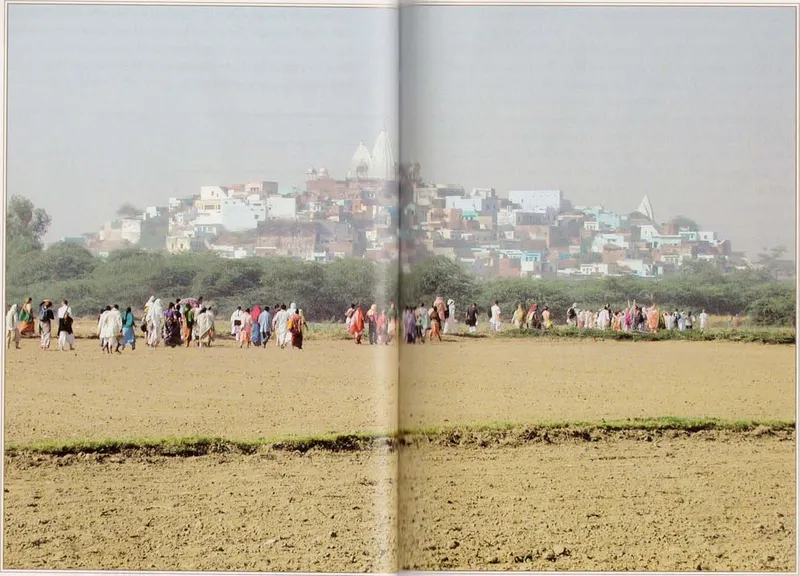
Nandīśvara Hill
नन्दीश्वर पर्वतNandīśvara is the hill of Nandagrāma, also called Rudra-parvata, "Rudra's hill".
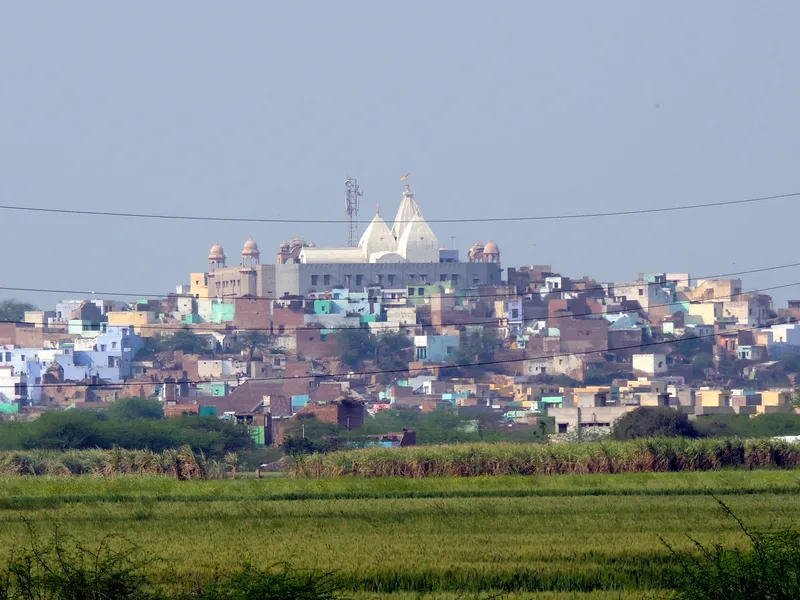
Nandagrāma
नन्दग्रामNandagrāma, today Nandagaon, is the village of Nanda Mahārāja, Kṛṣṇa's father in Vraja, on and around Nandīśvara Hill.
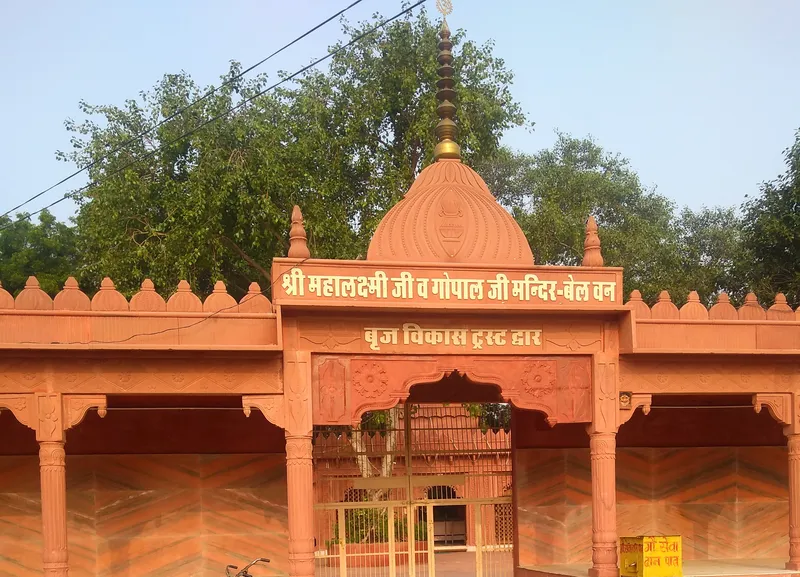
Bilvavana
बेलवनBaelvana, in Sanskrit Bilvavana, "the forest of bilva (bael) trees", is one of the twelve forests of Vraja.
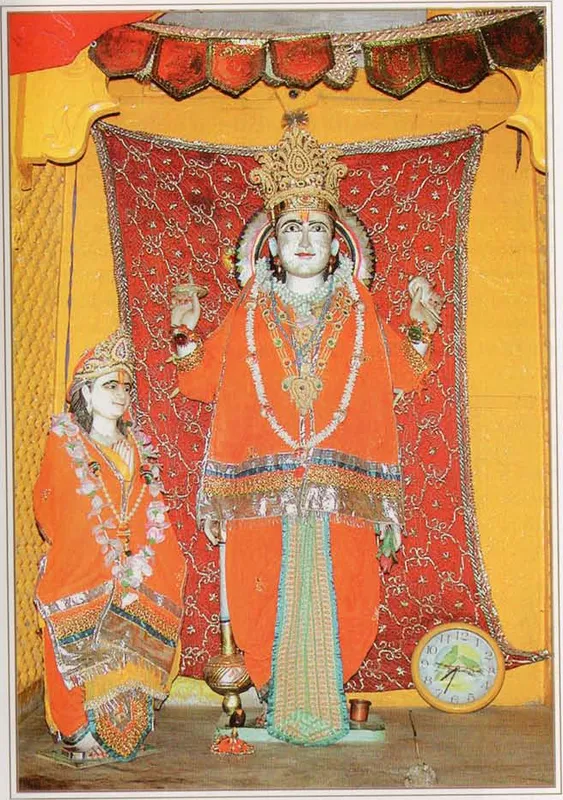
Madhuvana
मधुवनMadhuvana, the forest of the demon Madhu, is one of the twelve forests of Vraja.
Questions and answers
He was a great demon and a friend of King Kaṁsa. He took the form of a huge duck with a sharp beak. The Bhāgavatam calls Aghāsura the younger brother of Pūtanā and Bakāsura.[1–3, 6]
The Bhāgavatam says only at a reservoir where the boys watered the calves. Śrīla Prabhupāda's Kṛṣṇa book says the bank of the Yamunā. The commentators say the lake Baka-sthala east of Nandīśvara. The Bhakti-ratnākara says the village Bakatharā near Jāvaṭa.[1–5]
It is near Jāvaṭa, according to the Bhakti-ratnākara and the Bengali Bhaktamāla. The Bhakti-ratnākara shows it right after Khadiravana.[5, 31]
No. It calls the place a jalāśaya, a reservoir of water. The name Baka-sthala comes from the commentators, among them Śrīla Sanātana Gosvāmī and Śrīla Jīva Gosvāmī.[1–4]
They saw Kṛṣṇa split the demon by the two halves of his beak, as a child splits a blade of grass. The gods showered flowers from above.[1–3, 14]
According to the Bhāgavatam, Aghāsura was the younger brother of Pūtanā and Bakāsura. That makes Pūtanā and Bakāsura sister and brother. Aghāsura came to avenge them.[6, 22]
Sources
- Śrīmad-Bhāgavatam 10.11.48, GRETIL
- Śrīmad-Bhāgavatam 10.11.51, GRETIL
- Śrīla Prabhupāda, Kṛṣṇa, the Supreme Personality of Godhead (Kṛṣṇa book), chapter 11 · vedabase.io
- Bṛhad-vaiṣṇava-toṣaṇī (Śrīla Sanātana Gosvāmī): commentary on ŚB 10.11.46, Bhagavata Vidya Pith edition, ed. Bhagavata Rishi and Krishna Shankar Shastri, 1996
- Śrīla Narahari Cakravartī, Bhakti-ratnākara, Fifth Wave (pañcama taraṅga), printed p. 249: Rāghava Paṇḍita shows Khadiravana to Śrīnivāsa, 2nd ed., 1912
- Śrīla Prabhupāda, Śrīmad-Bhāgavatam, 10.12.14, translation · vedabase.io
- Garga-saṁhitā, Vṛndāvana-khaṇḍa (2) 5.1, Sanskrit Wikisource
- Brahma-vaivarta Purāṇa, Śrī-kṛṣṇa-janma-khaṇḍa (4) 16.1-5, Sanskrit Wikisource
- Brahma-vaivarta Purāṇa, Śrī-kṛṣṇa-janma-khaṇḍa (4) 18.5-6, Sanskrit Wikisource
- Brahma-vaivarta Purāṇa, Śrīkṛṣṇa-janma-khaṇḍa (4) 18.20-22, Sanskrit Wikisource
- Śrīmad-Bhāgavatam 10.11.47, GRETIL
- Śrīla Nārāyaṇa Bhaṭṭa Gosvāmī, Vraja-bhakti-vilāsa, chapter 10, the circumambulation of Bilvavana (quoted 'bhaviṣyottare'), printed p. 212, 1st ed., publ. Bābā Kṛṣṇadāsa, Kusuma-sarovara, Saṁvat 2008
- Śrīla Nārāyaṇa Bhaṭṭa Gosvāmī, Vraja-bhakti-vilāsa, chapter 2, list of the forests and their signs (the list is introduced 'nāradapañcarātre'), printed p. 51, 1st ed., publ. Bābā Kṛṣṇadāsa, Kusuma-sarovara, Saṁvat 2008
- Śrīla Prabhupāda, Kṛṣṇa, the Supreme Personality of Godhead (Kṛṣṇa book), Chapter 11, 'Killing the Demons Vatsāsura and Bakāsura' · vedabase.io
- Śrīmad-Bhāgavatam 10.11.41, GRETIL
- Śrīmad-Bhāgavatam 10.11.43, GRETIL
- Śrīmad-Bhāgavatam 10.11.46, GRETIL
- Śrīmad-Bhāgavatam 10.43.25, GRETIL
- Śrīmad-Bhāgavatam 10.46.26, GRETIL
- Śrīla Prabhupāda, Kṛṣṇa, the Supreme Personality of Godhead (Kṛṣṇa book), Chapter 43, 'The Killing of the Elephant Kuvalayāpīḍa' (the citizens of Mathurā) · vedabase.io
Show all 39 references
- Śrīla Prabhupāda, Kṛṣṇa, the Supreme Personality of Godhead (Kṛṣṇa book), Chapter 46, 'Uddhava Visits Vṛndāvana' (Nanda Mahārāja's words) · vedabase.io
- Śrīla Prabhupāda, Kṛṣṇa, the Supreme Personality of Godhead (Kṛṣṇa book), Chapter 12, 'The Killing of the Aghāsura Demon' · vedabase.io
- Śrīla Sanātana Gosvāmī: commentary v.10.11.46, sanātana-gosvāmī (bṛhad-vaiṣṇava-toṣaṇī), Bhagavata Vidya Pith edition, ed. Bhagavata Rishi and Krishna Shankar Shastri, 1996
- Gopāla-campū, Pūrva-campū (10) ¶[47]: Kaṁsa sends Baka
- Śrīla Jīva Gosvāmī, Gopāla-campū, Pūrva-campū, tenth pūraṇa, ¶[60] and ¶[62]
- Śrīla Narahari Cakravartī, Bhakti-ratnākara, Fifth Wave (pañcama taraṅga), printed p. 249: Rāghava Paṇḍita shows Khadiravana to Śrīnivāsa, 2nd ed., 1912
- Śrīla Narahari Cakravartī, Bhakti-ratnākara, Fifth Wave (pañcama taraṅga) v.1281 and vv.1283-1287, printed p. 249: Rāghava Paṇḍita shows Khadiravana to Śrīnivāsa, 2nd ed., 1912
- Śrīla Prabhupāda, Śrī Caitanya-caritāmṛta, Madhya-līlā 18.63, purport · vedabase.io
- Śrīla Narahari Cakravartī, Bhakti-ratnākara, Fifth Wave, printed p. 249: Bakatharā, Neochāka, Bhāṇḍāgora, 2nd ed., 1912
- Śrī Vraja-maṇḍala Parikramā (2007), PDF p. 232
- Śrī Śrī Bhaktamāla grantha, verse list of Vraja places, printed p. 338, right column
- Śrī Vraja-maṇḍala Parikramā (2007), PDF p. 231
- Śrīla Nārāyaṇa Bhaṭṭa, Vraja-bhakti-vilāsa, ch. 10 ('bilvavana-pradakṣiṇā') v.12; printed p. 212, 1st ed., publ. Bābā Kṛṣṇadāsa, Kusuma-sarovara, Saṁvat 2008
- Śrīla Nārāyaṇa Bhaṭṭa Gosvāmī, Vraja-bhakti-vilāsa, chapter 10, the circumambulation of Bilvavana (quoted 'bhaviṣyottare'), heading and v.11, printed p. 212) vv.10-11, 1st ed., publ. Bābā Kṛṣṇadāsa, Kusuma-sarovara, Saṁvat 2008
- Śrīla Nārāyaṇa Bhaṭṭa Gosvāmī, Vraja-bhakti-vilāsa, edition's Hindi contents (adhyāya-sūcī), chapter 10 entry, printed p. 8 of the front matter, 1st ed., publ. Bābā Kṛṣṇadāsa, Kusuma-sarovara, Saṁvat 2008
- Śrīla Nārāyaṇa Bhaṭṭa Gosvāmī, Vraja-bhakti-vilāsa, chapter 1, the presiding Deities of the twelve forests quoted from the Bṛhan-nāradīya, nos. 6, 9, 10, 12, printed p. 5, 1st ed., publ. Bābā Kṛṣṇadāsa, Kusuma-sarovara, Saṁvat 2008
- Śrīla Nārāyaṇa Bhaṭṭa Gosvāmī, Vraja-bhakti-vilāsa, chapter 1, list of the twelve forests quoted 'pādme', vv.13-17, printed p. 2, 1st ed., publ. Bābā Kṛṣṇadāsa, Kusuma-sarovara, Saṁvat 2008
- Śrīla Nārāyaṇa Bhaṭṭa Gosvāmī, Vraja-bhakti-vilāsa, chapter 10, 'the circumambulation of Bilvavana' (quoted 'bhaviṣyottare'), printed p. 212, 1st ed., publ. Bābā Kṛṣṇadāsa, Kusuma-sarovara, Saṁvat 2008
- Vṛndāvana-Dhāma Ki Jaya! (c. 1986), by Dhruva Mahārāja dāsa, PDF p. 55
Further sources
- Śrīmad-Bhāgavatam, Tenth Canto, chapters 11–12 (translation and purports by Śrīla Prabhupāda, BBT); Śrīla Prabhupāda, Kṛṣṇa, chapters 11–12 and 46.
- The Canto 10 commentaries of Śrīla Sanātana Gosvāmī, Śrīla Jīva Gosvāmī and Śrīla Baladeva Vidyābhūṣaṇa and Śrīla Jīva Gosvāmī's Gopāla-campū (Sanskrit), summarised, not translated.
- Bhakti-ratnākara, Fifth Wave; Vraja-bhakti-vilāsa; Garga-saṁhitā, Vṛndāvana-khaṇḍa 5; Brahma-vaivarta Purāṇa, Kṛṣṇa-janma-khaṇḍa 16: summarised here, not translated.