Māna-garh
मान-गढ़
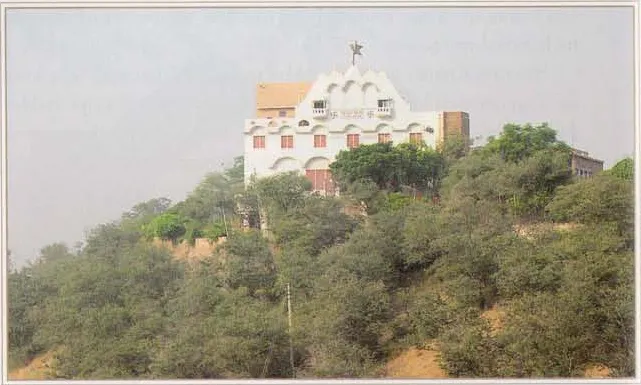
- What it is
- Māna-garh, the fort of māna, is a peak of Brahma-parvata, the hill of Varṣāṇā.
- Visiting
- Śrī Vraja-maṇḍala Parikramā (2007) places Māna-garh and the Māna Mandira on the top of the hill, south-west of Gahvaravana.
- Places here
- Māna Mandira, Māna-kuṭīra, Jhūlana-sthalī (Māna-garh), Rāsa-maṇḍala (Māna-garh), Ratnākara-sarovara (Varṣāṇā)
In short
Māna-garh, the fort of māna, is a peak of Brahma-parvata, the hill of Varṣāṇā. Māna is Śrī Rādhā's loving anger with Kṛṣṇa. The Bhakti-ratnākara names Māna as one of the three forts on the Varṣāṇā hills and says that at Varṣāṇā Kṛṣṇa broke Rādhikā's māna.[1 +1] Śrīla Nārāyaṇa Bhaṭṭa Gosvāmī's Vraja-bhakti-vilāsa calls the place Māneṅgita-vana and lists there the Māna-mandira on top of Brahma-parvata, a swing, a rāsa-maṇḍala and Ratna-kuṇḍa.[3 +2] According to Śrī Vraja-maṇḍala Parikramā (2007) and the undated parikramā notes Varṣāṇā, Kṛṣṇa came here dressed as a girl, Śyāmā Sakhī, to end Rādhikā's māna.[6 +4]
Key facts
| Kind | pastime site |
|---|---|
| Region · area | Varṣāṇā · Gahvaravana (Varṣāṇā) |
| Also part of | Brahma-parvata |
| Ācāryas | Śrīla Nārāyaṇa Bhaṭṭa Gosvāmī, Śrīla Narahari Cakravartī Ṭhākura, Śrīla Śrīnivāsa Ācārya, Śrīla Rāghava Paṇḍita Gosvāmī of Govardhana |
Why it is glorified
The Vraja-bhakti-vilāsa includes Māneṅgita-vana in its pilgrimage of the month of Bhādra, under a heading that names the …
The Vraja-bhakti-vilāsa includes Māneṅgita-vana in its pilgrimage of the month of Bhādra, under a heading that names the Ādi-purāṇa. On the third day of the bright fortnight of Bhādra the pilgrim goes to Māneṅgita-vana and prays to it as the forest whose form is the māna and playfulness of Rādhā and the gopīs; one who prays there obtains the happiness of a sakhī, Rādhā's companion (summarised here, not translated).[3 +2]
अथ मानेंगितबनप्रदक्षिणा । आदिपुराणे— भाद्रशुक्लतृतीयायां मानेंगितबनं ययौ । प्रार्थनं कुरुते यस्तु सखीवसुखमाप्नुयात् ॥ प्रार्थनमंत्रः—मानप्रवर्द्धनार्थाय मानेंगितबनाय ते । राधादिगोपिकामानहेलारूपाय ते नमः ॥
atha māneṁgitabanapradakṣiṇā
ādipurāṇe— bhādraśuklatṛtīyāyāṁ māneṁgitabanaṁ yayau
prārthanaṁ kurute yastu sakhīvasukhamāpnuyāt
prārthanamaṁtraḥ—mānapravarddhanārthāya māneṁgitabanāya te
rādhādigopikāmānahelārūpāya te namaḥ ||
Divine pastimes
What the Bhakti-ratnākara says
In the Fifth Wave of the Bhakti-ratnākara, Śrīla Rāghava Paṇḍita Gosvāmī of Govardhana shows Śrīla Śrīnivāsa Ācārya the hill of Varṣāṇā. He says (summarised here, not translated) that on this wonderful hill Kṛṣṇa performed the toll pastime, hidden from others; here He broke Rādhikā's māna; and Dāna, Māna and Vilāsa are the three forts on the hills. This is the oldest mention found of a Māna fort here. It does not say how the māna was broken.[1 +1]
বৃষভানুপুর এ বর্ষাণ নাম কয়। পর্ব্বতসমীপে বৃষভানুর আলয় ॥ অপূর্ব্ব পর্ব্বত এথা ব্রজেন্দ্রকুমার। করিলেন দানলীলা অন্য অগোচর ॥ এই খানে রাধিকার মানভঙ্গ কৈল। এথা কৃষ্ণ বিবিধ বিলাসে মত্ত হৈল ॥
bṛṣabhānupura e barṣāṇa nāma kaẏa| parbbatasamīpe bṛṣabhānura ālaẏa
apūrbba parbbata ethā brajendrakumāra| karilena dānalīlā anya agocara
ei khāne rādhikāra mānabhaṅga kaila| ethā kṛṣṇa bibidha bilāse matta haila ||
Śyāmā Sakhī
According to the local tradition recorded in Śrī Vraja-maṇḍala Parikramā (2007) and the undated parikramā notes Varṣāṇā, this peak is where Rādhikā was once in māna, and Viśākhā had Kṛṣṇa come to Her dressed as a new sakhī, Śyāmā Sakhī, who played the vīṇā and sang; when Rādhikā recognised Him, Her māna was gone.[6 +4]
No text older than these guidebooks has been found that sets this disguise at Māna-garh, and the Bhāgavatam does not tell Rādhā's māna. Older accounts of the disguise, and the place the Bhakti-ratnākara gives for it, are set out on the page of Māna-kuṭīra, the shrine of this pastime.[6 +4] Read more: Prema-sarovara and Māna-garh →
The rāsa dance
Śrīmad-Bhāgavatam (10.29–33) sets the rāsa dance on autumn nights on the sandy bank of the Kālindī, the Yamunā, and does not name Varṣāṇā or Māna-garh.[12 +4] The undated notes Varṣāṇā say that a rāsa dance took place at Māna-garh peak, and the Vraja-bhakti-vilāsa names a rāsa-maṇḍala, a circle for the dance, at Māneṅgita-vana. Neither says which rāsa it was.[3 +2]
Traditional accounts
The Vraja-bhakti-vilāsa is the oldest text found that names the Māna-mandira: in its list of forests, Māneṅgita-vana has the …
The Māna-mandira
The Vraja-bhakti-vilāsa is the oldest text found that names the Māna-mandira: in its list of forests, Māneṅgita-vana has the Māna-mandira on top of Brahma-parvata, a swing, a rāsa-maṇḍala and Ratna-kuṇḍa.[3 +1] In the Bhādra pilgrimage the pilgrim bows thirteen times to the Māna-mandira with a prayer that calls it the jewelled ground, delightful to the gods and gandharvas, where Rādhā's māna is enacted (summarised here, not translated).[3 +2]
ततो मानमन्दिरप्रार्थनमन्त्रः- देवगन्धर्वरम्याय राधामानविधायिने । मानमन्दिरसंज्ञाय नमस्ते रत्नभूमये ॥ इति त्रयोदशावृत्या नमस्कारं समाचरेत् । इच्छितं वरमालभ्य गृहसौख्यमवाप्नुयात् ॥६३॥
tato mānamandiraprārthanamantraḥ- devagandharvaramyāya rādhāmānavidhāyine
mānamandirasaṁjñāya namaste ratnabhūmaye
iti trayodaśāvṛtyā namaskāraṁ samācaret
icchitaṁ varamālabhya gṛhasaukhyamavāpnuyāt ||63||
Śrī Vraja-maṇḍala Parikramā (2007) prints the same prayer after its story of Māna-garh but gives a different source for it.[5]
Accounts differ The source of the Māna-mandira prayer ('deva-gandharva-ramyāya …').
- Śrī Vraja-maṇḍala Parikramā (2007)Ādi-varāha Purāṇa.
- Vraja-bhakti-vilāsa ch. 10 vv.62–63 (printed p. 225)No source line for the prayer itself; the Māneṅgita-vana section is headed 'ādipurāṇe' (Ādi-purāṇa).
Śrīla Prabhupāda
No statement of Śrīla Prabhupāda about Māna-garh has been found in the works searched.
No statement of Śrīla Prabhupāda about Māna-garh has been found in the works searched. As a general teaching, his translation of the Caitanya-caritāmṛta says that māna is one of the kinds of separation celebrated in Śrīmatī Rādhārāṇī and the gopīs.[19 +1]
General teaching (does not name the place)“Of the four kinds of separation, three [pūrva-rāga, pravāsa and māna] are celebrated in Śrīmatī Rādhārāṇī and the gopīs. In Dvārakā, among the queens, feelings of prema-vaicittya are very prominent.”
Śrīla Prabhupāda, Śrī Caitanya-caritāmṛta, Madhya-līlā 23.64, translation · vedabase.io
Visiting today
Śrī Vraja-maṇḍala Parikramā (2007) places Māna-garh and the Māna Mandira on the top of the hill, south-west of Gahvaravana. There one can have darśana of the Māna Mandira, a swing, a rāsa-maṇḍala and Ratnākara-sarovara, and the village of Mānapurā lies just below to the south.[7 +1] The sources place the peak differently on the hill:
Accounts differ Where Māna-garh lies on the hill and relative to Gahvaravana.
- the undated parikramā notes VarṣāṇāThe Managarh spot, with its swing and rāsa-maṇḍala, is 'also situated within the Gahvaravana forest'; elsewhere Gahvaravana is around the base of the hill and Mana Garh on its top.
- Śrī Vraja-maṇḍala Parikramā (2007), textMāna-garh and Māna Mandira are on the top of the hill, south-west of Gahvaravana.
- Śrī Vraja-maṇḍala Parikramā (2007), sketch mapMāna-garh (key 4) is drawn at the south-western end of the ridge, north-west of the 'Gahvaravana' label and of Kṛṣṇa-kuṇḍa (key 8).
- A. W. Entwistle (1987), a historianEntwistle describes Gahvaravana as the wooded north-western slopes of the Varṣāṇā hill; the pilgrims' path leads through it from Chiksoli, between Mora-kuṭī and Māna-garh, up to Dāna-garh, and he places Māna-garh at the north-western end of the hill above Mānpur. Śrī Vraja-maṇḍala Parikramā (2007) instead puts Māna-garh at the south-western end of the ridge, south of the Jaipur temple and the Śrījī temple.
Ratnākara-sarovara
Ratnākara-sarovara, the lake of jewels, is a pond at Māna-garh. Śrīla Nārāyaṇa Bhaṭṭa Gosvāmī's Vraja-bhakti-vilāsa names a pond of Māneṅgita-vana, the forest of Rādhā's māna on this hill, Ratna-kuṇḍa, and says that it arose from Kṛṣṇa's bathing.[3 +1] No source says whether Ratna-kuṇḍa and Ratnākara-sarovara are the same pond, and the guidebooks do not agree whether the lake still exists.[3 +1]
Accounts differ Whether Ratnākara-sarovara at Māna-garh exists today.
- Śrī Vraja-maṇḍala Parikramā (2007)'In Māna-garh, one can also have darśana of Māna Mandira, a swing, a rāsa-maṇḍala and Ratnākara-sarovara.'
- the undated parikramā notes Varṣāṇā'it is said there was once a lake called Ratnakar-sarovara' (a former lake).
- Vraja-bhakti-vilāsa ch. 2 v.54, ch. 10 v.66Names the pond of Māneṅgita-vana Ratna-kuṇḍa and gives its bathing prayer (16th century); it does not use the name Ratnākara.
The wording of these accounts is our summary of the sources, not a published translation.
The Vraja-bhakti-vilāsa lists Ratna-kuṇḍa as the fourth mark of Māneṅgita-vana, after the Māna-mandira, a swing and a rāsa-maṇḍala (above). In its pilgrimage of the month of Bhādra the pilgrim bathes, sips its water and bows fourteen times with a prayer to the tīrtha (holy bathing place) of jewelled ground called Ratna-kuṇḍa, arisen from Kṛṣṇa's bathing, the source of jewels; the book says that one who does so obtains land that yields many jewels (summarised here, not translated). The Bhāgavatam does not tell this bath of Kṛṣṇa.[3 +1]
ततो रत्नकुंडस्नानाचमनप्रार्थनमन्त्रः— रत्नभूमिमये तीर्थे रत्नकुंडसमाह्वय । कृष्णस्नपनसम्भूत रत्नोद्भव नमोऽस्तु ते ॥ इति चतुर्दशावृत्या मज्जनाचमनैर्नमन् । नानारत्नोद्भवां भूमिं लभते नात्र संशयः ॥
tato ratnakuṁḍasnānācamanaprārthanamantraḥ— ratnabhūmimaye tīrthe ratnakuṁḍasamāhvaya
kṛṣṇasnapanasambhūta ratnodbhava namo'stu te
iti caturdaśāvṛtyā majjanācamanairnaman
nānāratnodbhavāṁ bhūmiṁ labhate nātra saṁśayaḥ ||
Location
| Where it is | on top of Brahmācala-parvata; on the top of the hill south-west of Gahvaravana; map: on the ridge near the south end, west of 5[28] 'This place is situated on top of the Brahmagiri Parvata'[8] |
|---|
Places at Māna-garh
5 places
Nearby places
Gahvaravana (Varṣāṇā) · Mānapurā
History
The historian F. S. Growse (1883) records a Man-mandir on one of the peaks of the hill of Varṣāṇā. In 1987 A. W. Entwistle described the small temple called Mān Garh or Mān Mandir above the village of Mānpur; he was told that its image of Mān Bihārī had been stolen; a picture was then worshipped in its place, and a Bābā who had settled there was enlarging the building. No date or builder has been found.[21 +1]
Where the sources differ
Whether Ratnākara-sarovara lies at Māna-garh on the hilltop or within Gahvaravana, the forest of the hill, the sources tell …
Whether Ratnākara-sarovara lies at Māna-garh on the hilltop or within Gahvaravana, the forest of the hill, the sources tell differently; the accounts are set side by side on the page of the Rāsa-maṇḍala of Māna-garh.[3 +3]
More on this place
Prema-sarovara and Māna-garh
References
28 references
- Śrīla Narahari Cakravartī, Bhakti-ratnākara, Fifth Wave, printed p. 218 (1912 edition), 2nd ed., 1912
- Śrīla Narahari Cakravartī, Bhakti-ratnākara, Fifth Wave, 1912 ed. p. 218; Grantha Mandira text v.893–896, 2nd ed., 1912
- Śrīla Nārāyaṇa Bhaṭṭa, Vraja-bhakti-vilāsa, ch. 2 v.54, printed p. 51; the list begins on p. 50 'अथ कोकिलावनम् । नारदपञ्चरात्रे—', 1st ed., publ. Bābā Kṛṣṇadāsa, Kusuma-sarovara, Saṁvat 2008
- Śrīla Nārāyaṇa Bhaṭṭa, Vraja-bhakti-vilāsa, ch. 10 v.62 (circumambulation of Māneṅgita-vana), printed p. 225, 1st ed., publ. Bābā Kṛṣṇadāsa, Kusuma-sarovara, Saṁvat 2008
- Śrīla Nārāyaṇa Bhaṭṭa, Vraja-bhakti-vilāsa, ch. 10 v.63 (prayer for the Māna-mandira), printed p. 225, 1st ed., publ. Bābā Kṛṣṇadāsa, Kusuma-sarovara, Saṁvat 2008
- Śrī Vraja-maṇḍala Parikramā (2007), PDF p. 174
- Śrī Vraja-maṇḍala Parikramā (2007), PDF p. 175
- the undated parikramā notes Varṣāṇā, ¶24
- the undated parikramā notes Varṣāṇā, ¶25
- the undated parikramā notes Varṣāṇā, ¶26
- Śrīla Nārāyaṇa Bhaṭṭa, Vraja-bhakti-vilāsa, ch. 10 v.62 (circumambulation of Māneṅgita-vana), printed p. 225, 1st ed., publ. Bābā Kṛṣṇadāsa, Kusuma-sarovara, Saṁvat 2008
- Śrīmad-Bhāgavatam 10.29.1, GRETIL
- Śrīmad-Bhāgavatam 10.32.11-12, GRETIL
- Śrīmad-Bhāgavatam 10.33.2–3, GRETIL
- Śrīmad-Bhāgavatam 10.33.5, GRETIL
- Śrīla Prabhupāda, Kṛṣṇa, the Supreme Personality of Godhead (Kṛṣṇa book), Chapter 33, 'Description of the Rāsa Dance' · vedabase.io
- the undated parikramā notes Varṣāṇā, ¶28
- Śrīla Nārāyaṇa Bhaṭṭa, Vraja-bhakti-vilāsa, ch. 4 v.50, Hindi translation on printed p. 99; the Sanskrit is on p. 98, missing from the scan, 1st ed., publ. Bābā Kṛṣṇadāsa, Kusuma-sarovara, Saṁvat 2008
- Śrīla Nārāyaṇa Bhaṭṭa, Vraja-bhakti-vilāsa, ch. 10 vv.62–63 (the Bhādra forest pilgrimage: Māneṅgita-vana), printed p. 225, 1st ed., publ. Bābā Kṛṣṇadāsa, Kusuma-sarovara, Saṁvat 2008
- Śrīla Nārāyaṇa Bhaṭṭa, Vraja-bhakti-vilāsa, ch. 10 v.63 (prayer for the Māna-mandira), printed p. 225, 1st ed., publ. Bābā Kṛṣṇadāsa, Kusuma-sarovara, Saṁvat 2008
Show all 28 references
- A. W. Entwistle, §37 'Barsana', item 9 'Man Garh', printed p. 374, Egbert Forsten, Groningen, 1987
- Mathurá (1883), F. S. Growse, B.C.S., M.A. Oxon., C.I.E. (as the title page gives him, p. 313
- Śrīla Prabhupāda, Śrī Caitanya-caritāmṛta, Madhya-līlā 23.64, translation · vedabase.io
- Śrī Vraja-maṇḍala Parikramā (2007), PDF p. 171
- Śrīla Nārāyaṇa Bhaṭṭa, Vraja-bhakti-vilāsa, ch. 10 v.66 (prayer for Ratna-kuṇḍa of Māneṅgita-vana), printed pp. 225–226, 1st ed., publ. Bābā Kṛṣṇadāsa, Kusuma-sarovara, Saṁvat 2008
- Śrīla Nārāyaṇa Bhaṭṭa, Vraja-bhakti-vilāsa, ch. 10 v.66 (prayer for Ratna-kuṇḍa of Māneṅgita-vana), printed pp. 225–226, 1st ed., publ. Bābā Kṛṣṇadāsa, Kusuma-sarovara, Saṁvat 2008
- Śrīla Nārāyaṇa Bhaṭṭa, Vraja-bhakti-vilāsa, ch. 2 v.47, printed p. 46, 1st ed., publ. Bābā Kṛṣṇadāsa, Kusuma-sarovara, Saṁvat 2008
- Śrī Vraja-maṇḍala Parikramā (2007), p. 322-323