Śrī Rādhā's māna at the autumn rāsa and how it was broken
मान-भंजन: शरद के रास में श्री राधा का मान
In short
Māna is Śrī Rādhā's loving anger. Śrīmad-Bhāgavatam tells that during the rāsa dance the gopīs grew proud and Kṛṣṇa disappeared to show them mercy, without naming Rādhā or a place. The Gauḍīya commentators and Śrīla Prabhupāda's Kṛṣṇa book understand the chosen gopī as Śrī Rādhā, and Vṛndāvana remembers the pastime at several places.[1–4]
On this page
At a glance
- The word: māna, the loving anger of a beloved; the commentators also call it praṇaya-kopa.[5, 6]
- Scripture: Śrīmad-Bhāgavatam 10.29.47–48 tells of the gopīs' pride and Kṛṣṇa's disappearance.[1, 2]
- Śrīla Prabhupāda's Kṛṣṇa book names the chosen gopī Rādhārāṇī.[2, 4]
- The Caitanya-caritāmṛta gives two accounts of how Śrī Rādhā came to be apart from the other gopīs.[7, 8]
- Places: Māna-bhañjana-sthala, said to lie in Dhīra-samīra, Māna-sarovara across the Yamunā, and the hill of Varṣāṇā.[9–18]
- A caution: Śrīla Prabhupāda called the Gīta-govinda's scene of the māna very confidential.[19]
What is Śrī Rādhā's māna?
In the Vaiṣṇava books, māna is the loving anger a beloved shows when her love feels slighted. It is a form of love, not of coldness.[1 +3] The commentators, the ācāryas who explained the Tenth Canto verse by verse, use this word for one gopī, a cowherd girl of Vraja, on the night of the rāsa dance. They also call her mood praṇaya-kopa, "anger born of affection".[5, 6] Śrīla Prabhupāda explains in the Caitanya-caritāmṛta that among the kinds of separation in love, pūrva-rāga, pravāsa and māna are celebrated in Śrīmatī Rādhārāṇī and the gopīs.[20]
Śrīla Prabhupāda called such pastimes very confidential. So this article gives only what a newcomer needs: what the Bhāgavatam says, how the ācāryas understand it, and where Vṛndāvana remembers it. How Śrī Rādhā's moods of love are remembered near Varṣāṇā is told in its own article.[19, 20] Read more: Prema-sarovara and Māna-garh →
What does the Bhāgavatam say?
Śrīmad-Bhāgavatam tells the rāsa night on the sandy bank of the Yamunā. During the night the gopīs, honoured by Kṛṣṇa, became proud, each thinking herself the best of women, and Kṛṣṇa disappeared to calm that pride and to favour them. The Bhāgavatam names no place for this and does not name Rādhā here.[1, 2] Śrīla Prabhupāda tells it in his Kṛṣṇa book:[1, 2]
General teaching (does not name the place)“Lord Kṛṣṇa, who is known as Keśava, could immediately understand their pride caused by their great fortune of enjoying Him personally, and in order to show them His causeless mercy and to curb their false pride, He immediately disappeared from the scene, exhibiting His opulence of renunciation.”
Śrīla Prabhupāda, Kṛṣṇa, the Supreme Personality of Godhead (Kṛṣṇa book), Chapter 29, 'The Rāsa Dance: Introduction' (end) · vedabase.io
The gopīs searched for Him and found that He had taken one gopī with Him alone. She too began to think herself the best of women. Kṛṣṇa left her as well, and she felt great sorrow. The other gopīs then found her and heard what had happened.[1 +8] The Bhāgavatam does not name her; Śrīla Prabhupāda's Kṛṣṇa book does:[2, 4]
General teaching (does not name the place)“They said that this chief gopī, Rādhārāṇī, must be very proud of Her position, thinking Herself the greatest of the gopīs. … The gopīs found Rādhārāṇī and heard everything from Her – about how She had misbehaved with Kṛṣṇa and how She was proud and was insulted for Her pride.”
Śrīla Prabhupāda, Kṛṣṇa, the Supreme Personality of Godhead (Kṛṣṇa book), Chapter 30, 'Kṛṣṇa's Hiding from the Gopīs' · vedabase.io
When Kṛṣṇa reappeared, the gopīs received Him in different ways, and one of them, the Bhāgavatam says, was overwhelmed by loving anger.[6, 28] On the bank of the Kālindī they honoured Him and yet felt somewhat angry, and they questioned Him about love. In His answer Kṛṣṇa said three things. He had hidden only to increase their attachment; He had never stopped loving them; and He could never repay their love.[28–30]
My dear girls, understanding that simply for My sake you had rejected the authority of worldly opinion, of the Vedas and of your relatives, I acted as I did only to increase your attachment to Me. Even when I removed Myself from your sight by suddenly disappearing, I never stopped loving you. Therefore, My beloved gopīs, please do not harbor any bad feelings toward Me, your beloved.
Translation: Śrīla Prabhupāda's disciples (BBT)Śrīla Prabhupāda's Kṛṣṇa book gives the same reply in his own words, ending with Kṛṣṇa's request to the gopīs:[28–30]
General teaching (does not name the place)“Having gotten their most beloved Lord, the gopīs began to please Him by moving their eyebrows and smiling and also by suppressing their anger. … So please do not try to find fault with Me. Because you consider Me so dear to you, kindly excuse Me if I have done anything wrong.”
Śrīla Prabhupāda, Kṛṣṇa, the Supreme Personality of Godhead (Kṛṣṇa book), Chapter 32, 'Kṛṣṇa Returns to the Gopīs' · vedabase.io
How do the ācāryas understand the māna?
The Gauḍīya commentators on the Tenth Canto read these chapters as telling of Śrī Rādhā's māna. Śrīla Viśvanātha Cakravartī Ṭhākura and Śrīla Baladeva Vidyābhūṣaṇa explain that Vṛṣabhānu's daughter, Śrī Rādhā, felt slighted because Kṛṣṇa honoured all the gopīs alike. So He disappeared, to calm the others' pride and to win Her back, and took Her with Him. Śrīla Jīva Gosvāmī also reads the disappearance as together with Śrī Rādhā (all summarised here, not translated). None of them names a place.[1, 3]
They read the end of the night in the same light. Several commentators say that the gopī who met Kṛṣṇa in loving anger at His return was Śrī Rādhā. Among them are Śrīla Jīva Gosvāmī, Śrīla Viśvanātha Cakravartī Ṭhākura and Śrīla Baladeva Vidyābhūṣaṇa.[5, 6] Śrīla Jīva Gosvāmī and Śrīla Sanātana Gosvāmī call Kṛṣṇa's words on the bank His skill in pacifying the gopīs. Śrīla Jīva Gosvāmī adds that a hidden trace of māna in them was calmed by His praise.[30–32]
One more commentator connects a place with this part of the night. The searching gopīs saw the place where Kṛṣṇa had dressed His beloved's hair. On that verse Vaṁśīdhara says that the spot is now known as Śṛṅgāra-vaṭa, but he does not say which Śṛṅgāra-vaṭa he means.[26, 33] The temple of Śṛṅgāravaṭa in Vṛndāvana has its own article.[26, 33] Read more: The temple of Śṛṅgāravaṭa and its gosvāmīs →
In the Caitanya-caritāmṛta
The Caitanya-caritāmṛta speaks of the rāsa night in the talks of Śrī Caitanya Mahāprabhu and Śrī Rāmānanda Rāya. There the Lord says that Kṛṣṇa stole Śrī Rādhā away. Rāmānanda Rāya answers that She left the rāsa in māna, and that Kṛṣṇa, not seeing Her, searched for Her.[7, 8] In Śrīla Prabhupāda's translation:[7, 8]
ক্রোধ করি’ রাস ছাড়ি’ গেলা মান করি’ ।
তাঁরে না দেখিয়া ব্যাকুল হৈল শ্রীহরি ॥ ১১২ ॥
krodha kari’ rāsa chāḍi’ gelā māna kari’
tāṅre nā dekhiyā vyākula haila śrī-hari
When Rādhārāṇī left the rāsa dance out of anger and resentment, Lord Śrī Kṛṣṇa became very anxious because He could not see Her.
Translation: Śrīla A.C. Bhaktivedanta Swami PrabhupādaIn the Caitanya-caritāmṛta the two statements are steps of one conversation, and neither names a lane, a lake or a ghāṭa (a bathing place with steps).[7, 8]
Why is the Gīta-govinda approached with care?
A poem often linked with Śrī Rādhā's māna is the Gīta-govinda of Śrīla Jayadeva Gosvāmī. Its tenth canto tells of Kṛṣṇa pleading with Her in Her māna, and it names no place for the scene.[11] Śrīla Sanātana Gosvāmī explains the verse that closes the rāsa chapters. He counts the pastimes told in the Gīta-govinda and the Vidagdha-mādhava among those Kṛṣṇa enjoyed. Śrīla Viśvanātha Cakravartī Ṭhākura names Śrīla Jayadeva Gosvāmī among the poets of Kṛṣṇa's nights.[34, 35]
Śrīla Prabhupāda was asked in 1977 to bless a film of Kṛṣṇa's pastimes with songs of Śrīla Jayadeva Gosvāmī. He said that this poem is very confidential and not for ordinary men:[19]
General teaching (does not name the place)“Jayadeva's, that poetry, that Kṛṣṇa is begging pardon from Rādhārāṇī, that is also very confidential. … We must understand it is very confidential thing. It is not for ordinary men. If we present as ordinary thing, that is distortion.”
Śrīla Prabhupāda, Room Conversation with Film Producer about Kṛṣṇa Lila, Bhubaneswar, 22 January 1977 · vedabase.io
In a lecture of 1976 he gave the general rule behind this caution. Hearing of the dealings of the gopīs and Kṛṣṇa is for liberated persons, so one should first try to understand Kṛṣṇa.[36]
Names this place“So don't jump over the kṛṣṇa-līlā or jump over Rādhā-kuṇḍa unless you are a liberated person.”
Śrīla Prabhupāda, Lecture on Śrīmad-Bhāgavatam 1.7.16, Vṛndāvana, 14 September 1976 · vedabase.io
Following what Śrīla Prabhupāda says, the Gīta-govinda's scene is only named here, and its verse is not given.[19]
Which places in Vṛndāvana remember the pastime?
The Bhakti-ratnākara and the guidebooks connect several places of Vṛndāvana and Vraja with Śrī Rādhā's māna. Each is given here with the source that names it.[9 +9]
- Māna-bhañjana-sthala, "the place where the loving anger was broken", lies within Dhīra-samīra on the Yamunā, according to Śrī Vraja-maṇḍala Parikramā (2007). It rests on an older book, Vraja Parikramā, alone, so the spot may not be certain.[9–11]
- Dhīra-samīra: according to the Bhakti-ratnākara, Śrīla Śrīnivāsa Ācārya was shown the place of Śrī Rādhikā's māna-bhañjana, the breaking of Her māna, here. No separate spot is named.[37]
- Māna-sarovara, a lake across the Yamunā from Vṛndāvana near Pānīgāṁv: Śrī Vraja-maṇḍala Parikramā (2007) explains its name from Śrī Rādhā's māna.[12–17]
- Māna-galī, a narrow lane near Sevā-kuñja, a grove of bowers in the town. According to the same book, Śrī Rādhā is said to have gone once to Māna-sarovara by this lane in Her māna.[38–42]
- Govinda-ghāṭa: according to Vṛndāvana, the Playground of God (2010), it is said that Kṛṣṇa found and pleased Śrī Rādhā here after She left the rāsa in māna.[43]
- Varṣāṇā: the Bhakti-ratnākara also places a breaking of Śrī Rādhā's māna on the hill of Varṣāṇā, together with the toll pastime.[18]
None of these books says that the pastime happened in one place only, and the Bhāgavatam itself names none of them.[1 +2] The Bhakti-ratnākara names Māna among the three forts on the Varṣāṇā hills, the Māna-garh of today.[44] Read more: Prema-sarovara and Māna-garh →
Māna-sarovara across the Yamunā
Two texts older than the guidebooks name Māna-sarovara. The Nārada Purāṇa, an old scripture, names a holy lake called Māna among the holy places of Vṛndāvana, without saying more about it.[45] According to the Bhakti-ratnākara, Śrīla Rāghava Paṇḍita showed Śrīla Śrīnivāsa Ācārya that Māna-sarovara lay across the Yamunā, in a region whose villages are all places of Kṛṣṇa's pastimes.[46]
According to Śrī Vraja-maṇḍala Parikramā (2007), a painting worshipped in the old temple on the bank of the lake shows Kṛṣṇa breaking Śrī Rādhā's māna.[11 +3] The historians Growse (1883), Mītal (1966) and Entwistle (1987) record a yearly fair at the lake on the eleventh day of the dark half of Phālguna (February–March). Entwistle says that members of the Rādhāvallabha line hold it.[49–52] Lord Śiva's bath in this lake, which the Garga-saṁhitā tells, belongs to the story of how he came to the rāsa.[53–55] Read more: Lakṣmī, Lord Śiva and the rāsa dance: who could enter it →
Where the sources differ
The guidebooks set the māna-bhañjana of the Gīta-govinda at different places, and none of them may be certain. Śrī Vraja-maṇḍala Parikramā (2007) sets it within Dhīra-samīra in one entry. In its entry on Māna-sarovara it says that Śrī Rādhā, in Her māna, left the rāsa on Her own and came to that lake, where Kṛṣṇa found Her.[9 +6] The Bhakti-ratnākara names Dhīra-samīra and the hill of Varṣāṇā, and the poem itself names no place. The accounts are set side by side here, without choosing between them:
Accounts differ Where Kṛṣṇa pacified Śrī Rādhā's māna (māna-bhañjana).
- Śrī Vraja-maṇḍala Parikramā (2007), Dhīra-samīra (following the book 'Vraja Parikramā')The Song 19 pastime took place at Māna-bhañjana-sthala within Dhīra-samīra.
- Śrī Vraja-maṇḍala Parikramā (2007), Māna-sarovara (Māṭavana)Rādhā in māna went to Māna-sarovara, whose water, the book says, came from Her tears; Kṛṣṇa found Her there and appeased Her, and a painting in the old temple shows the scene.
- Bhakti-ratnākara, Fifth WaveRādhikā's māna-bhañjana 'here' at Dhīra-samīra (printed p. 326), and a māna-bhaṅga of Rādhikā on the hill at Varṣāṇā (printed p. 218); Song 19 is not quoted.
- Gīta-govinda, sarga 10No place is named for the scene.
Places in this article
Māna-bhañjana-sthala
मान-भंजन-स्थलMāna-bhañjana-sthala, "the place where the loving anger was broken", is a spot within Dhīra-samīra on the Yamunā in Vṛndāvana.
Māna-kuṭīra
मान-कुटीरAccording to the undated parikramā notes Varṣāṇā, Māna-kuṭīra is a shrine at Māna-garh, on the hill of Varṣāṇā, dedicated to the pastime in which Kṛṣṇa, dressed as a girl …
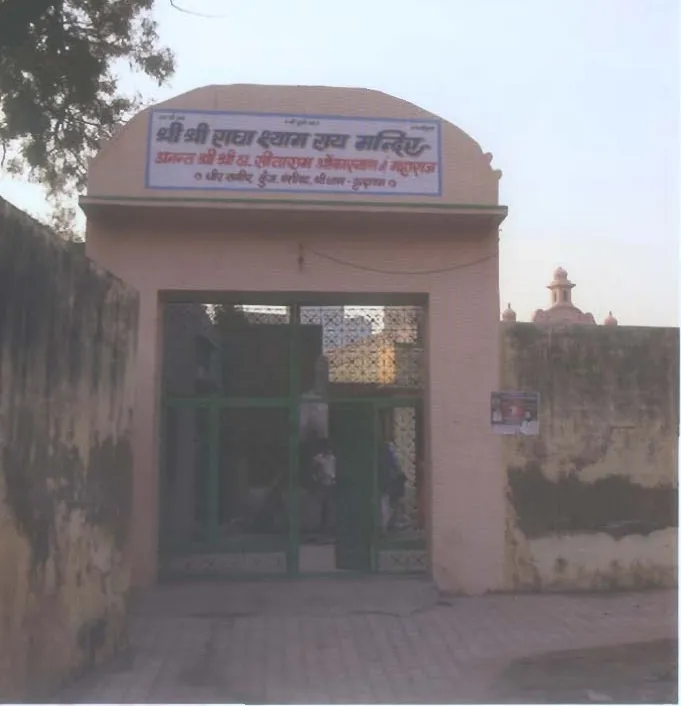
Dhīra-samīra
धीर-समीरDhīra-samīra, "the gentle breeze", is a kuñja (grove) and ghāṭa on the bank of the Yamunā in Vṛndāvana, near Vaṁśīvaṭa and Keśī-ghāṭa.
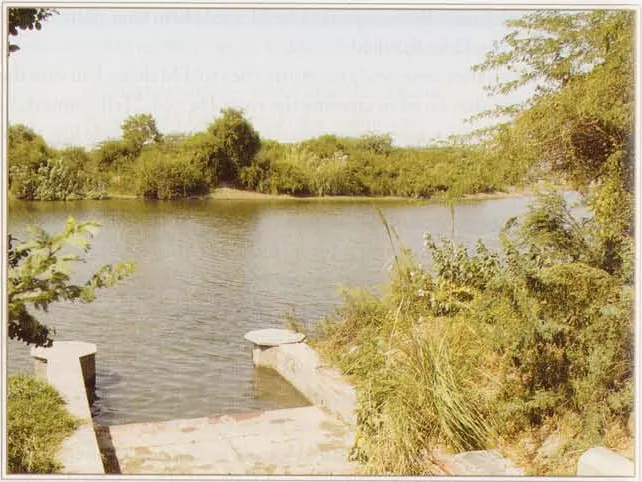
Māna-sarovara (Māṭavana)
मान-सरोवर (माटवन)Māna-sarovara is a lake across the Yamunā from Vṛndāvana, near the village of Pānī-gaon.
Māna-galī
मान-गलीGovinda-ghāṭa (Vṛndāvana)
गोविन्द-घाट (वृन्दावन)Govinda-ghāṭa is a bathing place on the Yamunā in Vṛndāvana, a little north of Śṛṅgāra-ghāṭa, with an old red-sandstone temple of Kṛṣṇa and Balarāma beside it.
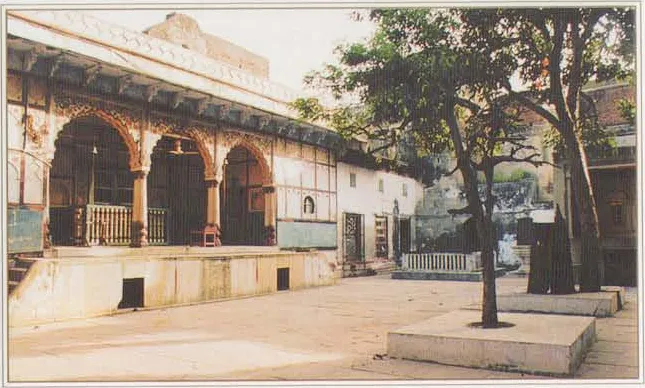
Śṛṅgāravaṭa (Vṛndāvana)
शृंगारवट (वृन्दावन)Śṛṅgāravaṭa, "the banyan of adornment", is a banyan with a temple on the bank of the Yamunā in Vṛndāvana, a little east of Imlītalā towards Keśī-ghāṭa and near the Rādhā- …
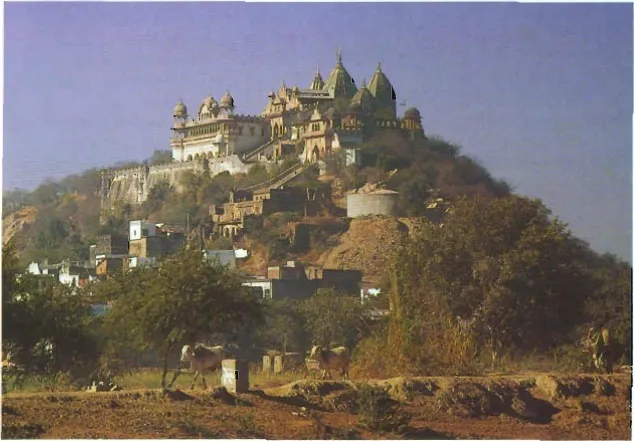
Varṣāṇā
बरसानाVarṣāṇā is the town of Vṛṣabhānu, Śrī Rādhā's father, on and around the hill of Brahma-parvata.
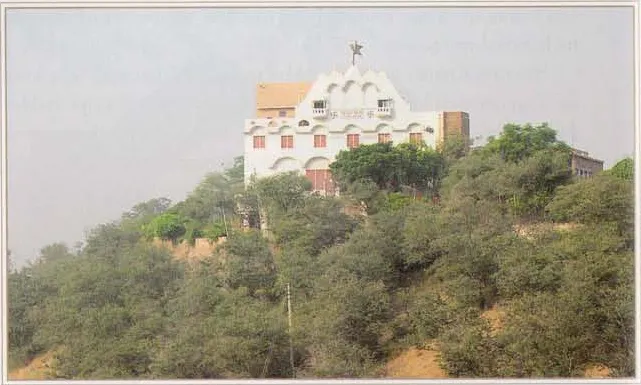
Māna-garh
मान-गढ़Māna-garh, the fort of māna, is a peak of Brahma-parvata, the hill of Varṣāṇā.
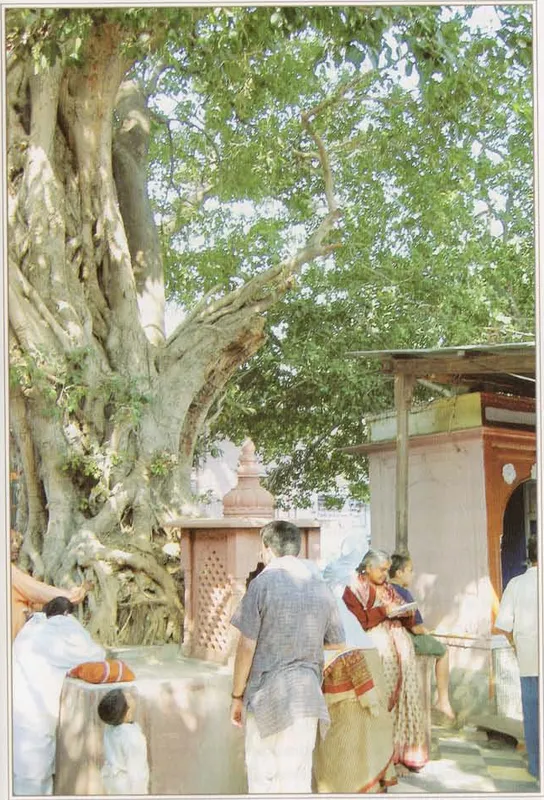
Vaṁśīvaṭa (Vṛndāvana)
वंशीवट (वृन्दावन)Vaṁśīvaṭa, "the banyan of the flute", stands on the bank of the Yamunā in Vṛndāvana, near the Gopīśvara Mahādeva temple.
Questions and answers
According to the commentators, māna is Her loving anger, a mood of love that appears when Her love feels slighted. Śrīla Prabhupāda teaches that pūrva-rāga, pravāsa and māna are the kinds of separation celebrated in Śrīmatī Rādhārāṇī and the gopīs.[5 +2]
It tells that the gopīs grew proud during the rāsa and that Kṛṣṇa disappeared to show them mercy, and that one gopī received Him in loving anger at His return. It names neither Śrī Rādhā nor a place; the commentators and Śrīla Prabhupāda's Kṛṣṇa book identify Her.[1 +4]
In the Caitanya-caritāmṛta Śrī Caitanya Mahāprabhu says that Kṛṣṇa stole Śrī Rādhā away from the rāsa. Rāmānanda Rāya says that She left it in māna and that Kṛṣṇa, not seeing Her, searched for Her.[7, 8]
Across the Yamunā from Vṛndāvana, near the village of Pānīgāṁv; Śrī Vraja-maṇḍala Parikramā (2007) explains its name from Śrī Rādhā's māna, and the Bhakti-ratnākara tells that Śrīla Śrīnivāsa Ācārya was shown it there.[12 +6]
According to the Bhakti-ratnākara and the guidebooks, each in its own account, Māna-bhañjana-sthala within Dhīra-samīra, Dhīra-samīra itself, the lane called Māna-galī and Govinda-ghāṭa remember it; outside Vṛndāvana, Māna-sarovara and the hill of Varṣāṇā.[9 +7]
Śrīla Prabhupāda called Śrīla Jayadeva Gosvāmī's poem in which Kṛṣṇa begs pardon of Rādhārāṇī very confidential and not for ordinary men. He taught that hearing of the gopīs' dealings with Kṛṣṇa is for liberated persons.[19, 36]
Sources
- Śrīmad-Bhāgavatam 10.29.48, GRETIL
- Śrīla Prabhupāda, Kṛṣṇa, the Supreme Personality of Godhead (Kṛṣṇa book), Chapter 29, 'The Rāsa Dance: Introduction' (end) · vedabase.io
- Śrīla Viśvanātha Cakravartī Ṭhākura: commentary on ŚB 10.29.48
- Śrīla Prabhupāda, Kṛṣṇa, the Supreme Personality of Godhead (Kṛṣṇa book), Chapter 30, 'Kṛṣṇa's Hiding from the Gopīs' · vedabase.io
- Śrīla Jīva Gosvāmī, Śrīla Viśvanātha Cakravartī Ṭhākura, Baladeva Vidyābhūṣaṇa: commentary on ŚB 10.32.6
- Śrīmad-Bhāgavatam 10.32.6, GRETIL
- Śrīla Prabhupāda, Śrī Caitanya-caritāmṛta, Madhya-līlā 8.102, translation and purport · vedabase.io
- Śrīla Kṛṣṇadāsa Kavirāja Gosvāmī, Śrī Caitanya-caritāmṛta, Madhya-līlā 8.112 (Rāmānanda Rāya speaking), online edition · vedabase.io
- Śrī Vraja-maṇḍala Parikramā (2007), PDF p. 317
- Śrī Vraja-maṇḍala Parikramā (2007), PDF p. 318
- Śrīla Jayadeva Gosvāmī, Gīta-govinda, sarga 10, verse 8 (seventh stanza of Song 19), GRETIL
- Śrī Vraja-maṇḍala Parikramā (2007), PDF p. 257
- Śrī Vraja-maṇḍala Parikramā (2007), PDF p. 258
- Śrī Vraja-maṇḍala Parikramā (2007), PDF p. 259
- the undated parikramā notes Māna-sarovara, ¶3
- the undated parikramā notes Māna-sarovara, ¶8
- Vṛndāvana-Dhāma Ki Jaya! (c. 1986), by Dhruva Mahārāja dāsa, PDF p. 83
- Śrīla Narahari Cakravartī, Bhakti-ratnākara, Fifth Wave, printed p. 218 (1912 edition), 2nd ed., 1912
- Śrīla Prabhupāda, Room Conversation with Film Producer about Kṛṣṇa Lila, Bhubaneswar, 22 January 1977 · vedabase.io
- Śrīla Prabhupāda, Śrī Caitanya-caritāmṛta, Madhya-līlā 23.64, translation · vedabase.io
Show all 56 references
- Śrīmad-Bhāgavatam 10.30.35–36, GRETIL
- Śrīmad-Bhāgavatam ŚB 10.30.37, GRETIL
- Śrīmad-Bhāgavatam ŚB 10.30.38, GRETIL
- Śrīla Prabhupāda, Kṛṣṇa, the Supreme Personality of Godhead, Chapter 29 (The Rāsa Dance: Introduction), last paragraph · vedabase.io
- Śrīla Prabhupāda, Kṛṣṇa, the Supreme Personality of Godhead, Chapter 30 (Kṛṣṇa’s Hiding from the Gopīs) · vedabase.io
- Śrīmad-Bhāgavatam 10.30.33, GRETIL
- Śrīmad-Bhāgavatam 10.30.38, GRETIL
- Śrīla Prabhupāda, Kṛṣṇa, the Supreme Personality of Godhead (Kṛṣṇa book), Chapter 32, 'Kṛṣṇa Returns to the Gopīs' · vedabase.io
- Śrīmad-Bhāgavatam 10.32.15, GRETIL
- Śrīmad-Bhāgavatam 10.32.21, GRETIL
- Śrīla Jīva Gosvāmī: commentary on ŚB 10.32.15
- Śrīla Śrīnātha Cakravartī, Śrīla Sanātana Gosvāmī, Śrīla Jīva Gosvāmī: commentary on ŚB 10.32.21
- Vaṁśīdhara: commentary on ŚB 10.30.33
- Śrīmad-Bhāgavatam 10.33.25, GRETIL
- Śrīla Sanātana Gosvāmī: commentary on ŚB 10.33.25
- Śrīla Prabhupāda, Lecture on Śrīmad-Bhāgavatam 1.7.16, Vṛndāvana, 14 September 1976 · vedabase.io
- Śrīla Narahari Cakravartī, Bhakti-ratnākara, Fifth Wave, printed p. 326 (1912 edition), 2nd ed., 1912
- Śrī Vraja-maṇḍala Parikramā (2007), PDF p. 302
- Śrī Vraja-maṇḍala Parikramā (2007), PDF p. 303
- Śrī Vraja-maṇḍala Parikramā (2007), PDF p. 339
- Śrī Vraja-maṇḍala Parikramā (2007), PDF p. 341
- Śrīla Prabhupāda, Śrī Caitanya-caritāmṛta, Madhya-līlā 14.142, synonyms and translation · vedabase.io
- Vṛndāvana, the Playground of God (2010), Bhakti Caitanya Svāmī, PDF p. 172
- Śrīla Narahari Cakravartī, Bhakti-ratnākara, Fifth Wave, 1912 ed. p. 218; Grantha Mandira text v.893–896, 2nd ed., 1912
- Nārada Purāṇa, Uttara-bhāga (उत्तरार्धः), adhyāya 80 (Vṛndāvana-māhātmya), verses 76-77
- Śrīla Narahari Cakravartī, Bhakti-ratnākara, Fifth Wave (pañcama taraṅga), printed pp. 275-276, vv.1693-1695 and the first half of v.1696 in the Grantha Mandira numbering, 2nd ed., 1912
- Śrī Vraja-maṇḍala Parikramā (2007), PDF p. 260
- the undated parikramā notes Māna-sarovara, ¶11
- Prabhudayāl Mītal, 'Braj kā prākṛtik aur bhaugolik varṇan', list of sarovaras, printed p. 37
- A. W. Entwistle, ch. 8 §67 'Man Sarovar', printed p. 419, Egbert Forsten, Groningen, 1987
- A. W. Entwistle, Appendix (calendar of festivals), month Phalgun I, printed p. 490, Egbert Forsten, Groningen, 1987
- Mathurá (1883), F. S. Growse, B.C.S., M.A. Oxon., C.I.E. (as the title page gives him, p. 269
- Garga-saṁhitā, Vṛndāvana-khaṇḍa (2), adhyāya 25 (rāsa-krīḍā: Śiva and Āsuri), verse 7, Sanskrit Wikisource
- Garga-saṁhitā, Vṛndāvana-khaṇḍa (2), adhyāya 25, verse 8, Sanskrit Wikisource
- Garga-saṁhitā, Vṛndāvana-khaṇḍa (2), adhyāya 25 (rāsa-krīḍā), verses 31–32, Sanskrit Wikisource
- the undated parikramā notes Māna-sarovara, ¶9
Further sources
- Śrīmad-Bhāgavatam 10.29–10.32, translation by the disciples of Śrīla Prabhupāda (BBT).
- Śrīla Prabhupāda, Kṛṣṇa, the Supreme Personality of Godhead, chapters 29, 30 and 32; Śrī Caitanya-caritāmṛta, Madhya-līlā 8 and 23, with his translation and purports; conversation of 22 January 1977; lecture of 14 September 1976 (BBT).
- The Canto 10 commentaries of Śrīla Sanātana Gosvāmī, Śrīla Jīva Gosvāmī, Śrīla Viśvanātha Cakravartī Ṭhākura, Śrīla Baladeva Vidyābhūṣaṇa and Vaṁśīdhara (Sanskrit), summarised, not translated.
- Bhakti-ratnākara (1912 edition), Nārada Purāṇa, Garga-saṁhitā: summarised from the original languages.