How Nārada became a gopī: the accounts side by side
नारद गोपी कैसे बने: सभी वर्णन साथ-साथ
In short
The Nārada Purāṇa, an old scripture, tells it like this. At a lake of flowers near Govardhana, Vṛndā's friend Mādhavī asked the sage Nārada to bathe. He came out of the water as a woman, Nāradī, and met Kṛṣṇa. A second dip made him Nārada again. Other Purāṇas, Śrīla Viśvanātha Cakravartī Ṭhākura and the guidebooks tell it differently.[1–5]
On this page
At a glance
- Pilgrims hear the story at Kusuma-sarovara (Kusum Sarovar), a lake on the path around Govardhana Hill. The guidebooks say the bath took place there.[5, 6]
- The fullest early telling is in the Nārada Purāṇa (Uttara-bhāga 80.6–35). It speaks of Vṛndā's lake of flowers near Govardhana.[1, 2, 7]
- The Padma Purāṇa sets the bath in a lake called Amṛta. It gives that lake no place in Vraja.[3, 4]
- Śrīla Viśvanātha Cakravartī Ṭhākura records a saying: Śrī Nārada became a gopī by bathing in the lake Kusumākara at Govardhana.[5]
- The Bhakti-ratnākara shows Nārada-kuṇḍa, a sacred pond near Kusuma-sarovara, where Nārada's austerities bore fruit through Vṛndā's advice.[8]
- A 2007 guidebook places Nārada-kuṇḍa about 400 metres south-east of Kusuma-sarovara, with a small temple of Nārada beside it.[9, 10]
Is the story of Nārada as a gopī in the Bhāgavatam?
Walk the parikramā of Govardhana, the circle of the hill that pilgrims walk on foot, and you will reach Kusuma-sarovara. There pilgrims hear, as Śrīla Viśvanātha Cakravartī Ṭhākura also records, how the sage Śrī Nārada Muni bathed in a lake and came out as a gopī, a cowherd girl of Vraja. In that form he could see the pastimes of Śrī Rādhā and Kṛṣṇa.[5, 6]
The story is old, and it is told in many forms. The books do not agree on the lake, on who sent Nārada into the water, or on what he saw. This article gives each form with its source, the Purāṇas first. It does not mix them into one.[1–5]
Śrīmad-Bhāgavatam does not tell this story, and neither does Śrīla Prabhupāda's Kṛṣṇa book. In the Bhāgavatam, Nārada meets Kṛṣṇa in Vraja after the killing of the demon Keśī. He praises Kṛṣṇa as the one who lives in the cave of the heart. Explaining that word, Vaṁśīdhara and Śrīla Sanātana Gosvāmī say that Kṛṣṇa, as Nanda's son, rests happily in a cave of Govardhana (summarised here, not translated). Nothing in that meeting speaks of a gopī's form.[11]
How does the Nārada Purāṇa tell it?
The fullest early telling is in the Nārada Purāṇa, in a chapter called the Śrī Vṛndāvana-māhātmya, "the glory of Vṛndāvana" (Uttara-bhāga 80.6–35). We quote only the translations of the Bhaktivedanta Book Trust (BBT), so the chapter is summarised here in plain words.[1, 2, 7]
- Nārada, travelling through the worlds, came to Vṛndāraṇya, the forest where Govardhana Hill stands. He stayed by a lake of flowers. On its bank was the āśrama (hermitage) of Vṛndā, the goddess of Vraja's forests, where Hari (Kṛṣṇa) rests every day at midday with His friends.[7]
- At Vṛndā's order, her friend Mādhavī took Nārada to the lake. She told him to bathe on its north-west side. He went into the water thinking of meeting Śrī Kṛṣṇa, and came out in a wonderful woman's form. The Purāṇa now calls him Nāradī.[1, 2]
- Viśākhā and the other sakhīs, Śrī Rādhā's close girlfriends, welcomed Nāradī and took her to Kṛṣṇa.[1, 2]
- Later Nāradī came back to the lake of flowers. Mādhavī dipped her again, and Nārada, amazed, was a man once more.[1, 2]
- Then, at Vṛndā's order, he stayed alone on the south-east side of the lake and performed austerities, longing to see that sight again. He lived on fruits that Vṛndā sent him.[2]
The Purāṇa calls the lake only "the lake of flowers" (kausuma saras). It does not use the name Kusuma-sarovara. It does not say that this is the lake we see today, though the setting near Govardhana and the meaning of the name fit it.[7]
It also names no kuṇḍa at the place of his austerities. The direction fits the Nārada-kuṇḍa that the guidebook Śrī Vraja-maṇḍala Parikramā (2007) places about 400 metres south-east of Kusuma-sarovara. But the Purāṇa itself does not name the spot.[2 +2]
Which other Purāṇas tell of Nārada's woman's form?
The Padma Purāṇa (Pātāla-khaṇḍa 75) gives the story in Nārada's own words. Pārvatī asks him how he once came to have a woman's nature, and he answers her. On the order of Mahāviṣṇu, Brahmā had Nārada bathe in a lake called Amṛta. At once Nārada found himself a woman among women on the far side of the lake (summarised here, not translated).[3, 4]
Lalitā-devī welcomed him there and asked him to come with her. Later Rādhikā took him back to the same lake. He dived in and became Nārada again. The Purāṇa gives no place in Vraja for this lake (summarised here, not translated).[3, 4]
An earlier chapter of the same Purāṇa (Pātāla-khaṇḍa 71) does bring Nārada to a lake called Kusuma, but in a different story. Nārada has just seen the baby daughter of the cowherd Bhānu. Her companions tell him to meet them all at midnight. The place is the root of an aśoka creeper that flowers in every season. It grows near Govardhana, beside the lake named Kusuma (summarised here, not translated).[12]
The Ādi-purāṇa (9.57–63) gives yet another lake. Nārada is told to go to the great forest and bathe in the Mānasa lake. He bathes there and at once becomes a girl. No place in Vraja is given for this lake either (summarised here, not translated).[13, 14]
What do the ācāryas and the Bhakti-ratnākara say?
The ācāryas, the teachers of the Gauḍīya tradition, speak of the story too. Śrīla Viśvanātha Cakravartī Ṭhākura describes Govardhana in his Vraja-rīti-cintāmaṇi (3.26–27). He praises the lotus lake Kusumākara, full of flowers of land and water and of shady bowers, and asks whether it is the very face of the king of hills.[5]
This lake, he says, is there for the finest flower of all: gaining a gopī's form. And he gives the reason with the words "so runs the charming saying": in this lake Śrī Nārada became a gopī just by bathing. He does not say where on the hill the lake lies (summarised here, not translated).[5]
The Bhakti-ratnākara of Śrīla Narahari Cakravartī Ṭhākura describes a pilgrimage. In it Śrīla Rāghava Paṇḍita shows Śrīla Śrīnivāsa Ācārya and Śrīla Narottama dāsa Ṭhākura the holy places around Govardhana. Right after Kusuma-sarovara he shows Nārada-kuṇḍa. There, he says, Nārada performed austerities and his heart's wish came true.[8]
What that wish was, the book says, is told fully in the Purāṇas, and Vṛndā's advice was the way it came true. It does not mention a bath or a gopī form here. It does not name the Purāṇa either, though what it says agrees with the Nārada Purāṇa.[2, 8]
The same book says something similar at Brahma-kuṇḍa in the town of Vṛndāvana. Here, it says, Vṛndā-devī opened her heart and fulfilled Nārada Muni's wish. Again it does not say how.[15]
Śrīla Nārāyaṇa Bhaṭṭa Gosvāmī's Vraja-bhakti-vilāsa, a guide to the holy places of Vraja, speaks of a forest named after Nārada. There Nārada performed austerities to see Kṛṣṇa, and he bathed every day in a kuṇḍa named after him. Whether that forest is the Nārada-vana near Govardhana is not known for certain.[13, 14]
Where are Nārada-kuṇḍa and Nārada-vana?
Two places near Kusuma-sarovara keep the sage's name. According to Śrī Vraja-maṇḍala Parikramā (2007), Nārada-kuṇḍa lies about 400 metres south-east of the lake. The book describes a temple with a Deity of Nārada beside it, and says a visit there brings great benefit.[9, 10]
Nārada-vana, "Nārada's forest", was once a real forest, the guidebooks say. In their time there was a kuṇḍa there with a temple of Nārada Muni. The guidebooks also say that Nārada did his austerities at Nārada-vana. The Bhakti-ratnākara says this of Nārada-kuṇḍa, and the Vraja-bhakti-vilāsa of its own Nāradavana.[2 +6]
The Vraja-bhakti-vilāsa counts a forest named after Nārada as the eleventh of twelve upavanas, the smaller forests of Vraja. It gives that list in the name of the Varāha Purāṇa. It also gives the days for visiting its Nāradavana: the fourteenth day of the dark fortnight of Bhādra (August–September), and the first day of the bright fortnight of Kārttika (October–November).[19, 20]
The same book gives a prayer to say while bathing in its Nārada-kuṇḍa and sipping its water. The prayer praises the kuṇḍa as giving Brahmaloka, the world of Brahmā, and Vaikuṇṭha, the spiritual world, and removing sins. The book says the prayer comes from the Nārada Purāṇa; whether it is there is not certain. Whether this kuṇḍa is the one at Govardhana is also uncertain.[13]
The Skanda Purāṇa links Nārada-kuṇḍa with another devotee of Kṛṣṇa. In its Bhāgavata-māhātmya, Uddhava speaks at a kīrtana (singing the holy names together) festival near Govardhana. He says that he lives as he likes among the creepers of Vraja, and always at the Nārada Kuṇḍa here. The text does not describe the kuṇḍa (summarised here, not translated).[21, 22] Read more: Uddhava among the creepers: the queens' kīrtana →
Kṛṣṇa's request at Nārada-vana
The guidebook Govardhana Hill (2001) records a local tradition. When Kṛṣṇa saw Nārada as a gopī, He asked him to stay at Nārada-vana and write books on bhakti, loving devotion. He told Nārada that Dakṣa's curse would not work there, because Vṛndāvana is not part of the material world. Vṛndāvana-Dhāma Ki Jaya! says only that Kṛṣṇa asked him to write about the glories of bhakti. No older book is known to tell this.[17 +2]
Two guidebooks also say that Nārada wrote the Nārada-bhakti-sūtras at Nārada-vana. A third says only that he is said to have written them there. No scripture or Gosvāmī's book is known to say so.[10 +2]
The curse itself is in the Bhāgavatam (6.5.43). Prajāpati Dakṣa, angry with Nārada, cursed him to travel all over the universe with no home anywhere. Here is Śrīla Prabhupāda's translation of the verse.[24]
General teaching (does not name the place)“You have made me lose my sons once, and now you have again done the same inauspicious thing. Therefore you are a rascal who does not know how to behave toward others. You may travel all over the universe, but I curse you to have no residence anywhere.”
Śrīla Prabhupāda, Śrīmad-Bhāgavatam, Canto 6, Chapter 5, verse 43, translation · vedabase.io
The verse and Śrīla Prabhupāda's purport, his explanation of it, say nothing about Vṛndāvana or Nārada-vana.[24]
Nārada is not the only one in the old stories who wished to see Kṛṣṇa's rāsa dance, His circle dance with the gopīs. Who could enter it, and who came in a gopī's form, is told for Lakṣmī and Lord Śiva in another article. Nārada's story stands beside theirs, but it is a different story.[1, 2] Read more: Lakṣmī, Lord Śiva and the rāsa dance: who could enter it →
Where the accounts differ
All the modern guidebooks set Nārada's bath at Kusuma-sarovara. But each tells the story in its own way.[3 +5]
- Govardhana Hill (2001): Nārada got a mantra from Lord Śiva and meditated at Nārada-vana. Vṛndā-devī took him to Kusuma-sarovara, where he became a gopī. He saw the pastimes of Rādhā and Kṛṣṇa through the eight parts of the day at Rādhā-kuṇḍa. A second bath made him a man again.[3 +6]
- Vṛndāvana-Dhāma Ki Jaya! (c. 1986): blessed by Vṛndā-devī, he became a woman by bathing there and saw those pastimes.[3 +5]
- The undated parikramā notes Govardhana Hill: Vṛndā-devī told him to bathe in Kusuma-sarovara, and then he entered the place of the rāsa to see the rāsa dance.[3 +5]
- Śrī Vraja-maṇḍala Parikramā (2007): he received the gopāla-mantra from Brahmā and worshipped for a long time at Nārada-kuṇḍa. Then Yogamāyā Paurṇamāsī dipped him in Kusuma-sarovara.[3 +6]
Accounts differ How, through whom and in which lake Nārada obtained a gopī's (woman's) form
- Govardhana Hill: India's Most Sacred Mountain (2001)after receiving a mantra from Lord Śiva and doing tapasya at Nārada Vana, Nārada was taken by Vṛndā Devī to Kuṣuma-sarovara; bathing there he obtained a gopī's form, saw the aṣṭa-kāliyā pastimes at Rādhā-kuṇḍa, and after a second bath there became male again
- Vṛndāvana-Dhāma Ki Jaya! (c. 1986)blessed by Vṛndā-devī, he took on a female form after bathing in Kusuma-sarovara and saw the pastimes at Rādhā-kuṇḍa
- the undated parikramā notes GovardhanaVrinda Devi told him to bathe in Kusuma-sarovara; he became a gopi and entered the rāsa-maṇḍala to see the rāsa dance
- Śrī Vraja-maṇḍala Parikramā (2007)after Nārada heard the glories of gopī-bhāva from Vṛndā-devī, he received the gopāla-mantra from Brahmā and worshipped at Nārada-kuṇḍa for a long time; then Yogamāyā Paurṇamāsī dipped him in Kusuma-sarovara, by which he received a gopī's form and then the ekādaśa-bhāva
The mantra is another difference. The Nārada Purāṇa gives none. In the Padma Purāṇa a mantra of Kṛṣṇa is told to him after the change of form, and it does not say by whom. Govardhana Hill (2001) speaks of a mantra from Lord Śiva, and the 2007 guidebook of the gopāla-mantra from Brahmā.[3 +3]
Accounts differ Which mantra Nārada worshipped with before obtaining a gopī's form, and from whom he received it
- Śrī Vraja-maṇḍala Parikramā (2007)the gopāla-mantra, received from Brahmā; worship at Nārada-kuṇḍa in rāga-mārga
- Govardhana Hill: India's Most Sacred Mountain (2001)a mantra received from Lord Śiva, meditated on at Nārada Vana
- Padma Purāṇa, Pātāla-khaṇḍa 75.38after his transformation, when Lalitā-devī had asked him to come with her, the fourteen-syllable mantra of Kṛṣṇa and also of that goddess was kindly told to him (75.36-38); the text does not say by whom
The wording of these accounts is our summary of the sources, not a published translation.
The place is a third difference. In its chapter on Vṛndāvana, the 2007 guidebook says that Vṛndā-devī gave Nārada the form of Nāradī Gopī by bathing him in Brahma-kuṇḍa, close to what the Bhakti-ratnākara says there. A Bengali Bhaktamāla printed in 1905 sets his bath, at Vṛndā's order, at Govinda-kuṇḍa in Vṛndāvana. No older text is known to say so.[15 +3]
Accounts differ Where Nārada received a gopī's form (Nāradī Gopī) to see Rādhā-Kṛṣṇa's pastimes.
- Śrī Vraja-maṇḍala Parikramā (2007), Vṛndāvana chapterVṛndā-devī gave Nārada the form of Nāradī Gopī by bathing him in Brahma-kuṇḍa.
- Śrī Vraja-maṇḍala Parikramā (2007), Govardhana chapter (Nārada-kuṇḍa)Nārada worshipped at Nārada-kuṇḍa near Kusuma-sarovara; Yogamāyā Paurṇamāsī dipped him in Kusuma-sarovara, and he received the form of a gopī.
- Vṛndāvana-Dhāma Ki Jaya! (c. 1986) (Vrindavana dhama Ki Jaya), Nārada-vanaBlessed by Vṛndā-devī, Nārada took on a female form after bathing in Kusuma-sarovara and saw the pastimes at Rādhā-kuṇḍa.
- Bhakti-ratnākara, Fifth Wave, printed p. 448At Brahma-kuṇḍa Vṛndā-devī revealed her mind and fulfilled Śrīla Nārada Muni's desire (how is not said).
Accounts differ Where Nārada bathed, received a gopī's (woman's) form and saw the Lord's eternal pastimes
- the Bengali Bhaktamāla of Kṛṣṇadāsa Bābājī (1905)At Govinda-kuṇḍa in Vṛndāvana, at Vṛndā's order
- Bhakti-ratnākara, Fifth Wave, p. 448By Brahma-kuṇḍa: 'here Vṛndā-devī disclosed her mind and fulfilled Nārada Muni's wish'; no bath or gopī form is named; the Govinda-svāmi-tīrtha follows on the same page
- Nārada Purāṇa, Uttara-bhāga 80.6–33At Vṛndā's āśrama on the bank of the Kusuma (flower) lake, in the forest where Govardhana stands: at Vṛndā's order Mādhavī had him bathe there; he came out in a woman's form, saw the Lord of the gopīs, and bathing again became a man
One thing is the same wherever details are given: the change of form comes by bathing. In the Nārada Purāṇa, the Padma Purāṇa and Govardhana Hill (2001), a second bath in the same water undoes it. Among the older texts, the Nārada Purāṇa and Śrīla Viśvanātha Cakravartī Ṭhākura set the bath at a lake of flowers at Govardhana. Of the books named here, the guidebooks are the first to call that lake Kusuma-sarovara.[1 +8]
Places in this article
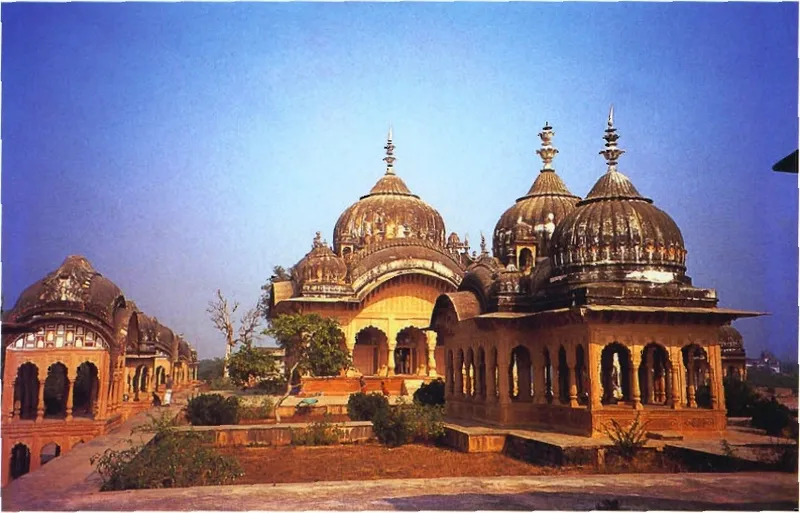
Kusuma-sarovara
कुसुम-सरोवरKusuma-sarovara lies on the right of the Govardhana parikramā path, about one and a half miles south-west of Rādhā-kuṇḍa, according to Śrī Vraja-maṇḍala Parikramā (2007).
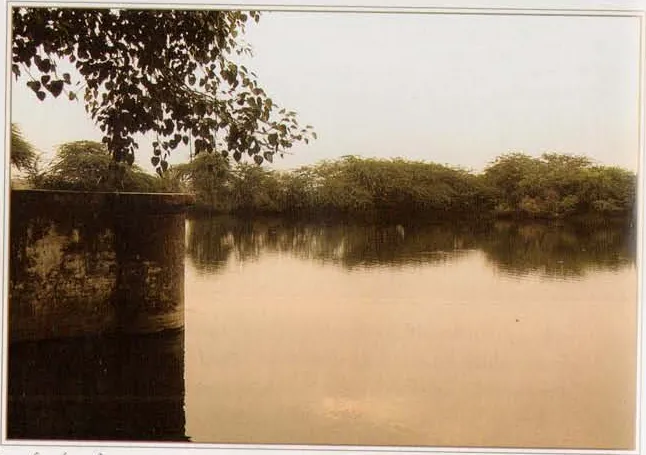
Nārada-kuṇḍa (Govardhana)
नारद-कुण्ड (गोवर्धन)Nārada-kuṇḍa is a kuṇḍa (sacred pond) on the Govardhana circuit, south-east of Kusuma-sarovara, with a temple and Deity of Śrī Nārada Muni beside it.
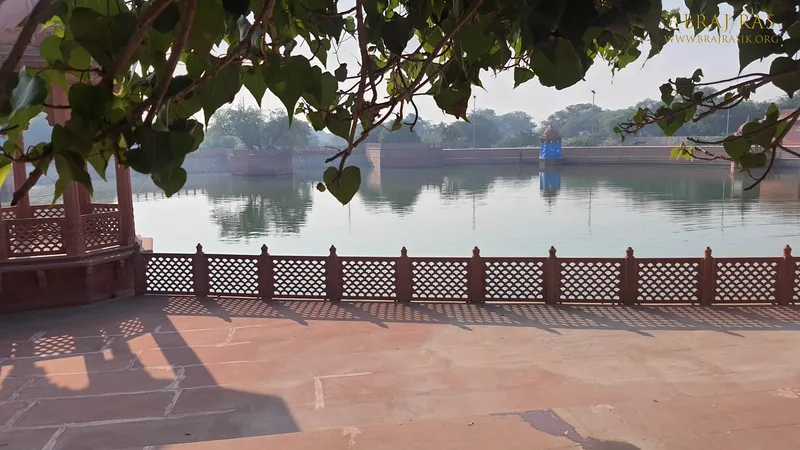
Nārada-vana
नारद-वनNārada-vana, the forest of Nārada, lies in the Govardhana area.
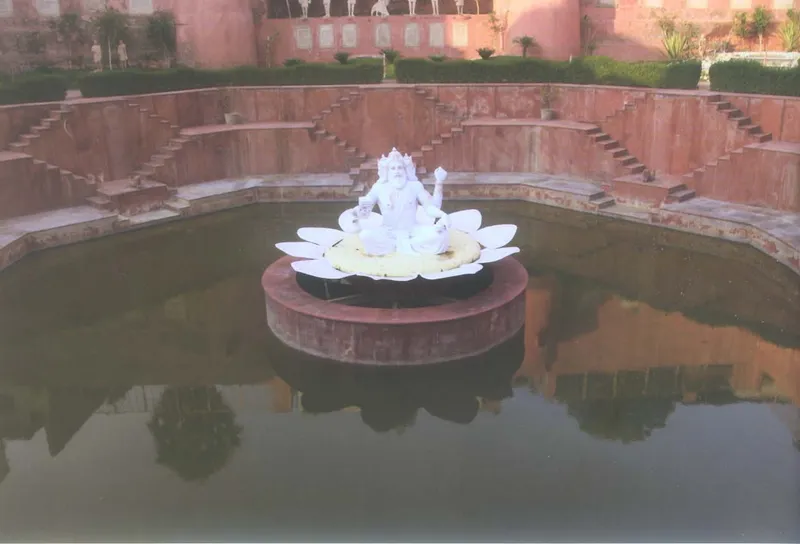
Brahma-kuṇḍa (Vṛndāvana)
ब्रह्म-कुण्ड (वृन्दावन)Brahma-kuṇḍa is a tank in Vṛndāvana, north of the Raṅgajī temple.
Govinda-kuṇḍa (Vṛndāvana)
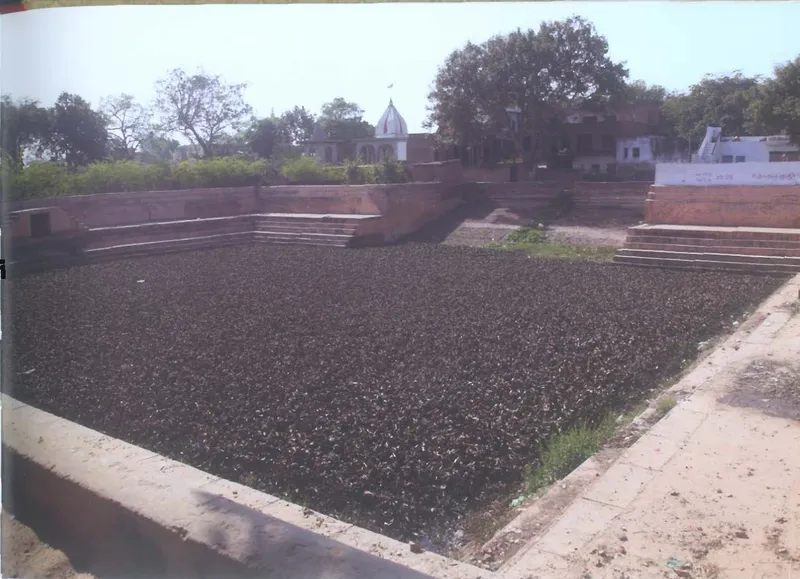
गोविन्द-कुण्ड (वृन्दावन)Govinda-kuṇḍa is a large stepped tank in the eastern part of Vṛndāvana, near the Raṅgajī temple.
Questions and answers
According to the Nārada Purāṇa, Vṛndā's friend Mādhavī had him bathe on the north-west side of Vṛndā's lake of flowers near Govardhana. He came out as a woman, Nāradī, and Viśākhā and the sakhīs took her to Kṛṣṇa. A second dip made him a man again (summarised here, not translated).[1, 2]
At Govardhana, about 400 metres south-east of Kusuma-sarovara, according to Śrī Vraja-maṇḍala Parikramā (2007). The book describes a temple with a Deity of Nārada beside it. The Bhakti-ratnākara shows it right after Kusuma-sarovara.[8–10]
The Nārada Purāṇa (Uttara-bhāga 80), the Padma Purāṇa (Pātāla-khaṇḍa 75), the Ādi-purāṇa (9.57–63), Śrīla Viśvanātha Cakravartī Ṭhākura's Vraja-rīti-cintāmaṇi (3.26–27) and the modern guidebooks. The Bhakti-ratnākara refers to it without telling it.[1 +7]
The guidebooks say so. The Nārada Purāṇa names only a lake of flowers near Govardhana, and Śrīla Viśvanātha Cakravartī Ṭhākura the lake Kusumākara. The Padma Purāṇa names a lake called Amṛta, with no place in Vraja.[3–5, 7]
Nāradī is the name the Nārada Purāṇa gives Nārada in his woman's form, after he came out of Vṛndā's lake. Viśākhā and the other sakhīs welcomed her and took her to Kṛṣṇa (summarised here, not translated).[1, 2]
Two guidebooks say that he wrote the Nārada-bhakti-sūtras there, and a third says he is said to have written them there. No scripture or Gosvāmī's book is known to say so.[10 +2]
Sources
- Nārada Purāṇa, उत्तरार्धः/अध्यायः 80 v.80-22 to 80-26
- Nārada Purāṇa, उत्तरार्धः/अध्यायः 80 v.80-32 to 80-35
- Padma Purāṇa, Pātāla-khaṇḍa (5), adhyāya 75 (Vṛndāvana-māhātmya, 'nāradīyānunaya'), verses 29-31, Sanskrit Wikisource
- Padma Purāṇa, Pātāla-khaṇḍa (5), adhyāya 75, verses 48-49, Sanskrit Wikisource
- Śrīla Viśvanātha Cakravartī Ṭhākura, Vraja-rīti-cintāmaṇi, tṛtīyaḥ sargaḥ (sarga 3), verses 26-27
- Śrī Vraja-maṇḍala Parikramā (2007), PDF p. 111
- Nārada Purāṇa, उत्तरार्धः/अध्यायः 80 v.80-6 to 80-10
- Śrīla Narahari Cakravartī, Bhakti-ratnākara, Fifth Wave (pañcama taraṅga), 1912 ed. p. 199, 2nd ed., 1912
- Śrī Vraja-maṇḍala Parikramā (2007), PDF p. 114
- the undated parikramā notes Govardhana, ¶34
- Vaṁśīdhara, Śrīla Sanātana Gosvāmī: commentary Vaṁśīdhara, Bhāvārtha-dīpikā-prakāśa, and Śrīla Sanātana Gosvāmī, Bṛhad-vaiṣṇava-toṣaṇī, on ŚB 10.37.11, Bhagavata Vidya Pith edition, ed. Bhagavata Rishi and Krishna Shankar Shastri, 1996
- Padma Purāṇa, Pātāla-khaṇḍa (5), adhyāya 71 (Śrī-Rādhā-Kṛṣṇa-māhātmya), verses 77-79, Sanskrit Wikisource
- Śrīla Nārāyaṇa Bhaṭṭa, Vraja-bhakti-vilāsa, printed p. 120, Nāradavana-utpatti-māhātmya, 1st ed., publ. Bābā Kṛṣṇadāsa, Kusuma-sarovara, Saṁvat 2008
- Śrīla Nārāyaṇa Bhaṭṭa, Vraja-bhakti-vilāsa, printed p. 47, section 51, 1st ed., publ. Bābā Kṛṣṇadāsa, Kusuma-sarovara, Saṁvat 2008
- Śrīla Narahari Cakravartī, Bhakti-ratnākara, Fifth Wave, printed p. 448 (1912 edition), 2nd ed., 1912
- Govardhana Hill: India's Most Sacred Mountain (2001), Rajasekhara dasa Brahmacari, PDF p. 53
- Vṛndāvana-Dhāma Ki Jaya! (c. 1986), by Dhruva Mahārāja dāsa, PDF p. 37
- Vṛndāvana-Dhāma Ki Jaya! (c. 1986), by Dhruva Mahārāja dāsa, PDF p. 36
- Śrīla Nārāyaṇa Bhaṭṭa, Vraja-bhakti-vilāsa, printed p. 2, verses 18-22, 1st ed., publ. Bābā Kṛṣṇadāsa, Kusuma-sarovara, Saṁvat 2008
- Śrīla Nārāyaṇa Bhaṭṭa, Vraja-bhakti-vilāsa, printed p. 119, 1st ed., publ. Bābā Kṛṣṇadāsa, Kusuma-sarovara, Saṁvat 2008
Show all 27 references
- Skanda Purāṇa, Vaiṣṇava-khaṇḍa (2), Śrīmad-bhāgavata-māhātmya (section 6), adhyāya 3, verses 49-50, Sanskrit Wikisource
- Skanda Purāṇa, 2.6.2.24, Sanskrit Wikisource
- Govardhana Hill: India's Most Sacred Mountain (2001), Rajasekhara dasa Brahmacari, PDF p. 56
- Śrīla Prabhupāda, Śrīmad-Bhāgavatam, Canto 6, Chapter 5, verse 43, translation · vedabase.io
- Śrī Śrī Bhaktamāla grantha, pilgrimage list of Vṛndāvana's places, printed p. 351, left-hand column
- Śrīla Narahari Cakravartī, Bhakti-ratnākara, Fifth Wave, quoting the Saura Purāṇa, 1912 ed. p. 448, 2nd ed., 1912
- Nārada Purāṇa, उत्तरार्धः/अध्यायः 80 v.80-59 – v.80-61 (Uttara-bhāga, chapter 80, verses 59–61)
Further sources
- Śrīmad-Bhāgavatam 6.5.43, translation by Śrīla Prabhupāda; 10.37 with the commentaries of Vaṁśīdhara and Śrīla Sanātana Gosvāmī.
- Nārada Purāṇa, Uttara-bhāga 80; Padma Purāṇa, Pātāla-khaṇḍa 71 and 75; Ādi-purāṇa 9; Skanda Purāṇa, Bhāgavata-māhātmya: summarised here, not translated.
- Śrīla Viśvanātha Cakravartī Ṭhākura, Vraja-rīti-cintāmaṇi 3.26–27; Śrīla Narahari Cakravartī Ṭhākura, Bhakti-ratnākara, Fifth Wave; Śrīla Nārāyaṇa Bhaṭṭa Gosvāmī, Vraja-bhakti-vilāsa; Bengali Bhaktamāla (1905).
- Govardhana Hill (2001); Vṛndāvana-Dhāma Ki Jaya! (c. 1986); Govardhana Hill, undated parikramā notes; Śrī Vraja-maṇḍala Parikramā (2007).