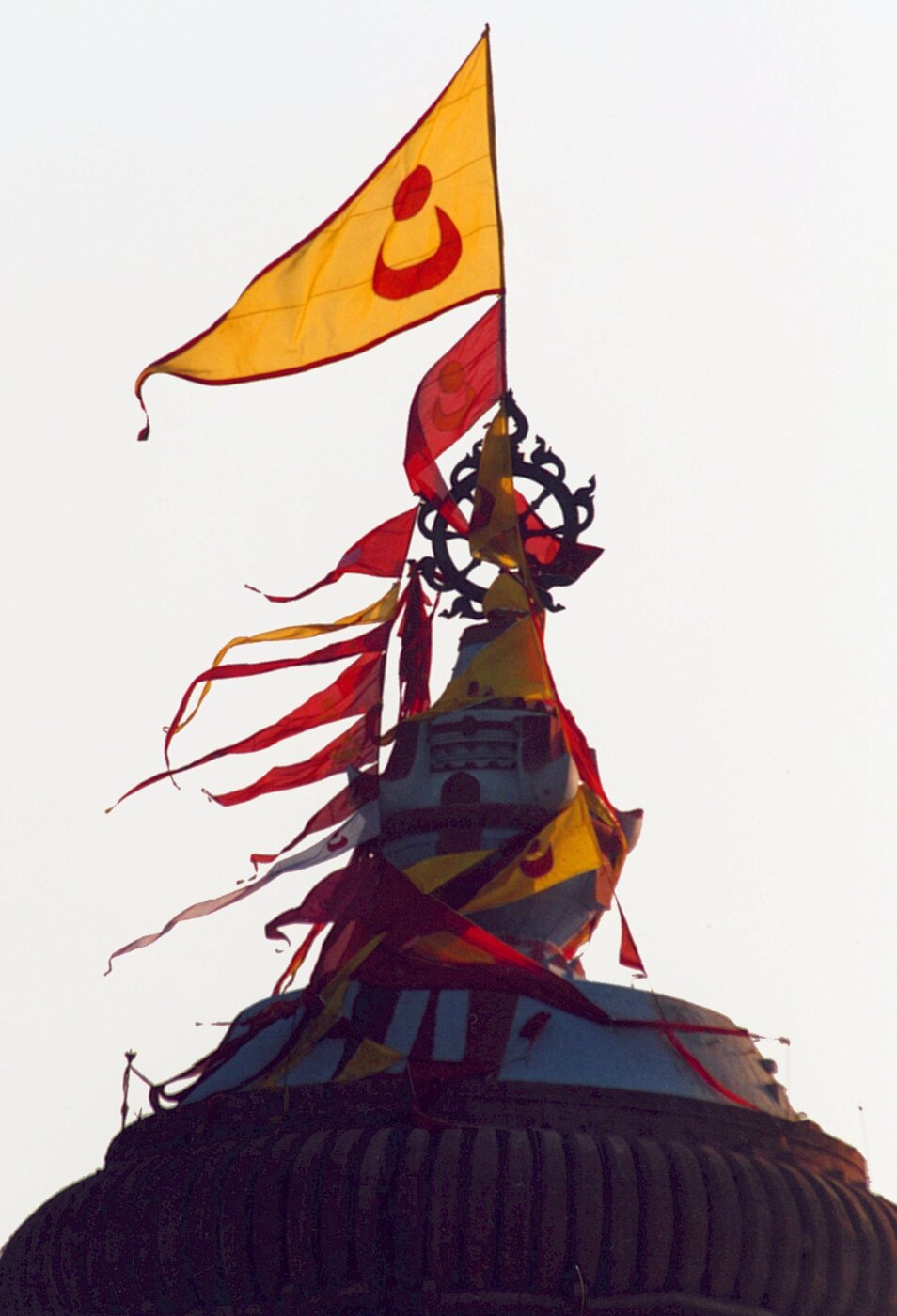
Srila Haridasa Thakura (Haridāsa Ṭhākura) spent his last years at Jagannatha Puri, in one small room in a flower garden. He never entered the great temple, yet Sri Chaitanya Mahaprabhu Himself came to him there every day. The years before this, when he sang, danced and preached at the Lord's side in Navadvipa, are told in With Sri Chaitanya Mahaprabhu in Navadvipa. Here the story begins when the Lord took sannyasa and set out for Puri.
"What Will Be My Destination?" #
On the last night before the Lord left Navadvipa to take sannyasa, Haridasa was sleeping close to Him: "There He rested under the influence of yoga-nidrā, or mystic sleep, while Gadādhara and Haridāsa slept nearby." (Chaitanya-bhagavata Madhya 28.44, translated by Bhumipati Dasa) Afterwards, at Advaita Acharya's house in Shantipur, the Lord asked the devotees to go home and chant the holy name together (Chaitanya-charitamrita Madhya 3.188-192). As He prepared to leave for Puri, Haridasa wept:
nīlācale yābe tumi, mora kon gati
nīlācale yāite mora nāhika śakati
Haridāsa Ṭhākura said, “You are going to Jagannātha Purī, and that is all right, but what will be my destination? I am not able to go to Jagannātha Purī. (Sri Chaitanya-charitamrita Madhya 3.194)
In his purport Srila Prabhupada explains: "Although Śrīla Haridāsa Ṭhākura was born in a Muslim family, he was accepted as a properly initiated brāhmaṇa. As such, he had every right to enter the temple of Jagannātha Purī, but ... Haridāsa Ṭhākura, out of his great humility, did not want to violate these existing rules."
Haridasa felt that if the Lord lived in the temple, a man who could not enter it would never see Him again (Madhya 3.194, purport). The Lord answered, "Please check your humility. Just the sight of your humility very much agitates My mind." He promised that He would make a request to Lord Jagannatha and take Haridasa to Puri Himself (Chaitanya-charitamrita Madhya 3.196-197).
Arrival at Puri and the Temple Rule #
The promise was kept. Some years later, after the Lord's tour of South India, the devotees of Bengal came to Puri for the Ratha-yatra, and Haridasa came with them. The Lord greeted each one, then asked, "Where is Haridāsa?" Haridasa was lying flat at the edge of the public road far away, offering obeisances from a distance (Chaitanya-charitamrita Madhya 11.161-163). The devotees ran to call him, and he answered:
haridāsa kahe, — muñi nīca-jāti chāra
mandira-nikaṭe yāite mora nāhi ādhikāra
Haridāsa Ṭhākura replied, “I cannot go near the temple because I am a low-caste, abominable person. I have no authority to go there.” (Sri Chaitanya-charitamrita Madhya 11.165)
In his purport Srila Prabhupada explains: "This is a long-standing regulation, and thus Haridāsa Ṭhākura, although certainly competent and qualified to enter the temple, did not want even to go near it."
He asked only for a lonely place near the temple, where he would not touch any servant of Lord Jagannatha (Madhya 11.166-167). The Lord was delighted to hear it (Madhya 11.168). Sri Chaitanya-charitamrita records no complaint from Haridasa about the rule.
A Room in the Flower Garden #
When Kashi Mishra came to arrange places for the devotees to stay, the Lord asked him for a single solitary room in a flower garden near His own residence: "Indeed, I shall remember the lotus feet of the Lord sitting in that solitary place" (Chaitanya-charitamrita Madhya 11.175-176). Srila Prabhupada notes that the Lord wanted it "either for Himself or Haridāsa Ṭhākura". He also warns that beginners should not imitate such solitary chanting (Madhya 11.176, purport).
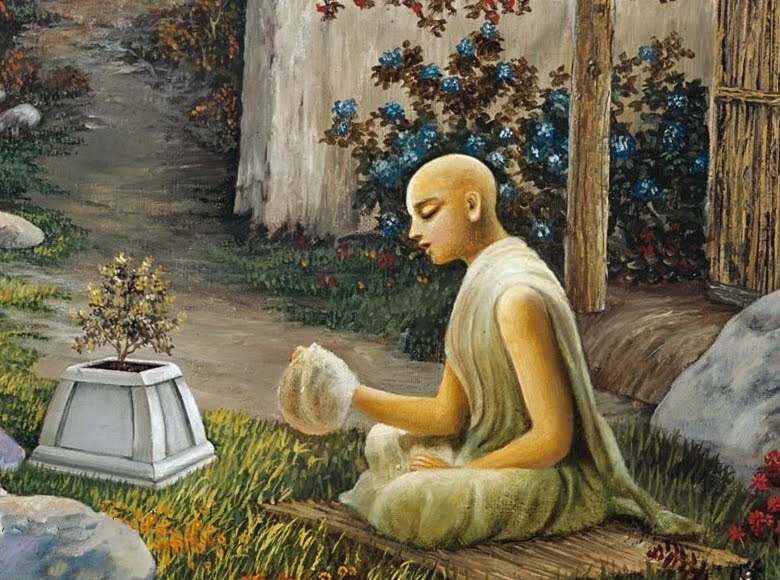
Then the Lord went to Haridasa, who fell flat before Him like a stick. The Lord lifted him up and embraced him, and both began to cry (Madhya 11.185-187). "My dear Lord, please do not touch me," Haridasa pleaded, "for I am most fallen and untouchable and am the lowest among men." The Lord replied, "I wish to touch you just to be purified, for your purified activities do not exist in Me" (Chaitanya-charitamrita Madhya 11.188-189). He said that Haridasa was bathing in every holy place at every moment and was far better than any brahmana or sannyasi (Madhya 11.190-192). Then He led him into the garden and showed him his room:
mandirera cakra dekhi’ kariha praṇāma
ei ṭhāñi tomāra āsibe prasādānna
“Remain here peacefully and look at the cakra on the top of the temple and offer obeisances. As far as your prasādam is concerned, I shall arrange to have that sent here.” (Sri Chaitanya-charitamrita Madhya 11.195)
In his purport Srila Prabhupada explains: "This means that if one is not allowed to enter the temple, or if he thinks himself unfit to enter the temple, he can look at the wheel from outside the temple, and that is as good as seeing the Deity within."
That same day the Lord carefully sent prasadam to Haridasa through His servant Govinda (Madhya 11.206). From then on Haridasa remained at Puri, among the Lord's own Puri devotees (Chaitanya-charitamrita Adi 10.124-126).
Siddha Bakula and the Bakula Tree #
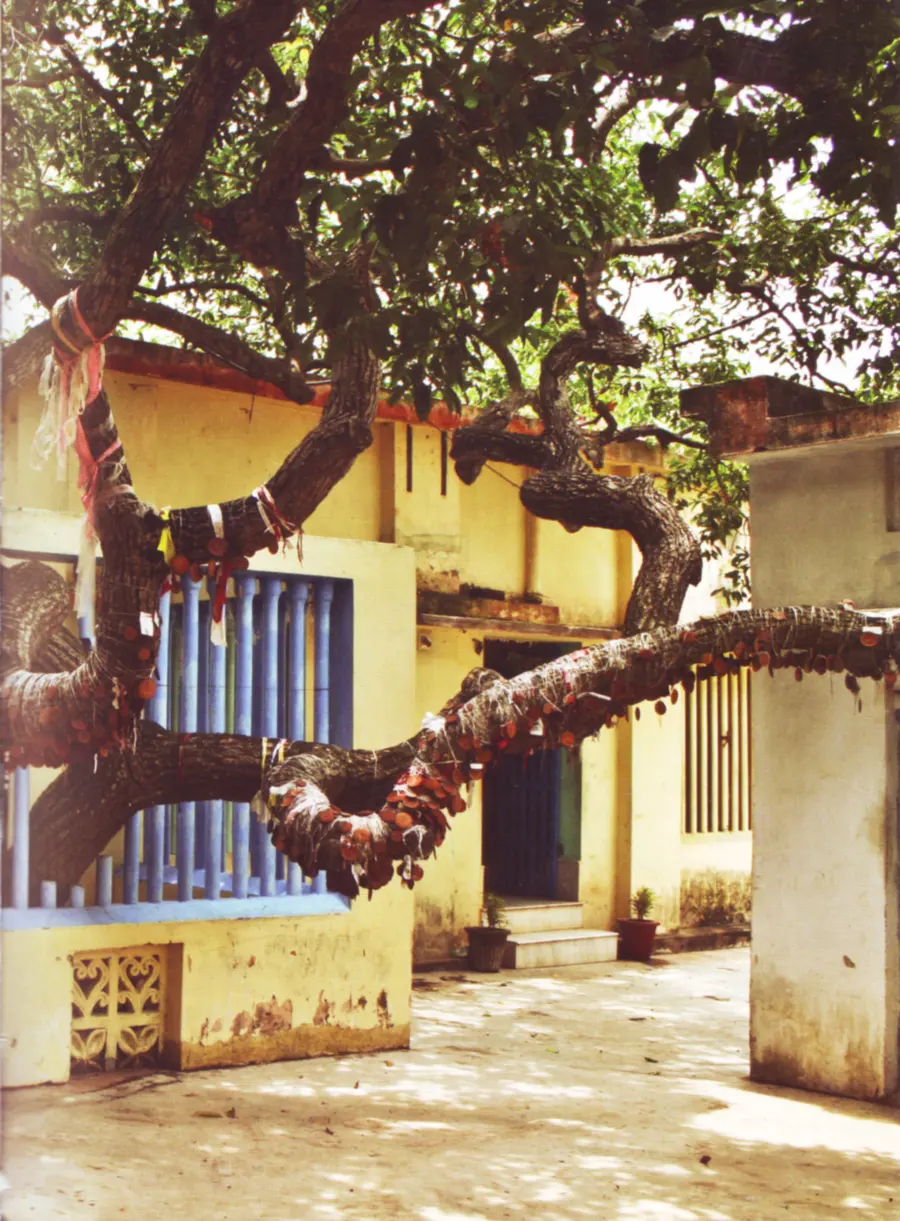
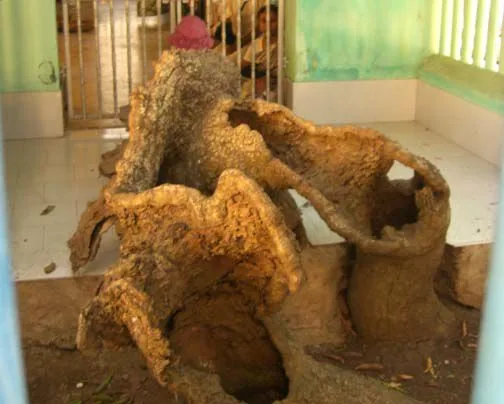
The garden where Haridasa lived is known today as Siddha Bakula. Srila Prabhupada writes: "A monastery has now been erected there, known as Siddhabakula Maṭha" (Chaitanya-charitamrita Madhya 3.194, purport). Local tradition in Puri says that the place was earlier called Mudra Math.
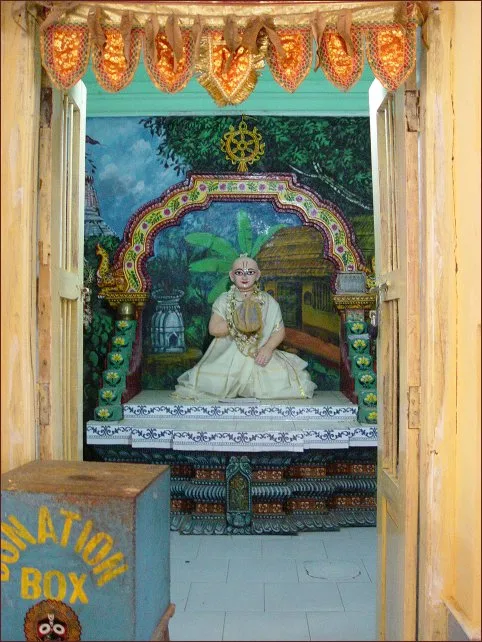
The name comes from a bakula tree. Sri Chaitanya-charitamrita does not mention it. The story is a well-known Puri tradition. It is told in the Sri Puri Dham Mahatmya Mukta Mala of the Sri Chaitanya Saraswat Math and on the Siddha Bakula page of ISKCON Desire Tree. It is said that the temple priests sometimes gave the twig used to clean Lord Jagannatha's teeth (danta-kashtha) as prasadam to a special person. Once such a bakula twig was given to Sri Chaitanya Mahaprabhu. He planted it at the place where Haridasa chanted, and it grew into a great tree. It is also said that the planting took place on Mahavishuva Sankranti, the day the sun enters Aries, and that a festival called the Danta-kashtha-ropana Mahotsava, the great festival of planting the tooth-cleaning twig, is held there on that day every year to celebrate the event.
The Lord's Daily Visits #
Every morning the Lord went to the temple to see the upala-bhoga offering, and on His way home He stopped to see Haridasa. When Rupa Goswami and Sanatana Goswami came to Puri, they too kept away from the temple and stayed with Haridasa, and the Lord visited whichever of them was there (Chaitanya-charitamrita Madhya 1.63-65; Antya 1.45; Antya 4.13-16). In his purport Srila Prabhupada draws the lesson: "Kṛṣṇa Himself associates with devotees who are chanting His holy name, and there is no need to be unhappy over not being able to enter a certain temple." The Lord's affection for Haridasa and Sanatana was open and tender. He told them, "I think of you as My little boys, to be maintained by Me." (Chaitanya-charitamrita Antya 4.184)
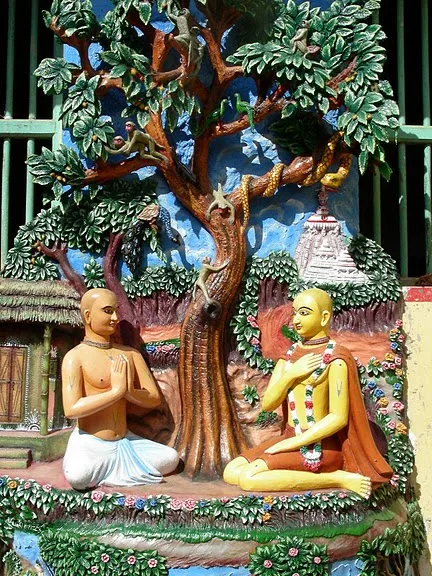
There, in Haridasa's room, Sanatana spoke the praise that has defined Haridasa ever since:
‘ācāra’, ‘pracāra’, — nāmera karaha ‘dui’ kārya
tumi — sarva-guru, tumi jagatera ārya
“You simultaneously perform both duties in relation to the holy name by your personal behavior and by your preaching. Therefore you are the spiritual master of the entire world, for you are the most advanced devotee in the world.” (Sri Chaitanya-charitamrita Antya 4.103)
In his purport Srila Prabhupada explains: "The qualifications expressed in this connection are that one must act according to the scriptural injunctions and at the same time preach."
On festival days Haridasa came out to dance. At the Ratha-yatra, in the party led by Mukunda Datta, "the senior Haridāsa [Haridāsa Ṭhākura] was the dancer" (Chaitanya-charitamrita Madhya 13.40-41).
In these years the Lord felt the deepest separation from Krishna, and He spent His nights with Ramananda Raya and Svarupa Damodara Goswami (Antya 11.11-15). His visit to Haridasa belonged to the daytime. It was a fixed hour of quiet friendship.
dine nṛtya-kīrtana, īśvara-daraśana
rātrye rāya-svarūpa-sane rasa-āsvādana
"In the daytime Śrī Caitanya Mahāprabhu engaged in dancing and chanting and in seeing the temple of Lord Jagannātha. At night, in the company of His most confidential devotees, such as Rāmānanda Rāya and Svarūpa Dāmodara Gosvāmī, He tasted the nectar of the transcendental mellows of Lord Śrī Kṛṣṇa’s pastimes." (Sri Chaitanya-charitamrita Antya 11.12)
Honoured Above His Birth #
Years before, at Shantipur, Advaita Acharya had offered him the shraddha-patra, the plate of food from the memorial rite for Advaita's father, which custom kept for the best brahmanas (Chaitanya-charitamrita Adi 10.44). Near the end of his life, Haridasa himself remembered this honour as he spoke to the Lord:
aneka nācāilā more prasāda kariyā
viprera śrāddha-pātra khāinu ‘mleccha’ hañā
“My dear Lord, by Your mercy You have made me dance in many ways. For example, I was offered the śrāddha-pātra, which should have been offered to first-class brāhmaṇas. I ate from it even though I was born in a family of meat-eaters.” (Sri Chaitanya-charitamrita Antya 11.30)
In his purport Srila Prabhupada explains: "Although Haridāsa Ṭhākura was born in the family of meat-eaters, because he was an advanced devotee he was shown more respect than a first-class brāhmaṇa."
In the same purport Srila Prabhupada cites Bhaktisiddhanta Sarasvati Thakura's Anubhashya, which says that a person born a brahmana who does not live like a brahmana should not receive the shraddha-patra. Srimad-Bhagavatam gives the rule: "If one shows the symptoms of being a brāhmaṇa, kṣatriya, vaiśya or śūdra, as described above, even if he has appeared in a different class, he should be accepted according to those symptoms of classification" (Srimad-Bhagavatam 7.11.35). The temple rule stayed, and Haridasa honoured it, but Srila Prabhupada is clear about what the Lord thought of it: "Such dogmatic prohibitions were not approved by Lord Caitanya Mahāprabhu" (Madhya 1.63, purport).
The Last Years at Siddha Bakula #
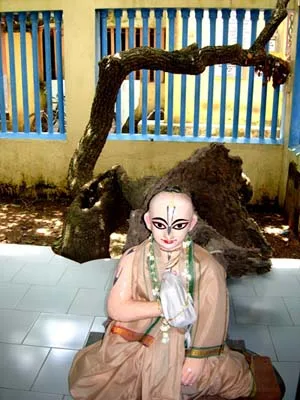
Haridasa grew old in that garden, still chanting three hundred thousand names a day. One day Govinda found him lying down and chanting slowly. Haridasa ate only a little of the prasadam, saying, "But you have brought mahā-prasādam, and how can I neglect it?" (Chaitanya-charitamrita Antya 11.16-20). The next day he told the Lord that his only disease was that he could not complete his rounds (Antya 11.21-23), and the Lord made a loving suggestion:
prabhu kahe, — “vṛddha ha-ilā ‘saṅkhyā’ alpa kara
siddha-deha tumi, sādhane āgraha kene kara?
“Now that you have become old,” the Lord said, “you may reduce the number of rounds you chant daily. You are already liberated, and therefore you need not follow the regulative principles very strictly.” (Sri Chaitanya-charitamrita Antya 11.24)
In his purport Srila Prabhupada explains: "Ṭhākura Haridāsa was the living example of how to follow the regulative principles."
Haridasa did not take the rest that was offered. Instead he asked the Lord for one last mercy, told in Disappearance in the Lord's Embrace.
