Srila Ramachandra Kaviraja
Poet-Disciple of Shrinivasa Acharya and Closest Friend of Narottama Dasa Thakura
The complete life, on one page: The main biography and every pastime page, in order, in one place
Introduction
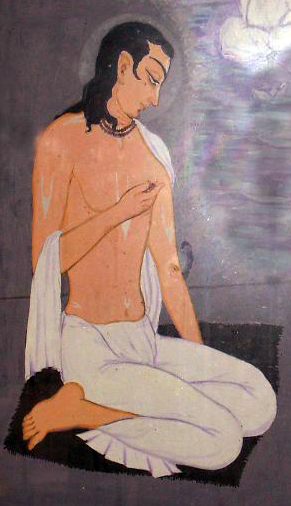
Srila Ramachandra Kaviraja belonged to the generation of Gaudiya Vaishnava saints who came directly after Sri Chaitanya Mahaprabhu's own associates had finished their work in Bengal and Vraja. We know more about him than about many others of that later generation. A few verses and a Prabhupada purport in Sri Chaitanya-charitamrita leave no real doubt about his family and his guru. A much longer story preserved in Narahari Chakravarti Thakura's *Bhakti-ratnakara* fills in a vivid picture of his life around those basic facts. He was a Bengali physician-poet who gave up worldly comfort on his own wedding day. He became Shrinivasa Acharya's most devoted personal servant, and he earned the title "Kaviraja", king of poets, from Jiva Goswami himself in Vrindavana.
| Detail | Description |
|---|---|
| Guru | Shrinivasa Acharya |
| Parents | Chiranjiva Sena and Sunanda, of Shrikhanda, Bengal |
| Younger brother | Govinda Dasa Kaviraja, Vaishnava poet-composer |
| Era | Late 16th - early 17th century, one generation after the Six Goswamis |
| Title "Kaviraja" | Conferred by Jiva Goswami in Vrindavana |
| Chief literary works | Smarana-chamatkara, Smarana-darpana, Siddhanta-chandrika, Shrinivasa Acharyera Jivana-charita |
| Samadhi | Dhira Samira, Vrindavana, beside Shrinivasa Acharya's own samadhi |
At a Glance
- Born into a Bengali family of physicians in Shrikhanda; raised for a time in Shakta worship, before his own initiation changed everything.
- Renounced the celebrations of his own wedding procession the moment he encountered Shrinivasa Acharya, and never really returned to household life.
- Traveled to Vrindavana, met Jiva Goswami and several of the Six Goswamis in person, and received the Kaviraja title after reciting his own poetry.
- Defended Narottama Dasa Thakura's mission in disguise as a village shopkeeper, when a rival party tried to discredit it.
- Died in Vrindavana after Shrinivasa Acharya's own disappearance, unable to bear separation from the Goswamis who had already passed on.
Scriptural evidence for the introduction (2)
From the purport: Purport excerpt: "Of Ciranjiva's two sons, the elder, Ramacandra Kaviraja, was a disciple of Srinivasa Acarya and an intimate associate of Narottama dasa Thakura. The younger son was Govinda dasa Kaviraja, the famous Vaisnava poet."
Srila Prabhupada's own purport is the primary documentary source establishing Ramachandra Kaviraja's parentage, his guru, and his relationship to Narottama Dasa Thakura and his brother Govinda.
svardhunyas-tira-bhumau sarajani-nagare gauda-bhupadi-patrad brahmanyad visnu-bhaktad api suparicitat sri-ciranjiva-senat yah sri-ramendu-nama samajani paramah sri-sunandabhidhayam so-yam sriman narakhye sa hi kavi-nrpatih samyag asid abhinnah
Ramachandra, a king amongst poets, was born in the town of Sarajani on the banks of the Ganges as the son of Sunanda and Chiranjiva Sena, a well-known minister of the king of Gauda, a devotee of the brahmanas and of Vishnu. Ramachandra was not in any way different from Narottama Dasa Thakura.
Composed by his own brother Govinda Dasa Kaviraja, this verse is the earliest source for Ramachandra Kaviraja's birthplace and family, though it names the town Sarajani-nagara rather than Shrikhanda.
Chapter 1
The Wedding Procession at Jajigram
How a single glimpse of Shrinivasa Acharya on his own wedding day ended a life of Shakta worship.
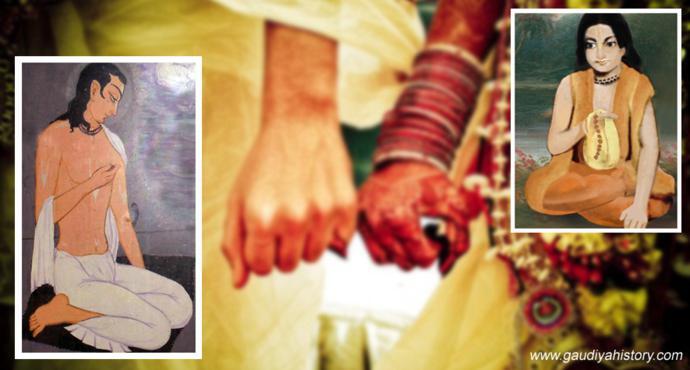
Ramachandra grew up in a household that, from the outside, already seemed to belong to Krishna. His father, Chiranjiva Sena of Shrikhanda, is named directly in Sri Chaitanya-charitamrita as one of a close circle of devotees who traveled every year to Puri for Ratha-yatra. Mukunda, Narahari Sarakara and Raghunandana were also in this circle. But Chiranjiva died while his two sons, Ramachandra and the younger Govinda, were still young. The boys were then raised by their maternal grandfather, Damodara Kaviraja. Damodara was a real poet himself, but he was also a firm worshiper of Durga in the Shakta tradition. Both brothers grew up worshiping deities who represent Krishna's external energy. By early adulthood Ramachandra had made a name for himself as a practicing physician and as a skilled poet.
A Palanquin Passes Jajigram #
None of that reputation prepared Ramachandra for what happened on his wedding day. After the wedding he sat in a palanquin beside his new bride, Ratnamala (given elsewhere as Ratanala). The procession was carrying them toward his home at Kumaranagara. On the way, the party passed through Jajigram, and past the house of Shrinivasa Acharya. Shrinivasa Acharya happened to be sitting on his own veranda, discussing Krishna-katha with his disciples.
Narahari Chakravarti Thakura's *Bhakti-ratnakara* records what happened next as something neither man could fully explain. When Ramachandra saw the Acharya, a feeling he had not known before rose in his heart. It was not the passing interest of a stranger. It was closer to meeting a very dear friend after a long separation. Shrinivasa Acharya felt the same pull toward Ramachandra. Seeing the young bridegroom in his palanquin, he turned to his own associates and asked who he was, what caste he belonged to, and where he lived. They told him that the young man was Ramachandra, a skilled poet and physician of Kumaranagara. The Acharya only smiled.
A Sleepless Night, and a Return at Dawn #
The wedding celebrations went ahead as planned. Ramachandra's new household welcomed its bride with the usual noise and festivity. But all the accounts agree that his mind never really left Jajigram. He got through the day, and as soon as night fell, he made his way back. He stayed until morning in the house of a local brahmana. At daybreak he went straight to Shrinivasa Acharya and fell at his feet.
Shrinivasa Acharya, who had spent that same day and night thinking of the young man he had seen in the palanquin, lifted him up and embraced him. What he said next is the line by which this meeting is still remembered: "Birth after birth, you are my most dear friend. In the same way that the Lord arranged my meeting with Narottama Dasa Thakura at Vrindavana, He has now reunited me with another dear friend." Ramachandra stayed on, studying the writings of the Six Goswamis under the Acharya's direct guidance, and in due course was initiated with the Radha-Krishna mantra.
Facing Down a Shakta Challenge #
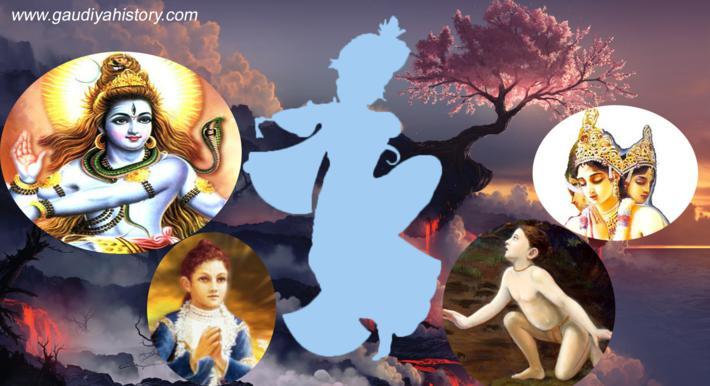
Initiation did not bring the matter to a quiet end. Ramachandra returned home wearing Vaishnava tilaka in the traditional twelve places and carrying a chanting bead-bag. His Shakta relatives and neighbors were upset, because his own grandfather had been a lifelong devotee of Lord Shiva. One day, as Ramachandra was returning from his bath, they faced him directly. They asked how he, the grandson of such a devotee, could give up Shiva's worship completely.
The same source records Ramachandra's reply. He did not insult anyone's faith. Instead, he explained a short point of Vaishnava philosophy. Shiva and Brahma, he said, are themselves great devotees and expansions of Krishna's own energy. So worship of Krishna nourishes them too, just as watering a tree's root feeds every leaf and branch. He gave the examples of Prahlada, Dhruva and Vibhishana, devotees of Krishna whom Shiva and Brahma naturally favored. Ravana, Kumbhakarna and Banasura were different. They were devotees of Shiva only in name, and they came to ruin because they were never devotees of Krishna Himself. He added that Brahma's own power to create the universe, and Shiva's own power to bless it, both come from their earlier service to Vishnu. His questioners, the account says, had no answer and fell silent.
After that confrontation, Ramachandra's old life never again had any real hold on him. The story of what came next continues on Pilgrimage to Vrindavana and the Kaviraja Title. It tells of his own journey to Vrindavana, and of the title that stayed with him for the rest of his life.
Chapter 2
Pilgrimage to Vrindavana and the Kaviraja Title
A journey to meet the Six Goswamis in person, and the title that made him one of Shrinivasa Acharya's eight Kavirajas.
Ramachandra set out for Vrindavana not long after his initiation. He went with his guru's blessing. By tradition, he also asked permission from the elder Vaishnava Raghunandana and others of Shrikhanda. For a devotional text, the record of his route is unusually exact about places. He went through Gaya, Kashi and Prayaga to Mathura. There he bathed and rested at Vishrama-ghat. Then he took darshan of the ancient Adi-Keshava temple, and finally went on to Vrindavana itself.
Reunited With His Guru, and Introduced to Jiva Goswami #
Shrinivasa Acharya was in Vrindavana when Ramachandra arrived. Ramachandra's first act was to fall at his guru's feet. Then he fell at the feet of Jiva Goswami and brought him news of the Vaishnavas back in Bengal. Shrinivasa Acharya's affection for his disciple only grew deeper in Vraja. Tradition records that the Malla king Bir Hambir of Bishnupur later became Shrinivasa Acharya's own formal initiated disciple. The same tradition says that it was Ramachandra who served the king as siksha-guru, guiding him in the day-to-day practice of devotional life. This showed unusual trust, because Ramachandra himself had been a Vaishnava for only a short time.
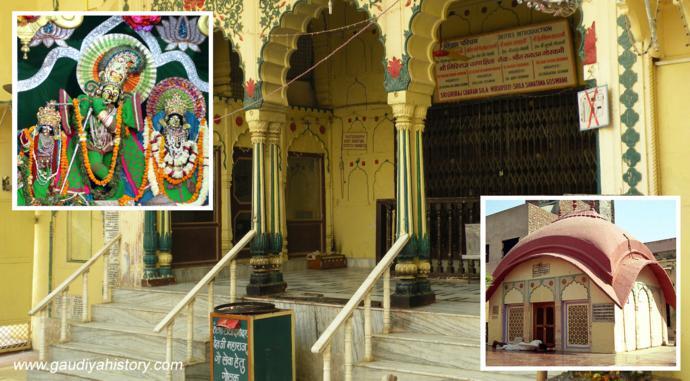
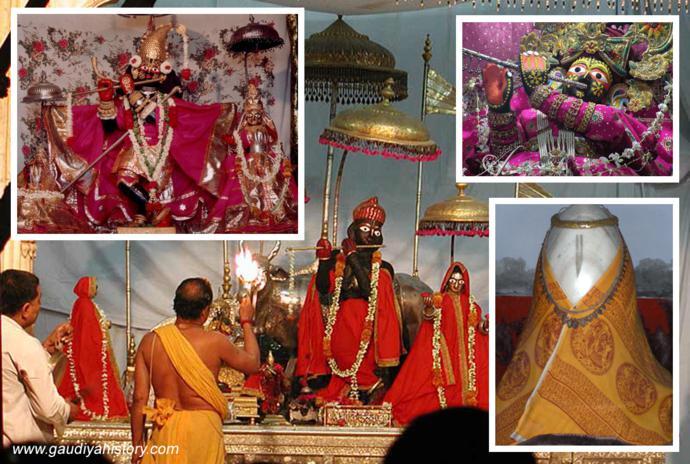
On Jiva Goswami's own instruction, Ramachandra was taken to see the Deities of Govinda, Gopinatha and Madana-mohana, and to the samadhi of Sanatana Goswami. From there he went on to receive the personal blessings of three more of the small circle of direct associates whom Sri Chaitanya Mahaprabhu had first sent to uncover and restore the lost holy places of Vraja. The first was Gopala Bhatta Goswami, the South Indian brahmana who would later compile the Hari-bhakti-vilasa. This is the manual of Deity worship that Gaudiya temples still follow. The second was Lokanatha Goswami, who is traditionally credited with first rediscovering the site of Radha-kunda itself. The third was Bhugarbha Goswami, one of Lokanatha Goswami's own closest associates in Vraja.
Radha-Damodara, Radha-kunda, and an Embrace From Raghunatha Dasa Goswami #
The *Bhakti-ratnakara* describes in some detail what happened at the Radha-Damodara temple. Ramachandra went there with Jiva Goswami and stood before Rupa Goswami's samadhi. What came over him there is described as an ecstatic change that everyone present could see. It is said that this amazed the Vaishnavas who saw it, and they took it as a sign of real devotion, not a show. From the temple he went on to bathe in the twin lakes of Radha-kunda and Shyama-kunda. Tradition connects these waters with Krishna's rasa-lila with Radharani and her gopi friends. By then the lakes had already been the home and bhajana-sthal of Raghunatha Dasa Goswami for decades. Raghunatha Dasa Goswami was not a man who easily showed warmth. Even his admiring biographers describe him this way. Yet when Ramachandra offered his obeisances there, the Goswami embraced him affectionately.
The Kaviraja Title #
While Ramachandra was in this same company, the Vaishnavas of Vraja heard him recite samples of his own poetry. By the *Bhakti-ratnakara*'s own account, Paramananda Bhattacharya was among them. After that, Jiva Goswami and the others decided together to award him the title Kaviraja, meaning king of poets. Srila Prabhupada's purport to Chaitanya-charitamrita, Adi-lila 11.51, gives much the same account in far fewer words. It credits the honor to Jiva Goswami's appreciation of "Sri Ramacandra Kaviraja's great devotion to Lord Krsna." The title placed him among the eight kavirajas, the poet-disciples of Shrinivasa Acharya. Later Vaishnava tradition remembers him by this title, not only by his birth name.
After some more time in the Goswamis' company, Ramachandra was instructed to return to Bengal. He traveled back slowly, through Shrikhanda, Jajigram and Kalna. Finally he arrived at Mayapura to receive the blessings of Ishana Thakura. Then he took up his life again alongside Shrinivasa Acharya and Narottama Dasa Thakura. Not long after, this partnership was tested by a very different kind of challenge, told on The Disguised Shopkeepers of Kumarapura.
Ramachandra's brief time at Radha-kunda was only a visit. He did not settle there. His own base remained Shrinivasa Acharya's household and, in time, Vrindavana in general. But the community of renounced Vaishnavas that Raghunatha Dasa Goswami had gathered at Radha-kunda lasted for generations after this meeting. About a century later, Vishvanatha Chakravarti Thakura wrote his famous commentaries at Radha-kunda. He belonged to the same continuing line of learned devotees who had renounced the world. They kept Raghunatha Dasa Goswami's bhajana alive at the two lakes long after the generation Ramachandra met there had passed on.
Scriptural evidence for this chapter (1)
kamsari sena, ramasena, ramacandra kaviraja
govinda, sriranga, mukunda, tina kaviraja
Word for word
kamsari sena - Kamsari Sena; ramasena - Ramasena; ramacandra kaviraja - Ramacandra Kaviraja; govinda - Govinda; sriranga - Sriranga; mukunda - Mukunda; tina kaviraja - all three are Kavirajas, or physicians.
The fifty-eighth great devotee of Lord Nityananda Prabhu was Kamsari Sena, the fifty-ninth was Ramasena, the sixtieth was Ramacandra Kaviraja, and the sixty-first, sixty-second and sixty-third were Govinda, Sriranga and Mukunda, who were all physicians.
From the purport: Purport excerpt: "Srila Jiva Gosvami very much appreciated Sri Ramacandra Kaviraja's great devotion to Lord Krsna and therefore gave him the title Kaviraja."
This verse places Ramachandra Kaviraja among the branches of Lord Nityananda Prabhu's devotee-tree in Chaitanya-charitamrita, and Prabhupada's purport is the most authoritative source for how he received the Kaviraja title.
Chapter 3
The Disguised Shopkeepers of Kumarapura
How two Vaishnava scholars, posing as village traders, turned back a conspiracy against Narottama Dasa Thakura.
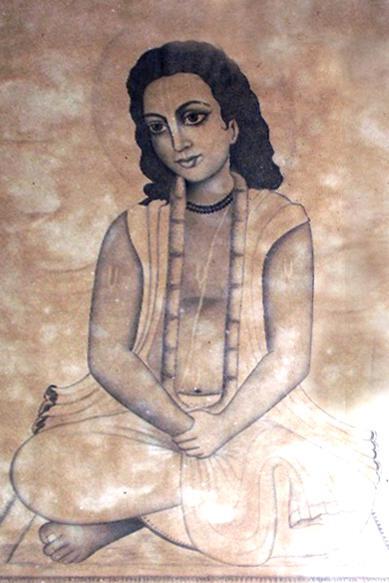
The greatest controversy in Narottama Dasa Thakura's own lifetime had nothing to do with his teaching. It had everything to do with his birth. Sri Chaitanya Mahaprabhu himself had taught that spiritual authority belongs to anyone who truly knows Krishna, whether he is a brahmana or not. But that teaching still went strongly against Bengal's caste-conscious smarta brahmana society, and Narottama Dasa Thakura's own life put it to a direct test. He was born a kayastha, not a brahmana, yet he had taken brahmana disciples. A group of smarta brahmanas could not tolerate this, and they set out to disgrace him in public. They brought in a local king, Raja Narasimha, and a powerful debater named Rupanarayana Pandita. The whole party then set off for Kheturi, where Narottama Dasa Thakura had his headquarters. They meant to expose him as a fraud in front of his own community.
Two Shopkeepers Who Were Not What They Seemed #
Word of the plan reached Ramachandra before the party arrived, and he did not wait for them at Kheturi. He traveled ahead to Kumarapura with a fellow Vaishnava, Ganga Narayana Chakravarti. In the Vaishnava tradition that has come down to us, Ganga Narayana's name appears mainly through this one episode. The plotters would have to pass through Kumarapura. There the two men set up two ordinary market stalls, one selling betel nut and pan, the other selling clay pots. Neither man gave any sign of who he really was. In fact both were skilled Sanskrit scholars, relying on nothing but their disguise.
When the smarta party reached Kumarapura, they sent disciples out to buy supplies. The young men expected simple tradesmen. Instead they found two shopkeepers who answered them in fluent Sanskrit and drew them almost at once into a philosophical argument. The disciples could not hold their own, so they called for their teachers. In the end the whole party came to the two stalls, Raja Narasimha and Rupanarayana Pandita among them. Rupanarayana himself entered the debate, and lost it. The *Bhakti-ratnakara* records that Ramachandra and Ganga Narayana defeated him with arguments firmly based on the Bhagavatam. Given the question being argued, they very likely used its repeated teaching that a person becomes spiritually qualified by character, knowledge and surrender, not by the family he happens to be born into. At last the two "shopkeepers" were asked who they really were. They answered with careful humility that they were two insignificant disciples of Narottama Dasa Thakura Mahasaya. The smarta party had already been beaten in a village marketplace by a kayastha's own disciples. So they lost all wish to face the guru himself, and turned back for home.
A Warning in a Dream #
The story does not end with a debate won. That same night, Raja Narasimha dreamed that Durga-devi herself appeared and scolded him. She warned him that he had committed a grave offense at Narottama Dasa Thakura's feet. Only surrender at those same feet, she said, could save him from what would follow. Rupanarayana Pandita, by the same account, had exactly the same dream. Both men rose at once, bathed, and set out for Kheturi. This time they went to ask forgiveness, not to fight.
They found Narottama Dasa Thakura absorbed in his own bhajana at the Temple of Sri Gauranga. By every account he was overflowing with krishna-prema. Just the sight of him was enough to remove whatever pride had brought them there. Both men fell at his feet in surrender. By nature, Narottama Dasa Thakura presented himself as the most fallen of souls, not as anyone's judge. He received them without any trace of bitterness, and in time he initiated both of them with the Radha-Krishna mantra.
What the Episode Meant #
Later Vaishnava memory treats this less as a story about winning an argument. It sees it as one more proof of how completely Ramachandra had given his own life to Narottama Dasa Thakura's mission. When it mattered, he was willing to give up a poet's dignity for a market stall and a disguise, so that his friend would not stand unprotected. Ramachandra had stood firm for his Vaishnava faith once before, against his own Shakta relatives at home. Here the episode fits naturally with a related teaching: that real devotion, not the family one is born into, is what makes a person qualified to teach and to initiate. Not long afterward, Ramachandra was present at Kheturi itself, for the festival that became the most famous single gathering in early Gaudiya Vaishnava history. That event, and the years that followed it, are told on Kheturi and the Return to Vrindavana.
Chapter 4
Kheturi and the Return to Vrindavana
A festival, a brother's conversion, and a final journey to Vrindavana from which Ramachandra Kaviraja never returned.
The Kheturi festival grew out of a discovery that Narottama Dasa Thakura made by following the guidance of his own dream. He found an abandoned granary belonging to a local brahmana. It was said to be full of poisonous snakes, which had kept everyone else away. Narottama Dasa Thakura went in anyway. Inside, guarded by those same snakes, he found six self-manifest Deities: Sri Gauranga-deva, Sri Vallabhi-kanta, Sri Vraja-mohana, Sri Radha-kanta, Sri Radha-ramana and Sri Krishna. By then Jahnava-mata was the senior-most figure among the Gaudiya Vaishnavas. She ruled that since the Deities were self-manifest, no formal installation ceremony was required, only a mahabhisheka. She named Shrinivasa Acharya to perform it, with Shyamananda Prabhu, Ramachandra Kaviraja and Narottama Dasa Thakura himself leading the kirtana. Devotees came together from all over Gauda-mandala, Kshetra-mandala and Vraja-mandala. Later tradition remembers this as the largest single gathering of Gaudiya Vaishnavas in the generation after Sri Chaitanya Mahaprabhu himself. It is said that no festival since has equaled it in scale.
A Brother Brought to Krishna Consciousness #
Kheturi was not the only matter that concerned Ramachandra in these years. There was also a matter in his own family. His younger brother, Govinda, had been raised with him in their grandfather's Shakta tradition, but by then he had been formally initiated by Shrinivasa Acharya. Govinda fell seriously ill and seemed to be near death. Ramachandra grew anxious that his brother's final thoughts should be fixed on Krishna. This was in the spirit of the well-known Srimad-Bhagavatam verse which says that the highest fruit of any path is simply "to remember the Personality of Godhead" at life's end (Bhagavatam 2.1.6). Ramachandra asked Narottama Dasa Thakura to arrange for the Bhagavatam to be recited to Govinda. As was his nature, Narottama did not want to present himself as anyone's spiritual authority. So instead he wrote to Shrinivasa Acharya and asked him to do it. Hearing the Bhagavatam recited at his bedside changed Govinda completely. By tradition, the well-known kirtana "bhaja re mana, sri-nanda-nandana" first came from his lips while he was in this state. The song is still counted among the classics of Vaishnava padavali literature.
A Second Journey to Vrindavana #
After Kheturi, Shrinivasa Acharya returned to Vrindavana, and Ramachandra Kaviraja went with him, this time for good. Later in life, Shrinivasa Acharya and Narottama Dasa Thakura together instructed him to make one more journey back to Vraja. But when he arrived, he found that the Goswamis and other direct associates of Mahaprabhu he had met and been blessed by on his first pilgrimage had by then all left this world. These are the men described on Pilgrimage to Vrindavana and the Kaviraja Title. Tradition says he could not bear the weight of that separation, and he did not live long after it himself.
Disappearance and Samadhi #
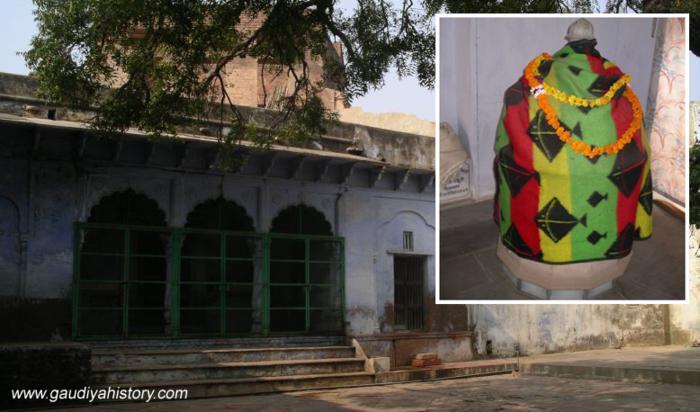
Sources do not agree on the exact date of Ramachandra Kaviraja's disappearance. One account places it on the third day of the dark fortnight of the month of Pausha, another on Krishna-trayodashi of Magha. But the sources agree that he passed away in Vrindavana after his own guru's disappearance. They also agree that his samadhi stands in the Dhira Samira grove, directly beside Shrinivasa Acharya's own. So guru and disciple, in death as in life, remain within sight of one another. His chief disciple was Harirama Acharya. The Deities that Ramachandra and Govinda had worshiped together were later moved from Teliya Budhari to Bhagavangola. They continue to be worshiped there today by the followers of Rama Dasa Babaji.
It is said that Narottama Dasa Thakura's own grief at Ramachandra's passing shaped two of his most lasting works, *Prema-bhakti-chandrika* and *Prarthana*. The second of these preserves the line by which their friendship is still remembered: "daya kara sri-acarya prabhu srinivasa, ramacandra sanga mage narottama dasa," "Be merciful, O Prabhu Shrinivasa Acharya, Narottama Dasa begs for the association of Ramachandra." Narottama is also remembered to have said, more simply, that if he were ever to take human birth again he would still want an associate like Ramachandra Kaviraja at his side. Five centuries later, that longing still shows most clearly who Ramachandra Kaviraja really was. He was not mainly a theologian or a builder of institutions. He was a friend whose company another great Vaishnava thought worth begging for.
Scriptural evidence for this chapter (1)
hau sasvad-bhagavat-parayana-parau samsara-parayanau samyak satvata-tantra-vada-paramau nihsesa-siddhantagau sasvad-bhakti-rasa pradana-rasikau pusanda-hrn-mandalav anyonya-priyatabharena yugali-bhutav imau tau numah
I pay my obeisances to Narottama and Ramachandra, who are devoted to all those who have dedicated their lives to the Supreme Lord, who help people cross over the ocean of material existence, who know all the scriptures completely and have understood all the transcendental doctrines, who most generously distributed bhakti-rasa and won the hearts of the faithless, and who are deeply attached to one another's affectionate company.
A joint verse of praise for Narottama Dasa Thakura and Ramachandra Kaviraja together, composed by Govinda Dasa Kaviraja and preserved in Bhakti-ratnakara, showing that their friendship was already celebrated as inseparable within a generation of their own lifetimes.
Closing
A Physician's Son Raised Among Shaktas #
Chiranjiva Sena, Ramachandra's father, belonged to Shrikhanda, a village in Bengal. In Sri Chaitanya-charitamrita, Krishnadasa Kaviraja Goswami names the devotees of this village directly: Mukunda, Narahari Sarakara, Raghunandana, and Chiranjiva himself. There Chiranjiva is described as "extremely learned", and his wife's conduct as "completely transcendental" (Chaitanya-charitamrita, Adi 11.92). Every year this same circle traveled to Puri for Ratha-yatra to see Mahaprabhu dance before Lord Jagannatha. Chiranjiva came from a family of physicians, and he had two sons. The elder was Ramachandra, and the younger was Govinda, who grew up to become the celebrated Vaishnava poet Govinda Dasa Kaviraja, author of Sangita-madhava and Gitamrita.
After their father's death, the brothers went to live with their maternal grandfather, Damodara Kaviraja. He was a real poet himself, but he was also a committed worshiper of Durga in the Shakta tradition. Under his influence, both boys grew up worshiping goddesses, who are personal forms of Krishna's external energy, instead of Krishna Himself. By early adulthood Ramachandra had made a name for himself as a practicing physician and an accomplished poet.
Legacy in the Gaudiya Vaishnava Tradition #
The Gaura-ganoddesha-dipika identifies Ramachandra's eternal identity in Krishna's Vraja-lila as Karunamanjari, one of the gopis who assist Srimati Radharani (sources give the name variously as Karunamanjari and Karna-manjari). Almost every surviving detail about his life comes from two sources. The first is Chaitanya-charitamrita and its purports, which mention him in a sober, factual way. The second is the Bhakti-ratnakara, which preserves a far more detailed and more devotional account. In both, Ramachandra Kaviraja is remembered not so much for any single contribution to doctrine as for a quality that later Vaishnavas have always prized highly. That quality is total, unwavering friendship, first with his guru and then with Narottama Dasa Thakura. It was a friendship of the kind Narottama himself prayed his whole life to keep.
- Sri Chaitanya-charitamrita, Adi-lila 10.78-79, with Prabhupada's purport
- Sri Chaitanya-charitamrita, Adi-lila 11.51, with Prabhupada's purport
- Gaudiya History (ISKCON Desire Tree): Ramachandra Kaviraja
- Gaudiya History (ISKCON Desire Tree): Ramachandra Kaviraja - Biography 2
- Gaudiya History (ISKCON Desire Tree): Ramacandra Kaviraja - Biography 3
- Shyam Das Baba: Sri Ramacandra Kaviraja (excerpting Bhakti Ballabh Tirtha Maharaja, Sri Chaitanya: His Life & Associates)
- ISKCON Bangalore: Sri Ramchandra Kaviraja
- Vaniquotes: Sri Ramacandra Kaviraja, the son of Khandavasi Ciranjiva and Sunanda...
