Srila Srinivasa Acharya
The Acharya Who Carried the Goswamis' Scriptures to Bengal
The complete life, on one page: The main biography and every pastime page, in order, in one place
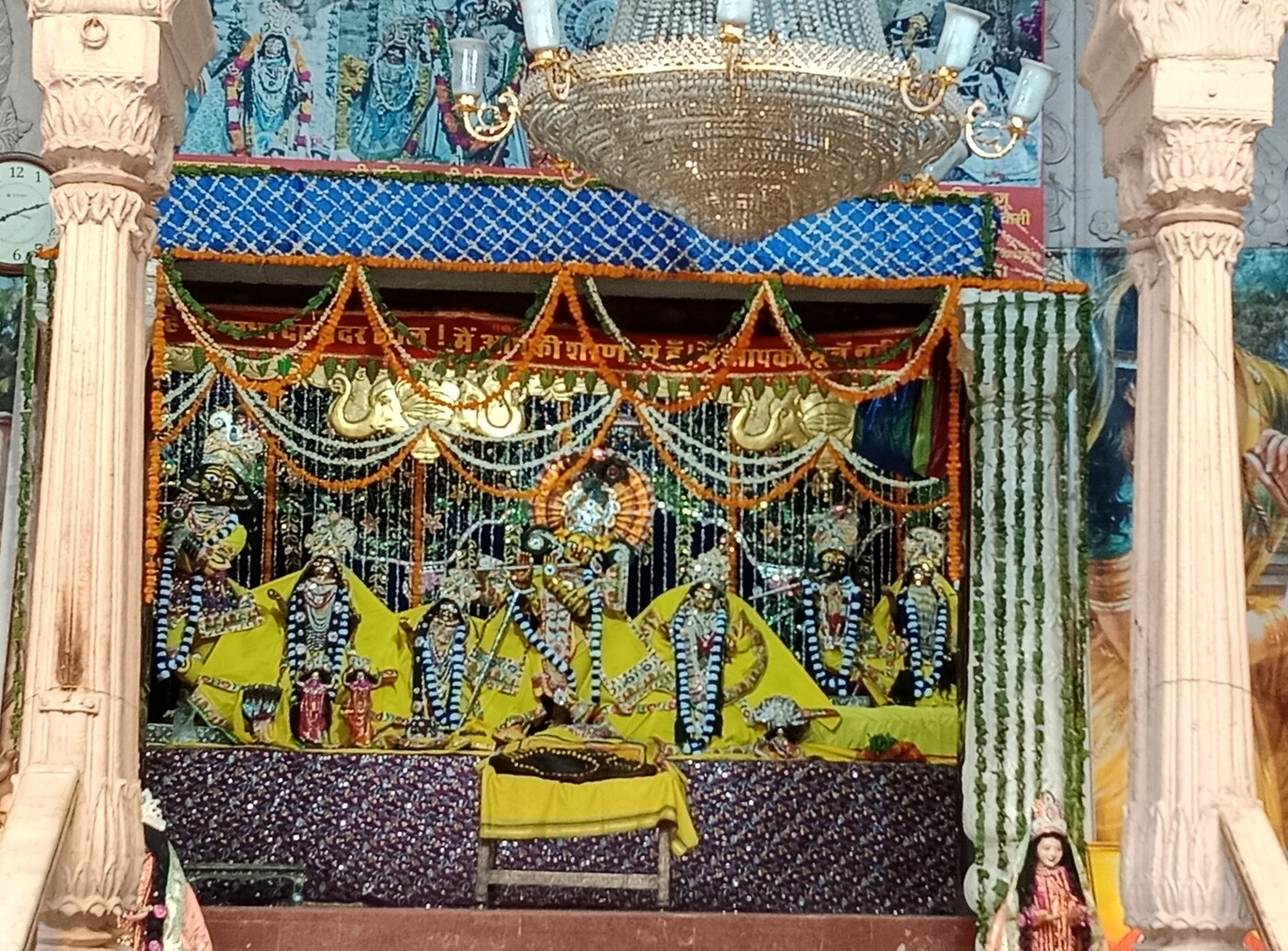
Introduction
doyā koro śrī-ācārya prabhu śrīnivāsa
rāmacandra-saṅga māge narottama-dāsa
"O Srinivasa Acharya, successor to the six Goswamis, please be merciful to me. Narottama dasa always desires the company of Ramachandra." So Narottama Dasa Thakura prays for his own siksha guru's mercy in his song Savarana-sri-gaura-pada-padme. Srila Prabhupada's purport to this verse begins: "After the six Gosvamis, the next acharya was Srinivasa Acharya. Actually, Narottama dasa Thakura was in the disciplic succession after Srinivasa Acharya and was almost his contemporary... The whole process is that we should always pray for the mercy of the superior acharyas and keep company with pure devotees."
According to tradition, Srinivasa Acharya was born only because Chaitanya Mahaprabhu Himself promised a childless brahmana couple in Bengal that their son would carry the Goswamis' writings out of Vrindavana. Decades later, that is almost exactly what happened. Srinivasa was trained directly by Jiva Goswami and Gopala Bhatta Goswami. He carried the core scriptures of Gaudiya Vaishnavism from Vrindavana to Bengal on an ox-cart. A bandit-king stole them from him, but Srinivasa came through this and converted that same king to Vaishnavism. He spent the rest of his life preaching. He married, raised a family of teachers, and helped organize the movement's most important early gathering at Kheturi.
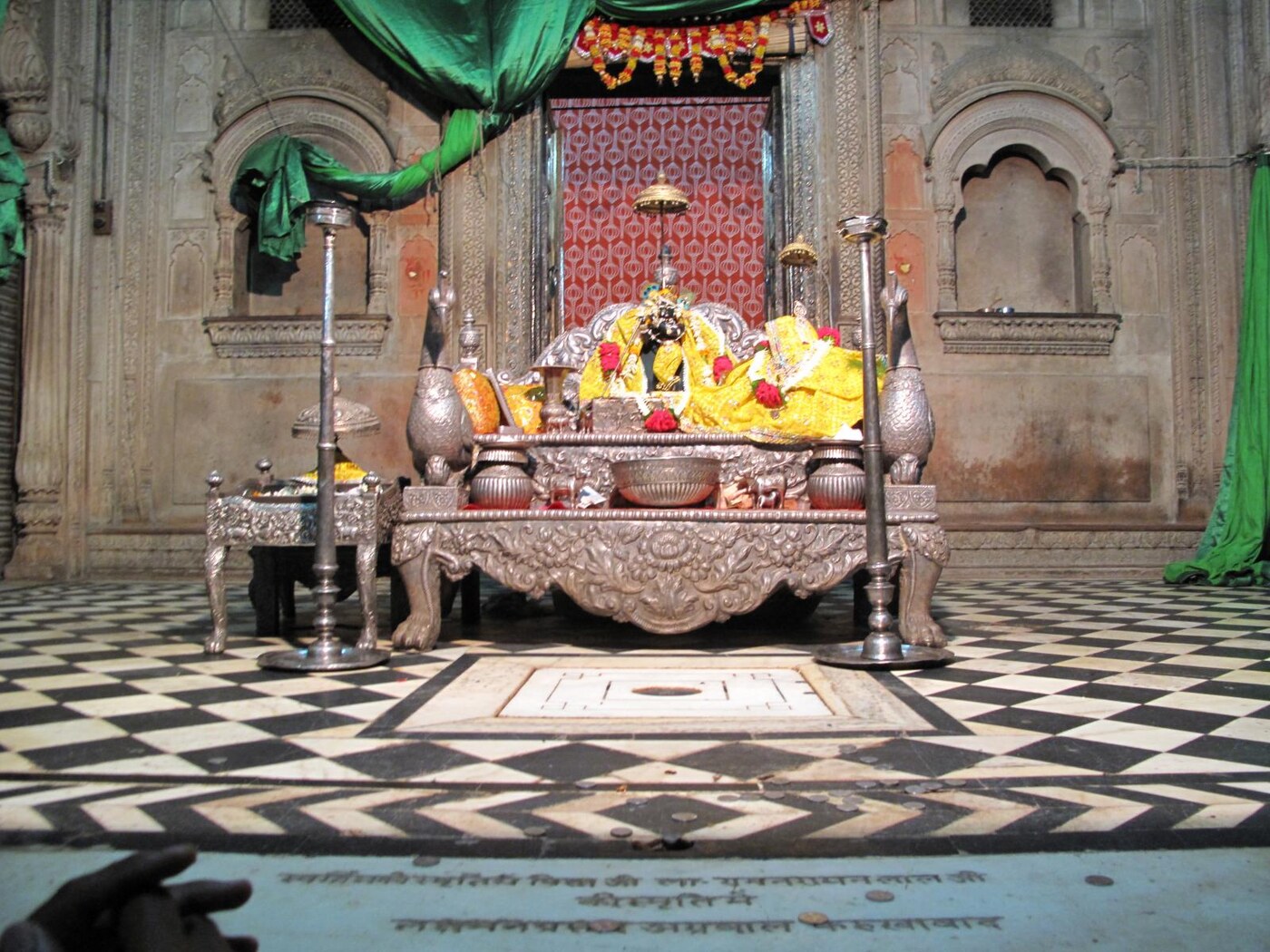
| Detail | Description |
|---|---|
| Birth | Full-moon day of Vaishakha; year given variously as roughly 1517 or 1530 (disputed, see below) |
| Birthplace | Chakhandi, on the Ganges, Bengal |
| Parents | Gangadhara Bhattacharya (later known as Chaitanya Dasa) and Lakshmi Priya |
| Diksha Guru | Gopala Bhatta Goswami |
| Siksha and philosophical training | Jiva Goswami |
| Chief works | Sad-Gosvamy-ashtaka (Eight Prayers to the Six Goswamis); a commentary on the Bhagavatam's four core verses |
| Manjari identity | Mani Manjari, assisting Guna Manjari (Gopala Bhatta Goswami) in the service of Radha and Krishna |
| Disappearance | Place and year not recorded by tradition |
Chapter 1
Early Life and Going to Vrindavana
A birth foretold by Chaitanya Mahaprabhu, and early years of reaching one teacher after another just too late.
This story has to begin with a brahmana named Gangadhara Bhattacharya, of the small village of Chakhandi on the Ganges, in Bengal. It begins with him because tradition says Srinivasa's whole life was foretold before he was born. Gangadhara had gone to Katwa and there watched Chaitanya Mahaprabhu accept sannyasa, the renounced order of life. The sight of the Lord's hair being cut overwhelmed him completely. Through his tears he could only repeat "Chaitanya! Chaitanya!" This habit earned him the name Chaitanya Dasa for the rest of his days.
| Detail | Description |
|---|---|
| Father | Gangadhara Bhattacharya, later known as Chaitanya Dasa |
| Mother | Lakshmi Priya |
| Birthplace | Chakhandi, on the Ganges, Bengal |
| First instructing guru | Narahari Sarakara Thakura of Shrikhanda |
| Grammar and poetics teacher | Dhananjaya Vidyavachaspati |
| Bhagavatam instruction (unfinished) | Gadadhara Pandita, at Jagannatha Puri |
A Son Promised at Puri #
Some years after Katwa, Chaitanya Dasa and Lakshmi Priya, still without a child, traveled to Jagannatha Puri to seek Mahaprabhu's blessing. According to the Bhakti-ratnakara's account of the visit, Mahaprabhu told His personal servant Govinda, where the couple could hear, that a son would soon be born to them: "Indeed his wife will give birth to a jewel of a son, who will be named Srinivasa. He will be the manifest form of My love and will be non-different from Me... Through Rupa and others I will bring scriptures into the world, and through Srinivasa, shall distribute them." Ordinary historical methods cannot check a devotional scene like this. Still, it is the story every later Gaudiya source tells about why the child was named as he was. It also prepares the way for the role Srinivasa would in fact go on to play. He was born on a full-moon day of the month of Vaishakha. Sources place the year anywhere from around 1517 to around 1530, and no independent record settles the question. But the sources do agree on his age compared with the others. Srinivasa was older than both Narottama and Shyamananda, and he was already a young man by the time of Chaitanya Mahaprabhu's own disappearance. His maternal grandfather, the astrologer Balarama Vipra, is credited in the Bhakti-ratnakara with reading the birth chart and pronouncing: "On the full moon day of Vaishakha month, in the constellation of Rohini, when all the stars are aligned in the most beneficial way, Lakshmi Priya, the wife of Chaitanya Dasa, gave birth to a son who will be a great devotee of Chaitanya Mahaprabhu."
Boyhood and a First Guru #
Srinivasa grew up devoted to both his parents, hearing Chaitanya Mahaprabhu's pastimes and the Vrindavana lila of Radha and Krishna from his father, and learning kirtana from his mother. He studied Sanskrit grammar, logic, and poetics under the scholar Dhananjaya Vidyavachaspati and by most accounts mastered these subjects unusually fast. His father died while Srinivasa was still young, and the loss struck him hard. He moved with his grieving mother from Chakhandi to her own father's house in Jajigram. From Jajigram he first visited nearby Shrikhanda and met Narahari Sarakara Thakura, an associate of Chaitanya Mahaprabhu known for the rare privilege of singing the Lord's glories in His presence. Srinivasa accepted Narahari as his first instructing (siksha) guru. Narahari was also the first to tell him that Mahaprabhu's own worldly life was drawing to a close. That news sent Srinivasa hurrying, with his mother's reluctant permission, toward Puri.
Arriving Too Late, Again and Again #
What followed became a strange pattern. Several biographers have noted that it is unusual even for devotional literature. Srinivasa kept setting out to meet a great soul and arriving just after that person had died. Word reached him on the road to Puri that Chaitanya Mahaprabhu had already left the world. He is said to have fainted and briefly thought of ending his own life, before a dream of Mahaprabhu urged him to continue the journey anyway. In Puri he was received warmly by Gadadhara Pandita. Gadadhara told him that Mahaprabhu had personally asked him, before passing, to teach Srinivasa Srimad-Bhagavatam. One version of the story adds a further difficulty. Gadadhara's own copy of the Bhagavatam had become impossible to read, because of the tears he had cried onto its pages during years of separation from Mahaprabhu. So a fresh manuscript had to be sent for from Bengal. Before that teaching could be completed, Gadadhara Pandita himself disappeared from the world. Srinivasa was left to mourn a second teacher he had barely had time to know.
He spent the following period touring the shripatas of Chaitanya Mahaprabhu's other associates across Bengal. These were their homes and holy places. At Navadwipa, Vishnupriya Devi, the Lord's widow, blessed him. He went to Shantipura, home of Advaita Acharya's family. At Khardaha, the home of Nityananda Prabhu, Jahnava Devi urged him not to delay any further in going to Vrindavana. Everywhere he went, the devotees who met him reported the same impression. His absorption in love for Chaitanya Mahaprabhu was so intense that it seemed to carry the Lord's own ecstatic energy.
A Third Disappointment, and a Turn Toward Gopala Bhatta and Jiva #
When Srinivasa finally set out for Vrindavana, the pattern repeated itself a third time. Four days before he reached the town, he learned that Sanatana Goswami had died four months earlier. On reaching Mathura itself, he was told that Rupa Goswami had died only three days before. By his own account he collapsed under a tree. He was convinced he was the most unfortunate man alive, because he had now failed three separate times to reach a teacher before that teacher's passing. That night, tradition says, Rupa and Sanatana Goswami appeared to him and told him plainly what to do next: go to Vrindavana, take shelter of Gopala Bhatta Goswami, and study under Jiva Goswami "with all his life and soul." The training that followed is told in Training Under Jiva and Gopala Bhatta Goswami. It covers his formal initiation, his education, and the title by which history remembers him.
Scriptural evidence for this chapter (1)
"Chaitanya Das desires to have a son. Indeed his wife will give birth to a jewel of a son, who will be named Shrinivasa. He will be the manifest form of My love and will be non-different from Me. He will increase everyone's enthusiasm for devotion. Through Rupa and others I will bring scriptures into the world, and through Shrinivasa, shall distribute them."
Bhakti-ratnakara has no standalone corpus on vedabase; this passage is quoted here via a reputable secondary translation/summary (Gaudiya History), cited explicitly as such rather than presented as a vedabase-sourced verse. It is the traditional textual basis for the story of Chaitanya Mahaprabhu foretelling Shrinivasa's birth and mission.
Chapter 2
Training Under Jiva and Gopala Bhatta Goswami
Diksha from Gopala Bhatta Goswami, philosophical training from Jiva Goswami, and the title "Acharya" earned through both.
No single teacher trained Srinivasa Acharya on his own, so his story cannot be told around just one guru. The sources describe the work being shared. He received formal initiation from one Goswami and deeper education from another. He also had close companionship with two fellow students who would go on to share his life's mission. It is worth being clear about who did what, because popular retellings sometimes mix up diksha (formal initiation) and siksha (instruction).
| Detail | Description |
|---|---|
| Diksha guru | Gopala Bhatta Goswami |
| Siksha and philosophical training | Jiva Goswami |
| Title received | "Acharya," given by Jiva Goswami |
| Fellow students under Jiva | Narottama (later Narottama Thakura Mahasaya) and Duhkhi Krishnadasa (later Shyamananda) |
| Deity entrusted to his care | Radha-Damodara, at Jiva Goswami's temple |
Received by Gopala Bhatta Goswami #
When Srinivasa reached Vrindavana, he was grieving the recent deaths of Rupa and Sanatana Goswami. He was received first at Rupa Goswami's Govinda temple and then introduced to Gopala Bhatta Goswami. Gopala Bhatta told him frankly that Rupa and Sanatana had been anxious to meet him and regretted that he had arrived too late. Gopala Bhatta took Srinivasa to his own Radha-Ramana temple, had the Deity bless him, and in time gave him diksha, formal initiation into the chanting of the holy name. Every source agrees on this point, even where the sources differ on other details of the journey. For this reason Gopala Bhatta Goswami is named here as Srinivasa's diksha guru, and the question is not left open. According to the Prema-vilasa, Gopala Bhatta Goswami also revealed to Srinivasa his own eternal identity in Krishna's pastimes. This identity is Mani Manjari, who forever assists Guna Manjari in her close service to Radha and Krishna. Guna Manjari is Gopala Bhatta Goswami's own manjari-svarupa. The same source describes Srinivasa as an incarnation of Mahaprabhu's own ecstasy. This shows the unusual respect that people of his own time had for him, even this early in his stay at Vrindavana.
Educated by Jiva Goswami #
Formal initiation was not the end of Srinivasa's training. Gopala Bhatta sent him on to Jiva Goswami. By then Jiva was recognized as the leading philosopher among the Goswamis still living in Vrindavana. Srinivasa was sent to him for the deeper education in Gaudiya Vaishnava theology, in scripture, and in the method of studying scripture, which his diksha alone did not supply. Jiva took Srinivasa's education so seriously that he personally gave him the care of his own Deities, Sri Sri Radha-Damodara. This was a sign of unusual closeness. According to tradition, one particular moment of scholarship fixed Jiva's opinion of him. Srinivasa explained a difficult verse from Rupa Goswami's Ujjvala-nilamani with real command of the subject. Hearing this, Jiva was so impressed that he gave him the title "Acharya," by which history has known him ever since.
Two Companions, Two Other Titles #
Srinivasa was not the only student Jiva Goswami was training at the time. A young man named Narottama had arrived in Vrindavana about a year earlier. He had already been initiated by Lokanatha Goswami and was sent on to Jiva for further instruction. Jiva now gave him the title Thakura Mahasaya, and he is remembered ever since as Narottama Dasa Thakura. A third student was a young man named Duhkhi Krishnadasa, sent by his own guru Hridaya Chaitanya. Jiva renamed him Shyamananda ("one whose bliss belongs to Shyama," a name for Krishna), and he is remembered as Shyamananda Pandit. The three young men, Srinivasa Acharya, Narottama Dasa Thakura, and Shyamananda Pandit, studied together under Jiva Goswami, and Srinivasa and Narottama also toured the sacred forests of Vraja under the guidance of Raghava Pandita Goswami of Govardhana. By every account, the three became inseparable friends. This friendship was formed here in Vrindavana, in a shared education that came from more than one teacher. The tradition remembers it as the foundation of everything the three of them accomplished afterward in Bengal.
His Diksha-Guru and His Teachers #
Most Gaudiya acharyas carry a single named diksha-guru. For his initiation, Srinivasa Acharya does too: his diksha came from Gopala Bhatta Goswami specifically. But for anything beyond initiation, his record, like that of a small number of other figures, does not fit such a simple picture. The philosophical and scriptural training that made Srinivasa fit to carry the title "Acharya" and to preach with authority in Bengal came largely from Jiva Goswami. It came together with the shared training and companionship of Narottama and Shyamananda. So Gopala Bhatta Goswami is recorded here as the formal diksha guru. The fuller picture of his education, with more than one teacher, is described alongside it. It is not squeezed into a single relationship that would not show it correctly. This training prepared him for a mission: taking the Goswamis' writings out of Vrindavana and into Bengal. That story is told in Carrying the Scriptures to Bengal.
Scriptural evidence for this chapter (2)
"On the order of Prabhu, Shrinivasa took his initiation from Gopala Bhatta and later propagated the Goswami scriptures in Gauda."
Quoted via a secondary translation of Bhakti-ratnakara (Gaudiya History), cited explicitly as such since Bhakti-ratnakara has no standalone vedabase corpus. This is the specific line the site relies on, alongside Wikipedia and other biographies, for naming Gopala Bhatta Goswami as Shrinivasa's diksha guru.
"Shrinivasa Acharya met Narottama in Vrindavana and gradually a dynamic new circle of Vaishnavas was established there... Shrinivasa also met Shyamananda in Vrindavana."
Quoted via a secondary translation of Bhakti-ratnakara (Gaudiya History), cited explicitly as such. This is the traditional source for the formation of the close friendship between Shrinivasa, Narottama, and Shyamananda during their shared training under Jiva Goswami.
Chapter 3
Carrying the Scriptures to Bengal
An ox-cart carrying the only copies of the Goswamis' writings, sent east from Vrindavana under armed guard - and robbed before it ever reached Bengal.
By the time Srinivasa, Narottama, and Shyamananda had finished their training, Vaishnavism had spread widely across Bengal in name and in feeling, but the actual books explaining its philosophy barely existed there. Almost everything Rupa, Sanatana, Gopala Bhatta, Raghunatha Dasa, and Jiva Goswami had written still sat in Vrindavana, mostly in single manuscript copies. Nityananda Prabhu's wife, Jahnava Devi, who had visited Vrindavana herself and seen how much had been produced there, is credited with first suggesting to Jiva Goswami that the books be sent east. Jiva agreed, and gave the job to his three best students.
| Detail | Description |
|---|---|
| Ordered by | Jiva Goswami, at Jahnava Devi's urging |
| Sent | Srinivasa Acharya, Narottama Dasa Thakura, and Shyamananda Pandit |
| Manuscripts carried | Works of Rupa, Sanatana, Gopala Bhatta, Raghunatha Dasa, and Jiva Goswami |
| Transport | Ox-cart, with armed guards and a royal passport arranged by Jiva Goswami |
| Route | Vrindavana, through Agra, toward Bengal via the Malla kingdom of Vishnupura |
Loading a Cart With the Tradition's Whole Library #
According to the traditional accounts, a wealthy merchant disciple of Jiva Goswami from Mathura supplied a large cart, several bullocks, and a group of armed guards for the journey. The precious manuscripts were mostly the original copies, since printing did not yet exist and no other copies had been made. They were packed into a wooden chest, bolted shut, and wrapped in waxed cloth against the weather. Jiva Goswami is even said to have obtained a passport from the ruler of Jaipur, since the party would be crossing several different kingdoms on the long road east. Jiva and a number of other Vrindavana devotees walked with the three preachers as far as Agra before turning back, because they could not bear a longer separation. From there, Srinivasa, Narottama, and Shyamananda continued alone. Tradition remembers this as the very first travelling sankirtana party in Gaudiya Vaishnava history. It set an example that Srila Prabhupada would revive centuries later, when he sent ISKCON's own book distributors and sankirtana parties out across the world.
A Long Road Through Hostile Country #
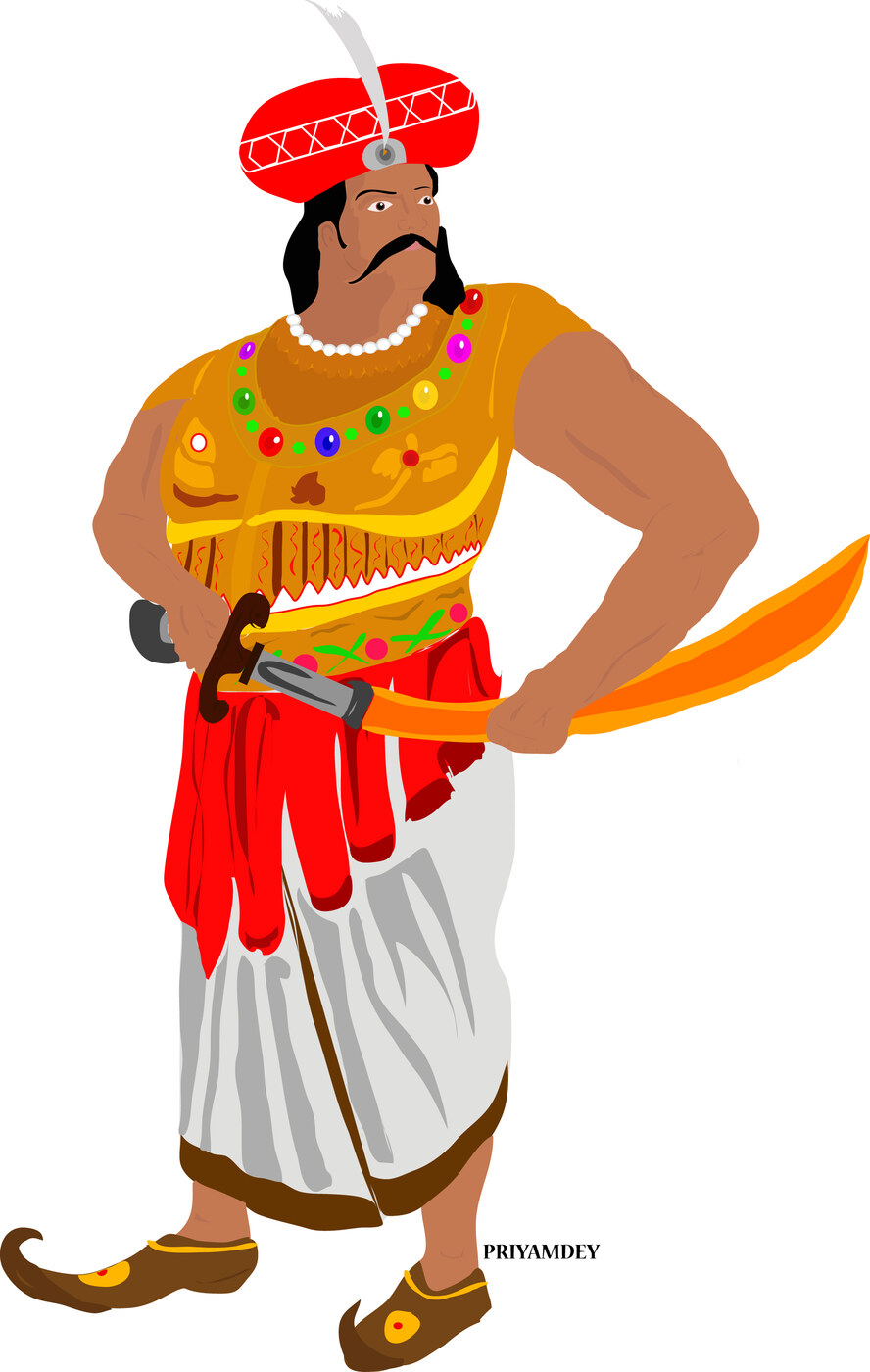
The journey covered hundreds of miles, largely on foot and by cart. It passed through territory that was not always safe for travelers carrying anything that looked valuable. Accounts differ on the exact circumstances of what happened next. One version says the party was robbed while still short of Bengal, near a village called Gopalapura, before they had even reached the Malla kingdom of Vishnupura. Another says they were already well inside Vishnupura's borders when the theft occurred, and believed the dangerous part of the trip was behind them. But both versions agree on the main events. The cart and its priceless cargo were stolen in the night by dacoits working for the local ruler, Vira Hambira. His kingdom controlled the region now known as Bishnupur in Bankura district, West Bengal.
The Books Are Taken #
Both traditional accounts describe Vira Hambira's men as having been told by court astrologers that an unusually valuable cargo was passing through the kingdom. The astrologers apparently expected gold or jewels, not palm-leaf manuscripts. However the theft actually happened, the result for the three preachers was the same. They woke to find the chest of books gone. By their own account, they fell into such despair that they briefly thought of taking their own lives. To them this seemed better than returning to Vrindavana after losing everything they had been sent to deliver. Then Srinivasa made the decision that shaped everything that followed. Instead of all three going on together, he sent Narottama and Shyamananda ahead to begin their preaching mission in Bengal and Odisha as planned. He himself stayed behind in Vira Hambira's territory to try to recover the manuscripts.
What Happened Next #
That decision led directly into one of the most celebrated episodes in later Gaudiya Vaishnava history. This was Srinivasa's meeting with Vira Hambira himself, and the king's eventual conversion to Vaishnavism. That story is told in full, with its own details and a careful look at what each source says, in The Encounter With Vira Hambira.
Scriptural evidence for this chapter (1)
"Prabhu empowered Shri Rupa and others to write and compile scriptures on Vaishnava religion; for the propagation of those scriptures he empowered Shrinivasa."
Quoted via a secondary translation of Bhakti-ratnakara (Gaudiya History), cited explicitly as such. This is the traditional textual basis for describing Shrinivasa's specific charge as distributor, rather than author, of the Goswamis' scriptures.
Chapter 4
The Encounter With Vira Hambira
A bandit-king's men stole the Goswamis' manuscripts, hoping for treasure, and the king himself was changed by a treasure he had not expected.
This is one of the best-documented pastimes of Srinivasa Acharya's life, in the sense that later Gaudiya Vaishnava literature returns to it more than once. It also connects with real history that can be checked. Vira Hambira (also spelled Bir Hambir, and known formally as Hambir Malla Dev) was an actual ruler of the Malla dynasty of Mallabhum. His kingdom was centered on Vishnupura, today's Bishnupur, in Bankura district, West Bengal. He really did rule the kingdom around the second half of the sixteenth century. His conversion to Vaishnavism is treated as a real historical turning point for the region, not only a devotional legend. Still, the surviving accounts of exactly how the events unfolded come from Vaishnava literature, not from court records. So we need to be careful about where each detail comes from.
| Detail | Description |
|---|---|
| The king | Vira Hambira (Bir Hambir), of the Malla dynasty of Mallabhum, ruling from Vishnupura |
| Primary Vaishnava sources | Bhakti-ratnakara (Narahari Chakravarti) and Prema-vilasa (Nityananda Dasa) |
| What was stolen | The chest of Goswami manuscripts Srinivasa, Narottama, and Shyamananda were carrying to Bengal |
| How it resolved | Vira Hambira returned the manuscripts, took initiation from Srinivasa, and endowed him with land |
| Lasting result | Vishnupura became a major center of Gaudiya Vaishnava worship, art, and architecture |
A Kingdom Ruled Partly by Its Own Bandits #
Historians note that Vira Hambira's Vishnupura lay in a part of Bengal where royal power and organized banditry were not always clearly separate. Court astrologers were reportedly kept on hand just to predict which roads and travelers were worth robbing, and the king kept bands of men for exactly that purpose. Word reached the court that a cart with armed guards and a small party of travelers was crossing the kingdom. The astrologers declared that its bolted, wax-sealed chest held gold and jewels of enormous value. As it turned out, they were wrong. Dacoits working for the king took the cart in the night while its guards and the three sadhus with it slept. They delivered the "treasure" to Vira Hambira himself.
The King Opens the Chest #
According to the traditional sources, Vira Hambira's excitement turned to confusion the moment he actually opened the trunk. Instead of jewels, he found palm-leaf manuscripts, the top one signed "Sri Rupa Gosvami." As the king read further into Rupa Goswami's writing on Vaishnava philosophy, something in him changed. He is described as feeling a completely new sense of guilt over what he had done, though he did not yet know whose books they were or why they mattered. That night, tradition says, he dreamed of a shining figure who told him not to worry. The figure said that the owner of the books would soon come to Vishnupura himself, and that the manuscripts would be returned. It also said that Vira Hambira would be freed from the sin he had brought on himself by taking them.
Srinivasa Finds His Way to the King's Own Assembly #
Meanwhile Srinivasa had stayed behind in Vishnupura, while Narottama and Shyamananda went on toward Bengal and Odisha. Through local villagers he learned that the theft had all the marks of Vira Hambira's men. A local brahmana named Krishna Vallabha became his friend. From him Srinivasa also learned that the king held a daily public class on Srimad-Bhagavatam, led by his court pandit, Vyas Acharya. Srinivasa began attending. According to the fuller narrative versions of this story, Srinivasa listened to commentary that did not follow the standard Vaishnava reading of the text, the one associated with Sridhara Swami. As he listened, he found it harder and harder to stay silent. In the end he said so directly. First he spoke privately to Vyas Acharya. Then, when challenged to do better, he spoke in front of the king's entire assembly. By every account, what followed was a long explanation of the Bhagavatam's confidential meaning, and it was clearly masterful. It held the court's attention for hours. It left Vyas Acharya impressed, however unwillingly, and not resentful.
Recognition and Surrender #
Vira Hambira had already been carrying the memory of his dream. In Srinivasa's presence and voice he recognized the same figure who had appeared to him at night. He gave Srinivasa the best rooms in the palace and sat by him like a servant, not like a host. By most accounts he overheard Srinivasa chanting through the night without apparent rest. At last Srinivasa told him directly who he was and why he had come. He said that he had brought the Vrindavana Goswamis' writings toward Bengal on their own order, and that the books had been stolen inside the king's own territory. Hearing this, Vira Hambira broke down, confessed everything, and returned the chest untouched. Srinivasa is said to have worshiped the recovered books with tulasi leaves, flower garlands, and sandalwood paste before anything else, and only then to have turned to the king's own request, which was to be accepted as a disciple. Srinivasa recited the Hare Krishna maha-mantra into his ear and initiated Vira Hambira. By the Prema-vilasa's account, the king first received the name Haricharan Dasa. The same source adds that Jiva Goswami later heard of the conversion and showed the king a further sign of favor. He wrote him a letter renaming him Chaitanya Dasa, the name by which he is remembered today. His wife and son were converted alongside him, along with Krishna Vallabha and, in the end, even the court pandit Vyas Acharya, who had first argued against Srinivasa.
A Genuine Turning Point for the Region #
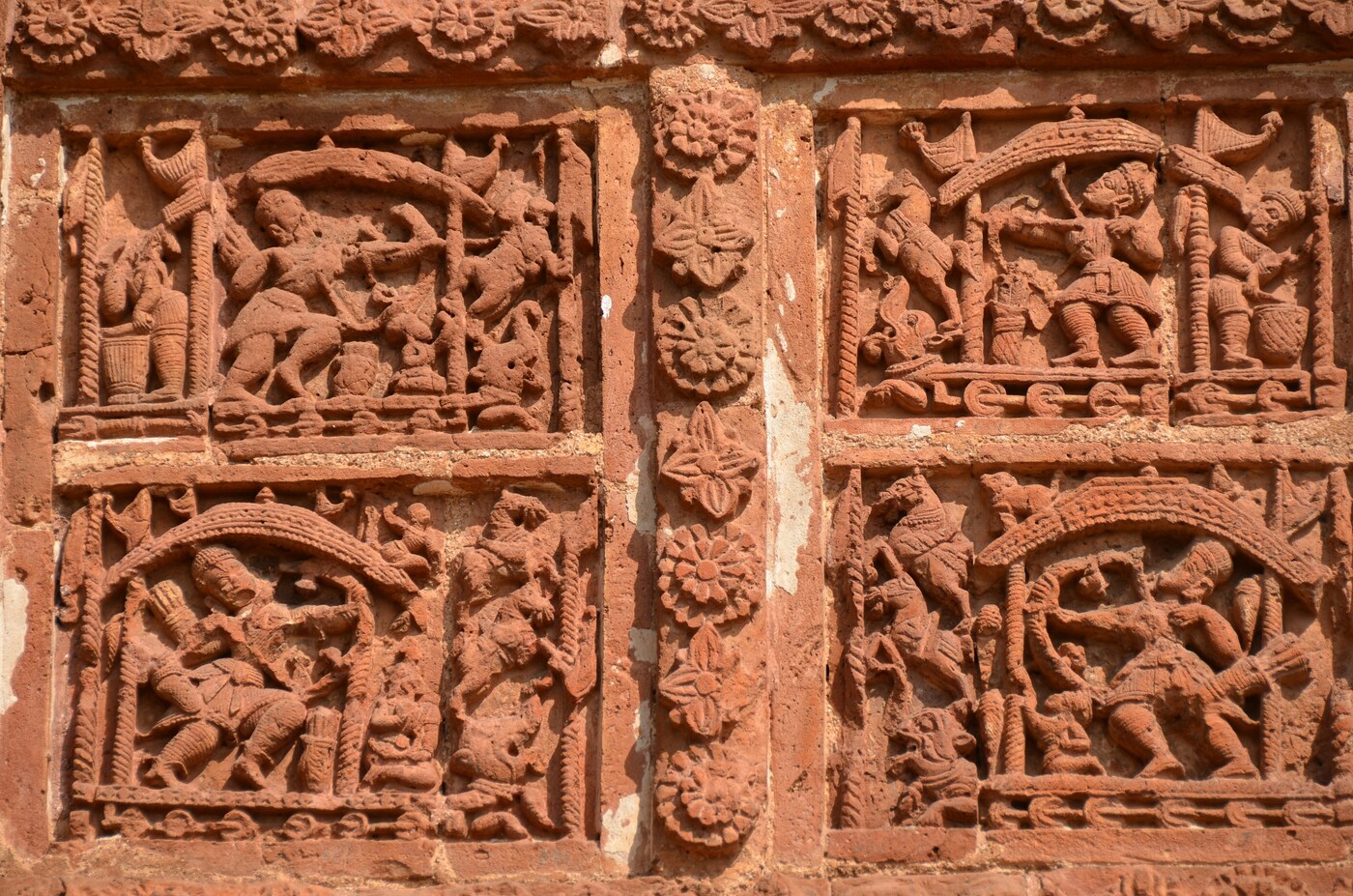
This story is more than a moving devotional tale because of what followed it. Historians of Bengal, and not only Vaishnava tradition, treat Vira Hambira's conversion as a real and documented event. Wikipedia's own account of Bir Hambir notes that he "was so moved by Srinivasa's reading of the Bhagavata that he converted to Vaishnavism and gave Srinivasa a rich endowment of land and money," and that he personally introduced the worship of the Deity Madan Mohan to Bishnupur. With the support of the king and his successors, Vishnupura became, in the words of later historians, one of the very few places in Bengal where Gaudiya Vaishnava culture and temple architecture developed for generations with almost no outside disruption. The town's distinctive terracotta temples, several of which still stand today, come from this same tradition of kings supporting Vaishnava culture. That tradition goes back to Srinivasa's stay there. One account even records that Vira Hambira, later in his reign, followed Srinivasa's advice in political matters. It says he made the chanting of God's holy name compulsory within his kingdom by royal decree. Whatever its exact accuracy, this detail shows how completely things had turned around between the two men. The king whose men had once robbed Srinivasa now accepted him as guru and took his advice.
One question is still open, and it should be stated honestly. Sources do not agree closely on the exact years of Vira Hambira's reign. One gives 1565 to 1620, another 1596 to 1622, and the available sources do not settle this difference. But no available source disputes three things. The conversion happened. It followed the theft and recovery of the Goswamis' manuscripts. And it turned Vishnupura into a lasting center of Vaishnava devotion. Srinivasa's own account of these events, and of what came after, continues in Marriage, Family, and Disciples.
Scriptural evidence for this chapter (1)
"A story in two Vaishnava works (Prem-vilasa of Nityananda Das... and Bhakti Ratnakara of Narahari Chakrabarti) recounts how Srinivasa and other devotees were robbed by Bir Hambir while traveling from Vrindavan to Gaur with several Vaishnava manuscripts. However, Bir Hambir was so moved by Srinivasa's reading of Bhagavata that he converted to Vaishnavism and gave Srinivasa a rich endowment of land and money. He introduced the worship of Madan Mohan to Bishnupur."
Neither Bhakti-ratnakara nor Prema-vilasa has a standalone corpus on vedabase, so this citation follows a secondary academic summary (Wikipedia, itself citing both works and the historian Ramakanta Chakravarti) rather than either text directly, and says so explicitly. This is the independent, non-devotional confirmation that the Vira Hambira story is treated as real regional history, not only hagiography.
Chapter 5
Marriage, Family, and Disciples
A reluctant marriage, a daughter who became a preacher, and a disciple, Ramachandra Kaviraja, who in time also became his teacher.
With Vira Hambira converted and the recovered manuscripts safely delivered, Srinivasa's mission had already succeeded, by any reasonable measure. The rest of his life was less dramatic. But one can fairly say it was just as important for the long-term survival of Gaudiya Vaishnavism in Bengal. He built a settled base for preaching. His family itself passed on the teaching. And he gathered a circle of disciples who carried his work forward after him.
| Detail | Description |
|---|---|
| Base of operations | Jajigram, Bengal, with continued ties to Vishnupura |
| First wife | Ishvari (also called Draupadi), daughter of Gopala Chakravarti of Jajigram |
| Second wife | Gauranga-priya (also called Padmavati) |
| Best-known disciple | Ramachandra Kaviraja, son of Chiranjiva Sena of Shrikhanda |
| Notable descendant | Hemalata Thakurani, his daughter, a preacher and diksha-guru |
Persuaded to Marry #
Srinivasa had shown little interest in household life. But three people whose word he could not easily set aside pushed him toward it. They were his own teacher Narahari Sarakara, his mother, and, according to one tradition, Advaita Acharya himself. Advaita Acharya is said to have told him in a dream to marry. Narahari in particular pointed out that Srinivasa's mother had given devoted service for years, and that she deserved to see her son settled before she died. Srinivasa accepted the reasoning, though with some reluctance, and married Ishvari, the daughter of a Jajigram brahmana named Gopala Chakravarti. Her father and two brothers, Shyama Dasa and Ramachandra, all became his disciples in turn. Some years later, after the couple's sons died young, Srinivasa's closest disciples asked him to marry again. He took a second wife, Gauranga-priya, daughter of Raghava Chakravarti. Her parents are said to have received the same kind of instruction in a dream of their own. It told them to give their daughter to Srinivasa.
A Family of Teachers #
Ishvari bore Srinivasa three daughters, Hemalata, Krishna-priya, and Kanchana (also called Yamuna), along with the sons who did not survive childhood. Gauranga-priya bore a son, Gati Govinda. Srinivasa's family line is said to continue through him in Vrindavana to this day. Of the daughters, Hemalata Thakurani became by far the most significant figure. She became a highly educated preacher who initiated both men and women into Gaudiya Vaishnavism, a role tradition compares to that of Jahnava Devi. The sources do not record who gave her her own diksha. Because she was Srinivasa's blood relation, she is not counted among his initiated disciples either. One of her own disciples, Yadunandana Thakura, became a respected scholar and poet. He put Gaudiya devotional literature into easy Bengali verse, partly at her direct request.
Ramachandra Kaviraja: Disciple and, in Time, Teacher #
Among Srinivasa's initiated disciples, one stands out clearly both in the devotional literature and in Sri Chaitanya-charitamrita itself. He is Ramachandra Kaviraja, son of Chiranjiva Sena of Shrikhanda. Sri Chaitanya-charitamrita names him directly, in its listing of Nityananda Prabhu's spiritual family, as "a disciple of Srinivasa Acarya and the most intimate friend of Narottama dasa Thakura," adding that he "greatly assisted in the preaching work of Srinivasa Acarya and Narottama dasa Thakura." Jiva Goswami himself gave Ramachandra the title Kaviraja after hearing his poetry during a visit to Vrindavana. Some accounts add something that makes the relationship unusual. According to some Bengali-tradition sources, Ramachandra later came to serve Srinivasa in the opposite direction as well. He acted as a kind of siksha guru to the very acharya who had initiated him. This is a reminder that in Gaudiya Vaishnavism, instruction is not assumed to flow only downward, from senior to junior. Ramachandra's younger brother, Govinda Kaviraja, also became Srinivasa's disciple. Like his brother, he received the title Kaviraja from Jiva Goswami for his own poetic gifts. The two brothers are remembered together as being "of the same soul" in their devotion.
A Shared Trance in Search of a Lost Ornament #
Biographies preserve one story in particular to show how far this bond between guru and disciple could reach. Once, Srinivasa was absorbed in meditation on his eternal identity as Mani Manjari. He is said to have watched Radharani at play with Krishna and her gopi friends in the Yamuna. Then her nose-ornament slipped from her face into the water. It could not be found, even after Guna Manjari and Srinivasa himself, as Mani Manjari, searched for it. Srinivasa remained in that unbroken trance for three days. His body was still, and his breath was so faint that his wives and Vira Hambira feared for his life. At Ishvari's suggestion, Ramachandra Kaviraja was called. He entered the same meditative vision as his own manjari-self. He found the ornament hidden beneath a lotus leaf and delivered it in time for Radharani to complete her adornment. After this, both men returned to outer consciousness together, laughing and weeping in each other's arms. Tradition treats the story as proof that Srinivasa's most trusted disciple could, when needed, also serve him almost as an equal in devotion.
A Daily Life of Study and Chanting #
Away from such extraordinary moments, Srinivasa kept a settled and disciplined routine wherever he stayed, in Jajigram or in Vishnupura. According to Karnananda, his mornings were given to reading and explaining scripture to his disciples. The works named include the Bhakti-rasamrita-sindhu, Hari-bhakti-vilasa, Shat-sandarbha, Srimad-Bhagavatam, and Brahma-samhita. He then chanted japa alone through the middle of the day, before leading kirtana with his disciples each evening. He kept up this combination of personal sadhana and daily teaching for decades. Later biographers point to it, as much as to any single dramatic episode, to explain how deeply Gaudiya Vaishnavism took root in Bengal under his care.
Preaching Across Bengal #
With Vira Hambira's support, and later that of the king's successors, Srinivasa's preaching reached well beyond Jajigram and Vishnupura. It extended into the districts of Birbhum, Bankura, and Burdwan, and as far east as Tripura. He taught his disciples the Goswamis' writings directly and held daily readings and instruction. By tradition he kept a schedule of scriptural study in the morning, chanting alone through midday, and congregational kirtana each evening. Later biographers point to this discipline as the model for how a preacher combines personal sadhana with public teaching. His continued closeness to Narottama Dasa Thakura through these years is told in Preaching in Bengal and the Kheturi Festival. That page also tells of the two men's shared role in organizing Gaudiya Vaishnavism's most important early gathering.
Scriptural evidence for this chapter (4)
কংসারি সেন, রামসেন, রামচন্দ্ৰ কবিরাজ ।
গোবিন্দ, শ্রীরঙ্গ, মুকুন্দ, তিন কবিরাজ ॥
kaṁsāri sena, rāmasena, rāmacandra kavirāja
govinda, śrīraṅga, mukunda, tina kavirāja
Word for word
kaṁsāri sena: Kamsari Sena; rāmasena: Ramasena; rāmacandra kavirāja: Ramachandra Kaviraja; govinda: Govinda; śrīraṅga: Sriranga; mukunda: Mukunda; tina kavirāja: all three are Kavirajas, or physicians.
The fifty-eighth great devotee of Lord Nityananda Prabhu was Kamsari Sena, the fifty-ninth was Ramasena, the sixtieth was Ramachandra Kaviraja, and the sixty-first, sixty-second and sixty-third were Govinda, Sriranga and Mukunda, who were all physicians.
From the purport: Purport excerpt: "Sri Ramacandra Kaviraja... was a disciple of Srinivasa Acarya and the most intimate friend of Narottama dasa Thakura... [he] greatly assisted in the preaching work of Srinivasa Acarya and Narottama dasa Thakura."
This purport is the clearest primary-source confirmation that Ramachandra Kaviraja (and his brother Govinda Kaviraja) were formally counted among Shrinivasa Acharya's own disciples.
dayā kara śrī-ācārya prabhu śrīnivāsa
rāmacandra-saṅga māge narottama-dāsa
Word for word
dayā kara: please be merciful; śrī-ācārya prabhu śrīnivāsa: O master Srinivasa Acharya; rāmacandra-saṅga: the association of Ramachandra; māge: begs; narottama-dāsa: Narottama Dasa.
O Srinivasa Acharya, successor to the Six Gosvamis! Please be merciful to me. Narottama Dasa always desires the company of Ramachandra Kaviraja.
Narottama Dasa Thakura's own prayer names Shrinivasa Acharya directly as the Six Goswamis' successor and pairs him, in the very next line, with Ramachandra Kaviraja - textual evidence of how closely the two friends' preaching missions and disciples were bound together.
"Paramananda Bhattacharya, an ocean of love, Jiva Goswami and the other residents of Vraja, listened to Ramachandra recite his own poetic compositions and they joyfully awarded him the title of kaviraja. Ramachandra Kaviraj was full of all virtues and Narottama Thakur's second self."
Quoted via a secondary translation (Gaudiya History) of the Sangita-madhava-nataka as preserved within Bhakti-ratnakara, cited explicitly as such. This is the traditional source for how Shrinivasa's disciple Ramachandra received the title Kaviraja from Jiva Goswami.
hau sasvad-bhagavat-parayana-parau-samsara-parayanau
samyak satvata-tantra-vada-paramau nihsesa-siddhantagau
sasvad-bhakti-rasa pradana-rasikau pusanda-hrn-mandalav
anyonya-priyatabharena yugali-bhutav imau tau numah
I pay my obeisances to Narottama and Ramachandra, who are devoted to all those who have dedicated their lives to the Supreme Lord, who help people cross over the ocean of material life, who know all the scriptures completely and have understood all the transcendental doctrines, who most generously distributed bhakti-rasa and won the hearts of the atheists, who are deeply attached to each other's affectionate company.
Quoted via a secondary translation (Gaudiya History) of a verse from the Sangita-madhava-nataka, preserved within Bhakti-ratnakara, cited explicitly as such. It shows how closely Shrinivasa's own disciple Ramachandra Kaviraja and his friend Narottama Dasa Thakura were regarded as a devotional pair.
Chapter 6
Preaching in Bengal and the Kheturi Festival
His own role in installing the Deities at Kheturi, the distinct kirtana style that carries his name, and decades of steady preaching across Bengal.
Narottama Dasa Thakura returned to his childhood home at Kheturi, and a festival followed. Together they are one of the most important single events in early Gaudiya Vaishnava history. That event is told in full on its own page, so it is not repeated here. This page tells only the part of the story that belongs to Srinivasa Acharya: what he did there, and what it meant for his many decades of preaching across Bengal.
| Detail | Description |
|---|---|
| Full account of the festival | The Kheturi Festival |
| Srinivasa's specific role | Performed the installation (abhisheka) rites for the six Deities |
| Co-organizer | Narottama Dasa Thakura, at his family estate |
| Also present | Jahnava Devi (presiding), Shyamananda Pandit, Vaishnavas from across Bengal and Odisha |
| Kirtana style associated with Srinivasa | Manohara-sahi |
Called Back to Kheturi #
Narottama Dasa Thakura's cousin Santosh Datta built a temple complex at the family's ancestral home of Kheturi. He set a date for its dedication to fall on Chaitanya Mahaprabhu's appearance day. By that time, Srinivasa Acharya was already the most senior and most widely respected of the three preachers Jiva Goswami had sent from Vrindavana years before. He was also especially close to Narottama, from the days when they were students together under Jiva Goswami. So it was natural that Srinivasa was the one given the installation rites themselves. These were the abhisheka bathing ceremony and the consecration of the six Deities, which were the heart of the festival. The fuller Kheturi account also records this detail, and it is well supported. People may still debate the festival's exact year or the exact list of those who came. But Srinivasa's role in installing the Deities with his own hands is one of the facts most sources agree on.
A Trio, Not a Solo Act #
Kheturi was historically important because of how many people came and what their gathering produced, not because of any one person's work. Vaishnavas came from Shrikhanda, Shantipura, Ambika Kalna, Kharadaha, and Nrisimhapura in Odisha, which was Shyamananda Pandit's own base. Hundreds of others came with them. They were drawn by the fame of the three preachers named throughout this account, Srinivasa, Narottama, and Shyamananda. These were the three students Jiva Goswami had sent from Vrindavana together. Now they met again as grown men, each with his own established following. The Bhakti-ratnakara, the traditional source for the event, describes the preparations in words that later commentators have compared to the famous Rajasuya sacrifice of Vedic literature. This shows how large and how carefully organized the gathering was understood to be. Jahnava Devi, Nityananda Prabhu's widow, presided over the festival. Her presence gave the event more authority, because it linked it to Nityananda Prabhu's own branch of Chaitanya Mahaprabhu's mission. For the fuller account of who attended, what was said, and how the gathering is understood to have united the scattered followers of Gaudiya Vaishnavism into something more like a single community, see The Kheturi Festival.
Three Preachers, Three Styles of Kirtana #
One detail belongs especially to Srinivasa's own part in the story, and it sets his work apart from that of his two friends. Tradition says that each of the three preachers became linked with his own style of congregational chanting. Srinivasa is linked with what is remembered as Manohara-sahi, Narottama with Garanahati, and Shyamananda with Reneti. Later Gaudiya experts on music describe these as regional kirtana traditions that can still be recognized. Each one carries the name of the preacher who began it and, in devotional memory, something of his personal mood. Some sources describe Manohara-sahi in particular as one of very few truly old kirtana styles from this period that have survived, in some form, into later practice. Sources do not agree on exactly when Srinivasa attended the Kheturi festival, compared with his own second journey back to Vrindavana. Some place him at Kheturi before that journey, and others only after his return. We leave this point open here and do not force a single answer. What matters more to the tradition is that he was there as co-organizer at all.
Decades of Steady Preaching #
Kheturi was a single event, though an unusually important one, within a much longer career. For decades afterward Srinivasa kept up his preaching journeys through Birbhum, Bankura, Burdwan, and further east into Tripura. Vira Hambira's conversion and support had given him high standing in the region, and he drew on it in his work. Steadily he built up a network of disciples, led by Ramachandra Kaviraja and his brother Govinda Kaviraja. These disciples in turn carried the Goswamis' teachings to the next generation. The last page of this series, Final Days and Legacy, brings together what is known, and what is still unknown, about how that long career finally ended.
Chapter 7
Final Days and Legacy
Almost nothing is recorded of how his life ended - but his Sad-Gosvamy-ashtaka is still sung in temples worldwide, and his bloodline and disciples carried his mission forward.
Chaitanya Mahaprabhu's own biographers chose not to describe how He disappeared from this world. They treated the details as too sacred, or too painful, to write down. Srinivasa Acharya's own followers appear to have made a similar choice. His two closest friends and fellow preachers left at least some small traditions about their last days. For example, the grief and disappearance of Narottama Dasa Thakura near Kheturi are recorded, though the date is not certain. But almost nothing at all has come down to us about how, when, or where Srinivasa Acharya himself left the world. So this page is mainly about what he left behind, more than about how his life ended.
| Detail | Description |
|---|---|
| Circumstances of disappearance | Not recorded by any surviving source |
| Descendants | Through his son Gati Govinda; family later known by the brahmana title Chattaraj, settled in Vrindavana district |
| Notable descendant-preacher | Radhamohana Thakura |
| Chief literary legacy | Sad-Gosvamy-ashtaka (eight verses in praise of the Six Goswamis) |
| Kirtana style | Manohara-sahi |
An Unrecorded Ending #
About Srinivasa's own passing, we can say with any confidence only the order of events, not the dates. One tradition places Srinivasa's disappearance before that of Ramachandra Kaviraja. Ramachandra's own passing is recorded as having happened "after the disappearance of Srinivasa Acharya," in Vrindavana, where he had returned. Apart from this order of events, no surviving source gives a year, a place, or any description of Srinivasa's last days. Readers should treat this silence as an open gap in history and should not assume any particular reason for it. The tradition is known to say little about the deaths of its greatest teachers. But that habit does not by itself tell us what actually happened to Srinivasa.
Descendants and a Living Bloodline #
Where little was written down, family memory has lasted longer. Srinivasa's son by his second wife, Gauranga-priya, was named Gati Govinda. His bloodline is said to continue through this son in Vrindavana to the present day, and the family is remembered under the brahmana title Chattaraj. A later descendant, Radhamohana Thakura, is himself remembered as a devotional writer within the tradition. There is also a separate line that came from his daughter Hemalata Thakurani, who became a preacher and guru, as told in Marriage, Family, and Disciples. This line settled in the villages of Maliati and Budhaipada in Murshidabad district. There her own preaching work left a lasting mark on Gaudiya Vaishnavism in that part of Bengal.
The Sad-Gosvamy-Ashtaka #
Srinivasa Acharya is said to have written fairly few original works of his own. By one count he wrote only five original padas, and three of them also appear in the anthology Pada-kalpataru. He also wrote a commentary on the four basic verses of Srimad-Bhagavatam known as the catuh-shloki. But one of those few works has lasted longer than almost everything else written in his generation. It is the Sad-Gosvamy-ashtaka, eight Sanskrit verses offering homage to the Six Goswamis of Vrindavana by name: Rupa, Sanatana, Raghunatha Bhatta, Gopala Bhatta, Jiva, and Raghunatha Dasa. Srila Prabhupada himself directly confirms that Srinivasa wrote it. He introduces a verse from the prayer with the words "Srila Srinivasa Acarya has sung," in his purport to Sri Chaitanya-charitamrita, Madhya-lila 1.33. He also quoted lines from it again and again in lectures over decades. He quoted it in Bombay in 1972 and 1974, in Vrindavana in 1974, in London in 1972, and in Nairobi in 1975, among many other occasions. He almost always did so when describing the Six Goswamis' own qualities and conduct. The prayer is still part of the standard opening of Srimad-Bhagavatam class in Gaudiya Vaishnava and ISKCON temples worldwide today. Its opening verse, Krishnotkirtana Gana Nartana, is listed and can be searched in the song archive under Srinivasa Acharya's name. This is a rare case where a separately kept song database and the historical record clearly agree on who wrote a work.
A Style of Chanting That Still Carries His Name #
Besides his writing, Srinivasa is remembered for the Manohara-sahi style of kirtana. He either started it, or at least gave his name to it. It is one of three related regional styles, together with Narottama's Garanahati and Shyamananda's Reneti. All three trace back to the separate preaching work of the three friends after Kheturi. Experts who study Bengali devotional music have identified Manohara-sahi as one of the few kirtana traditions from this period whose special melodies can still be traced in later practice. So, together with the Sad-Gosvamy-ashtaka, it is one of the two clearest living signs of Srinivasa Acharya's own devotional mood that have survived him.
A Life Measured in What He Delivered, Not What Is Known of His End #
Taken as a whole, Srinivasa Acharya's life does not follow a simple story shape like some other Gaudiya Vaishnava biographies. Its center is not one dramatic conversion or one defining teaching. It is an unusually long list of tasks he carried out successfully. He carried manuscripts out of Vrindavana in spite of real danger. He turned a bandit-king into a temple patron. He properly installed a festival's Deities. He raised a daughter who became a preacher. And he left a small body of verses that Gaudiya Vaishnavas all over the world still sing before they hear Srimad-Bhagavatam explained, though most of them have never heard his name. Chaitanya Mahaprabhu is said to have promised, before Srinivasa was even born, that scripture would be written through Rupa and Sanatana and distributed through Srinivasa. Judging from everything told above, that promise appears to have been kept.
Scriptural evidence for this chapter (3)
nānā-śāstra-vicāraṇaika-nipuṇau sad-dharma-saṁsthāpakau
lokānāṁ hita-kāriṇau tri-bhuvane mānyau śaraṇyākarau
rādhā-kṛṣṇa-padāravinda-bhajanānandena mattālikau
vande rūpa-sanātanau raghu-yugau śrī-jīva-gopālakau
Word for word
nānā-śāstra: various scriptures; vicāraṇa-eka-nipuṇau: expert in scrutinizing; sad-dharma-saṁsthāpakau: establishers of eternal religious principles; lokānām hita-kāriṇau: benefactors of all people; tri-bhuvane mānyau: honored in the three worlds; śaraṇya-ākarau: worth taking shelter of; rādhā-kṛṣṇa-pada-aravinda: the lotus feet of Radha and Krishna; bhajana-ānandena mattālikau: maddened with the bliss of worship; vande: I offer respects; rūpa-sanātanau: unto Rupa and Sanatana; raghu-yugau: the two Raghunathas; śrī-jīva-gopālakau: Sri Jiva and Gopala Bhatta.
I offer my respectful obeisances unto the six Gosvamis... who are very expert in scrutinizingly studying all the revealed scriptures with the aim of establishing eternal religious principles for the benefit of all human beings. Thus they are honored all over the three worlds and are worth taking shelter of, because they are absorbed in the transcendental loving service of Radha and Krishna.
From the purport: Purport excerpt: "Srila Srinivasa Acarya has sung: nana-sastra-vicaranaika-nipunau sad-dharma-samsthapakau..."
Srila Prabhupada names Shrinivasa Acharya directly as the author of this verse from the Sad-Gosvamy-ashtaka, settling the question of authorship beyond any doubt.
kṛṣṇotkīrtana-gāna-nartana-parau premāmṛtāmbho-nidhī
dhīrādhīra-jana-priyau priya-karau nirmatsarau pūjitau
śrī-caitanya-kṛpā-bharau bhuvi bhuvo bhārāvahantārakau
vande rūpa-sanātanau raghu-yugau śrī-jīva-gopālakau
Word for word
kṛṣṇa-utkīrtana-gāna-nartana-parau: devoted to loudly chanting and dancing in Krishna's glorification; prema-amṛta-ambhaḥ-nidhī: an ocean of the nectar of love of God; dhīra-adhīra-jana-priyau: dear to both the sober and the not-so-sober; priya-karau: all-pleasing; nirmatsarau: free from envy; pūjitau: worshipable; śrī-caitanya-kṛpā-bharau: fully endowed with the mercy of Sri Chaitanya; bhuvi bhuvaḥ bhāra-avahanta-ārakau: relieving the earth of its burden; vande: I offer obeisances.
I offer my respectful obeisances unto the six Gosvamis, who are always engaged in chanting the holy name of Krishna and dancing. They are just like an ocean of love of God, popular with both the gentle and the ruffians, because they are not envious of anyone. Whatever they do is all-pleasing to everyone, and they are fully blessed by Lord Chaitanya, thus engaged in delivering all the conditioned souls in the material universe.
The opening verse of Shrinivasa Acharya's own Sad-Gosvamy-ashtaka, still sung before Bhagavatam class in Gaudiya Vaishnava temples; the site's own song-author record for Shrinivasa Acharya carries this text, verified genuine by content, not name alone.
he rādhe vraja-devike ca lalite he nanda-sūno kutaḥ
śrī-govardhana-kalpa-pādapa-tale kālindī-vane kutaḥ
ghoṣantāv iti sarvato vraja-pure khedair mahā-vihvalau
vande rūpa-sanātanau raghu-yugau śrī-jīva-gopālakau
Word for word
he rādhe: O Radha; vraja-devike: queen of Vraja; ca lalite: and O Lalita; he nanda-sūno: O son of Nanda; kutaḥ: where; śrī-govardhana-kalpa-pādapa-tale: under the desire trees of Govardhana; kālindī-vane: in the forest by the Yamuna; ghoṣantau: calling out; sarvataḥ vraja-pure: all over Vraja; khedaiḥ mahā-vihvalau: overwhelmed with distress; vande: I offer obeisances.
"O Radharani! O Queen of Vraja! O Lalita! O son of Nanda Maharaja! Where are you all now? Are you on the hill of Govardhana, or under the trees on the bank of the Yamuna? Where are you?" Calling out like this all over Vraja, overwhelmed with distress, I offer my obeisances unto Rupa and Sanatana, the two Raghunathas, and Sri Jiva and Gopala Bhatta.
The closing verse of the Sad-Gosvamy-ashtaka, describing the Goswamis' mood of separation; Srila Prabhupada quoted this same verse in a 1972 Ratha-yatra address in London, naming Shrinivasa Acharya as its author.
Closing
A Son Promised by Chaitanya Mahaprabhu #
The story tradition tells about Srinivasa's birth begins with his father. A Bengali brahmana named Gangadhara Bhattacharya traveled to the town of Katwa. He arrived just as Chaitanya Mahaprabhu was taking sannyasa, the renounced order of life. Watching the Lord's hair being cut, Gangadhara was dazed with grief and love, and he could do nothing but repeat "Chaitanya! Chaitanya!" The name stayed with him, and from then on people called him Chaitanya Dasa. Some years later, still childless, he and his wife Lakshmi Priya traveled to Jagannatha Puri to ask Mahaprabhu's blessing for a son. According to the Bhakti-ratnakara, Chaitanya Mahaprabhu spoke to His servant Govinda while the couple could hear. He said that a son named Srinivasa, "the manifest form of My love," would soon be born to them. He also said that just as the Lord would bring the bhakti scriptures into the world through Rupa and Sanatana Goswami, He would have them distributed through Srinivasa. The child was born on a full-moon day of the month of Vaishakha in the small village of Chakhandi, on the Ganges. Sources disagree on the year. Some accounts place his birth around 1517 and others around 1530. Neither date can be confirmed by an independent record, so the year remains open, not settled. But the sources agree on his age compared with the others. Srinivasa was older than both Narottama and Shyamananda, and by most estimates he was already a young man by the time of Chaitanya Mahaprabhu's own disappearance.
Losing Every Teacher Just Before Meeting Them #
Srinivasa's early life shows a strange pattern. Again and again, he set out to meet a great devotee and arrived just after that person had already left the world. He studied grammar and poetics as a boy under the scholar Dhananjaya Vidyavachaspati. He took his first instruction in devotion from Narahari Sarakara Thakura of Shrikhanda, a close associate of Chaitanya Mahaprabhu. When his father died, Srinivasa moved with his mother to Jajigram. From there he set out for Jagannatha Puri to see Mahaprabhu in person. But on the road he learned that the Lord had already disappeared. He was filled with grief, but because of a dream he continued to Puri anyway. There he was received by Gadadhara Pandita, who told him that Mahaprabhu Himself had asked him to teach Srinivasa Srimad-Bhagavatam. That teaching had barely begun when Gadadhara Pandita, too, passed from the world.
The same thing happened again when Srinivasa finally set out for Vrindavana years later. He learned along the way that Sanatana Goswami had died four months earlier, and when he reached Mathura he was told that Rupa Goswami had died only three days before. By his own account he collapsed on the ground, certain he was the most unfortunate man alive. He had now failed, three times over, to reach a teacher before that teacher's disappearance. Tradition says Rupa and Sanatana appeared to him that night in a dream and told him to take shelter of Gopala Bhatta Goswami and study under Jiva Goswami instead. The tradition sees these repeated disappointments as a test of his devotion, not just as bad luck. This cannot be checked as history. Only the pattern itself is reported the same way across the sources.
- Srinivasa Acharya - Gaudiya History
- Srinivasa Acharya - Biography (Bhakti-ratnakara excerpts and Satyaraja Dasa/Steven Rosen narrative) - Gaudiya History
- Srinivasa Acharya - Pastimes (from Sri Chaitanya: His Life and Associates, Bhakti Ballabh Tirtha Goswami Maharaja) - Gaudiya History
- Ramacandra Kaviraja - Biography - Gaudiya History
- Sri Chaitanya-caritamrta, Adi-lila 11.51, purport
- Sri Chaitanya-caritamrta, Madhya-lila 1.33, purport
- Room Conversation with Professor Olivier Lacombe, June 14, 1974, Paris
