The original Gokula: Mahāvana and the later village of Gokula
मूल गोकुल: महावन और बाद का गोकुल गाँव
In short
The Gokula of Kṛṣṇa's infancy is Mahāvana, the great forest on the east bank of the Yamunā. Śrīmad-Bhāgavatam calls Nanda's settlement both Gokula and Bṛhadvana. The Gosvāmīs, the great teachers of Vṛndāvana, name it Mahāvana. In Śrīla Prabhupāda's translation, Śrī Caitanya sees Gokula at Mahāvana. Today's village of Gokul was settled near Mahāvana in the sixteenth century.[1–15]
On this page
At a glance
- Scripture: Śrīmad-Bhāgavatam, Tenth Canto, chapters 5 to 11, tells of Kṛṣṇa's infancy in Nanda's settlement. It calls the settlement Gokula and also Bṛhadvana, the great forest.[1–6]
- Commentators: Śrīla Jīva Gosvāmī calls these the pastimes at Śrī Bṛhadvana. Śrīla Viśvanātha Cakravartī Ṭhākura names the place Mahāvana.[16–21]
- Śrīla Prabhupāda: in his translation of Caitanya-caritāmṛta Madhya 18.67, Śrī Caitanya goes to Mahāvana and sees Gokula there.[7]
- One place: according to the Bhakti-ratnākara, Śrī Gokula and Mahāvana are one.[22–24]
- Other accounts: Śrīla Murāri Gupta and Śrīla Locana dāsa Ṭhākura place a Gokula on the south side of Mahāvana.[25, 26]
- The present village: the gosvāmīs (teachers) of the Vallabha tradition settled it in saṁvat 1628 of the Indian calendar (about 1571), according to their own sources.[14 +4]
What does the Bhāgavatam mean by Gokula?
In Śrīmad-Bhāgavatam, "Gokula" is not the name of a fixed village. It is the name of Nanda Mahārāja's cowherd settlement: a camp of families, carts and cows. The Bhāgavatam uses the name for the first site, which the cowherds left because of the demons. It goes on using it after they moved to Vṛndāvana. When Kṛṣṇa was in Kāliya's lake, the people of Vraja ran out of Gokula to find Him.[1 +3]
gaccha devi vrajaṃ bhadre gopa-gobhir alaṅkṛtam / rohiṇī vasudevasya bhāryāste nanda-gokule / anyāś ca kaṃsa-saṃvignā vivareṣu vasanti hi
The Lord ordered Yoga-māyā: O My potency, who are worshipable for the entire world and whose nature is to bestow good fortune upon all living entities, go to Vraja, where there live many cowherd men and their wives. In that very beautiful land, where many cows reside, Rohiṇī, the wife of Vasudeva, is living at the home of Nanda Mahārāja. Other wives of Vasudeva are also living there incognito because of fear of Kaṁsa. Please go there.
Translation: Śrīla A.C. Bhaktivedanta Swami PrabhupādaFor the first site, the Tenth Canto also gives a second name. Vasudeva met Nanda in Mathurā and asked whether the great forest where Nanda lived was good for the cows. He told Nanda to go back to Gokula quickly, since there might be disturbances there.[2, 3] Then the cart broke and the whirlwind demon Tṛṇāvarta was killed. After all this, Nanda was amazed at what had happened in Bṛhadvana.[5]
dṛṣṭvādbhutāni bahuśo nanda-gopo bṛhadvane / vasudeva-vaco bhūyo mānayām āsa vismitaḥ
Having seen all these incidents in Bṛhadvana, Nanda Mahārāja became more and more astonished, and he remembered the words spoken to him by Vasudeva in Mathurā.
Translation: Śrīla A.C. Bhaktivedanta Swami PrabhupādaSo the same chapters call the place both Gokula and Bṛhadvana. Here the Bhāgavatam tells of the birth festival and the killing of Pūtanā. It tells of the broken cart, Tṛṇāvarta, the naming of the child, His crawling, the butter and the clay. Last comes the binding to the mortar, which broke the twin arjuna trees.[1–6] Read more: The deliverance of Pūtanā: the Bhāgavatam and the other accounts → “Dāmodara and the twin arjuna trees”
The Bhāgavatam tells how Kṛṣṇa was born from Devakī in Kaṁsa's prison at Mathurā. Then Vasudeva carried his son across the Yamunā to Nanda's village. He laid Him on Yaśodā's bed and took her daughter back. The Bhāgavatam names no spot for this.[32, 33]
Bṛhadvana, the great forest, in the commentaries and Purāṇas
The commentators on the Tenth Canto, the teachers who wrote explanations of it, read Bṛhadvana as the forest still called Mahāvana. (Their words are summarised here, not translated.) Śrīla Viśvanātha Cakravartī Ṭhākura says that Kṛṣṇa went from Vasudeva's house to Vraja, that is, to Mahāvana. He adds that Kṛṣṇa played in Mahāvana before He wished to play in Vṛndāvana. Śrīla Jīva Gosvāmī says that the Yamunā made way for Vasudeva as he came from Mathurā to Mahāvana.[16–21] Śrīla Sanātana Gosvāmī places the twin arjuna trees near Nanda's home in Bṛhadvana.[20]
Śrīla Jīva Gosvāmī also lists the pastimes of these chapters in order. He calls them the pastimes at Śrī Bṛhadvana, from the killing of Pūtanā to the binding to the mortar and the entry into Vṛndāvana. None of these commentators speaks of a second, separate Gokula.[19 +2] The later commentator Vaṁśīdhara explains Nanda's Gokula as the place called Bṛhadvana, and Bṛhadvana as Mahāvana.[34, 36]
The Garga-saṁhitā uses the name Mahāvana openly. In it, Vasudeva brings the newborn Kṛṣṇa to Mahāvana. Nanda calls his council because calamities are happening in Mahāvana. Later Yaśodā remembers that they left Mahāvana for Vṛndāvana.[37–42]
The Varāha and Nārada Purāṇas, two old scriptures, count Mahāvana as the eighth of the twelve forests of Mathurā-maṇḍala, the holy land around Mathurā. They call it always dear to the Lord (summarised here, not translated).[43–46] The Padma Purāṇa calls the great forest named Gokula a secret place of Kṛṣṇa's pastimes. It makes Mahāvana the place where Pūtanā was killed and the twin arjuna trees were broken.[47, 48]
What does Śrīla Prabhupāda say about Mahāvana and Gokula?
Śrīla Prabhupāda speaks of this in his Caitanya-caritāmṛta. In the Bengali verse of Madhya 18.67, Śrī Caitanya Mahāprabhu goes to Mahāvana and sees the birthplace. Śrīla Prabhupāda's translation says that He went to Mahāvana and saw Gokula, the place of Kṛṣṇa's early childhood pastimes.[49]
Names this place“Śrī Caitanya Mahāprabhu then visited Śrīvana and Lohavana. He then went to Mahāvana and saw Gokula, the place of Lord Kṛṣṇa’s early childhood pastimes.”
Śrīla Prabhupāda, Śrī Caitanya-caritāmṛta, Madhya-līlā 18.67, translation · vedabase.io
In the purport, his explanation after the verse, he quotes the Bhakti-ratnākara:[22–24]
Names this place“Behold the house of Nanda and Yaśodā in Mahāvana. See the birthplace of Lord Kṛṣṇa. Mahāvana and the birthplace of Lord Kṛṣṇa, Gokula, are one and the same.”
Śrīla Prabhupāda, Śrī Caitanya-caritāmṛta, Madhya-līlā 18.67, purport (quoting the Bhakti-ratnākara, Fifth Wave) · vedabase.io
He writes the same way in other places. In his translation of Madhya 18.156, Balabhadra Bhaṭṭācārya proposes to go "to Mahāvana [Gokula]". In a purport on the twelve forests, he names the last one Gokulamahāvana.[9, 10]
In the Bhāgavatam and the Kṛṣṇa book, the disturbances that made the cowherds leave happen in Mahāvana. He writes that they had moved there earlier.[50, 51]
General teaching (does not name the place)“Vṛndāvana is situated between Nandeśvara and Mahāvana. Formerly the cowherd men had shifted to Mahāvana, but still there were disturbances. Therefore the cowherd men selected Vṛndāvana, which was between the two villages, and decided to go there.”
Śrīla Prabhupāda, Śrīmad-Bhāgavatam, Canto 10, chapter 11, verse 28, purport · vedabase.io
On 29 November 1971, during his parikramā of Vraja (a pilgrimage tour of the holy places), Śrīla Prabhupāda stopped with his disciples at a place on the road to Gokula. Dr. Kapoor said that it was also the birthplace of Śrī Vallabhācārya. Śrīla Prabhupāda answered that they wanted to see the original Gokula.[52] The transcript does not name the stop or say which place he meant.[52]
Names this place“This is not original Gokula. … Three miles, four miles. We have come to Gokula. … That may be, but we want to see the original Gokula.”
Śrīla Prabhupāda, Parikramā on the Way to Gokula, Vṛndāvana, 29 November 1971 · vedabase.io
He also teaches that the Gokula of this world is not a copy. Kṛṣṇa's abode appears in the material world by His will, and it is the same as the original Gokula, as the Caitanya-caritāmṛta says. Śrīla Murāri Gupta calls Gokula "golokākhya", the one called Goloka (Kṛṣṇa's spiritual abode).[25 +3]
General teaching (does not name the place)“That abode is manifested within the material world by the will of Lord Kṛṣṇa. It is identical to that original Gokula; they are not two different bodies.”
Śrīla Prabhupāda, Śrī Caitanya-caritāmṛta, Ādi-līlā 5.19, translation · vedabase.io
Gokula and Mahāvana are one: the Bhakti-ratnākara
The line Śrīla Prabhupāda quotes comes from the Bhakti-ratnākara of Śrīla Narahari Cakravartī Ṭhākura. In this book the guide, Śrīla Rāghava Paṇḍita, takes Śrīla Śrīnivāsa Ācārya and Śrīla Narottama dāsa Ṭhākura around Mahāvana. He shows them the home of Nanda and Yaśodā, the birthplace and the courtyard of the birth festival. Then, at the Gopa-kūpa well, he says that Śrī Gokula and Mahāvana are one.[22–24]
দেখ এই কূপে গোপকূপ সবে কয়। শ্রীগোকুল মহাবন দুই এক হয় ॥ এই শ্রীগোকুল মহাবন শোভা অতি। ক্রমে উপনন্দাদিক গোপের বসতি ॥ গোকুলে কৃষ্ণের বাল্য লীলা অতিশয়। যাতে উল্লসিত গোপ গোপীর হৃদয় ॥
dekha ei kūpe gopakūpa sabe kaẏa| śrīgokula mahābana dui eka haẏa
ei śrīgokula mahābana śobhā ati| krame upanandādika gopera basati
gokule kṛṣṇera bālya līlā atiśaẏa| yāte ullasita gopa gopīra hṛdaẏa ||
The same book calls the place Gokula-Mahāvana. It says that here, in turn, stood the homes of Upananda and the other gopas, the cowherd men.[23] The order of the places on that tour is told in its own article. Read more: Rāghava Paṇḍita's tour of Gokula-Mahāvana in the Bhakti-ratnākara → Later in the book, Śrī Vīracandra Prabhu goes with his party to Gokula-Mahāvana and sees Kṛṣṇa's birthplace there.[57]
Which texts name Gokula apart from Mahāvana?
Some texts name the two side by side. The Caitanya-caritāmṛta names Gokula after Mahāvana on Śrī Caitanya's journey. It also names Gokula as the place where Śrīla Sanātana Gosvāmī and Śrīla Jagadānanda Paṇḍita stayed, in Sanātana's cave, after they had seen Mahāvana. It does not say whether this Gokula is part of Mahāvana.[58, 59]
Śrīla Prabhupāda himself lists Mahāvana and Gokula separately in two places: his summary of Madhya 18 and his Introduction to the Bhāgavatam. He does not say how they are related.[11, 12]
Śrīla Nārāyaṇa Bhaṭṭa Gosvāmī's Vraja-bhakti-vilāsa lists forty-two forests on the Yamunā's northern bank, and Gokula and Mahāvana are two separate entries in it. It makes Gokula the seventh of the twelve adhivanas, or smaller forests, with Gokula-candramā as its presiding Deity (the form of the Lord worshipped there).[60–63]
Śrīla Murāri Gupta's Sanskrit life of Śrī Caitanya gives a direction. In it, the Lord's guide Kṛṣṇadāsa shows Him Nanda's house in Mahāvana. Then he says that on its southern side is Gokula, called Goloka, where Hari (Kṛṣṇa) played His childhood pastimes with His mother. In Śrīla Locana dāsa Ṭhākura's Caitanya-maṅgala, the Lord is told to see the town of Gokula south of Mahāvana.[25, 26] Both are summarised here, not translated.[25, 26] Two guidebook maps also mark Gokula with a dot apart from Mahāvana, but they show only present-day places.[64–68]
How long did Kṛṣṇa stay, and why did Nanda's people leave?
The Bhāgavatam gives no number of years. In 1971 Śrīla Prabhupāda told his party that Kṛṣṇa was brought to Nandagrāma when He was three or four years old.[69] From the Bhāgavatam, Śrīla Jīva Gosvāmī works out that Kṛṣṇa and Balarāma stayed in Bṛhadvana for two years and three months. They came to Vṛndāvana in the third year.[19 +2] Śrīla Viśvanātha Cakravartī Ṭhākura counts Kṛṣṇa's first age, spent in Mahāvana, as three years and four months. The Bhāgavatam purport gives this comment in English.[70] The counts differ:
Accounts differ How long Kṛṣṇa lived in Mahāvana before the move.
- Śrīla Sanātana Gosvāmī, Bṛhad-vaiṣṇava-toṣaṇī on ŚB 10.11.37Three years in Bṛhadvana; to Vṛndāvana in the fourth year.
- Śrīla Jīva Gosvāmī, Laghu-vaiṣṇava-toṣaṇī on ŚB 10.11.37Two years and three months; they came to Vṛndāvana in the third year. He reads the Harivaṁśa's "seven years old" as as if seven, or (some say) as a difference of kalpas.
- Śrīla Viśvanātha Cakravartī on ŚB 10.45.3 (purport in the disciples' translation); the undated parikramā notes KumudavanaThree years and four months, His kaumāra age.
- Harivaṁśa 52.1 (critical edition; = 2.8.1 in the vulgate)Kṛṣṇa and Saṅkarṣaṇa became seven years old in that same Vraja place.
The wording of these accounts is our summary of the sources, not a published translation.
The Bhāgavatam's reason for leaving is the demons. After the twin arjuna trees fell, the elder cowherds met under Nanda. Upananda proposed that they leave Gokula for the good of the children.[30 +5]
utthātavyam ito 'smābhir gokulasya hitaiṣibhiḥ / āyānty atra mahotpātā bālānāṃ nāśa-hetavaḥ
He said: My dear friends the cowherd men, in order to do good to this place, Gokula, we should leave it, because so many disturbances are always occurring here, just for the purpose of killing Rāma and Kṛṣṇa.
Translation: Śrīla A.C. Bhaktivedanta Swami PrabhupādaIn his Gopāla-campū, Śrīla Jīva Gosvāmī adds a second reason: after a long stay, the forest near Bṛhadvana had been used up. In the Harivaṁśa, the worn-out forest is Kṛṣṇa's own reason. He sends wolves from His body to make the cowherds move.[74–76] The journey to Vṛndāvana and the later return to Nandīśvara are told in another article. Read more: Nanda's family at Nandagrāma →
When was the present village of Gokul founded?
According to the guidebook Śrī Vraja-maṇḍala Parikramā (2007), the village pilgrims now call Gokul lies on the Yamunā near Mahāvana. The guidebook says it is the seat of the gosvāmīs of the Vallabha-sampradāya, known as the Gokula gosvāmīs. (A sampradāya is a line of teachers and disciples.)[77, 78] Śrīla Prabhupāda writes that this sampradāya has had great influence in Vṛndāvana near Gokula.[78]
According to the historian Prabhudayāl Mītal (1966), the Vallabha gosvāmīs settled the present Gokula in the sixteenth century. The sampradāya's own books, he notes, date it to saṁvat 1628 (about 1571), under Śrī Viṭṭhalanātha. A. W. Entwistle (1987) says that Śrī Viṭṭhalanātha had begun to build temples there by about 1570.[14 +4]
A Vallabha family chronicle gives the same year: the Vaṁśāvalī of Madhusūdana Bhaṭṭa. It says that the family asked the king for a pleasant place near Mahāvana on the Yamunā's bank, and settled a village named Gokula there (summarised here, not translated).[13–15] This history is only about the later village. It is not evidence for where Kṛṣṇa's pastimes took place.[13–15]
Emperor Akbar's farmans, or royal orders, were printed by K. M. Jhaveri (1928). In 1577 they let "Vithaldas" live at Gokul in peace. In 1593 they settled the village of Gokul, with its ferry, on "Goswami Vithalrai" and his descendants, free of tax.[29, 79]
The editor takes the grantee to be Śrī Viṭṭhalanātha. Śrīla Prabhupāda gives 1585 as the year of Śrī Viṭṭhalanātha's passing. Both readings are set out on the Gokula page.[80] According to Mītal, the Vallabha Deities were taken away from Gokula after Aurangzeb's order of about 1669. Only the old Deity of Śrī Gokulanātha came back.[77 +2]
Where the sources differ
Every position is kept here with its source, without forcing them into one. This website presents Mahāvana as the Gokula of Nanda and Yaśodā, according to Śrīla Prabhupāda's translation and purport. It also keeps the direction given according to Śrīla Murāri Gupta and Śrīla Locana dāsa Ṭhākura, with its own attribution.[7 +7]
The guidebook Śrī Vraja-maṇḍala Parikramā (2007) says three things: Mahāvana and Gokula are one and the same; Gokula was not a separate village in Nanda's time; and the present village is a recent settlement. It cites no source for this.[77] The texts set side by side:
Accounts differ Whether the present town is (part of) the Gokula of Kṛṣṇa's infancy: whether Gokula and Mahāvana are one, and where 'the original Gokula' is.
- Śrī Vraja-maṇḍala Parikramā (2007)Mahāvana and Gokula are one and the same; in Nanda's time Gokula was not a separate village; the current village is a recent settlement founded by Viṭṭhalācārya. Śrīla Sanātana's cave at Mahāvana is where 'Sanātana Gosvāmī would come to Gokula'.
- Bhakti-ratnākara, Fifth Wave, quoted by Śrīla Prabhupāda (CC Madhya 18.67, purport)'Mahāvana and the birthplace of Lord Kṛṣṇa, Gokula, are one and the same.'
- Śrīla Prabhupāda, translations of CC Madhya 18.67 and 18.156; CC Madhya 1.239 purport; Kṛṣṇa book ch. 11; ŚB 10.11.28 purportŚrī Caitanya 'went to Mahāvana and saw Gokula'; 'Let us go to Mahāvana [Gokula]'; the twelve forests include 'Gokulamahāvana'; the disturbances that made the cowherds leave were 'in Mahāvana', to which they had 'shifted'.
- Caitanya-caritāmṛta Madhya 18.67-69 and Antya 13.45-46; Śrīla Prabhupāda's CC Madhya 18 chapter summary and ŚB Canto 1 IntroductionGokula is named after Mahāvana in sequence (Śrī Caitanya saw Gokula, then returned to Mathurā; Sanātana and Jagadānanda stayed in Gokula after seeing Mahāvana); the two names are listed separately; nothing is said about their relation.
Timeline
- 1570
Entwistle (1987) says that Śrī Viṭṭhalanātha had begun to build temples there by about 1570.
Read in the article: When was the present village of Gokul founded? → - 1577
In 1577 they let "Vithaldas" live at Gokul in peace.
Read in the article: When was the present village of Gokul founded? → - 1593
In 1593 they settled the village of Gokul, with its ferry, on "Goswami Vithalrai" and his descendants, free of tax.
Read in the article: When was the present village of Gokul founded? → - 1971
On 29 November 1971, during his parikramā of Vraja (a pilgrimage tour of the holy places), Śrīla Prabhupāda stopped with his disciples at a place on the road to Gokula.
Read in the article: What does Śrīla Prabhupāda say about Mahāvana and Gokula? →
Places in this article
Gokula (present village)
गोकुल (वर्तमान गाँव)Gokula is a village on the bank of the Yamunā near Mahāvana, the seat of the gosvāmīs of the Vallabha-sampradāya, called the Gokula gosvāmīs according to the guidebook Śr …
Mahāvana
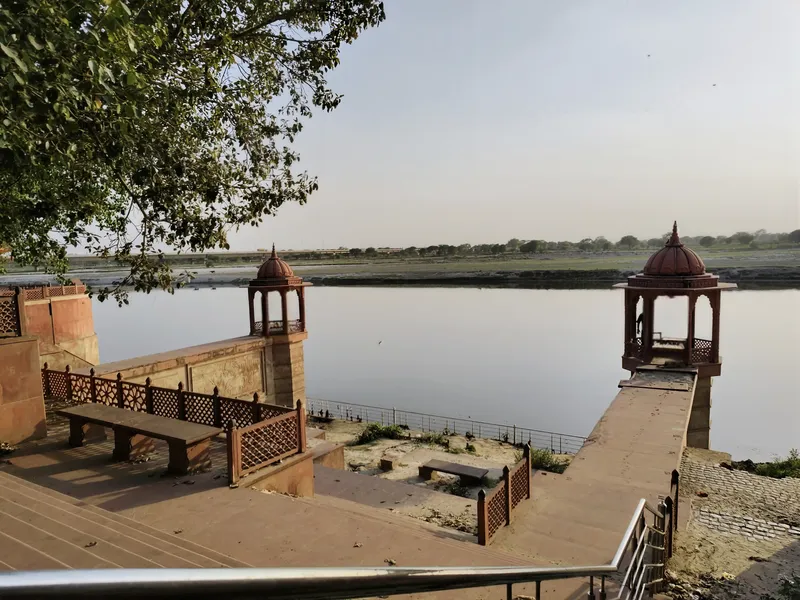
महावनMahāvana, "the great forest", also called Bṛhadvana, is the forest on the eastern bank of the Yamunā where Kṛṣṇa spent His infancy.
Mahāvana (village)
महावन (गाँव)Mahāvana, the great forest, is the village where, according to the Gauḍīya tradition, Nanda and Yaśodā lived and Kṛṣṇa spent His infancy: the Gokula of Śrīmad-Bhāgavatam' …
Nanda-bhavana (Mahāvana)
नन्द-भवन (महावन)The Bhakti-ratnākara and the guidebooks show Nanda-bhavana in Mahāvana as the house of Nanda Mahārāja and Mother Yaśodā, where Vasudeva left the newborn Kṛṣṇa, where Nand …
Pūtanā-uddhāra-sthala
पूतना-उद्धार-स्थलThe Pūtanā-uddhāra-sthala, the place of Pūtanā's deliverance, is a spot within Nanda-bhavana in Mahāvana.
Yamalārjuna-uddhāra-sthala
यमलार्जुन-उद्धार-स्थलYamalārjuna-uddhāra-sthala is the place in Mahāvana that the Bhakti-ratnākara and the guidebooks show as where Kṛṣṇa, tied to a wooden mortar, pulled down the twin arjuna …
Mathurā
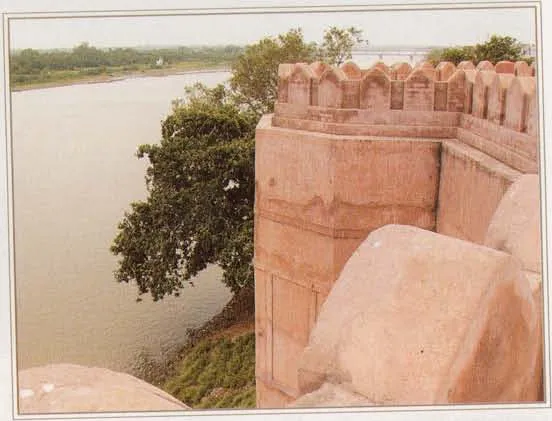
मथुराMathurā is the city on the Yamunā where Śrī Kṛṣṇa appeared from Devakī in the prison of King Kaṁsa.
Yamunā
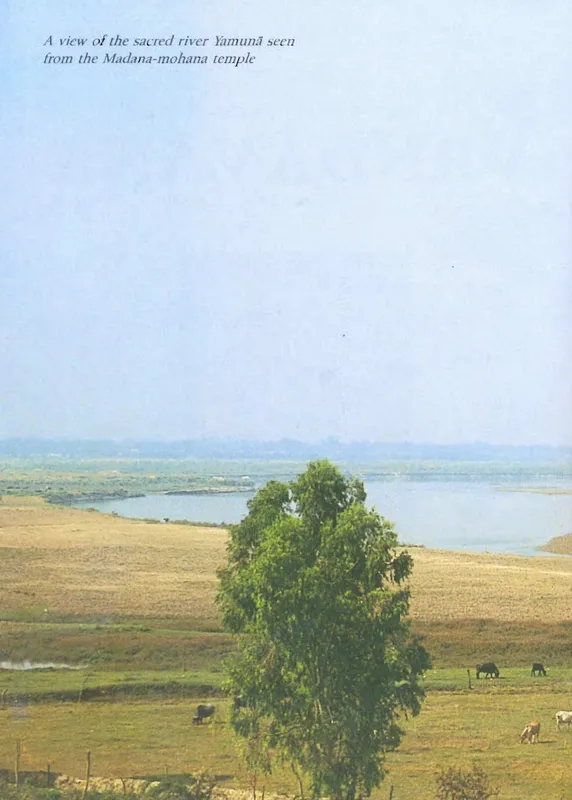
यमुनाThe Yamunā, also called the Kālindī, is the river that runs through Vraja-maṇḍala.
Questions and answers
Not according to Śrīla Prabhupāda and the Gosvāmīs' texts. They place Kṛṣṇa's infancy at Mahāvana, the great forest. The present village was settled near Mahāvana in the sixteenth century by the Vallabha gosvāmīs.[7–15]
Both names mean the great forest. The Bhāgavatam calls Nanda's settlement Bṛhadvana as well as Gokula. The commentators and the Purāṇas name it Mahāvana, the eighth of the twelve forests of Vraja.[1 +9]
In his translation of Caitanya-caritāmṛta Madhya 18.67, Śrī Caitanya went to Mahāvana and saw Gokula there. His purport quotes the Bhakti-ratnākara: Mahāvana and Gokula are one and the same.[7–12]
According to the historian Mītal and the Vallabha family chronicle, Śrī Viṭṭhalanātha settled it in saṁvat 1628, about 1571. Entwistle says he was building temples there by about 1570.[14 +4]
The Bhāgavatam gives no figure. Śrīla Prabhupāda said in 1971 that Kṛṣṇa was brought to Nandagrāma when He was three or four years old. Śrīla Jīva Gosvāmī counts two years and three months, and Śrīla Viśvanātha Cakravartī Ṭhākura three years and four months.[19 +4]
Because demons kept attacking the children. After the twin arjuna trees fell, Upananda advised the elders to leave Gokula for Vṛndāvana. They went with all their carts and cows.[30 +5]
Yes. Śrīla Murāri Gupta and Śrīla Locana dāsa Ṭhākura put a Gokula on the south side of Mahāvana. The Vraja-bhakti-vilāsa lists the two separately.[25 +2]
Sources
- Śrīmad-Bhāgavatam 10.2.7, GRETIL
- Śrīmad-Bhāgavatam 10.5.26, GRETIL
- Śrīmad-Bhāgavatam 10.5.31, GRETIL
- Śrīmad-Bhāgavatam 10.7.21, GRETIL
- Śrīmad-Bhāgavatam 10.7.33, GRETIL
- Śrīmad-Bhāgavatam 10.8.21, GRETIL
- Śrīla Prabhupāda, Śrī Caitanya-caritāmṛta, Madhya-līlā 18.67, translation · vedabase.io
- Śrīla Prabhupāda, Śrī Caitanya-caritāmṛta, CC Madhya-līlā 18.67, purport · vedabase.io
- Śrīla Prabhupāda, Śrī Caitanya-caritāmṛta, Madhya-līlā 18.156, translation · vedabase.io
- Śrīla Prabhupāda, Śrī Caitanya-caritāmṛta, Madhya-līlā 1.239, purport · vedabase.io
- Śrīla Prabhupāda, Śrīmad-Bhāgavatam, Canto 1, Introduction, Introduction (life of Śrī Caitanya Mahāprabhu) · vedabase.io
- Śrīla Prabhupāda, Śrī Caitanya-caritāmṛta, Madhya-līlā chapter 18, summary · vedabase.io
- Vaṁśāvalī of Madhusūdana Bhaṭṭa, Appendix (Telivala's sketch),: vv. 4-6 of the ten Sanskrit verses quoted below the prose and signed '( वंशावली—मधुसूदनभट्टकृता )'
- M. T. Telivala, Appendix (Telivala's sketch)
- M. T. Telivala, Appendix (Telivala's sketch),, with the Sanskrit verses it quotes
- Śrīla Viśvanātha Cakravartī Ṭhākura: commentary on ŚB 10.1.9, Bhagavata Vidya Pith edition, ed. Bhagavata Rishi and Krishna Shankar Shastri, 1996
- Śrīla Viśvanātha Cakravartī Ṭhākura: commentary on ŚB 10.11.21 (opening verse of the comment), Bhagavata Vidya Pith edition, ed. Bhagavata Rishi and Krishna Shankar Shastri, 1996
- Śrīla Jīva Gosvāmī: commentary on ŚB 10.3.51-53, Bhagavata Vidya Pith edition, ed. Bhagavata Rishi and Krishna Shankar Shastri, 1996
- Śrīla Jīva Gosvāmī: commentary on ŚB 10.11.37, Bhagavata Vidya Pith edition, ed. Bhagavata Rishi and Krishna Shankar Shastri, 1996
- Śrīla Sanātana Gosvāmī: commentary on ŚB 10.10.22, Bhagavata Vidya Pith edition, ed. Bhagavata Rishi and Krishna Shankar Shastri, 1996
Show all 82 references
- Śrīla Jīva Gosvāmī, Kṛṣṇa-sandarbha, anuccheda 182, GRETIL
- Śrīla Narahari Cakravartī, Bhakti-ratnākara, Fifth Wave, 1912 ed. pp. 277-278; Grantha Mandira text v.1713-1717, 2nd ed., 1912
- Śrīla Narahari Cakravartī, Bhakti-ratnākara, Fifth Wave, 1912 ed. p. 284; Grantha Mandira text v.1787-1789, 2nd ed., 1912
- Śrīla Prabhupāda, Śrī Caitanya-caritāmṛta, Madhya-līlā 18.67, purport (quoting the Bhakti-ratnākara, Fifth Wave) · vedabase.io
- Kṛṣṇa-caitanya-caritāmṛta, prakrama 4, sarga 6, vv.11-12
- Caitanya-maṅgala, Śeṣa-khaṇḍa, 1903 ed. printed p. 172, right column, first couplet
- Prabhudayāl Mītal, 'Gokula', printed p. 145
- A. W. Entwistle, ch. 6, on Vitthalnath at Gokul, printed p. 161, with notes 135-136, Egbert Forsten, Groningen, 1987
- K. M. Jhaveri, Farman no. I (Akbar), English translation
- Śrīmad-Bhāgavatam 10.11.23, GRETIL
- Śrīmad-Bhāgavatam 10.16.15 (vedabase 10.16.13-15), GRETIL
- Śrīmad-Bhāgavatam 10.3.51, GRETIL
- Śrīla Prabhupāda, Kṛṣṇa, the Supreme Personality of Godhead, ch. 3 "The Birth of Lord Kṛṣṇa" · vedabase.io
- Vaṁśīdhara: commentary on ŚB 10.2.7, Bhagavata Vidya Pith edition, ed. Bhagavata Rishi and Krishna Shankar Shastri, 1996
- Vaṁśīdhara: commentary on ŚB 10.11.23, Bhagavata Vidya Pith edition, ed. Bhagavata Rishi and Krishna Shankar Shastri, 1996
- Vaṁśīdhara: commentary on ŚB 10.5.26, Bhagavata Vidya Pith edition, ed. Bhagavata Rishi and Krishna Shankar Shastri, 1996
- Garga-saṁhitā, Balabhadra-khaṇḍa (8) 5.12 (prose), Sanskrit Wikisource
- Garga-saṁhitā, Goloka-khaṇḍa (1) 19.31-32, Sanskrit Wikisource
- Garga-saṁhitā, Vṛndāvana-khaṇḍa (2) 1.3-4, Sanskrit Wikisource
- Garga-saṁhitā, Vṛndāvana-khaṇḍa (2) 6.20, Sanskrit Wikisource
- Garga-saṁhitā, Viśvajit-khaṇḍa (7) 26.6, Sanskrit Wikisource
- Garga-saṁhitā, Balabhadra-khaṇḍa (8), adhyāya 13 (Balabhadra's thousand names), verse 105, Sanskrit Wikisource
- Varāha Purāṇa, adhyāya 153 v.43, Sanskrit Wikisource
- Varāha Purāṇa, adhyāya 161, verse 8, Sanskrit Wikisource
- Nārada Purāṇa, Uttarārdha, adhyāya 79 v.14
- Śrīla Rūpa Gosvāmī, Mathurā-māhātmya v.347-351, quoting the Ādi-vārāha
- Padma Purāṇa, Pātāla-khaṇḍa 69.16-18; = Vṛndāvana-māhātmya (1) vv.16-18, Sanskrit Wikisource
- Padma Purāṇa, Pātāla-khaṇḍa 69.51b-54; = Vṛndāvana-māhātmya (1) vv.51-54, Sanskrit Wikisource
- Śrīla Kṛṣṇadāsa Kavirāja Gosvāmī, Śrī Caitanya-caritāmṛta, Madhya-līlā 18.67, online edition · vedabase.io
- Śrīla Prabhupāda, Śrīmad-Bhāgavatam, Canto 10, chapter 11, verse 28, purport · vedabase.io
- Śrīla Prabhupāda, Kṛṣṇa, the Supreme Personality of Godhead, ch. 11 'Killing the Demons Vatsāsura and Bakāsura' · vedabase.io
- Śrīla Prabhupāda, Parikramā on the Way to Gokula, Vṛndāvana, 29 November 1971 · vedabase.io
- Śrīla Prabhupāda, Śrī Caitanya-caritāmṛta, Ādi-līlā 5.19, translation · vedabase.io
- Śrī Brahma-saṁhitā, 5.2, online edition · vedabase.io
- Śrīla Nārāyaṇa Bhaṭṭa Gosvāmī, Vraja-bhakti-vilāsa, chapter 4 vv.71-72, printed p. 104; Grantha Mandira text (4) v.71-72, 1st ed., publ. Bābā Kṛṣṇadāsa, Kusuma-sarovara, Saṁvat 2008
- Śrīla Narahari Cakravartī, Bhakti-ratnākara, Fifth Wave, 1912 ed. p. 284; Grantha Mandira text v.1787-1789, 2nd ed., 1912
- Śrīla Narahari Cakravartī, Bhakti-ratnākara, Thirteenth Wave (trayodaśa taraṅga), 1912 ed. p. 1025; verses 381-384 in the Grantha Mandira text numbering, 2nd ed., 1912
- Śrīla Kṛṣṇadāsa Kavirāja Gosvāmī, Śrī Caitanya-caritāmṛta, Madhya-līlā 18.69, online edition · vedabase.io
- Śrīla Kṛṣṇadāsa Kavirāja Gosvāmī, Śrī Caitanya-caritāmṛta, Antya-līlā 13.45, online edition · vedabase.io
- Śrīla Nārāyaṇa Bhaṭṭa, Vraja-bhakti-vilāsa, chapter 2, the forty-two forests of the northern bank (2.19, citing the 'Sanmohana-tantra'), printed p. 36; Grantha Mandira text (2) v.19, 1st ed., publ. Bābā Kṛṣṇadāsa, Kusuma-sarovara, Saṁvat 2008
- Śrīla Nārāyaṇa Bhaṭṭa, Vraja-bhakti-vilāsa, the twelve adhivanas, vv.29–30, printed p. 3, 1st ed., publ. Bābā Kṛṣṇadāsa, Kusuma-sarovara, Saṁvat 2008
- Śrīla Nārāyaṇa Bhaṭṭa Gosvāmī, Vraja-bhakti-vilāsa, list of the presiding deities of the twelve adhivanas, under the name of Baudhāyana (the edition numbers the list '॥ ७० ॥'), printed p. 6; Grantha Mandira text 'part 5' vv.1 and 7, 1st ed., publ. Bābā Kṛṣṇadāsa, Kusuma-sarovara, Saṁvat 2008
- Śrī Vraja-maṇḍala Parikramā (2007), PDF p. 21
- Śrī Vraja-maṇḍala Parikramā (2007), PDF p. 25
- Śrī Vraja-maṇḍala Parikramā (2007), PDF p. 265
- Śrī Vraja-maṇḍala Parikramā (2007), PDF p. 263
- Śrī Vraja-maṇḍala Parikramā (2007), PDF p. 31
- Vṛndāvana-Dhāma Ki Jaya! (c. 1986), by Dhruva Mahārāja dāsa, PDF p. 98
- Śrīla Prabhupāda, Parikramā on the Way to Gokula, Vṛndāvana, 28 November 1971 · vedabase.io
- Śrīla Viśvanātha Cakravartī Ṭhākura: commentary on ŚB 10.45.3, Bhagavata Vidya Pith edition, ed. Bhagavata Rishi and Krishna Shankar Shastri, 1996
- Śrīmad-Bhāgavatam 10.11.21, GRETIL
- Śrīmad-Bhāgavatam 10.11.28, GRETIL
- Śrīmad-Bhāgavatam 10.11.35, GRETIL
- Śrīla Viśvanātha Cakravartī Ṭhākura: commentary on ŚB 10.11.28, Bhagavata Vidya Pith edition, ed. Bhagavata Rishi and Krishna Shankar Shastri, 1996
- Gopāla-campū, Pūrva-campū 9.[30]
- Harivaṁśa, HV 52.1, GRETIL
- Śrī Vraja-maṇḍala Parikramā (2007), PDF p. 279
- Śrīla Prabhupāda, Śrī Caitanya-caritāmṛta, CC Madhya-līlā 19.61, purport · vedabase.io
- K. M. Jhaveri, Farman no. V (Akbar), English translation, scan pages 51-52 (no page numbers printed)
- Śrīla Prabhupāda, Śrī Caitanya-caritāmṛta, Madhya-līlā 18.47, purport · vedabase.io
- Prabhudayāl Mītal, 'Gokula', printed p. 147
- A. W. Entwistle, §72 'Gokul', printed p. 427, Egbert Forsten, Groningen, 1987
Further sources
- Śrīmad-Bhāgavatam, Tenth Canto, chapters 2 to 11, translation and purports by Śrīla Prabhupāda (BBT); chapter 16 by his disciples.
- The Canto 10 commentaries of Śrīla Sanātana Gosvāmī, Śrīla Jīva Gosvāmī and Śrīla Viśvanātha Cakravartī Ṭhākura, and Vaṁśīdhara's glosses (Sanskrit), summarised, not translated.
- Śrī Caitanya-caritāmṛta, Madhya-līlā 18 and Antya-līlā 13, with Śrīla Prabhupāda's translation and purports; Bhakti-ratnākara (1912 edition).
- Historians and documents only for the later village: P. Mītal (1966), A. W. Entwistle (1987), K. M. Jhaveri, Imperial Farmans (1928).