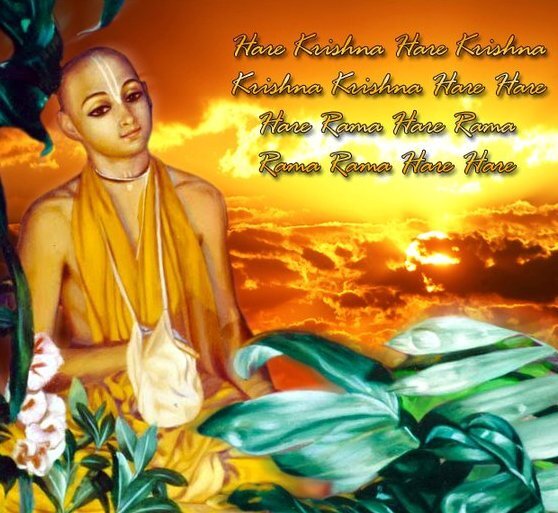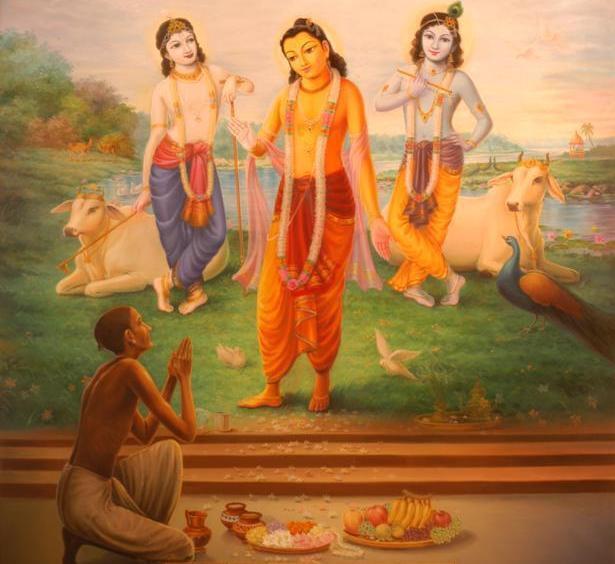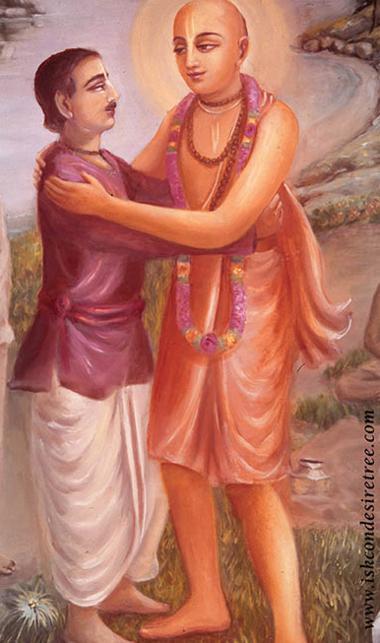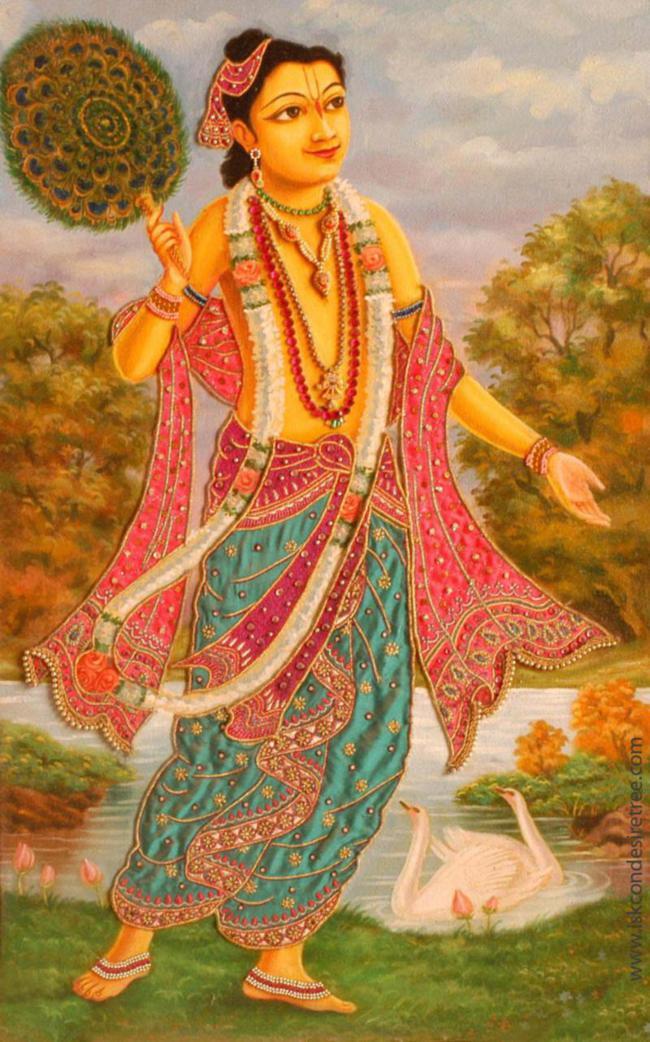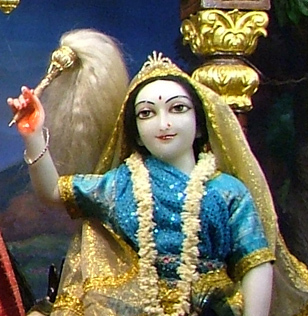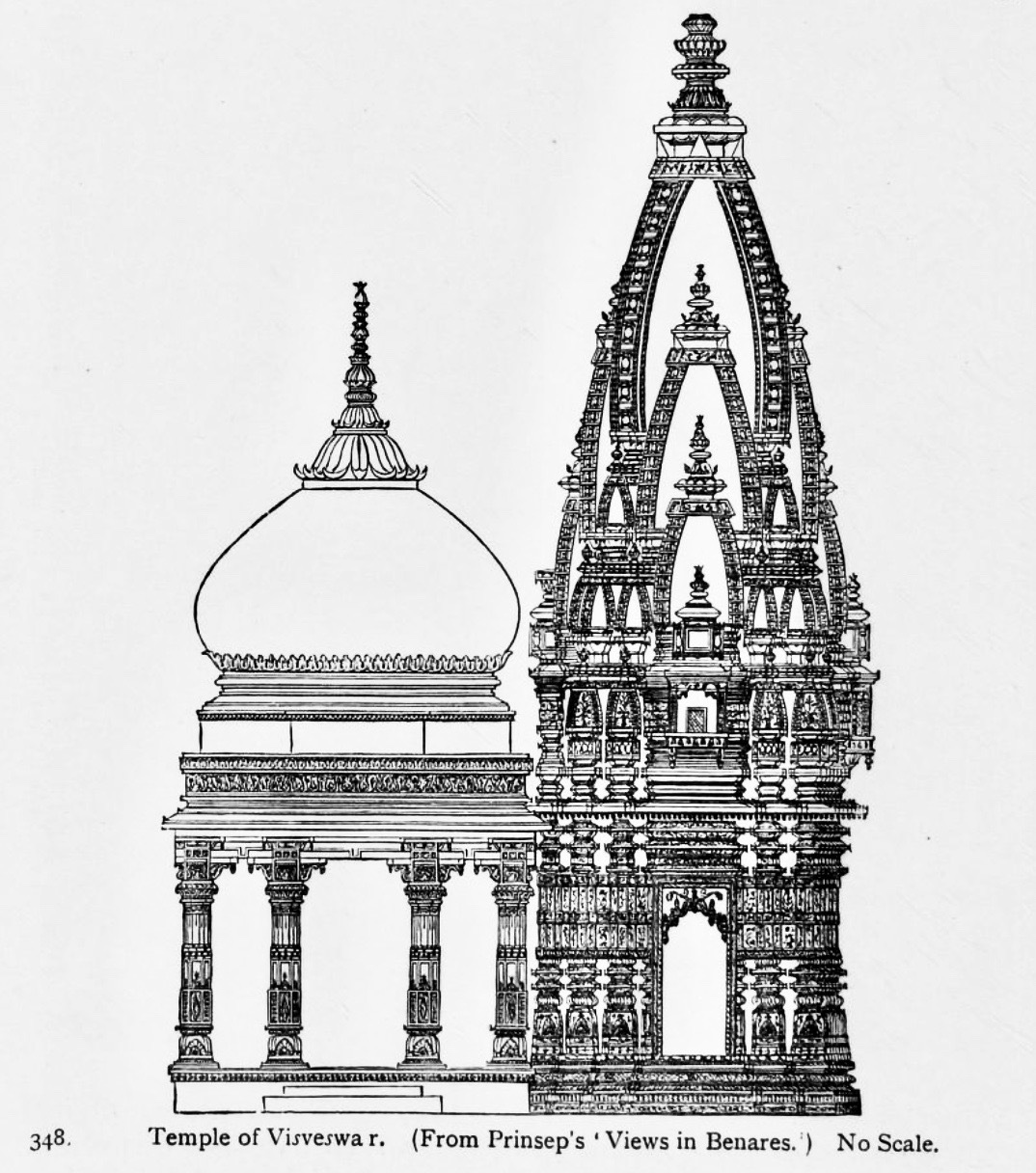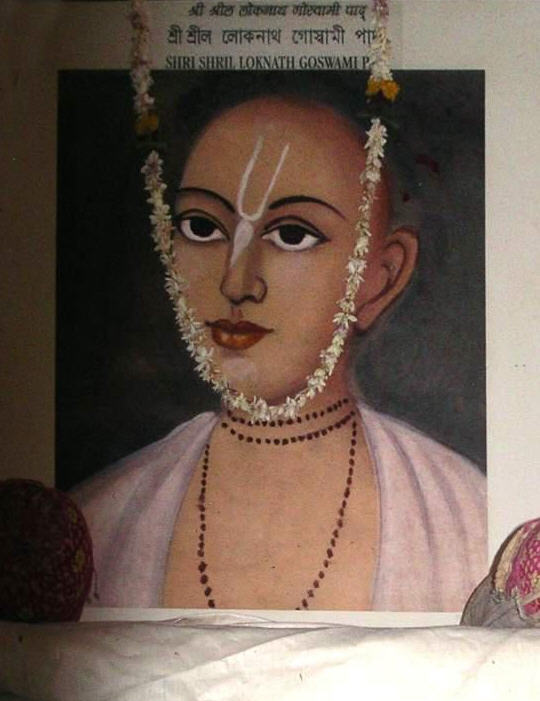
श्रील धनञ्जय पण्डित
शीतलग्राम में नित्यानन्द प्रभु के वैरागी सेवक
अन्य नाम धनञ्जय पण्डित, वसुदाम (कृष्ण-लीला में उनकी पहचान)
“नित्यानन्द प्रभु के सोलहवें प्रिय सेवक धनञ्जय पण्डित थे। वे अत्यन्त वैरागी थे और सदा कृष्ण-प्रेम में लीन रहते थे।”
श्री चैतन्य-चरितामृत, आदि-लीला 11.31, कृष्णदास कविराज गोस्वामी द्वारा नित्यानन्द प्रभु के सहयोगियों में धनञ्जय पण्डित का वर्णन
कृष्णदास कविराज गोस्वामी के श्री चैतन्य-चरितामृत में श्रील धनञ्जय पण्डित का नाम केवल एक बार आता है। यह एक ही श्लोक है, जिसमें दर्जनों भक्तों के बीच उनके लिए एक पंक्ति है। फिर भी यह एक उल्लेख, और गौड़ीय परम्परा ने बाद में उनके बारे में जो बातें सुरक्षित रखीं, दोनों को साथ पढ़ने पर साफ पता चल जाता है कि वे कौन थे। वे नित्यानन्द प्रभु के एक वैरागी सेवक थे। उन्होंने अपने पिता का धन दे दिया और अपने पास केवल एक भिक्षा-पात्र रखा। उनके विग्रह आज भी ग्रामीण बंगाल में पूजे जाते हैं।
| विशेष | विवरण |
|---|---|
| अन्य नाम | धनञ्जय पण्डित |
| नित्यानन्द प्रभु के सहयोगियों में स्थान | चैतन्य-चरितामृत की उनकी "प्रमुख शाखाओं" की सूची में सोलहवें स्थान पर नामित |
| पहचान | वसुदाम, व्रज में कृष्ण के गोपमित्र; बारह गोपालों में से एक (गौर-गणोद्देश-दीपिका 127; चैतन्य-चरितामृत आदि 11.31 तात्पर्य) |
| पत्नी | हरिप्रिया (द्वितीयक स्रोतों के अनुसार; स्वयं चैतन्य-चरितामृत में नाम नहीं दिया गया) |
| श्रीपाट / निवास | शीतलग्राम, मंगलकोट, बर्धमान जिला, बंगाल |
| स्थापित विग्रह | श्री गोपीनाथ, श्री निताई-गौरांग और एक दामोदर-शालग्राम-शिला |
| तिरोभाव | कार्तिक की शुक्ल-अष्टमी; वर्ष दर्ज नहीं |
एक दृष्टि में
- चैतन्य-चरितामृत में उन्हें नित्यानन्द प्रभु का सोलहवाँ "प्रिय सेवक" कहा गया है। वहीं उन्हें अत्यन्त विरक्त, अर्थात् बहुत बड़ा वैरागी बताया गया है।
- अपने विवाह के दिन उन्होंने पिता की पूरी यात्रा-राशि श्री चैतन्य महाप्रभु को दे दी और अपने पास केवल एक कमण्डलु रखा। यह कथा बाद के एक भक्ति-पद में आज भी याद की जाती है।
- वे दो बार वृन्दावन की ओर गए और हर बार विग्रह-सेवा किसी शिष्य को सौंप गए। अन्त में लौटकर उन्होंने शीतलग्राम में वह मन्दिर स्थापित किया, जो आज भी मौजूद है।
- गौड़ीय भक्ति-जीवनियों में उन्हें शीतलग्राम के आसपास डाकुओं और अविश्वासियों को भक्ति की ओर मोड़ने के लिए याद किया जाता है। इससे दिखता है कि पतितों का उद्धार करने वाली नित्यानन्द प्रभु की अपनी शक्ति उनके भक्त के द्वारा कार्य कर रही थी।
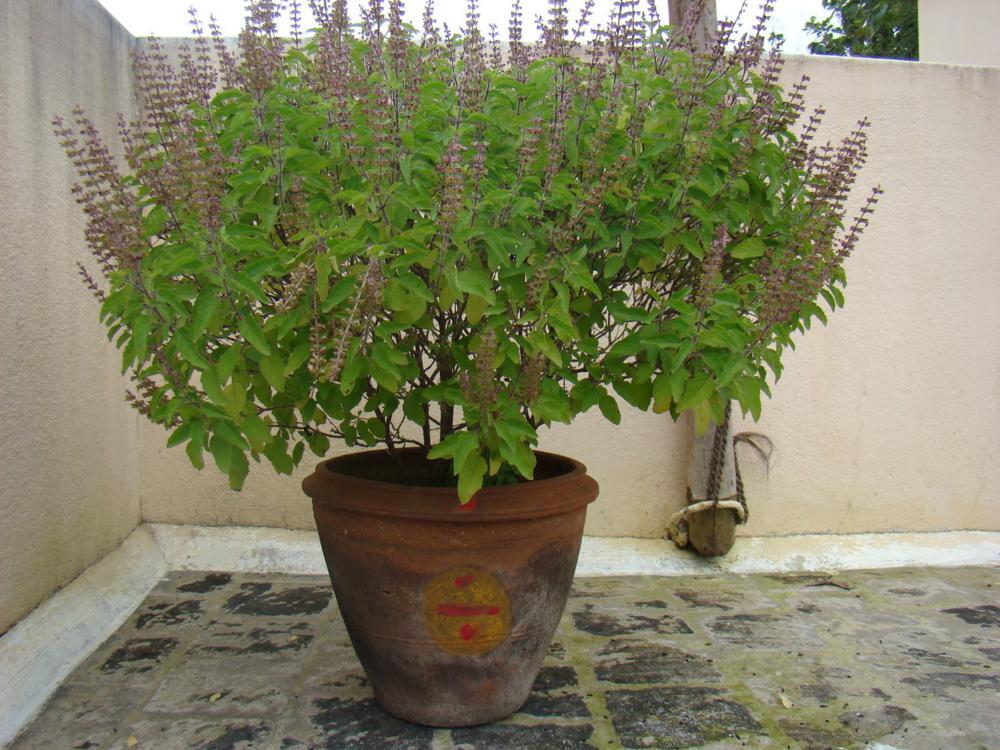
- उनकी समाधि आज शीतलग्राम मन्दिर के भीतर एक तुलसी वेदी के पास है। वहाँ उनके शिष्यों के वंशज आज भी उनकी शुरू की हुई विग्रह-सेवा कर रहे हैं।
नित्यानन्द प्रभु के वैरागी सेवक #
चैतन्य-चरितामृत के आदि-लीला के ग्यारहवें अध्याय में कृष्णदास कविराज गोस्वामी नित्यानन्द प्रभु की "शाखाओं" की सूची देते हैं। ग्रन्थ इन भक्तों की तुलना उन भौंरों से करता है, जो नित्यानन्द प्रभु के चरण-कमलों के मधु की ओर खिंचे चले आते हैं। इस सूची में अधिकतर नामों को एक ही पंक्ति मिलती है। कुछ भक्तों को, जैसे अभिराम गोपाल ठाकुर को, कई श्लोक मिलते हैं। धनञ्जय पण्डित को ठीक एक पंक्ति मिलती है: "नित्यानन्द प्रभु के सोलहवें प्रिय सेवक धनञ्जय पण्डित थे। वे अत्यन्त वैरागी थे और सदा कृष्ण-प्रेम में लीन रहते थे" (आदि 11.31)। इस श्लोक पर भक्तिसिद्धान्त सरस्वती ठाकुर की अनुभाष्य टीका ही वास्तव में उनके बारे में बचा हुआ सबसे पूरा और जुड़ा हुआ विवरण है। इसमें उनके पैतृक गाँव, वृन्दावन की ओर उनकी दो यात्राओं और अन्त में उनके द्वारा स्थापित विग्रह का नाम दिया गया है। बाद के गौड़ीय साहित्य में उनके बारे में जो कुछ और कहा गया है, वह सब इसी एक श्लोक और इसकी टीका के आसपास जोड़ा गया है।
अनुभाष्य में यह भी लिखा है कि धनञ्जय "बारह गोपालों में से एक" थे। कवि कर्णपुर गोस्वामी की गौर-गणोद्देश-दीपिका (श्लोक 127) बताती है कि कृष्ण की अपनी व्रज-लीला में वे वसुदाम थे। वसुदाम कृष्ण के एक गोपमित्र हैं। लेकिन एक छोटे द्वितीयक विवरण में उन्हें कृष्ण के नहीं, बल्कि बलराम के बारह गोपालों में से एक बताया गया है। यह दो द्वितीयक स्रोतों के बीच एक छोटा-सा मतभेद है, और यहाँ इसे सुलझाने का प्रयास नहीं किया गया है।
श्रील प्रभुपाद अनुभाष्य की यह बात चैतन्य-चरितामृत आदि 11.31 के तात्पर्य में देते हैं। श्लोक की वह पंक्ति, जिसमें उनका नाम है, इस प्रकार है:
वसुदामसखा यश्च पण्डितः श्रीधनञ्जयः ॥
"भगवान कृष्ण के गोपमित्र वसुदाम श्री चैतन्य महाप्रभु की लीला में श्री धनञ्जय पण्डित के रूप में प्रकट हुए।" (गौर-गणोद्देश-दीपिका 127)
दो ग्राम, दो वंशावलियाँ #
यह निश्चित नहीं है कि धनञ्जय पण्डित का जन्म कहाँ और किस परिवार में हुआ। गौड़ीय वैष्णव अभिधान में दर्ज एक परम्परा के अनुसार उनका जन्म चटगाँव जिले के जरियाग्राम गाँव में हुआ। इसके अनुसार वे श्रीपति बन्दोपाध्याय और कालिन्दी देवी के पुत्र थे। गौरांग माधुरी नामक ग्रन्थ में दी गई दूसरी परम्परा कहती है कि उनका जन्म बीरभूम जिले में बोलपुर के पास सियान-मुलुक में हुआ, और वे आदिदेव वाचस्पति और दयामयी के पुत्र थे। द्वितीयक स्रोतों के अनुसार भक्तिसिद्धान्त सरस्वती ठाकुर ने अपने लेखन में पहले विवरण को अधिक माना। लेकिन अनुभाष्य के किसी मूल संस्करण से इस दावे की जाँच नहीं हो सकी। इसलिए दोनों परम्पराएँ यहाँ बिना किसी एक को चुने दी गई हैं।
उनके वयस्क जीवन के बारे में अधिक जानकारी दर्ज है। उनका विवाह हरिप्रिया नाम की एक स्त्री से हुआ। ऐसा लगता है कि तब वे युवा ही थे। उनकी कोई सन्तान नहीं हुई। बोलपुर के पास एक सम्बन्धित श्रीपाट में संजय नाम के एक व्यक्ति को याद किया जाता है। कुछ विवरण संजय को धनञ्जय का छोटा भाई बताते हैं, और कुछ उनका शिष्य। जो परिवार आज भी शीतलग्राम में विग्रह-सेवा की देखभाल करते हैं, उन्हें धनञ्जय के अपने वंशज नहीं, बल्कि उनके शिष्यों के वंशज बताया गया है।
वैराग्य और शीतलग्राम के विग्रह #
संसार में उनके जीवन के बारे में जो कुछ सचमुच ज्ञात है, वह अधिकतर दो प्रसंगों में मिलता है। दोनों का पूरा विवरण अलग-अलग पृष्ठों पर दिया गया है। पहला प्रसंग उनका वैराग्य है। बताया जाता है कि यह लगभग उनके विवाह के समय ही हुआ, जब उन्होंने अपने पिता की यात्रा-राशि श्री चैतन्य महाप्रभु को सौंप दी और केवल एक भिक्षा-पात्र लेकर निकल पड़े। इसका पूरा विवरण वैरागी पण्डित का वैराग्य में दिया गया है। दूसरा प्रसंग उस मन्दिर की स्थापना है, जो आज उनके नाम से जाना जाता है। वे दो बार वृन्दावन की ओर गए। कुछ समय के लिए उन्होंने विग्रह-सेवा अपने साथ यात्रा करने वाले एक शिष्य के हाथों में सौंपी। अन्त में वे शीतलग्राम लौटे और वहाँ उन विग्रहों की स्थापना की, जिनकी सेवा आज भी होती है। इसका विवरण शीतलग्राम के विग्रह में दिया गया है।
तिरोभाव और एक ईमानदार अभिलेख #
धनञ्जय पण्डित का तिरोभाव-दिवस कार्तिक की शुक्ल-अष्टमी को मनाया जाता है। किसी भी उपलब्ध स्रोत में इसका वर्ष दर्ज नहीं मिलता। कहा जाता है कि उनकी समाधि शीतलग्राम मन्दिर के भीतर ही एक छोटी तुलसी वेदी के पास है। इससे आगे हमें साफ-साफ बताना चाहिए कि अभिलेख में क्या-क्या नहीं मिलता। धनञ्जय पण्डित के बारे में श्रील प्रभुपाद का कोई विशेष प्रवचन या वार्तालाप नहीं मिल सका। यहाँ जिन दो द्वितीयक संकलनों का उपयोग किया गया है, वे दोनों उनके बारे में चैतन्य-भागवत की एक ही पंक्ति उद्धृत करते हैं। लेकिन वे उस पंक्ति के ठीक अध्याय और श्लोक-संख्या पर भी आपस में सहमत नहीं हैं। जो बात विश्वास के साथ कही जा सकती है, वह चैतन्य-चरितामृत के उस एक श्लोक और उसकी टीका पर ही टिकी है। इससे आगे जो कुछ है, वह भक्ति-स्मृति है, और उसे साफ तौर पर वैसा ही बताया गया है।
शास्त्र प्रमाण
ऊपर पाठ में उद्धृत:
- Adi 11.31 Sri Chaitanya-charitamrita ऊपर देखें ↑
अन्य शास्त्र प्रमाण:
पुरा सुदामनामासीदद्य सुन्दरठक्कुरः ।
वसुदामसखा यश्च पण्डितः श्रीधनञ्जयः ॥१२७॥
purā sudāma-nāmāsīd adya sundara-ṭhakkuraḥ |
vasudāma-sakhā yaś ca paṇḍitaḥ śrī-dhanañjayaḥ ||127||
भगवान कृष्ण के ग्वाल-मित्र सुदामा श्री चैतन्य महाप्रभु की लीला में सुन्दर ठाकुर के रूप में प्रकट हुए। भगवान कृष्ण के ग्वाल-मित्र वसुदाम श्री चैतन्य महाप्रभु की लीला में श्री धनञ्जय पण्डित के रूप में प्रकट हुए।
कवि कर्णपुर का यह श्लोक धनञ्जय पण्डित को कृष्ण के गोपमित्र वसुदाम बताता है (यही श्लोक सुन्दरानन्द को सुदामा बताता है); इसकी पुष्टि करने वाला अनुभाष्य-वाक्य चैतन्य-चरितामृत आदि 11.31 के अन्तर्गत दिया गया है। संस्कृत: गौर-गणोद्देश-दीपिका का डायक्रिटिक संस्करण; अंग्रेज़ी अनुवाद bvmlu.org पर प्रकाशित पाठ के अनुसार।
- Sri Chaitanya-charitamrita, Adi-lila 11.31, with Bhaktisiddhanta Sarasvati Thakura's Anubhasya commentary
- Sri Chaitanya-charitamrita, Adi-lila 11.1 (introduces the list of Nityananda Prabhu's associates)
- Gaudiya History (ISKCON Desire Tree): Sri Dhananjaya Pandit
- Gaudiya History (ISKCON Desire Tree): Dhananjaya Pandit - Biopraphy
- Gaudiya History (ISKCON Desire Tree): Dhananjaya Pandit (2)
अक्सर पूछे जाने वाले प्रश्न
श्रील धनञ्जय पण्डित का जन्म कब हुआ था?
श्रील धनञ्जय पण्डित का प्राकट्य विश्वसनीय रूप से दर्ज नहीं (एक द्वितीयक स्रोत में वर्ष 1485 दिया गया है, पर यह नहीं बताया गया कि यह किस संवत् का है; इस तिथि की जाँच नहीं हो सकी, और न ही इसे महाप्रभु के जीवनकाल से मिलाया जा सका) में, विवादित: जरियाग्राम, चटगाँव जिला (गौड़ीय वैष्णव अभिधान के अनुसार) अथवा बोलपुर के निकट सियान-मुलुक, बीरभूम जिला (गौरांग माधुरी के अनुसार); दोनों दावों की जाँच स्रोत ग्रन्थों के किसी मूल संस्करण से नहीं की जा सकी, इसलिए दोनों को यहाँ बिना किसी निर्णय के प्रस्तुत किया गया है। में हुआ।
श्रील धनञ्जय पण्डित के गुरु कौन थे?
श्रील धनञ्जय पण्डित के गुरु श्री नित्यानन्द प्रभु थे।
श्रील धनञ्जय पण्डित का तिरोभाव कब और कहाँ हुआ?
श्रील धनञ्जय पण्डित का तिरोभाव कार्तिक मास की शुक्ल-अष्टमी (शुक्ल पक्ष की आठवीं तिथि); वर्ष दर्ज नहीं है, शीतलग्राम, मंगलकोट, बर्धमान जिला, बंगाल में हुआ।
श्रील धनञ्जय पण्डित की प्रमुख लीलाएँ कौन-सी हैं?
यहाँ इन लीलाओं पर पृष्ठ उपलब्ध हैं: वैरागी पण्डित का वैराग्य, शीतलग्राम के विग्रह।