The dice game of Rādhā and Kṛṣṇa: the books and the places
राधा-कृष्ण की पाशा-क्रीड़ा: ग्रन्थ और स्थान
In short
Pāśa-khela-ghāṭa (Pasa Khel Ghat) is a bathing place on Śyāma-kuṇḍa where, a guidebook says, pilgrims may remember a dice game of Rādhā and Kṛṣṇa. The game is told not in the Bhāgavatam but in poems of Their midday pastimes by Śrīla Rūpa Gosvāmī, Śrīla Kṛṣṇadāsa Kavirāja Gosvāmī and Śrīla Viśvanātha Cakravartī Ṭhākura.[1–10]
On this page
At a glance
- Pāśā means dice, and khelā means play; the ghāṭa's name means the bathing place of the dice game. A guidebook of 1999, the only source for it, places it on the bank of Śyāma-kuṇḍa.[1, 2]
- Śrīmad-Bhāgavatam, Canto 10, tells no dice game of Rādhā and Kṛṣṇa; one commentary on it mentions dice among the gopīs' pastimes.[3–8, 11]
- Śrīla Rūpa Gosvāmī's Ujjvala-nīlamaṇi counts the dice game among the pastimes of the Divine Couple.[12]
- The Govinda-līlāmṛta calls Sudevī's green kuñja, on the north-west of Rādhā-kuṇḍa, the ground of Their dice game.[9, 10]
- The Bhakti-ratnākara shows pilgrims a village called Hāroyāla where, it says, Śrī Rādhā won the game.[13, 14]
- Śrīla Prabhupāda taught that one should first understand Kṛṣṇa before entering into such pastimes.[15]
Is the dice game in the Bhāgavatam?
The Tenth Canto of Śrīmad-Bhāgavatam, the main scripture of Kṛṣṇa's life in Vraja, tells no dice game of Rādhā and Kṛṣṇa.[3–8]
Among the commentaries on the Tenth Canto only one passage mentions games of dice with the gopīs, the cowherd girls of Vraja. Śrīla Viśvanātha Cakravartī Ṭhākura mentions them when he explains how Kṛṣṇa's message, brought by Uddhava, eased the gopīs' pain of separation (10.47.53). He counts dice among the pastimes that Kṛṣṇa's own divine power granted them, and he names no place (summarised here, not translated).[11]
So the game comes to us from other books: poems and prayers written by the Gosvāmīs and later ācāryas, the great teachers of the tradition.[3–8]
What are the midday pastimes?
The poems that tell the dice game describe the pastimes of Rādhā and Kṛṣṇa through the eight parts of each day. Śrīla Prabhupāda's translation of Śrīla Rūpa Gosvāmī's Upadeśāmṛta calls them the aṣṭa-kālīya-līlā, Their eternal eightfold daily pastimes, and connects them with service at Rādhā-kuṇḍa.[16–21]
In the Govinda-līlāmṛta of Śrīla Kṛṣṇadāsa Kavirāja Gosvāmī, Kṛṣṇa comes to Rādhā-kuṇḍa at the end of the forenoon. The next eleven cantos of the poem, set mostly in the forest by the kuṇḍa, are called the midday pastimes, and the dice game is one of them.[9 +4]
This is why the game belongs to the two ponds. Śrīla Prabhupāda writes that, as Śrīmatī Rādhikā is very dear to Kṛṣṇa, so are Her ponds, Śyāma-kuṇḍa and Rādhā-kuṇḍa.[23] Śrīla Kṛṣṇadāsa Kavirāja Gosvāmī's own verse on the kuṇḍa, which Śrī Caitanya Mahāprabhu recites in the Caitanya-caritāmṛta, says the same:[16]
শ্রীরাধেব হরেস্তদীয়সরসী প্রেষ্ঠাদ্ভুতৈঃ স্বৈর্গুণৈ-
র্যস্যাং শ্রীযুত-মাধববেন্দুরনিশং প্রীত্যা তয়া ক্রীড়তি ।
প্রেমাস্মিন্ বত রাধিকেব লভতে যস্যাং সকৃৎ স্নানকৃৎ
তস্যা বৈ মহিমা তথা মধুরিমা কেনাস্তু বর্ণ্যঃ ক্ষিতৌ ॥ ১২ ॥
śrī-rādheva hares tadīya-sarasī preṣṭhādbhutaiḥ svair guṇair
yasyāṁ śrī-yuta-mādhavendur aniśaṁ prītyā tayā krīḍati
premāsmin bata rādhikeva labhate yasyāṁ sakṛt snāna-kṛt
tasyā vai mahimā tathā madhurimā kenāstu varṇyaḥ kṣitau
“ ‘Because of its wonderful transcendental qualities, Rādhā-kuṇḍa is as dear to Kṛṣṇa as Śrīmatī Rādhārāṇī. It was in that lake that the all-opulent Lord Śrī Kṛṣṇa performed His pastimes with Śrīmatī Rādhārāṇī with great pleasure and transcendental bliss. Whoever bathes just once in Rādhā-kuṇḍa attains Śrīmatī Rādhārāṇī’s loving attraction for Śrī Kṛṣṇa. Who within this world can describe the glories and sweetness of Śrī Rādhā-kuṇḍa?’ ”
Translation: Śrīla A.C. Bhaktivedanta Swami PrabhupādaŚrīla Rūpa Gosvāmī's Upadeśāmṛta places Rādhā-kuṇḍa above Govardhana, the forest of Vṛndāvana, Mathurā and even Vaikuṇṭha. It says that the kuṇḍa is as dear to Kṛṣṇa as Śrī Rādhā Herself, and that one bath there awakens pure love of Kṛṣṇa.[18 +4] Read more: How Rādhā-kuṇḍa appeared: the accounts side by side →
Śrīla Prabhupāda adds that the importance of Rādhā-kuṇḍa is understood mainly by the Gauḍīya Vaiṣṇavas, the followers of Śrī Caitanya Mahāprabhu. So the pastimes told here are remembered chiefly in that tradition.[26]
Which books tell the dice game?
Several books mention or tell the game. We quote only the translations of the Bhaktivedanta Book Trust (BBT), so each is summarised here, not translated.[3–8]
- *The Ujjvala-nīlamaṇi* of Śrīla Rūpa Gosvāmī.** Śrīla Prabhupāda lists this book among Śrīla Rūpa Gosvāmī's works, beside the Bhakti-rasāmṛta-sindhu. It counts the dice game among the pastimes of the Divine Couple (15.223–224).[12, 28]
- Śrīla Rūpa Gosvāmī's hundred and eight names of Śrī Rādhā (in his Stava-mālā, verse 40). One name calls Her the one who laughs at Kṛṣṇa when He has lost His flute at dice.[8]
- *The Govinda-līlāmṛta* of Śrīla Kṛṣṇadāsa Kavirāja Gosvāmī.** The author of the Caitanya-caritāmṛta tells the game among the midday pastimes, in Sudevī's kuñja by Rādhā-kuṇḍa (18.25–30). Rādhā's friends and Kṛṣṇa's friends sit on the two sides.[9, 10]
- *The Kṛṣṇa-bhāvanāmṛta* of Śrīla Viśvanātha Cakravartī Ṭhākura.** He tells the game in his fifteenth canto, the canto of the midday pastimes. Lalitā proposes it and Sudevī brings the pieces; the canto names no ghāṭa.[29, 30]
- The prayers of Śrīla Raghunātha dāsa Gosvāmī. He remembers the game in his Vilāpa-kusumāñjali (80) and Utkaṇṭhā-daśaka (3). The second sets it in a bower on the bank of a kuṇḍa that the verse does not name.[6, 7]
In all of these books Śrī Rādhā wins the game.[3–8]
Where is the game remembered?
Only one of the ācāryas' works gives the game a fixed place. The Govinda-līlāmṛta describes a kuñja, a bower or grove, in the north-west of Rādhā's lake, called Sudevī-sukhada.[9, 10] Read more: The kuñjas of the sakhīs around Rādhā-kuṇḍa →
It is green in every part: green creepers, trees, birds and bees, and pavements of emerald. The poem calls it the ground of Rādhā and Kṛṣṇa's dice game (7.98–99).[9] Sudevī is one of Śrī Rādhā's eight dearest friends, the aṣṭa-sakhīs. Śrīla Rūpa Gosvāmī names the eight in his Ujjvala-nīlamaṇi, and Śrīla Prabhupāda lists them in a letter of 1970: Lalitā, Viśākhā, Citrā, Campakalatā, Raṅgadevī, Sudevī, Tuṅgavidyā and Indulekhā.[31, 32]
Hāroyāna, the village of the defeat
The Bhakti-ratnākara is a Bengali book by Śrīla Narahari Cakravartī Ṭhākura about the pilgrimages of the later ācāryas. In it Śrīla Rāghava Paṇḍita Gosvāmī brings Śrīla Śrīnivāsa Ācārya and Śrīla Narottama dāsa Ṭhākura to a Kṛṣṇa-kuṇḍa and the village of Hāroyāla. Here, he says, Rāi, a loving name of Śrī Rādhā, defeated Kṛṣṇa at dice (summarised here, not translated).[13, 14]
With the village, Śrīla Rāghava Paṇḍita shows them a Kṛṣṇa-kuṇḍa, a pond named after Kṛṣṇa, as part of the same place.[13, 14] Kṛṣṇadāsa Bābājī's Bengali Bhaktamāla (1905) also names Hāroyāla as the village of the dice game.[33] A guidebook of 2007 calls the village Hāroyāna, says that it is now called Pīparavāra, and places it four miles north of Sāñculī, which lies north-west of Nandagaon.[34, 35] The same guidebook lists Hāroyāna with Bhāṇḍokhora, Bichora, Hoḍal and other villages among the pastime places of that northern area of Vraja.[36, 37]
Pāśa-khela-ghāṭa on Śyāma-kuṇḍa
The Colour Guide to Rādhā-kuṇḍa (1999) says that at Pāśa-khela-ghāṭa, on the bank of Śyāma-kuṇḍa, Rādhā and Kṛṣṇa enjoy the dice game. It retells the game of the Kṛṣṇa-bhāvanāmṛta there, but the setting at this ghāṭa is perhaps the guidebook's own, since the poem names no ghāṭa.[1 +3]
The same guidebook says that the ghāṭa is also the sitting place, or baiṭhaka, of Vallabhācārya, with a small temple run by his followers. This rests on that book alone and may not be certain.[1, 2] The Caitanya-caritāmṛta does mention Vallabha Bhaṭṭa, who went to see Śrī Caitanya Mahāprabhu near Prayāga. Śrīla Prabhupāda explains that his line became known as the Vallabhācārya-sampradāya, with great influence near Gokula.[38, 39]
How should one hear such pastimes?
The dice game is one of the confidential pastimes of Rādhā and Kṛṣṇa. Śrīla Prabhupāda taught that one should first try to understand Kṛṣṇa, since hearing His dealings with the gopīs is for liberated persons. He warned:[15]
Names this place“So don't jump over the kṛṣṇa-līlā or jump over Rādhā-kuṇḍa unless you are a liberated person.”
Śrīla Prabhupāda, Lecture on Śrīmad-Bhāgavatam 1.7.16, Vṛndāvana, 14 September 1976 · vedabase.io
In another talk he said that such pastimes are understood only by going through the instructions of Śrīla Rūpa Gosvāmī first, and not by a forced approach.[40] For this reason the game itself is only named in this article, with the books that tell it and the places that remember it.[3–8, 40]
For a pilgrim, the places are a reminder of these books and of the ācāryas who wrote them. In the Bhakti-ratnākara, Śrīla Śrīnivāsa Ācārya and Śrīla Narottama dāsa Ṭhākura were shown Hāroyāla on their own round of Vraja, so that the pastime could be remembered there.[13, 14]
Where the sources differ
The books place the game in different spots, and none of them says that the others are wrong; the guidebook's ghāṭa is perhaps a later local memory. The Govinda-līlāmṛta sets it in Sudevī's kuñja by Rādhā's lake, the Bhakti-ratnākara at Hāroyāla, and the 1999 guidebook at Pāśa-khela-ghāṭa on Śyāma-kuṇḍa.[1 +5]
Accounts differ Where Rādhā and Kṛṣṇa play dice at the two kuṇḍas.
- The Colour Guide to Rādhā-kuṇḍa (1999)At Pāśa-khela-ghāṭa: 'At this celebrated ghāṭa on the banks of Śyāma-kuṇḍa, Rādhā and Kṛṣṇa enjoy the pastimes of pāśa-khela'.
- Śrī Vraja-maṇḍala Parikramā (2007)In Vidagdhānandada-kuñja, Vidagdha Sakhā's 'green emerald' kuñja in the south of Śyāma-kuṇḍa, given to Campakalatā: 'Here the Youthful Couple play the game of chaupaḍa'.
- Govinda-līlāmṛta 7.98–7.99 and 18.25–18.28 (Śrīla Kṛṣṇadāsa Kavirāja Gosvāmī)In Sudevī-sukhada, the all-green kuñja in the north-west of Rādhā's lake, 'the ground of Rādhā and Kṛṣṇa's dice game'; the midday game is played there.
- Kṛṣṇa-bhāvanāmṛta 14.9–14.12 and 15.1–34 (Śrīla Viśvanātha Cakravartī Ṭhākura)Jokes over dice are among the pastimes at Rādhā's lake (14.12); the midday game of sarga 15, which The Colour Guide to Rādhā-kuṇḍa (1999) retells, follows the water sports at the two kuṇḍas and is played in a kuñja that is not named; no ghāṭa.
The 2007 guidebook retells the Kṛṣṇa-bhāvanāmṛta's game at Hāroyāna and explains the name from the Hindi word for being defeated; it gives no source for the setting. It also places a dice game in a green kuñja south of Śyāma-kuṇḍa, given to Campakalatā.[3 +3]
Accounts differ Where the dice game takes place in which Rādhā defeats Kṛṣṇa (and wins His flute).
- Bhakti-ratnākara, Fifth Wave (Śrīla Narahari Cakravartī), printed p. 256at the village Hāroyāla with Kṛṣṇa-kuṇḍa, shown by Rāghava Paṇḍita to Śrīnivāsa and Narottama
- the Bengali Bhaktamāla of Kṛṣṇadāsa Bābājī (1905)Hāroyāla is the village of the dice game, where Kṛṣṇa lost to Rādhikā
- Śrī Vraja-maṇḍala Parikramā (2007)at Hāroyāna-grāma, now called Pīparavāra, four miles north of Sāñculī
- Kṛṣṇa-bhāvanāmṛta, sarga 15 (Śrīla Viśvanātha Cakravartī)in the midday pastimes, after the water sports at the two kuṇḍas, in a kuñja that is not named
The Govinda-līlāmṛta and the Kṛṣṇa-bhāvanāmṛta describe pastimes of every day, so the places named for the game are set side by side here, not harmonised.[3–8]
Places in this article
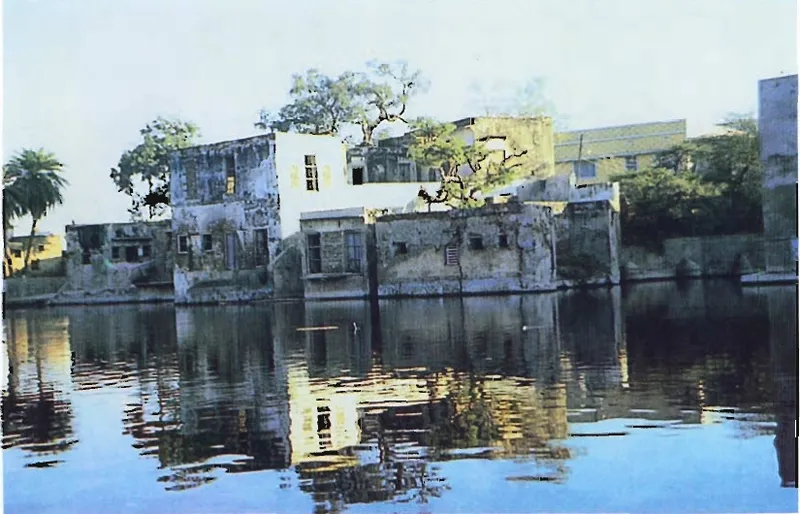
Pāśa-khela-ghāṭa
पाश-खेल-घाटPāśa-khela-ghāṭa, "the ghāṭa of the dice game", is a bathing ghāṭa on the bank of Śyāma-kuṇḍa at Rādhā-kuṇḍa.
Sudevī-sukhada-kuñja
सुदेवी-सुखद-कुंजSudevī-sukhada-kuñja, the grove "giving happiness to Sudevī", is the kuñja (grove) of Sudevī, one of Śrī Rādhā's eight dearest friends, on the north-west side of Rādhā-ku …
Hāroyāna-grāma
हारोयान-ग्रामHāroyāna-grāma is the village where, according to the Bhakti-ratnākara, Śrī Rādhā defeated Kṛṣṇa at a game of dice.
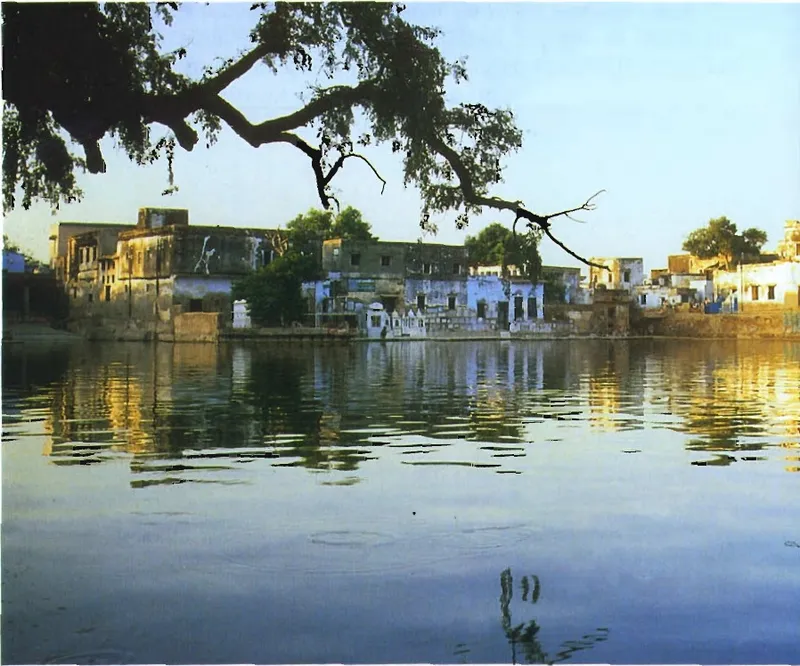
Rādhā-kuṇḍa
राधा-कुण्डRādhā-kuṇḍa is the lake of Śrī Rādhā at the foot of Govardhana Hill, in the village of Āriṭa.
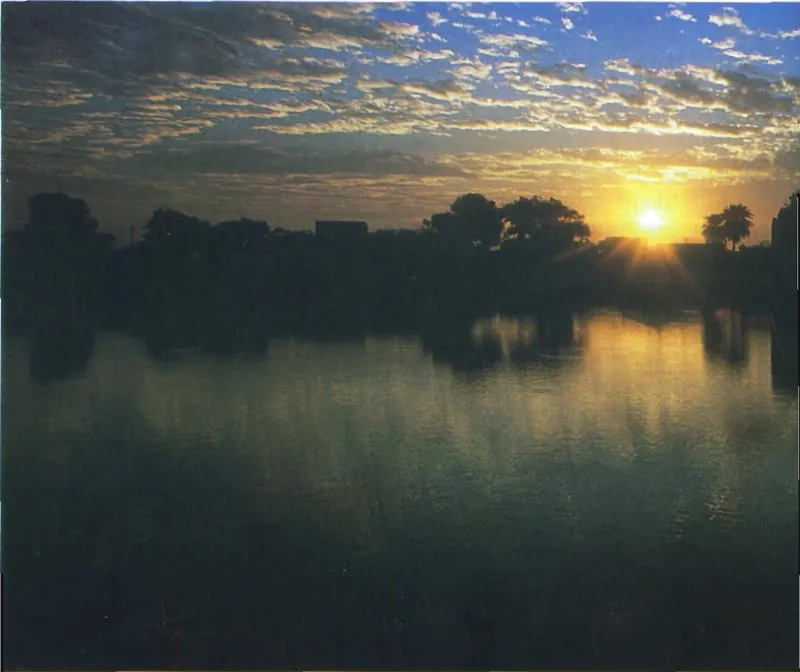
Śyāma-kuṇḍa (Rādhā-kuṇḍa)
श्याम-कुण्ड (राधा-कुण्ड)Śyāma-kuṇḍa, also called Kṛṣṇa-kuṇḍa, is Kṛṣṇa's lake beside Rādhā-kuṇḍa at the foot of Govardhana Hill.
Questions and answers
On the bank of Śyāma-kuṇḍa, at Rādhā-kuṇḍa near Govardhana, according to The Colour Guide to Rādhā-kuṇḍa (1999), perhaps the only source. The same book says that Vallabhācārya's sitting place may also be there.[1, 2]
No. The Tenth Canto does not tell it. Only one commentary, by Śrīla Viśvanātha Cakravartī Ṭhākura, mentions dice among the gopīs' pastimes.[3–8, 11]
Śrīla Rūpa Gosvāmī's Ujjvala-nīlamaṇi and his names of Śrī Rādhā, Śrīla Kṛṣṇadāsa Kavirāja Gosvāmī's Govinda-līlāmṛta, Śrīla Viśvanātha Cakravartī Ṭhākura's Kṛṣṇa-bhāvanāmṛta, and Śrīla Raghunātha dāsa Gosvāmī's prayers.[3 +10]
Because the poems set it among the midday pastimes by the kuṇḍa: the Govinda-līlāmṛta places it in Sudevī's kuñja on the north-west of Rādhā's lake.[9 +4]
A village that the Bhakti-ratnākara calls Hāroyāla. A guidebook of 2007 says it is now called Pīparavāra and lies four miles north of Sāñculī, north-west of Nandagaon.[13 +3]
The eternal pastimes of Rādhā and Kṛṣṇa through the eight parts of the day. Śrīla Prabhupāda uses the term in his translation of the Upadeśāmṛta, about service at Rādhā-kuṇḍa.[16–21]
Sources
- The Colour Guide to Rādhā-kuṇḍa (1999), Rājaśekhara dāsa Brahmacārī, PDF p. 152
- The Colour Guide to Rādhā-kuṇḍa (1999), Rājaśekhara dāsa Brahmacārī, PDF p. 153
- Śrīla Viśvanātha Cakravartī Ṭhākura, Kṛṣṇa-bhāvanāmṛta, sarga 15 ('mādhyāhnika-līlāsvādana'), v.1-2 (index locator '(15) caturdaśaḥ sargaḥ'), after the edition of Radhikanath Goswami, Vrindavan, 1906
- Śrīla Viśvanātha Cakravartī Ṭhākura, Kṛṣṇa-bhāvanāmṛta, sarga 15 ('mādhyāhnika-līlāsvādana'), v.38-40 (index locator '(15) caturdaśaḥ sargaḥ'), after the edition of Radhikanath Goswami, Vrindavan, 1906
- Śrīla Kṛṣṇadāsa Kavirāja Gosvāmī, Govinda-līlāmṛta, 18.29-30 (aṣṭadaśaḥ sargaḥ, midday pastimes), after the editions of Haridas Das and Haridas Shastri
- Śrīla Raghunātha dāsa Gosvāmī, Vilāpa-kusumāñjali, Stavāvalī (8) Śrī Vilāpa-kusumāñjali, v.80
- Śrīla Raghunātha dāsa Gosvāmī, Utkaṇṭhā-daśaka, Stavāvalī (25) Śrī Utkaṇṭhā-daśaka, v.3
- Śrīla Rūpa Gosvāmī, Stava-mālā part 17 (Rādhā's 108 names), v.40 and ṭīkā, after the edition of Bhakti Saranga Goswami and Purushottam Das, Vrindavan, 1959
- Śrīla Kṛṣṇadāsa Kavirāja Gosvāmī, Govinda-līlāmṛta, 7.98–7.99 (saptamaḥ sargaḥ, the forenoon pastimes; a pair of verses, 'yugmakam'), after the editions of Haridas Das and Haridas Shastri
- Śrīla Kṛṣṇadāsa Kavirāja Gosvāmī, Govinda-līlāmṛta, 18.25–18.28 (aṣṭadaśaḥ sargaḥ, the midday pastimes), after the editions of Haridas Das and Haridas Shastri
- Śrīla Viśvanātha Cakravartī Ṭhākura: commentary on ŚB 10.47.53, Bhagavata Vidya Pith edition, ed. Bhagavata Rishi and Krishna Shankar Shastri, 1996
- Śrīla Rūpa Gosvāmī, Ujjvala-nīlamaṇi, 15.246, GRETIL
- Śrīla Narahari Cakravartī, Bhakti-ratnākara, Fifth Wave (pañcama taraṅga), printed p. 256 (1912 ed.), 2nd ed., 1912
- Śrīla Narahari Cakravartī, Bhakti-ratnākara, Fifth Wave (pañcama taraṅga), printed p. 252 (1912 ed.), 2nd ed., 1912
- Śrīla Prabhupāda, Lecture on Śrīmad-Bhāgavatam 1.7.16, Vṛndāvana, 14 September 1976 · vedabase.io
- Śrī Caitanya-caritāmṛta, Madhya-līlā 18.12, online edition · vedabase.io
- Śrī Caitanya-caritāmṛta, Ādi-līlā 4.125, online edition · vedabase.io
- Śrīla Rūpa Gosvāmī, Upadeśāmṛta, Śrī Upadeśāmṛta, text 10, online edition · vedabase.io
- Śrīla Raghunātha dāsa Gosvāmī, Rādhā-kuṇḍāṣṭaka, verses 6–8
- Śrīla Kṛṣṇadāsa Kavirāja Gosvāmī, Govinda-līlāmṛta, sarga 7, vv. 1–2, after the editions of Haridas Das and Haridas Shastri
Show all 40 references
- Śrīla Kṛṣṇadāsa Kavirāja Gosvāmī, Govinda-līlāmṛta, sarga 7, v. 109, after the editions of Haridas Das and Haridas Shastri
- Śrīla Kṛṣṇadāsa Kavirāja Gosvāmī, Govinda-līlāmṛta, sarga 7, vv. 26–27, after the editions of Haridas Das and Haridas Shastri
- Śrīla Prabhupāda, Śrī Caitanya-caritāmṛta, Ādi-līlā 7.18–19, purport · vedabase.io
- Śrīla Rūpa Gosvāmī, Upadeśāmṛta 9 (The Nectar of Instruction, text 9), online edition · vedabase.io
- Śrīla Rūpa Gosvāmī, Upadeśāmṛta, Śrī Upadeśāmṛta, text 11, online edition · vedabase.io
- Śrīla Prabhupāda, The Nectar of Instruction (Śrī Upadeśāmṛta), Text 9, purport · vedabase.io
- Śrīla Prabhupāda, The Nectar of Instruction (Śrī Upadeśāmṛta), Text 11, purport · vedabase.io
- Śrīla Prabhupāda, Śrī Caitanya-caritāmṛta, Madhya-līlā 1.38, translation · vedabase.io
- Śrīla Viśvanātha Cakravartī Ṭhākura, Kṛṣṇa-bhāvanāmṛta, sarga 15 ('mādhyāhnika-līlāsvādana'), v.6–7 with the ṭīkā on v.7 (index locator '(15) caturdaśaḥ sargaḥ'), after the edition of Radhikanath Goswami, Vrindavan, 1906
- Śrīla Viśvanātha Cakravartī Ṭhākura, Kṛṣṇa-bhāvanāmṛta, sarga 15 ('mādhyāhnika-līlāsvādana'), v.33–34 with the ṭīkā on v.33 (index locator '(15) caturdaśaḥ sargaḥ'), after the edition of Radhikanath Goswami, Vrindavan, 1906
- Śrīla Rūpa Gosvāmī, Ujjvala-nīlamaṇi, 4.54 (śrī-rādhā-prakaraṇa; GRETIL), GRETIL
- Śrīla Prabhupāda, Letter to Tamala Krsna, letter 70-05-27, 27 May 1970 · vedabase.io
- Śrī Śrī Bhaktamāla grantha, ṣaḍviṁśa-mālā, printed p. 338, right column
- Śrī Vraja-maṇḍala Parikramā (2007), PDF p. 188
- Śrī Vraja-maṇḍala Parikramā (2007), PDF p. 355
- Śrī Vraja-maṇḍala Parikramā (2007), PDF p. 185
- Śrī Vraja-maṇḍala Parikramā (2007), PDF p. 25
- Śrīla Kṛṣṇadāsa Kavirāja Gosvāmī, Śrī Caitanya-caritāmṛta, CC Madhya-līlā 19.61, online edition · vedabase.io
- Śrīla Prabhupāda, Śrī Caitanya-caritāmṛta, Madhya-līlā 19.61, purport · vedabase.io
- Śrīla Prabhupāda, Room Conversation, Vṛndāvana, 5 September 1976 · vedabase.io
Further sources
- Śrīmad-Bhāgavatam 10.47.53 (translation by the disciples of Śrīla Prabhupāda, BBT), with Śrīla Viśvanātha Cakravartī Ṭhākura's commentary: summarised here, not translated.
- Śrīla Prabhupāda, The Nectar of Instruction, text 10; Śrī Caitanya-caritāmṛta, Ādi-līlā 7, Madhya-līlā 1.38 and 18.12; lecture on Śrīmad-Bhāgavatam 1.7.16 (Vṛndāvana, 1976); room conversation, Vṛndāvana, 5 September 1976; letter of 27 May 1970 (BBT).
- Śrīla Rūpa Gosvāmī, Ujjvala-nīlamaṇi and Stava-mālā; Śrīla Kṛṣṇadāsa Kavirāja Gosvāmī, Govinda-līlāmṛta; Śrīla Viśvanātha Cakravartī Ṭhākura, Kṛṣṇa-bhāvanāmṛta; Śrīla Raghunātha dāsa Gosvāmī, Stavāvalī (Sanskrit): summarised here, not translated.
- Bhakti-ratnākara, Fifth Wave (Bengali, 1912 edition); Kṛṣṇadāsa Bābājī, Śrī Śrī Bhaktamāla (Bengali, 1905); The Colour Guide to Rādhā-kuṇḍa (1999); Śrī Vraja-maṇḍala Parikramā (2007).