Śrīla Viśvanātha Cakravartī Ṭhākura at Rādhā-kuṇḍa
राधा-कुण्ड पर श्रील विश्वनाथ चक्रवर्ती ठाकुर
In short
Śrīla Viśvanātha Cakravartī Ṭhākura, the commentator on Śrīmad-Bhāgavatam whom Śrīla Prabhupāda often follows, lived at Rādhā-kuṇḍa (Radha Kund), the sacred pond near Govardhana. In a work he dated to 1678 he calls living on its bank his great wealth. Later accounts say that he settled there, went to Bengal, came back and wrote many books there. Their dates differ.[1–6]
On this page
At a glance
- Śrīla Prabhupāda explains Bhāgavatam verses according to Śrīla Viśvanātha Cakravartī Ṭhākura's commentary, for example in his purport (explanation) to ŚB 3.2.7.[1, 2]
- In the closing verses of his Surata-kathāmṛta, which dates itself to Śaka 1600 (1678 CE), he calls living on the bank of Rādhā-kuṇḍa his great wealth.[3, 4]
- His Kṛṣṇa-kuṇḍāṣṭaka prays in every verse to live at Kṛṣṇa-kuṇḍa, that is, Śyāma-kuṇḍa.[7]
- An account printed in 1893–94 says that he settled at Rādhā-kuṇḍa, went to Bengal on his guru's order, came back and wrote many books near the kuṇḍa.[5, 6, 8]
- A Bengali local history of 1920 says that he installed a Deity (sacred image) named Gokulānanda on the bank of Rādhā-kuṇḍa, later brought to Vṛndāvana.[9, 10]
- A guidebook and two historians place his samādhi, his tomb, at the Rādhā-Gokulānanda temple in Vṛndāvana, not at Rādhā-kuṇḍa.[11–13]
Why is he remembered?
Śrīla Viśvanātha Cakravartī Ṭhākura is best known for his commentaries, above all his commentary on Śrīmad-Bhāgavatam. Śrīla Prabhupāda drew on it in his own purports, his explanations of the verses.[1, 2] In one of them he writes:
General teaching (does not name the place)“The disappearance of the Kṛṣṇa sun may be explained as follows, according to the commentary of Śrīla Viśvanātha Cakravartī Ṭhākura.”
Śrīla Prabhupāda, Śrīmad-Bhāgavatam, 3.2.7, purport · vedabase.io
His life at Rādhā-kuṇḍa is told by sources of very different ages. There are his own verses of 1678 and an account first printed in 1893–94. Then come a footnote of about 1913, a Bengali local history of 1920, and pilgrims' guidebooks of recent years. They agree that he lived at the kuṇḍa. Here they are taken one at a time, oldest first.[2 +7]
What does he say himself about Rādhā-kuṇḍa?
The oldest witness is the ācārya himself. Near the end of his Surata-kathāmṛta he speaks in his own voice. He calls living on the bank of Rādhā-kuṇḍa his great wealth, and asks what other rare thing he could wish for (summarised here, not translated).[3]
The last verse of the same work gives its date in words that stand for numbers. Read in the usual way, they give the Śaka year 1600, that is 1678 CE, with the sun in Vṛṣa (Taurus), about May and June. The verses do not name a kuṭī or say where he was when he wrote them.[4]
He also wrote an aṣṭaka, a prayer in eight verses, to Kṛṣṇa-kuṇḍa, that is, Śyāma-kuṇḍa, the twin of Rādhā-kuṇḍa. Every verse ends with a prayer to live at that kuṇḍa. The closing verse calls the eight verses a means to live on its bank. It promises loving service at the feet of Rādhikā and Giridhārī to the one who recites them (summarised here, not translated).[7]
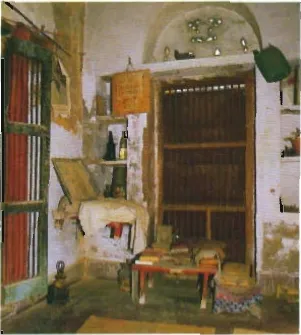
The guidebooks place his bhajana-kuṭī, his hut for chanting and prayer, near the bank of Śyāma-kuṇḍa, next to Śrīla Raghunātha dāsa Gosvāmī's.[2 +5]
How did he come to live at Rādhā-kuṇḍa?
The 1907 edition of the Narottama-vilāsa, a Bengali life of Śrīla Narottama dāsa Ṭhākura, prints an appendix. Its editor says it was taken from an edition of 1893–94.[5, 6]
Its heading calls it the author's introduction, and its speaker calls himself the son of Jagannātha, a disciple of Śrīla Viśvanātha Cakravartī Ṭhākura. Whether it is really the work of the Narottama-vilāsa's author is not settled. It tells his life in stages (summarised here, not translated).[5, 6]
- Leaving home. When his elder brother Rāmabhadra told him that his study of the Bhāgavatam was complete, he took leave, told his mother in some way and went to Vṛndāvana. After travelling everywhere he settled at Rādhā-kuṇḍa, to the joy of the Vaiṣṇavas (devotees of Viṣṇu and Kṛṣṇa) of Vraja.[5, 6]
- Mukunda dāsa. The account says that a brāhmaṇa named Mukunda dāsa lived there. He had studied the books of the Gosvāmīs, the great teachers of Vṛndāvana, at Śrīla Kṛṣṇadāsa Kavirāja Gosvāmī's place and served him. After Kavirāja's passing, it says, he perhaps found comfort in Viśvanātha. He had him complete a book of līlā, of Kṛṣṇa's pastimes, that he had left unfinished, and passed away at Rādhā-kuṇḍa.[5]
- Bengal and back. After some days Viśvanātha went from Śrī-kuṇḍa to Bengal on his guru's order. With his guru's permission he came back, lived near Rādhā-kuṇḍa and wrote many books, among them his commentaries on the Bhāgavatam and the Gītā.[6, 8]
- Gokulānanda. The Deity Gokulānanda, the account says, came to him through a dream. Gokulānanda told a pilgrim brahmacārī (a celibate student) who was serving Him to take Him to Viśvanātha. Viśvanātha at first declined, and then accepted His service. The account does not say where he served Him.[6, 8]
The appendix names no kuṭī. It does not say that he stayed in Śrīla Kṛṣṇadāsa Kavirāja Gosvāmī's hut, and it does not call Mukunda dāsa Kavirāja's disciple.[5, 6]
What do the later accounts add?
The Bengali Vṛndāvana-kathā of Pulinbihārī Datta (1920) says that in his youth he went to Vṛndāvana and lived on the bank of Rādhā-kuṇḍa, in the village of Āriṭ near Govardhana. There, it says, he installed and worshipped a Rādhā-Kṛṣṇa Deity named Gokulānanda, who was later brought to a temple beside Rādhāramaṇa in Vṛndāvana.[9, 10]
The same book tells of a dispute at Jaipur in the time of Sawai Jai Singh. It calls him the aged commentator on the Bhāgavata who lived at Rādhā-kuṇḍa, by then too old to go elsewhere.[17] It also says that at Rādhā-kuṇḍa there are seats, huts or other marks of Bengali devotees, among them Śrīla Viśvanātha Cakravartī Ṭhākura, without saying what or where they are.[18]
The Colour Guide to Rādhā-kuṇḍa (1999) and undated pilgrim notes tell a fuller story, without naming their sources. When he first came to Rādhā-kuṇḍa as a young man, they say, he stayed in the old bhajana-kuṭī of Śrīla Kṛṣṇadāsa Kavirāja Gosvāmī. There he was in the care of Mukunda dāsa, whom they call Kavirāja's disciple.[2 +2]
After a short stay, according to these books, he went back to Bengal. On his return he lived in his own kuṭī next to Śrīla Raghunātha dāsa Gosvāmī's. In outline they agree with the account of 1893–94: life at the kuṇḍa, Mukunda dāsa, a journey to Bengal and a return.[2 +5]
Gokulānanda and the Govardhana-śilā
The sources place the Deity Gokulānanda differently. The 1920 book has Śrīla Viśvanātha Cakravartī Ṭhākura install Him on the bank of Rādhā-kuṇḍa. The Colour Guide (1999) says that the small Gokulānanda he worshipped was later installed in the Rādhā-Gokulānanda temple of Vṛndāvana, which Śrīla Lokanātha Gosvāmī established. It does not say where he had worshipped Him before.[9 +3]
Śrīla Prabhupāda confirms only who built that temple. In the purport this sentence comes just after the temples of Śrīla Sanātana Gosvāmī and Śrīla Rūpa Gosvāmī, so their nephew is the nephew of these two brothers:[19]
General teaching (does not name the place)“Similarly, their nephew Jīva Gosvāmī constructed the Rādhā-Dāmodara temple, Śrī Gopāla Bhaṭṭa Gosvāmī constructed the Rādhā-ramaṇa temple, Śrī Lokanātha Gosvāmī constructed the Gokulānanda temple, and Śyāmānanda Gosvāmī constructed the Śyāmasundara temple.”
Śrīla Prabhupāda, Śrī Caitanya-caritāmṛta, Ādi-līlā 7.164, purport · vedabase.io
The Colour Guide also says that he worshipped the Govardhana-śilā, the stone from Govardhana, that Śrī Caitanya Mahāprabhu had given to Śrīla Raghunātha dāsa Gosvāmī.[14, 19]
Where that stone is kept is reported as it was when each book was written. In 1966 the historian Prabhudayāl Mītal described it at the Rādhā-Gokulānanda temple in Vṛndāvana. In 1999 The Colour Guide placed it at the Bhāgavata-nivāsa near the Kṛṣṇa-Balarāma Mandira, with a pratibhū, a representative form, at the Rādhā-Gokulānanda temple.[12 +2]
The same guidebook, and the historians Mītal (1966) and A. W. Entwistle (1987), place his samādhi at the Rādhā-Gokulānanda temple in Vṛndāvana, not at Rādhā-kuṇḍa.[11–13]
The story of the half syllable
The Colour Guide (1999) tells one more story under the heading of his kuṭī, without saying that it happened there. It rests on a statement of the Caitanya-caritāmṛta about the Kāma-gāyatrī mantra:[20–22]
কামগায়ত্রী-মন্ত্ররূপ, হয় কৃষ্ণের স্বরূপ,
সার্ধ-চব্বিশ অক্ষর তার হয় ।
সে অক্ষর ‘চন্দ্র’ হয়, কৃষ্ণে করি’ উদয়,
ত্রিজগৎ কৈলা কামময় ॥ ১২৫ ॥
kāma-gāyatrī-mantra-rūpa, haya kṛṣṇera svarūpa,
sārdha-cabbiśa akṣara tāra haya
se akṣara ‘candra’ haya, kṛṣṇe kari’ udaya,
trijagat kailā kāmamaya
“Kṛṣṇa, the Supreme Personality of Godhead, is identical with the Vedic hymn known as the Kāma-gāyatrī, which is composed of twenty-four and a half syllables. Those syllables are compared to moons that arise in Kṛṣṇa. Thus all three worlds are filled with desire.
Translation: Śrīla A.C. Bhaktivedanta Swami PrabhupādaŚrīla Prabhupāda repeats the point in a purport (Madhya-līlā 8.138). There is no difference between the Kāma-gāyatrī and Kṛṣṇa, he says, and both are made of twenty-four and a half transcendental syllables.[21]
According to the guidebook, while Śrīla Viśvanātha Cakravartī Ṭhākura was writing his explanation of the mantra, the Mantrārtha-dīpikā, he could not find the half syllable. He would not think that Śrīla Kṛṣṇadāsa Kavirāja Gosvāmī could be wrong, so he resolved to fast. At dawn Śrīmatī Rādhārāṇī appeared to him in a dream and showed him the answer, and he finished his book. No older source is known to tell the story, so it is given as the guidebook's, perhaps a later tradition.[11, 22]
- Śrīla Raghunātha dāsa Gosvāmī's bhajana-kuṭī: the hut beside which, the guidebooks say, his own kuṭī stands.[2, 15] Read more: Śrīla Raghunātha dāsa Gosvāmī's life at Rādhā-kuṇḍa →
- Śrīla Kṛṣṇadāsa Kavirāja Gosvāmī's bhajana-kuṭī: where, the guidebooks say, he first stayed in the care of Mukunda dāsa.[2 +2] Read more: Śrīla Kṛṣṇadāsa Kavirāja Gosvāmī at Rādhā-kuṇḍa →
- Rādhā-Gokulānanda Mandira at Rādhā-kuṇḍa: a temple that, a guidebook says, holds a pratibhū of Rādhā-Gokulānanda; see “The pratibhū Deities of Rādhā-kuṇḍa”.[6, 8]
- Rādhā-Gokulānanda Mandira in Vṛndāvana: the temple of his samādhi, as a guidebook and two historians report.[11–13]
Where the sources differ
No two sources give the same dates for his life, and none of them gives evidence for its years. The Colour Guide (1999) and the undated notes give his birth in Bengal in 1638 and his coming to Rādhā-kuṇḍa about 1655. The Colour Guide gives 1708 for his passing. These dates are not certain.[2 +2]
The Vṛndāvana-kathā (1920) gives his birth as Śaka 1576 (the book prints 1664 CE, though Śaka 1576 is 1654/55). It gives Śaka 1626, that is 1704, for his Bhāgavatam commentary, the Sārārtha-darśinī. On the next page it reports another view, about 1628 to 1708; none of these years is certain. The card below also lists the scholars that the historian Entwistle (1987) reports.[9, 24]
Accounts differ The dates of Śrīla Viśvanātha Cakravartī's life
- The Colour Guide to Rādhā-kuṇḍa (1999)Born in Bengal in 1638; its chronology: appearance 1638, disappearance 1708.
- the undated parikramā notes Rādhā-kuṇḍaBorn in Bengal in 1638; first came to Rādhā-kuṇḍa around 1655, still very young.
- Vṛndāvana-kathā (Pulinbihārī Datta, 1920), p. 227Born at Devagrāma (Nadia) in Śaka 1576, printed with '1664 CE' (Śaka 1576 is 1654/55 CE); his Sārārtha-darśinī was composed in Śaka 1626 (1704 CE).
- Vṛndāvana-kathā (1920), p. 228, reporting Śyāmalāl GosvāmīHis life lasted from about Śaka 1550 to Śaka 1630 (about 1628–1708 CE).
The one date from his own hand, Śaka 1600 (1678 CE) in the Surata-kathāmṛta, fits most of these ranges. But it dates a single work, not his life.[4]
Where he wrote is told in the same varied way. The Surata-kathāmṛta speaks of living on the bank of Rādhā-kuṇḍa but not of writing. The appendix of 1893–94 has him write many books near Rādhā-kuṇḍa, and one commentary, on Śrī Caitanya's order in a dream, in a cave of Govardhana.[3, 6, 8]
The Colour Guide puts more than forty books at Rādhā-kuṇḍa.[2] A footnote in the edition of the Prema-vilāsa printed about 1913 names the place where he wrote his commentaries. He wrote those on the Bhāgavatam, the Gītā, the Bhakti-rasāmṛta-sindhu and the Ujjvala-nīlamaṇi, it says, while staying at the Rādhāvinoda-Gokulānanda temple in Vṛndāvana. This is the editor's note, not the poem, and perhaps his own view.[25]
Accounts differ Where Śrīla Viśvanātha Cakravartī lived and wrote his books
- Śrīla Viśvanātha Cakravartī, Surata-kathāmṛta 103 (the work is dated Śaka 1600 = 1678 CE)Speaks of residence on the bank of Rādhā-kuṇḍa as his great wealth (it does not say where he wrote).
- The Colour Guide to Rādhā-kuṇḍa (1999)He spent a large part of his life at Rādhā-kuṇḍa performing his bhajana and writing over forty books.
- Narottama-vilāsa, appendix printed 1893–94 and 1907, p. 124After returning from Bengal he lived near Rādhā-kuṇḍa and wrote many books; on Śrī Caitanya's order in a dream he wrote a commentary sitting in a cave of Govardhana.
- Prema-vilāsa, c. 1913 edition, footnote on p. 206He wrote his commentaries on the Bhāgavatam, the Gītā, the Bhakti-rasāmṛta-sindhu and the Ujjvala-nīlamaṇi while staying at the Rādhāvinoda-Gokulānanda temple in Vṛndāvana.
Timeline
- 1628
On the next page it reports another view, about 1628 to 1708; none of these years is certain.
Read in the article: Where the sources differ → - 1638
The Colour Guide (1999) and the undated notes give his birth in Bengal in 1638 and his coming to Rādhā-kuṇḍa about 1655.
Read in the article: Where the sources differ → - 1664
The Vṛndāvana-kathā (1920) gives his birth as Śaka 1576 (the book prints 1664 CE, though Śaka 1576 is 1654/55).
Read in the article: Where the sources differ → - 1893
There are his own verses of 1678 and an account first printed in 1893–94.
Read in the article: Why is he remembered? → - 1913
A footnote in the edition of the Prema-vilāsa printed about 1913 names the place where he wrote his commentaries.
Read in the article: Where the sources differ → - 1920
Then come a footnote of about 1913, a Bengali local history of 1920, and pilgrims' guidebooks of recent years.
Read in the article: Why is he remembered? →
Places in this article
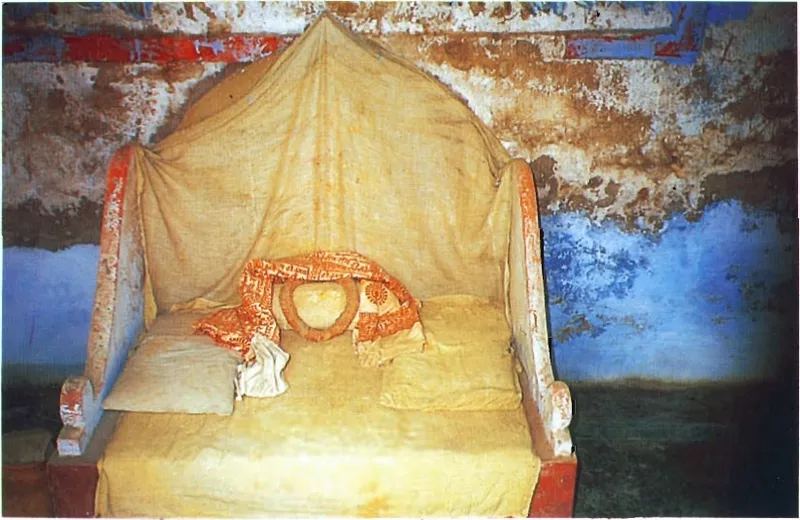
Viśvanātha Cakravartī Ṭhākura's bhajana-kuṭī
विश्वनाथ चक्रवर्ती ठाकुर की भजन-कुटीThe bhajana-kuṭī (a hut for chanting and prayer) of Śrīla Viśvanātha Cakravartī Ṭhākura stands right next to Śrīla Raghunātha dāsa Gosvāmī's at Rādhā-kuṇḍa, according to …
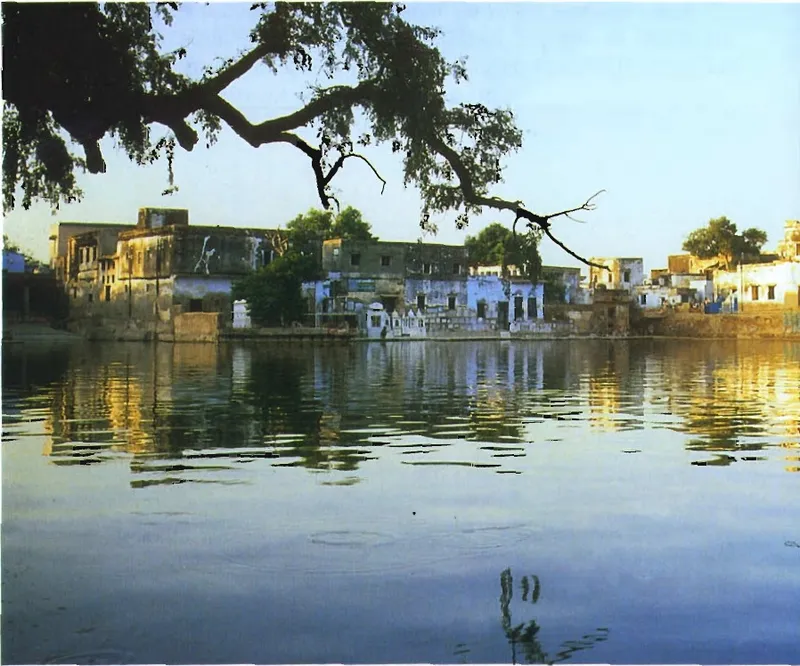
Rādhā-kuṇḍa
राधा-कुण्डRādhā-kuṇḍa is the lake of Śrī Rādhā at the foot of Govardhana Hill, in the village of Āriṭa.
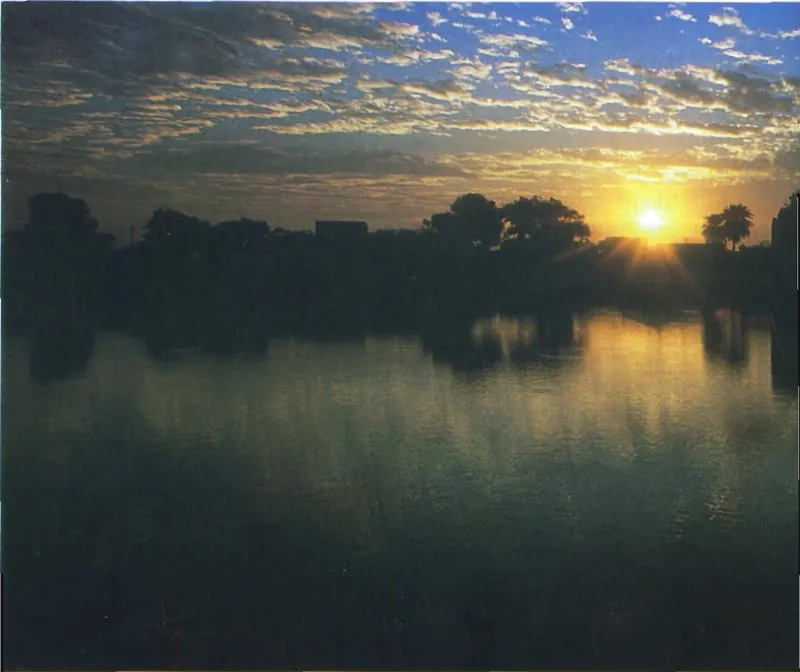
Śyāma-kuṇḍa (Rādhā-kuṇḍa)
श्याम-कुण्ड (राधा-कुण्ड)Śyāma-kuṇḍa, also called Kṛṣṇa-kuṇḍa, is Kṛṣṇa's lake beside Rādhā-kuṇḍa at the foot of Govardhana Hill.
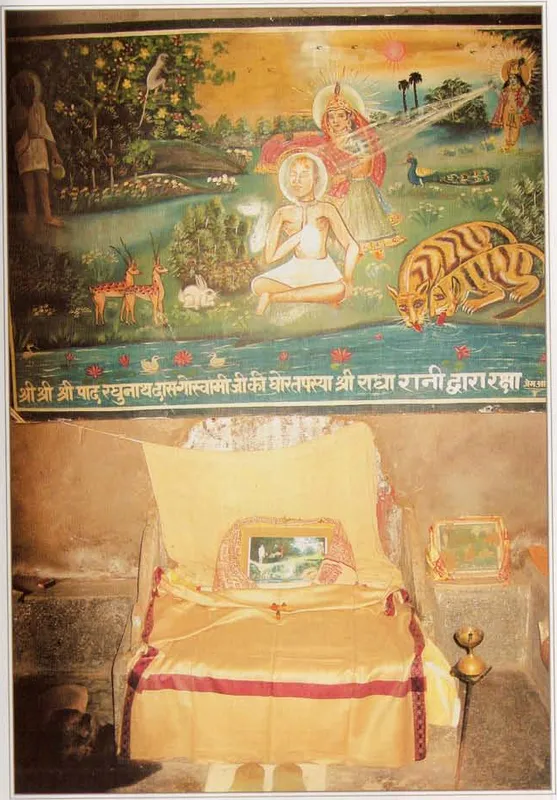
Raghunātha dāsa Gosvāmī's bhajana-kuṭī
रघुनाथ दास गोस्वामी की भजन-कुटीŚrīla Raghunātha dāsa Gosvāmī's bhajana-kuṭī, his hut for chanting and prayer, stands between Rādhā-kuṇḍa and Śyāma-kuṇḍa, next to the kuṭīs of Śrī Gopāla Bhaṭṭa Gosvāmī …
Kṛṣṇadāsa Kavirāja Gosvāmī's bhajana-kuṭī (Rādhā-kuṇḍa)
कृष्णदास कविराज गोस्वामी की भजन-कुटी (राधा-कुण्ड)Śrīla Kṛṣṇadāsa Kavirāja Gosvāmī's bhajana-kuṭī, his hut for chanting and prayer, stands near the banks of Śyāma-kuṇḍa, close to the kuṭī of Śrīla Raghunātha dāsa Gosvāmī …
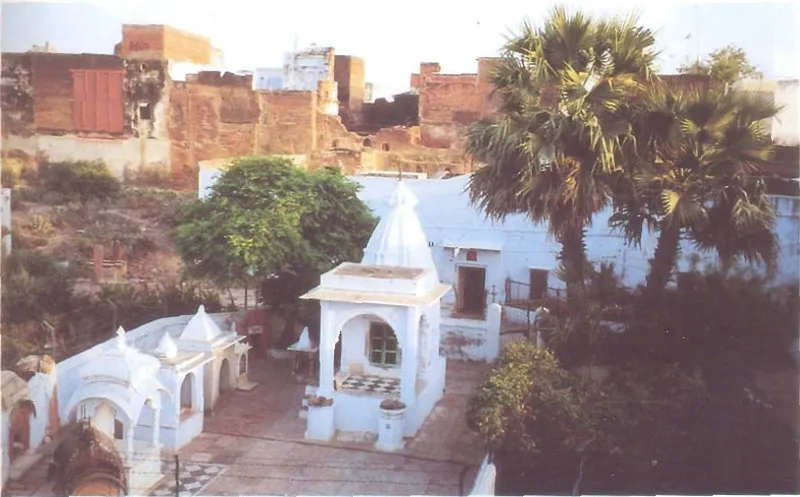
Rādhā-Gokulānanda Mandira (Vṛndāvana)
राधा-गोकुलानन्द मन्दिर (वृन्दावन)The Rādhā-Gokulānanda Mandira is a small temple in Vṛndāvana, about 200 metres from the Rādhā-Ramaṇa temple on a street that leads towards Keśī-ghāṭa.
Rādhā-Gokulānanda Mandira (Rādhā-kuṇḍa)
राधा-गोकुलानन्द मन्दिर (राधा-कुण्ड)The Rādhā-Gokulānanda Mandira is a temple of Śrī Śrī Rādhā-Gokulānanda in the village of Rādhā-kuṇḍa.
Questions and answers
At Rādhā-kuṇḍa. In his own Surata-kathāmṛta (1678) he calls living on its bank his great wealth, and later accounts say that he settled there, went to Bengal and returned. The guidebooks show his bhajana-kuṭī beside Śrīla Raghunātha dāsa Gosvāmī's.[2 +6]
An account printed in 1893–94 says that after his return from Bengal he wrote many books near Rādhā-kuṇḍa, among them his commentaries on the Bhāgavatam and the Gītā. Other sources place some of his writing elsewhere.[6, 8]
He lived there, and in his own verses he prayed to live on its bank and on the bank of Śyāma-kuṇḍa. According to the 1920 Vṛndāvana-kathā, he also installed the Deity Gokulānanda there.[3 +3]
According to the account printed in 1893–94, he was a brāhmaṇa living at Rādhā-kuṇḍa who had served Śrīla Kṛṣṇadāsa Kavirāja Gosvāmī. After Kavirāja's passing, it says, he perhaps found comfort in Śrīla Viśvanātha Cakravartī Ṭhākura. The guidebooks call him Kavirāja's disciple.[2 +3]
At the Rādhā-Gokulānanda temple in Vṛndāvana, according to a guidebook of 1999 and the historians Mītal (1966) and Entwistle (1987). His kuṭī at Rādhā-kuṇḍa is not his samādhi.[11–13]
Śrīla Prabhupāda drew on his Bhāgavatam commentary in his own purports and explains verses according to it, as in his purport to ŚB 3.2.7.[1, 2]
Sources
- Śrīla Prabhupāda, Śrīmad-Bhāgavatam, 3.2.7, purport · vedabase.io
- The Colour Guide to Rādhā-kuṇḍa (1999), Rājaśekhara dāsa Brahmacārī, PDF p. 112
- Surata-kathāmṛta, verse 103 (the author's closing verses)
- Surata-kathāmṛta, verse 105 (last verse) and colophon
- Śrīla Narahari Cakravartī, Narottama-vilāsa, appendix 'Granthakartāra paricaya', printed p. 123, right column, lines 5–10 and 13–18, 1st ed., Baṅgābda 1314
- Śrīla Narahari Cakravartī, Narottama-vilāsa, appendix, printed p. 124, 1st ed., Baṅgābda 1314
- Śrīla Viśvanātha Cakravartī Ṭhākura, Kṛṣṇa-kuṇḍāṣṭaka, verse 9 (closing verse); colophon
- Śrīla Narahari Cakravartī, Narottama-vilāsa, appendix, printed p. 125; continued on printed p. 126, 1st ed., Baṅgābda 1314
- Vṛndāvana-kathā, chapter 19 (ūnaviṁśa pariccheda), printed p. 227
- Vṛndāvana-kathā, chapter 7 (Rādhāvinoda and Gokulānanda), printed p. 101
- The Colour Guide to Rādhā-kuṇḍa (1999), Rājaśekhara dāsa Brahmacārī, PDF p. 115
- Prabhudayāl Mītal, 'Braj-saṁskṛti ke upakaraṇ', Vṛndāvana, entry 'Śrī Rādhāvinoda jī tathā Śrī Gokulānanda jī', printed p. 137
- A. W. Entwistle, Vrindaban temples, entry 32 'Radhavinod and Gokulanand' (citing VDA 32), printed p. 413, Egbert Forsten, Groningen, 1987
- The Colour Guide to Rādhā-kuṇḍa (1999), Rājaśekhara dāsa Brahmacārī, PDF p. 113
- the undated parikramā notes Rādhā-kuṇḍa, ¶64
- Śrī Vraja-maṇḍala Parikramā (2007), PDF p. 92
- Vṛndāvana-kathā, chapter 19 (ūnaviṁśa pariccheda), printed p. 225, lines 17–20
- Vṛndāvana-kathā, chapter 8 (aṣṭama pariccheda), under the heading 'Rādhākuṇḍa', printed pp. 121–122
- Śrīla Prabhupāda, Śrī Caitanya-caritāmṛta, Ādi-līlā 7.164, purport · vedabase.io
- Śrīla Kṛṣṇadāsa Kavirāja Gosvāmī, Śrī Caitanya-caritāmṛta, Madhya-līlā 21.125, online edition · vedabase.io
Show all 25 references
- Śrīla Prabhupāda, Śrī Caitanya-caritāmṛta, Madhya-līlā 8.138, purport · vedabase.io
- The Colour Guide to Rādhā-kuṇḍa (1999), Rājaśekhara dāsa Brahmacārī, PDF p. 114
- The Colour Guide to Rādhā-kuṇḍa (1999), Rājaśekhara dāsa Brahmacārī, PDF p. 174
- Vṛndāvana-kathā, chapter 19 (ūnaviṁśa pariccheda), printed p. 228, lines 1–3
- Prema-vilāsa, vilāsa 20, printed p. 206, footnote (1), right column, Kolkata, 1913
Further sources
- Śrīla Viśvanātha Cakravartī Ṭhākura, Surata-kathāmṛta 103 and 105, and Kṛṣṇa-kuṇḍāṣṭaka (in the Stavāmṛta-laharī): summarised here, not translated.
- Narottama-vilāsa, appendix (c. 1907, from the Baharampur edition of 1893–94); Pulinbihārī Datta, Vṛndāvana-kathā (Bengali, 1920); Nityānanda dāsa, Prema-vilāsa (c. 1913), editor's footnote: summarised here, not translated.
- Śrī Caitanya-caritāmṛta, Madhya-līlā 21.125, and purports to Ādi-līlā 7.164 and Madhya-līlā 8.138; Śrīmad-Bhāgavatam 3.2.7, purport (BBT).
- The Colour Guide to Rādhā-kuṇḍa (1999); undated parikramā notes Rādhā-kuṇḍa. Historians cited for dates and places only: Prabhudayāl Mītal (1966), A. W. Entwistle (1987).