Śrīla Kṛṣṇadāsa Kavirāja Gosvāmī at Rādhā-kuṇḍa
His guru, his kuṭī (hut) and the writing of the Caitanya-caritāmṛta
In short
Śrīla Kṛṣṇadāsa Kavirāja Gosvāmī wrote the Śrī Caitanya-caritāmṛta. He came to Vraja after Śrī Nityānanda Prabhu called him in a dream and took Śrīla Raghunātha dāsa Gosvāmī of Rādhā-kuṇḍa as his instructing guru. He says that he finished the book in Vṛndāvana in Śaka 1537 (A.D. 1615). Guidebooks place the writing at his kuṭī (hut) at Rādhā-kuṇḍa (Radha Kund).[1–15]
On this page
At a glance
- In the Caitanya-caritāmṛta he writes that Śrī Nityānanda Prabhu told him in a dream to go to Vṛndāvana. There he found the shelter of Śrīla Rūpa, Śrīla Sanātana and Śrīla Raghunātha dāsa Gosvāmī.[1–6]
- He calls Śrīla Raghunātha dāsa Gosvāmī his guru; Śrīla Prabhupāda explains that he was his instructing spiritual master.[6–10]
- His book rests on what he heard from Śrīla Raghunātha dāsa Gosvāmī, who kept Śrīla Svarūpa Dāmodara's record. It also rests on the notes of Śrīla Svarūpa Dāmodara and Śrīla Murāri Gupta.[6 +4]
- The Bhakti-ratnākara often shows him at Rādhā-kuṇḍa beside Śrīla Raghunātha dāsa Gosvāmī, and once mentions a kuṭīra, a hut, of his.[12 +4]
- The closing verse of his book says that it was completed in Vṛndāvana in Śaka 1537; the guidebooks give other places and years.[3 +6]
- The earliest known dated mention of a dwelling of his at Rādhā-kuṇḍa is a document of 1637, as the historian Entwistle reports it.[20]
How did he come to Vraja?
Śrīla Kṛṣṇadāsa Kavirāja Gosvāmī tells his own story in a few verses of the Caitanya-caritāmṛta (Ādi-līlā, the book's first part, chapter 5). Śrī Nityānanda Prabhu appeared to him in a dream and said:
āre āre kṛṣṇadāsa, nā karaha bhaya
vṛndāvane yāha, — tāṅhā sarva labhya haya
“O my dear Kṛṣṇadāsa, do not be afraid. Go to Vṛndāvana, for there you will attain all things.”
Translation: Śrīla A.C. Bhaktivedanta Swami PrabhupādaHe set out for Vṛndāvana that very moment, he writes, and reached it in great happiness. By the same mercy he found shelter at the feet of Śrīla Rūpa Gosvāmī and Śrīla Sanātana Gosvāmī (Ādi 5.199–201).[2, 4] The next verse goes on:
yāṅhā haite pāinu raghunātha-mahāśaya
yāṅhā haite pāinu śrī-svarūpa-āśraya
By His mercy I have attained the shelter of the great personality Śrī Raghunātha dāsa Gosvāmī, and by His mercy I have found the refuge of Śrī Svarūpa Dāmodara.
Translation: Śrīla A.C. Bhaktivedanta Swami PrabhupādaThe verses say Vṛndāvana. They do not say where he met Śrīla Raghunātha dāsa Gosvāmī. The Colour Guide to Rādhā-kuṇḍa (1999) says that he took shelter of him on arriving at Rādhā-kuṇḍa; that detail is the guidebook's.[1–6]
In his Introduction to the Caitanya-caritāmṛta Śrīla Prabhupāda tells the same journey. Kṛṣṇadāsa had been living with his family at Katwa, in Burdwan, when the dream came.[5]
General teaching (does not name the place)“Although he was very old, he started out that very night and went to live in Vṛndāvana. While he was there, he met some of the Gosvāmīs, principal disciples of Lord Caitanya Mahāprabhu. He was requested to write the Caitanya-caritāmṛta by the devotees of Vṛndāvana.”
Śrīla Prabhupāda, Śrī Caitanya-caritāmṛta, Ādi-līlā, Introduction (five lectures, New York, April 1967) · vedabase.io
Who was his guru, and where did his book come from?
He tells us where his knowledge of Śrī Caitanya Mahāprabhu came from. Śrīla Svarūpa Dāmodara Gosvāmī, the Lord's close companion, kept the Lord's pastimes in memory and told them to Śrīla Raghunātha dāsa Gosvāmī, who told them to him.[6 +4]
caitanya-līlā-ratna-sāra, svarūpera bhāṇḍāra,
teṅho thuilā raghunāthera kaṇṭhe
tāhāṅ kichu ye śuniluṅ, tāhā ihāṅ vistāriluṅ,
bhakta-gaṇe diluṅ ei bheṭe
The pastimes of Śrī Caitanya Mahāprabhu are the topmost of jewels. They have been kept in the storehouse of Svarūpa Dāmodara Gosvāmī, who has explained them to Raghunātha dāsa Gosvāmī, who has repeated them to me. Whatever little I have heard from Raghunātha dāsa Gosvāmī I have described in this book, which is presented to all devotees.
Translation: Śrīla A.C. Bhaktivedanta Swami PrabhupādaElsewhere he says that Śrīla Svarūpa Dāmodara and Śrīla Murāri Gupta wrote down the main pastimes in notes, which he follows (Ādi 13.46).[17] At the end of the book he places on his head the feet of the Lord and His companions. Among them is Śrīla Raghunātha dāsa Gosvāmī, whom he calls his guru (Antya 20.144–146).[6–10]
Śrīla Prabhupāda explains this in his purport, his explanation of the verse:
General teaching (does not name the place)“Śrīla Raghunātha dāsa Gosvāmī was the instructing spiritual master of Kṛṣṇadāsa Kavirāja Gosvāmī and has therefore been described as śrī-guru.”
Śrīla Prabhupāda, Śrī Caitanya-caritāmṛta, Antya-līlā 20.144-146, purport · vedabase.io
In another purport he adds that Śrīla Kṛṣṇadāsa Kavirāja Gosvāmī accepted Śrīla Raghunātha dāsa Gosvāmī as his special guide. That is why every chapter of the book ends with the line śrī-rūpa-raghunātha-pade yāra āśa. The same purport notes that Śrīla Bhaktisiddhānta Sarasvatī Ṭhākura does not accept the view that Śrīla Raghunātha Bhaṭṭa Gosvāmī was Śrīla Kṛṣṇadāsa Kavirāja Gosvāmī's spiritual master.[9]
What does the Bhakti-ratnākara tell of him at Rādhā-kuṇḍa?
The Bhakti-ratnākara is a Bengali book by Śrīla Narahari Cakravartī Ṭhākura about the later ācāryas, the great teachers, and their pilgrimages. Its chapters are called Waves. It often shows him at the kuṇḍa beside his guide (summarised here, not translated).[12 +3]
- The book says that he is among those who welcome Śrīla Śrīnivāsa Ācārya on his first visit (Fourth Wave). He is there again when Śrīnivāsa comes back with Śrīla Narottama dāsa Ṭhākura (Fifth Wave).[12 +4]
- It tells that when Śrī Jāhnavā-devī arrives, he goes ahead to the quiet bank where Śrīla Raghunātha dāsa Gosvāmī sits chanting. He stands before him until he can tell him the news (Eleventh Wave).[12 +3]
- After Śrīla Śrīnivāsa Ācārya's farewell to the Gosvāmī, he and other learned devotees take Śrīnivāsa, Narottama and Śyāmānanda back to Vṛndāvana (Sixth Wave).[12 +3]
Once the book speaks of a hut of his own. According to its Thirteenth Wave, Śrīla Jīva Gosvāmī, Śrīla Bhūgarbha Gosvāmī and other devotees went slowly from Govardhana to Śrī Kṛṣṇadāsa Kavirāja's kuṭīra. From there, with Kavirāja going along, they reached Vṛndāvana in two days.[15]
This is the earliest known mention of a kuṭī of his. The book does not say where it stood or that he wrote there. None of these passages says in so many words that he lived at Rādhā-kuṇḍa.[15 +3]
Where did he write the Caitanya-caritāmṛta?
The last verse of the Caitanya-caritāmṛta gives its own date:
śāke sindhv-agni-vāṇendau
jyaiṣṭhe vṛndāvanāntare
sūryāhe ’sita-pañcamyāṁ
grantho ’yaṁ pūrṇatāṁ gataḥ
In Vṛndāvana in the year 1537 Śakābda Era [A.D 1615], in the month of Jyaiṣṭha [May-June], on Sunday, the fifth day of the waning moon, this Caitanya-caritāmṛta has been completed.
Translation: Śrīla A.C. Bhaktivedanta Swami PrabhupādaThe A.D. year (1615) is added in the current online text of the translation; the verse itself gives only the year of the Indian Śaka era. The original says vṛndāvanāntare, in Vṛndāvana, and names no kuṭī.[11] Śrīla Prabhupāda's Introduction says that he went to live in Vṛndāvana and wrote at the request of its devotees. It names no particular place.[5]
The guidebooks, a biography and one book that prints words as Śrīla Prabhupāda's give places and years of their own. They are set out, each with its source, in the section on where the sources differ, below.[3 +6]
How did his life end?
Two older Bengali books tell how his life ended, and they differ on the order of events (both summarised here, not translated).[24–26]
*The Prema-vilāsa*** (printed about 1913, thirteenth chapter) tells that news reached Vraja that the Gosvāmīs' books, sent to Bengal, had been stolen on the way. Raghunātha and Kavirāja wept. Kavirāja was old and could no longer walk, and he sat on the bank of the kuṇḍa in grief.[24] At the end, the book says, he fixed his eyes on Śrīla Raghunātha dāsa Gosvāmī's face. He prayed for a home on the bank of Rādhā-kuṇḍa and for the mercy of Raghunātha. Then he left this world with his guide beside him.[24]
*An introduction printed with the Narottama-vilāsa*** (1907, taken from an edition of about 1893) tells it the other way round. Śrī Caitanya Mahāprabhu had given a stone from Govardhana, a Govardhana-śilā, to Śrīla Raghunātha dāsa Gosvāmī. After the Gosvāmī's passing, it says, Kṛṣṇadāsa Kavirāja served the stone, and after Kavirāja's passing one Śrī Mukunda dāsa served it. In this account Kavirāja outlives his guide.[25, 26]
Where his remains lie is also told in two ways. Śrīla Prabhupāda, explaining the name of a tomb in the Rādhā-Dāmodara temple of Vṛndāvana, records both opinions about it:[27]
General teaching (does not name the place)“There is a tomb in the Rādhā-Dāmodara temple known as Kṛṣṇadāsa’s tomb. Some say that this is the tomb of Kṛṣṇadāsa Brahmacārī, and others say it is that of Kṛṣṇadāsa Kavirāja Gosvāmī.”
Śrīla Prabhupāda, Śrī Caitanya-caritāmṛta, Ādi-līlā 12.85, purport · vedabase.io
Where is his bhajana-kuṭī?
A bhajana-kuṭī is a small hut for chanting and prayer. The guidebooks show a bhajana-kuṭī at Rādhā-kuṇḍa as his: Śrīla Kṛṣṇadāsa Kavirāja Gosvāmī's bhajana-kuṭī.[3 +5]
The oldest dated mention of a dwelling of his at the kuṇḍa is a document of 1637. The historian A. W. Entwistle (1987) reports it from a copy made by N. C. Bansal. The original document has not been independently examined. It names the dwellings of Śrīla Raghunātha dāsa Gosvāmī and Śrīla Kṛṣṇadāsa Kavirāja Gosvāmī among the places there.[20]
As Entwistle reports it, the document does not say where at the kuṇḍa the dwelling stood, or that it is the kuṭī the guidebooks show.[20]
The guidebooks also say that Śrīla Viśvanātha Cakravartī Ṭhākura, coming to Rādhā-kuṇḍa as a young man, first stayed in Kavirāja's old kuṭī in the care of the same Mukunda dāsa. That later part of the kuṭī's story is told in “Śrīla Viśvanātha Cakravartī Ṭhākura at Rādhā-kuṇḍa”.[28–30]
- Śrīla Raghunātha dāsa Gosvāmī's bhajana-kuṭī: the hut of his guide at the same kuṇḍa; his life there is told in “Śrīla Raghunātha dāsa Gosvāmī's life at Rādhā-kuṇḍa”.[6 +5]
- Śrīla Kṛṣṇadāsa Kavirāja Gosvāmī's samādhi at the Rādhā-Dāmodara temple in Vṛndāvana: the tomb that Śrīla Prabhupāda says some ascribe to him.[27]
Where the sources differ
Where the book was written is told in several ways. The Colour Guide (1999) says at his bhajana-kuṭīra at Rādhā-kuṇḍa; undated notes for parikramā (the pilgrims' walk around the holy places) say near the banks of Śyāma-kuṇḍa. Śrī Vraja-maṇḍala Parikramā (2007) reports that some parts are said to have been written at Rādhā-kuṇḍa and most at his kuṭī by the Rādhā-Dāmodara temple in Vṛndāvana. These reports are not certain and may copy one another.[6 +4]
The biography Śrīla Prabhupāda-līlāmṛta (vol. 1, ch. 4), describing Śrīla Prabhupāda's visit to Rādhā-kuṇḍa in 1935, says in the biographer's own words that Kṛṣṇadāsa Kavirāja wrote the book there in a small bhajana-kuṭīra. These are not Śrīla Prabhupāda's words, and the statement may rest on the guidebooks.[33]
One later book, Vṛndāvana-Dhāma Ki Jaya! (c. 1986), prints two sentences to the same effect inside a quotation of Śrīla Prabhupāda's purport to Ādi 10.158. They are not in his purport, which ends with Śrīla Raghunātha Bhaṭṭa Gosvāmī's cottage at Rādhā-kuṇḍa, so they are not his words.[34]
Accounts differ Where Śrīla Kṛṣṇadāsa Kavirāja wrote the Śrī Caitanya-caritāmṛta
- The Colour Guide to Rādhā-kuṇḍa (1999)at this bhajana-kuṭīra at Rādhā-kuṇḍa
- the undated parikramā notes Rādhā-kuṇḍaat this place near the banks of Śyāma-kuṇḍa
- Vṛndāvana-Dhāma Ki Jaya! (c. 1986)he compiled it at Rādhā-kuṇḍa
- Satsvarūpa dāsa Goswami, Śrīla Prabhupāda-līlāmṛta vol. 1 ch. 4 (BBT; biographer's narrative of Abhay's visit to Rādhā-kuṇḍa in November 1935)'here, in a small bhajana-kuṭīra, Kṛṣṇadāsa Kavirāja had written Caitanya-caritāmṛta' (at Rādhā-kuṇḍa)
The year is also given differently. The Colour Guide says that the book was finished in 1581 and that he passed away in 1582, which does not seem to fit the book's own date, Śaka 1537.[6 +2]
Entwistle (1987) reports that Śrīla Jīva Gosvāmī drew up a testament in 1606, witnessed by a Krishnadas Kaviraj. Nothing else confirms that this witness is the author. If he is, the author was alive in 1606.[36]
Accounts differ When the Śrī Caitanya-caritāmṛta was completed, and when Śrīla Kṛṣṇadāsa Kavirāja left this world (including whether he left before or after Śrīla Raghunātha dāsa Gosvāmī)
- The Colour Guide to Rādhā-kuṇḍa (1999)finished in 1581; Kavirāja entered samādhi in 1582 (on Āśvina-śukla dvādaśī)
- Śrī Caitanya-caritāmṛta Antya 20.157, as printed and translated in Śrīla Prabhupāda's editioncompleted in Śaka 1537, in Jyaiṣṭha, on Sunday, the fifth day of the dark fortnight (the current vedabase translation adds '[A.D 1615]'; an early printing gives no A.D. year)
- A. W. Entwistle (1987), a historian, citing Mukherjee and Wright (1979)A Kṛṣṇadāsa Kavirāja is named among the leading Gauḍīya devotees who witnessed Śrīla Jīva Gosvāmī's will of 1606. If he is the author of the Caitanya-caritāmṛta, he was still living in 1606.
- Prema-vilāsa, thirteenth vilāsa (c. 1913 edition, printed p. 94)he left this world, old and grieving, when the news came that the books taken to Gauḍa had been stolen, on the bank of the kuṇḍa with Śrīla Raghunātha dāsa Gosvāmī beside him; no year is given
On his tomb the books differ too. The guidebooks show a samādhi, a tomb, of his at Rādhā-kuṇḍa, the middle one of the three at the Teen Gosvāmī Samādhi. Some of them believe that his ashes rest there. A tomb in the Rādhā-Dāmodara temple is ascribed to him as well.[32 +7] At the Rādhā-Dāmodara temple in 1972 Śrīla Prabhupāda, showing devotees the samādhis, said that Śrīla Kṛṣṇadāsa Kavirāja Gosvāmī was entombed there:[41]
Names this place“Here is Kṛṣṇadāsa Kavirāja Gosvāmī entombed, and here is Rūpa Gosvāmī entombed. Later on, several other devotees, they are not entombed like them. Flowers from their body, they were placed. It is called puṣpa-samādhi. But here, the original bodies.”
Śrīla Prabhupāda, Morning Walk, Vṛndāvana, 15 October 1972 · vedabase.io
The years are not certain, so each is given as its source gives it.[6 +3]
Timeline
- 1581
The Colour Guide says that the book was finished in 1581 and that he passed away in 1582, which does not seem to fit the book's own date, Śaka 1537.
Read in the article: Where the sources differ → - 1606
Entwistle (1987) reports that Śrīla Jīva Gosvāmī drew up a testament in 1606, witnessed by a Krishnadas Kaviraj.
Read in the article: Where the sources differ → - 1637
The oldest dated mention of a dwelling of his at the kuṇḍa is a document of 1637.
Read in the article: Where is his bhajana-kuṭī? → - 1935
4), describing Śrīla Prabhupāda's visit to Rādhā-kuṇḍa in 1935, says in the biographer's own words that Kṛṣṇadāsa Kavirāja wrote the book there in a small bhajana-kuṭīra.
Read in the article: Where the sources differ →
Places in this article
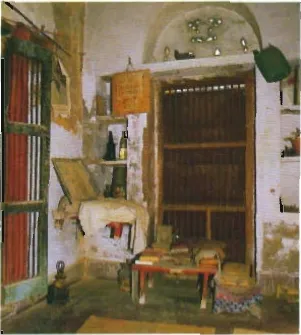
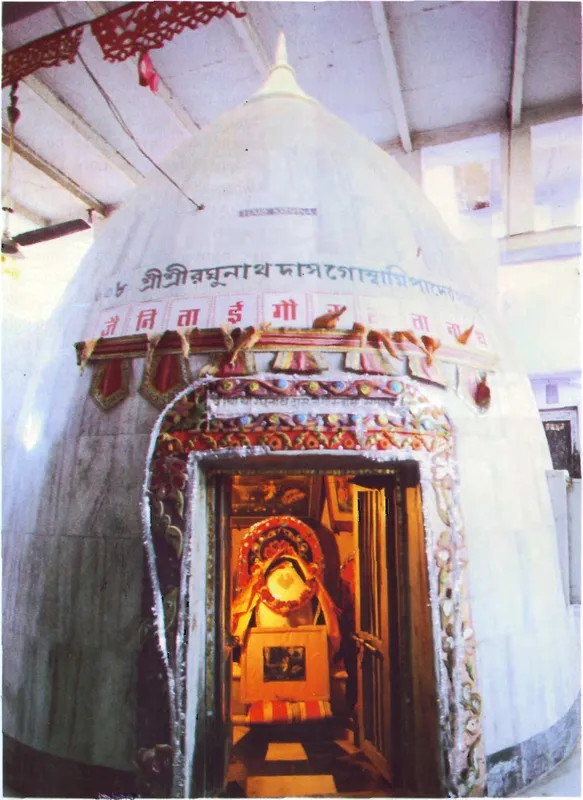
Kṛṣṇadāsa Kavirāja Gosvāmī's bhajana-kuṭī (Rādhā-kuṇḍa)
कृष्णदास कविराज गोस्वामी की भजन-कुटी (राधा-कुण्ड)Śrīla Kṛṣṇadāsa Kavirāja Gosvāmī's bhajana-kuṭī, his hut for chanting and prayer, stands near the banks of Śyāma-kuṇḍa, close to the kuṭī of Śrīla Raghunātha dāsa Gosvāmī …
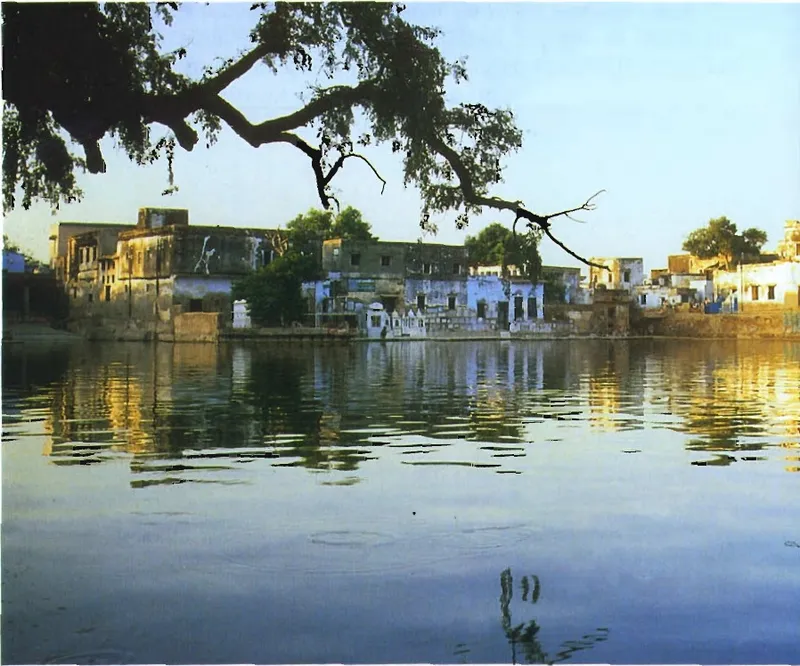
Rādhā-kuṇḍa
राधा-कुण्डRādhā-kuṇḍa is the lake of Śrī Rādhā at the foot of Govardhana Hill, in the village of Āriṭa.
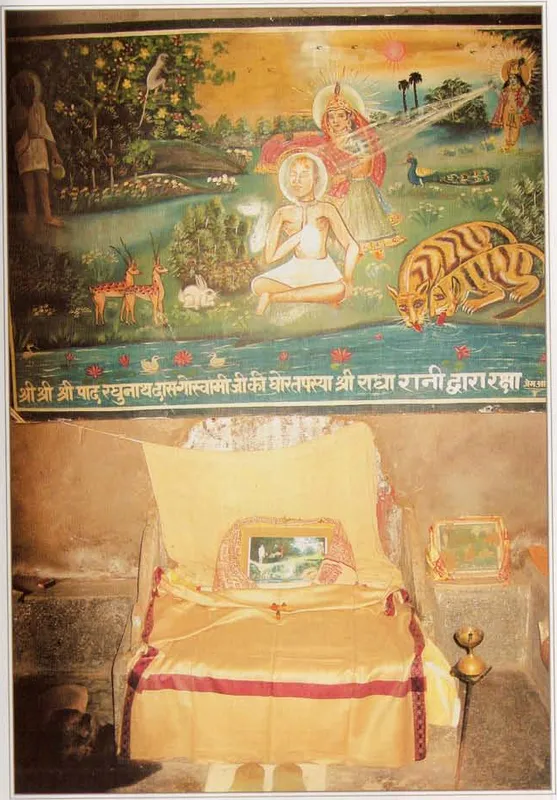
Raghunātha dāsa Gosvāmī's bhajana-kuṭī
रघुनाथ दास गोस्वामी की भजन-कुटीŚrīla Raghunātha dāsa Gosvāmī's bhajana-kuṭī, his hut for chanting and prayer, stands between Rādhā-kuṇḍa and Śyāma-kuṇḍa, next to the kuṭīs of Śrī Gopāla Bhaṭṭa Gosvāmī …
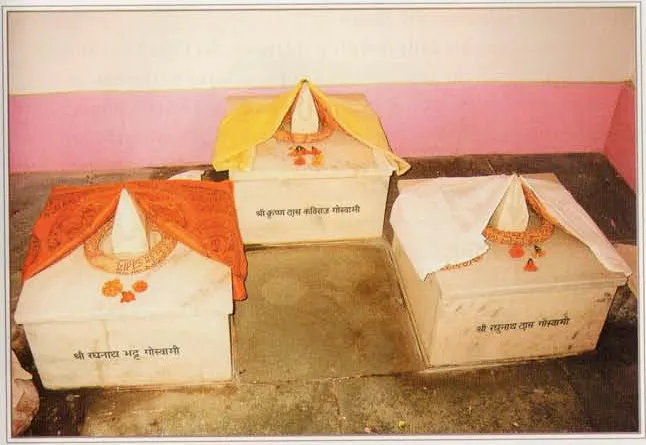
Teen Gosvāmī Samādhi
तीन गोस्वामी समाधिThe Teen Gosvāmī Samādhi, "the samādhi of the three Gosvāmīs", is a shrine at Rādhā-kuṇḍa between the bhajana-kuṭīs (huts for chanting and prayer) of Śrīla Raghunātha dās …
Raghunātha dāsa Gosvāmī's samādhi (Rādhā-kuṇḍa)
रघुनाथ दास गोस्वामी की समाधि (राधा-कुण्ड)This is the samādhi, the tomb or memorial shrine, of Śrīla Raghunātha dāsa Gosvāmī on the bank of Rādhā-kuṇḍa.
Kṛṣṇadāsa Kavirāja Gosvāmī Samādhi (Rādhā-Dāmodara)
कृष्णदास कविराज गोस्वामी समाधि (राधा-दामोदर)A tomb known as "Kṛṣṇadāsa's tomb" stands in the Rādhā-Dāmodara temple in Vṛndāvana; the guidebooks place it next to Śrīla Jīva Gosvāmī's samādhi.
Questions and answers
The book's closing verse says that it was completed in Vṛndāvana, and names no kuṭī. The guidebooks place the writing, wholly or in part, at his bhajana-kuṭī at Rādhā-kuṇḍa; this is their report, and the sources differ on it.[3 +6]
Its last verse gives Śaka 1537, in the month of Jyaiṣṭha (May–June), on the fifth day of the waning moon; the current online text of the translation adds A.D. 1615. A guidebook's 1581 does not agree with it.[11]
He calls Śrīla Raghunātha dāsa Gosvāmī his guru. Śrīla Prabhupāda explains that Śrīla Raghunātha dāsa Gosvāmī was his instructing spiritual master and special guide.[6–10]
The guidebooks show it at Rādhā-kuṇḍa. The oldest dated mention of a dwelling of his at the kuṇḍa is a document of 1637, as Entwistle reports it. The Bhakti-ratnākara mentions a kuṭīra of his without saying where it stood.[3 +6]
In his Introduction he tells how Śrī Nityānanda Prabhu sent him to Vṛndāvana in a dream and how the devotees there asked him to write the book. In his purports he explains that Śrīla Raghunātha dāsa Gosvāmī was his instructing spiritual master.[5, 8]
The guidebooks show one at the Teen Gosvāmī Samādhi of Rādhā-kuṇḍa, and a tomb in the Rādhā-Dāmodara temple of Vṛndāvana is also ascribed to him. In 1972 Śrīla Prabhupāda said there that he was entombed at Rādhā-Dāmodara.[27, 41]
Sources
- Śrīla Kṛṣṇadāsa Kavirāja Gosvāmī, Śrī Caitanya-caritāmṛta, Ādi-līlā 5.195, online edition · vedabase.io
- Śrīla Kṛṣṇadāsa Kavirāja Gosvāmī, Śrī Caitanya-caritāmṛta, Ādi-līlā 5.199, online edition · vedabase.io
- Śrīla Kṛṣṇadāsa Kavirāja Gosvāmī, Śrī Caitanya-caritāmṛta, Ādi-līlā 5.202, online edition · vedabase.io
- Śrīla Kṛṣṇadāsa Kavirāja Gosvāmī, Śrī Caitanya-caritāmṛta, Ādi-līlā 5.201, online edition · vedabase.io
- Śrīla Prabhupāda, Śrī Caitanya-caritāmṛta, Ādi-līlā, Introduction (five lectures, New York, April 1967) · vedabase.io
- The Colour Guide to Rādhā-kuṇḍa (1999), Rājaśekhara dāsa Brahmacārī, PDF p. 100
- Śrīla Kṛṣṇadāsa Kavirāja Gosvāmī, Śrī Caitanya-caritāmṛta, Antya-līlā 20.144-146, online edition · vedabase.io
- Śrīla Prabhupāda, Śrī Caitanya-caritāmṛta, Antya-līlā 20.144-146, purport · vedabase.io
- Śrīla Prabhupāda, Śrī Caitanya-caritāmṛta, Ādi-līlā 10.103, purport · vedabase.io
- the undated parikramā notes Rādhā-kuṇḍa, ¶53
- Śrīla Kṛṣṇadāsa Kavirāja Gosvāmī, Śrī Caitanya-caritāmṛta, Antya-līlā 20.157, online edition · vedabase.io
- Śrīla Narahari Cakravartī, Bhakti-ratnākara, Fifth Wave, 1912 ed. printed p. 198, 2nd ed., 1912
- Śrīla Narahari Cakravartī, Bhakti-ratnākara, Eleventh Wave, 1912 ed. printed p. 668, 2nd ed., 1912
- Śrīla Narahari Cakravartī, Bhakti-ratnākara, Fourth Wave, 1912 ed. p. 145, 2nd ed., 1912
- Śrīla Narahari Cakravartī, Bhakti-ratnākara, Thirteenth Wave, 1912 ed. printed p. 1022, 2nd ed., 1912
- Śrīla Kṛṣṇadāsa Kavirāja Gosvāmī, Śrī Caitanya-caritāmṛta, Madhya-līlā 2.84, online edition · vedabase.io
- Śrīla Kṛṣṇadāsa Kavirāja Gosvāmī, Śrī Caitanya-caritāmṛta, Ādi-līlā 13.46, online edition · vedabase.io
- Śrīla Prabhupāda, Śrī Caitanya-caritāmṛta, Madhya-līlā 2.84, purport · vedabase.io
- Śrīla Narahari Cakravartī, Bhakti-ratnākara, Sixth Wave, 1912 ed. printed p. 469, 2nd ed., 1912
- A. W. Entwistle, ch. 8 gazetteer entry '12 Radhakund', printed p. 340, Egbert Forsten, Groningen, 1987
Show all 42 references
- Śrīla Narahari Cakravartī, Bhakti-ratnākara, Fifth Wave, 1912 ed. p. 198, 2nd ed., 1912
- Śrīla Narahari Cakravartī, Bhakti-ratnākara, Eleventh Wave (ekādaśa taraṅga), 1912 ed. p. 667, 2nd ed., 1912
- Śrīla Narahari Cakravartī, Bhakti-ratnākara, Eleventh Wave, 1912 ed. p. 668, 2nd ed., 1912
- Prema-vilāsa, thirteenth vilāsa (trayodaśa vilāsa), printed p. 94: left-hand column lines 13-15, right-hand column lines 5-12, Kolkata, 1913
- Śrīla Narahari Cakravartī, Narottama-vilāsa, appendix, printed p. 126: left-hand column, the last eight lines; right-hand column lines 9-11 and 19-20, 1st ed., Baṅgābda 1314
- Śrīla Kṛṣṇadāsa Kavirāja Gosvāmī, Śrī Caitanya-caritāmṛta, CC Antya-līlā 6.307, online edition · vedabase.io
- Śrīla Prabhupāda, Śrī Caitanya-caritāmṛta, Ādi-līlā 12.85, purport · vedabase.io
- The Colour Guide to Rādhā-kuṇḍa (1999), Rājaśekhara dāsa Brahmacārī, PDF p. 112
- The Colour Guide to Rādhā-kuṇḍa (1999), Rājaśekhara dāsa Brahmacārī, PDF p. 113
- the undated parikramā notes Rādhā-kuṇḍa, ¶64
- Vṛndāvana-Dhāma Ki Jaya! (c. 1986), by Dhruva Mahārāja dāsa, PDF p. 36
- Śrī Vraja-maṇḍala Parikramā (2007), PDF p. 92
- Śrīla Prabhupāda-līlāmṛta 1.4 · vedabase.io
- Śrīla Prabhupāda, Śrī Caitanya-caritāmṛta, Ādi-līlā 10.158, purport (last two sentences) · vedabase.io
- The Colour Guide to Rādhā-kuṇḍa (1999), Rājaśekhara dāsa Brahmacārī, PDF p. 98
- A. W. Entwistle, ch. 5 §15 'Some Gaudiya devotees of the late sixteenth century', printed p. 166, Egbert Forsten, Groningen, 1987
- The Colour Guide to Rādhā-kuṇḍa (1999), Rājaśekhara dāsa Brahmacārī, PDF p. 99
- Śrī Vraja-maṇḍala Parikramā (2007), PDF p. 93
- the undated parikramā notes Rādhā-kuṇḍa, ¶50
- Śrī Vraja-maṇḍala Parikramā (2007), PDF p. 102
- Śrīla Prabhupāda, Morning Walk, Vṛndāvana, 15 October 1972 · vedabase.io
- The Color Guide to Vṛndāvana (2000), Written and Photographed by Rājaśekhara dāsa Brahmacārī, PDF p. 72
Further sources
- Śrī Caitanya-caritāmṛta, Ādi-līlā 5.195–202, 10.103, 10.158, 12.85, 13.46; Madhya-līlā 2.84; Antya-līlā 20.144–146 and 20.157; and the Introduction; translation and purports by Śrīla Prabhupāda (BBT). Śrīla Prabhupāda, morning walk at the Rādhā-Dāmodara temple, Vṛndāvana, 15 October 1972.
- Bhakti-ratnākara, Fourth, Fifth, Sixth, Eleventh and Thirteenth Waves (Bengali, 1912 edition); Nityānanda dāsa, Prema-vilāsa, thirteenth vilāsa (c. 1913); Narottama-vilāsa, appendix (1907, from the edition of c. 1893): summarised here, not translated.
- Satsvarūpa dāsa Goswami, Śrīla Prabhupāda-līlāmṛta, vol. 1, ch. 4 (BBT). Historian cited by name for dated documents only: A. W. Entwistle, Braj: Centre of Krishna Pilgrimage (1987); the documents are known only from his report.
- The Colour Guide to Rādhā-kuṇḍa (1999); Śrī Vraja-maṇḍala Parikramā (2007); Vṛndāvana-Dhāma Ki Jaya! (c. 1986); undated parikramā notes Rādhā-kuṇḍa.