How Rādhā-kuṇḍa was found and dug out again
राधा-कुण्ड की पुनः खोज और खुदाई
In short
Śrī Caitanya Mahāprabhu found Rādhā-kuṇḍa (Radha Kund) again. At Āriṭ-grāma no one could show Him the sacred pond, and He recognised it, with Śyāma-kuṇḍa, in two paddy fields holding a little water, and bathed there. His followers later dug the two ponds out; the sources name different Gosvāmīs for that work.[1–11]
On this page
At a glance
- The Caitanya-caritāmṛta (Madhya 18.3–14) says that at Āriṭ-grāma no one knew where Rādhā-kuṇḍa was. Śrī Caitanya Mahāprabhu found it in two paddy fields, bathed, prayed, danced on the bank and took its earth as tilaka.[1–6]
- The Bhakti-ratnākara says that He sat under a tamāla tree there, and that the villagers had called the two fields Kālī and Gaurī.[9 +3]
- Śrīla Prabhupāda writes in one purport that Śrīla Rūpa Gosvāmī and Śrīla Sanātana Gosvāmī renovated Rādhā-kuṇḍa. In another he writes that Śrī Caitanya's devotees, headed first by the Six Gosvāmīs (His leading followers in Vṛndāvana), dug it out.[10, 11]
- The Bhakti-ratnākara tells that a rich man, sent in a dream by Nārāyaṇa of Badarikāśrama (Badrinath, in the Himalayas), brought coins to Śrīla Raghunātha dāsa Gosvāmī, and the two kuṇḍas were dug out.[15–19]
- The same book tells why the outline of Śyāma-kuṇḍa is not straight: five trees on its bank, in which the five Pāṇḍava brothers of the Mahābhārata lived, were spared.[16 +2]
- Two historians credit the stone steps of Rādhā-kuṇḍa to Lālā Bābū in the nineteenth century, without a year.[21–24]
How did Śrī Caitanya Mahāprabhu find Rādhā-kuṇḍa?
Śrīla Kṛṣṇadāsa Kavirāja Gosvāmī tells the visit in the Caitanya-caritāmṛta, the life of Śrī Caitanya Mahāprabhu (Madhya-līlā 18.3–14). Śrī Caitanya Mahāprabhu was dancing in ecstasy through Vraja. When He reached Āriṭ-grāma, today's Rādhā-kuṇḍa village, His outer awareness returned.[1]
He asked the people where Rādhā-kuṇḍa was. No one could tell Him, and the brāhmaṇa (priest) travelling with Him did not know either.[2]
তীর্থ ‘লুপ্ত’ জানি’ প্রভু সর্বজ্ঞ ভগবান্ ।
দুই ধান্যক্ষেত্রে অল্পজলে কৈলা স্নান ॥ ৫ ॥
tīrtha ‘lupta’ jāni’ prabhu sarvajña bhagavān
dui dhānya-kṣetre alpa-jale kailā snāna
The Lord then understood that the holy place called Rādhā-kuṇḍa was no longer visible. However, being the omniscient Supreme Personality of Godhead, He discovered Rādhā-kuṇḍa and Śyāma-kuṇḍa in two paddy fields. There was only a little water, but He took His bath there.
Translation: Śrīla A.C. Bhaktivedanta Swami PrabhupādaThe Bengali verse itself says only that He bathed in a little water in two paddy fields. The names of the two kuṇḍas come from Śrīla Prabhupāda's translation and from his purport, his explanation, to Madhya 18.3:[7–9]
Names this place“Śrī Caitanya Mahāprabhu could then understand that the holy places known as Rādhā-kuṇḍa and Śyāma-kuṇḍa were at that time lost to everyone’s vision. He therefore discovered Rādhā-kuṇḍa and Śyāma-kuṇḍa, which were two reservoirs of water in two paddy fields.”
Śrīla Prabhupāda, Śrī Caitanya-caritāmṛta, Madhya-līlā 18.3, purport · vedabase.io
The villagers were astonished to see Him bathe there. Then He prayed to the kuṇḍa. Of all the gopīs, the cowherd girls of Vraja, Rādhā is dearest to Kṛṣṇa, He said, and so Her lake is dear to Him.[4, 25]
He recited a verse from the Padma Purāṇa to the same effect. He said that Kṛṣṇa plays in this water with Rādhā every day and dances the rāsa, His circle dance, on its bank.[25–30] In the same prayer He says:
সেই কুণ্ডে যেই একবার করে স্নান ।
তাঁরে রাধা-সম ‘প্রেম’ কৃষ্ণ করে দান ॥ ১০ ॥
sei kuṇḍe yei eka-bāra kare snāna
tāṅre rādhā-sama ‘prema’ kṛṣṇa kare dāna
“Indeed, Lord Kṛṣṇa gives ecstatic love like that of Śrīmatī Rādhārāṇī to whoever bathes in that lake even once in his life.
Translation: Śrīla A.C. Bhaktivedanta Swami PrabhupādaThe prayer ends with a verse from Śrīla Kṛṣṇadāsa Kavirāja Gosvāmī's own Govinda-līlāmṛta (7.102) on the kuṇḍa's glory.[30] Then Śrī Caitanya Mahāprabhu danced on the bank, remembering Kṛṣṇa's pastimes there. He marked His body with tilaka, a sacred mark, made from the kuṇḍa's mud, and with the help of Balabhadra Bhaṭṭācārya He took some of the mud with Him.[5, 6]
What does the Bhakti-ratnākara add?
The Bhakti-ratnākara is a Bengali book by Śrīla Narahari Cakravartī Ṭhākura about the pilgrimages of the later ācāryas, the great teachers. It tells the same visit in its Fifth Wave, or chapter. Here Śrīla Rāghava Paṇḍita Gosvāmī shows the place to Śrīla Śrīnivāsa Ācārya.[9]
Pointing to this tamāla tree, he says that Śrī Kṛṣṇa-Caitanya came here after wandering through the forests. He sat under it and asked the people of Ariṣṭa-grāma about the kuṇḍas (summarised here, not translated).[9]
No one could tell Him, not even the brāhmaṇa who had come with Him from Mathurā. Then He saw that the hidden holy places had become two paddy fields. The villagers said that they had called these fields Kālī and Gaurī, and that by His mercy they now knew them as the two kuṇḍas.[9 +4] Read more: How Rādhā-kuṇḍa appeared: the accounts side by side →
The book does not say which field became which kuṇḍa. Later guidebooks call the fields Kālī-kheta and Gaurī-kheta (kheta means field), or kari and gauri, and say which became which. No older book is known to give these details, so they are not certain.[12 +4]
The tamāla stayed a place of memory. In the Thirteenth Wave of the same book, Śrīla Vīracandra Prabhu is overwhelmed with love at the kuṇḍa where Śrī Caitanya Mahāprabhu had sat under the tamāla. He dances in saṅkīrtana, congregational chanting, at Rādhā-kuṇḍa, Śyāma-kuṇḍa and Govardhana.[33] Pilgrims remember the spot at Tamāla-talā on the bank.[9]
What did Śrīla Prabhupāda say about the discovery?
Śrīla Prabhupāda spoke of the discovery in lectures from 1966 to 1976. In New York in 1966 he said that Śrī Caitanya Mahāprabhu first pointed out Rādhā-kuṇḍa and then surveyed the land. His followers, the Gosvāmīs, then built present-day Vṛndāvana.[34]
In San Francisco in 1971 he said that Śrī Caitanya Mahāprabhu first of all discovered Rādhā-kuṇḍa, where Śrīmatī Rādhārāṇī bathed and Kṛṣṇa came. Both lakes still exist, he said, and thousands visit them every day.[35, 36]
In Vṛndāvana in 1976 he described the whole area as it was before Śrī Caitanya Mahāprabhu came:
Names this placeThis place, before Caitanya Mahāprabhu's advent, this city, or this whole Vṛndāvana area, Rādhā-kuṇḍa, it was all field only, agricultural field. Nobody knew where Kṛṣṇa had His pastimes. So it was the direction of Caitanya Mahāprabhu that "This is Rādhā-kuṇḍa, this is this, this is this," and the Gosvāmīs, they did it.
Śrīla Prabhupāda, Lecture on Śrīmad-Bhāgavatam 5.5.9, Vṛndāvana, 31 October 1976 · vedabase.io
In his purport to The Nectar of Instruction, text 9, he adds that Śrīla Rūpa Gosvāmī gives Rādhā-kuṇḍa great weight because of Śrī Caitanya Mahāprabhu's own wish to find it. Its importance, he writes, is understood mainly by the Gauḍīya Vaiṣṇavas, His followers.[10]
The Caitanya-caritāmṛta gives no year for the visit. Two guidebooks give 1515, and one adds that He reached Vṛndāvana on the full-moon day of Kārttika (October–November), so the year is not certain.[14, 37]
Who dug Rādhā-kuṇḍa out again?
Who dug the two kuṇḍas out after Śrī Caitanya Mahāprabhu's visit is told in several ways. The sources do not say how their accounts fit together.[10, 11] Śrīla Prabhupāda speaks of it twice in his books. In his purport to Caitanya-caritāmṛta Ādi-līlā 10.90 he writes:
Names this place“The spot where we now find Śrī Rādhā-kuṇḍa was an agricultural field during the time of Caitanya Mahāprabhu. A small reservoir of water was there, and Śrī Caitanya Mahāprabhu bathed in that water and pointed out that originally Rādhā-kuṇḍa existed in that location. Following His directions, Śrīla Rūpa Gosvāmī and Sanātana Gosvāmī renovated Rādhā-kuṇḍa.”
Śrīla Prabhupāda, Śrī Caitanya-caritāmṛta, Ādi-līlā 10.90, purport · vedabase.io
In his purport to The Nectar of Instruction, text 9, he writes:
Names this place“Finally He found the holy spot, and there was a small pond there. He took His bath in that small pond and told His devotees that the actual Rādhā-kuṇḍa was situated there. Later the pond was excavated by Lord Caitanya’s devotees, headed first by the Six Gosvāmīs, such as Rūpa and Raghunātha dāsa.”
Śrīla Prabhupāda, The Nectar of Instruction (Śrī Upadeśāmṛta), Text 9, purport · vedabase.io
In another purport (Madhya-līlā 23.104) he lists the duties that Śrī Caitanya Mahāprabhu gave Śrīla Sanātana Gosvāmī. One of them was to re-establish lost places of pilgrimage like Vṛndāvana and Rādhā-kuṇḍa.[38]
The rich man from Badarikāśrama
The Bhakti-ratnākara tells a story of Śrīla Raghunātha dāsa Gosvāmī, who lived at the kuṇḍa. One day he thought how good it would be if the two kuṇḍas were full of water. At once he blamed himself for the wish.[15] Read more: Śrīla Raghunātha dāsa Gosvāmī's life at Rādhā-kuṇḍa →
Far away, a rich man had gone to Badarikāśrama and offered many coins there. Nārāyaṇa told him in a dream to take the coins to Śrīla Raghunātha dāsa Gosvāmī at Āriṭ-grāma in Vraja, and with them the two kuṇḍas were quickly dug out. The book names neither the donor nor a year (summarised here, not translated).[15–19]
What are the Pāṇḍava trees?
The same book explains why the outline of Śyāma-kuṇḍa is not straight. While the kuṇḍas were being dug, an old tree on Śyāma-kuṇḍa's bank was to be cut the next day.[16]
That night King Yudhiṣṭhira told Śrīla Raghunātha dāsa Gosvāmī in a dream that the five Pāṇḍava brothers were living there as trees. He asked him to go to Mānasa-pāvana-ghāṭa, a bathing place on Śyāma-kuṇḍa, in the morning and protect them. At dawn Śrīla Raghunātha dāsa Gosvāmī saw five trees in one, and he stopped the cutting.[16 +2]
This is the earliest known written source of the story; no Purāṇa or Gosvāmī's book is known to tell it. The last line of the passage is unclear in the 1912 printing, and the guidebooks describe the kuṇḍa's shape in different ways.[16] Pilgrims are shown the Pāṇḍava trees on Śyāma-kuṇḍa's bank.[16 +2]
What do the later books add?
The later books add their own details, and none of them gives an older source for what it adds.[17 +6]
- The Colour Guide to Rādhā-kuṇḍa (1999) says that Śrīla Jīva Gosvāmī bought the two fields in Śrīla Raghunātha dāsa Gosvāmī's name and managed the digging with him. This rests on that book alone and is not certain.[17 +5]
- The Bengali Vṛndāvana-kathā (1920) says that the two silted kuṇḍas were cleared on Śrīla Raghunātha dāsa Gosvāmī's own wish after he came to live there.[39]
- According to the local tradition recorded in The Colour Guide, Śrīla Raghunātha dāsa Gosvāmī found Deities of Rādhā and Kṛṣṇa in the mud during the digging. He gave Them to a local brāhmaṇa, who built a temple for Them on the western bank, the Rādhā-Kṛṣṇa Mandira; the 2007 guidebook tells the finding as hearsay.[17 +5]
One more book bears on the kuṇḍas' care. The Sādhana-dīpikā is a work of the Govinda temple of Vṛndāvana. It says that Raghunātha, whom it calls one in form with Śrī Rūpa, offered the service of the two kuṇḍas and the land around them to Śrī Govinda (summarised here, not translated). It gives only the name Raghunātha, which probably means Śrīla Raghunātha dāsa Gosvāmī, and no year.[49]
When were the stone steps built?
The early dates rest on modern guidebooks. Two of them give 1545 for the purchase of the fields and the start of the digging, and 1554 for its end. The Colour Guide alone gives 1591 for steps added by Rājā Mān Singh of Jaipur. No inscription or dated document is known for 1554 or 1591, so these years are not certain.[17 +7]
The historian A. W. Entwistle (1987) reports a record of 1545. In it, Śrīla Raghunātha dāsa Gosvāmī bought land from the village council to dump the earth dug out of the tank. Entwistle does not name Śrīla Jīva Gosvāmī.[51]
On the stone steps two historians agree. Entwistle (1987) and Prabhudayāl Mītal (1966) both credit the stone ghāṭas, the bathing steps, of Rādhā-kuṇḍa to Lālā Bābū (Kṛṣṇacandra Siṁha). He was a wealthy Bengali who settled in Vraja early in the nineteenth century, and Entwistle says that he rebuilt the steps around both tanks and the causeway between them.[21–24]
The Vṛndāvana-kathā (1920) says that he had all four sides of the kuṇḍa faced with stone. None of the three gives a year, so The Colour Guide's 1817 is not confirmed.[24 +2]
Where the sources differ
Who restored the kuṇḍas is a real disagreement. Śrīla Prabhupāda's two purports, the Bhakti-ratnākara, the guidebooks and the Vṛndāvana-kathā name different persons. Each is given here as its source tells it, without forcing them to agree.[10 +7]
Accounts differ Who excavated or restored the two kuṇḍas (Rādhā-kuṇḍa and Śyāma-kuṇḍa) after Śrī Caitanya Mahāprabhu found them.
- Śrīla Prabhupāda, CC Ādi 10.90 purport'Following His directions, Śrīla Rūpa Gosvāmī and Sanātana Gosvāmī renovated Rādhā-kuṇḍa' (after Śrī Caitanya Mahāprabhu had bathed in the small reservoir in an agricultural field and pointed out that Rādhā-kuṇḍa was originally there); 'This is one of the brilliant examples of how the Gosvāmīs excavated lost places of pilgrimage.'
- Śrīla Prabhupāda, The Nectar of Instruction, text 9, purportAfter Śrī Caitanya Mahāprabhu took His bath in the small pond and told His devotees that the actual Rādhā-kuṇḍa was there, 'Later the pond was excavated by Lord Caitanya's devotees, headed first by the Six Gosvāmīs, such as Rūpa and Raghunātha dāsa.'
- The Colour Guide to Rādhā-kuṇḍa (1999)Śrīla Raghunātha dāsa Gosvāmī excavated the kuṇḍas, with the large donation of a wealthy merchant, Samarpaṇ ('some say Samarpaṇ was a King'), whom Lord Badri-Nārāyaṇa had sent to him in a dream; he called Śrīla Jīva Gosvāmī, who bought the two paddy fields in Śrīla Raghunātha dāsa Gosvāmī's name in 1545, and the excavation was then under the personal supervision of both; the work was completed in 1554. On it says that Śrīla Raghunātha dāsa Gosvāmī was 'the inspiration and spiritual force behind the excavation', but that it was Śrīla Jīva Gosvāmī 'who actually purchased the land, oversaw the excavation and managed all the affairs'.
- Śrī Vraja-maṇḍala Parikramā (2007), Vṛndāvana-Dhāma Ki Jaya! (c. 1986) and the undated parikramā notes Rādhā-kuṇḍaŚrīla Raghunātha dāsa Gosvāmī restored the two kuṇḍas with the money of a wealthy pilgrim from Badarikāśrama whom Śrī Badrī-nārāyaṇa had sent to him; in Vṛndāvana-Dhāma Ki Jaya! (c. 1986) a rich merchant named Sampanna, to whom Kṛṣṇa appeared in a dream at Badarikāśrama, came to help him excavate Rādhā-kuṇḍa. Śrī Vraja-maṇḍala Parikramā (2007) adds that Śrī Caitanya made manifest the kuṇḍas 'which had been established by Mahārāja Vajranābha' and that 'Later, Śrī Raghunātha dāsa Gosvāmī reconstructed them as we see them today', and tells, as hearsay, that he found Deities 'while he was renovating the kuṇḍa'; the undated parikramā notes Rādhā-kuṇḍa: he dug around the Pāṇḍava trees while excavating Śyāma-kuṇḍa. …
The donor has no name in the Bhakti-ratnākara. The guidebooks call him Samarpaṇ or Sampanna, or leave him unnamed, and they differ on whether Nārāyaṇa of Badarikāśrama or Kṛṣṇa sent him.[17 +3]
Accounts differ Who paid for the restoration of the kuṇḍas, and who sent him.
- The Colour Guide to Rādhā-kuṇḍa (1999)A wealthy merchant named Samarpaṇ ('some say Samarpaṇ was a King'), sent by Lord Badri-Nārāyaṇa in a dream; Śrīla Jīva Gosvāmī then bought the two fields in Śrīla Raghunātha dāsa Gosvāmī's name (1545).
- Vṛndāvana-Dhāma Ki Jaya! (c. 1986)A rich merchant named Sampanna, to whom Kṛṣṇa appeared in a dream at Badarikāśrama.
- Śrī Vraja-maṇḍala Parikramā (2007); the undated parikramā notes Rādhā-kuṇḍaAn unnamed wealthy pilgrim returning from Badarikāśrama, sent by Śrī Badrī-nārāyaṇa.
- Bhakti-ratnākara, Fifth Wave p. 195An unnamed rich man (ধনী) who had offered many coins at Badarikāśrama was told by Nārāyaṇa in a dream to take them to Śrīla Raghunātha dāsa Gosvāmī at Āriṭ-grāma.
Śrīla Murāri Gupta's Sanskrit life of Śrī Caitanya tells the visit to Govardhana differently (4.8.8–10). There His brāhmaṇa guide points out a pair of kuṇḍas east of the hill and the place of Rādhā and Kṛṣṇa's rāsa. Śrī Caitanya Mahāprabhu then shows those pastimes in Himself (summarised here, not translated).[56, 57]
These verses name neither kuṇḍa and say nothing of a search or of paddy fields.[56]
Accounts differ How Śrī Caitanya Mahāprabhu came to the two kuṇḍas at Govardhana.
- Śrī Caitanya-caritāmṛta, Madhya-līlā 18.4–5 (Śrīla Kṛṣṇadāsa Kavirāja Gosvāmī)At Āriṭ-grāma no one could tell Him where Rādhā-kuṇḍa was, and the brāhmaṇa accompanying Him did not know either; knowing that the holy place was hidden (lupta), He found it in two paddy fields with a little water and bathed there.
- Kṛṣṇa-caitanya-caritāmṛta of Śrīla Murāri Gupta, 4.8.8–10At Govardhana His brāhmaṇa guide points out a pair of kuṇḍas east of the hill that give the rasa of Kṛṣṇa, and the rāsa place on its southern side; the kuṇḍas are not named, and nothing is said of their being lost or found.
The year of the visit is given as 1515 or 1516 by the guidebooks, and one guidebook gives both. The Caitanya-caritāmṛta gives none, so the year is not certain.[14 +4]
Accounts differ The year of Śrī Caitanya Mahāprabhu's visit to Vraja and rediscovery of Rādhā-kuṇḍa.
- The Colour Guide to Rādhā-kuṇḍa (1999) (narrative and chronology)He arrived in Vṛndāvana on Kārttika Pūrṇimā 1515; chronology: '1515 Lord Caitnaya [sic] Mahāprabhu visits Vṛndāvana'.
- The Colour Guide to Rādhā-kuṇḍa (1999) (back cover)Rādhā-kuṇḍa was lost 'until the year 1516, when Lord Caitanya … re-discovered' it.
- Govardhana Hill: India's Most Sacred Mountain (2001); the undated parikramā notes Rādhā-kuṇḍa1515.
What was bought in 1545 is reported in two ways, and neither report is certain. The Colour Guide has Śrīla Jīva Gosvāmī buy the two fields, while Entwistle reports a purchase of land to dump the earth from the digging.[17 +3]
Accounts differ What land was bought at Rādhā-kuṇḍa in 1545, and by whom
- The Colour Guide to Rādhā-kuṇḍa (1999)Śrīla Raghunātha dāsa Gosvāmī asked Śrīla Jīva Gosvāmī to buy the two paddy fields where Rādhā-kuṇḍa and Śyāma-kuṇḍa lay; Śrīla Jīva Gosvāmī bought them in Śrīla Raghunātha dāsa Gosvāmī's name in 1545, and the digging then began under both of them.
- Entwistle (1987), p. 148, citing Mukherjee and Wright (1979), p. 316 n. 20It is recorded that in 1545 Śrīla Raghunātha dāsa Gosvāmī bought land from the local village council (the 'Panch') to dump the earth dug out of the tank; Śrīla Jīva Gosvāmī is not named.
Timeline
- 1515
Two guidebooks give 1515, and one adds that He reached Vṛndāvana on the full-moon day of Kārttika (October–November), so the year is not certain.
Read in the article: What did Śrīla Prabhupāda say about the discovery? → - 1545
Two of them give 1545 for the purchase of the fields and the start of the digging, and 1554 for its end.
Read in the article: When were the stone steps built? → - 1554
No inscription or dated document is known for 1554 or 1591, so these years are not certain.
Read in the article: When were the stone steps built? → - 1817
None of the three gives a year, so The Colour Guide's 1817 is not confirmed.
Read in the article: When were the stone steps built? →
Places in this article
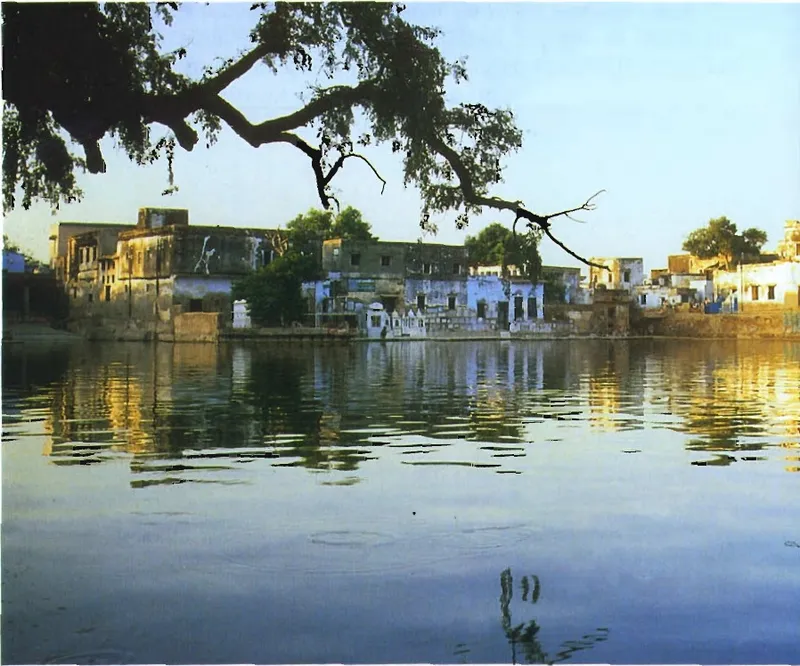
Rādhā-kuṇḍa
राधा-कुण्डRādhā-kuṇḍa is the lake of Śrī Rādhā at the foot of Govardhana Hill, in the village of Āriṭa.
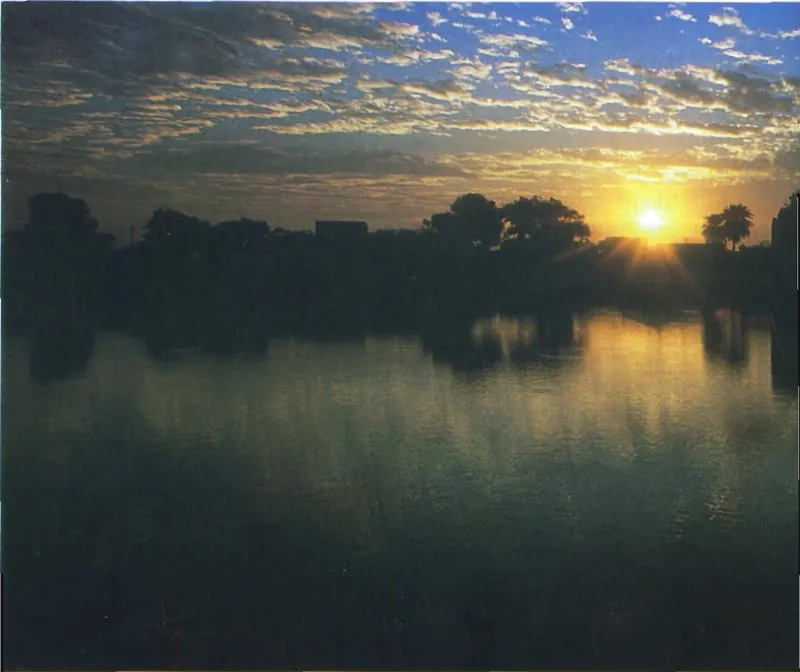
Śyāma-kuṇḍa (Rādhā-kuṇḍa)
श्याम-कुण्ड (राधा-कुण्ड)Śyāma-kuṇḍa, also called Kṛṣṇa-kuṇḍa, is Kṛṣṇa's lake beside Rādhā-kuṇḍa at the foot of Govardhana Hill.
Rādhā-kuṇḍa (village)
राधा-कुण्ड (गाँव)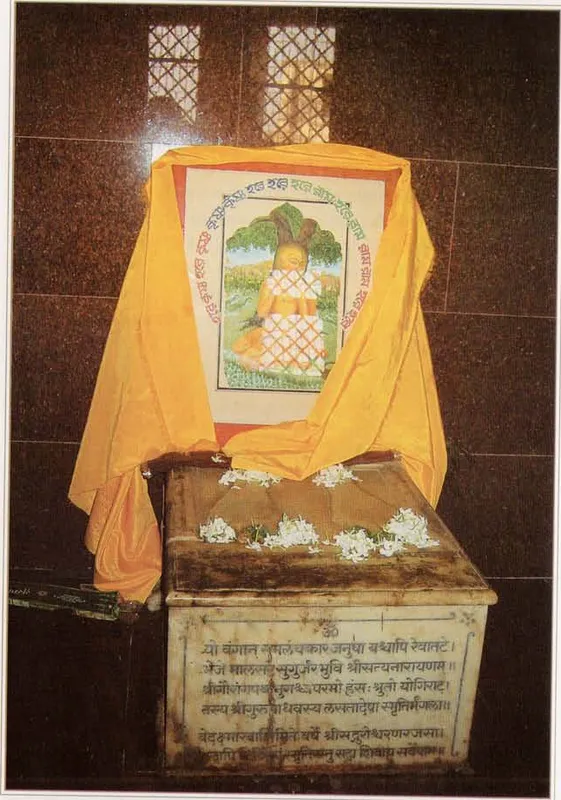
Tamāla-talā
तमाल-तलाTamāla-talā, "the foot of the tamāla tree", is the place on the bank of Śyāma-kuṇḍa that the guidebooks give as the spot where Śrī Caitanya Mahāprabhu sat under a tamāla …
Tamāla-talā-ghāṭa
तमाल-तला-घाटPāṇḍava trees (Śyāma-kuṇḍa)
पाण्डव वृक्ष (श्याम-कुण्ड)The Pāṇḍava trees are placed on the north bank of Śyāma-kuṇḍa, Kṛṣṇa's kuṇḍa at Rādhā-kuṇḍa.
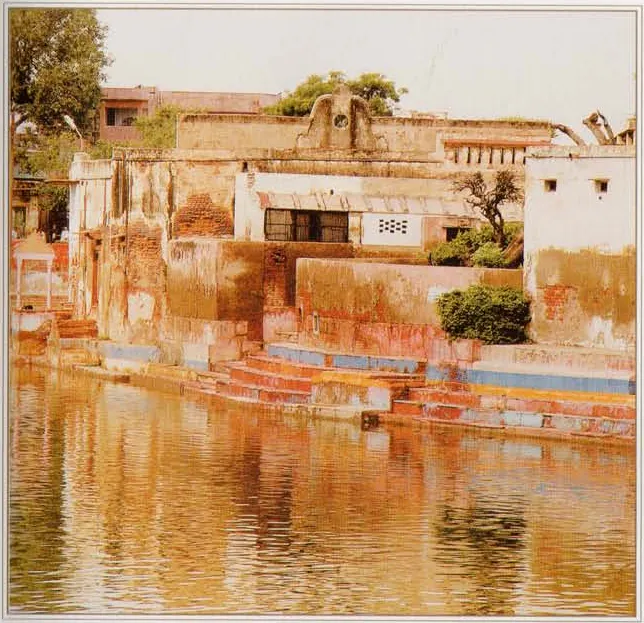
Mānasa-pāvana-ghāṭa
मानस-पावन-घाटMānasa-pāvana-ghāṭa is a bathing ghāṭa on the north side of Śyāma-kuṇḍa, Kṛṣṇa's kuṇḍa beside Rādhā-kuṇḍa.
Rādhā-Kṛṣṇa Mandira (Rādhā-kuṇḍa)
राधा-कृष्ण मन्दिर (राधा-कुण्ड)The Rādhā-Kṛṣṇa Mandira, also called the Purāṇa (old) Rādhā-Kṛṣṇa Mandira, is a temple on the western side of Rādhā-kuṇḍa, in the village of Rādhā-kuṇḍa.
Questions and answers
Śrī Caitanya Mahāprabhu. The Caitanya-caritāmṛta (Madhya 18.3–5) says that no one at Āriṭ-grāma could show Him the kuṇḍa. He found it, with Śyāma-kuṇḍa, in two paddy fields with a little water, and bathed there.[1–9]
They had become two paddy fields with very little water. The Bhakti-ratnākara adds that the villagers had called the fields Kālī and Gaurī.[7 +5]
Śrīla Prabhupāda writes that Śrīla Rūpa Gosvāmī and Śrīla Sanātana Gosvāmī renovated it, and also that Śrī Caitanya's devotees, headed first by the Six Gosvāmīs, dug it out. The Bhakti-ratnākara says that it was dug out with the coins of a rich man sent to Śrīla Raghunātha dāsa Gosvāmī.[10 +6]
According to the Bhakti-ratnākara, an unnamed rich man whom Nārāyaṇa of Badarikāśrama told in a dream to take his coins to Śrīla Raghunātha dāsa Gosvāmī at Āriṭ-grāma. Later guidebooks give him different names.[15–19]
According to the Bhakti-ratnākara, King Yudhiṣṭhira told Śrīla Raghunātha dāsa Gosvāmī in a dream that the five Pāṇḍavas lived as trees on Śyāma-kuṇḍa's bank. So the trees were spared, and the kuṇḍa's outline was left crooked.[16 +2]
Two historians, Entwistle (1987) and Mītal (1966), credit the stone ghāṭas to Lālā Bābū (Kṛṣṇacandra Siṁha) in the nineteenth century. Neither gives a year.[21–24]
The Caitanya-caritāmṛta gives no year. Two guidebooks give 1515, and one of them also gives 1516, so the year is not certain.[14, 37]
Sources
- Śrīla Kṛṣṇadāsa Kavirāja Gosvāmī, Śrī Caitanya-caritāmṛta, CC Madhya-līlā 18.3, online edition · vedabase.io
- Śrīla Kṛṣṇadāsa Kavirāja Gosvāmī, Śrī Caitanya-caritāmṛta, CC Madhya-līlā 18.4, online edition · vedabase.io
- Śrīla Kṛṣṇadāsa Kavirāja Gosvāmī, Śrī Caitanya-caritāmṛta, Madhya-līlā 18.5, online edition · vedabase.io
- Śrīla Kṛṣṇadāsa Kavirāja Gosvāmī, Śrī Caitanya-caritāmṛta, CC Madhya-līlā 18.6, online edition · vedabase.io
- Śrīla Kṛṣṇadāsa Kavirāja Gosvāmī, Śrī Caitanya-caritāmṛta, Madhya-līlā 18.13, online edition · vedabase.io
- Śrīla Kṛṣṇadāsa Kavirāja Gosvāmī, Śrī Caitanya-caritāmṛta, Madhya-līlā 18.14, online edition · vedabase.io
- Śrīla Prabhupāda, Śrī Caitanya-caritāmṛta, Madhya-līlā 18.3, purport · vedabase.io
- Śrīla Prabhupāda, Śrī Caitanya-caritāmṛta, Madhya-līlā 18.5, translation · vedabase.io
- Śrīla Narahari Cakravartī, Bhakti-ratnākara, Pañcama-taraṅga (5th wave), printed page 194, 2nd ed., 1912
- Śrīla Prabhupāda, The Nectar of Instruction (Śrī Upadeśāmṛta), Text 9, purport · vedabase.io
- Śrīla Prabhupāda, Śrī Caitanya-caritāmṛta, Ādi-līlā 10.90, purport · vedabase.io
- Śrīla Narahari Cakravartī, Bhakti-ratnākara, Fifth Wave, 1912 ed. p. 195, lines 4-5, 2nd ed., 1912
- Śrī Vraja-maṇḍala Parikramā (2007), PDF p. 85
- The Colour Guide to Rādhā-kuṇḍa (1999), Rājaśekhara dāsa Brahmacārī, PDF p. 37
- Śrīla Narahari Cakravartī, Bhakti-ratnākara, Fifth Wave, 1912 ed. p. 195, 2nd ed., 1912
- Śrīla Narahari Cakravartī, Bhakti-ratnākara, Fifth Wave, 1912 ed. p. 196, 2nd ed., 1912
- The Colour Guide to Rādhā-kuṇḍa (1999), Rājaśekhara dāsa Brahmacārī, PDF p. 42
- Śrī Vraja-maṇḍala Parikramā (2007), PDF p. 87
- Vṛndāvana-Dhāma Ki Jaya! (c. 1986), by Dhruva Mahārāja dāsa, PDF p. 31
- The Colour Guide to Rādhā-kuṇḍa (1999), Rājaśekhara dāsa Brahmacārī, PDF p. 44
Show all 58 references
- A. W. Entwistle, ch. 8 §12 'Radhakund', printed p. 339, Egbert Forsten, Groningen, 1987
- A. W. Entwistle, ch. 5 §35 'Patronage in the nineteenth century' (Krishna Chandra Sinha, 'Lala Babu'), printed p. 216, Egbert Forsten, Groningen, 1987
- Prabhudayāl Mītal, part 2 ('Braj kā itihās'), 'Ādhunik kāl': 'Braj ke samṛddhiśālī bhakt jan', Kṛṣṇacandra Siṁha (Lālā Bābū), printed p. 275
- Vṛndāvana-kathā, Viṁśa pariccheda, printed page 242
- Śrīla Kṛṣṇadāsa Kavirāja Gosvāmī, Śrī Caitanya-caritāmṛta, Madhya-līlā 18.7, online edition · vedabase.io
- Śrī Caitanya-caritāmṛta, Madhya-līlā 18.8, online edition · vedabase.io
- Śrīla Kṛṣṇadāsa Kavirāja Gosvāmī, Śrī Caitanya-caritāmṛta, Madhya-līlā 18.9, online edition · vedabase.io
- Śrīla Kṛṣṇadāsa Kavirāja Gosvāmī, Śrī Caitanya-caritāmṛta, Madhya-līlā 18.10, online edition · vedabase.io
- Śrīla Kṛṣṇadāsa Kavirāja Gosvāmī, Śrī Caitanya-caritāmṛta, Madhya-līlā 18.11, online edition · vedabase.io
- Śrī Caitanya-caritāmṛta, Madhya-līlā 18.12, online edition · vedabase.io
- the undated parikramā notes Rādhā-kuṇḍa, ¶114
- Śrī Vraja-maṇḍala Parikramā (2007), PDF p. 99
- Śrīla Narahari Cakravartī, Bhakti-ratnākara, Thirteenth Wave (trayodaśa taraṅga), 1912 ed. p. 1022, 2nd ed., 1912
- Śrīla Prabhupāda, Lecture on Śrī Caitanya-caritāmṛta, Madhya-līlā 20.66–96, New York, 27 November 1966 · vedabase.io
- Śrīla Prabhupāda, Lecture, San Francisco, 28 June 1971 · vedabase.io
- Śrīla Prabhupāda, Lecture, San Francisco, 28 June 1971 · vedabase.io
- the undated parikramā notes Rādhā-kuṇḍa, ¶81
- Śrīla Prabhupāda, Śrī Caitanya-caritāmṛta, Madhya-līlā 23.104, purport · vedabase.io
- Vṛndāvana-kathā, chapter 8 (aṣṭama pariccheda), entry 'Rādhākuṇḍa', printed p. 121
- The Colour Guide to Rādhā-kuṇḍa (1999), Rājaśekhara dāsa Brahmacārī, PDF p. 43
- The Colour Guide to Rādhā-kuṇḍa (1999), Rājaśekhara dāsa Brahmacārī, PDF p. 65
- The Colour Guide to Rādhā-kuṇḍa (1999), Rājaśekhara dāsa Brahmacārī, PDF p. 66
- Śrī Vraja-maṇḍala Parikramā (2007), PDF p. 90
- Śrī Vraja-maṇḍala Parikramā (2007), PDF p. 101
- The Colour Guide to Rādhā-kuṇḍa (1999), Rājaśekhara dāsa Brahmacārī, PDF p. 45
- The Colour Guide to Rādhā-kuṇḍa (1999), Rājaśekhara dāsa Brahmacārī, PDF p. 108
- The Colour Guide to Rādhā-kuṇḍa (1999), Rājaśekhara dāsa Brahmacārī, PDF p. 173
- Govardhana Hill: India's Most Sacred Mountain (2001), Rajasekhara dasa Brahmacari, PDF p. 160
- Śrī Rādhā-kṛṣṇa Gosvāmī, Sādhana-dīpikā, prathama-kakṣā (first part), prose after v.21
- The Color Guide to Vṛndāvana (2000), Written and Photographed by Rājaśekhara dāsa Brahmacārī, PDF p. 159
- A. W. Entwistle, ch. 5 §7 'The Six Goswamis and other contemporary Gaudiya devotees', printed p. 148, Egbert Forsten, Groningen, 1987
- A. W. Entwistle, ch. 5 §35 (nineteenth-century patrons), printed p. 216, Egbert Forsten, Groningen, 1987
- Prabhudayāl Mītal, part 2 ('ब्रज का इतिहास'), modern period, entry 'Kṛṣṇacandra Siṁha (Lālā Bābū)', printed p. 275
- The Colour Guide to Rādhā-kuṇḍa (1999), Rājaśekhara dāsa Brahmacārī, PDF p. 40
- the undated parikramā notes Rādhā-kuṇḍa, ¶88
- Kṛṣṇa-caitanya-caritāmṛta, prakrama 4, sarga 8, vv. 8–10
- Kṛṣṇa-caitanya-caritāmṛta of Murāri Gupta, prakrama 4, sarga 8, v.8
- The Colour Guide to Rādhā-kuṇḍa (1999), Rājaśekhara dāsa Brahmacārī, PDF p. 182
Further sources
- Śrī Caitanya-caritāmṛta, Ādi-līlā 10.90 and Madhya-līlā 18.3–14, 23.104, with translations and purports by Śrīla Prabhupāda (BBT); The Nectar of Instruction, text 9, purport; Śrīla Prabhupāda's lectures in New York (1966), San Francisco (1971) and Vṛndāvana (1976).
- Bhakti-ratnākara, Fifth and Thirteenth Waves (Bengali, 1912 edition); Śrīla Murāri Gupta, Kṛṣṇa-caitanya-caritāmṛta 4.8.8–10 (modern edition); Sādhana-dīpikā (Gaudiya Grantha Mandira digital edition): summarised here, not translated.
- Pulinbihārī Datta, Vṛndāvana-kathā (Bengali, 1920). Historians cited by name for dated history only: A. W. Entwistle, Braj: Centre of Krishna Pilgrimage (1987); Prabhudayāl Mītal, Braj kā sāṁskṛtik itihās (1966).
- The Colour Guide to Rādhā-kuṇḍa (1999); Śrī Vraja-maṇḍala Parikramā (2007); Vṛndāvana-Dhāma Ki Jaya! (c. 1986).