How Lalitā-kuṇḍa and Mohana-kuṇḍa became known
ललिता-कुण्ड और मोहन-कुण्ड कैसे प्रसिद्ध हुए
In short
Lalitā-kuṇḍa and Mohana-kuṇḍa are two small ponds north of Rādhā-kuṇḍa and Śyāma-kuṇḍa. According to the Vraja-bhakti-vilāsa, they became known when Kṛṣṇa, as Lalitā-mohana, called sixty-eight holy places and bathed there after killing a demon in a bull's form. The Bhāgavatam names no Lalitā-kuṇḍa, and Kṛṣṇa incurred no sin.[1–12]
On this page
At a glance
- The Garga-saṁhitā names a Lalitā-kuṇḍa among the holy places of Govardhana, next to Rādhā-kuṇḍa and Kṛṣṇa-kuṇḍa, and gives only its name.[13, 14]
- The Vraja-bhakti-vilāsa of Śrīla Nārāyaṇa Bhaṭṭa Gosvāmī lists Lalitā- and Mohana-kuṇḍa beside the place where Dhenukāsura was killed, with the kuṇḍas of Rādhā and Kṛṣṇa to their south.[1]
- Śrīmad-Bhāgavatam 10.36 tells the killing of Ariṣṭa and names no Lalitā-kuṇḍa.[4–8]
- The commentators on the Tenth Canto explain that killing Ariṣṭa, a demon in a bull's form, was no sin for Kṛṣṇa.[5, 9–12]
- In the Bhāgavatam's own telling Balarāma kills Dhenuka in the Tālavana, and the commentators place that forest near Govardhana or Mathurā.[15–19]
- The Vraja-bhakti-vilāsa tells pilgrims to bathe first in Lalitā-kuṇḍa and then in Mohana-kuṇḍa.[20]
Where are Lalitā-kuṇḍa and Mohana-kuṇḍa?
North of Rādhā-kuṇḍa and Śyāma-kuṇḍa lie two small ponds, Lalitā-kuṇḍa and Mohana-kuṇḍa. The Vraja-bhakti-vilāsa, as it says, puts the kuṇḍas of Rādhā and Kṛṣṇa to their south.[1]
Lalitā is a sakhī, a dear friend, of Śrīmatī Rādhārāṇī. Mohana, the charmer, is a name of Kṛṣṇa.[21]
The Garga-saṁhitā already names a Lalitā-kuṇḍa in Nārada's list of the holy places of Govardhana, right after Rādhā-kuṇḍa and Kṛṣṇa-kuṇḍa. It gives only the name (summarised here, not translated).[13, 14]
The story of how the two ponds became known comes from one older book, the Vraja-bhakti-vilāsa of Śrīla Nārāyaṇa Bhaṭṭa Gosvāmī. It sets the story in Ariṣṭa-vana, beside the place where, it says, Dhenuka was killed. A modern guidebook tells it again in another form, set out at the end.[1–3]
The Śrīmad-Bhāgavatam tells both killings in its own way, and it names no Lalitā-kuṇḍa. The accounts are set side by side below, starting with the Bhāgavatam, and are not merged.[4 +7]
What does the Bhāgavatam say about Ariṣṭa?
The Tenth Canto of Śrīmad-Bhāgavatam (chapter 36) tells how Ariṣṭa came to the cowherd village in the form of a bull with a huge hump. He tore up the earth with his hooves. Kṛṣṇa challenged him, calling him most wicked, and then:[4, 5]
tam āpatantaṃ sa nigṛhya śṛṅgayoḥ padā samākramya nipātya bhū-tale / niṣpīḍayām āsa yathārdram ambaraṃ kṛtvā viṣāṇena jaghāna so 'patat
As Ariṣṭa attacked, Lord Kṛṣṇa seized him by the horns and knocked him to the ground with His foot. The Lord then thrashed him as if he were a wet cloth, and finally He yanked out one of the demon’s horns and struck him with it until he lay prostrate.
Translation: Śrīla Prabhupāda's disciples (BBT)The demigods showered flowers, and Kṛṣṇa entered the village with Balarāma (10.36.14–15). The chapter names no kuṇḍa and no spot for the fight. It speaks of no bath and no calling of holy waters.[4–8] Śrīla Prabhupāda's Kṛṣṇa book tells it the same way:
General teaching (does not name the place)“Kṛṣṇa again caught his horns and immediately threw him to the ground, breaking his horns. Kṛṣṇa then began to kick his body, just as one squeezes a wet cloth on the ground. … With Balarāma, He triumphantly entered Vṛndāvana village, and the inhabitants glorified Him and Balarāma with great jubilation.”
Śrīla Prabhupāda, Kṛṣṇa, the Supreme Personality of Godhead (Kṛṣṇa book), Chapter 36, 'Kaṁsa Sends Akrūra for Kṛṣṇa' · vedabase.io
As for the place, Śrīla Prabhupāda writes in a purport, his explanation of a verse, that Āriṭ-grāma is also called Ariṣṭa-grāma. Śrī Caitanya Mahāprabhu, he writes, understood that Ariṣṭāsura had been killed by Śrī Kṛṣṇa in that village.[4 +3]
Why did the killing bring Kṛṣṇa no sin?
Kṛṣṇa is the Supreme Personality of Godhead, and no sinful reaction touches Him, as the commentators on the Tenth Canto explain. They say so directly when they explain this pastime (summarised here, not translated).[5, 9–12]
- On ŚB 10.36.7. Kṛṣṇa calls the bull most wicked. Śrīla Sanātana Gosvāmī and Śrīla Jīva Gosvāmī answer the bull's imagined objection that he has a bull's form: in truth he was nothing but a wicked demon. Śrīla Viśvanātha Cakravartī Ṭhākura reads the same words to mean that killing one who only had a bull's form brought no sin of killing a cow.[5, 9–12]
- On ŚB 10.36.15. Śrīla Jīva Gosvāmī quotes verses of the Ādi-varāha. In them Kṛṣṇa makes a tīrtha, a holy bathing place, with His heel after the killing, and bathes there with the cowherd boys. Kṛṣṇa's wish for purification, he explains, was only acted out, to show the glory of His own tīrtha. No sin at all arose for Him.[5, 9–12]
The talk of atonement belongs to the loving, joking exchange between Kṛṣṇa and the gopīs, the cowherd girls, that followed. Śrīla Viśvanātha Cakravartī Ṭhākura gives it in twenty verses, which he calls the joking talk of Rādhā and Kṛṣṇa from the Purāṇas, the old scriptures. The first of them, as the Bhaktivedanta Book Trust (BBT) translates it:[11]
The innocent young gopīs said, ‘Ah, Kṛṣṇa, don’t touch us now, O killer of a bull! Alas, even though Ariṣṭa was a terrible demon, still he was a male cow, so You will have to undergo atonement, just as Lord Indra did after killing Vṛtrāsura. But how can You purify Yourself without going to the trouble of visiting every single holy place in the three worlds?’ … [Kṛṣṇa replied,] ‘Why should I have to wander throughout the entire universe? I will at once bring all the countless pilgrimage places here and take My bath in them. Just watch!’ With this, Lord Mukunda struck His heel on the ground.
Translation: Śrīla Prabhupāda's disciples (BBT)In those verses Kṛṣṇa calls all the holy places into the pond made by His heel and bathes in it. Śrī Rādhā and Her friends then make their own kuṇḍa nearby. Lalitā is not named in them, and there is no Lalitā-kuṇḍa.[10 +3]
Śrīla Sanātana Gosvāmī names the pond of Kṛṣṇa's heel Ariṣṭa-kuṇḍa and refers to the Varāha Purāṇa for the details. In the Varāha Purāṇa's own text Kṛṣṇa bathes at that tīrtha and then Śrī Rādhā makes Her kuṇḍa beside it. It names no Lalitā-kuṇḍa or Mohana-kuṇḍa either.[10, 23] The appearance of Rādhā-kuṇḍa itself is told in “How Rādhā-kuṇḍa appeared: the accounts side by side”.[10 +3]
How did Lalitā-kuṇḍa become known?
Śrīla Nārāyaṇa Bhaṭṭa Gosvāmī tells the story differently. In his book he lists the marks of Śrī-kuṇḍa-vana, the forest of the kuṇḍas. He names Ariṣṭa-vana and the place where Dhenukāsura was killed, then two kuṇḍas called Lalitā and Mohana, and to their south the two kuṇḍas called Rādhā and Kṛṣṇa.[1]
In its fourth chapter the book tells the story behind them. We quote only the BBT's translations, so it is summarised here, not translated.[2, 3]
- The bath. Here Lalitā-mohana, the charmer of Lalitā, a name of Kṛṣṇa, called the sixty-eight well-known tīrthas and bathed in them after the killing of a bull. From then on the two kuṇḍas named Lalitā and Mohana were known. The book speaks of this bath as an answer to the charge raised over that killing. As in the twenty verses, that charge belongs to the loving exchange after the killing, not to any real sin.[2 +7]
- The two other kuṇḍas. Then, in the same loving exchange with Śrī Rādhikā, the tīrthas were called into the kuṇḍas before Them. So the kuṇḍas of Śrī Kṛṣṇa and Śrī Rādhikā became known in the world.[3, 25]
- The pilgrim's rite. Bathe first in Lalitā-kuṇḍa with ten dips, then in Mohana-kuṇḍa, with a prayer the book gives. The book says that this frees one from six kinds of killing. These are the killing of an unborn child, of insects, of a cow, of a brāhmaṇa (priest), of a svāna (an unclear word in the printed book) and of oneself.[2 +2]
Three points in this account are worth noticing.[2 +2]
- The name Lalitā-mohana stands in the singular, and the verses that follow show that it means Kṛṣṇa. The Hindi rendering printed with the edition reads it as two persons, Kṛṣṇa and Lalitā.[2, 3]
- This book tells that Lalitā- and Mohana-kuṇḍa came first, and Rādhā-kuṇḍa and Kṛṣṇa-kuṇḍa after them.[3, 25]
- The bull is not named in these lines. The section is about Ariṣṭa-vana and calls the demon of that forest Ariṣṭāsura, who came in a bull's form, but the verses just before speak of Dhenukāsura.[1 +3]
The charge in this book is part of a loving, transcendental exchange among Kṛṣṇa, Śrī Rādhā and Her friends after the killing. It is the same in the account quoted in the purport to Śrīmad-Bhāgavatam 10.36.16. Kṛṣṇa never became sinful and never needed purification, as the commentators explain.[5, 9–12]
The link between this pastime and Lalitā-kuṇḍa rests on the Vraja-bhakti-vilāsa alone. The twenty verses, the Varāha Purāṇa and the commentators tell how Rādhā-kuṇḍa and Śyāma-kuṇḍa appeared, but name no Lalitā-kuṇḍa. The Garga-saṁhitā gives Lalitā-kuṇḍa only its name.[4 +10]
Where was Dhenuka killed, and by whom?
The Vraja-bhakti-vilāsa puts the place where Dhenukāsura was killed beside the two kuṇḍas. Just before the story of Lalitā-mohana it quotes verses it ascribes to the Skanda Purāṇa, in which Kṛṣṇa killed Dhenukāsura at that spot. It also gives a prayer to say there before bowing down. It is not certain that those verses are in the Skanda Purāṇa.[1 +2]
The Bhāgavatam (10.15) sets the pastime in the Tālavana, a great forest of palm trees. The cowherd boys said it was not far from here. There Balarāma killed Dhenuka, and then both brothers killed his kinsmen.[15–17] Read more: The killing of Dhenuka at Tālavana → Śrīla Prabhupāda tells it so:
General teaching (does not name the place)“Will You kindly note that just near this place there is a big forest of the name Tālavana? … This time Balarāma immediately caught hold of the legs of the ass with one hand and, wheeling him around, threw him into the treetops. While he was being wheeled around by Balarāma, the demon lost his life.”
Śrīla Prabhupāda, Kṛṣṇa, the Supreme Personality of Godhead, Chapter 15, 'The Killing of Dhenukāsura' · vedabase.io
Elsewhere the Bhāgavatam's speakers give Kṛṣṇa the credit. The citizens of Mathurā say that by Him Dhenuka and similar demons were killed (10.43.25). Nanda Mahārāja counts Dhenuka and Ariṣṭa among the demons killed here (10.46.26); the BBT translation renders both as Kṛṣṇa and Balarāma.[27–30]
In Śrīla Prabhupāda's translation of 2.7.34–35, Dhenuka and Ariṣṭa are among the demons who fight with the Lord Hari (Kṛṣṇa). They fight Him directly or under His names of Baladeva, Arjuna, Bhīma and others.[31]
As for the forest, the commentators on 10.15.21 put it near Govardhana. Śrīla Sanātana Gosvāmī, followed by Śrīla Jīva Gosvāmī, places it within four krośas (an old measure of distance) east of the hill. Śrīla Viśvanātha Cakravartī Ṭhākura names a place called Tārapharā or Tālasī. They also quote a Varāha Purāṇa verse that places the Tālavana west of Mathurā.[18, 19]
The Harivaṁśa sets it north of Govardhana on the bank of the Yamunā. None of them places the killing of Dhenuka in Ariṣṭa-vana or by the kuṇḍas (all summarised here, not translated). So for Dhenuka the account of the Vraja-bhakti-vilāsa stands alone.[1 +3]
- Mohana-kuṇḍa: the pond beside Lalitā-kuṇḍa, the second of the two in the pilgrim's rite that the Vraja-bhakti-vilāsa gives.[20]
- Lalitā-bihārī Mandira: a temple at Rādhā-kuṇḍa whose other name, Lalitā-Mohana, the books connect with the Vraja-bhakti-vilāsa's name for Kṛṣṇa, by name only.[21]
- Tālavana: the palm forest where, in the Bhāgavatam, Balarāma killed Dhenuka.[15–17]
Where the sources differ
The Colour Guide to Rādhā-kuṇḍa (1999) gives the story another form, which it calls the legend. In its version Lalitā, together with Kṛṣṇa (Mohan), called eighty-four holy places. They made a kuṇḍa where the sins of six kinds of killing could be washed away. Its six are not quite the Vraja-bhakti-vilāsa's. It agrees with the older book that Lalitā-kuṇḍa and Mohana-kuṇḍa appeared before Śyāma-kuṇḍa and Rādhā-kuṇḍa.[2 +2]
No older source for the number eighty-four is known. The Vraja-bhakti-vilāsa, the oldest known text for the legend, has sixty-eight tīrthas, called by Kṛṣṇa after the killing of a bull. In the guidebook the holy places are called by Lalitā with Kṛṣṇa, and the purpose is a kuṇḍa for pilgrims' sins.[2 +2]
Accounts differ The legend of how Lalitā-kuṇḍa (with Mohana-kuṇḍa) came to be and what bathing in it removes
- Vraja-bhakti-vilāsa, chapter 4, verses 4-5 (printed pp. 84-85)Lalitā-mohana (Kṛṣṇa), to be rid of the sin of killing the bull, called the sixty-eight famous tīrthas and bathed; the two kuṇḍas Lalitā and Mohana became famous; bathing in them frees from six killings: embryo, insects, cow, brāhmaṇa, 'svāna' (so printed) and oneself; afterwards Rādhikā turns from Lalitā-mohana and Rādhā- and Kṛṣṇa-kuṇḍa appear
- The Colour Guide to Rādhā-kuṇḍa (1999)'The legend goes that Lalitā, who along with Kṛṣṇa (Mohan), called eighty four holy places to appear and create a kuṇḍa where the sins of six kinds of murders could be washed off': killing a brāhmaṇa, a cow, a baby (abortion), suicide, killing a man or woman, and killing insects or worms; Lalitā- and Mohana-kuṇḍa manifested before Śyāma- and Rādhā-kuṇḍa
Where Kṛṣṇa bathed after the killing, and which kuṇḍas came first, is told differently. On one side are the Bhāgavatam, the commentators and the Varāha Purāṇa; on the other, the Vraja-bhakti-vilāsa.[3 +10]
Accounts differ Where Kṛṣṇa bathed in the tīrthas after killing the bull Ariṣṭa, and which kuṇḍas came first
- Śrīmad-Bhāgavatam 10.36.13–15Kṛṣṇa kills Ariṣṭa and enters the cowherd village with Balarāma; no bath, no tīrthas and no kuṇḍa are mentioned
- Śrīla Sanātana Gosvāmī on ŚB 10.36.15, after the Varāha Purāṇawater rose from the blow of Kṛṣṇa's heel and a kuṇḍa named Ariṣṭa-kuṇḍa came into being; afterwards Rādhā produced another kuṇḍa, made known by Her name; the pair is at the eastern edge of Govardhana
- Varāha Purāṇa 164.31–38 and the Ādi-varāha as Śrīla Jīva Gosvāmī and Vaṁśīdhara quote it on ŚB 10.36.15north of the Gaṅgā (Jīva: the Mānasa-gaṅgā) Kṛṣṇa made a tīrtha with His heel after killing Ariṣṭa and bathed there; Rādhā then made Her kuṇḍa nearby; bathing in the Ariṣṭa- and Rādhā-kuṇḍas removes great sins
- The twenty verses in Śrīla Viśvanātha Cakravartī's comment on ŚB 10.36.15 (BBT: purport to 10.36.16)at the gopīs' demand Kṛṣṇa calls all the tīrthas into the pond made by His heel and bathes there; Rādhā's friends dig Her pond west of it, and the tīrthas then pass into Rādhā-kuṇḍa; no Lalitā-kuṇḍa
Where Dhenuka was killed, and by whom, differs between the Bhāgavatam, its commentators, the Harivaṁśa and the Vraja-bhakti-vilāsa.[1 +5]
Accounts differ Where Dhenukāsura was killed, and by whom
- Śrīmad-Bhāgavatam 10.15.21–40in the Tālavana, a very great palm forest 'not far from here'; Balarāma killed Dhenuka, and both brothers killed his kinsmen
- Śrīmad-Bhāgavatam 10.43.25 and 10.46.26 (the citizens of Mathurā; Nanda Mahārāja)the citizens say that Kṛṣṇa ('by Him', anena; Vaṁśīdhara: 'by Kṛṣṇa') killed Dhenuka and similar demons; Nanda counts Dhenuka and Ariṣṭa among the demons killed 'here' (BBT: in Vṛndāvana) 'by Him' (yena), which the BBT translation renders 'Kṛṣṇa and Balarāma' and Śrīla Jīva Gosvāmī explains as 'by whichever one'; no closer place
- Canto 10 commentators on ŚB 10.15.21, with the Varāha Purāṇawithin four krośas east of Govardhana, in the place called Tārapharā or Tālasī (Viśvanātha), one yojana west or south-west of Mathurā
- Harivaṁśa 57.3–21 (critical edition)the Tālavana lies north of Govardhana, on the bank of the Yamunā; Balarāma (Rauhiṇeya) kills Dhenuka and throws his kinsmen into the palm trees
Places in this article
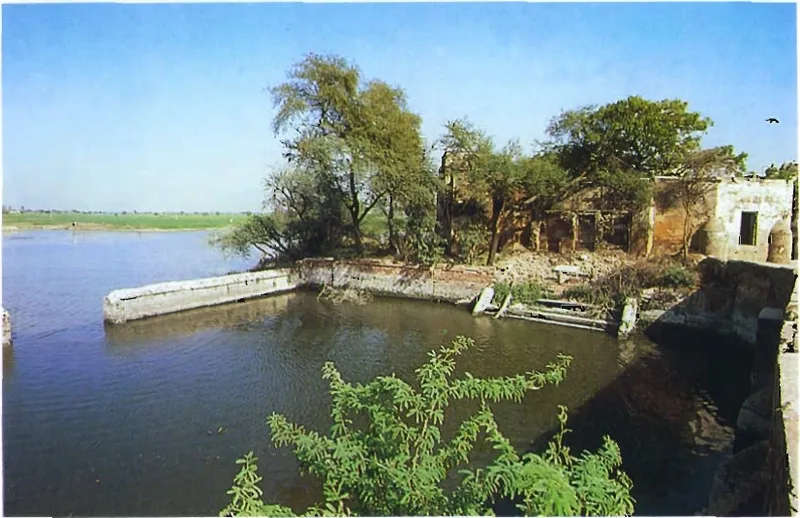
Lalitā-kuṇḍa (Rādhā-kuṇḍa)
ललिता-कुण्ड (राधा-कुण्ड)Lalitā-kuṇḍa is the kuṇḍa of Lalitā, Śrī Rādhā's sakhī (companion), north of Rādhā-kuṇḍa and Śyāma-kuṇḍa.
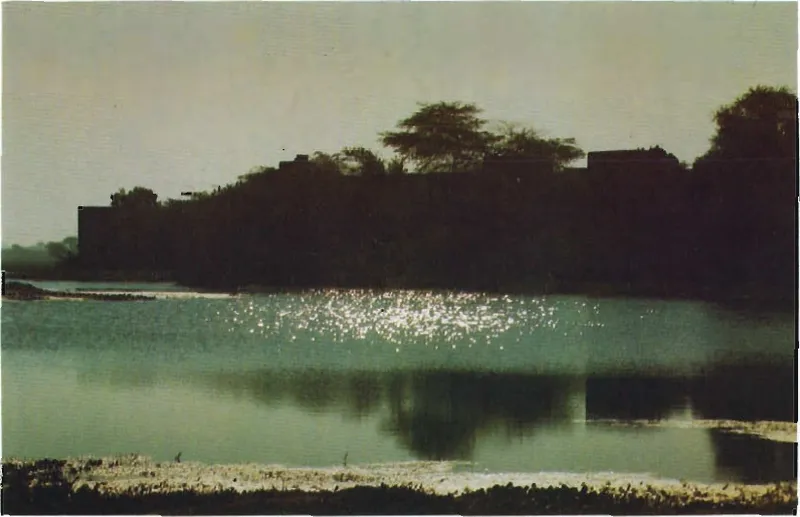
Mohana-kuṇḍa (Rādhā-kuṇḍa)
मोहन-कुण्ड (राधा-कुण्ड)Mohana-kuṇḍa is a pond just next to Lalitā-kuṇḍa in Rādhā-kuṇḍa village.
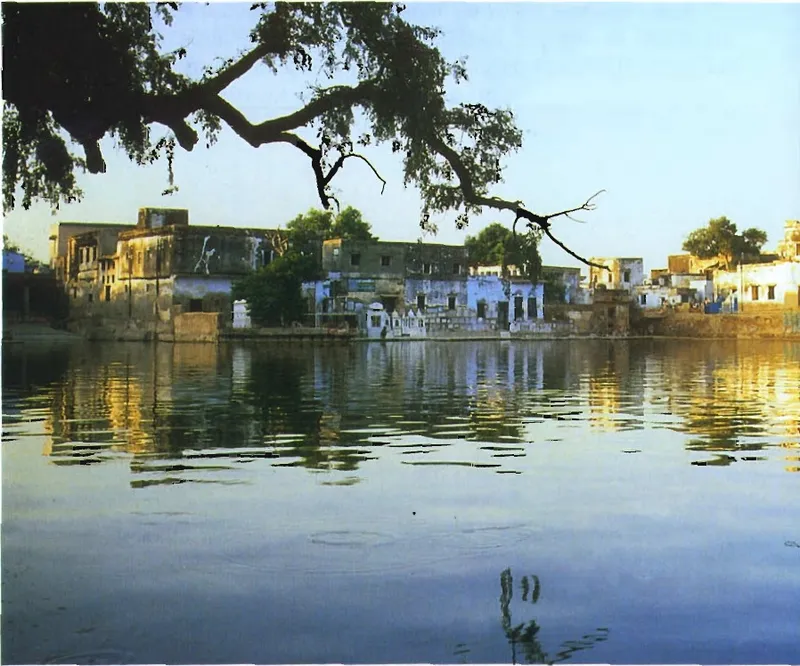
Rādhā-kuṇḍa
राधा-कुण्डRādhā-kuṇḍa is the lake of Śrī Rādhā at the foot of Govardhana Hill, in the village of Āriṭa.
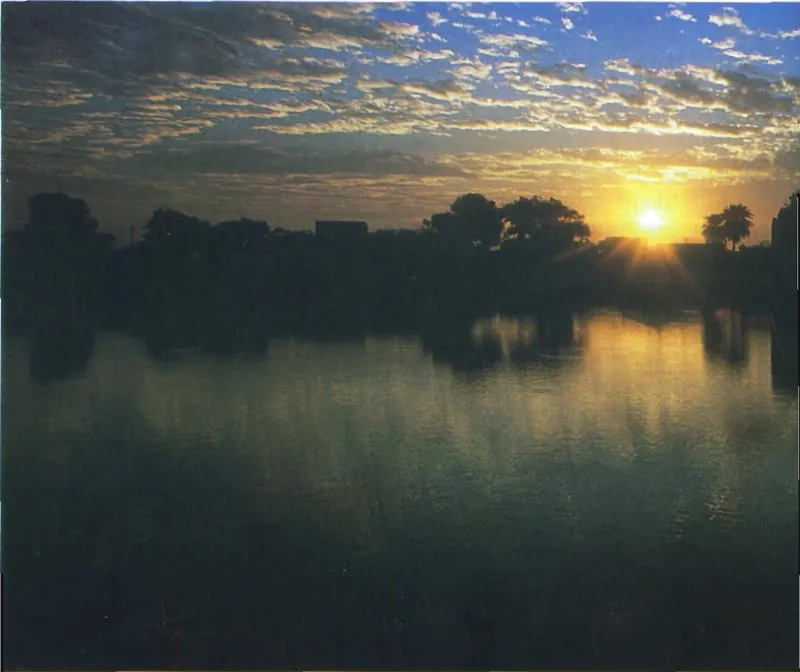
Śyāma-kuṇḍa (Rādhā-kuṇḍa)
श्याम-कुण्ड (राधा-कुण्ड)Śyāma-kuṇḍa, also called Kṛṣṇa-kuṇḍa, is Kṛṣṇa's lake beside Rādhā-kuṇḍa at the foot of Govardhana Hill.
Rādhā-kuṇḍa (village)
राधा-कुण्ड (गाँव)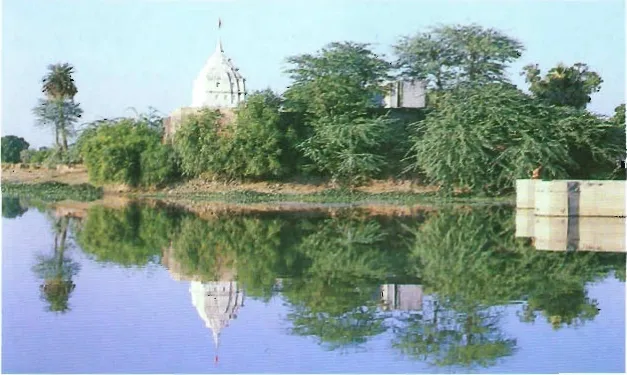
Tālavana
तालवनTālavana, the forest of tāla (palm) trees, is one of the twelve forests of Vraja and one of the seven on the western side of the Yamunā.
Lalitā-bihārī Mandira (Rādhā-kuṇḍa)
ललिता-बिहारी मन्दिर (राधा-कुण्ड)The Lalitā-bihārī Mandira is a temple just past Lalitā-kuṇḍa and Mohana-kuṇḍa in Rādhā-kuṇḍa village; in 1999 The Colour Guide to Rādhā-kuṇḍa described it as run by Vaiṣṇ …
Questions and answers
According to the Vraja-bhakti-vilāsa, Kṛṣṇa, as Lalitā-mohana, called the sixty-eight well-known holy places and bathed there after killing a demon in a bull's form. From then on the two kuṇḍas named Lalitā and Mohana were known.[2, 3]
The pond beside Lalitā-kuṇḍa, named after Mohana, the charmer, a name of Kṛṣṇa. The Vraja-bhakti-vilāsa lists the two together north of the kuṇḍas of Rādhā and Kṛṣṇa.[1, 21]
The Garga-saṁhitā names a Lalitā-kuṇḍa in Nārada's list of the holy places of Govardhana, next to Rādhā-kuṇḍa and Kṛṣṇa-kuṇḍa, but tells no story of it. The Bhāgavatam does not name it.[4 +6]
No. The commentators on the Tenth Canto explain that Ariṣṭa was a demon who only had a bull's form. Śrīla Jīva Gosvāmī says that Kṛṣṇa's bath only acted out a purification. The gopīs' charge belongs to their loving, joking exchange.[5, 9–12]
The Bhāgavatam sets it in the Tālavana, where Balarāma killed him. The commentators place that forest near Govardhana or Mathurā. Only the Vraja-bhakti-vilāsa puts the place beside Lalitā-kuṇḍa.[1 +7]
The Vraja-bhakti-vilāsa tells them to bathe first in Lalitā-kuṇḍa and then in Mohana-kuṇḍa, with a prayer it gives, and says that this frees one from six kinds of killing.[20]
Sources
- Śrīla Nārāyaṇa Bhaṭṭa Gosvāmī, Vraja-bhakti-vilāsa, list of the marks of Śrī-kuṇḍa-vana, § 43, 1st ed., publ. Bābā Kṛṣṇadāsa, Kusuma-sarovara, Saṁvat 2008
- Śrīla Nārāyaṇa Bhaṭṭa Gosvāmī, Vraja-bhakti-vilāsa, chapter 4 (Śrī-kuṇḍa-vana), verses numbered 4, 1st ed., publ. Bābā Kṛṣṇadāsa, Kusuma-sarovara, Saṁvat 2008
- Śrīla Nārāyaṇa Bhaṭṭa Gosvāmī, Vraja-bhakti-vilāsa, chapter 4 (Śrī-kuṇḍa-vana), verses numbered 5, 1st ed., publ. Bābā Kṛṣṇadāsa, Kusuma-sarovara, Saṁvat 2008
- Śrīmad-Bhāgavatam 10.36.1, GRETIL
- Śrīmad-Bhāgavatam 10.36.7, GRETIL
- Śrīmad-Bhāgavatam 10.36.13, GRETIL
- Śrīmad-Bhāgavatam 10.36.15, GRETIL
- Śrīla Prabhupāda, Kṛṣṇa, the Supreme Personality of Godhead (Kṛṣṇa book), Chapter 36, 'Kaṁsa Sends Akrūra for Kṛṣṇa' · vedabase.io
- Śrīla Jīva Gosvāmī, Śrīla Viśvanātha Cakravartī Ṭhākura: commentary on ŚB 10.36.7: Jīva Gosvāmī Śrīmad-Bhāgavatam canto 10, part 5, with ten commentaries, Viśvanātha Cakravartī Śrīmad-Bhāgavatam canto 10, part 5, with ten commentaries, Bhagavata Vidya Pith edition, ed. Bhagavata Rishi and Krishna Shankar Shastri, 1996
- Śrīla Jīva Gosvāmī: commentary on ŚB 10.36.15, Bhagavata Vidya Pith edition, ed. Bhagavata Rishi and Krishna Shankar Shastri, 1996
- Śrīla Viśvanātha Cakravartī Ṭhākura: commentary on ŚB 10.36.15: the introduction and verses i–ii of the twenty verses he quotes, Bhagavata Vidya Pith edition, ed. Bhagavata Rishi and Krishna Shankar Shastri, 1996
- Śrīla Viśvanātha Cakravartī Ṭhākura: commentary on ŚB 10.36.15: verses vi and ix of the twenty verses he quotes, Bhagavata Vidya Pith edition, ed. Bhagavata Rishi and Krishna Shankar Shastri, 1996
- Garga-saṁhitā, Girirāja-khaṇḍa (3), adhyāya 7, verse 8, Sanskrit Wikisource
- Garga-saṁhitā, Mādhurya-khaṇḍa (4), adhyāya 19, verse 42, Sanskrit Wikisource
- Śrīmad-Bhāgavatam 10.15.27, GRETIL
- Śrīmad-Bhāgavatam 10.15.32, GRETIL
- Śrīla Prabhupāda, Kṛṣṇa, the Supreme Personality of Godhead, Chapter 15, 'The Killing of Dhenukāsura' · vedabase.io
- Śrīla Jīva Gosvāmī, Śrīla Viśvanātha Cakravartī Ṭhākura: commentary on ŚB 10.15.21: Sanātana Śrīmad-Bhāgavatam canto 10, part 2, with ten commentaries, Jīva 299387, Viśvanātha 299389, Bhagavata Vidya Pith edition, ed. Bhagavata Rishi and Krishna Shankar Shastri, 1996
- Varāha Purāṇa, adhyāya 157, verse 39, Sanskrit Wikisource
- Śrīla Nārāyaṇa Bhaṭṭa, Vraja-bhakti-vilāsa, chapter 4 (Śrī-kuṇḍa-vana), § 4, printed p. 84, 1st ed., publ. Bābā Kṛṣṇadāsa, Kusuma-sarovara, Saṁvat 2008
Show all 32 references
- Śrīla Nārāyaṇa Bhaṭṭa, Vraja-bhakti-vilāsa, chapter 4 (Śrī Kuṇḍa-vana), Ariṣṭa-vana section, printed p. 84: the two verses before 'tato lalitāmohanakuṇḍayoḥ snānaprārthanamantraḥ', 1st ed., publ. Bābā Kṛṣṇadāsa, Kusuma-sarovara, Saṁvat 2008
- Śrīla Prabhupāda, Śrī Caitanya-caritāmṛta, Madhya-līlā 18.3, purport · vedabase.io
- Varāha Purāṇa, adhyāya 164, verses 31-36, Sanskrit Wikisource
- Śrīla Viśvanātha Cakravartī Ṭhākura: commentary on ŚB 10.36.15: the introduction and verses i–ii of the twenty verses he quotes, Bhagavata Vidya Pith edition, ed. Bhagavata Rishi and Krishna Shankar Shastri, 1996
- The Colour Guide to Rādhā-kuṇḍa (1999), Rājaśekhara dāsa Brahmacārī, PDF p. 129
- Śrīla Nārāyaṇa Bhaṭṭa Gosvāmī, Vraja-bhakti-vilāsa, chapter 4 (Śrī-kuṇḍa-vana), end of the verses numbered 3 and beginning of those numbered 4, 1st ed., publ. Bābā Kṛṣṇadāsa, Kusuma-sarovara, Saṁvat 2008
- Śrīmad-Bhāgavatam 10.43.25, GRETIL
- Śrīmad-Bhāgavatam 10.46.26, GRETIL
- Śrīla Prabhupāda, Kṛṣṇa, the Supreme Personality of Godhead (Kṛṣṇa book), Chapter 43, 'The Killing of the Elephant Kuvalayāpīḍa' (the citizens of Mathurā) · vedabase.io
- Śrīla Prabhupāda, Kṛṣṇa, the Supreme Personality of Godhead (Kṛṣṇa book), Chapter 46, 'Uddhava Visits Vṛndāvana' (Nanda Mahārāja's words) · vedabase.io
- Śrīla Prabhupāda, Śrīmad-Bhāgavatam, 2.7.34–35, translation · vedabase.io
- Harivaṁśa, 57.3, GRETIL
Further sources
- Śrīmad-Bhāgavatam 2.7.34–35 (translation by Śrīla Prabhupāda); 10.15, 10.36, 10.43.25, 10.46.26 (translation of Canto 10 by the disciples of Śrīla Prabhupāda, BBT), including the twenty verses in the purport to 10.36.16; Śrīla Prabhupāda, Kṛṣṇa, chapters 15 and 36; Śrī Caitanya-caritāmṛta, Madhya-līlā 18.3, purport.
- Commentaries on Śrīmad-Bhāgavatam 10.15.21, 10.36.7 and 10.36.15 by Śrīla Sanātana Gosvāmī, Śrīla Jīva Gosvāmī and Śrīla Viśvanātha Cakravartī Ṭhākura (Sanskrit): summarised here, not translated.
- Śrīla Nārāyaṇa Bhaṭṭa Gosvāmī, Vraja-bhakti-vilāsa, § 43 and chapter 4 (Sanskrit with Hindi rendering); Varāha Purāṇa 157.39 and 164.31–38; Harivaṁśa 57 (critical edition); Garga-saṁhitā, Girirāja-khaṇḍa 3.7.8: summarised here, not translated.
- The Colour Guide to Rādhā-kuṇḍa (1999).