The kuñjas of the sakhīs around Rādhā-kuṇḍa
राधा-कुण्ड के चारों ओर सखियों के कुंज
In short
The Gosvāmīs describe Rādhā-kuṇḍa (Radha Kund), a sacred pond, in the eternal pastimes as ringed with kuñjas, groves and bower-houses. These belong to Śrī Rādhā's eight dearest friends, the sakhīs: Lalitā's to the north, Viśākhā's to the north-east and so on. Groves of Kṛṣṇa's friends ring Śyāma-kuṇḍa. These are descriptions of the pastimes, not maps of buildings standing today.[1–10]
On this page
At a glance
- Śrīla Raghunātha dāsa Gosvāmī's Rādhā-kuṇḍāṣṭaka speaks of named groves on the banks, shared out among Śrī Rādhā's own circle, without naming any one of them.[11]
- The Bhakti-ratnākara says that the kuñjas of the eight sakhīs, headed by Lalitā, lie on all sides of Rādhā-kuṇḍa, and those of Subala and Kṛṣṇa's other friends around Śyāma-kuṇḍa.[9, 10]
- The fullest plan is in the seventh canto of Śrīla Kṛṣṇadāsa Kavirāja Gosvāmī's Govinda-līlāmṛta: one kuñja for each sakhī, in each of the eight directions.[1 +4]
- Śrīla Viśvanātha Cakravartī Ṭhākura describes the same plan in his Kṛṣṇa-bhāvanāmṛta and Vraja-rīti-cintāmaṇi.[14–19]
- A modern guidebook draws a plan from these works and adds details that neither poem has.[5 +4]
- Śrīla Prabhupāda reports Śrīla Bhaktivinoda Ṭhākura's words that Rādhā-kuṇḍa is the select place for service in the wake of Śrī Rādhā's sakhīs and mañjarīs.[23]
Are the kuñjas places or pastimes?
A kuñja is a grove or bower, a shady house of trees and creepers. The kuñjas of Rādhā-kuṇḍa belong to the eternal pastimes of Rādhā and Kṛṣṇa that the ācāryas, the great teachers, meditated on. They are described in poems and prayers, and the texts point to no building standing today.[3–10]
Later guidebooks drew maps from these descriptions and added details of their own. Those are set out below, each with its source.[5 +4]
Śrīla Prabhupāda warned that these pastimes are not to be approached lightly. In a lecture at Vṛndāvana in 1976 he said that hearing of the gopīs' dealings with Kṛṣṇa is for liberated persons, and that one should first try to understand Kṛṣṇa:
Names this place“So don't jump over the kṛṣṇa-līlā or jump over Rādhā-kuṇḍa unless you are a liberated person.”
Śrīla Prabhupāda, Lecture on Śrīmad-Bhāgavatam 1.7.16, Vṛndāvana, 14 September 1976 · vedabase.io
What do the hymns say about the groves?
Śrīla Raghunātha dāsa Gosvāmī lived at the kuṇḍa, and he speaks of the groves in general words. In the sixth verse of his Rādhā-kuṇḍāṣṭaka, a prayer of eight verses, the sweet groves on its banks hum with bees. They have been given names and shared out among Śrī Rādhā's own circle.[4, 11] Read more: Śrīla Raghunātha dāsa Gosvāmī's life at Rādhā-kuṇḍa →
The next verse speaks of a fine platform on the bank where She talks with Her dearest friends about Kṛṣṇa.[4]
In his Vraja-vilāsa-stava (52, 54) he takes shelter of the place where the banks of the two kuṇḍas meet, among kadamba, campaka, mango and bakula trees. He also honours the great bower on the bank of Rādhā's lake, with its pavilion of jewels, gold and pearls.[24–26]
Śrīla Prabodhānanda Sarasvatī asks his friend to remember the circle of creeper pavilions at Śrī Rādhikā-kuṇḍa (Vṛndāvana-mahimāmṛta 5.14). None of these verses names a single kuñja (all summarised here, not translated).[27]
The Bhakti-ratnākara is a Bengali book of pilgrimage by Śrīla Narahari Cakravartī Ṭhākura. It says that the kuñjas of the eight sakhīs headed by Lalitā lie on all sides of Śrī Rādhikā's kuṇḍa. Those of Subala and Kṛṣṇa's other friends lie on all sides of Śyāma-kuṇḍa.[9, 10]
A song of the author's own follows. In it Kṛṣṇa stands on the bank and gazes at the lake, its jewelled ghāṭas, or bathing steps, its pavilions, and the kuñjas of Lalitā and the others all around.[28]
Whose kuñjas surround Rādhā-kuṇḍa?
The fullest description is in the seventh canto of Śrīla Kṛṣṇadāsa Kavirāja Gosvāmī's Govinda-līlāmṛta, a long poem on the pastimes of each day. The canto tells the forenoon pastimes at Rādhā-kuṇḍa.[8 +2] A verse from this canto (7.102) is the one that Śrī Caitanya Mahāprabhu recites at the kuṇḍa in the Caitanya-caritāmṛta (Madhya 18.12).[29] Read more: How Rādhā-kuṇḍa was found and dug out again →
The kuṇḍa is ringed with jewelled steps. It has four bathing places, one in each direction, each with a jewelled pavilion. Swings hang from pairs of trees: campakas in the south, kadambas in the east, mangoes in the west and bakulas in the north.[30]
Between the east and the south-east it joins Kṛṣṇa's kuṇḍa, which was born from His foot. A bridge on pillars stands above the place where they meet.[31, 32]
On the banks, in the eight directions, stand kuñjas named after Śrī Rādhā's dearest friends. The friends arranged them with their own hands for the Divine Couple (7.27). The poem describes each one; all of it is summarised here, not translated.[1, 2, 8]
- North, Lalitā: a courtyard laid out like a lotus, with eight smaller kuñjas as its petals. It gives joy to Lalitā and is the chief palace of Rādhā and Kṛṣṇa with Their friends (7.31–34).[2 +2]
- North-east, Viśākhā: Madana-sukhada, with ornaments and canopies of flowers and leaves, and a jewelled lotus of sixteen petals at its centre (7.73–78).[14 +3]
- East, Citrā: everything many-coloured, its trees, jewels, birds, pavilion and swing (7.79–80).[14 +3]
- South-east, Indulekhā: Pūrṇendu, the full moon, all white, its courtyard set with crystal and moonstone (7.81–84).[2 +2]
- South, Campakalatā: all golden, with golden creepers, flowers and lotuses (7.85–90).[14 +3]
- South-west, Raṅgadevī: all dark, with tamāla trees and a floor of sapphires (7.93–95).[2 +2]
- West, Tuṅgavidyā: all red, and dear to Kṛṣṇa (7.96–97).[14 +3]
- North-west, Sudevī: all green, set with emeralds (7.98–99).[14 +3]
In the water of the lake, the poem goes on, stands a lotus-house laid out like a lotus of sixteen petals, which gives joy to Anaṅga-mañjarī. It is built of gems patterned like waves, so that to others it looks like water. On the north a causeway of the same kind joins it to the bank (7.12, 7.100–101).[42–44]
Whose groves surround Śyāma-kuṇḍa?
Beside Rādhā's lake Kṛṣṇa sees His own, laid out in much the same way. The same canto (7.111–113) names His closest friends: Subala, Madhumaṅgala, Ujjvala, Arjuna, Gandharva, Vidagdha, Bhṛṅga, Kokila, Dakṣa, Sannandana and others. They built kuñjas around it bearing their own names and gave them to Rādhā, Lalitā and the other sakhīs (summarised here, not translated).[45, 46]
The poem places three of them. Subala's lies in the north-west and is accepted by Rādhā. Its bathing place is Mānasa-pāvana, where Rādhā bathes every day with Her friends.[6 +2]
Madhumaṅgala's lies in the north, accepted by Lalitā, and Ujjvala's in the north-east, accepted by Viśākhā. The others, the poem says, lie in the other directions.[46, 49]
The Bhakti-ratnākara also puts Subala's kuñja (Subalānandada-kuñja) north of Śyāma-kuṇḍa, with the Mānasa-pāvana-ghāṭa there.[50]
How does Śrīla Viśvanātha Cakravartī Ṭhākura describe them?
Śrīla Viśvanātha Cakravartī Ṭhākura describes the same plan twice. In his Kṛṣṇa-bhāvanāmṛta (canto 14), Lalitā and the other sakhīs have accepted the row of kuñjas around Rādhā's lake, quarter by quarter. The commentary printed with it, by Śrī Kṛṣṇadeva Sārvabhauma, gives the same eight directions as the Govinda-līlāmṛta.[14 +6]
A house of moonstone stands in the middle of the lake, reached by a causeway from the northern bathing place; the commentary calls it Anaṅga-mañjarī's.[52]
From the south-east toward the east runs a golden causeway by which the two lakes meet, the playground of all the holy places. The commentary says that it is known as the Saṅgama, the meeting place, and that beyond it lies Kṛṣṇa's kuṇḍa among the kuñjas of Subala and the others.[53] The spot is now called Saṅgama-ghāṭa.[53]
His Vraja-rīti-cintāmaṇi (3.39–46) surrounds the kuṇḍa with clusters of the sakhīs' kuñjas. Lalitā's lies to the north, a lotus-house made only of jewels; Viśākhā's to the north-east, made only of flowers; Indulekhā's Pūrṇendu to the south-east; and the others in order.[2 +3]
He then says that the kuṇḍa and all its kuñjas, with their places and paths, are as the Govinda-līlāmṛta tells them. On one point the two poets differ. In his verse Viśākhā's kuñja is of flowers alone, while the Govinda-līlāmṛta gives it a centre of jewelled ground (both summarised here, not translated).[14–20]
What do the guidebooks add?
Śrī Vraja-maṇḍala Parikramā (2007) describes the kuñjas of both kuṇḍas as told in the Kṛṣṇa-bhāvanāmṛta and the Govinda-līlāmṛta, and draws a plan of them. It does not say which detail comes from which work.[5 +4] For Lalitā's kuñja it follows the poems: north of Rādhā-kuṇḍa, a golden lotus of eight petals.[2 +4]
The same book adds details that neither poem has. It gives places and owners to friends' kuñjas that the Govinda-līlāmṛta leaves unplaced. Arjuna's kuñja, it says, lies east of Śyāma-kuṇḍa, made of sapphires and given to Citrā; Gandharva's lies in the south-east, given to Indulekhā.[6 +2]
It says too that Bhṛṅga's kuñja was given to Raṅgadevī and Madhumaṅgala's to Lalitā. It may place Kokila's in the west, given to Sudevī, though its own map draws it elsewhere.[5 +3]
The Colour Guide to Rādhā-kuṇḍa (1999) shows the kuñjas of the eight sakhīs and of eight of Kṛṣṇa's friends in a painting. The painting has no compass, so its directions cannot be compared with the poems.[56] The book also says that the Rādhā-Kānta temple stands on the spot of Tuṅgavidyā's kuñja; no other source says so, and it is not certain.[57]
These links between today's buildings and kuñjas of the eternal pastimes are the guidebooks' own. The poems describe the pastimes and point to no present-day building.[9 +2]
Service in the wake of the sakhīs
Explaining Śrīla Rūpa Gosvāmī's Upadeśāmṛta, Śrīla Prabhupāda reports what Śrīla Bhaktivinoda Ṭhākura wrote about the place:
Names this place“Śrīla Bhaktivinoda Ṭhākura writes in this connection that Śrī Rādhā-kuṇḍa is the most select place for those interested in advancing their devotional service in the wake of the lady friends (sakhīs) and confidential serving maids (mañjarīs) of Śrīmatī Rādhārāṇī.”
Śrīla Prabhupāda, The Nectar of Instruction (Śrī Upadeśāmṛta), Text 11, purport · vedabase.io
Śrīla Bhaktivinoda Ṭhākura also sang of the banks of Rādhā-kuṇḍa. In his song he longs for a cottage in a grove he calls Svānanda-sukhada-kuñja, where he would sit and sing Kṛṣṇa's names.[23 +2]
In a letter of 1970 Śrīla Prabhupāda lists the eight principal sakhīs, the owners of these kuñjas. They are Lalitā, Viśākhā, Citrā (whom he calls Sucitrā), Campakalatā, Raṅgadevī, Sudevī, Tuṅgavidyā and Indulekhā (Indurekhā in the letter), the same eight that Śrīla Rūpa Gosvāmī names in the Ujjvala-nīlamaṇi.[60, 61]
Where the sources differ
On some kuñjas the guidebooks and the poems differ, and the books do not agree among themselves. Each position is given as its source tells it.[2 +10]
Lalitā's kuñja. The 2007 guidebook, in its walk around the village, says that Lalitā-kuṇḍa lies on the place of Lalitā's kuñja, north-east of Śyāma-kuṇḍa. The poems put that kuñja north of Rādhā-kuṇḍa and do not mention Lalitā-kuṇḍa.[2 +4] Read more: How Lalitā-kuṇḍa and Mohana-kuṇḍa became known →
Accounts differ Where Lalitānandada-kuñja lies.
- Śrī Vraja-maṇḍala Parikramā (2007), kuñja description and illustrated planNorth of Śrī Rādhā-kuṇḍa (text); on the north bank of Rādhā-kuṇḍa (plan).
- Śrī Vraja-maṇḍala Parikramā (2007), walk and town mapLalitā-kuṇḍa 'is situated on the location of Lalitānandada-kuñja'; the town map draws Lalitā-kuṇḍa as a small tank north-east of Śyāma-kuṇḍa, east of the ring road (key 10).
- The Colour Guide to Rādhā-kuṇḍa (1999), schematic paintingLalitā-kuñja at the lower left of Rādhā-kuṇḍa, next to Sudevī-kuñja; no compass.
- Govinda-līlāmṛta 7.31–34; Vraja-rīti-cintāmaṇi 3.40; Kṛṣṇa-bhāvanāmṛta 14.10 with the ṭīkā of Kṛṣṇadeva SārvabhaumaLalitā's kuñja lies north of Rādhā-kuṇḍa (GLA: near the northern tīrtha); none of them mentions Lalitā-kuṇḍa.
What two kuñjas are made of. The same book makes Indulekhā's kuñja of diamonds, while the Govinda-līlāmṛta makes it of crystal and moonstone; and the two poets differ on Viśākhā's kuñja, as said above.[2 +6]
Accounts differ Name and materials of Indulekhā's kuñja south-east of Rādhā-kuṇḍa.
- Śrī Vraja-maṇḍala Parikramā (2007), following 'Kṛṣṇa-bhāvanāmṛta and Govinda-lilāmṛta'Indulekhānandada, shaped like an eight-petalled lotus and made of diamonds (plan: Indulekhānandada-kuñja at the south-east).
- Govinda-līlāmṛta 7.81–84Pūrṇendu, giving happiness to Indulekhā, all white, its courtyard inlaid with crystals (sphaṭika) and moonstones (indukānta).
- Vraja-rīti-cintāmaṇi 3.41 (Śrīla Viśvanātha Cakravartī Ṭhākura)The Pūrṇendu-kuñja at the south-east corner, sung as delighting Indulekhā.
- Kuñja-varṇana c.83–84 (Bengali; attribution doubtful)A charming kuñja at the kuṇḍa's south-east corner, 'Indurekhā's sukhadā (happiness-giving) kuñja'; c.84 gives the kuñja's name as printed 'candraa kānti' (perhaps Candrakānti; the reading is unclear), with crystal pillars and crystal terraces.
The wording of these accounts is our summary of the sources, not a published translation.
Accounts differ What Viśākhā's kuñja is made of: jewels, or flowers alone (descriptions of one kuñja of the eternal pastimes in different works; outside Canto 10).
- Govinda-līlāmṛta 7.75–7.76 (Śrīla Kṛṣṇadāsa Kavirāja Gosvāmī)Its ornaments, clothes, beds and canopies are made of flowers and leaves (7.75), and at its centre is a sixteen-petalled lotus of ground inlaid with heaps of jewels (7.76).
- Vraja-rīti-cintāmaṇi 3.40 (Śrīla Viśvanātha Cakravartī Ṭhākura)The kuñja Viśākhā-pramada in the north-east corner is made of flowers alone (kusumaika-kḷptam); in the same verse Lalitā's kuñja is a house of jewels alone.
- Kuñja-varṇana c.73 (attributed to Śrīla Narottama dāsa Ṭhākura; doubtful)Huts of many kinds with lovely doors and divine beds; the kuñja shines with the colour of a cloud.
- Śrī Vraja-maṇḍala Parikramā (2007), following the Kṛṣṇa-bhāvanāmṛta and Govinda-līlāmṛta, as it saysViśākhānandada is the bejewelled kuñja of Viśākhā Sakhī, shaped like a sixteen-petalled lotus.
The house in the lake. In the 2007 guidebook a bridge of moonstones joins it to the bank, and it is called Svānanda-sukhada-kuñja. The Colour Guide (1999) speaks instead of a footbridge of crystal running out from the spot where Śrī Jāhnavā-devī sat.[5 +3]
Accounts differ The causeway to the kuñja in the middle of Rādhā-kuṇḍa: where it starts and what it is made of.
- Govinda-līlāmṛta 7.12, 7.100–7.101In the north (Kubera's direction) the lotus-house is joined to a causeway of that kind (tādṛk-setubandha), i.e. like the house, which is built of topazes, moonstones and emeralds and looks like water to others; 7.12: a jewelled temple with a causeway in the water of the lake's middle. (The 'pure crystal' of 7.29 is said of the paths among the kuñjas on the banks, not of this causeway.)
- Kṛṣṇa-bhāvanāmṛta 14.14 with Kṛṣṇadeva Sārvabhauma's ṭīkāA causeway from the bathing place (tīrtha) on the north side; its material is not given; the house itself is of moonstone.
- Śrī Vraja-maṇḍala Parikramā (2007)'connected with the bank of the kuṇḍa by a bridge made of moonstones'; its map draws a straight causeway from the north bank to the central kuñja.
- The Colour Guide to Rādhā-kuṇḍa (1999)'the very spot where Jāhnavā mātā sat, is the place where in aprakaṭa-līlā, a footbridge made of pure crystal extends out into the middle of Rādhā-kuṇḍā'.
The wording of these accounts is our summary of the sources, not a published translation.
The name Svānanda-sukhada-kuñja. According to the guidebooks, the name is also given to the bhajana-kuṭī, the hut for prayer, of Śrīla Bhaktivinoda Ṭhākura at Rādhā-kuṇḍa. In his song it is the grove on the kuṇḍa's banks where he longs for a cottage. To which place the name belongs, the sources do not agree.[5 +5]
Accounts differ To what the name Svānanda-sukhada-kuñja belongs.
- Śrīla Bhaktivinoda Ṭhākura's songs as the song book (Nandgram Dham Vaiṣṇava song book (nandgramdham.org/songs/) (2026)) gives them: 'Cintāmaṇi-moya' and 'Baraṇe taḍit' (Gīta-mālā, Siddhi-lālasā) and 'Āmi to' svānanda-sukhada-bāsī' (Śaraṇāgati); with Vṛndāvana-Dhāma Ki Jaya! (c. 1986)'s own English of 'Cintāmaṇi-moya'Among the hundreds of groves on the cintāmaṇi banks of Rādhā-kuṇḍa is the charming Svānanda-sukhada kuñja, with a cottage where the singer longs to sit and sing Kṛṣṇa's names ('Cintāmaṇi-moya' vv. 1–2; Vṛndāvana-Dhāma Ki Jaya! (c. 1986): 'My cottage is shining beautifully within that most enchanting garden called Svānanda-sukhada-kuñja'); the singer longs to be the maidservant Kamala-mañjarī, whose home (dhāma) is Svānanda-sukhada, and asks when, residing at Rādhā-kuṇḍa, she will serve Rādhā-Kṛṣṇa ('Baraṇe taḍit' vv. 1, 4; the song does not say in so many words that this home is at Rādhā-kuṇḍa); the singer is a resident of Svānanda-sukhada and a maidservant of Rādhikā-Mādhava's feet ('Āmi to'' v. 1; the song does not name Rādhā-kuṇḍa).
- The Colour Guide to Rādhā-kuṇḍa (1999); the undated parikramā notes Rādhā-kuṇḍaŚrīla Bhaktivinoda Ṭhākura's bhajana-kuṭīra at Rādhā-kuṇḍa, used after him by Śrīla Bhaktisiddhānta Sarasvatī Ṭhākura, 'is known as the Vraja-Swānanda-Sukhada-kuñja' (The Colour Guide to Rādhā-kuṇḍa (1999), text and photo caption); the undated parikramā notes Rādhā-kuṇḍa reports a sign above its entrance reading 'Vraja Swananda Sukhada Kunja'.
- Śrī Vraja-maṇḍala Parikramā (2007)In the centre of Śrī Rādhā-kuṇḍa is Anaṅga Mañjarī's kuñja, Anaṅgamañjarī-ānandada-kuñja, 'also known as Svānanda-sukhada-kuñja'; its map of the kuñjas labels the medallion in the middle of the water 'Svānanda-sukhada-kuñja'.
- Song book (Nandgram Dham Vaiṣṇava song book (nandgramdham.org/songs/) (2026)): about-text of 'Āmi to' svānanda-sukhada-bāsī' and the description of its Śaraṇāgati section ('Bhakti Pratikūla Bhāva Varjanāṅgīkāra')Svānanda-sukhada-kuñja is 'a specific grove in Godruma near Māyāpura tied to his own devotional life' (about-text); the last sentence of the section description likewise names 'Svananda-sukhada-kunja in Godruma'. Neither gives a source for the Godruma placement (the song page lists four 'Further reading' web pages after the about-text; they are not sources used here), and no source has been found that places the kuñja in Godruma.
Places in this article
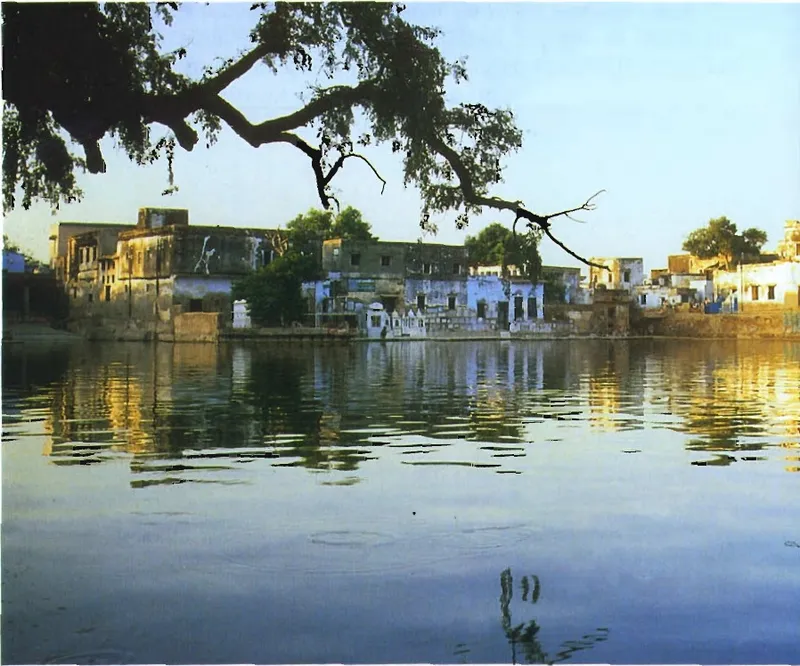
Rādhā-kuṇḍa
राधा-कुण्डRādhā-kuṇḍa is the lake of Śrī Rādhā at the foot of Govardhana Hill, in the village of Āriṭa.
Śyāma-kuṇḍa (Rādhā-kuṇḍa)
श्याम-कुण्ड (राधा-कुण्ड)Śyāma-kuṇḍa, also called Kṛṣṇa-kuṇḍa, is Kṛṣṇa's lake beside Rādhā-kuṇḍa at the foot of Govardhana Hill.
Lalitānandada-kuñja
ललितानन्दद-कुंजLalitānandada-kuñja, the grove that gives joy to Lalitā, is the kuñja (grove) of Śrī Rādhā's foremost friend Lalitā on the north side of Rādhā-kuṇḍa in the eternal pastim …
Viśākhānandada-kuñja
विशाखानन्दद-कुंजViśākhānandada-kuñja, the grove "giving joy to Viśākhā", also called Madana-sukhada, is the kuñja of Viśākhā, one of Śrī Rādhā's eight dearest friends, on the north-east …
Citrānandada-kuñja
चित्रानन्दद-कुंजCitrānandada-kuñja, the grove "giving joy to Citrā", is the kuñja of Citrā, one of Śrī Rādhā's eight dearest friends, on the east side of Rādhā-kuṇḍa.
Indulekhānandada-kuñja
इन्दुलेखानन्दद-कुंजIndulekhānandada-kuñja is the kuñja (grove) of Indulekhā, one of Śrī Rādhā's eight dearest friends, at the south-east of Rādhā-kuṇḍa.
Campakalatānandada-kuñja
चम्पकलतानन्दद-कुंजCampakalatānandada-kuñja, the grove that gives joy to Campakalatā, is the kuñja of Campakalatā on the south side of Rādhā-kuṇḍa in the eternal pastimes of Rādhā and Kṛṣṇa …
Raṅgadevī-sukhada-kuñja
रंगदेवी-सुखद-कुंजRaṅgadevī-sukhada-kuñja, the grove that gives happiness to Raṅgadevī, is the kuñja (grove) of Śrī Rādhā's friend Raṅgadevī in the south-west of Rādhā-kuṇḍa, in the eterna …
Tuṅgavidyānandada-kuñja
तुंगविद्यानन्दद-कुंजTuṅgavidyānandada-kuñja, the grove "giving joy to Tuṅgavidyā", is the kuñja (grove) of Tuṅgavidyā, one of Śrī Rādhā's eight dearest friends, on the west side of Rādhā-kuṇ …
Sudevī-sukhada-kuñja
सुदेवी-सुखद-कुंजSudevī-sukhada-kuñja, the grove "giving happiness to Sudevī", is the kuñja (grove) of Sudevī, one of Śrī Rādhā's eight dearest friends, on the north-west side of Rādhā-ku …
Anaṅgamañjarī-ānandada-kuñja
अनंगमंजरी-आनन्दद-कुंजAnaṅgamañjarī-ānandada-kuñja, the grove that gives joy to Anaṅga-mañjarī, is the house in the middle of Rādhā-kuṇḍa that the poems of the ācāryas describe in the eternal …
Subalānandada-kuñja
सुबलानन्दद-कुंजSubalānandada-kuñja is the kuñja (grove) of Subala, one of Kṛṣṇa's most intimate cowherd friends, on the bank of Śyāma-kuṇḍa, Kṛṣṇa's lake beside Rādhā-kuṇḍa.
Arjunānandada-kuñja
अर्जुनानन्दद-कुंजArjunānandada-kuñja, the grove that gives joy to Arjuna, is the kuñja of Kṛṣṇa's cowherd friend Arjuna by Śyāma-kuṇḍa, Kṛṣṇa's own kuṇḍa.
Gandharvānandada-kuñja
गन्धर्वानन्दद-कुंजGandharvānandada-kuñja is the kuñja (grove) of Gandharva, one of Kṛṣṇa's most intimate friends, which the guidebook Śrī Vraja-maṇḍala Parikramā (2007) places south-east o …
Ujjvalānandada-kuñja
उज्ज्वलानन्दद-कुंजUjjvalānandada-kuñja, the grove that gives joy to Ujjvala, is the kuñja of Kṛṣṇa's intimate friend Ujjvala in the eternal pastimes by Śyāma-kuṇḍa, Kṛṣṇa's own kuṇḍa besid …
Kokilānandada-kuñja
कोकिलानन्दद-कुंजKokilānandada-kuñja is the grove named after Kokila, a friend of Kṛṣṇa, among the kuñjas (groves) of His friends that surround Śyāma-kuṇḍa in the unmanifest pastimes, the …
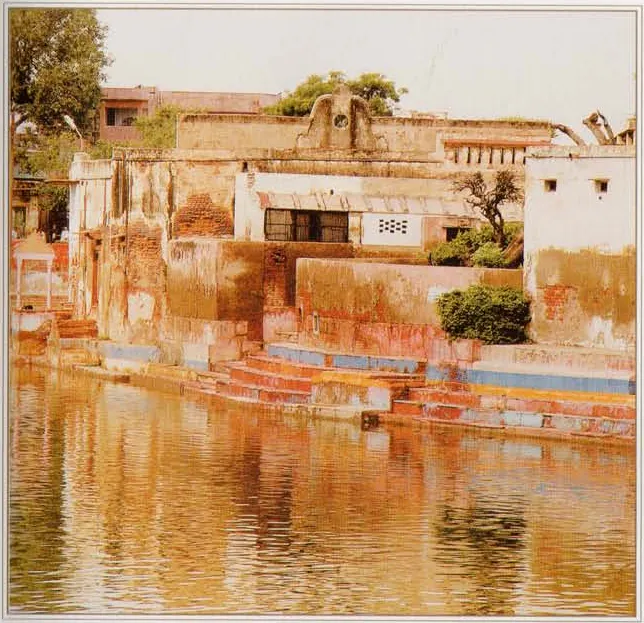
Mānasa-pāvana-ghāṭa
मानस-पावन-घाटMānasa-pāvana-ghāṭa is a bathing ghāṭa on the north side of Śyāma-kuṇḍa, Kṛṣṇa's kuṇḍa beside Rādhā-kuṇḍa.
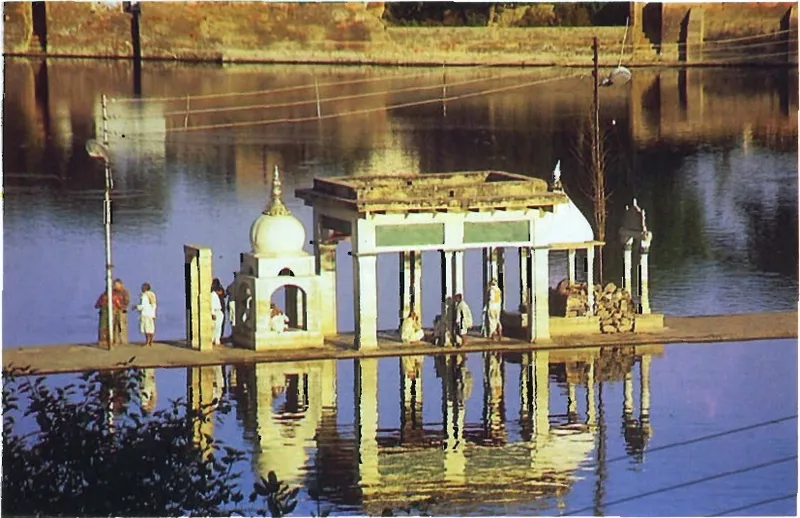
Saṅgama-ghāṭa
संगम-घाटSaṅgama-ghāṭa is the meeting place of Rādhā-kuṇḍa and Śyāma-kuṇḍa, where the banks of the two kuṇḍas (sacred ponds) touch.
Questions and answers
The kuñjas of Śrī Rādhā's eight dearest friends, the sakhīs, one in each of the eight directions, as the Govinda-līlāmṛta describes them in the eternal pastimes. The Bhakti-ratnākara says that Lalitā heads them.[1 +3]
In the Govinda-līlāmṛta it lies in the north of Rādhā-kuṇḍa, near the bathing place. It is a lotus-shaped courtyard with eight smaller kuñjas as its petals, the chief palace of Rādhā and Kṛṣṇa with Their friends.[2 +2]
Those of Kṛṣṇa's closest friends, Subala, Madhumaṅgala, Ujjvala, Arjuna and others. The Govinda-līlāmṛta says that they built them in their own names and gave them to Śrī Rādhā and the sakhīs.[45]
Lalitā, Viśākhā, Citrā, Campakalatā, Raṅgadevī, Sudevī, Tuṅgavidyā and Indulekhā, as Śrīla Rūpa Gosvāmī lists them in the Ujjvala-nīlamaṇi and Śrīla Prabhupāda in a letter of 1970.[60, 61]
The texts describe the kuñjas in the eternal pastimes and point to no present-day building. Where guidebooks link a kuñja with a building of today, such as the Rādhā-Kānta temple, the link is their own, given without an older source, and not certain.[56, 57]
In the Govinda-līlāmṛta it is a house in the water of Rādhā-kuṇḍa, laid out like a lotus of sixteen petals. A causeway of gems, which looks like water to others, joins it to the north bank.[42, 43]
Sources
- Śrīla Kṛṣṇadāsa Kavirāja Gosvāmī, Govinda-līlāmṛta, sarga 7, v. 27, after the editions of Haridas Das and Haridas Shastri
- Śrīla Viśvanātha Cakravartī Ṭhākura, Kṛṣṇa-bhāvanāmṛta, sarga 14, vv. 10–11 with the ṭīkā), after the edition of Radhikanath Goswami, Vrindavan, 1906
- Śrīla Narahari Cakravartī, Bhakti-ratnākara, Pañcama-taraṅga (5th wave), printed page 191, 2nd ed., 1912
- Śrīla Raghunātha dāsa Gosvāmī, Rādhā-kuṇḍāṣṭaka, verses 6–8
- Śrī Vraja-maṇḍala Parikramā (2007), PDF p. 87
- Śrī Vraja-maṇḍala Parikramā (2007), PDF p. 88
- the undated parikramā notes Rādhā-kuṇḍa, ¶94
- Śrīla Kṛṣṇadāsa Kavirāja Gosvāmī, Govinda-līlāmṛta, sarga 7, vv. 26–27, after the editions of Haridas Das and Haridas Shastri
- Śrīla Narahari Cakravartī, Bhakti-ratnākara, Fifth Wave, 1912 ed. p. 191, after the quotation of Vraja-vilāsa-stava 52, 2nd ed., 1912
- Śrīla Narahari Cakravartī, Bhakti-ratnākara, Fifth Wave, 1912 ed. p. 192, first song (gīte yathā, rāga sāraṅga), 2nd ed., 1912
- Śrīla Raghunātha dāsa Gosvāmī, Rādhā-kuṇḍāṣṭaka, verse 6
- Śrīla Kṛṣṇadāsa Kavirāja Gosvāmī, Govinda-līlāmṛta, sarga 7, vv. 1–2, after the editions of Haridas Das and Haridas Shastri
- Śrī Caitanya-caritāmṛta, Ādi-līlā 4.125, online edition · vedabase.io
- Śrīla Viśvanātha Cakravartī Ṭhākura, Kṛṣṇa-bhāvanāmṛta, 14.10 (caturdaśaḥ sargaḥ, 'jala-vihāra-līlāsvādana'), verse and ṭīkā (index locator '(14) trayodaśaḥ sargaḥ'), after the edition of Radhikanath Goswami, Vrindavan, 1906
- Śrīla Viśvanātha Cakravartī Ṭhākura, Vraja-rīti-cintāmaṇi, 3.39–3.40 (tṛtīyaḥ sargaḥ)
- Śrīla Viśvanātha Cakravartī Ṭhākura, Vraja-rīti-cintāmaṇi, 3.44 and 3.46 (tṛtīyaḥ sargaḥ)
- Kuñja-varṇana, c.71–74 (couplets counted), after the Calcutta University edition, 1975
- Kuñja-varṇana, c.119–122 (couplets counted), after the Calcutta University edition, 1975
- Kuñja-varṇana, c.125–127 (couplets counted), after the Calcutta University edition, 1975
- Śrīla Kṛṣṇadāsa Kavirāja Gosvāmī, Govinda-līlāmṛta, 7.76–7.78 (saptamaḥ sargaḥ, the forenoon pastimes; the last three of the six verses 7.73–7.78, 'ṣaḍbhiḥ kulakam'), after the editions of Haridas Das and Haridas Shastri
Show all 65 references
- Śrīla Kṛṣṇadāsa Kavirāja Gosvāmī, Govinda-līlāmṛta, 7.96–7.97 (saptamaḥ sargaḥ, the forenoon pastimes; a pair of verses, 'yugmakam'), after the editions of Haridas Das and Haridas Shastri
- Śrīla Kṛṣṇadāsa Kavirāja Gosvāmī, Govinda-līlāmṛta, 7.98–7.99 (saptamaḥ sargaḥ, the forenoon pastimes; a pair of verses, 'yugmakam'), after the editions of Haridas Das and Haridas Shastri
- Śrīla Prabhupāda, The Nectar of Instruction (Śrī Upadeśāmṛta), Text 11, purport · vedabase.io
- Śrīla Raghunātha dāsa Gosvāmī, Vraja-vilāsa-stava, verses 52–54
- Govardhana Hill: India's Most Sacred Mountain (2001), Rajasekhara dasa Brahmacari, PDF p. 151
- Vṛndāvana-Dhāma Ki Jaya! (c. 1986), by Dhruva Mahārāja dāsa, PDF p. 35
- Vṛndāvana-mahimāmṛta, pañcamaṁ śatakam, vv. 5.13–5.15, after Shyamlal Hakim's edition, Vrindavan, 1978
- Śrīla Narahari Cakravartī, Bhakti-ratnākara, Pañcama-taraṅga (5th wave), printed page 192, first song (rāga sāraṅga), 2nd ed., 1912
- Śrī Caitanya-caritāmṛta, Madhya-līlā 18.12, online edition · vedabase.io
- Śrīla Kṛṣṇadāsa Kavirāja Gosvāmī, Govinda-līlāmṛta, sarga 7, vv. 2–6), after the editions of Haridas Das and Haridas Shastri
- Śrīla Kṛṣṇadāsa Kavirāja Gosvāmī, Govinda-līlāmṛta, sarga 7, verse 6 (in the 26-verse kulaka 7.1–26 on Rādhā-kuṇḍa), after the editions of Haridas Das and Haridas Shastri
- Śrīla Kṛṣṇadāsa Kavirāja Gosvāmī, Govinda-līlāmṛta, sarga 7, verse 26 (last verse of the kulaka 7.1–26 on Rādhā-kuṇḍa), after the editions of Haridas Das and Haridas Shastri
- Śrīla Kṛṣṇadāsa Kavirāja Gosvāmī, Govinda-līlāmṛta, sarga 7, vv. 31–34, after the editions of Haridas Das and Haridas Shastri
- Śrīla Viśvanātha Cakravartī Ṭhākura, Vraja-rīti-cintāmaṇi, sarga 3 (tṛtīyaḥ sargaḥ), vv. 39–41 and 43
- Śrīla Kṛṣṇadāsa Kavirāja Gosvāmī, Govinda-līlāmṛta, 7.79–7.80 (saptamaḥ sargaḥ, the forenoon pastimes; a pair of verses, 'yugmakam'), after the editions of Haridas Das and Haridas Shastri
- Śrīla Viśvanātha Cakravartī Ṭhākura, Vraja-rīti-cintāmaṇi, 3.39, 3.41–3.42 (tṛtīyaḥ sargaḥ)
- Kuñja-varṇana, c.77–80, after the Calcutta University edition, 1975
- Śrīla Kṛṣṇadāsa Kavirāja Gosvāmī, Govinda-līlāmṛta, sarga 7, vv. 81–84, after the editions of Haridas Das and Haridas Shastri
- Śrīla Kṛṣṇadāsa Kavirāja Gosvāmī, Govinda-līlāmṛta, 7.85–7.89 (saptamaḥ sargaḥ, the forenoon pastimes; the first five of the six verses 7.85–7.90, 'ṣaḍbhiḥ kulakam'), after the editions of Haridas Das and Haridas Shastri
- Śrīla Kṛṣṇadāsa Kavirāja Gosvāmī, Govinda-līlāmṛta, 7.90–7.92 (saptamaḥ sargaḥ, the forenoon pastimes), after the editions of Haridas Das and Haridas Shastri
- Śrīla Kṛṣṇadāsa Kavirāja Gosvāmī, Govinda-līlāmṛta, sarga 7, vv. 93–95, after the editions of Haridas Das and Haridas Shastri
- Śrīla Kṛṣṇadāsa Kavirāja Gosvāmī, Govinda-līlāmṛta, 7.100–7.101 (saptamaḥ sargaḥ, the forenoon pastimes; a pair of verses, 'yugmakam'), after the editions of Haridas Das and Haridas Shastri
- Śrīla Kṛṣṇadāsa Kavirāja Gosvāmī, Govinda-līlāmṛta, 7.12 (saptamaḥ sargaḥ, the forenoon pastimes), after the editions of Haridas Das and Haridas Shastri
- Śrīla Kṛṣṇadāsa Kavirāja Gosvāmī, Govinda-līlāmṛta, sarga 7, vv. 100–101, after the editions of Haridas Das and Haridas Shastri
- Śrīla Kṛṣṇadāsa Kavirāja Gosvāmī, Govinda-līlāmṛta, sarga 7, verses 111–113, after the editions of Haridas Das and Haridas Shastri
- Śrīla Kṛṣṇadāsa Kavirāja Gosvāmī, Govinda-līlāmṛta, 7.112–7.113 (a pair of verses marked 'yugmakam') and 7.116 (saptamaḥ sargaḥ), after the editions of Haridas Das and Haridas Shastri
- Śrīla Kṛṣṇadāsa Kavirāja Gosvāmī, Govinda-līlāmṛta, sarga 7, verses 114–115, after the editions of Haridas Das and Haridas Shastri
- Śrī Vraja-maṇḍala Parikramā (2007), PDF p. 97
- Śrīla Kṛṣṇadāsa Kavirāja Gosvāmī, Govinda-līlāmṛta, 7.117 (saptamaḥ sargaḥ), after the editions of Haridas Das and Haridas Shastri
- Śrīla Narahari Cakravartī, Bhakti-ratnākara, Fifth Wave, 1912 ed. p. 199, 2nd ed., 1912
- Śrīla Viśvanātha Cakravartī Ṭhākura, Kṛṣṇa-bhāvanāmṛta, sarga 14 (caturdaśaḥ sargaḥ, jala-vihāra-līlāsvādana), v. 10 (the index labels the section '(14) trayodaśaḥ sargaḥ'), after the edition of Radhikanath Goswami, Vrindavan, 1906
- Śrīla Viśvanātha Cakravartī Ṭhākura, Kṛṣṇa-bhāvanāmṛta, sarga 14 (jala-vihāra-līlāsvādana), verse 14, with the ṭīkā, after the edition of Radhikanath Goswami, Vrindavan, 1906
- Śrīla Viśvanātha Cakravartī Ṭhākura, Kṛṣṇa-bhāvanāmṛta, sarga 14 (jala-vihāra-līlāsvādana), verse 15, with the ṭīkā, after the edition of Radhikanath Goswami, Vrindavan, 1906
- Śrīla Viśvanātha Cakravartī Ṭhākura, Vraja-rīti-cintāmaṇi, tṛtīyaḥ sargaḥ, vv. 39–40
- Śrī Vraja-maṇḍala Parikramā (2007), PDF p. 89
- The Colour Guide to Rādhā-kuṇḍa (1999), Rājaśekhara dāsa Brahmacārī, PDF p. 62
- The Colour Guide to Rādhā-kuṇḍa (1999), Rājaśekhara dāsa Brahmacārī, PDF p. 78
- Vṛndāvana-Dhāma Ki Jaya! (c. 1986), by Dhruva Mahārāja dāsa, PDF p. 32
- the undated parikramā notes Rādhā-kuṇḍa, ¶93
- Śrīla Prabhupāda, Letter to Tamala Krsna, letter 70-05-27, 27 May 1970 · vedabase.io
- Śrīla Rūpa Gosvāmī, Ujjvala-nīlamaṇi, 4.54 (śrī-rādhā-prakaraṇa; GRETIL), GRETIL
- The Colour Guide to Rādhā-kuṇḍa (1999), Rājaśekhara dāsa Brahmacārī, PDF p. 88
- The Colour Guide to Rādhā-kuṇḍa (1999), Rājaśekhara dāsa Brahmacārī, PDF p. 122
- the undated parikramā notes Rādhā-kuṇḍa, ¶100
- Nandgram Dham Vaiṣṇava song book, ‘Āmi To’ Swānanda Sukhada Bāsī’ · song book
Further sources
- Śrīla Kṛṣṇadāsa Kavirāja Gosvāmī, Govinda-līlāmṛta, canto 7; Śrīla Viśvanātha Cakravartī Ṭhākura, Kṛṣṇa-bhāvanāmṛta, canto 14, with the commentary of Śrī Kṛṣṇadeva Sārvabhauma, and Vraja-rīti-cintāmaṇi 3.39–46; Śrīla Raghunātha dāsa Gosvāmī, Rādhā-kuṇḍāṣṭaka and Vraja-vilāsa-stava; Śrīla Prabodhānanda Sarasvatī, Vṛndāvana-mahimāmṛta 5.13–15 (Gaudiya Grantha Mandira digital editions): summarised here, not translated.
- Bhakti-ratnākara, Fifth Wave (Bengali, 1912 edition): summarised here, not translated.
- Śrīla Prabhupāda, The Nectar of Instruction, text 11, purport; lecture on Śrīmad-Bhāgavatam 1.7.16, Vṛndāvana, 1976; letter to Tamāla Kṛṣṇa, 27 May 1970; Śrī Caitanya-caritāmṛta, Madhya-līlā 18.12 (BBT).
- Śrī Vraja-maṇḍala Parikramā (2007); The Colour Guide to Rādhā-kuṇḍa (1999).