Gahvaravana (Varṣāṇā)
गह्वरवन (बरसाना) Hindi name proposed
Also called Gahavara vana
- What it is
- Gahvaravana, the forest of the hollow, is the wooded ground at the foot of the hill of Varṣāṇā.
- Visiting
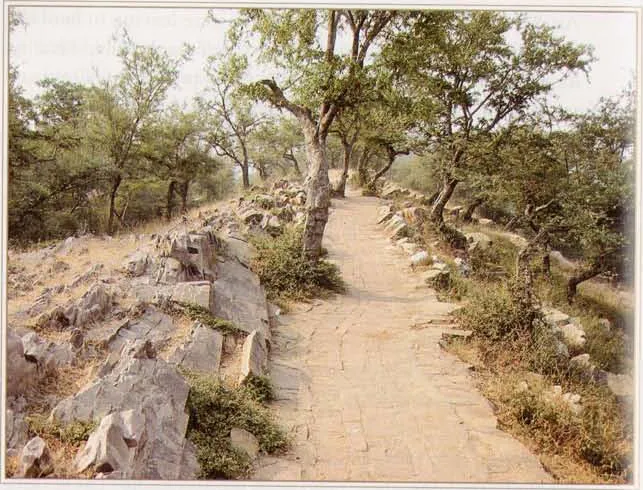
- Śrī Vraja-maṇḍala Parikramā (2007) shows a paved parikramā path through Gahvaravana and the groves near Kṛṣṇa-kuṇḍa, where Vaiṣṇavas walk with deep faith.
- Places here
- Māna-garh, Jhūlana-sthalī (Māna-garh), Rāsa-maṇḍala (Māna-garh), Ratnākara-sarovara (Varṣāṇā), Kṛṣṇa-kuṇḍa (Gahvaravana) +3 more
In short
Gahvaravana, the forest of the hollow, is the wooded ground at the foot of the hill of Varṣāṇā. The Bhakti-ratnākara points out the dense forest in the hollow (gahvara) of the hill and says that people now call it Gahvaravana.[1] Śrīla Nārāyaṇa Bhaṭṭa Gosvāmī's Vraja-bhakti-vilāsa names it among the holy places of Vṛṣabhānupura, the town of Śrī Rādhā's father, and gives a prayer to it as the forest of Kṛṣṇa's pastimes.[2 +1] Within it the sources place Rādhā-sarovara, a pond now called Kṛṣṇa-kuṇḍa, a rāsa-maṇḍala and a sitting-place of Śrī Vallabhācārya.[4 +3] It is a different forest from the Gahvaravana of Vṛndāvana.
Key facts
| Kind | forest |
|---|---|
| Region · area | Varṣāṇā |
| Ācāryas | Śrīla Nārāyaṇa Bhaṭṭa Gosvāmī, Śrīla Narahari Cakravartī Ṭhākura, Śrīla Śrīnivāsa Ācārya, Śrī Vallabhācārya, Śrīla Rāghava Paṇḍita Gosvāmī of Govardhana |
Why it is glorified
In the Fifth Wave of the Bhakti-ratnākara, Śrīla Rāghava Paṇḍita Gosvāmī of Govardhana, guiding Śrīla Śrīnivāsa Ācārya through …
In the Fifth Wave of the Bhakti-ratnākara, Śrīla Rāghava Paṇḍita Gosvāmī of Govardhana, guiding Śrīla Śrīnivāsa Ācārya through Varṣāṇā, says after the village of Ciksaulī: see the dense forest in the hollow of the hill; now people call it Gahvaravana (summarised here, not translated).[1]
পর্ব্বতগহ্বরে দেখ নিবিড় কানন। এবে লোকে কহে এই গহবর বন ॥
parbbatagahbare dekha nibiṛa kānana| ebe loke kahe ei gahabara bana ||
The Vraja-bhakti-vilāsa (ch. 4, verse 62) gives a prayer for the forest, which it cites from the Bṛhan-nāradīya Purāṇa: obeisances again and again to the lovely forest called Gahvara, where Kṛṣṇa's pastimes take place, the joy of the lover of the gopīs (summarised here, not translated). The guidebook Śrī Vraja-maṇḍala Parikramā (2007) prints the same verse with the same source; the verse has not been found in that Purāṇa.[2 +4]
ततो गह्वरबनप्रार्थनमन्त्रः । वृहन्नारदीये— गह्वराख्याय रम्याय कृष्णलीलाविधायिने । गोपीरमणसौख्याय वनाय च नमो नमः ॥ इति षोडशवृत्तिभि र्मन्त्रमुक्त्वा नमश्चरेत् । भगवच्छखीतां लब्ध्वा भुक्तिभागी भवेन्नरः ॥६२॥
tato gahvarabanaprārthanamantraḥ
vṛhannāradīye— gahvarākhyāya ramyāya kṛṣṇalīlāvidhāyine
gopīramaṇasaukhyāya vanāya ca namo namaḥ
iti ṣoḍaśavṛttibhi rmantramuktvā namaścaret
bhagavacchakhītāṁ labdhvā bhuktibhāgī bhavennaraḥ ||62||
The same book assigns Gahvaravana to Vicitrā, a companion of the sakhī Indulekhā, in a list it cites from the Trailokya-sammohana-tantra, and gives the forest's extent as half a krośa (an old measure of distance).[12 +1]
Divine pastimes
The rāsa and the rāsa-maṇḍala
The Bhāgavatam tells the rāsa dance on autumn nights on the sandy bank of the Yamunā (10.29–33), and it does not name Gahvaravana or Varṣāṇā.[14 +4] Śrīla Sanātana Gosvāmī, Śrīla Jīva Gosvāmī and Śrīla Baladeva Vidyābhūṣaṇa explain the river of that verse as the Yamunā, and Śrīla Baladeva Vidyābhūṣaṇa calls its bank the place of the rāsa.[19] Śrīla Prabhupāda's Kṛṣṇa book also tells the dance on the bank of the Yamunā.[20 +1]
nadyāḥ pulinam āviśya gopībhir hima-vālukam
reme tat-taralānanda-kumudāmoda-vāyunā ||
Śrī Kṛṣṇa went with the gopīs to the bank of the Yamunā, where the sand was cooling and the wind, enlivened by the river’s waves, bore the fragrance of lotuses.
Translation: Śrīla Prabhupāda's disciples (BBT)The rāsa-maṇḍala of Gahvaravana keeps the memory of the rāsa as a pilgrimage tradition, not as a statement of the Bhāgavatam.[4 +4] The Vraja-bhakti-vilāsa lists a rāsa-maṇḍala "in the place below" Gahvaravana, and its prayer there honours Kṛṣṇa, whose play is the vilāsa-rāsa, the lover in the form of a boy of ten, Hari in Bhānupura (summarised here, not translated).[23 +1] According to the introduction of the Hindi edition of that book, Gahvaravana is one of Śrīla Nārāyaṇa Bhaṭṭa Gosvāmī's rāsa places, whose rāsa-maṇḍalas Rājā Ṭoḍaramal paid for.[10]
The sources do not agree on where this rāsa-maṇḍala lies: according to the Vraja-bhakti-vilāsa it is below the forest, according to the guidebooks within it. Nor do they agree on which rāsa the circles of Varṣāṇā remember; those accounts are set out on the page of the rāsa-maṇḍala of Māna-garh.[23 +1]
Accounts differ Where the rāsa-maṇḍala of Gahvaravana lies.
- Vraja-bhakti-vilāsa ch. 2 v.47'tad-adhaḥ-sthale rāsamaṇḍalam': in the place below (Gahvara-vana, which it lists beside the Vilāsa-mandira on Viṣṇu-parvata).
- Śrī Vraja-maṇḍala Parikramā (2007)Within Gahvaravana ('Within Gahvaravana are Rādhā-sarovara and a rāsa-maṇḍala'), and Dohanī-kuṇḍa nearby.
- the undated parikramā notes VarṣāṇāThe rāsa-maṇḍala 'that commemorates the rasa-dance that occurred here at Managarh peak' is 'also situated within the Gahvaravana forest'.
- A. W. Entwistle (1987), a historianOn the path through Gahvaravana towards Dāna-gaḍh, Entwistle notes a rāsa-maṇḍala beside a Nimbārka temple called Gopāla-gaḍh.
The roasted chickpeas
Śrī Vraja-maṇḍala Parikramā tells, from a Braj verse it gives to a poet named Nāgarī Dāsa, a local tradition, which is not certain, that Kṛṣṇa and His friends took green chickpea plants from a field and roasted them in Gahvaravana, and that the woman guarding the field saw Kṛṣṇa, forgot her anger and fed Him. No older account has been found, and the poet is not identified.[6]
Traditional accounts
The Vraja-bhakti-vilāsa lists Rādhā-sarovara after the rāsa-maṇḍala below Gahvaravana and says that the lake is named after …
Rādhā-sarovara
The Vraja-bhakti-vilāsa lists Rādhā-sarovara after the rāsa-maṇḍala below Gahvaravana and says that the lake is named after Rādhā, who came there with sixty-four sakhīs and bathed in it every day. One who bathes with its prayer and honours the gopīs with gifts of cloth and ornaments becomes fulfilled (summarised here, not translated).[23 +1] Śrī Vraja-maṇḍala Parikramā places Rādhā-sarovara and a rāsa-maṇḍala within Gahvaravana.[4 +1]
यत्र राधा चतुः षष्ठि सखिभिः समुपागता । नित्य स्नानकृता साध्वी यतो राधा सरोऽभवत् ॥ ततो राधासरस्नानाचमनमन्त्रः— देवकृतार्थरूपायै श्रीराधासरसे नमः । त्रैलोक्यपदमोक्षाय रम्यतीर्थाय ते नमः ॥ इति मन्त्रं दशावृत्या मज्जनाचमनैः स्नपन् । गोपीनां पूजनं कुर्यात् वस्त्रालंकरणादिभिः ॥ कृतार्थी भवति लोके देवयोनिमवाप्नुयात् ॥ ६४ ॥
yatra rādhā catuḥ ṣaṣṭhi sakhibhiḥ samupāgatā
nitya snānakṛtā sādhvī yato rādhā saro'bhavat
tato rādhāsarasnānācamanamantraḥ— devakṛtārtharūpāyai śrīrādhāsarase namaḥ
trailokyapadamokṣāya ramyatīrthāya te namaḥ
iti mantraṁ daśāvṛtyā majjanācamanaiḥ snapan
gopīnāṁ pūjanaṁ kuryāt vastrālaṁkaraṇādibhiḥ
kṛtārthī bhavati loke devayonimavāpnuyāt || 64 ||
Kṛṣṇa-kuṇḍa
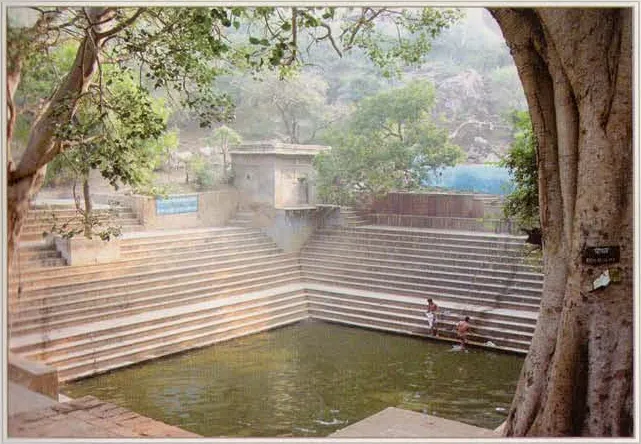
According to Śrī Vraja-maṇḍala Parikramā, Kṛṣṇa-kuṇḍa, also called Gahvara-kuṇḍa, is the beauty of Gahvaravana, shaded by creepers. Vaiṣṇavas walk around the groves near it and roll in their dust, and the pond holds many memories of the loving exchanges of Rādhā and Kṛṣṇa.[6 +1] The undated parikramā notes Varṣāṇā say that the kuṇḍa of the forest, near the foot of the hill below Mayūra-kuṭī, is known as Kṛṣṇa-kuṇḍa or sometimes Rādhārāṇī-sarovara, and that local people call it Gahvaravana-kuṇḍa.[28]
The Bhakti-ratnākara names a Śītilā-kuṇḍa "well surrounded by trees" right after Gahvaravana, and the Vraja-bhakti-vilāsa names Rādhā-sarovara. Neither says whether its pond is the one now called Kṛṣṇa-kuṇḍa.[2 +1]
Accounts differ Which pond the sources name in Gahvaravana.
- Vraja-bhakti-vilāsa ch. 2 v.47 and ch. 4 v.64Rādhā-sarovara, after the rāsa-maṇḍala below Gahvara-vana, named after Rādhā's daily bath with sixty-four sakhīs.
- Bhakti-ratnākara, Fifth Wave, p. 219In Gahvara-vana, this Śītilā-kuṇḍa, surrounded by trees; no Rādhā-sarovara.
- Śrī Vraja-maṇḍala Parikramā (2007)Rādhā-sarovara within Gahvaravana; also 'Gahvaravana and Gahvara-kuṇḍa' south-west of Sāṅkarī-khor and, as a separate entry, Kṛṣṇa-kuṇḍa, 'also called Gahvara-kuṇḍa', 'the very beauty of Gahvaravana'.
- the undated parikramā notes VarṣāṇāThe famous kuṇḍa of Gahvaravana below Mayura Kutira is 'known also as Krishna-kunda, or sometimes as Radharani-Sarovara', locally 'Gahvaravana-Kunda'.
The wording of these accounts is our summary of the sources, not a published translation.
Śrī Vallabhācārya's sitting-place
According to Śrī Vraja-maṇḍala Parikramā, Gahvaravana has a sitting-place (baiṭhaka) of Śrī Vallabhācārya, where he recited Śrīmad-Bhāgavatam, and places where many devotees performed bhajana.[4] In 1987 the historian A. W. Entwistle recorded a baiṭhaka of Śrī Vallabhācārya a little beyond the rāsa-maṇḍala on the path through the forest.[30] Śrīla Prabhupāda writes that Vallabha Bhaṭṭa, whose line is called the Vallabhācārya-sampradāya, wrote a commentary on Śrīmad-Bhāgavatam called Subodhinī; he does not mention Gahvaravana.[31]
Visiting today
Śrī Vraja-maṇḍala Parikramā (2007) shows a paved parikramā path through Gahvaravana and the groves near Kṛṣṇa-kuṇḍa, where Vaiṣṇavas walk with deep faith.[6 +1] The sources place the forest differently: beside the Vilāsa Mandira on Viṣṇu-parvata, south-west of Sāṅkarī-khor, or around the foot of Brahma-parvata.[2]
Accounts differ Where Gahvaravana lies: beside the Vilāsa-mandira, or south-west of Sāṅkarī-khor at the foot of Brahma-parvata.
- Vraja-bhakti-vilāsa ch. 2 v.47 (citing the Padma)On Viṣṇu-parvata the Kṛṣṇa temple, in front the līlā-nṛtya-mandira, beside it the Vilāsa-mandira, beside it Gahvara-vana, in the place below it a rāsa-maṇḍala; then Rādhā-sarovara and, beside it, Dohanī-kuṇḍa.
- Śrī Vraja-maṇḍala Parikramā (2007) (English of the same passage)'Near Sāṅkarī-khor is Vilāsa Mandira, and next to Vilāsa Mandira is Gahvaravana.'
- Śrī Vraja-maṇḍala Parikramā (2007) (its own overview and map)Vilāsa-garh is on Viṣṇu-parvata east of Sāṅkarī-khor; Gahvaravana and Gahvara-kuṇḍa are south-west of Sāṅkarī-khor and west of Ciksaulī; the map draws 'Gahvaravana' south-west of Brahma-parvata.
- the undated parikramā notes VarṣāṇāGahvaravana is around the base of Brahmagiri Parvata; the Managarh swing and rāsa-maṇḍala are within it.
The wording of these accounts is our summary of the sources, not a published translation.
Location
| Where it is | south-west of Sāṅkarī-khor and west of the village of Ciksaulī; next to Vilāsa Mandira; map: bottom left, south-west of Brahma-parvata[35] 'This small forest is situated around the base of Brahmagiri Parvata'[28] |
|---|
Places at Gahvaravana (Varṣāṇā)
8 places
Nearby places
Sāṅkarī-khor · Brahma-parvata · Vilāsa Mandira
Pictures
1 pictures
History
The introduction of the Hindi edition of the Vraja-bhakti-vilāsa says that Śrīla Nārāyaṇa Bhaṭṭa Gosvāmī had rāsa-maṇḍalas, swings and the like built at the rāsa places his book mentions, with money spent by Rājā Ṭoḍaramal, Akbar's treasurer, and counts Gahvaravana among the chief holy places he made known at Barsānā.[10 +1]
Along the path through the forest, A. W. Entwistle (1987) recorded a Gauḍīya temple of Gahvaravana-bihārī and a rāsa-maṇḍala beside a Nimbārka temple called Gopāla-gaṛh, on the way towards Dāna-garh; he gives no dates.[4 +3] He also reported that a verse attributed to Nehī Nāgarīdās, a poet of the late sixteenth century, names Gahvaravana; he knew the verse only from other books that quote it, so this is not certain.[34]
References
35 references
- Śrīla Narahari Cakravartī, Bhakti-ratnākara, Fifth Wave, 1912 ed. p. 219; Grantha Mandira text v.909, 2nd ed., 1912
- Śrīla Nārāyaṇa Bhaṭṭa, Vraja-bhakti-vilāsa, ch. 2 v.47, printed p. 46, 1st ed., publ. Bābā Kṛṣṇadāsa, Kusuma-sarovara, Saṁvat 2008
- Śrīla Nārāyaṇa Bhaṭṭa, Vraja-bhakti-vilāsa, ch. 4 v.62 (prayer for Gahvara-vana), printed p. 101, 1st ed., publ. Bābā Kṛṣṇadāsa, Kusuma-sarovara, Saṁvat 2008
- Śrī Vraja-maṇḍala Parikramā (2007), PDF p. 177
- A. W. Entwistle, ch. 6 §37 'Barsana', item 8 'Gahwarban', printed p. 373, Egbert Forsten, Groningen, 1987
- Śrī Vraja-maṇḍala Parikramā (2007), PDF p. 178
- Śrī Vraja-maṇḍala Parikramā (2007), PDF p. 171
- Śrīla Narahari Cakravartī, Bhakti-ratnākara, Fifth Wave, 1912 ed. p. 219; Grantha Mandira text v.909, 2nd ed., 1912
- Śrīla Nārāyaṇa Bhaṭṭa, Vraja-bhakti-vilāsa, ch. 4 v.62 (prayer for Gahvara-vana, citing the 'Bṛhannāradīya'), printed p. 101, 1st ed., publ. Bābā Kṛṣṇadāsa, Kusuma-sarovara, Saṁvat 2008
- Vraja-bhakti-vilāsa, introduction, 1st ed., publ. Bābā Kṛṣṇadāsa, Kusuma-sarovara, Saṁvat 2008
- Śrīla Nārāyaṇa Bhaṭṭa, Vraja-bhakti-vilāsa, ch. 4 v.62 (prayer for Gahvara-vana), printed p. 101, 1st ed., publ. Bābā Kṛṣṇadāsa, Kusuma-sarovara, Saṁvat 2008
- Śrīla Nārāyaṇa Bhaṭṭa, Vraja-bhakti-vilāsa, ch. 2 v.36 (the realms of Indulekhā's companions, item 3), printed p. 39, 1st ed., publ. Bābā Kṛṣṇadāsa, Kusuma-sarovara, Saṁvat 2008
- Śrīla Nārāyaṇa Bhaṭṭa, Vraja-bhakti-vilāsa, ch. 2, list of the extents of the forests, v.40, printed p. 42, 1st ed., publ. Bābā Kṛṣṇadāsa, Kusuma-sarovara, Saṁvat 2008
- Śrīmad-Bhāgavatam 10.29.45
- Śrīmad-Bhāgavatam 10.32.11–12
- Śrīmad-Bhāgavatam 10.33.2
- Śrīmad-Bhāgavatam 10.33.3
- Śrīmad-Bhāgavatam 10.33.6
- Bṛhad-vaiṣṇava-toṣaṇī of Śrīla Sanātana Gosvāmī on Śrīmad-Bhāgavatam 10.29.45: commentary on ŚB 10.29.45
- Śrīla Prabhupāda, Kṛṣṇa, the Supreme Personality of Godhead (Kṛṣṇa book), Chapter 33, 'Description of the Rāsa Dance' · vedabase.io
Show all 35 references
- Śrīla Prabhupāda, Kṛṣṇa, the Supreme Personality of Godhead, ch. 32 'Kṛṣṇa Returns to the Gopīs' · vedabase.io
- Śrīmad-Bhāgavatam 10.29.45
- Śrīla Nārāyaṇa Bhaṭṭa, Vraja-bhakti-vilāsa, ch. 2 v.47 ('ततो वृपभानुपुरलिंगानि', 'pādme'), printed p. 46, 1st ed., publ. Bābā Kṛṣṇadāsa, Kusuma-sarovara, Saṁvat 2008
- Śrīla Nārāyaṇa Bhaṭṭa, Vraja-bhakti-vilāsa, ch. 4 v.59 (prayer for the rāsa-maṇḍala at the Mayūra-kuṭī site), printed p. 101, 1st ed., publ. Bābā Kṛṣṇadāsa, Kusuma-sarovara, Saṁvat 2008
- Śrīla Nārāyaṇa Bhaṭṭa, Vraja-bhakti-vilāsa, ch. 4 v.63 (prayer at the rāsa-maṇḍala), printed pp. 101–102, 1st ed., publ. Bābā Kṛṣṇadāsa, Kusuma-sarovara, Saṁvat 2008
- Śrīla Nārāyaṇa Bhaṭṭa, Vraja-bhakti-vilāsa, ch. 4 v.64 (Rādhā-saras), printed p. 102, 1st ed., publ. Bābā Kṛṣṇadāsa, Kusuma-sarovara, Saṁvat 2008
- Śrīla Nārāyaṇa Bhaṭṭa, Vraja-bhakti-vilāsa, ch. 4 v.64 (Rādhā-saras), printed p. 102, 1st ed., publ. Bābā Kṛṣṇadāsa, Kusuma-sarovara, Saṁvat 2008
- the undated parikramā notes Varṣāṇā, ¶18
- Śrīla Narahari Cakravartī, Bhakti-ratnākara, Fifth Wave, 1912 ed. pp. 219–220; Grantha Mandira text v.910, 2nd ed., 1912
- A. W. Entwistle, §37, item 8 'Gahwarban', printed p. 373, Egbert Forsten, Groningen, 1987
- Śrīla Prabhupāda, Śrī Caitanya-caritāmṛta, Madhya-līlā 19.61, purport · vedabase.io
- Vraja-bhakti-vilāsa, introduction, p. (2), 1st ed., publ. Bābā Kṛṣṇadāsa, Kusuma-sarovara, Saṁvat 2008
- Prabhudayāl Mītal, 'Braj-yātrā', Barsana: Gahvara-vana, printed p. 120
- A. W. Entwistle, ch. 6 §37 'Barsana', printed p. 370, Egbert Forsten, Groningen, 1987
- Śrī Vraja-maṇḍala Parikramā (2007), p. 328-329