Śrī Rādhā-Dāmodara, the Deity of Śrīla Jīva Gosvāmī
श्री राधा-दामोदर, श्रील जीव गोस्वामी के श्री विग्रह
In short
Śrī Rādhā-Dāmodara is the Deity of Śrīla Jīva Gosvāmī at the Rādhā-Dāmodara temple in Vṛndāvana (Radha Damodar, Vrindavan). According to the Sādhana-dīpikā and the Bhakti-ratnākara, Śrīla Rūpa Gosvāmī made the Deity with his own hand. He gave Him to Śrīla Jīva Gosvāmī, who founded the temple for Him.[1–9]
On this page
At a glance
- Maker and first worshipper: Śrīla Rūpa Gosvāmī made the Deity and gave Him to Śrīla Jīva Gosvāmī, according to the Sādhana-dīpikā and the Bhakti-ratnākara.[1–3]
- The name: Dāmodara recalls child Kṛṣṇa, whom mother Yaśodā bound round the belly with a rope. The Bhāgavatam tells this in 10.9–10.10.[10–17]
- The day of that pastime: Dīpāvalī (the festival of lamps) in the month of Kārttika, according to Śrīla Jīva Gosvāmī and Śrīla Viśvanātha Cakravartī Ṭhākura.[18, 19]
- The beginning of the worship: about 1542 or 1543 in most accounts. A Jaipur document and the guidebooks give other years.[20–23]
- The journey: the original Deity went to Kāmā and later to Jaipur, according to the historian A. W. Entwistle (1987) and the Vṛndāvana-kathā (1920).[24, 25]
- On the same altar: Rādhā-Vṛndāvana-candra, Rādhā-Mādhava and Rādhā-Chalacikana, according to the guidebooks.[17 +6]
Who made the Deity of Rādhā-Dāmodara?
Two Bengali and Sanskrit works of the Gauḍīya tradition tell where the Deity (the sacred form of the Lord in the temple) came from. The Sādhana-dīpikā of Śrīla Rādhā-kṛṣṇa Gosvāmī offers salutations to the Gosvāmīs. It honours Śrīla Jīva Gosvāmī, who loved the feet of Śrīla Rūpa Gosvāmī and lived in Vraja. Then it says that Śrī Rūpa made the Deity Rādhā-Dāmodara with his own hand. Śrī Rūpa, the ocean of mercy, gave Him to Śrīla Jīva Gosvāmī (summarised here, not translated).[1–3]
The Bhakti-ratnākara of Śrīla Narahari Cakravartī Ṭhākura tells of the same gift in its Fourth Wave (chapter) and adds the reason. Śrīla Rūpa Gosvāmī received an order in a dream, it says. So he made Śrī Rādhā-Dāmodara with his own hands and gave Him to Śrīla Jīva Gosvāmī, and the Deity became the treasure of Śrīla Jīva Gosvāmī's life.[2, 3] The book then quotes the two verses of the Sādhana-dīpikā, with one small difference. Where the Sādhana-dīpikā has "made by Śrī Rūpa's hand", its copy reads "installed by Śrī Rūpa".[1 +2]
The words "the treasure of Śrīla Jīva Gosvāmī's life" have stayed with the Deity. The kīrtana (devotional song) Jaya Rādhā-Mādhava greets Rādhā-Dāmodara in the same way, as the treasure of Śrīla Jīva Gosvāmī, which is what the Bhakti-ratnākara calls Him.[2 +2]
The Deity's pastimes with Śrīla Jīva Gosvāmī
According to the Bhakti-ratnākara, Śrīla Jīva Gosvāmī was always joyful as he watched the pastimes of his Deity. From time to time the Lord asked him for something to eat, and Śrīla Jīva Gosvāmī watched how He ate.[2] One day, the book says, the Lord played His flute, smiling again and again, and called Śrīla Jīva Gosvāmī to come and see Him. His youthful form and dress enchanted the world (summarised here, not translated).[2] No other known source tells these pastimes.[2]
The same book shows that Śrīla Jīva Gosvāmī lived where his Deity was worshipped. When Śrīla Śrīnivāsa Ācārya reached Vṛndāvana, Śrīla Jīva Gosvāmī took him to his own home. Rādhā-Dāmodara had already gone to rest, so there was no darśana (seeing of the Deity) that night. The next morning he gave Śrīla Śrīnivāsa Ācārya darśana of the Deity.[2 +2] Then he offered Śrīla Śrīnivāsa Ācārya at the Deity's feet and took him to the samādhi of Śrīla Rūpa Gosvāmī (his tomb), which the book places "at that very place".[2 +5]
Why is He called Dāmodara?
The Deity's name comes from a pastime of Kṛṣṇa's childhood. Śrīmad-Bhāgavatam tells it in its Tenth Canto, chapters 9 and 10, in Śrīla Prabhupāda's own translation. One day mother Yaśodā found her maidservants busy, so she churned the yogurt herself and sang of her child's deeds.[10] After the pot of yogurt was broken, she bound Him to a wooden mortar with a rope.[11] Every rope she joined was two fingers too short. At last Kṛṣṇa saw that she was tired and sweating, and He agreed to be bound.[10–15]
Dragging the mortar tied to His belly, the child pulled down the twin arjuna trees. In that verse the Bhāgavatam itself calls Him Dāmodara:
bālena niṣkarṣayatānvag ulūkhalaṁ tad dāmodareṇa tarasotkalitāṅghri-bandhau
niṣpetatuḥ parama-vikramitātivepa- skandha-pravāla-viṭapau kṛta-caṇḍa-śabdau ||
By dragging behind Him with great force the wooden mortar tied to His belly, the boy Kṛṣṇa uprooted the two trees. By the great strength of the Supreme Person, the two trees, with their trunks, leaves and branches, trembled severely and fell to the ground with a great crash.
Translation: Śrīla A.C. Bhaktivedanta Swami PrabhupādaŚrīla Prabhupāda explains the name in his purport (his explanation) to that verse. He calls it the dāmodara-līlā, the pastime of Dāmodara. He quotes the Harivaṁśa, which says that because of this binding with a rope, the gopīs (cowherd women) of the village sing of Kṛṣṇa as Dāmodara.[38–40]
General teaching (does not name the place)“This is the pastime of Kṛṣṇa known as dāmodara-līlā. Therefore another of Kṛṣṇa’s names is Dāmodara. As stated in the Hari-vaṁśa: sa ca tenaiva nāmnā tu kṛṣṇo vai dāma-bandhanāt goṣṭhe dāmodara iti gopībhiḥ parigīyate”
Śrīla Prabhupāda, Śrīmad-Bhāgavatam, 10.10.27, purport · vedabase.io
In The Nectar of Devotion he gives the meaning of the two parts of the word. Dāma means ropes and udara the abdomen, because mother Yaśodā bound Him round the abdomen.[11 +2] The commentators on the Tenth Canto, the teachers who explained it verse by verse, make the same point (summarised here, not translated). Śrīla Sanātana Gosvāmī says that the verse on the binding does not name the belly, because it is well known from the name Dāmodara, and that the Harivaṁśa says so. Śrīla Viśvanātha Cakravartī Ṭhākura recalls the same Harivaṁśa verse on the verse of the trees.[38–40]
What the binding shows
The Bhāgavatam draws its own lesson from the pastime. The Lord controls the whole universe with its great gods, yet He comes under the control of His devotees, and Kṛṣṇa now showed this.[14 +3] Neither Brahmā nor Śiva nor even the goddess of fortune received from Him such mercy as mother Yaśodā did. He is easily reached by those who serve Him with spontaneous love, but not so easily by those who only speculate or who try for self-realisation through austerity.[14 +3]
In his Kṛṣṇa book Śrīla Prabhupāda tells the same scene "in the house of Mother Yaśodā". She first thought to bind His hands, and Kṛṣṇa, valuing her hard labour, agreed to be bound up by the ropes.[14]
Where and when the pastime took place
The Bhāgavatam sets the binding in Nanda's household in Gokula, also called Bṛhadvana or Mahāvana, before the cowherds moved to Vṛndāvana. At the elders' meeting that followed, Upananda counted the falling of the two trees among the dangers for which they should leave Gokula.[10 +4] No source sets the pastime at the site of the temple in Vṛndāvana town, whose Deity bears its name. The place of the trees is remembered at the Yamalārjuna-uddhāra-sthala in Mahāvana.[10 +4]
The Bhāgavatam says only "one day". Śrīla Jīva Gosvāmī writes that it was probably the festival of the row of lamps, Dīpa-mālikā or Dīpāvalī, because the worship of the Dāmodara pastime is set for Kārttika. Śrīla Viśvanātha Cakravartī Ṭhākura gives the same day, and Śrīla Prabhupāda's purport follows him.[18, 19]
Dāmodara and the month of Kārttika
Kārttika falls in October–November. Śrīla Prabhupāda writes that during Kārttika it is the rule in Vṛndāvana to pray daily to Kṛṣṇa in His Dāmodara form. In that month, especially in Vṛndāvana, there is a programme of temple worship of the Lord as Dāmodara.[16, 47]
Names this place“Ūrja-vrata is observed in the month of Kārttika (October-November); especially in Vṛndāvana, there is a specific program for temple worship of the Lord in His Dāmodara form. … They go to Mathurā or Vṛndāvana and stay there during the month of Kārttika specifically to perform devotional services during this period.”
Śrīla Prabhupāda, The Nectar of Devotion, Chapter 12, 'Further Aspects of Transcendental Service' (Ūrja-vrata) · vedabase.io
The Caitanya-caritāmṛta makes a distinction. In its list of the Viṣṇu forms who rule over the months, Dāmodara is the Deity of Kārttika. It says that this Dāmodara is different from Rādhā-Dāmodara, the son of Nanda Mahārāja in Vṛndāvana.[48]
āśvine — padmanābha, kārtike dāmodara / ‘rādhā-dāmodara’ anya vrajendra-koṅara
In the month of Āśvina, the predominating Deity is Padmanābha, and in Kārttika it is Dāmodara. This Dāmodara is different from Rādhā-Dāmodara, the son of Nanda Mahārāja in Vṛndāvana.
Translation: Śrīla A.C. Bhaktivedanta Swami PrabhupādaThe temple of Śrīla Jīva Gosvāmī
Śrīla Prabhupāda names Śrīla Jīva Gosvāmī as the founder of the temple in his books and talks. He counts it among the seven important old temples of Vṛndāvana, the authorised institutions of the Gauḍīya Vaiṣṇavas.[4–9] In 1974 he explained to a visitor that each Gosvāmī set up one temple in the beginning: Śrīla Rūpa Gosvāmī the temple of Govindajī, and Śrīla Jīva Gosvāmī the Rādhā-Dāmodara temple.[8]
Names this place“In Vṛndāvana each and every Gosvāmī established one temple in the beginning. Then others followed. Rūpa Gosvāmī established Govindajī's temple, and Jīva Gosvāmī established Rādhā-Dāmodara temple.”
Śrīla Prabhupāda, Morning Walk with Professor Durckheim, Germany, 21 June 1974 · vedabase.io
The temple stands in the Sevā-kuñja quarter of Vṛndāvana. Śrīla Prabhupāda writes that the Gosvāmīs held their learned talks at this spot, and that the actual tombs of Śrīla Rūpa Gosvāmī and Śrīla Jīva Gosvāmī are here.[2 +9] The tomb of Śrīla Jīva Gosvāmī has its own page, Śrīla Jīva Gosvāmī's samādhi.[2 +5]
In a talk of 1970 Śrīla Prabhupāda told who served the Deity after Śrīla Jīva Gosvāmī. Śrīla Jīva Gosvāmī was a brahmacārī (celibate monk) without sons. He gave the management of the temple to a householder devotee, whose descendants still manage it.[51–55] Śrīla Prabhupāda's own years at this temple, from his rooms to his lectures of 1972, are told in a separate article.[56–59] Read more: Śrīla Prabhupāda at the Rādhā-Dāmodara temple →
Why is a Govardhana-śilā worshipped there?
Beside the Deity the temple keeps a śilā, a stone from Govardhana Hill, linked with Śrīla Sanātana Gosvāmī. According to the Bhakti-ratnākara, Śrīla Sanātana Gosvāmī lived in his old age at Cakra-tīrtha. Every day he walked around Govardhana, a walk of twelve krośas (an old measure of distance). Seeing his labour, Kṛṣṇa came to him dressed as a cowherd boy.[60, 61]
The boy wiped his sweat, climbed the hill and brought a Govardhana-śilā bearing His own footprint. He told Śrīla Sanātana Gosvāmī to walk around this stone from that day, because it would count for the whole parikramā (the walk around the hill). Then He gave him the stone at his hut and disappeared (summarised here, not translated).[60, 61] The Bhakti-ratnākara does not say where the stone went later.[60, 61]
The later accounts take the story to this temple. The Vṛndāvana-kathā (1920) says that after Śrīla Sanātana Gosvāmī's departure, Śrīla Jīva Gosvāmī kept the stone here and worshipped it. In the book's time it was shown for a separate darśana fee.[29 +3] Śrī Vraja-maṇḍala Parikramā (2007) also says that Śrīla Jīva Gosvāmī installed the śilā in the temple and began to worship it.[29 +2] In a conversation of 1975 Śrīla Prabhupāda reminded his disciples of the mark of Kṛṣṇa's footprint they had seen at the Rādhā-Dāmodara temple. He did not name the stone.[65]
Śrīla Prabhupāda's translation of the Caitanya-caritāmṛta gives the principle behind such worship, in the words of Śrī Caitanya Mahāprabhu to Śrīla Raghunātha dāsa Gosvāmī:
General teaching (does not name the place)Śrī Caitanya Mahāprabhu instructed Raghunātha dāsa, “This stone is the transcendental form of Lord Kṛṣṇa. Worship the stone with great eagerness.”
Śrīla Prabhupāda, Śrī Caitanya-caritāmṛta, Antya-līlā 6.294, translation · vedabase.io
The guidebooks do not agree on whether the original stone is still here, or on how many rounds of it equal a parikramā of the hill. Their accounts are set side by side on the page of Śrīla Sanātana Gosvāmī's govardhana-śilā.[29 +2]
The Deity's journeys to Kāmā and Jaipur
The Bengali Vṛndāvana-kathā of Pulinbihārī Datta (1920) dates the departure with its own "probably". It says that probably in 1670 temples and images were being destroyed under Aurangzeb. Then all the Deities of the Gauḍīya line were taken from Vṛndāvana to Jaipur, under the shelter of Rāmasiṁha, the eldest son of Mirzā Rājā Jaisiṁha I. Govindadeva, Gopīnātha, Madana-mohana, Rādhā-Dāmodara, Rādhā-vinoda and Rādhā-Mādhava were among them.[25]
The historian A. W. Entwistle (1987) gives the stages. The Gauḍīya priests of Govinda-deva, Gopīnātha, Rādhā-Dāmodara and Rādhā-vinoda sought the protection of the rulers of Amber, and the Deities were taken first to Kāmā.[24] They did not stay there. Following A. K. Roy, Entwistle reports that Rādhā-Dāmodara was moved to Jaipur in 1760, brought back to Vṛndāvana in 1796 and returned to Jaipur in 1821.[24, 66] These are a historian's reports of the record, given here under his name.[24, 66]
Śrīla Prabhupāda spoke of the same period in a lecture of 1970, naming only the Deities of Govinda, Gopīnātha and Madana-mohana:
General teaching (does not name the place)“In the Jaipur there is Govinda-seva temple of Govindaji. The king of Jaipur took away, when Aurangzeb was harassing Hindus and he was breaking some of the Hindu temple, at that time from Vṛndāvana the Govinda mūrti—not only Govinda, but Govinda Gopinatha and Madana-mohana—these mūrtis were taken from Vṛndāvana to Jaipur.”
Śrīla Prabhupāda, Śrīla Baladeva Vidyābhūṣaṇa Appearance lecture, Los Angeles, 14 June 1970 · vedabase.io
In Vṛndāvana a representative form, a pratibhū-vigraha, is worshipped in place of the original, according to the Vṛndāvana-kathā (1920) and the historian Prabhudayāl Mītal (1966).[22, 23] According to the guidebooks, the gosāins (the hereditary priests) of the Vṛndāvana temple also own a small Rādhā-Dāmodara temple at Rādhā-kuṇḍa.[28 +5] Read more: The pratibhū Deities of Rādhā-kuṇḍa →
Which other Deities are on the altar?
The guidebooks describe three other pairs of Deities beside Rādhā-Dāmodara. Rādhā-Vṛndāvana-candra are named as the Deities of Śrīla Kṛṣṇadāsa Kavirāja Gosvāmī, and Rādhā-Mādhava as Śrīla Jayadeva Gosvāmī's. Rādhā-Chalacikana are the Deities of Śrīla Bhūgarbha Gosvāmī.[17 +7] Vṛndāvana, the Playground of God (2010) adds Lalitā beside Rādhā-Dāmodara and calls the Vṛndāvana-candra and Mādhava Deities representative forms.[17 +5]
The Bengali book of 1920 already saw a pair of Deities named Vṛndāvana-candra on the same seat as the representative of Rādhā-Dāmodara.[23] Śrīla Bhūgarbha Gosvāmī's samādhi is also in the compound, as the guidebooks and the same book of 1920 report.[17 +5]
Where the sources differ
The sources give different years for the start of the worship. The Vṛndāvana-kathā (1920) cites a manuscript called the Sevā-prākaṭya. It says the image was installed on the tenth day of the bright fortnight of Māgha (January–February), Saṁvat 1599 of the Indian Vikrama calendar, which it gives as 1542. Śrī Vraja-maṇḍala Parikramā (2007) cites the same work for the same day and gives 1543.[17 +6] Entwistle dates the founding to about 1542 and reports a Jaipur document that gives 1547. Mītal gives the same day of Māgha, Saṁvat 1599.[20–22] Entwistle also reports a document of 1588 by which Śrīla Jīva Gosvāmī bought the plot on which he built a temple for Rādhā-Dāmodara. The guidebooks give 1558 for the land.[17 +6]
Accounts differ Year of the Deity's installation and of the temple's founding.
- Śrī Vraja-maṇḍala Parikramā (2007), citing Sevā-prākaṭyainstalled in saṁvat 1599 (1543 AD), Māgha, Śuklā-daśamī
- Vṛndāvana, the Playground of God (2010)Śrīla Rūpa's gift of Dāmodara to Jīva 'is generally understood to have occurred in 1542'; Jīva 'established this temple in 1558'
- The Color Guide to Vṛndāvana (2000)Deity first worshipped in 1542; land acquired in 1558 when the Deity was installed on the siṁhāsana
- Vṛndāvana-Dhāma Ki Jaya! (c. 1986)Śrīla Rūpa Gosvāmī installed the Deity of Lord Dāmodara in A.D. 1542
The sources tell in different ways when the original Deity left, and whether He came back.[9 +5]
Accounts differ When the original Rādhā-Dāmodara Deity was taken to Jaipur, and by which way.
- Vṛndāvana, the Playground of God (2010)Taken to Jaipur by Mahārāja Jai Singh in 1670; brought back around 1796; may have returned to Jaipur around 1821.
- The Color Guide to Vṛndāvana (2000)Moved to Jaipur in 1670, at the time of Aurangzeb's attack.
- Entwistle (1987), p. 185 and p. 219, note 471, citing A. K. RoyWith the Deities of Govinda-deva, Gopīnātha and Rādhā-vinoda first taken to Kāmā under the protection of the rulers of Amber; moved to Jaipur in 1760; brought back to Vṛndāvana in 1796; returned to Jaipur in 1821.
- Vṛndāvana-kathā (1920), p. 218Probably at this time (1670 CE) all the Gauḍīya Deities, Rādhā-Dāmodara among them, were taken from Vṛndāvana to Jaipur under the shelter of Rāmasiṁha, eldest son of Mirzā Rājā Jaisiṁha I.
The guidebooks and the historians answer differently whether the Deity now in Vṛndāvana is the original.[9 +5]
Accounts differ Whether the Rādhā-Dāmodara Deity now in Vṛndāvana is the original, and where the original is.
- Śrī Vraja-maṇḍala Parikramā (2007)the original Śrī Rādhā-Dāmodara are now in Jaipura and Their pratibhū-vigrahas are in Vṛndāvana
- Vṛndāvana, the Playground of God (2010)taken to Jaipur in 1670, returned around 1796; some say the original stayed in Vṛndāvana from then on, others that He went back to Jaipur around 1821; the book does not decide
- The Color Guide to Vṛndāvana (2000)the original Deity was moved to Jaipur in 1670; some researchers believe the present Deity is the pratibhū-mūrti, others that it is the original
- Vṛndāvana-Dhāma Ki Jaya! (c. 1986)The original Deities have all been moved to Jaipur; those here are pratibhū-mūrtis
The sources also differ on who installed the Rādhā-Vṛndāvana-candra Deities. The guidebooks name Śrīla Kṛṣṇadāsa Kavirāja Gosvāmī, while the Vṛndāvana-kathā (1920) says that no one knows who installed them, or how long ago.[17 +5]
Accounts differ Who installed the Rādhā-Vṛndāvana-candra Deities now on the altar of the Rādhā-Dāmodara temple.
- Vṛndāvana, the Playground of God (2010); The Color Guide to Vṛndāvana (2000); Vṛndāvana-Dhāma Ki Jaya! (c. 1986); the undated parikramā notes VṛndāvanaRādhā-Vṛndāvana-candra of (originally worshipped by) Śrīla Kṛṣṇadāsa Kavirāja Gosvāmī; Vṛndāvana, the Playground of God (2010) and Vṛndāvana-Dhāma Ki Jaya! (c. 1986) add that those in Vṛndāvana are pratibhū forms
- Śrīla Prabhupāda-līlāmṛta 1.10 (biography)the four-foot-high form of Vṛndāvana-candra, the black marble Kṛṣṇa Deity Śrīla Kṛṣṇadāsa Kavirāja had worshiped hundreds of years ago
- Śrī Vraja-maṇḍala Parikramā (2007)Śrī Vṛndāvana-candra is on the altar (no former worshipper named)
- Vṛndāvana-kathā (1920), pp. 77 and 84a pair of Deities named Vṛndāvana-candra is installed on the same seat as the Rādhā-Dāmodara pratibhū; no one knows who installed the Vṛndāvana-candra Ṭhākura in this temple, or how long ago
Timeline
- 1542
It says the image was installed on the tenth day of the bright fortnight of Māgha (January–February), Saṁvat 1599 of the Indian Vikrama calendar, which it gives as 1542.
Read in the article: Where the sources differ → - 1543
Śrī Vraja-maṇḍala Parikramā (2007) cites the same work for the same day and gives 1543.
Read in the article: Where the sources differ → - 1558
The guidebooks give 1558 for the land.
Read in the article: Where the sources differ → - 1588
Entwistle also reports a document of 1588 by which Śrīla Jīva Gosvāmī bought the plot on which he built a temple for Rādhā-Dāmodara.
Read in the article: Where the sources differ → - 1972
Śrīla Prabhupāda's own years at this temple, from his rooms to his lectures of 1972, are told in a separate article.
Read in the article: The temple of Śrīla Jīva Gosvāmī → - 1975
In a conversation of 1975 Śrīla Prabhupāda reminded his disciples of the mark of Kṛṣṇa's footprint they had seen at the Rādhā-Dāmodara temple.
Read in the article: Why is a Govardhana-śilā worshipped there? →
Places in this article
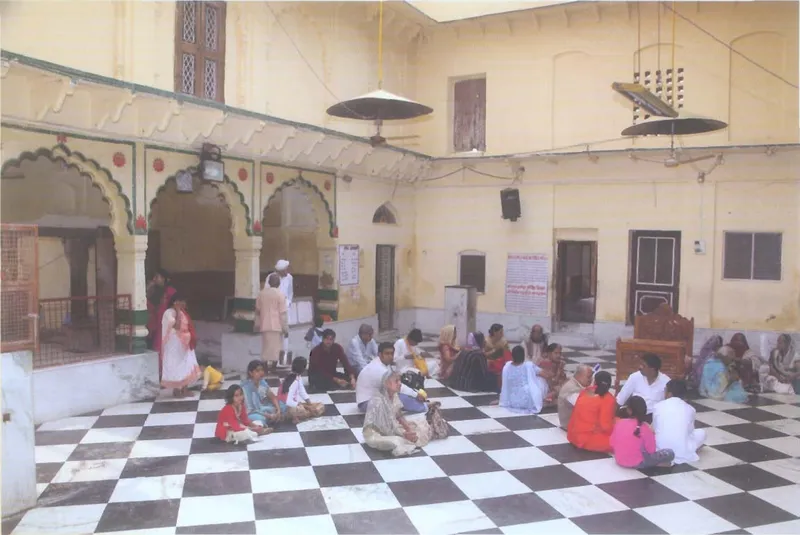
Rādhā-Dāmodara Mandira (Vṛndāvana)
राधा-दामोदर मन्दिर (वृन्दावन)The Rādhā-Dāmodara Mandira is one of the seven old temples of the Gauḍīya Vaiṣṇavas in Vṛndāvana, in the Sevā-kuñja quarter.
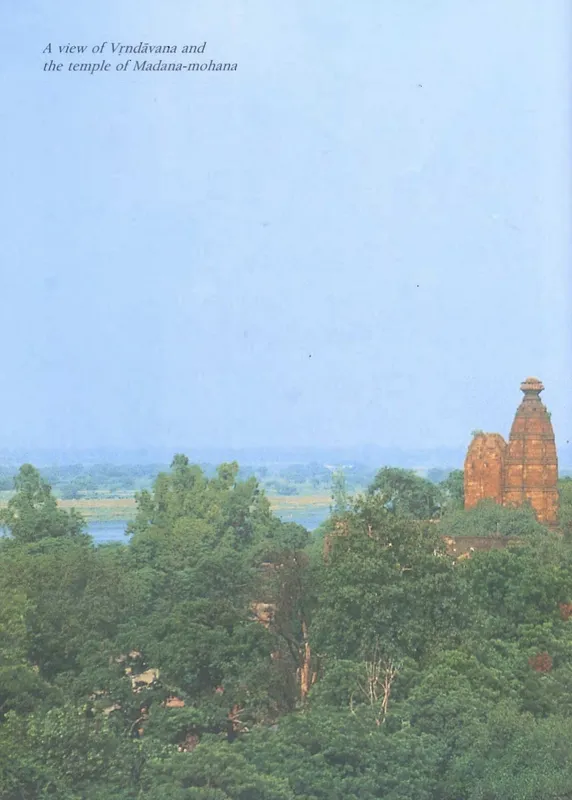
Vṛndāvana
वृन्दावनVṛndāvana is the forest on the bank of the Yamunā where Kṛṣṇa spent His childhood and youth, and the town of temples that stands in that forest today.
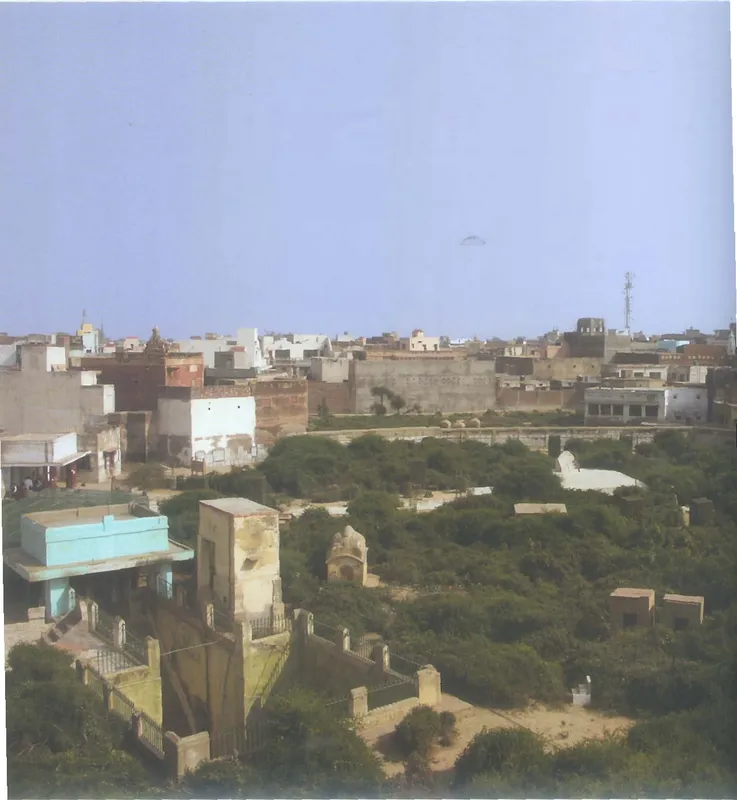
Sevā-kuñja
सेवा-कुंजSevā-kuñja, "the grove of service", is a walled garden in the centre of Vṛndāvana.
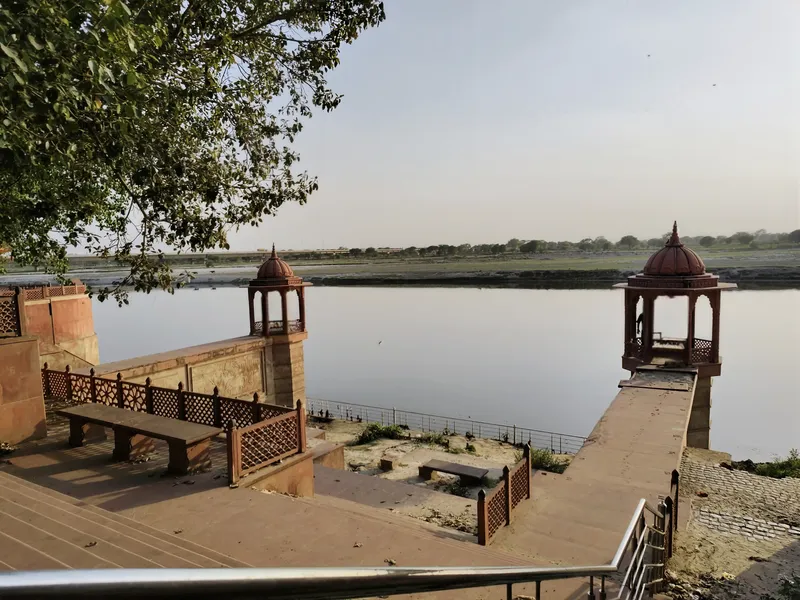
Mahāvana
महावनMahāvana, "the great forest", also called Bṛhadvana, is the forest on the eastern bank of the Yamunā where Kṛṣṇa spent His infancy.
Yamalārjuna-uddhāra-sthala
यमलार्जुन-उद्धार-स्थलYamalārjuna-uddhāra-sthala is the place in Mahāvana that the Bhakti-ratnākara and the guidebooks show as where Kṛṣṇa, tied to a wooden mortar, pulled down the twin arjuna …
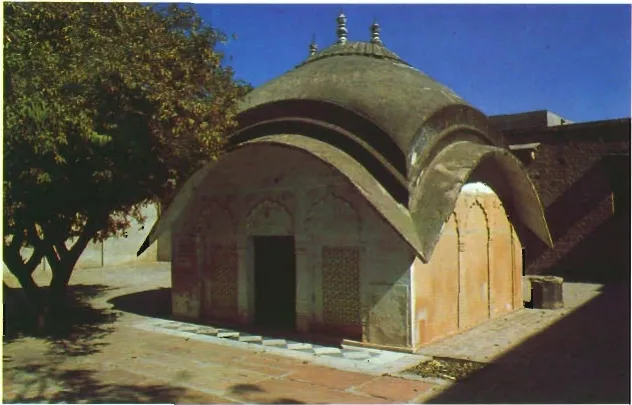
Rūpa Gosvāmī Samādhi (Rādhā-Dāmodara)
रूप गोस्वामी समाधि (राधा-दामोदर)The samādhi (tomb) of Śrīla Rūpa Gosvāmī stands in the courtyard of the Rādhā-Dāmodara temple in Vṛndāvana, opposite his bhajana-kuṭī, with Śrīla Bhūgarbha Gosvāmī's samā …
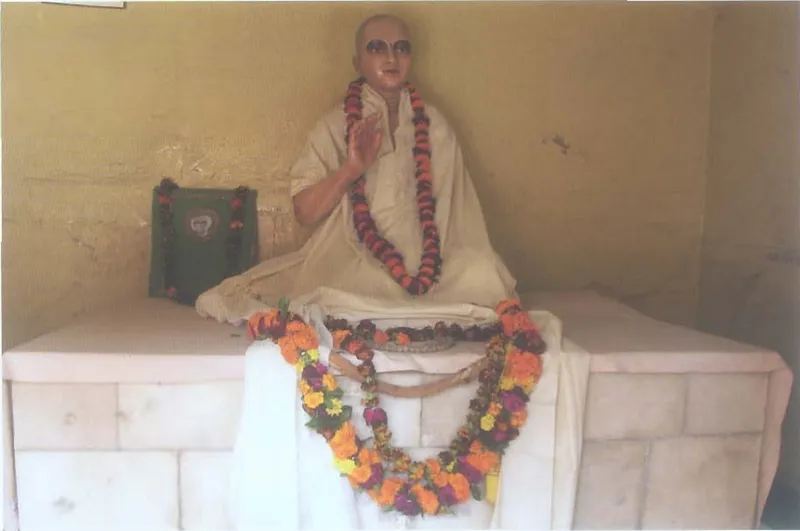
Jīva Gosvāmī's samādhi (Rādhā-Dāmodara)
जीव गोस्वामी की समाधि (राधा-दामोदर)The samādhi (tomb) of Śrīla Jīva Gosvāmī stands in the compound of the Rādhā-Dāmodara Mandira in Vṛndāvana, the temple he founded for his Deities.
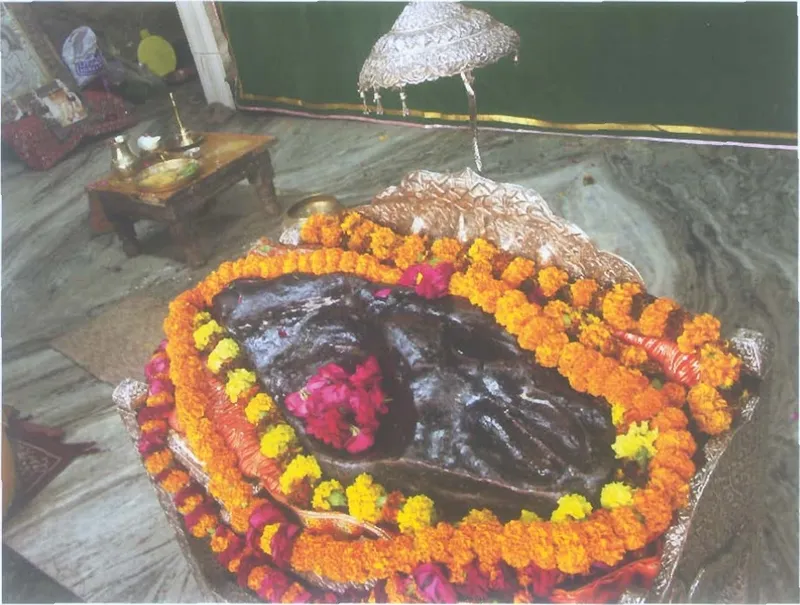
Sanātana Gosvāmī's govardhana-śilā (Rādhā-Dāmodara)
सनातन गोस्वामी की गोवर्धन-शिला (राधा-दामोदर)A large dark stone from Govardhana Hill is kept in the Rādhā-Dāmodara temple in Vṛndāvana and shown to pilgrims on request.
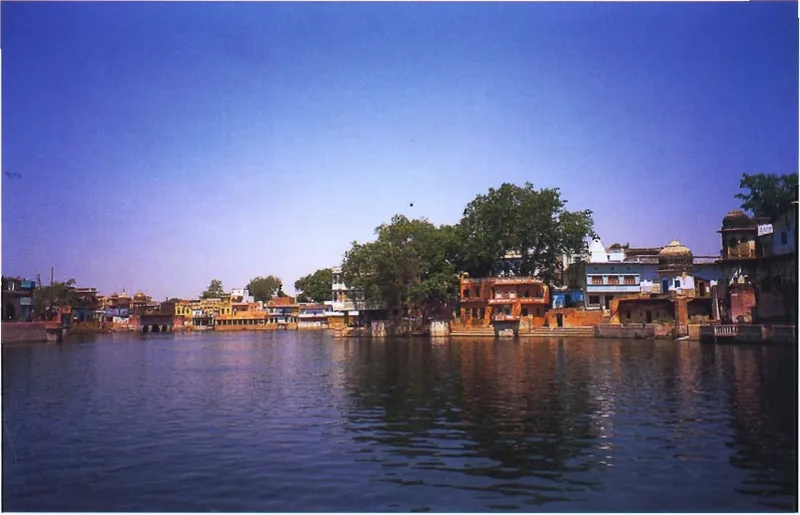
Cakra-tīrtha (Govardhana)
चक्र-तीर्थ (गोवर्धन)Cakra-tīrtha is a holy bathing place (tīrtha) on the northern bank of Mānasī-gaṅgā in Govardhana town, as the guidebooks place it.
Rādhā-Dāmodara Mandira (Rādhā-kuṇḍa)
राधा-दामोदर मन्दिर (राधा-कुण्ड)The Rādhā-Dāmodara Mandira of Rādhā-kuṇḍa village is a small temple of Śrī Śrī Rādhā-Dāmodara with Lalitā Sakhī.
Questions and answers
According to the Sādhana-dīpikā and the Bhakti-ratnākara, Śrīla Rūpa Gosvāmī made the Deity with his own hand and gave Him to Śrīla Jīva Gosvāmī. The Bhakti-ratnākara adds that he did so on an order received in a dream.[1–3]
Dāma means rope and udara the belly. In Śrīmad-Bhāgavatam 10.9–10.10 mother Yaśodā binds child Kṛṣṇa to a mortar with a rope round His belly. The Bhāgavatam itself calls Him Dāmodara when He uproots the twin arjuna trees.[10–17]
Most accounts give 1542 or 1543. They follow a manuscript called the Sevā-prākaṭya, which dates the installation to the tenth day of the bright fortnight of Māgha, Saṁvat 1599. A Jaipur document reported by the historian Entwistle gives 1547.[20–23]
The sources differ. The Vṛndāvana-kathā (1920) and the historian Mītal say that the original is in Jaipur and a representative form is worshipped in Vṛndāvana. Entwistle reports that the Deity came back to Vṛndāvana in 1796 and returned to Jaipur in 1821.[22 +2]
According to the guidebooks: Rādhā-Vṛndāvana-candra, named as Śrīla Kṛṣṇadāsa Kavirāja Gosvāmī's Deities; Rādhā-Mādhava, named as Śrīla Jayadeva Gosvāmī's; and Rādhā-Chalacikana of Śrīla Bhūgarbha Gosvāmī.[17 +6]
According to the Bhakti-ratnākara, Kṛṣṇa as a cowherd boy gave the aged Śrīla Sanātana Gosvāmī a stone from Govardhana with His footprint, to walk around instead of the hill. Later books say that Śrīla Jīva Gosvāmī kept and worshipped it in this temple.[29 +4]
Sources
- Śrīla Rādhā-kṛṣṇa Gosvāmī, Sādhana-dīpikā, eighth kakṣā (the text's chapter '(8) aṣṭa-kakṣā'), in its salutations to the Gosvāmīs; index segment labelled '(8) yāṅhāra prasāde haya abhīṣṭa-pūraṇa after v.9.29 (part 2/3)'
- Śrīla Narahari Cakravartī, Bhakti-ratnākara, Fourth Wave, 1912 ed. p. 139, 2nd ed., 1912
- Śrīla Narahari Cakravartī, Bhakti-ratnākara, Fourth Wave, 1912 ed. p. 138, 2nd ed., 1912
- Śrīla Prabhupāda, Śrīmad-Bhāgavatam, 2.2.5, purport · vedabase.io
- Śrīla Prabhupāda, Śrī Caitanya-caritāmṛta, Ādi-līlā 10.85, purport · vedabase.io
- Śrīla Prabhupāda, Śrī Caitanya-caritāmṛta, Ādi-līlā 12.82, purport · vedabase.io
- Śrīla Prabhupāda, Room Conversation with Professor Olivier Lacombe, Paris, 14 June 1974 · vedabase.io
- Śrīla Prabhupāda, Morning Walk with Professor Durckheim, Germany, 21 June 1974 · vedabase.io
- Vṛndāvana, the Playground of God (2010), Bhakti Caitanya Svāmī, PDF p. 12
- Śrīmad-Bhāgavatam 10.9.1–2, GRETIL
- Śrīmad-Bhāgavatam 10.9.14, GRETIL
- Śrīmad-Bhāgavatam 10.9.18, GRETIL
- Śrīmad-Bhāgavatam 10.10.27, Bhagavata Vidya Pith edition, ed. Bhagavata Rishi and Krishna Shankar Shastri, 1996
- Śrīla Prabhupāda, Kṛṣṇa, the Supreme Personality of Godhead (Kṛṣṇa book), Chapter 9, 'Mother Yaśodā Binds Lord Kṛṣṇa' · vedabase.io
- ŚB 10.9.15, Śrīla Prabhupāda's translation · vedabase.io
- Śrīla Prabhupāda, The Nectar of Devotion, Chapter 4 · vedabase.io
- Vṛndāvana-Dhāma Ki Jaya! (c. 1986), by Dhruva Mahārāja dāsa, PDF p. 66
- Śrīla Jīva Gosvāmī: commentary on ŚB 10.9.1, Bhagavata Vidya Pith edition, ed. Bhagavata Rishi and Krishna Shankar Shastri, 1996
- Śrīla Prabhupāda, Śrīmad-Bhāgavatam, 10.9.1–2, purport · vedabase.io
- A. W. Entwistle, ch. 8 §66.13 'Radhadamodar', printed p. 406, Egbert Forsten, Groningen, 1987
Show all 76 references
- A. W. Entwistle, ch. 5 §7 'The Six Goswamis and other contemporary Gaudiya devotees', note 64, printed p. 148, Egbert Forsten, Groningen, 1987
- Prabhudayāl Mītal, part 1 ('ब्रज-संस्कृति की भूमिका'), 'Braj-yātrā', Vṛndāvana: 'Śrī Rādhādāmodara-jī', printed p. 137
- Vṛndāvana-kathā, ch. 5 (পঞ্চম পরিচ্ছেদ) 'রাধা-দামোদরজী', printed p. 77
- A. W. Entwistle, ch. 5 §25 'The exodus of deities from Braj', printed p. 185, Egbert Forsten, Groningen, 1987
- Vṛndāvana-kathā, chapter 19 (ūnaviṁśa pariccheda), printed p. 218
- Vṛndāvana, the Playground of God (2010), Bhakti Caitanya Svāmī, PDF p. 52
- The Color Guide to Vṛndāvana (2000), Written and Photographed by Rājaśekhara dāsa Brahmacārī, PDF p. 77
- Śrī Vraja-maṇḍala Parikramā (2007), PDF p. 330
- Śrī Vraja-maṇḍala Parikramā (2007), PDF p. 331
- Śrīla Prabhupāda-līlāmṛta 1.10 · vedabase.io
- the undated parikramā notes Vṛndāvana, ¶140
- Jaya Rādhā-Mādhava Rādhā-Mādhava Rādhe (no author credited in the song book) · song book
- Vṛndāvana, the Playground of God (2010), Bhakti Caitanya Svāmī, PDF p. 53
- Śrīla Prabhupāda, Morning Walk, Vṛndāvana, 15 October 1972 · vedabase.io
- Śrīla Prabhupāda, The Nectar of Devotion, Concluding Words, 30 June 1969 · vedabase.io
- Śrī Vraja-maṇḍala Parikramā (2007), PDF p. 345
- Śrīmad-Bhāgavatam 10.10.27, Bhagavata Vidya Pith edition, ed. Bhagavata Rishi and Krishna Shankar Shastri, 1996
- Śrīla Prabhupāda, Śrīmad-Bhāgavatam, 10.10.27, purport · vedabase.io
- Śrīla Sanātana Gosvāmī: commentary on ŚB 10.9.13–14, Bhagavata Vidya Pith edition, ed. Bhagavata Rishi and Krishna Shankar Shastri, 1996
- Śrīla Viśvanātha Cakravartī Ṭhākura: commentary on ŚB 10.10.27, Bhagavata Vidya Pith edition, ed. Bhagavata Rishi and Krishna Shankar Shastri, 1996
- Śrīmad-Bhāgavatam 10.9.19, GRETIL
- Śrīmad-Bhāgavatam 10.9.20, GRETIL
- Śrīmad-Bhāgavatam 10.9.21, GRETIL
- Śrīmad-Bhāgavatam 10.11.26, GRETIL
- Śrīla Prabhupāda, Kṛṣṇa, the Supreme Personality of Godhead (Kṛṣṇa book), Chapter 11, 'Killing the Demons Vatsāsura and Bakāsura' · vedabase.io
- ŚB 10.11.23, Śrīla Prabhupāda's translation: Upananda says that 'in order to do good to th · vedabase.io
- Śrīla Prabhupāda, The Nectar of Devotion, Chapter 12, 'Further Aspects of Transcendental Service' (Ūrja-vrata) · vedabase.io
- Śrī Caitanya-caritāmṛta, Madhya-līlā 20.201, online edition · vedabase.io
- Śrīla Prabhupāda, The Nectar of Devotion lecture, Bombay, 8 January 1973 · vedabase.io
- Vṛndāvana-Dhāma Ki Jaya! (c. 1986), by Dhruva Mahārāja dāsa, PDF p. 67
- Śrīla Prabhupāda, Vaiṣṇava Calendar Description, Calcutta, 2 September 1970 · vedabase.io
- Śrīla Prabhupāda, Letter to Gosainji, letter 68-05-17, 17 May 1968 · vedabase.io
- Śrīla Prabhupāda, Letter to Gauracandra Goswami and others, letter 71-12-22, 22 December 1971 · vedabase.io
- Śrīla Prabhupāda, Letter to Manager of Punjab National Bank, letter 72-03-12, 12 March 1972 · vedabase.io
- Śrīla Prabhupāda, Letter to Nripen Babu, letter 66-12-15, 15 December 1966 · vedabase.io
- Śrīla Prabhupāda, Letter to Tejiyas, Gurudasa, letter 72-08-16, 16 August 1972 · vedabase.io
- Śrīla Prabhupāda, Letter to Mukunda, letter 72-11-02, 2 November 1972 · vedabase.io
- The Color Guide to Vṛndāvana (2000), Written and Photographed by Rājaśekhara dāsa Brahmacārī, PDF p. 27
- Bhakti: The Art of Eternal Love, introduction · vedabase.io
- Śrīla Narahari Cakravartī, Bhakti-ratnākara, Fifth Wave, 1912 ed. p. 208, 2nd ed., 1912
- Śrīla Narahari Cakravartī, Bhakti-ratnākara, Fifth Wave, 1912 ed. p. 209, 2nd ed., 1912
- Vṛndāvana-kathā, ch. 5, 'রাধা-দামোদরজী', printed p. 82
- Govardhana Hill: India's Most Sacred Mountain (2001), Rajasekhara dasa Brahmacari, PDF p. 83
- Vṛndāvana-kathā, chapter 5 (pañcama pariccheda, 'Rādhā-Dāmodarajī'), printed p. 82
- Śrīla Prabhupāda, Conversation with Devotees, Hyderabad, 14 April 1975 · vedabase.io
- A. W. Entwistle, ch. 5 §36 'The Gaudiya Sampraday in modern times', note 471, printed p. 219, Egbert Forsten, Groningen, 1987
- Śrī Vraja-maṇḍala Parikramā (2007), PDF p. 303
- Śrī Vraja-maṇḍala Parikramā (2007), PDF p. 346
- Śrī Vraja-maṇḍala Parikramā (2007), PDF p. 333
- Śrī Vraja-maṇḍala Parikramā (2007), PDF p. 121
- Vṛndāvana, the Playground of God (2010), Bhakti Caitanya Svāmī, PDF p. 55
- Śrī Vraja-maṇḍala Parikramā (2007), PDF p. 334
- Vṛndāvana-kathā, ch. 5, caption of the photograph printed after p. 82
- The Color Guide to Vṛndāvana (2000), Written and Photographed by Rājaśekhara dāsa Brahmacārī, PDF p. 25
- A. W. Entwistle, ch. 5 §15 'Some Gaudiya devotees of the late sixteenth century', printed p. 166, Egbert Forsten, Groningen, 1987
- Vṛndāvana-kathā, ch. 5, 'রাধা-দামোদরজী', printed p. 84
Further sources
- Śrīmad-Bhāgavatam, Tenth Canto, chapters 9–11, translation and purports by Śrīla Prabhupāda (BBT).
- Bhakti-ratnākara of Śrīla Narahari Cakravartī Ṭhākura (Bengali, 1912 edition) and the Sādhana-dīpikā (Grantha Mandira digital edition), summarised, not translated.
- The historians A. W. Entwistle (1987) and Prabhudayāl Mītal (1966), named for dated history only.