Śrīla Prabhupāda at the Rādhā-Dāmodara temple
राधा-दामोदर मन्दिर में श्रील प्रभुपाद
In short
Before he left for America in 1965, Śrīla Prabhupāda lived in two rooms of the Rādhā-Dāmodara temple in Vṛndāvana (Radha Damodar, Vrindavan). He said he accepted them because it was Śrīla Jīva Gosvāmī's place. There he wrote his first English Śrīmad-Bhāgavatam volumes. In 1972 he lectured daily in its courtyard.[1–13]
On this page
At a glance
- The rooms: two rooms and an entrance verandah on the temple courtyard. One room was for living and writing, the other was his kitchen.[14–19]
- How he came: in his own words, the temple's sevāits (the hereditary keepers of the temple) invited him from Keśī-ghāṭa to live in two rooms that he should repair.[2, 20]
- The years: he left in 1965. For the year he moved in, he himself gave 1959, 1960, 1961 and 1962 at different times.[1 +3]
- The work: his English Śrīmad-Bhāgavatam and Back to Godhead, written here and printed in Delhi.[2, 5–9]
- Kārttika 1972: daily talks, morning and evening, in the samādhi courtyard, on the Bhakti-rasāmṛta-sindhu.[10 +5]
- Afterwards: he wanted the rooms kept and cleaned daily, with his society keeping them as tenant.[16 +5]
How did Śrīla Prabhupāda come to the Rādhā-Dāmodara temple?
Śrīla Prabhupāda told the story of his move several times. In his own words he came from Keśī-ghāṭa. In 1974 he said that before Rādhā-Dāmodara he had lived seven years in a house at Keśī-ghāṭa. In 1977 he called that house a palace, while the Rādhā-Dāmodara temple was not.[3, 7] In 1968 he wrote to one of the temple's Gosvāmīs. He recalled that they had invited him from Keśī-ghāṭa "to the shelter Radha-Damodara Jeu" and had promised him the empty lands next to the temple on lease.[20]
In 1973 he described the invitation and why he accepted it:
Names this placeThen these Rādhā-Damodara temple men, they call me, that "Why don’t you come, live here? We give you two rooms. You just repair and live here. Whatever you like, you can do." So I thought, "It is Jīva Gosvāmī's place"; otherwise living in a very big palace, Keśī Ghat, for seven years.
Śrīla Prabhupāda, Room Conversation with Yadurabara About Early Life, London, 12 August 1973 · vedabase.io
His biography, the Śrīla Prabhupāda-līlāmṛta, adds who invited him: Gauracand Gosvāmī, the owner of the temple. He did so because the temple, the eternal home of Śrīla Jīva Gosvāmī and Śrīla Rūpa Gosvāmī, would suit Śrīla Prabhupāda's writing and translating.[4] The guidebooks and the biography say that he came from the Vaṁśī-gopāla temple. This differs from his own words and is set out below.[30]
Two rooms to repair
At first, he wrote in 1973, he was not really living in Vṛndāvana but in Delhi. When he came for short periods, he stayed in two rooms upstairs, paying rent from 1960.[21] Then one of the Gosvāmīs offered him the two rooms below, where a bābājī (a renounced devotee) who looked after the tombs had stayed. The rooms were in very poor condition, so he was to repair them and pay what he liked.[5, 21]
He spent about a thousand rupees on the repairs and paid five rupees a month, later ten. A former tenant of one room had paid three rupees, he explained in 1976, so for two rooms he gave five.[2 +5] One room was his living and writing room; in "the other room" he cooked.[14–19] The rooms have their own page, Śrīla Prabhupāda's rooms.[1 +5]
Why did he call it "Jīva Gosvāmī's place"?
The temple was founded by Śrīla Jīva Gosvāmī. Śrīla Prabhupāda names him as its founder in his purport (his explanation of a verse) on Śrīla Jīva Gosvāmī, where he also dates his own stay.[1]
Names this place“In Vṛndāvana he established the Rādhā-Dāmodara temple, where, after retirement, we had the opportunity to live from 1962 until 1965, when we decided to come to the United States of America.”
Śrīla Prabhupāda, Śrī Caitanya-caritāmṛta, Ādi-līlā 10.85, purport · vedabase.io
He gave the same reason whenever he spoke of the move. It was Śrīla Jīva Gosvāmī's place, where Śrīla Rūpa Gosvāmī and Śrīla Jīva Gosvāmī sat together.[2–5, 34] In the Śrīmad-Bhāgavatam he writes that the first duty of the Gosvāmīs was to hold learned talks among themselves at this spot in Sevā-kuñja. The tombs of Śrīla Rūpa Gosvāmī and Śrīla Jīva Gosvāmī lie there.[35–40]
In his own Bengali opening prayer to the Gītār Gān, he names the lovely place called Sevā-kuñja, where Śrī Rādhā-Dāmodara live, and takes shelter at Their feet. Another verse of the song says that Śrī Jīva has given him a place at his feet.[41, 42] Read more: Śrī Rādhā-Dāmodara, the Deity of Śrīla Jīva Gosvāmī →
What did Śrīla Prabhupāda write there?
In those years his office was in Delhi, at Chippiwada, and he lived at the Rādhā-Dāmodara temple, he said in 1974.[7] In the rooms he wrote his English Śrīmad-Bhāgavatam and Back to Godhead, and he went to Delhi to have them printed.[2, 5–9] In a Hindi lecture in Vṛndāvana in 1974, as vedabase gives it in English, he recalled:
Names this place“here in Vṛndāvana, at your lotus feet, I was staying at Radha Damodar temple … I started writing commentary on Śrīmad-Bhāgvatam in English, In this Radha Damodar temple I used to sit and write and then I used to go to Delhi and get it printed, Thus three cantos of Bhāgvatam were complete in 1965”
Śrīla Prabhupāda, Lecture in Hindi (English translation), Vṛndāvana, 13 February 1974 · vedabase.io
In The Nectar of Devotion, finished in 1969, he wrote that his own place of bhajana (worship and prayer) was behind the very tomb of Śrīla Rūpa Gosvāmī. His disciples were taking care of it while he was away.[33]
Names this place“The place of Rūpa Gosvāmī’s bhajana, his execution of devotional service, is commemorated still. There are two different tomblike structures at the Rādhā-Dāmodara temple: one structure is called his place of bhajana, and in the other his body is entombed. Behind this very tomb I have my place of bhajana, but since 1965 I have been away.”
Śrīla Prabhupāda, The Nectar of Devotion, Concluding Words, 30 June 1969 · vedabase.io
While he lived here, he also organised a Janmāṣṭamī (Kṛṣṇa's appearance day) meeting at the temple on 31 August 1964. The Governor of Uttar Pradesh, Biswanath Das, was present. His biography quotes the flyer he printed for it, which names the venue as the samādhi ground of Śrīla Rūpa Gosvāmī and Śrīla Jīva Gosvāmī.[8 +3] In a letter of 1967 he recalled the Governor's public promise, made in the temple at that meeting. It was a yearly sum for the Janmāṣṭamī kīrtana (singing of the holy names).[45]
Leaving for America
In 1976 he was asked what he was planning in those years. Śrīla Prabhupāda said that he lived there as a retired man. The idea of going to the West was already there, but he was planning how to go, how to preach and how to print books, all alone.[31] From the Rādhā-Dāmodara temple, he said, he went to the USA.[32] He took volumes of his Śrīmad-Bhāgavatam with him and reached New York with forty rupees.[1 +5]
In his first year in America he still called the Rādhā-Dāmodara temple his home, one of the seven or eight old temples of Vṛndāvana.[47] In 1974 he told an audience in Māyāpur that he still had his two rooms there.[18]
Which samādhis did he visit?
A samādhi is the tomb of a saint. According to his biography, he always felt inspired by the samādhis of Śrīla Jīva Gosvāmī and Śrīla Rūpa Gosvāmī. While living here, he regularly visited the chief samādhis: those of Śrīla Jīva Gosvāmī, Śrīla Bhaktisiddhānta Sarasvatī Gosvāmī and Śrīla Kṛṣṇadāsa Kavirāja Gosvāmī.[4] The same book says that he often chanted japa (the holy names on beads) before Śrīla Rūpa Gosvāmī's samādhi. From his kitchen he could see it through the latticework as he cooked and ate.[4 +5]
The samādhis have their own pages: Śrīla Jīva Gosvāmī's samādhi, the puṣpa-samādhi of Śrīla Bhaktisiddhānta Sarasvatī Gosvāmī (a memorial holding flowers) and Śrīla Kṛṣṇadāsa Kavirāja Gosvāmī's samādhi.[4] In a letter of 1967 from America he asked a co-sevāit of the temple to save Śrīla Jīva Gosvāmī's temple. Soon, he wrote, people from all parts of the world would come to see it and the samādhi of Śrīla Jīva Gosvāmī and Śrīla Rūpa Gosvāmī.[45]
The walk of 15 October 1972
On a morning walk through the temple in October 1972 he showed his disciples the compound. He said that Śrīla Jīva Gosvāmī built the temple and that Śrīla Rūpa Gosvāmī lived here with him. The six Gosvāmīs, he said, used to meet here and read Śrīmad-Bhāgavatam.[37]
Names this place“This temple was constructed by Śrīla Jīva Gosvāmī, one of the first disciples of Lord Caitanya, and this is Narottama samādhi. Here is Kṛṣṇadāsa Kavirāja Gosvāmī entombed, and here is Rūpa Gosvāmī entombed. Later on, several other devotees, they are not entombed like them. Flowers from their body, they were placed. It is called puṣpa-samādhi.”
Śrīla Prabhupāda, Morning Walk, Vṛndāvana, 15 October 1972 · vedabase.io
He also said that the well was the original one, and that the room where the Gosvāmīs dined was not less than four hundred and fifty years old.[37] He was asked whether Śrīla Jīva Gosvāmī or Śrīla Rūpa Gosvāmī had once used his own rooms. He said no: the rooms existed, but the Gosvāmīs used to sit outside, in the courtyard.[50] Two remarks on that walk, about a samādhi of Narottama and a tomb of Śrīla Lokanātha Gosvāmī, cannot be matched with the other sources; see below.[37]
Plans for Śrīla Jīva Gosvāmī's temple, 1966–1973
From America Śrīla Prabhupāda kept trying to develop the temple. In December 1966 he asked Nripendra Nath Banerji of Kanpur, a co-sevāit, for land on lease near the temple. It was for an institute he called the Rupanuga Para Vidya Pitha.[20 +4]
Names this place“the Rupanuga Para Vidya Pitha which I wanted to start in Vrindaban within the vicinity of Radha Damodara Mandir … my aim is to start it in the land of Sri Sri Radha Damodara Temple … My mission is develop the glories of Srila Jiva Goswami all over the world”
Śrīla Prabhupāda, Letter to Nripen Babu, letter 66-12-15, 15 December 1966 · vedabase.io
His later steps were these. In 1967 he paid a deposit for land around the temple that he hoped to lease. In 1971 and 1973 he offered the sevāits to arrange the worship and daily prasādam (food offered to the Deity) for at least fifty devotees. From March 1972 he had his bank pay the sevāit two hundred rupees a month.[20 +4] In 1968 he urged the family to settle their court case and develop the service of the Deity.[20] In 1970 he explained that Śrīla Jīva Gosvāmī, a brahmacārī (celibate monk) without sons, had given the temple into the care of a householder devotee, whose descendants still manage it.[20 +4] In a conversation in Delhi on 1 November 1973 he gave his reason:
Names this place“I want to see Rādhā-Dāmodara dressed nicely. … We want to make it unique in Vṛndāvana. Because it is Jīva Gosvāmī's place. That is my... Because Rūpa Gosvāmī and Jīva Gosvāmī sat there.”
Śrīla Prabhupāda, Room Conversation about Rādhā-Dāmodara Property, Delhi, 1 November 1973 · vedabase.io
Kārttika 1972 in the samādhi courtyard
In August 1972 he wrote of his plan for the Kārttika vow (a month of special devotion in October–November). He would come to Vṛndāvana in the middle of October and stay at the Rādhā-Dāmodara temple until late November, lecturing daily in the courtyard on the Bhakti-rasāmṛta-sindhu.[10–13]
Names this place“My plan is to come to Vrindaban sometimes near the 12th or 15th of October for the Karati Varta and I want to sit down there in the Sri Radha Damodara Temple until some time near the end of November. I will lecture daily in the courtyard on the Bhakti Rasamrita Sindhu”
Śrīla Prabhupāda, Letter to Tejiyas, Gurudasa, letter 72-08-16, 16 August 1972 · vedabase.io
He did so. His letters of late October and early November say that the talks were held every morning and evening in the courtyard, at the samādhi place. The devotees, they say, were enlivened by them.[10 +5] In one of those lectures he told his listeners that where they were sitting was Śrīla Rūpa Gosvāmī's place.[24, 25]
Names this place“This is Gosvāmī's, Rūpa Gosvāmī's message. Where you are sitting, this is Rūpa Gosvāmī's place.”
Śrīla Prabhupāda, The Nectar of Devotion, Vṛndāvana, 21 October 1972 · vedabase.io
The same year the new temple at Ramaṇa-reti was being planned. He asked that a saṅkīrtana party (a group chanting together) go every day from the Rādhā-Dāmodara temple to the new land.[55] How that land became the Kṛṣṇa-Balarāma Mandira is told in a separate article.[55] Read more: How Śrīla Prabhupāda built the Kṛṣṇa-Balarāma Mandira →
Can pilgrims see his rooms?
Śrīla Prabhupāda wanted the rooms kept. In January 1972 he wrote that the two rooms and the verandah should be kept as his right and looked after every day. In 1973 he decided that his society should keep the place as tenant. In March 1977 he asked that a photograph of him be kept in his room and offered the prasādam of Śrī Rādhā-Dāmodara.[16 +5]
Names this place“In my room at Radha Damodara Temple you should keep one photo of me and offer to it Prasadam of Sri Radha Damodara.”
Śrīla Prabhupāda, Letter to Gurudasa, 77-03-18, 18 March 1977 · vedabase.io
Vṛndāvana, the Playground of God (2010) places the rooms on the right side of the temple courtyard and says that ISKCON still rented them then. Other guidebooks place them on the eastern side.[16 +7] The biography says that he spoke of the rooms as his eternal home, the place where he had begun his plans for the Kṛṣṇa consciousness movement.[57] The guidebooks also report that he said he is always present there. A disciple's memoir says that he called this corner of the temple the hub of the spiritual world. Neither saying is known from his own recorded words.[8 +6]
Where the sources differ
The year in which Śrīla Prabhupāda took the rooms is given as 1959, 1960, 1961 or 1962. In 1973 he wrote that he did not remember the dates when he came and went.[1 +5]
Accounts differ When Śrīla Prabhupāda took, or moved into, the rooms at Rādhā-Dāmodara
- the undated parikramā notes Vṛndāvana and The Color Guide to Vṛndāvana (2000), entry 33Imoved into the temple in 1959 and occupied two rooms
- The Color Guide to Vṛndāvana (2000), chronology'1959 (July) Moved to Rādhā Dāmodara temple and began the English translation of Śrīmad-Bhāgavatam'
- Vṛndāvana, the Playground of God (2010)stayed here from 1959; moved in 'shortly after taking sannyāsa on September 17th, 1959'
- Vṛndāvana-Dhāma Ki Jaya! (c. 1986)stayed here 'for nearly six years' before leaving in 1965
The sources also name different places where he lived before: Keśī-ghāṭa in his own words, the Vaṁśī-gopāla temple in the guidebooks and the biography.[2 +5]
Accounts differ Where Śrīla Prabhupāda lived just before moving to the Rādhā-Dāmodara temple.
- Śrīla Prabhupāda, letter to Gosainji, 17 May 1968When you invited me from Kesi Ghat to the shelter Radha-Damodara Jeu
- Śrīla Prabhupāda, conversations of 1973, 1974 and 1976he lived seven years at Keśī-ghāṭa (in a house he took there), then came to Rādhā-Dāmodara
- Vṛndāvana, the Playground of God (2010); The Color Guide to Vṛndāvana (2000); the undated parikramā notes Vṛndāvanabefore staying here he lived at the Vaṁśī Gopāla temple (from 1956 to 1959, The Color Guide to Vṛndāvana (2000))
- Śrīla Prabhupāda-līlāmṛta 1.10 (biography)changed his Vṛndāvana residence from Vaṁśī-gopālajī temple to Rādhā-Dāmodara temple (July 1962)
The sources also differ on whether the rooms were rented or given free of charge. By his letters he paid five rupees a month, while in 1976 he recalled the offer as free.[2 +3]
Accounts differ Whether Śrīla Prabhupāda's rooms at the temple were rented or given free.
- Vṛndāvana, the Playground of God (2010); Līlāmṛta 1.10initially at a rent of five rupees per month
- Śrīla Prabhupāda, letter of 22 December 1971deducting your dues at Rs. 5/- per month for 51 months
- Śrīla Prabhupāda, conversation, Vṛndāvana, 3 October 1976We give you two rooms. We don't charge. …
How his acceptance of sannyāsa on 17 September 1959 relates to the rooms is told differently; the biography places the ceremony at the Keśavajī Gauḍīya Maṭha in Mathurā.[5 +5]
Accounts differ Śrīla Prabhupāda's sannyāsa (1959) and his move to the Rādhā-Dāmodara rooms: order, month and place
- the undated parikramā notes Vṛndāvana and The Color Guide to Vṛndāvana (2000) (entry 33I)accepted sannyāsa on 17 September 1959 'while staying at Rādhā-Dāmodara' (the place of the ceremony is not given)
- The Color Guide to Vṛndāvana (2000), chronologymoved to Rādhā-Dāmodara in July 1959; 'Takes sannyāsa initiation' in November 1959
- Vṛndāvana, the Playground of God (2010)moved in 'shortly after taking sannyāsa on September 17th, 1959'; elsewhere: took sannyāsa on 17 September 1959, 'He then took up residence at the Rādhā-Dāmodara temple'
- Śrīla Prabhupāda-līlāmṛta 1.9-1.10 (biography)the ceremony took place on the morning of 17 September 1959 in the Deity room of the Keśavajī Gauḍīya Maṭha, Mathurā; afterwards he was 'back in his own place at the Vaṁśī-gopālajī temple' and was invited to Rādhā-Dāmodara
The guidebooks differ on how many volumes of the Śrīmad-Bhāgavatam he finished while living here.[2 +3]
Accounts differ How many volumes of Śrīmad-Bhāgavatam Śrīla Prabhupāda completed while living at the temple.
- Vṛndāvana, the Playground of God (2010)He completed the first two volumes of the first canto here
- Vṛndāvana-Dhāma Ki Jaya! (c. 1986)While staying here Śrīla Prabhupāda translated, wrote commentary on, and printed three volumes of the Śrīmad-Bhāgavatam
- The Color Guide to Vṛndāvana (2000), chronologyfirst, second and third volumes of Śrīmad-Bhāgavatam published in English in 1962, 1963 and 1964 (its chronology has him living at Rādhā Dāmodara from 1959 to 1965)
The sources differ on whose tomb stands beside Śrīla Rūpa Gosvāmī's. The guidebooks name Śrīla Bhūgarbha Gosvāmī, and a remark of Śrīla Prabhupāda on the 1972 walk may name Śrīla Lokanātha Gosvāmī; the transcript does not show which tomb he meant.[37 +3]
Accounts differ Whose tomb stands beside Śrīla Rūpa Gosvāmī's samādhi at the Rādhā-Dāmodara temple.
- Śrī Vraja-maṇḍala Parikramā (2007), Vṛndāvana, the Playground of God (2010), The Color Guide to Vṛndāvana (2000), Vṛndāvana-Dhāma Ki Jaya! (c. 1986)the samādhi of Śrīla Bhūgarbha Gosvāmī (adjacent to, next to or opposite Śrīla Rūpa's)
- Śrīla Prabhupāda, morning walk, Vṛndāvana, 15 October 1972after saying Śrīla Rūpa Gosvāmī was entombed 'there': 'But that tomb is Lokanātha Gosvāmī. He is also one of the important Gosvāmīs.' (which tomb is not recorded)
- Śrī Vraja-maṇḍala Parikramā (2007); The Color Guide to Vṛndāvana (2000)Śrīla Lokanātha Gosvāmī's samādhi is in the courtyard of the Rādhā-Gokulānanda temple, next to the temple he established
Timeline
- 1959
The year in which Śrīla Prabhupāda took the rooms is given as 1959, 1960, 1961 or 1962.
Read in the article: Where the sources differ → - 1960
When he came for short periods, he stayed in two rooms upstairs, paying rent from 1960.
Read in the article: How did Śrīla Prabhupāda come to the Rādhā-Dāmodara temple? → - 1964
While he lived here, he also organised a Janmāṣṭamī (Kṛṣṇa's appearance day) meeting at the temple on 31 August 1964.
Read in the article: What did Śrīla Prabhupāda write there? → - 1966
In December 1966 he asked Nripendra Nath Banerji of Kanpur, a co-sevāit, for land on lease near the temple.
Read in the article: Plans for Śrīla Jīva Gosvāmī's temple, 1966–1973 → - 1972
In August 1972 he wrote of his plan for the Kārttika vow (a month of special devotion in October–November).
Read in the article: Kārttika 1972 in the samādhi courtyard → - 1973
In 1971 and 1973 he offered the sevāits to arrange the worship and daily prasādam (food offered to the Deity) for at least fifty devotees.
Read in the article: Plans for Śrīla Jīva Gosvāmī's temple, 1966–1973 → - 1977
In March 1977 he asked that a photograph of him be kept in his room and offered the prasādam of Śrī Rādhā-Dāmodara.
Read in the article: Can pilgrims see his rooms? →
Places in this article
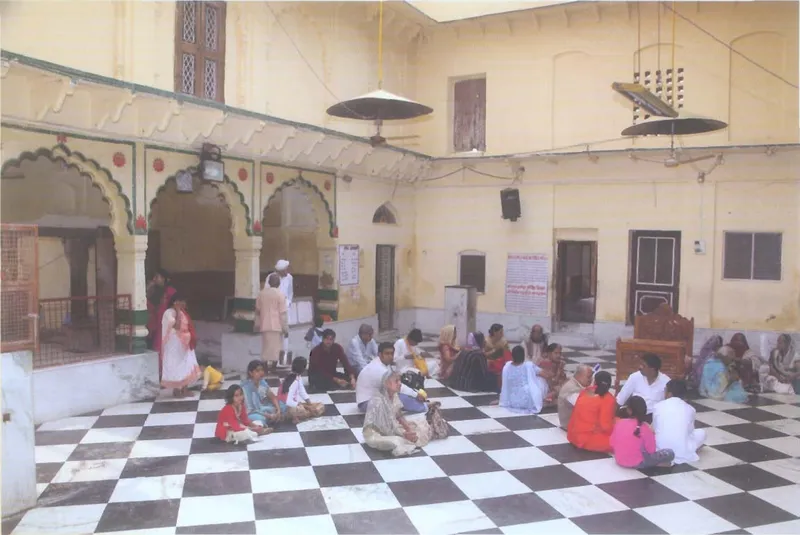
Rādhā-Dāmodara Mandira (Vṛndāvana)
राधा-दामोदर मन्दिर (वृन्दावन)The Rādhā-Dāmodara Mandira is one of the seven old temples of the Gauḍīya Vaiṣṇavas in Vṛndāvana, in the Sevā-kuñja quarter.
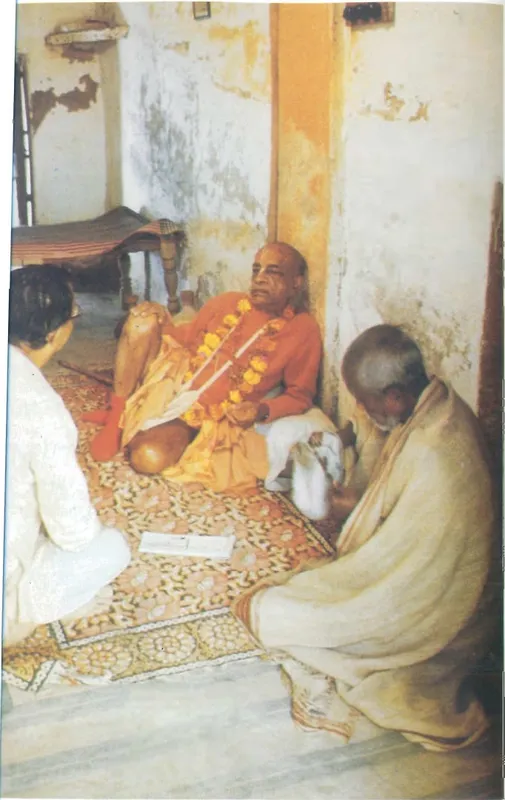
Prabhupāda's rooms (Rādhā-Dāmodara)
प्रभुपाद के कमरे (राधा-दामोदर)Śrīla Prabhupāda's rooms are two small rooms with an entrance verandah on the courtyard of the Rādhā-Dāmodara temple in Vṛndāvana: one was his living and writing room, th …
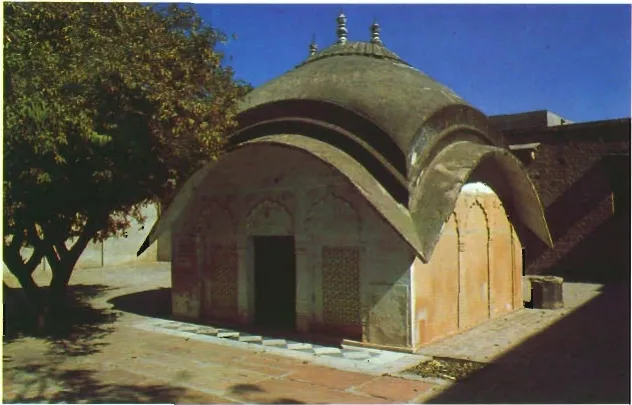
Rūpa Gosvāmī Samādhi (Rādhā-Dāmodara)
रूप गोस्वामी समाधि (राधा-दामोदर)The samādhi (tomb) of Śrīla Rūpa Gosvāmī stands in the courtyard of the Rādhā-Dāmodara temple in Vṛndāvana, opposite his bhajana-kuṭī, with Śrīla Bhūgarbha Gosvāmī's samā …
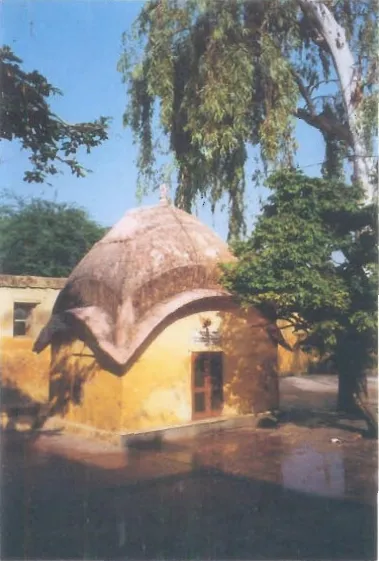
Rūpa Gosvāmī's bhajana-kuṭī (Rādhā-Dāmodara)
रूप गोस्वामी की भजन-कुटी (राधा-दामोदर)Śrīla Rūpa Gosvāmī's bhajana-kuṭī, his place of chanting and prayer, is a small whitewashed domed shrine in the courtyard of the Rādhā-Dāmodara temple in Vṛndāvana, oppos …
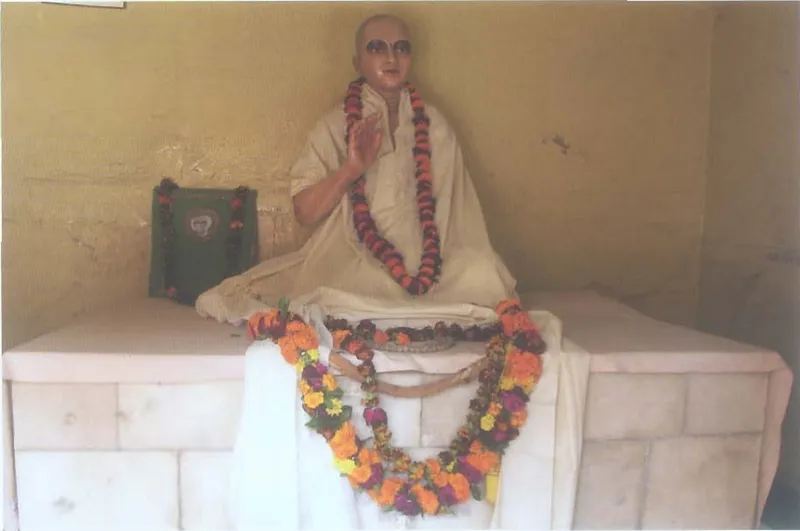
Jīva Gosvāmī's samādhi (Rādhā-Dāmodara)
जीव गोस्वामी की समाधि (राधा-दामोदर)The samādhi (tomb) of Śrīla Jīva Gosvāmī stands in the compound of the Rādhā-Dāmodara Mandira in Vṛndāvana, the temple he founded for his Deities.
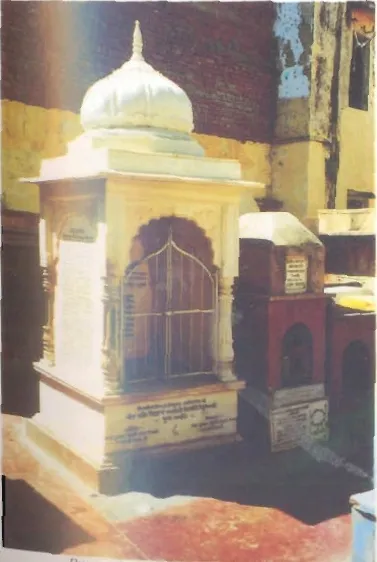
Bhaktisiddhānta Sarasvatī Gosvāmī Puṣpa-samādhi (Rādhā-Dāmodara)
भक्तिसिद्धान्त सरस्वती गोस्वामी पुष्प-समाधि (राधा-दामोदर)In the courtyard of the Rādhā-Dāmodara Mandira in Vṛndāvana stands a small puṣpa-samādhi of Śrīla Bhaktisiddhānta Sarasvatī Ṭhākura, the spiritual master of Śrīla Prabhup …
Kṛṣṇadāsa Kavirāja Gosvāmī Samādhi (Rādhā-Dāmodara)
कृष्णदास कविराज गोस्वामी समाधि (राधा-दामोदर)A tomb known as "Kṛṣṇadāsa's tomb" stands in the Rādhā-Dāmodara temple in Vṛndāvana; the guidebooks place it next to Śrīla Jīva Gosvāmī's samādhi.
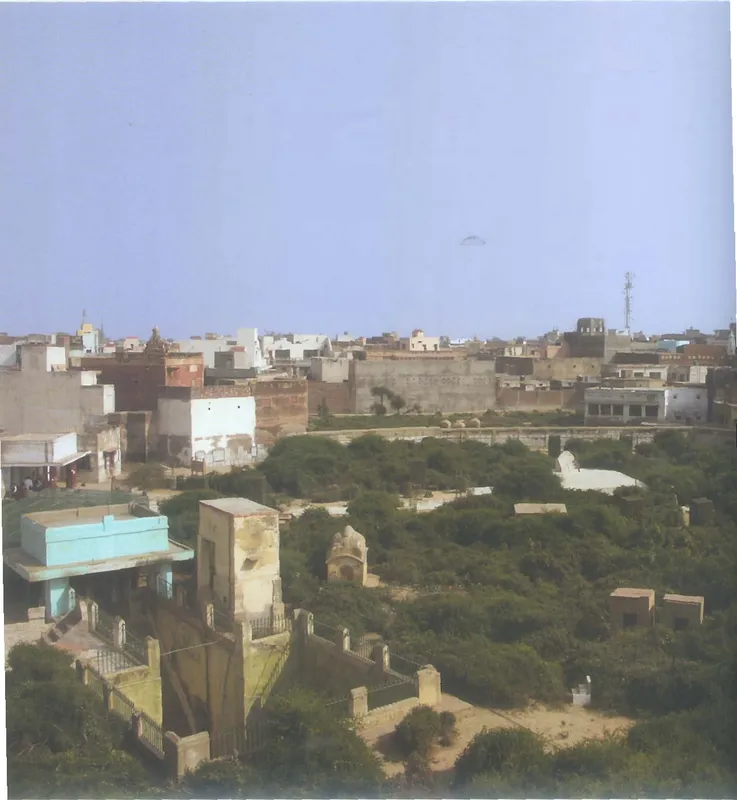
Sevā-kuñja
सेवा-कुंजSevā-kuñja, "the grove of service", is a walled garden in the centre of Vṛndāvana.
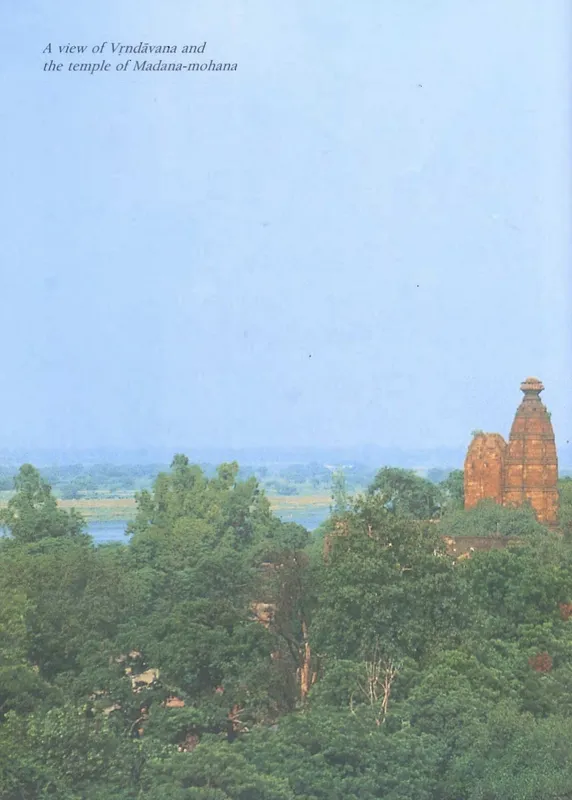
Vṛndāvana
वृन्दावनVṛndāvana is the forest on the bank of the Yamunā where Kṛṣṇa spent His childhood and youth, and the town of temples that stands in that forest today.
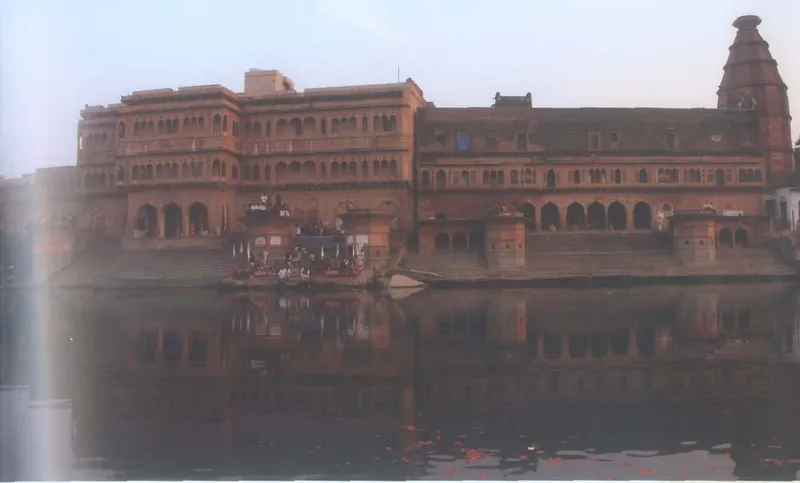
Keśī-ghāṭa
केशी-घाटKeśī-ghāṭa, also called Keśī-tīrtha, is a bathing place on the Yamunā in the north-west of Vṛndāvana, close to Cīra-ghāṭa.
Ramaṇa-reti (Vṛndāvana)
रमण-रेती (वृन्दावन)Ramaṇa-reti, "the pleasing sands", is a sandy area on the western edge of Vṛndāvana, on the old Chattikara road.
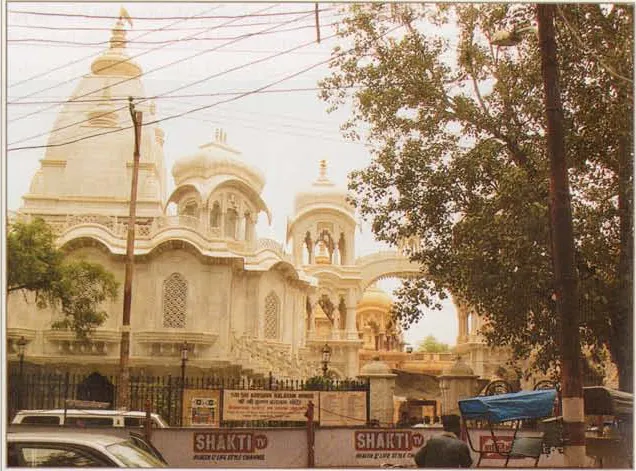
Kṛṣṇa-Balarāma Mandira (Ramaṇa-retī)
कृष्ण-बलराम मन्दिर (रमण-रेती)The Kṛṣṇa-Balarāma Mandira is the temple that Śrīla Prabhupāda built in Ramaṇa-reti, a sandy area on the western edge of Vṛndāvana, and opened on Śrī Rāma-navamī, 20 Apri …
Questions and answers
Until he left for America in 1965. For the start he gave different years: possession since 1959, rent from 1960, a move in 1961, and, in his Caitanya-caritāmṛta purport, a stay from 1962 until 1965.[1 +3]
The temple's sevāits invited him from Keśī-ghāṭa to live in two rooms that he would repair. He accepted because, as he said in 1973, it was Śrīla Jīva Gosvāmī's place.[2–5]
His English Śrīmad-Bhāgavatam and Back to Godhead. He wrote in his rooms and went to Delhi to have them printed. He took the printed volumes with him to America in 1965.[1 +9]
According to his biography, he regularly visited the chief samādhis of the compound: those of Śrīla Jīva Gosvāmī, Śrīla Bhaktisiddhānta Sarasvatī Gosvāmī and Śrīla Kṛṣṇadāsa Kavirāja Gosvāmī. He often chanted japa before Śrīla Rūpa Gosvāmī's samādhi.[4]
The rooms are on the temple courtyard, and according to a guidebook of 2010 ISKCON still rented them then. Śrīla Prabhupāda asked that they be kept and cleaned daily, and that his photograph there be offered Śrī Rādhā-Dāmodara's prasādam.[16 +7]
Because Śrīla Jīva Gosvāmī founded the temple, and Śrīla Rūpa Gosvāmī and Śrīla Jīva Gosvāmī sat there together. In 1973 he gave this as his reason for wanting to serve the temple and its Deity.[1, 34]
Sources
- Śrīla Prabhupāda, Śrī Caitanya-caritāmṛta, Ādi-līlā 10.85, purport · vedabase.io
- Śrīla Prabhupāda, Room Conversation with Yadurabara About Early Life, London, 12 August 1973 · vedabase.io
- Śrīla Prabhupāda, Room Conversation, Bombay, 22 March 1977 · vedabase.io
- Satsvarūpa dāsa Gosvāmī, Śrīla Prabhupāda-līlāmṛta, vol. 1, ch. 10 · vedabase.io
- Vṛndāvana, the Playground of God (2010), Bhakti Caitanya Svāmī, PDF p. 62
- Śrīla Prabhupāda, Lecture in Hindi (English translation), Vṛndāvana, 13 February 1974 · vedabase.io
- Śrīla Prabhupāda, Morning Walk, Māyāpur, 5 March 1974 · vedabase.io
- Vṛndāvana, the Playground of God (2010), Bhakti Caitanya Svāmī, PDF p. 63
- The Color Guide to Vṛndāvana (2000), Written and Photographed by Rājaśekhara dāsa Brahmacārī, PDF p. 91
- Śrīla Prabhupāda, Letter to Tejiyas, Gurudasa, letter 72-08-16, 16 August 1972 · vedabase.io
- Śrīla Prabhupāda, Letter to Mukunda, letter 72-11-02, 2 November 1972 · vedabase.io
- The Color Guide to Vṛndāvana (2000), Written and Photographed by Rājaśekhara dāsa Brahmacārī, PDF p. 27
- Bhakti: The Art of Eternal Love, introduction · vedabase.io
- Śrīla Prabhupāda, Letter to Madan Mohan Goswami, 71-12-30, 30 December 1971 · vedabase.io
- Śrīla Prabhupāda, Letter to Gauracandra Goswami and others, 71-12-22, 22 December 1971 · vedabase.io
- Śrīla Prabhupāda, Letter to Gargamuni, 72-01-01, 1 January 1972 · vedabase.io
- Śrīla Prabhupāda, Room Conversation, Māyāpur, 19 January 1976 · vedabase.io
- Śrīla Prabhupāda, Śrīmad-Bhāgavatam 1.8.31 lecture, Māyāpur, 11 October 1974 · vedabase.io
- Vṛndāvana, the Playground of God (2010), Bhakti Caitanya Svāmī, PDF p. 61
- Śrīla Prabhupāda, Letter to Gosainji, letter 68-05-17, 17 May 1968 · vedabase.io
Show all 66 references
- Śrīla Prabhupāda, Letter to Gurudasa, 73-09-13, 13 September 1973 · vedabase.io
- Śrīla Prabhupāda, Letter to Kirtanananda, 72-10-27, 27 October 1972 · vedabase.io
- Śrīla Prabhupāda, Letter to Puri Maharajji, 72-11-05 (vedabase page code LT_721105_E2), 5 November 1972 · vedabase.io
- Śrīla Prabhupāda, The Nectar of Devotion, Vṛndāvana, 21 October 1972 · vedabase.io
- Śrīla Prabhupāda, The Nectar of Devotion, Vṛndāvana, 6 November 1972 · vedabase.io
- Śrīla Prabhupāda, Letter to Gurudasa, 73-05-11, 11 May 1973 · vedabase.io
- Śrīla Prabhupāda, Letter to Gurudasa, 77-03-18, 18 March 1977 · vedabase.io
- Śrīla Prabhupāda, Letter to Ksirodakasayi, 71-04-17, 17 April 1971 · vedabase.io
- Satsvarūpa dāsa Gosvāmī, Śrīla Prabhupāda-līlāmṛta, vol. 2, ch. 37 · vedabase.io
- Satsvarūpa dāsa Gosvāmī, Śrīla Prabhupāda-līlāmṛta, vol. 1, ch. 10 · vedabase.io
- Śrīla Prabhupāda, Room Conversation, London, 26 July 1976 · vedabase.io
- Śrīla Prabhupāda, Room Conversation, Vṛndāvana, 3 October 1976 · vedabase.io
- Śrīla Prabhupāda, The Nectar of Devotion, Concluding Words, 30 June 1969 · vedabase.io
- Śrīla Prabhupāda, Room Conversation about Rādhā-Dāmodara Property, Delhi, 1 November 1973 · vedabase.io
- Śrīla Prabhupāda, Śrīmad-Bhāgavatam, 2.2.5, purport · vedabase.io
- Śrīla Prabhupāda, The Nectar of Devotion lecture, Bombay, 8 January 1973 · vedabase.io
- Śrīla Prabhupāda, Morning Walk, Vṛndāvana, 15 October 1972 · vedabase.io
- Śrī Vraja-maṇḍala Parikramā (2007), PDF p. 330
- The Color Guide to Vṛndāvana (2000), Written and Photographed by Rājaśekhara dāsa Brahmacārī, PDF p. 77
- Vṛndāvana-Dhāma Ki Jaya! (c. 1986), by Dhruva Mahārāja dāsa, PDF p. 67
- Śrī Guru Vandana Kori (Maṅgalācaraṇa of Gītār-gān) (A.C. Bhaktivedanta Swami Prabhupāda (as the song book credits it)) · song book
- Śrī Guru Vandanā Kori (Maṅgalācaraṇa of the Gītār Gān) (A.C. Bhaktivedanta Swami Prabhupāda (as the song book credits it; the song book files it as 'the introduction to the Gitar Gan')) · song book
- Satsvarūpa dāsa Gosvāmī, Śrīla Prabhupāda-līlāmṛta, vol. 1, ch. 11 (quoting a flyer printed by Bhaktivedanta Swami), 31 August 1964 (date printed on the flyer) · vedabase.io
- Śrīla Prabhupāda, Letter to Visvanatha Babu (Chief Minister of Orissa), 72-01-03, 3 January 1972 · vedabase.io
- Śrīla Prabhupāda, Letter to Nripen Babu, 67-03-18, 18 March 1967 · vedabase.io
- the undated parikramā notes Vṛndāvana, ¶177
- Śrīla Prabhupāda, Bhagavad-gītā 2.59-69 lecture, New York, 18 April 1966 · vedabase.io
- Vṛndāvana, the Playground of God (2010), Bhakti Caitanya Svāmī, PDF p. 64
- Vṛndāvana, the Playground of God (2010), Bhakti Caitanya Svāmī, PDF p. 65
- Śrīla Prabhupāda, Morning Walk, Vṛndāvana, 15 October 1972 · vedabase.io
- Śrīla Prabhupāda, Letter to Nripen Babu, letter 66-12-15, 15 December 1966 · vedabase.io
- Śrīla Prabhupāda, Letter to Gauracandra Goswami and others, letter 71-12-22, 22 December 1971 · vedabase.io
- Śrīla Prabhupāda, Letter to Manager of Punjab National Bank, letter 72-03-12, 12 March 1972 · vedabase.io
- Śrīla Prabhupāda, Vaiṣṇava Calendar Description, Calcutta, 2 September 1970 · vedabase.io
- Śrīla Prabhupāda, Letter to Acyutananda, letter dated 5 August 1972, London · vedabase.io
- The Color Guide to Vṛndāvana (2000), Written and Photographed by Rājaśekhara dāsa Brahmacārī, PDF p. 165
- Satsvarūpa dāsa Gosvāmī, Śrīla Prabhupāda-līlāmṛta, vol. 2, ch. 41 · vedabase.io
- the undated parikramā notes Vṛndāvana, ¶138
- Śrīla Prabhupāda, Morning Walk, Māyāpur, 5 March 1974 · vedabase.io
- The Color Guide to Vṛndāvana (2000), Written and Photographed by Rājaśekhara dāsa Brahmacārī, PDF p. 117
- the undated parikramā notes Vṛndāvana, ¶176
- Vṛndāvana, the Playground of God (2010), Bhakti Caitanya Svāmī, PDF p. 114
- Satsvarūpa dāsa Gosvāmī, Śrīla Prabhupāda-līlāmṛta, vol. 1, ch. 9 · vedabase.io
- Śrī Vraja-maṇḍala Parikramā (2007), PDF p. 331
- Śrī Vraja-maṇḍala Parikramā (2007), PDF p. 345
- The Color Guide to Vṛndāvana (2000), Written and Photographed by Rājaśekhara dāsa Brahmacārī, PDF p. 109
Further sources
- Śrīla Prabhupāda's books (Caitanya-caritāmṛta Ādi 10.85 purport, Śrīmad-Bhāgavatam 2.2.5 purport, The Nectar of Devotion), letters and recorded talks, BBT, as published on vedabase.
- Śrīla Prabhupāda-līlāmṛta by Satsvarūpa dāsa Goswami, used and named as a biography.