How Śrīla Lokanātha Gosvāmī came to Vraja and stayed there
श्रील लोकनाथ गोस्वामी व्रज कैसे आए और वहीं कैसे रहे
In short
Śrī Caitanya Mahāprabhu sent Śrīla Lokanātha Gosvāmī to Vṛndāvana from Navadvīpa, before the Lord took sannyāsa (the renounced order). According to the Bhakti-ratnākara, he missed the Lord in Vraja, and a dream told him to stay. He lived unknown in the forests, outlived Śrīla Rūpa and Śrīla Sanātana Gosvāmī, and accepted one disciple, Śrīla Narottama dāsa Ṭhākura.[1–7]
On this page
At a glance
- His home: Tālakhaḍi in the Yaśohara (Jessore) district of Bengal. His father was Padmanābha, according to Śrīla Prabhupāda and the Bhakti-ratnākara.[1, 7]
- The order: at Navadvīpa, Śrī Caitanya told him in person to go quickly to Vṛndāvana, according to the Bhakti-ratnākara and the Narottama-vilāsa.[1–4]
- Why he stayed: he missed the Lord, and then, the books say, a dream told him not to leave Vṛndāvana.[1–4]
- His life in Vraja: alone in the forests, at Umrāo and at Khadiravana, according to the Bhakti-ratnākara.[2, 6, 8]
- His one disciple: Śrīla Narottama dāsa Ṭhākura, as Śrīla Prabhupāda writes.[7, 9]
- His tomb: in the samādhi garden of the Rādhā-Gokulānanda temple, named there by Bengali books of 1905 and 1920.[10, 11]
Who was Śrīla Lokanātha Gosvāmī?
The Bhakti-ratnākara of Śrīla Narahari Cakravartī Ṭhākura begins its account of him with his home in the Yaśohara district and his parents, Sītā and Padmanābha Cakravartī. It then quotes a Sanskrit verse by earlier authors. The verse praises Lokanātha Prabhu, the son of Padmanābha, whose one treasure was the service of Śrī Rādhā-vinoda (summarised here, not translated).[1] Śrīla Prabhupāda gives the same background in his purport (his explanation of a verse) on Śrīla Lokanātha Gosvāmī. He names his home at Tālakhaḍi, his father Padmanābha and his younger brother Pragalbha.[7]
The Caitanya-caritāmṛta names him only once, among the devotees who stayed with Śrīla Rūpa Gosvāmī at Mathurā:
সঙ্গে গোপাল-ভট্ট, দাস-রঘুনাথ ।
রঘুনাথ-ভট্টগোসাঞি, আর লোকনাথ ॥ ৪৯ ॥
saṅge gopāla-bhaṭṭa, dāsa-raghunātha
raghunātha-bhaṭṭa-gosāñi, āra lokanātha
When Rūpa Gosvāmī stayed at Mathurā, he was accompanied by Gopāla Bhaṭṭa Gosvāmī, Raghunātha dāsa Gosvāmī, Raghunātha Bhaṭṭa Gosvāmī and Lokanātha dāsa Gosvāmī.
Translation: Śrīla A.C. Bhaktivedanta Swami PrabhupādaŚrīla Prabhupāda explains in the purport to that verse that Śrīla Lokanātha Gosvāmī did not want his name to appear in the Caitanya-caritāmṛta.[7, 12] Elsewhere he calls him a great friend of Śrīla Bhūgarbha Gosvāmī and the spiritual master of Śrīla Narottama dāsa Ṭhākura.[13]
Why did Śrī Caitanya send him to Vṛndāvana?
According to the Bhakti-ratnākara, Śrīla Lokanātha Gosvāmī was always detached at home. He gave up everything and came to the Lord at Navadvīpa. Śrī Gauracandra (Śrī Caitanya) showed him great mercy and told him to go quickly to Vṛndāvana. He Himself would soon take sannyāsa and go there, and He wished to send Lokanātha ahead.[1–4]
The Narottama-vilāsa, by the same author, tells of the same order given in person. The Lord, about to take sannyāsa, sent Śrīla Lokanātha Gosvāmī from Navadvīpa to Vraja. Lokanātha understood that the Lord would leave home within a few days, and he wept all the way. On the road he heard that the Lord had taken sannyāsa and gone to Nīlācala (Purī) (summarised here, not translated).[3, 4]
The Prema-vilāsa adds two details. According to this book, the Lord told Śrīla Lokanātha Gosvāmī where to live in Vṛndāvana. It was a grove on the eastern side of Cīra-ghāṭa and the place of the rāsa dance. Śrīla Bhūgarbha Gosvāmī, a disciple of Śrī Gadādhara Paṇḍita, asked to go too. The Lord asked Gadādhara's permission and sent the two together.[14] It is disputed who wrote parts of the Prema-vilāsa and how old they are. So these details are given as what its edition of about 1913 prints.[14]
Following the Lord to the south and back
After a pilgrimage Śrīla Lokanātha Gosvāmī reached Vṛndāvana, the Bhakti-ratnākara continues. Meanwhile the Lord took sannyāsa, went to Nīlācala and set out on His tour of South India. When Śrīla Lokanātha Gosvāmī heard this, he went south to find Him. Then he heard that the Lord, after the southern tour, had gone to Vṛndāvana, and he returned to Vraja.[1–4]
The dream that kept him in Vṛndāvana
By the time he arrived, the Lord had already left Vṛndāvana for Prayāga. According to the Bhakti-ratnākara, Śrīla Lokanātha Gosvāmī came to Vraja full of grief and decided to set out for Prayāga at dawn. But in a dream the Lord comforted him and kept him in Vṛndāvana. He could not disobey that order, so he lived unknown in the forests of Vraja.[1–4]
The Narottama-vilāsa tells the dream in more words. At the end of the night the Lord came as a sannyāsī. He told Lokanātha that He was always near him and that he should go nowhere away from Vṛndāvana. He foretold that Śrīla Sanātana Gosvāmī, Śrīla Rūpa Gosvāmī and others would soon come. After some days, He said, a king's son named Narottama would become his disciple (summarised here, not translated).[3, 4]
Life in the forests of Vraja
After some days, the Bhakti-ratnākara says, he met Śrīla Rūpa Gosvāmī and Śrīla Sanātana Gosvāmī in Vṛndāvana, to his great joy. It adds that for some time he also served Śrī Govinda and other Deities.[2] The Gosvāmīs' own writings show him among them. The Hari-bhakti-vilāsa, in its opening blessings, names him with Kāśīśvara and Kṛṣṇadāsa among the Vaiṣṇavas of the Māthura-maṇḍala (the land around Mathurā). Śrīla Viśvanātha Cakravartī Ṭhākura's hymn to him praises one who had obtained a lasting home in Vṛndāvana.[12 +2]
The same book names his places. He lived for a time alone at Umrāo beside Chatravana, by the Kiśorī-kuṇḍa (a kuṇḍa is a sacred pond). There he received his Deity, Śrī Rādhā-vinoda; that story belongs to the Deity's own article.[2, 6, 8] Read more: Śrī Rādhā-vinoda, the Deity of Śrīla Lokanātha Gosvāmī →
The Bhakti-ratnākara also takes us to Khadiravana, right after the Saṅgama-kuṇḍa. There, it says, he lived happily in the greatest solitude, from time to time together with Śrīla Bhūgarbha Gosvāmī.[9 +4] Śrī Vraja-maṇḍala Parikramā (2007) shows his place of sādhana-bhajana (daily worship and prayer) there in a photograph. Vṛndāvana, the Playground of God (2010) says that his Deity of Śrī Caitanya was still worshipped in his bhajana-kuṭīra (small hut for worship) at Khadiravana.[18, 21]
Who was his only disciple?
Śrīla Prabhupāda writes that Śrīla Narottama dāsa Ṭhākura chose Śrīla Lokanātha Gosvāmī as his spiritual master and was his only disciple.[7, 9] The Bhakti-ratnākara tells how it came about. Śrīla Sanātana Gosvāmī and Śrīla Rūpa Gosvāmī had departed from this world. Śrīla Lokanātha Gosvāmī wept day and night remembering them, and his life stayed in his body only by the Lord's wish.[5, 6]
At that time, the book says, Śrīla Narottama dāsa Ṭhākura came and joyfully served him as a disciple serves his guru. Pleased with the service, Śrīla Lokanātha Gosvāmī gave him the initiation mantra and showed him the utmost mercy (summarised here, not translated).[5, 6] In the Narottama-vilāsa, too, Śrīla Jīva Gosvāmī brings Śrīla Narottama dāsa Ṭhākura to Śrīla Lokanātha Gosvāmī's very secluded āśrama. There he was initiated after a time of service.[4 +3] Read more: Śrīla Śrīnivāsa and Śrīla Narottama at Viśrāma-ghāṭa →
The guidebook Vṛndāvana, the Playground of God (2010) tells a longer story of that service. It says that Śrīla Narottama dāsa Ṭhākura secretly cleaned his guru's bhajana-kuṭīra every morning for a year before he was accepted. The older books do not have this story.[4 +3]
In 1976 Śrīla Prabhupāda explained a line of Śrīla Narottama dāsa Ṭhākura's song Śrī Guru-caraṇa-padma to devotees in New York in the same way:
General teaching (does not name the place)“Narottama dāsa Ṭhākura's guru's name was Lokanātha Gosvāmī. You have seen, those who have gone to Vṛndāvana, there is Lokanatha Gosvāmī's tomb.”
Śrīla Prabhupāda, Lecture on Śrī Caitanya-caritāmṛta, Madhya-līlā 20.105, New York, 11 July 1976 · vedabase.io
His last years in Vṛndāvana
The Bhakti-ratnākara shows him still in Vṛndāvana in the time of Śrīla Jīva Gosvāmī. Śrīla Śrīnivāsa Ācārya and his companions were about to leave for Gauḍa (Bengal) with the Gosvāmīs' books. Before they left, Śrīla Jīva Gosvāmī took them to Śrīla Lokanātha Gosvāmī, who sat alone in a quiet place, his eyes fixed on Śrī Rādhā-vinoda.[6 +2] The book shows him alive after Śrīla Rūpa Gosvāmī and Śrīla Sanātana Gosvāmī had departed, but it does not tell of his death.[5, 6]
Where is his samādhi?
A samādhi is the tomb of a saint. The main tomb of the samādhi garden beside the Rādhā-Gokulānanda temple in Vṛndāvana is called Śrīla Lokanātha Gosvāmī's. The Bengali Bhaktamāla of 1905 names his tomb at this temple. The Vṛndāvana-kathā (1920) names the tombs of Śrīla Lokanātha Gosvāmī and Śrīla Narottama dāsa Ṭhākura in its courtyard and prints a photograph of them.[10, 11] The guidebooks describe it inside the temple grounds, to the left of the temple.[25–30]
According to Vṛndāvana, the Playground of God (2010), he lived at this very place for many years, so the tomb is also his bhajana-kuṭīra. The Color Guide to Vṛndāvana (2000) says that he performed his bhajana (worship) here.[5 +4] The guides name other memorials too. One is a flower-samādhi and an underground cave at the Rādhā-Gokulānanda temple of Rādhā-kuṇḍa (Śrīla Lokanātha Gosvāmī's gufā and puṣpa-samādhi). One set of notes reports a samādhi at Yugala-kuṇḍa in Khadiravana.[27 +4]
Where the sources differ
The sources tell differently how and why Śrī Caitanya sent him to Vṛndāvana. The older books give the order in person at Navadvīpa, with a later dream to stay. Two guidebooks speak of a dream in 1509 and a mission, with Śrīla Bhūgarbha Gosvāmī, to find the forests of Vraja. They give no source for it, so it is not certain.[1 +6]
Accounts differ How Lord Caitanya sent Lokanātha to Vṛndāvana, and for what purpose.
- Bhakti-ratnākara (1st wave, printed pp. 21-22)In person at Navadvīpa, before His sannyāsa, to send him ahead because the Lord would go to Vṛndāvana Himself; later, in Vraja, a dream told him to stay. No search for lost forests is mentioned.
- Vṛndāvana, the Playground of God (2010) pp. 86-87, quoting Narottama-vilāsa (First Vilāsa)At Nadia the Lord requested him to go to Vraja; he left with Bhūgarbha before the Lord took sannyāsa and heard of it on the way.
- Vṛndāvana, the Playground of God (2010) p. 61Lokanātha and Bhūgarbha were 'the first two devotees sent to Śrī Vṛndāvana-dhāma by Lord Caitanya to begin the work of uncovering the holy places'.
- The Color Guide to Vṛndāvana (2000) entry 49B; the undated parikramā notes VṛndāvanaIn 1509 Lord Caitanya 'appeared in a dream and ordered' Lokanātha and Bhūgarbha to locate the sacred forests of Vraja (the undated parikramā notes Vṛndāvana: to come to Vṛndāvana and locate the twelve forests).
The sources tell differently whether the tomb in Vṛndāvana holds his body, and where he passed away; it is not certain.[20 +6]
Accounts differ What kind of tomb of Śrīla Lokanātha Gosvāmī stands in the Rādhā-Gokulānanda courtyard, and where did he pass away and lie buried?
- The Color Guide to Vṛndāvana (2000) entry 49B'The sacred body of Lokanātha Gosvāmī was entombed here at the place where he performed his bhajana'.
- The Color Guide to Vṛndāvana (2000) entry 77AIn the 64-samādhi garden Lokanātha's samādhi is one of the nāma-, puṣpa- or smṛti-samādhis, not a full samādhi.
- The Colour Guide to Rādhā-kuṇḍa (1999) pp. 135, 165His full samādhi is in the grounds of the Vṛndāvana Rādhā-Gokulānanda temple; his puṣpa-samādhi and cave are at Rādhā-kuṇḍa.
- Vṛndāvana, the Playground of God (2010) p. 86His is the main samādhi of the garden and also his bhajana-kuṭīra; he lived here many years.
The sources give different days for the observance of his disappearance, and which is right is not certain.[11 +2]
Accounts differ On which day Śrīla Lokanātha Gosvāmī's disappearance is observed.
- the undated parikramā notes KhadiravanaThe eighth day of the bright fortnight of Śrāvaṇa (no year).
- Vṛndāvana-kathā (1920) p. 104His disappearance festival is held every year at this temple on the eighth day of the dark fortnight of Āṣāḍha.
- F. S. Growse, Mathurá (1883), a historianGrowse's calendar of Vṛndāvana festivals lists, on the eighth day of the dark fortnight of Śrāvaṇa, a day of mourning for the passing of Gosāīṁ Gokulānanda; Śrīla Lokanātha Gosvāmī is not named. In the pūrṇimānta reckoning this is the same lunar day as in the Vṛndāvana-kathā.
Places in this article
Lokanātha Gosvāmī Samādhi (Rādhā-Gokulānanda)
लोकनाथ गोस्वामी समाधि (राधा-गोकुलानन्द)The tomb of Śrīla Lokanātha Gosvāmī is the main samādhi in the samādhi garden beside the Rādhā-Gokulānanda Mandira in Vṛndāvana.
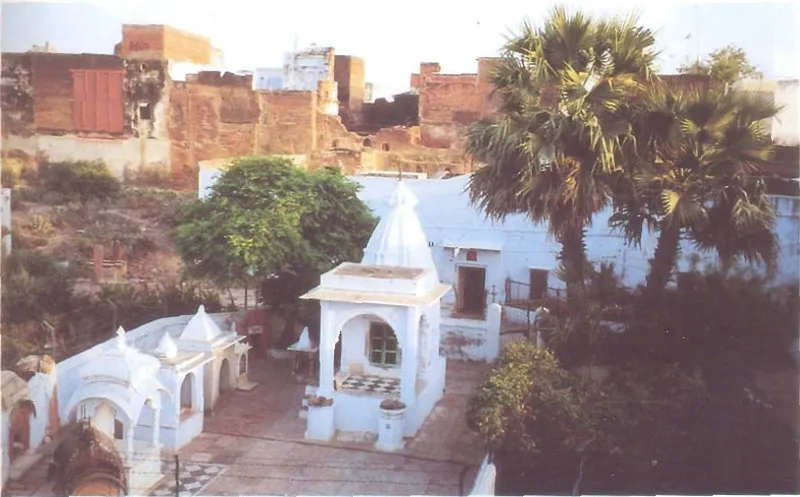
Rādhā-Gokulānanda Mandira (Vṛndāvana)
राधा-गोकुलानन्द मन्दिर (वृन्दावन)The Rādhā-Gokulānanda Mandira is a small temple in Vṛndāvana, about 200 metres from the Rādhā-Ramaṇa temple on a street that leads towards Keśī-ghāṭa.
Samādhi Garden (Rādhā-Gokulānanda)
समाधि उद्यान (राधा-गोकुलानन्द)The samādhi garden is a walled courtyard beside the Rādhā-Gokulānanda Mandira in Vṛndāvana, with the tombs of Śrīla Lokanātha Gosvāmī, Śrīla Narottama dāsa Ṭhākura, Śrīla …
Umrāo
उमरावUmrāo is a village beside Chatravana.
Kiśorī-kuṇḍa (Umrāo)
किशोरी-कुण्ड (उमराव)The Kiśorī-kuṇḍa of Umrāo, a village beside Chatravana, is honoured as the place where Śrīla Lokanātha Gosvāmī lived in great renunciation and received his Deity, Śrī Rād …
Khadiravana
खदिरवनKhadiravana, the forest of khadira trees, is one of the twelve forests of Vraja in every list found, on the western side of the Yamunā.
Lokanātha Gosvāmī's place of sādhana-bhajana (Khadiravana)
लोकनाथ गोस्वामी का साधन-भजन-स्थल (खदिरवन)Lokanātha Gosvāmī's samādhi (Khadiravana)
लोकनाथ गोस्वामी की समाधि (खदिरवन)Lokanātha Gosvāmī's gufā and puṣpa-samādhi (Rādhā-kuṇḍa)
लोकनाथ गोस्वामी की गुफा और पुष्प-समाधि (राधा-कुण्ड)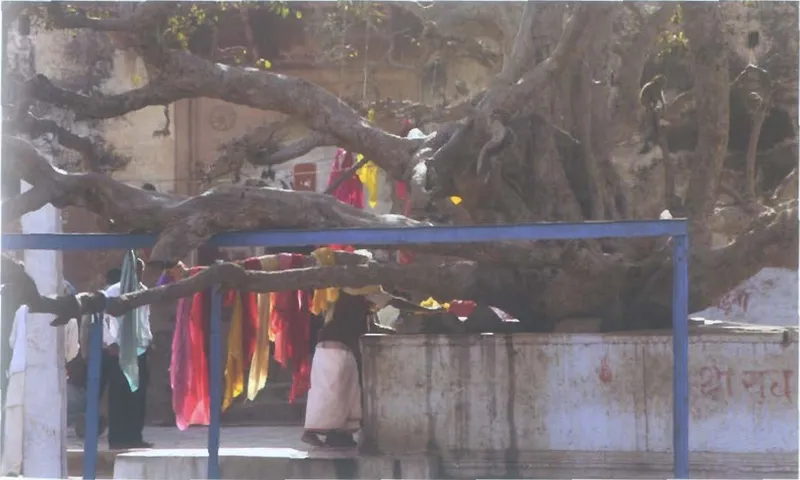
Cīra-ghāṭa (Vṛndāvana)
चीर-घाट (वृन्दावन)Cīra-ghāṭa is a bathing place on the Yamunā in Vṛndāvana, close to Keśī-ghāṭa.
Questions and answers
He was an associate of Śrī Caitanya Mahāprabhu from Tālakhaḍi in Bengal, whom the Lord sent to live in Vṛndāvana. He was the spiritual master of Śrīla Narottama dāsa Ṭhākura. Śrīla Prabhupāda writes that he established the Gokulānanda temple.[7, 9]
According to the Bhakti-ratnākara, the Lord told him at Navadvīpa to go quickly to Vṛndāvana. He Himself would soon take sannyāsa and go there, and He wished to send him ahead.[1–4]
Śrīla Prabhupāda writes that he did not want his name to appear in the book. So Śrīla Kṛṣṇadāsa Kavirāja Gosvāmī names him only once, among Śrīla Rūpa Gosvāmī's companions at Mathurā.[7, 12]
Śrīla Narottama dāsa Ṭhākura. According to the Bhakti-ratnākara, he came after Śrīla Rūpa and Śrīla Sanātana Gosvāmī had departed. He served Śrīla Lokanātha Gosvāmī and received initiation from him.[5–7, 9]
According to the Bhakti-ratnākara, he lived alone in the forests of Vraja: for a time at Umrāo by the Kiśorī-kuṇḍa, and at Khadiravana, sometimes with Śrīla Bhūgarbha Gosvāmī. Later he lived in Vṛndāvana among the Gosvāmīs.[1 +5]
In the samādhi garden of the Rādhā-Gokulānanda temple in Vṛndāvana. Bengali books of 1905 and 1920 already name his tomb there. The sources tell differently whether it holds his body.[10, 11]
Sources
- Śrīla Narahari Cakravartī, Bhakti-ratnākara, taraṅga 1, printed p. 21, 2nd ed., 1912
- Śrīla Narahari Cakravartī, Bhakti-ratnākara, taraṅga 1, printed p. 22, 2nd ed., 1912
- Śrīla Narahari Cakravartī, Narottama-vilāsa, first vilāsa, vv. 35, 37, 39-40, printed p. 2, left-hand column, 1st ed., Baṅgābda 1314
- Śrīla Narahari Cakravartī, Narottama-vilāsa, first vilāsa, vv. 71 and 76 (as numbered), printed p. 3, right-hand column, 1st ed., Baṅgābda 1314
- Śrīla Narahari Cakravartī, Bhakti-ratnākara, taraṅga 1, printed p. 24, 2nd ed., 1912
- Śrīla Narahari Cakravartī, Bhakti-ratnākara, taraṅga 1, printed p. 23, 2nd ed., 1912
- Śrīla Prabhupāda, Śrī Caitanya-caritāmṛta, Madhya-līlā 18.49, purport · vedabase.io
- Śrīla Narahari Cakravartī, Bhakti-ratnākara, taraṅga 5, printed p. 249, 2nd ed., 1912
- Śrīla Prabhupāda, Śrī Caitanya-caritāmṛta, Ādi-līlā 12.82, purport · vedabase.io
- Śrī Śrī Bhaktamāla grantha, 26th mālā, survey of the temples, printed p. 350, left-hand column, first lines
- Vṛndāvana-kathā, chapter 7 ('রাধাবিনোদ ও গোকুলানন্দ'), printed p. 104
- Śrīla Kṛṣṇadāsa Kavirāja Gosvāmī, Śrī Caitanya-caritāmṛta, Madhya-līlā 18.49, online edition
- Śrīla Prabhupāda, Śrī Caitanya-caritāmṛta, Ādi-līlā 12.88, purport · vedabase.io
- Prema-vilāsa, seventh vilāsa, printed p. 45, both columns, Kolkata, 1913
- Śrīla Gopāla Bhaṭṭa Gosvāmī, Hari-bhakti-vilāsa, 1.4, GRETIL
- Śrīla Viśvanātha Cakravartī Ṭhākura, Stavāmṛta-laharī no. 6 (as numbered on the page), Śrī Lokanātha-prabhuvarāṣṭaka, verse 2 and colophon
- Śrīla Narahari Cakravartī, Bhakti-ratnākara, Fifth Wave (pañcama taraṅga), printed p. 249: Rāghava Paṇḍita shows Khadiravana to Śrīnivāsa, 2nd ed., 1912
- Śrī Vraja-maṇḍala Parikramā (2007), PDF p. 231
- Vṛndāvana-Dhāma Ki Jaya! (c. 1986), by Dhruva Mahārāja dāsa, PDF p. 55
- the undated parikramā notes Khadiravana, ¶43
Show all 37 references
- Vṛndāvana, the Playground of God (2010), Bhakti Caitanya Svāmī, PDF p. 87
- Vṛndāvana, the Playground of God (2010), Bhakti Caitanya Svāmī, PDF p. 88
- Śrīla Narahari Cakravartī, Bhakti-ratnākara, taraṅga 6, printed p. 480, 2nd ed., 1912
- Śrīla Narahari Cakravartī, Bhakti-ratnākara, taraṅga 11, printed p. 666, 2nd ed., 1912
- Vṛndāvana, the Playground of God (2010), Bhakti Caitanya Svāmī, PDF p. 86
- The Color Guide to Vṛndāvana (2000), Written and Photographed by Rājaśekhara dāsa Brahmacārī, PDF p. 109
- The Color Guide to Vṛndāvana (2000), Written and Photographed by Rājaśekhara dāsa Brahmacārī, PDF p. 166
- the undated parikramā notes Vṛndāvana, ¶210
- Vṛndāvana-Dhāma Ki Jaya! (c. 1986), by Dhruva Mahārāja dāsa, PDF p. 70
- Śrī Vraja-maṇḍala Parikramā (2007), PDF p. 345
- The Colour Guide to Rādhā-kuṇḍa (1999), Rājaśekhara dāsa Brahmacārī, PDF p. 169
- The Color Guide to Vṛndāvana (2000), Written and Photographed by Rājaśekhara dāsa Brahmacārī, PDF p. 148
- the undated parikramā notes Khadiravana, ¶50
- The Colour Guide to Rādhā-kuṇḍa (1999), Rājaśekhara dāsa Brahmacārī, PDF p. 139
- Vṛndāvana, the Playground of God (2010), Bhakti Caitanya Svāmī, PDF p. 61
- the undated parikramā notes Khadiravana, ¶23
- Mathurá (1883), F. S. Growse, B.C.S., M.A. Oxon., C.I.E. (as the title page gives him, p. 268
Further sources
- Bhakti-ratnākara (Bengali, 1912 edition), Narottama-vilāsa (c. 1907 edition) and Prema-vilāsa (c. 1913 edition), summarised, not translated.
- Śrīla Prabhupāda's purports to Caitanya-caritāmṛta Ādi 12.88 and Madhya 18.49 (BBT).