Brahmā's theft of the calves and cowherd boys
The pastime and its places
In short
In the brahma-vimohana-līlā, the pastime of Brahmā's bewilderment (Śrīmad-Bhāgavatam 10.13–10.14), Brahmā took away Kṛṣṇa's calves and cowherd boys to test His power. For a year Kṛṣṇa Himself became all of them. Then Brahmā saw Him in Vṛndāvana, bathed His feet with tears and prayed. The Bhāgavatam names Vṛndāvana and a riverbank, but no kuṇḍa (sacred pond).[1–6]
On this page
At a glance
- Scripture: Śrīmad-Bhāgavatam 10.13, in Śrīla Prabhupāda's own translation, and 10.14, in that of his disciples; Śrīla Prabhupāda's Kṛṣṇa book, chapters 13 and 14.[1–7]
- Why: Brahmā was amazed that Kṛṣṇa had freed Aghāsura. He wanted to see more of Kṛṣṇa's power and to show some of his own.[1]
- How long: a moment of Brahmā's time, but a full year by human measure. All that time Kṛṣṇa Himself became the calves and the boys.[2, 3]
- What Brahmā saw: Vṛndāvana, and Kṛṣṇa alone in it as a cowherd boy, searching for the calves with a bite of food in His hand.[4, 5]
- His prayer: to take any birth in the forest of Gokula and be touched by the dust of its people's feet.[8]
- The places: the guidebooks and older texts link Vatsavana, Caumā, Brahma-ghāṭa and two Brahma-kuṇḍas with the pastime. The Bhāgavatam names none of them.[1 +9]
Why did Brahmā steal the calves and cowherd boys?
The day began with a picnic. Kṛṣṇa had just freed Aghāsura. He brought His friends to a riverbank with clean, soft sand and told them it was the best place to play and eat their lunch.[13, 14] Śrīla Prabhupāda pictures the meal in his purport (his explanation of the verse):
General teaching (does not name the place)When Kṛṣṇa was eating with His cowherd boyfriends, a certain bumblebee came there to take part in the eating. Thus Kṛṣṇa joked, “Why have you come to disturb My brāhmaṇa friend Madhumaṅgala? You want to kill a brāhmaṇa. This is not good.” All the boys would laugh and enjoy, speaking such joking words while eating.
Śrīla Prabhupāda, Śrīmad-Bhāgavatam, ŚB 10.13.11, purport · vedabase.io
While the boys ate, the calves wandered deep into the forest, and Kṛṣṇa went to look for them.[1 +4] Śrīla Prabhupāda notes in his purport that Kṛṣṇa Himself took care to find His friends' calves, and that this was His causeless mercy.[18] At that moment Brahmā acted:
O Mahārāja Parīkṣit, Brahmā, who resides in the higher planetary system in the sky, had observed the activities of the most powerful Kṛṣṇa in killing and delivering Aghāsura, and he was astonished. Now that same Brahmā wanted to show some of his own power and see the power of Kṛṣṇa, who was engaged in His childhood pastimes, playing as if with ordinary cowherd boys. Therefore, in Kṛṣṇa’s absence, Brahmā took all the boys and calves to another place. Thus he became entangled, for in the very near future he would see how powerful Kṛṣṇa was.
Translation: Śrīla A.C. Bhaktivedanta Swami PrabhupādaIn Śrīla Prabhupāda's words in the Kṛṣṇa book, Kṛṣṇa could not find the calves. He even lost His friends on the bank of the Yamunā, where they had been eating their lunch.[7]
How long were the calves and boys hidden?
Kṛṣṇa did not search for long. To please both Brahmā and the mothers of the calves and boys, He expanded Himself and became the calves and the boys.[1 +5]
tataḥ kṛṣṇo mudaṃ kartuṃ tan-mātṝṇāṃ ca kasya ca / ubhayāyitam ātmānaṃ cakre viśva-kṛd īśvaraḥ
Thereafter, just to create pleasure both for Brahmā and for the mothers of the calves and cowherd boys, Kṛṣṇa, the creator of the entire cosmic manifestation, expanded Himself as calves and boys.
Translation: Śrīla A.C. Bhaktivedanta Swami PrabhupādaFor a whole year, as Śrīla Raghunātha dāsa Gosvāmī says, Hari (Kṛṣṇa) became each of them and gave joy to their mothers.[10] Brahmā came back after what was for him only a moment. He found Kṛṣṇa playing as before, with boys and calves who were His own expansions.[3]
Why Balarāma was not taken
Balarāma was not among the boys Brahmā took. Śrīla Prabhupāda explains why in his purport to the verse about Brahmā's return:
General teaching (does not name the place)“On the day when Lord Brahmā had first come, Baladeva could not go with Kṛṣṇa and the cowherd boys, for it was His birthday, and His mother had kept Him back for the proper ceremonial bath, called śāntika-snāna. Therefore Lord Baladeva was not taken by Brahmā at that time.”
Śrīla Prabhupāda, Śrīmad-Bhāgavatam, 10.13.40, purport · vedabase.io
Śrīla Viśvanātha Cakravartī Ṭhākura and Śrīla Baladeva Vidyābhūṣaṇa say the same about that day (summarised here, not translated). His mother kept Him at home for the rites of His birth-star.[20] The Kṛṣṇa book, telling of the morning of Aghāsura, names Balarāma among the boys whom the serpent wanted to swallow. The accounts are set side by side below.[21]
What did Brahmā see?
Kṛṣṇa drew back the curtain of His yogamāyā (His own inner energy). Then Brahmā looked in all directions and saw Vṛndāvana before him. It was full of trees that support its people, and pleasing in every season.[4] This is the only place the Bhāgavatam names in these verses.[1–6] Then he saw the Absolute Truth Himself:
Then Lord Brahmā saw the Absolute Truth — who is one without a second, who possesses full knowledge and who is unlimited — assuming the role of a child in a family of cowherd men and standing all alone, just as before, with a morsel of food in His hand, searching everywhere for the calves and His cowherd friends.
Translation: Śrīla A.C. Bhaktivedanta Swami PrabhupādaBrahmā hurried down from his swan and fell flat like a golden rod. He touched Kṛṣṇa's feet with his four crowns and bathed them with tears of joy.[6]
dṛṣṭvā tvareṇa nija-dhoraṇato 'vatīrya / pṛthvyāṃ vapuḥ kanaka-daṇḍam ivābhipātya / spṛṣṭvā catur-mukuṭa-koṭibhir aṅghri-yugmaṃ / natvā mud-aśru-sujalair akṛtābhiṣekam
After seeing this, Lord Brahmā hastily got down from his swan carrier, fell down like a golden rod and touched the lotus feet of Lord Kṛṣṇa with the tips of the four crowns on his heads. Offering his obeisances, he bathed the feet of Kṛṣṇa with the water of his tears of joy.
Translation: Śrīla A.C. Bhaktivedanta Swami PrabhupādaŚrīla Prabhupāda tells the moment in the Kṛṣṇa book:
General teaching (does not name the place)“Immediately Brahmā descended from his great swan carrier and fell down before the Lord just like a golden stick. … All the four helmets on the heads of Brahmā touched the lotus feet of Kṛṣṇa. Brahmā, being very joyful, began to shed tears, and he washed the lotus feet of Kṛṣṇa with his tears.”
Śrīla Prabhupāda, Kṛṣṇa, the Supreme Personality of Godhead (Kṛṣṇa book), Chapter 13, 'The Stealing of the Boys and Calves by Brahmā' · vedabase.io
The commentators, the teachers who explained the Bhāgavatam verse by verse, take Brahmā's bath of Kṛṣṇa to mean that he bathed Kṛṣṇa's two feet with tears (summarised here, not translated). None of them names a lake.[23]
What are Brahmā's prayers?
Brahmā rose slowly and wiped his eyes. With his head bent low and his body trembling, he began to praise Kṛṣṇa in a shaking voice.[24] His prayers fill the fourteenth chapter of the Tenth Canto. Śrīla Prabhupāda gives their opening:
General teaching (does not name the place)Brahmā said, “My dear Lord, You are the only worshipable Supreme Lord, the Personality of Godhead; therefore I am offering my humble obeisances and prayers just to please You.”
Śrīla Prabhupāda, Kṛṣṇa, the Supreme Personality of Godhead, chapter 14, 'Prayers Offered by Lord Brahmā to Lord Kṛṣṇa' (opening) · vedabase.io
In those prayers Brahmā asks to be excused. Śrīla Prabhupāda writes that Brahmā asked the Lord to see him as a servant under Him and to forgive his little mistake and rudeness.[25] The best remembered of the prayers is his wish for Vṛndāvana itself:
tad bhūri-bhāgyam iha janma kim apy aṭavyāṃ / yad gokule 'pi katamāṅghri-rajo-'bhiṣekam / yaj-jīvitaṃ tu nikhilaṃ bhagavān mukundas / tv adyāpi yat-pada-rajaḥ śruti-mṛgyam eva
My greatest possible good fortune would be to take any birth whatever in this forest of Gokula and have my head bathed by the dust falling from the lotus feet of any of its residents. Their entire life and soul is the Supreme Personality of Godhead, Mukunda, the dust of whose lotus feet is still being searched for in the Vedic mantras.
Translation: Śrīla Prabhupāda's disciples (BBT)Śrīla Viśvanātha Cakravartī Ṭhākura explains the verse step by step (summarised here, not translated). First Brahmā asks to be born even as tender grass in Vṛndāvana, where the feet of Kṛṣṇa's friends might touch him. Then, as if told to ask for something fit for him, he asks to be a stone slab or a plank at the edge of Gokula. There the foot-dust of even one of Kṛṣṇa's humble servants would bathe him. He asks this because their very life is Mukunda (Kṛṣṇa), whose foot-dust the Vedas still seek.[8 +2] Śrīla Prabhupāda gives the same wish in his words:
Names this place“I am most humbly praying at Your lotus feet for You to please give me any sort of birth within this Vṛndāvana forest so that I may be able to be favored by the dust of the feet of some of the devotees of Vṛndāvana.”
Śrīla Prabhupāda, Kṛṣṇa, the Supreme Personality of Godhead (Kṛṣṇa book), Chapter 14, 'Prayers Offered by Lord Brahmā to Lord Kṛṣṇa' · vedabase.io
At the end Brahmā walked around Kṛṣṇa three times, bowed at His feet and went back to his own abode.[28] Kṛṣṇa took the calves, which were still where they had been a year before, and brought them back to the riverbank. There His friends sat at their meal as if no time had passed.[29, 30]
Which places in Vraja are connected with the pastime?
The Bhāgavatam itself names Vṛndāvana and a riverbank, but no kuṇḍa, ghāṭa (bathing steps) or village.[1–6] The places come from later texts, and they do not agree.
Vatsavana, Balihārā, Sei and Caumā
Śrīla Raghunātha dāsa Gosvāmī's Vraja-vilāsa-stava praises two places but does not say where they are. Verse 96 worships the place where the calves were stolen, where Hari became each of them and gave joy to their mothers.[10] Verse 97 bows to the place called Bhīru-caturmukha, "the frightened four-faced one". There Brahmā, afraid of his offence, fell to the ground and praised Mukunda with tears.[12]
The Bhakti-ratnākara gives these places on Śrīla Rāghava Paṇḍita's tour north of Vṛndāvana. He shows Śrīla Śrīnivāsa Ācārya Vatsavana, where Brahmā stole the calves. Then come the village of Balihārā, for the theft of the boys, and a place called Sei, where Brahmā was bewildered. Last is the village printed as Ecomuhā, where Brahmā came to Kṛṣṇa and offered prayers.[9–12] Śrī Vraja-maṇḍala Parikramā (2007) reads that village as Caumuṅhā, today Caumā, named after Brahmā's four mouths.[31]
Nārāyaṇa Bhaṭṭa's Vraja-bhakti-vilāsa asks pilgrims to visit Vatsavana on the seventh day of the bright half of Vaiśākha (April–May). They say a prayer to the forest where the calves were taken away, bathe in Gopāla-kuṇḍa and walk around the place for two krośas (an old measure of distance).[32, 33] The same guidebook of 2007 describes Vatsavana, four miles south-west of Nanda-ghāṭa, as the place where Brahmā stole both the calves and the boys.[31, 34]
The Brahma-kuṇḍa of Vṛndāvana
The Nārada Purāṇa, an old Sanskrit scripture, in its praise of Vṛndāvana links a Brahma-kuṇḍa with the end of Brahmā's bewilderment. It says that the holy Brahma-kuṇḍa in the forest of Vṛndāvana is where the truth was shown to Brahmā. Whoever bathes there, thinking of the Lord's original form, sees something of His glory.[35] The guidebooks place that kuṇḍa north of the Śrī Raṅgajī temple in Vṛndāvana town, and some of them set Brahmā's prayers there. Their accounts are set out below.[36–38]
The same kuṇḍa has other links of its own. Śrīla Prabhupāda writes that Śrīla Bilvamaṅgala Ṭhākura lived in Vṛndāvana for seven hundred years near Brahma-kuṇḍa, a bathing tank that still exists.[39–43]
The Brahma-kuṇḍa of Govardhana and Brahma-ghāṭa
At Govardhana, the Vraja-bhakti-vilāsa says, Brahmā and the gods came, and Brahmā performed Hari's abhiṣeka (a ceremonial bath) with praises and Sāma-veda mantras. From this the Brahma-kuṇḍa there arose.[44] Read more: Harideva of Govardhana: the Deity, Śrī Caitanya's visit and the temple → The commentators on Kṛṣṇa's bath after the lifting of Govardhana add that Brahmā did not come to that bath, because he feared an offence as before (summarised here, not translated).[45] Read more: The lifting of Govardhana Hill, Indra's homage and the name Govinda → Śrī Vraja-maṇḍala Parikramā (2007) also names a Brahma-ghāṭa near Rāma-ghāṭa, where Brahmā is said to have worshipped Kṛṣṇa to beg forgiveness.[11, 12]
The Padma Purāṇa tells the pastime in its own way, which the Bhāgavatam does not follow. There Brahmā took the calves and boys while Balarāma and Kṛṣṇa slept. After a year he gave them back himself and asked forgiveness for his great offence (summarised here, not translated).[46–48]
Where the sources differ
The texts tell differently where Brahmā offered his prayers, and whether his tears formed a kuṇḍa. Two guidebooks say that the tears formed the Brahma-kuṇḍa of Vṛndāvana. No scripture or Gosvāmī's book is known to say so, and which place is meant is not certain.[6 +6]
Accounts differ Where Brahmā offered his prayers after stealing the calves and boys, and whether his tears formed Brahma-kuṇḍa.
- Vṛndāvana, the Playground of God (2010)The brahmā-vimohana-līlā took place here; as Brahmā prayed he cried tears of ecstasy, and these tears formed the waters of this kuṇḍa.
- The Color Guide to Vṛndāvana (2000)This is where Brahmā offered his prayers; the kuṇḍa was created from his tears.
- Vṛndāvana-Dhāma Ki Jaya! (c. 1986) (Vrindavana dhama Ki Jaya)The place where Brahmā offered prayers is known as Brahma-kuṇḍa (with Vraja-vilāsa-stava 97).
- Bhakti-ratnākara, Fifth Wave, printed pp. 269–270Brahmā stole the calves at Vatsavana (printed p. 269, with Vraja-vilāsa-stava 96) and the boys at Balihārā village, and came to Kṛṣṇa and offered prayers at Ecomuhā village (printed 'এচোমুহা', one word; p. 270, with Vraja-vilāsa-stava 97).
Where the calves and boys were stolen, and which place is Vatsavana, is also told differently.[9 +3]
Accounts differ Where Brahmā stole the calves and the cowherd boys, and which place is 'Vatsavana'.
- Śrīmad-Bhāgavatam 10.13.12-16The calves strayed deep into the forest while the boys ate; the boys were taken from the riverbank; Brahmā took both 'to another place'; no place is named.
- Kṛṣṇa book ch. 13 (Śrīla Prabhupāda)The calves entered the deep forest; the boys were lost on the bank of the Yamunā, where they had been taking their lunch.
- Garga-saṁhitā 2.7.2-7, 28-34The calves went far into a thicket (gahvara) while the boys ate on the Yamunā's sandy bank; Brahmā took the calves and gopas from here; no place is named.
- Bhakti-ratnākara, Fifth Wave (1912, pp. 269-270)The calves were stolen at Vatsavana; the boys at Balihārā.
The wording of these accounts is our summary of the sources, not a published translation.
Whether Balarāma was with Kṛṣṇa on that day is told differently by Śrīla Prabhupāda's purport, the commentators and the Kṛṣṇa book.[20 +3]
Accounts differ Whether Balarāma was with Kṛṣṇa and the cowherd boys on the day of Aghāsura and of the lunch during which Brahmā took the calves and the boys, as Vṛndāvana, the Playground of God (2010) tells the pastime at Brahma-kuṇḍa.
- Vṛndāvana, the Playground of God (2010), Brahmā-kuṇḍaThe pastime 'took place on Lord Balarāma's birthday, and He was not with Kṛṣṇa and the cowherd boys' at the lunch.
- Śrīla Viśvanātha Cakravartī and Śrīla Baladeva Vidyābhūṣaṇa on ŚB 10.12.1 (and, for the day of Brahmā's return, Viśvanātha, Śrīla Sanātana Gosvāmī and Śrīla Jīva Gosvāmī on ŚB 10.13.40)On that day Balarāma's mother kept Him at home for the propitiatory bath and other rites of His birth-star; on the day of Brahmā's return a year later Baladeva again was not with Kṛṣṇa.
- Śrīla Prabhupāda, ŚB 10.13.40, purport (Bhaktivedanta purport)'On the day when Lord Brahmā had first come, Baladeva could not go with Kṛṣṇa and the cowherd boys, for it was His birthday, and His mother had kept Him back for the proper ceremonial bath, called śāntika-snāna.' A year later, on the same day, Baladeva was again kept at home.
- Śrīmad-Bhāgavatam 10.12.1–10.13.27Names Kṛṣṇa and the cowherd boys for that day, not Balarāma ('sa-balam' in 10.12.14 is translated along with His assistants, the other cowherd boys); Balarāma is named again in 10.13.28, near the end of the year.
The wording of these accounts is our summary of the sources, not a published translation.
The Padma Purāṇa tells differently from the Bhāgavatam how the calves and boys were taken and returned.[46–48]
Accounts differ How Brahmā took the calves and boys and how they were returned: the Padma Purāṇa tells it differently from the Bhāgavatam.
- Śrīmad-Bhāgavatam 10.13.15, 10.14.42while Kṛṣṇa was away searching for the calves, Brahmā took the boys and calves; after Brahmā's prayers and departure Kṛṣṇa Himself brought the calves back to the riverbank where His friends sat at their meal.
- Padma Purāṇa, Uttara-khaṇḍa 245.100-107, 122-123Brahmā took the calves and boys while Balarāma and Kṛṣṇa slept under a jambu tree; after a year he gave them back himself and then prayed for forgiveness.
Places in this article
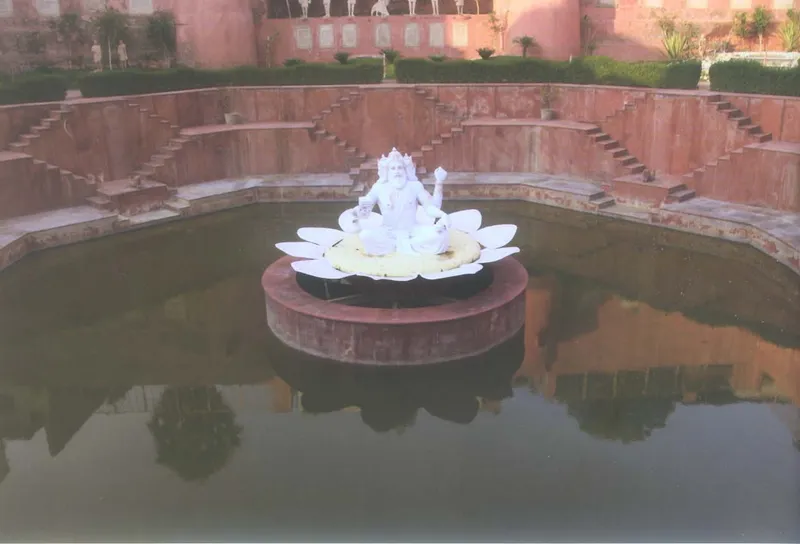
Brahma-kuṇḍa (Vṛndāvana)
ब्रह्म-कुण्ड (वृन्दावन)Brahma-kuṇḍa is a tank in Vṛndāvana, north of the Raṅgajī temple.
Vatsavana (near Nanda-ghāṭa)
वत्सवन (नन्द-घाट के पास)Vatsavana, "the forest of the calves", also called Bacchavana, is honoured as the place where Brahmā stole Kṛṣṇa's calves.
Caumā
चौमाCaumā, formerly Caumuṅhā, is a village on the Mathurā–Delhi road about eight miles from Mathurā and one mile west of Parkhama, according to the guidebook Śrī Vraja-maṇḍal …
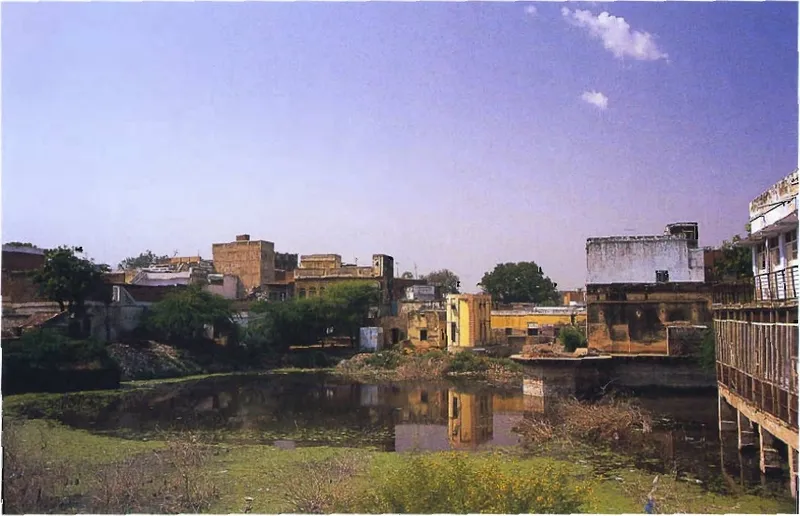
Brahma-kuṇḍa (Govardhana)
ब्रह्म-कुण्ड (गोवर्धन)Brahma-kuṇḍa is a kuṇḍa (sacred pond) in the town of Govardhana, which the guidebooks place below the temple of the goddess Manasā-devī on the south bank of Mānasī-gaṅgā.
Brahma-ghāṭa (near Rāma-ghāṭa)
ब्रह्म-घाट (राम-घाट के पास)Brahma-ghāṭa is a bathing place near Rāma-ghāṭa.
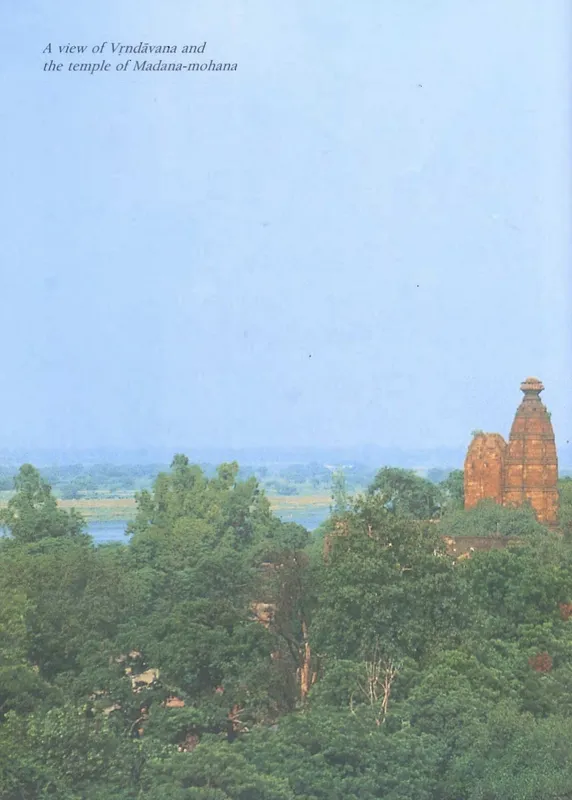
Vṛndāvana
वृन्दावनVṛndāvana is the forest on the bank of the Yamunā where Kṛṣṇa spent His childhood and youth, and the town of temples that stands in that forest today.
Ramaṇa-reti (Vṛndāvana)
रमण-रेती (वृन्दावन)Ramaṇa-reti, "the pleasing sands", is a sandy area on the western edge of Vṛndāvana, on the old Chattikara road.
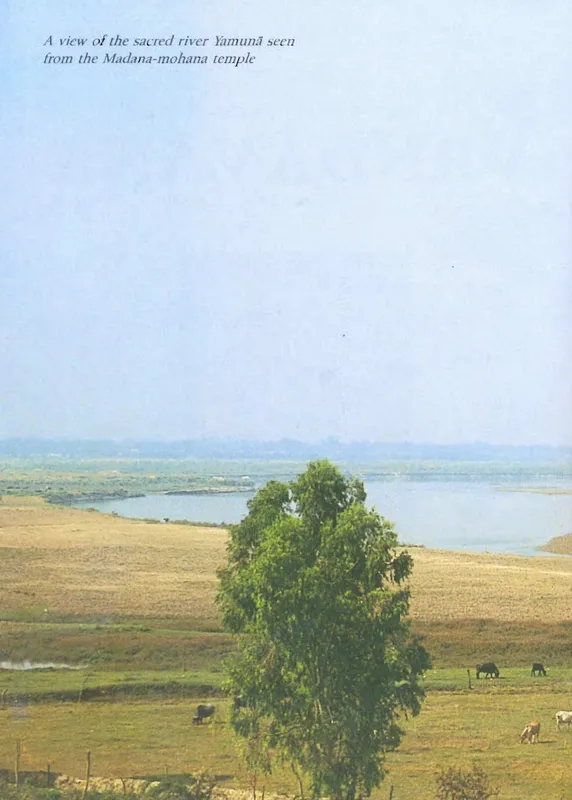
Yamunā
यमुनाThe Yamunā, also called the Kālindī, is the river that runs through Vraja-maṇḍala.
Questions and answers
Brahmā was amazed that Kṛṣṇa had freed Aghāsura. He wanted to show some of his own power and see more of Kṛṣṇa's. So, while Kṛṣṇa was away, he took the calves and boys to another place.[1]
For a moment of Brahmā's time, which was a full year by human measure. During that year Kṛṣṇa Himself became all the calves and boys and gave joy to their mothers, as Śrīla Raghunātha dāsa Gosvāmī says.[2 +2]
The Bhāgavatam names only Vṛndāvana and the riverbank of the lunch. The Bhakti-ratnākara names Vatsavana for the calves, Balihārā for the boys and Ecomuhā for the prayers. The guidebooks name other places.[1 +8]
He saw Vṛndāvana, and Kṛṣṇa alone in it as a cowherd boy. Kṛṣṇa was searching everywhere for the calves and His friends, with a bite of food in His hand. Then Brahmā fell at His feet and bathed them with tears.[4–6]
They fill the fourteenth chapter of the Tenth Canto. In them Brahmā asks forgiveness. He prays to take any birth in the forest of Gokula, so that the dust of its people's feet may touch him.[8, 25]
The Bhakti-ratnākara names Vatsavana, Balihārā and Ecomuhā, read today as Caumā. The Nārada Purāṇa and the guidebooks name the Brahma-kuṇḍa of Vṛndāvana. One guidebook names Brahma-ghāṭa and the Brahma-kuṇḍa of Govardhana.[9 +4]
Sources
- Śrīmad-Bhāgavatam 10.13.15, Bhagavata Vidya Pith edition, ed. Bhagavata Rishi and Krishna Shankar Shastri, 1996
- Śrīmad-Bhāgavatam 10.13.18, GRETIL
- Śrīmad-Bhāgavatam 10.13.40, GRETIL
- Śrīmad-Bhāgavatam 10.13.59, GRETIL
- Śrīmad-Bhāgavatam 10.13.61, Bhagavata Vidya Pith edition, ed. Bhagavata Rishi and Krishna Shankar Shastri, 1996
- Śrīmad-Bhāgavatam 10.13.62, GRETIL
- Śrīla Prabhupāda, Kṛṣṇa, the Supreme Personality of Godhead, Chapter 13, 'The Stealing of the Boys and Calves by Brahmā' · vedabase.io
- Śrīmad-Bhāgavatam 10.14.34, GRETIL
- Śrīla Narahari Cakravartī, Bhakti-ratnākara, Fifth Wave, printed p. 269: Vatsavana, 2nd ed., 1912
- Raghunātha dāsa Gosvāmī, Stavāvalī (9) Vraja-vilāsa-stava v.96
- Śrīla Narahari Cakravartī, Bhakti-ratnākara, Fifth Wave, printed p. 270 (1912 edition), 2nd ed., 1912
- Śrīla Raghunātha dāsa Gosvāmī, Vraja-vilāsa-stava, Stavāvalī (9) Vraja-vilāsa-stava v.97
- Śrīmad-Bhāgavatam, 10.13.5, online edition · vedabase.io
- Śrīla Prabhupāda, Kṛṣṇa, the Supreme Personality of Godhead (Kṛṣṇa book), Chapter 13, 'The Stealing of the Boys and Calves by Brahmā' · vedabase.io
- Śrīmad-Bhāgavatam 10.13.12, Bhagavata Vidya Pith edition, ed. Bhagavata Rishi and Krishna Shankar Shastri, 1996
- Śrīmad-Bhāgavatam 10.13.16, Bhagavata Vidya Pith edition, ed. Bhagavata Rishi and Krishna Shankar Shastri, 1996
- Śrīmad-Bhāgavatam 10.13.18, Bhagavata Vidya Pith edition, ed. Bhagavata Rishi and Krishna Shankar Shastri, 1996
- Śrīla Prabhupāda, Śrīmad-Bhāgavatam, 10.13.14, purport · vedabase.io
- Śrīmad-Bhāgavatam 10.13.15, Bhagavata Vidya Pith edition, ed. Bhagavata Rishi and Krishna Shankar Shastri, 1996
- Śrīla Viśvanātha Cakravartī Ṭhākura: commentary on ŚB 10.12.1, Bhagavata Vidya Pith edition, ed. Bhagavata Rishi and Krishna Shankar Shastri, 1996
Show all 52 references
- Śrīla Prabhupāda, Kṛṣṇa, the Supreme Personality of Godhead (Kṛṣṇa book), Chapter 12, 'The Killing of the Aghāsura Demon' · vedabase.io
- Śrīmad-Bhāgavatam 10.13.61, Bhagavata Vidya Pith edition, ed. Bhagavata Rishi and Krishna Shankar Shastri, 1996
- Śrīla Sanātana Gosvāmī: commentary on ŚB 10.13.62, Bhagavata Vidya Pith edition, ed. Bhagavata Rishi and Krishna Shankar Shastri, 1996
- Śrīmad-Bhāgavatam 10.13.64, GRETIL
- Śrīla Prabhupāda, Kṛṣṇa, the Supreme Personality of Godhead, ch. 14 'Prayers Offered by Lord Brahmā to Lord Kṛṣṇa' · vedabase.io
- Śrīla Viśvanātha Cakravartī Ṭhākura: commentary on ŚB 10.14.34, Bhagavata Vidya Pith edition, ed. Bhagavata Rishi and Krishna Shankar Shastri, 1996
- Vṛndāvana, the Playground of God (2010), Bhakti Caitanya Svāmī, PDF p. 198
- Śrīmad-Bhāgavatam 10.14.41, GRETIL
- Śrīmad-Bhāgavatam 10.14.42, GRETIL
- Śrīla Prabhupāda, Kṛṣṇa, the Supreme Personality of Godhead (Kṛṣṇa book), Chapter 14, 'Prayers Offered by Lord Brahmā to Lord Kṛṣṇa' (end of the prayers) · vedabase.io
- Śrī Vraja-maṇḍala Parikramā (2007), PDF p. 246
- Śrīla Nārāyaṇa Bhaṭṭa, Vraja-bhakti-vilāsa, printed pp. 244-245, section 57, 1st ed., publ. Bābā Kṛṣṇadāsa, Kusuma-sarovara, Saṁvat 2008
- Śrīla Nārāyaṇa Bhaṭṭa, Vraja-bhakti-vilāsa, ch. 2 v.56 (the 'signs', liṅga, of the forests), printed p. 52, 1st ed., publ. Bābā Kṛṣṇadāsa, Kusuma-sarovara, Saṁvat 2008
- Śrī Vraja-maṇḍala Parikramā (2007), PDF p. 245
- Nārada Purāṇa, उत्तरार्धः/अध्यायः 80 v.80-58–80-60
- Śrī Vraja-maṇḍala Parikramā (2007), PDF p. 345
- Śrī Vraja-maṇḍala Parikramā (2007), PDF p. 321
- The Color Guide to Vṛndāvana (2000), Written and Photographed by Rājaśekhara dāsa Brahmacārī, PDF p. 136
- Śrīla Prabhupāda, Śrī Caitanya-caritāmṛta, Ādi-līlā 1.57, purport · vedabase.io
- Vṛndāvana, the Playground of God (2010), Bhakti Caitanya Svāmī, PDF p. 190
- The Color Guide to Vṛndāvana (2000), Written and Photographed by Rājaśekhara dāsa Brahmacārī, PDF p. 125
- Vṛndāvana-Dhāma Ki Jaya! (c. 1986), by Dhruva Mahārāja dāsa, PDF p. 79
- the undated parikramā notes Vṛndāvana, ¶245
- Śrīla Nārāyaṇa Bhaṭṭa, Vraja-bhakti-vilāsa, Govardhana section, printed p. 113, after mantra 4, 1st ed., publ. Bābā Kṛṣṇadāsa, Kusuma-sarovara, Saṁvat 2008
- Śrīla Jīva Gosvāmī: commentary on ŚB 10.27.21, Bhagavata Vidya Pith edition, ed. Bhagavata Rishi and Krishna Shankar Shastri, 1996
- Padma Purāṇa, Uttara-khaṇḍa (6) ch. 245, vv.101-102, Sanskrit Wikisource
- Padma Purāṇa, Uttara-khaṇḍa (6) ch. 245, vv.106-107, Sanskrit Wikisource
- Padma Purāṇa, Uttara-khaṇḍa (6) ch. 245, vv.122-123, Sanskrit Wikisource
- The Color Guide to Vṛndāvana (2000), Written and Photographed by Rājaśekhara dāsa Brahmacārī, PDF p. 135
- Śrī Vraja-maṇḍala Parikramā (2007), PDF p. 239
- Śrīla Prabhupāda, Śrīmad-Bhāgavatam, 10.13.40, purport · vedabase.io
- Vṛndāvana, the Playground of God (2010), Bhakti Caitanya Svāmī, PDF p. 196
Further sources
- Śrīmad-Bhāgavatam 10.13 (translation and purports by Śrīla Prabhupāda) and 10.14 (translation by his disciples), BBT; Śrīla Prabhupāda's Kṛṣṇa, chapters 12–14.
- Bhakti-ratnākara (Bengali, 1912 edition), Fifth Wave; Vraja-vilāsa-stava of Śrīla Raghunātha dāsa Gosvāmī; Nārada, Padma Purāṇas: summarised, not translated.